
Huge Turkesterone 500 mg (Softgels) Review
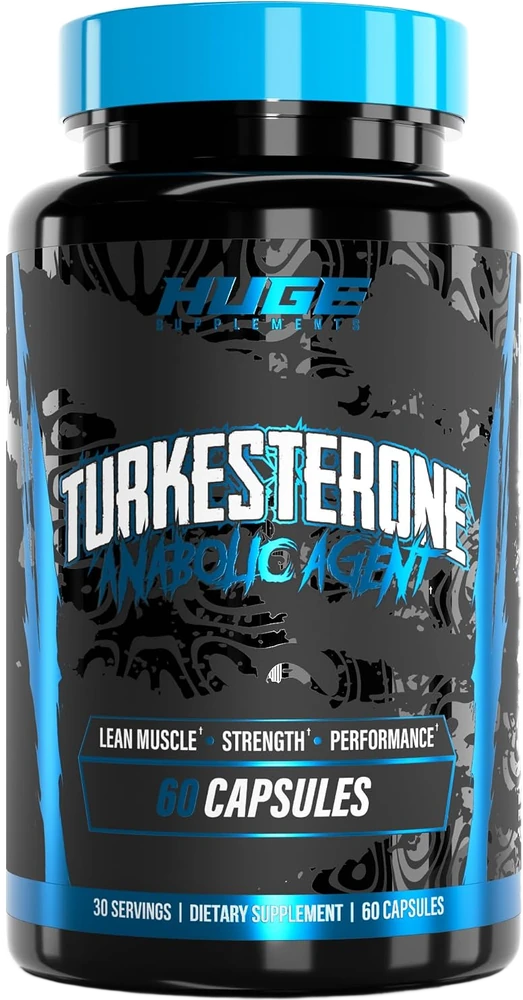 #6 of 8 · Best softgel format✓ Label verified · Supplement Facts read Sep 7, 2026
Real retailer photo, cut out. Label unedited.
Consider it. A softgel absorption bet at the highest price per serving — and no verified content. Huge delivers the standard 500 mg / 10% Ajuga turkestanica extract as a softgel, marketed as more absorbable — a plausible but unproven bet on turkesterone's bioavailability problem.
$40$0.67 / serving
Why It Scores 7.0 — And The Label Line Behind Each Number
Third-party verification & COA
30% of scoreThe decisive axis, and Huge's weakest. No batch HPLC Certificate of Analysis is posted on the listing, and unlike Toniiq (#1), Nutricost (#3) or eFlow (#8), Huge doesn't even foreground a 'third-party tested' claim here. In a category where independent labs keep finding under 1% of claimed turkesterone, that leaves the actual content entirely unverified. Scored at the category floor — there's no verification signal to credit.
- Source
- Ajuga turkestanica extract (stated on label)
- Third-party testing
- No posted turkesterone COA on the listing; no third-party-tested claim foregrounded
Standardization & dose
25% of scoreA clean, conservative spec: 500 mg of Ajuga turkestanica extract standardized to 10% turkesterone — roughly 50 mg turkesterone per softgel on paper — matching Gorilla Mind (#2) and Double Wood (#4). Clearly the genuine Ajuga turkestanica source. Solid as a claim, but scored as a claim: the 10% is unconfirmed by any independent assay, so it earns the standardization credit without the verification it would need to be a fact.
- Standardization
- 10% turkesterone (label) = ~50 mg turkesterone per 500 mg softgel
- Dose per serving
- 500 mg Ajuga turkestanica extract (1 softgel); 1 in the morning with a meal
Formulation & delivery
20% of scoreThe product's distinguishing feature. The softgel is a legitimate attempt at turkesterone's real bioavailability problem — fat-soluble compounds can absorb better from a softgel — and it's a different route than the cyclodextrin complexes elsewhere in the lineup. Credited as a plausible absorption bet, not a demonstrated advantage: there's no clinical comparison showing the softgel delivers more turkesterone than a capsule.
- Delivery
- Softgel format marketed for absorption (no cyclodextrin stated)
Value per serving
15% of scoreThe weakest practical axis. At roughly $40 for 60 softgels at one a day, it works out to about $0.67 per serving — the highest cost-per-serving in this eight-product lineup. Double Wood (#4, ~$0.25) and Nutricost (#3, ~$0.18) deliver the same 10% standardization for a fraction of the price. You're paying for the brand and the format, not for more verified turkesterone.
- Count
- 60 softgels (~60-day supply at 1/day)
- Price
- ~$40 ≈ $0.67 per serving — highest cost per serving in this lineup
Label transparency
10% of scoreStrong. The listing plainly states the 500 mg extract amount, the 10% turkesterone standardization, the Ajuga turkestanica source and a clear once-daily serving — none of the 'highest purity' hand-waving that drags down vaguer listings. It loses a little only because the softgel 'better absorption' framing is presented as a benefit without the evidence to back it.
Label verified. Every figure read from the Supplement Facts photo, Sep 7, 2026.
Marketing Claims Vs. Reality
Softgel format improves digestibility and absorption.
Mechanistically plausible — softgels can aid uptake of fat-soluble compounds, and turkesterone's bioavailability is genuinely poor — but there is no published clinical comparison showing this softgel delivers more turkesterone into the bloodstream than a standard capsule. A reasonable rationale, not a demonstrated advantage.
500 mg standardized to 10% turkesterone from Ajuga turkestanica.
Stated clearly on the label and consistent with the category-standard spec, but no batch HPLC Certificate of Analysis is posted and no independent assay confirms the actual turkesterone content. Given documented adulteration across this category, the figure has to be treated as an unverified label claim.
Turkesterone supports muscle growth and strength.
There is no well-conducted human trial showing turkesterone builds muscle. The anabolic case rests on rodent and in-vitro data plus one flawed human study of a different compound (ecdysterone). This is a category-wide evidence gap, not specific to Huge.
What Our Test Actually Found
The softgel is the whole pitch — and it's a bet, not proof
Huge's one distinguishing move is the softgel format, marketed as more digestible and absorbable than a capsule. That's a reasonable response to turkesterone's real bioavailability problem, and it's a genuinely different route than the cyclodextrin complexes used by Gorilla Mind (#2) and Codeage (#5). But it's a plausible bet, not a demonstrated edge: no clinical comparison shows this softgel delivers more turkesterone into your blood, and no human trial shows the ingredient does anything for muscle in the first place. Buy the format because you prefer it, not because it's proven to work better.
No COA, and not even a testing claim
The category's defining failure is adulteration — independent labs repeatedly finding products with a tiny fraction of their claimed turkesterone. Against that backdrop, Huge posts no batch Certificate of Analysis and, unlike Toniiq (#1), Nutricost (#3) or eFlow (#8), doesn't even foreground a 'third-party tested' claim on the listing. The 500 mg / 10% spec is taken entirely on trust. That's the single biggest reason it ranks where it does despite a clean label.
The most expensive serving in the lineup
At roughly $40 for 60 softgels at one a day, Huge is about $0.67 per serving — the priciest in this eight-product ranking. The same 10% standardization is available from Double Wood (#4) at about $0.25 and Nutricost (#3) at about $0.18 per serving. Unless the softgel format specifically matters to you, you're paying a meaningful premium for a format rationale rather than for verified content or proven results.
Full analysis: all pros & cons (7), buy if / skip if
- Softgel format is a legitimate, distinctive bet on turkesterone's real absorption problem
- Clearly stated 500 mg extract at 10% turkesterone from Ajuga turkestanica
- Simple once-daily serving with a meal
- Conservative, transparent label with no 'highest purity' hand-waving
- No posted batch COA — and no third-party-tested claim foregrounded either
- Highest cost per serving in the lineup (~$0.67) at just 60 softgels
- Softgel 'better absorption' claim is a marketing rationale, not a clinical advantage for turkesterone
- You specifically prefer a softgel over a capsule and the format is worth a premium
- You want a clearly stated, conservative 500 mg / 10% standardization
- You like a simple once-daily serving with a meal
- You want verified content — there's no posted COA and no third-party-tested claim here
- You're value-sensitive — at ~$0.67/serving it's the most expensive pick in the lineup
- You expect proven muscle benefit — no turkesterone product has human efficacy data
Huge delivers the standard 500 mg / 10% Ajuga turkestanica extract as a softgel, marketed as more absorbable — a plausible but unproven bet on turkesterone's bioavailability problem. The label is clear, but there's no posted COA, no third-party-tested claim, and at 60 softgels for about $40 it's the priciest per serving here. Consider it only if you specifically prefer softgels and the format is worth a premium. If you want the same standardization cheaper, Double Wood (#4) or Nutricost (#3) cost a fraction.
Huge Turkesterone takes a different swing at turkesterone's one real practical problem — absorption — by skipping the capsule and delivering the standard 500 mg / 10% Ajuga turkestanica extract as a softgel, which Huge markets as more digestible and bioavailable. As a bet on the bioavailability question that's reasonable; softgels genuinely can help fat-soluble compounds dissolve and absorb. But it remains a bet rather than a proven edge, because there's no clinical comparison showing this softgel puts more turkesterone into your blood than a standard capsule. The label itself is the usual, clearly stated spec, which is to its credit: 500 mg of Ajuga turkestanica extract standardized to 10% turkesterone, one softgel in the morning with a meal. Where it lands at #6 is on the two things that decide this category. There's no posted Certificate of Analysis — Huge doesn't even lead with a 'third-party tested' claim the way some competitors do — so the actual content is taken entirely on trust. And at 60 softgels for roughly $40, it's the most expensive pick per serving in the lineup. You're paying a premium for a format rationale, not for verified content or proven muscle benefit, neither of which exists for any product here.
A reasonable softgel bet, but you pay the most for the least verification.

Huge Turkesterone does one thing differently and does it cleanly: it puts the standard 500 mg / 10% Ajuga turkestanica extract into a softgel and argues that format absorbs better. The label is conservative and clearly stated, and the absorption rationale is sensible given how poorly turkesterone is absorbed. If you specifically prefer softgels, it's a fair pick. It lands at #5 because of the two things that decide this category. There's no posted Certificate of Analysis — Huge doesn't even lead with a third-party-testing claim — so the actual content is unverified in a category where adulteration is the documented norm. And at roughly $0.67 a serving it's the most expensive option here, with cheaper picks offering the same standardization. The softgel is a plausible bet on absorption, not proof of it, and like everything in this category the underlying ingredient has no human efficacy evidence. Worth considering only if the format is worth the premium to you.
If This Doesn’t Fit — Try These
 02
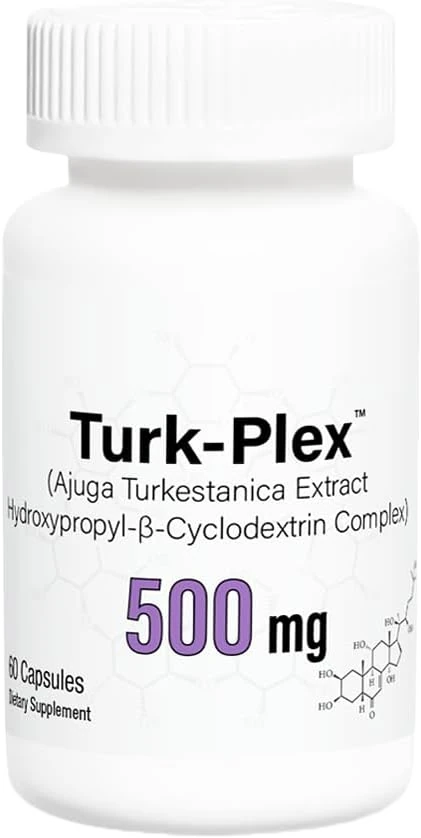
Gorilla Mind Turk-Plex
Turk-Plex is the category's reference product: a clearly labeled 10% Ajuga turkestanica extract pre-complexed with hydroxypropyl-β-cyclodextrin — the absorption approach most turkesterone marketing points to — from the best-known brand in the space.
 05
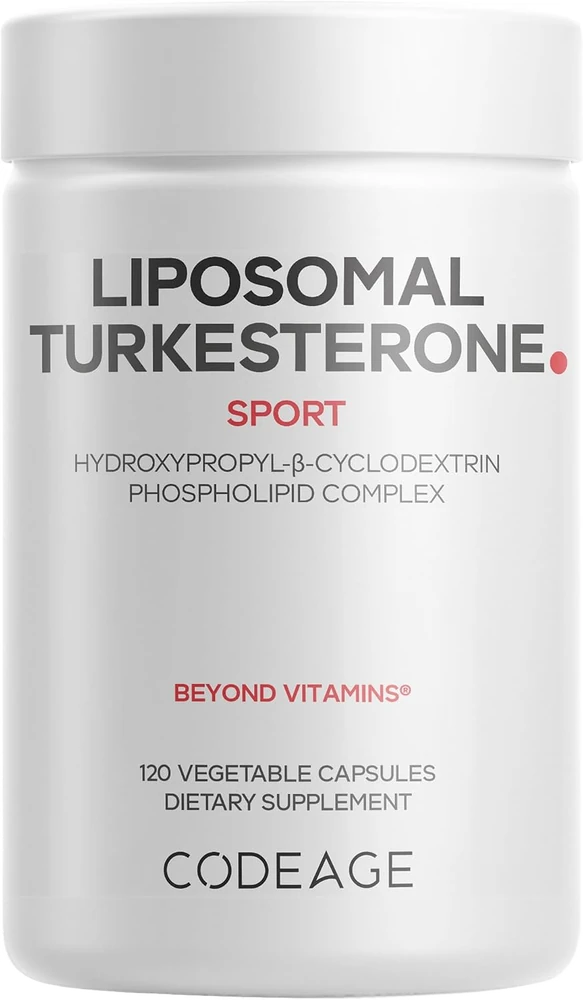
Codeage Liposomal Turkesterone
Codeage builds the most elaborate delivery system here — hydroxypropyl-β-cyclodextrin stacked with a liposomal phospholipid complex — and pairs it with a 120-count, four-month supply at a low cost per day.
 03
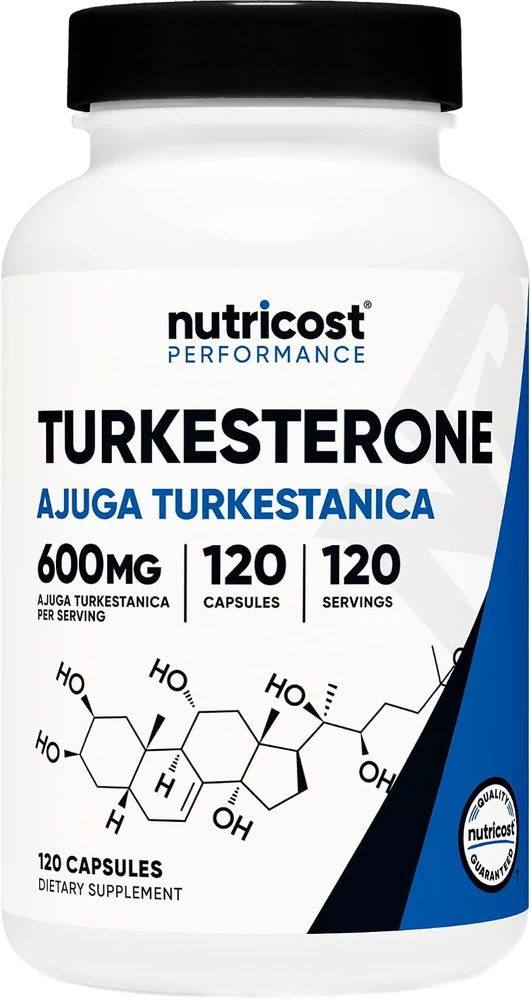
Nutricost Turkesterone 600 mg
Nutricost is the value pick: 600 mg of 10% Ajuga turkestanica extract per capsule at 120 count works out to the lowest cost per daily serving here, from a high-volume brand that states ISO-accredited third-party testing and GMP/FDA-registered manufacturing.
Quick Answers
Does the softgel actually absorb better than a capsule?
It's plausible, but unproven for turkesterone specifically. Softgels can improve the dissolution and uptake of fat-soluble compounds, and turkesterone's poor bioavailability is a genuine problem — so the rationale isn't nonsense. But there's no published clinical comparison showing this softgel delivers more turkesterone into your bloodstream than a standard capsule, and no human trial showing the ingredient builds muscle in the first place. Treat the absorption claim as a sensible-sounding marketing argument, not a demonstrated edge. If you want the most-cited absorption approach instead, the cyclodextrin-complex picks — Gorilla Mind (#2) or Codeage (#5) — take that route.
Is Huge Turkesterone third-party tested with a COA?
No COA is posted on the listing. Unlike Toniiq (#1), Nutricost (#3) or eFlow (#8), Huge doesn't even foreground a 'third-party tested' claim here — and none of those brands posts an actual downloadable batch HPLC Certificate of Analysis either. In a category where independent labs have repeatedly found products with under 1% of their claimed turkesterone, that absence matters more than anything else. You're trusting the label that the 500 mg is really standardized to 10%, with nothing independent confirming it.
Why is it the most expensive pick per serving?
At roughly $40 for 60 softgels taken one a day, Huge works out to about $0.67 per serving — the highest cost-per-serving in our eight-product lineup. You're paying a premium for the brand and the softgel format rather than for verified content or proven results. If value per serving is your priority, Nutricost (#3) at about $0.18 and Double Wood (#4) at about $0.25 deliver the same 10% standardization for a fraction of the cost. The softgel is the only thing that justifies the premium, and only if you specifically prefer that format.
Is the 500 mg / 10% standardization any good?
It's the category-standard spec, clearly stated: 500 mg of Ajuga turkestanica extract standardized to 10% turkesterone, which works out to roughly 50 mg of turkesterone per softgel on paper. That matches Gorilla Mind (#2) and Double Wood (#4) and is conservative compared to Toniiq's claimed 20%. The clarity of the label is a genuine plus — but remember the percentage is a claim, not a verified figure, so the real question isn't whether 10% is enough, it's whether the softgel actually contains it.
Should I buy this or a cheaper capsule?
Buy Huge only if you specifically prefer softgels and the format is worth a premium to you. The standardization is the usual 500 mg / 10%, the label is clear, and the absorption rationale is reasonable. But you're paying the most per serving here for a format bet, with no posted COA and no human evidence behind the ingredient. If you just want the standard turkesterone done plainly and cheaply, Double Wood (#4) or Nutricost (#3) give you the same claimed extract for far less.
Sources & Further Reading
3 peer-reviewed sources, each linked to PubMed
- [1] Phytosteroid labeling RCT 2025 PMID 40781783 — How reliable is the labeling of a commercial phytosteroid product? A 12-week randomized double-blind training study. The most decision-relevant study in the category. A commercial phytosteroid supplement, when assayed, contained <0.1% of its labeled ecdysterone and produced no hypertrophy and no advantage over placebo. Hard evidence that label numbers here can be almost fictional — which is exactly why an unverified 500 mg / 10% softgel has to be treated with caution.
- [2] Isenmann 2019 PMID 31123801 — Ecdysteroids as non-conventional anabolic agent: performance enhancement by ecdysterone supplementation in humans. The single most-cited human study behind turkesterone hype — but it tested ecdysterone, a different compound, not turkesterone. Even there, the authors noted the supplements contained far less active than labeled and the result has not been independently replicated. Not evidence that a turkesterone softgel builds muscle.
- [3] Parr 2015 PMID 26060342 — Ecdysteroids: a novel class of anabolic agents?. A review by leading ecdysteroid researchers weighing whether ecdysteroids (including turkesterone) act as anabolic agents. It compiles supportive animal and in-vitro data while making clear that rigorous human efficacy evidence was lacking — the balanced context for why this whole category is plausible-but-unproven, regardless of delivery format.
Affiliate disclosure: every Amazon link uses our Associates tag (superachieverclub-20). We earn a small commission at no cost to you; it funds independent reviews. We never accept payment to change a ranking.