
Gorilla Mind Turk-Plex Review
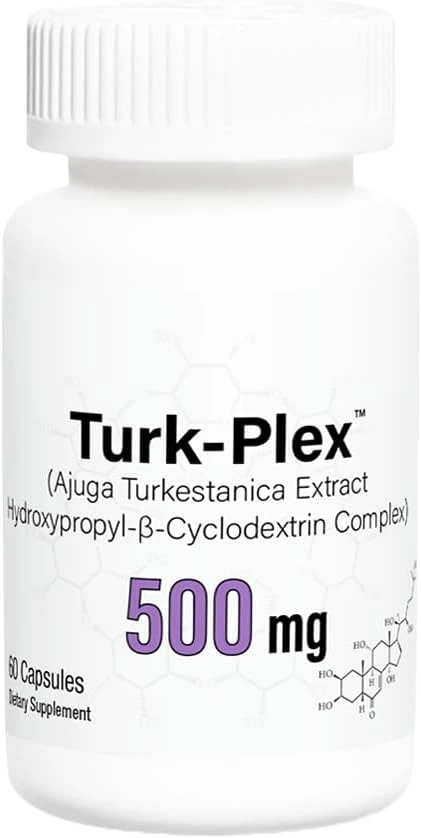 #2 of 8 · Best known✓ Label verified · Supplement Facts read Sep 7, 2026
Real retailer photo, cut out. Label unedited.
Consider it. The best-known name and the cyclodextrin formula everyone copies — but no testing claim. Turk-Plex is a clearly labeled 10% Ajuga turkestanica extract pre-complexed with hydroxypropyl-β-cyclodextrin, from the category's reference brand.
$30$0.50 / serving
Why It Scores 7.9 — And The Label Line Behind Each Number
Third-party verification & COA
30% of scoreThe decisive axis, and Turk-Plex's weakest. No batch HPLC Certificate of Analysis is posted on the listing, and the product makes no third-party-testing claim at all — so the turkesterone content rests purely on brand reputation. In a category whose documented failure is adulteration (products assayed at under 1% of label), that's a real shortfall, and the single reason it sits behind Toniiq (#1), which at least states batch testing.
- Source
- Ajuga turkestanica extract (stated on label)
- COA / testing
- No posted batch HPLC COA on the listing; no third-party-testing claim made
Standardization & dose
25% of scoreSolid and clearly stated: a 10% turkesterone standardization on a 500 mg Ajuga turkestanica extract, implying ~50 mg turkesterone per capsule, with the label suggesting one capsule twice daily. Lower than Toniiq's claimed 20%, but the standard, credible spec for the category — scored as a label claim, since no assay confirms it.
- Standardization
- 10% turkesterone (label) = ~50 mg turkesterone per 500 mg capsule
- Dose per serving
- 500 mg extract (1 capsule); label suggests 1 capsule twice daily
Formulation & delivery
20% of scoreThe standout. Turk-Plex pre-complexes the extract with hydroxypropyl-β-cyclodextrin — the most-cited approach to turkesterone's poor bioavailability, and one this product helped popularize. The best formulation in the lineup on this axis. The honest caveat stays attached: better absorption is a plausible bet, not proof the compound works.
- Delivery
- Hydroxypropyl-β-cyclodextrin inclusion complex (stated on label)
Value per serving
15% of scoreMiddling. At about $30 for 60 capsules (~$0.50 a serving) it sits at the upper end of the standard 10% products, with the premium going to the brand and the cyclodextrin complex rather than to verified content. Double Wood (#4) and Nutricost (#3) deliver the same standardization for materially less per serving.
- Count
- 60 capsules
- Price
- ≈ $30 (~$0.50 per serving)
Label transparency
10% of scoreStrong. The listing plainly states the 10% turkesterone standardization, the Ajuga turkestanica source and the cyclodextrin complex, with a clear per-capsule extract amount and serving suggestion — none of the 'highest purity' vagueness that weakens lower-ranked listings. The only thing missing is the COA that would turn its disclosure into verification.
Label verified. Every figure read from the Supplement Facts photo, Sep 7, 2026.
Marketing Claims Vs. Reality
Pre-complexed with hydroxypropyl-β-cyclodextrin for enhanced absorption.
The cyclodextrin complex is genuinely present and stated on the label, and it's the most-cited approach to turkesterone's poor bioavailability — so the formulation claim is real. It's partial rather than verified because 'enhanced absorption' has not been demonstrated to translate into any measured benefit for turkesterone in humans; it's a sound bet, not a proven advantage.
Standardized to 10% turkesterone from Ajuga turkestanica.
The 10% standardization and Ajuga turkestanica source are clearly stated, which is appropriate disclosure. But with no posted batch COA and no testing claim, the figure is a label claim in a category where assays routinely fall far below label — so it's marked partial. An independent assay would be needed to verify it.
Supports muscle building as a natural anabolic.
No human efficacy evidence exists for turkesterone. The anabolic framing rests on rodent and in-vitro data plus one flawed ecdysterone study (a different compound); a 2025 RCT that assayed a commercial phytosteroid found <0.1% of the labeled active and no benefit over placebo. Not verified for Turk-Plex or for the ingredient.
What Our Test Actually Found
Reputation and formulation are the real value
Turk-Plex is the product most people picture when they hear 'turkesterone,' and that's not nothing: it pairs a clearly labeled 10% Ajuga turkestanica extract with a hydroxypropyl-β-cyclodextrin complex, the most-cited attempt at the compound's poor absorption. The brand is widely available and well-known. If you weight a recognized name and a thoughtful delivery system highly, this is a sensible product — those strengths are genuine and clearly disclosed.
The verification gap is the whole reason it's #2
Here's the problem the formulation can't paper over: no batch COA is posted, and unlike Toniiq (#1) Turk-Plex makes no third-party-testing claim at all, so the turkesterone content rests entirely on trusting the brand. In a category where independent labs keep finding products at under 1% of label, that's the decisive shortfall. A great delivery system wrapped around an unverified extract is exactly the trap this category sets — and the single reason a higher-standardization, testing-claiming competitor ranks above it.
You pay a premium for the name
At roughly $0.50 a serving, Turk-Plex sits at the top of the standard 10% products' price band. The premium buys the brand and the cyclodextrin complex, not verified content or proven results. Double Wood (#4) offers the same 10% standardization at the best cost-per-capsule in the lineup, and Nutricost (#3) is cheaper still per serving while at least stating third-party testing. If value rather than brand is your priority, Turk-Plex is hard to justify over those.
The evidence floor is unchanged
However good the formulation, Turk-Plex rests on the same foundation as everything here: no well-conducted human trial shows turkesterone builds muscle. The cyclodextrin complex may improve how much of the compound you absorb, but improving the absorption of something with no demonstrated effect doesn't create an effect. Buy it, if at all, as a brand-and-formulation bet in an unproven category — not as a product shown to do what its marketing implies.
Full analysis: all pros & cons (7), buy if / skip if
- Uses a hydroxypropyl-β-cyclodextrin complex — the most-cited approach to turkesterone absorption
- Clearly states the 10% standardization and the Ajuga turkestanica source
- From the best-known, widely available brand in the category
- Transparent per-capsule extract amount and serving suggestion
- No posted batch HPLC COA — and, unlike Toniiq, no third-party-testing claim at all
- Premium price for a 10% extract — cheaper picks match the standardization
- Muscle-building claims rest on rodent/in-vitro data, not human trials
- You want the most-recognized brand and the cyclodextrin delivery system it popularized
- You value a thoughtful attempt at turkesterone's bioavailability problem
- You prefer a clearly stated 10% standardization with the Ajuga source named
- You accept turkesterone is unproven and you're buying on formulation, not evidence
- You want a verification claim — Turk-Plex posts no COA and makes none (Toniiq #1 does)
- You're price-sensitive — Double Wood (#4) and Nutricost (#3) match 10% for less
- You want any human efficacy evidence — none exists for turkesterone
Turk-Plex is a clearly labeled 10% Ajuga turkestanica extract pre-complexed with hydroxypropyl-β-cyclodextrin, from the category's reference brand. Reputation and formulation are its real strengths. The catch is verification: no posted COA and, unlike Toniiq (#1), no third-party-testing claim, so content is taken on trust — at a premium price. Consider it if the cyclodextrin delivery and a known brand outweigh the higher standardization and testing claim you'd get from Toniiq.
Turk-Plex is the category's reference product, and it earns that status on two real strengths: it's a clearly labeled 10% Ajuga turkestanica extract pre-complexed with hydroxypropyl-β-cyclodextrin — the absorption approach most turkesterone marketing points to — from the best-known brand in the space. If you've heard of one turkesterone product, it's probably this one, and the formulation is a sensible attempt at the compound's genuine bioavailability problem. What you're paying for, then, is reputation and a thoughtful formula. What you are not getting is verification. No batch Certificate of Analysis is posted on the listing, and — unlike Toniiq (#1) — Turk-Plex doesn't even make a third-party-testing claim, so the actual turkesterone content rests entirely on trust in the brand. In a category where independent assays routinely come in under 1% of label, that's the decisive gap. Add a premium price and the same evidence vacuum behind the ingredient, and Turk-Plex lands at #2: strong on name and formulation, behind Toniiq only because it makes no verification claim at all.
The reference product — strong on name and formula, short on verification.

Turk-Plex is the category's best-known product for understandable reasons: a clearly labeled 10% Ajuga turkestanica extract pre-complexed with hydroxypropyl-β-cyclodextrin, from the most recognized brand in the space. The formulation is the most sensible answer here to turkesterone's bioavailability problem, and the labeling is clean. If reputation and delivery tech are what you're optimizing for, it's a defensible buy. It lands at #2 rather than #1 because of the axis that decides this category. No batch COA is posted, and Turk-Plex makes no third-party-testing claim at all, so the turkesterone content is taken purely on trust — where Toniiq at least states batch testing to a higher 20% standardization. Add a premium price that cheaper 10% products undercut, and the same evidence vacuum behind the ingredient, and the picture is clear: Turk-Plex is a strong pick on name and formulation, and a weak one on the verification that actually protects you from this category's documented adulteration. Choose it for the formula and the brand; don't mistake either for proof.
If This Doesn’t Fit — Try These
 01
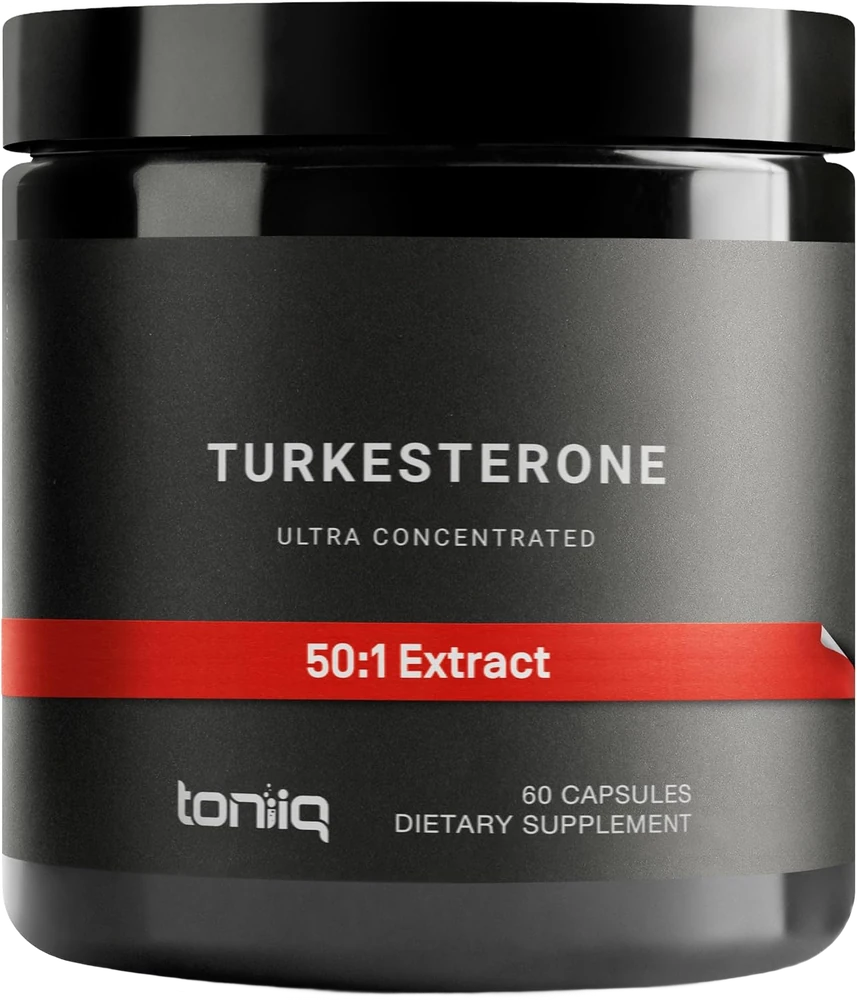
01Toniiq Turkesterone 50:1
Toniiq takes the top slot because it leans hardest on the only axis that actually separates real product from fake: its listing states every batch is third-party lab tested to a minimum 20% turkesterone, the highest standardization here.
 03
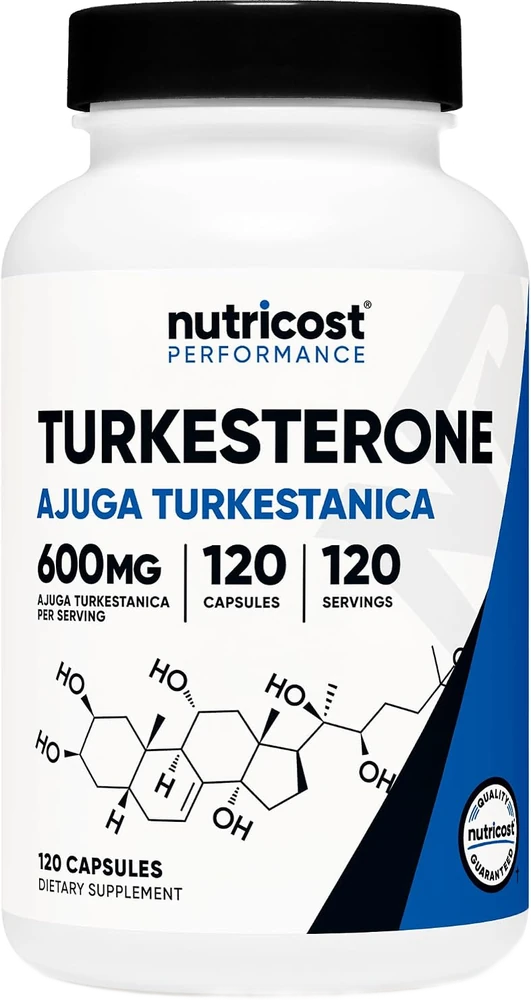
03Nutricost Turkesterone 600 mg
Nutricost is the value pick: 600 mg of 10% Ajuga turkestanica extract per capsule at 120 count works out to the lowest cost per daily serving here, from a high-volume brand that states ISO-accredited third-party testing and GMP/FDA-registered manufacturing.
 04
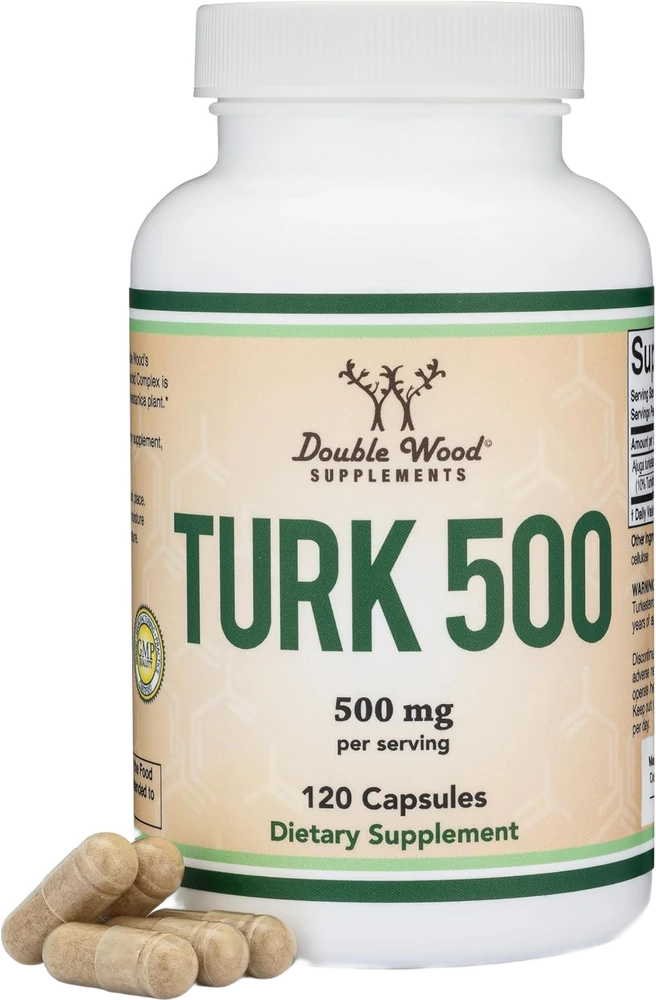
04Double Wood Turkesterone
Double Wood is the pick for buyers who want the standard turkesterone done plainly and cheaply: a conservatively labeled 500 mg / 10% Ajuga turkestanica extract, 120 capsules, manufactured and tested in the USA, at the best cost-per-capsule among the 10% options.
Quick Answers
Is Gorilla Mind Turk-Plex third-party tested?
No published batch Certificate of Analysis appears on the listing, and unlike Toniiq (#1) the product does not even make a third-party-testing claim — so the actual turkesterone content is taken purely on the brand's reputation. That's the single biggest mark against it, because adulteration and under-dosing are the documented failure of this entire category: independent labs have repeatedly found turkesterone products with under 1% of their labeled content. Turk-Plex is a credible, well-known product, but on the decisive criterion — verification — it asks for trust rather than offering proof.
What is the hydroxypropyl-β-cyclodextrin complex for?
Turkesterone is poorly absorbed on its own, and a hydroxypropyl-β-cyclodextrin inclusion complex is the most-cited approach to improving its bioavailability — the extract is essentially wrapped in a ring-shaped sugar molecule that helps carry it into solution. Turk-Plex was one of the products that popularized this route, and it's the strongest part of the formulation. Be clear on what it does and doesn't mean: better absorption of a compound is not the same as evidence that the compound works, and no human trial shows turkesterone builds muscle whether it's absorbed well or not.
How does it compare to Toniiq (#1)?
They make opposite bets. Toniiq competes on standardization (20% from a 50:1 extract) and a stated third-party-testing claim, but uses no absorption complex. Turk-Plex competes on brand reputation and the cyclodextrin delivery system, at a lower 10% standardization and with no testing claim at all. Because verification is the decisive axis in this category, Toniiq edges ahead — but if you weight the cyclodextrin formulation and a known brand more heavily than the higher % and the testing claim, Turk-Plex is the rational pick.
Is it worth the premium price?
At about $30 for 60 capsules (~$0.50 a serving) Turk-Plex is priced at the upper end of the standard 10% products, and you're paying for the brand name and the cyclodextrin complex rather than for verified content. If those two things matter to you, it's a defensible premium. If cost-per-serving is your priority, Double Wood (#4) and Nutricost (#3) deliver the same 10% standardization for materially less, and Nutricost at least states third-party testing. None of them, including Turk-Plex, posts a COA.
Will Turk-Plex build muscle?
There's no good human evidence that it will. The 'natural anabolic' claim behind all turkesterone rests on rodent and in-vitro data plus one flawed study on ecdysterone — a different compound — whose supplement was later shown to be under-dosed. A 2025 randomized trial that assayed a commercial phytosteroid product found under 0.1% of the labeled active and no benefit over placebo. Turk-Plex's reputation and formulation are real; the proof that the ingredient works is not. Treat it as an experiment, not a guarantee.
Sources & Further Reading
3 peer-reviewed sources, each linked to PubMed
- [1] Phytosteroid labeling RCT 2025 PMID 40781783 — How reliable is the labeling of a commercial phytosteroid product? A 12-week randomized double-blind training study. Researchers assayed a commercial phytosteroid supplement and found the actual ecdysterone content was <0.1% of the label claim, with no hypertrophy in a cell model and no advantage over placebo in human training groups. Hard evidence that label numbers in this category can be almost entirely fictional — which is exactly why a posted COA, absent here, matters more than Turk-Plex's brand name or formulation.
- [2] Parr 2014 PMID 24974955 — Estrogen receptor beta is involved in skeletal muscle hypertrophy induced by the phytoecdysteroid ecdysterone. A mechanistic rodent/in-vitro study: ecdysterone induced hypertrophy of rat soleus muscle fibers and increased C2C12 myotube diameter, apparently via estrogen-receptor-beta signaling. The kind of animal and cell data the 'natural anabolic' positioning is built on — biologically suggestive, but conducted on ecdysterone in rats and cells, not turkesterone in humans, and no substitute for clinical efficacy.
- [3] Parr 2015 PMID 26060342 — Ecdysteroids: a novel class of anabolic agents?. A review by leading ecdysteroid researchers weighing whether ecdysteroids (including turkesterone) act as anabolic agents. It compiles supportive animal and in-vitro data and notes their marketing as natural anabolics, while making clear that rigorous human efficacy evidence was lacking — a balanced read of why the category is plausible-but-unproven, from the scientists closest to it.
Affiliate disclosure: every Amazon link uses our Associates tag (superachieverclub-20). We earn a small commission at no cost to you; it funds independent reviews. We never accept payment to change a ranking.