
NAC (N-Acetylcysteine): Benefits, Dosage & Side Effects (2026)
NAC is a cysteine derivative that raises glutathione, with rock-solid evidence as an IV antidote and mucolytic but much thinner proof for the "daily detox" capsule most people buy it for.
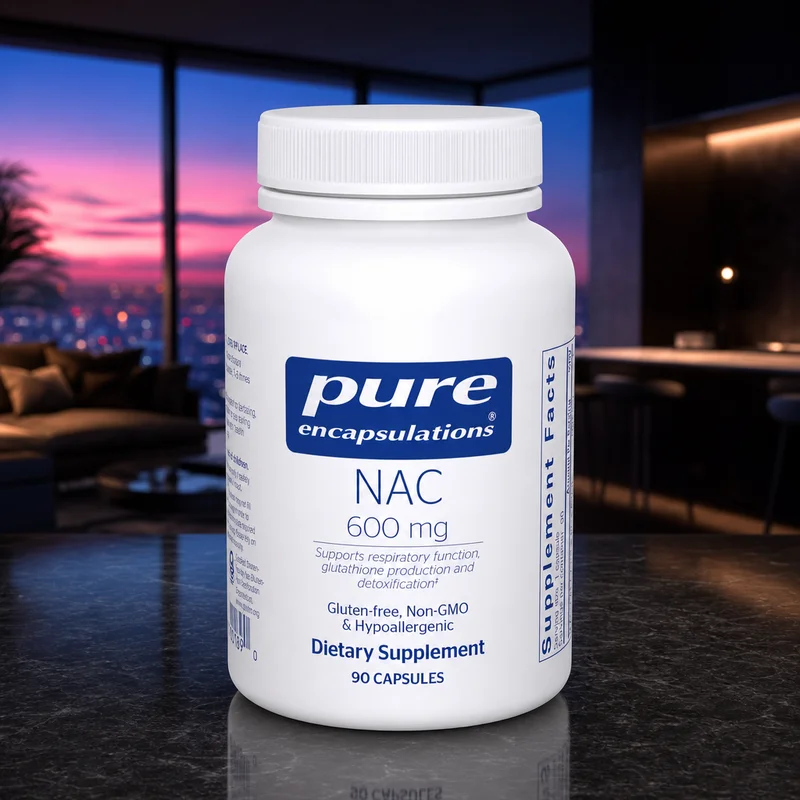
Pure Encapsulations NAC 600 mg (Freeform N-Acetyl-L-Cysteine), 90 Capsules
What is NAC (N-Acetylcysteine)?
NAC (N-acetylcysteine) is the acetylated form of the amino acid L-cysteine — the rate-limiting building block your body uses to make glutathione, its master antioxidant. It has a genuine, decades-old place in medicine: given intravenously or orally in hospitals, it is the standard antidote for acetaminophen (paracetamol) overdose, and it is used as an inhaled or oral mucolytic to thin mucus in chronic lung disease. That clinical pedigree is exactly why the supplement version is marketed so aggressively for "liver detox," immunity, and antioxidant support. The honest read: the molecule in a $0.10 capsule is chemically identical to the hospital drug, but the doses, routes, and patient populations behind the strong evidence are usually not what a healthy person swallowing 600 mg a day is replicating. Two consumer formats exist — plain NAC (600-1300 mg per capsule) and GlyNAC, which pairs NAC with glycine to feed both halves of the glutathione molecule. Worth knowing before you shop: the FDA spent 2020-2022 questioning whether NAC could legally be sold as a supplement at all (it was first approved as a drug in 1963), sending warning letters before settling into enforcement discretion — so its regulatory status has genuinely flip-flopped.
How it works
Glutathione is made from three amino acids — cysteine, glycine, and glutamate — and cysteine is the one your body runs short of. NAC delivers cysteine in a stable, well-absorbed form; once inside cells it is deacetylated to cysteine and fed into glutathione synthesis. Higher glutathione means more capacity to neutralize reactive oxygen species and to conjugate toxins (including the toxic acetaminophen metabolite NAPQI) so the liver can clear them — which is precisely the mechanism behind the overdose antidote. NAC also breaks disulfide bonds in mucus, which thins airway secretions (the mucolytic effect), and it modulates glutamate in the brain, the proposed basis for its psychiatric-adjunct research. The catch that the marketing skips: NAC has a very short plasma half-life (~2 hours) and modest oral bioavailability, so a single daily capsule produces a brief, transient bump rather than a sustained glutathione flood. GlyNAC exists to address a second bottleneck — glycine can also be limiting, especially in older adults — by supplying both precursors at once.
At-a-glance facts
- Class
- Amino-acid derivative / glutathione precursor
- Typical dose
- 600-1200 mg/day (research range)
- Strongest evidence
- IV/oral antidote for acetaminophen overdose
- Plasma half-life
- ~2 hours (short — favors split dosing)
- Forms
- Plain NAC vs GlyNAC (NAC + glycine)
- FDA status
- Contested; warning letters 2020-22, enforcement discretion since
- Cost per 600 mg dose
- ~$0.10-0.38 across reviewed brands
Evidence: Evidence is strong and near-definitive for NAC's medical uses (acetaminophen antidote, mucolytic in chronic lung disease) but only modest and mixed for the everyday oral-supplement claims of "detox," liver protection, and antioxidant benefit in otherwise healthy people.
Who it's for — and who it isn't
- People wanting general antioxidant and liver-health maintenance support who understand it is a maintenance supplement, not a treatment
- Chronic bronchitis or COPD patients using it as a mucolytic adjunct to thin mucus, alongside their doctor's plan
- Patients exploring NAC as an add-on in psychiatric protocols (OCD, bipolar depression, trichotillomania) under clinical supervision
- Older adults interested in the emerging GlyNAC research on glutathione deficiency and aging biomarkers
- Anyone dealing with an acute acetaminophen overdose at home — that is an ER emergency requiring IV or supervised dosing, never a supplement bottle
- Asthmatics or people prone to bronchospasm, who should only use NAC with medical guidance
- People on blood thinners or antiplatelet drugs, or anyone approaching surgery, without clearing it with a clinician first
- Anyone expecting a proven 'detox cleanse' — the general-detox marketing far outruns the oral-supplement evidence
Week-by-week, what happens
- 30-90 minutesNAC is absorbed and blood cysteine rises; because of the ~2-hour half-life the bump is transient, which is why split (1-2x/day) dosing is used
- Days to 2 weeksMucus-thinning (mucolytic) effects are reported early in respiratory users; intracellular glutathione markers begin to rise
- 4-8 weeksAny shift in liver enzymes or antioxidant markers seen in trials emerges over weeks, not days; psychiatric-adjunct trials typically dose for 8+ weeks before benefit appears
- 12-24 weeksThe real clinical endpoints — COPD exacerbation frequency, psychiatric symptom scales, GlyNAC aging/oxidative-stress markers — are measured over months of continuous use
Safety & contraindications
- Commonly causes GI upset (nausea, diarrhea, heartburn), more so at 1200 mg+ or on an empty stomach
- Can cause rash, flushing, or itching; serious anaphylactoid reactions are real but occur mainly with high-dose IV administration
- Asthma caution: inhaled and high-dose NAC can provoke bronchospasm in susceptible people
- May alter liver-function blood tests (e.g., can flag abnormal results) without actually harming the liver — tell your doctor you take it before bloodwork, per manufacturer labeling
- Possible antiplatelet/blood-thinning effect — use caution with anticoagulants and stop before surgery unless a clinician approves
- Not a substitute for medical care: a suspected acetaminophen overdose is a medical emergency requiring the ER, not a supplement
- Safety in pregnancy and breastfeeding at supplement doses is not established — consult a clinician first
- The strong sulfur/rotten-egg smell of genuine NAC is normal, not spoilage, but makes some products unpleasant to take
All articles on NAC (N-Acetylcysteine)
Best Choline Supplements
9 choline supplements ranked on form and bioavailability, dose against the clinical range, third-party testing, tolerability and value.
Read →Best Glutathione Supplements
The 9 best glutathione supplements ranked by absorption strategy (liposomal / S-acetyl / branded Setria vs plain reduced GSH), dose, testing and value — with the genuinely debated oral bioavailability of plain reduced glutathione as the page's honest spine.
Read →Best Milk Thistle (Silymarin) Supplements
9 milk thistle supplements ranked on form and bioavailability, silymarin dose against the clinical range, third-party testing, value per effective serving and tolerability.
Read →Best NAC (N-Acetylcysteine) Supplements
9 NAC supplements ranked on form and bioavailability, third-party testing, dose against the clinical range, tolerability and cost per effective dose.
Read →Best TUDCA Supplements
9 TUDCA supplements ranked on third-party testing and purity, form, dose against the functional range, tolerability and value.
Read →Core Med Science Liposomal Glutathione Review
The higher-dose, better-value liposomal — full 500 mg Setria for less per mg.
Read →Designs for Health Liposomal Glutathione Review
A pleasant practitioner-brand liquid liposomal — for buyers who specifically want the liquid format.
Read →Double Wood NAC 500 mg per cap / 1000 mg per serving, 210 Capsules Review
500 mg caps let you dose-titrate flexibly, with published heavy-metal testing — but the notorious sulfur smell is the price of real, un-masked NAC.
Read →Double Wood S-Acetyl L-Glutathione Review
A distinct, sensible acetylated mechanism — but its own human outcome evidence is thin.
Read →Healthy Origins Setria L-Glutathione Review
The best single-ingredient glutathione — named Setria source, full dose, lowest cost-per-day.
Read →Jarrow Formulas Glutathione Reduced Review
The honest cheap entry — full 500 mg of clean reduced GSH at the lowest sticker price.
Read →Jarrow Formulas N-A-C Sustain 600 mg, 60 Bilayer Sustained-Release Tablets Review
A bilayer sustained-release tablet that sounds clever for NAC's short half-life — but timed release is not clinically proven to beat standard NAC for any outcome.
Read →Life Extension N-Acetyl-L-Cysteine 600 mg, 60 Capsules Review
A small 60-count bottle with a per-product COA available — the low-risk way to trial NAC, if you ignore the overselling on the label.
Read →NatureBell Glutathione 2,000 mg Review
2,000 mg reduced glutathione in four capsules at about $0.42 a day; no certifier listing or COA found. 7.0/10.
Read →NOW Foods Glutathione 500 mg Review
A coherent liver/detox stack — glutathione plus the cofactors that support it.
Read →NOW NAC 600 mg with Selenium & Molybdenum, 250 Veg Capsules Review
An 8-month bottle of clinical-dose NAC from one of the most transparent labs in the category — our default recommendation for most people.
Read →Nutricost Glutathione 500 mg Review
The bulk-value champion — 240 caps at 500 mg, about a dime a day.
Read →Nutricost N-Acetyl L-Cysteine 600 mg, 180 Capsules Review
A bare-bones 600 mg NAC at the lowest cost per dose — just don't mistake 'NSF-certified facility' for a per-batch NSF seal.
Read →PrimaForce NAC 600 mg Review
Plain 600 mg NAC per vegan capsule at about $0.11; testing claim names no lab. 6.7/10.
Read →Pure Encapsulations Liposomal Glutathione Review
The cleanest practitioner-grade liposomal — pay the premium to sidestep the absorption debate.
Read →Pure Encapsulations NAC 600 mg (Freeform N-Acetyl-L-Cysteine), 90 Capsules Review
Practitioner-grade, hypoallergenic 600 mg NAC — you pay 3-4x per capsule for sourcing purity, not for a stronger molecule.
Read →Quicksilver Scientific Liposomal Glutathione Review
The most aggressive delivery route — sublingual liquid nanoliposomal, at the highest cost-per-mg.
Read →Sports Research Vegan NAC 600 mg, 90 Veggie Capsules Review
One of the only NACs carrying actual Non-GMO Project Verified + Vegan Certified seals — you pay for the certifications, not for stronger NAC.
Read →Toniiq NAC 1300 mg (min. 98% tested purity), 240 Vegetarian Capsules Review
The highest per-serving dose here (1300 mg) with a published 98% purity floor — but more NAC isn't proven better, and it overshoots the studied range.
Read →Utzy Naturals High Dose GlyNAC+ (2,000 mg Glycine + NAC) with Vitamin B2, 90 Capsules Review
The most mechanism-complete pick — glycine + NAC + B2 targets glutathione synthesis directly — but the headline GlyNAC trials were small, unblinded, and used far more than one serv
Read →FAQ
Does NAC actually 'detox' or protect your liver?
In hospitals, yes — it is the standard antidote for acetaminophen poisoning and demonstrably prevents liver injury there. As a daily 600 mg capsule in a healthy person, the 'liver detox' claim is far softer: it can raise glutathione and some small trials suggest modest liver-enzyme improvements (e.g., in fatty liver), but robust proof that it protects the average person's liver is lacking. Treat it as maintenance support, not a cleanse.
Plain NAC or GlyNAC — which should I buy?
For most people targeting general antioxidant/liver support, plain NAC at 600-1200 mg is the well-trodden, cheaper option. GlyNAC (NAC plus glycine) is the more complete way to feed glutathione synthesis and is behind interesting aging research, but those trials are small, sometimes unblinded, and often used far more glycine than a single consumer serving provides. GlyNAC is promising but earlier science — pay the premium only if the glutathione-synthesis angle specifically interests you.
Is NAC even legal to sell as a supplement?
Its status genuinely flip-flopped. Because NAC was approved as a drug back in 1963, the FDA argued in 2020-2021 that it couldn't also be sold as a dietary supplement and sent warning letters. After industry pushback the agency signaled enforcement discretion, so NAC remains widely available today — but the regulatory footing is less settled than for a typical vitamin.
600 mg or 1200 mg per day?
Most human research sits in the 600-1200 mg/day range, and 600 mg once or twice daily is the sensible default. Going above ~1200 mg (some products push 1300 mg per serving) is not established as more effective for oral use and raises the odds of GI upset. Because of NAC's short half-life, splitting the dose beats one large dose.
Why does my NAC smell like rotten eggs?
That sulfur odor is normal — NAC is a sulfur-containing compound, and un-masked, genuine material smells strongly. It signals authenticity, not spoilage. Some brands add a lemon or scent-masking insert to make capsules easier to take.
When is the best time to take it?
With food generally reduces the GI upset some people get. Timing relative to a goal matters less than consistency; because of the short half-life, twice-daily dosing keeps cysteine availability steadier than a single dose.
Sources & further reading
- Smilkstein MJ, Knapp GL, Kulig KW, Rumack BH. Efficacy of oral N-acetylcysteine in the treatment of acetaminophen overdose. Analysis of the national multicenter study (1976 to 1985). N Engl J Med. 1988;319(24):1557-1562.Efficacy of oral N-acetylcysteine in the treatment of acetaminophen overdose. Analysis of the national multicenter study (1976 to 1985).
Landmark study establishing oral NAC as an effective, hepatoprotective antidote for acetaminophen overdose — the strongest, best-documented use of NAC and the clinical basis the supplement trades on.
- Prescott LF, Illingworth RN, Critchley JA, Stewart MJ, Adam RD, Proudfoot AT. Intravenous N-acetylcystine: the treatment of choice for paracetamol poisoning. Br Med J. 1979;2(6198):1097-1100.Intravenous N-acetylcysteine: the treatment of choice for paracetamol poisoning.
Foundational trial showing IV NAC prevents liver damage in paracetamol poisoning — underscores that NAC's definitive evidence is for the IV/high-dose antidote route, not the daily oral 'detox' capsule.
- Poole P, Sathananthan K, Fortescue R. Mucolytic agents versus placebo for chronic bronchitis or chronic obstructive pulmonary disease. Cochrane Database Syst Rev. 2019;5(5):CD001287.Mucolytic agents versus placebo for chronic bronchitis or chronic obstructive pulmonary disease.
Meta-analysis finding mucolytics such as NAC produce a small reduction in COPD exacerbations — a real but modest respiratory benefit, illustrating that even NAC's evidenced uses show limited effect sizes.
- Berk M, Copolov D, Dean O, et al. N-acetyl cysteine as a glutathione precursor for schizophrenia--a double-blind, randomized, placebo-controlled trial. Biol Psychiatry. 2008;64(5):361-368.N-acetyl cysteine as a glutathione precursor for schizophrenia--a double-blind, randomized, placebo-controlled trial.
Randomized controlled trial reporting modest symptom improvement with adjunctive NAC in schizophrenia — supports NAC as a supervised psychiatric adjunct while showing benefits are add-on and moderate, not standalone.
- Kumar P, Liu C, Hsu JW, et al. Glycine and N-acetylcysteine (GlyNAC) supplementation in older adults improves glutathione deficiency, oxidative stress, mitochondrial dysfunction, inflammation, physical function, and aging hallmarks: A randomized clinical trial. Clin Transl Med. 2021;11(3):e372.Glycine and N-acetylcysteine (GlyNAC) supplementation in older adults improves glutathione deficiency, oxidative stress, mitochondrial dysfunction, inflammation, physical function, and aging hallmarks: A randomized clinical trial.
Small clinical trial showing GlyNAC restored glutathione and improved several oxidative-stress and aging biomarkers in older adults — promising but early, limited-size evidence behind the GlyNAC format.