
Nutricost Glutathione 500 mg Review
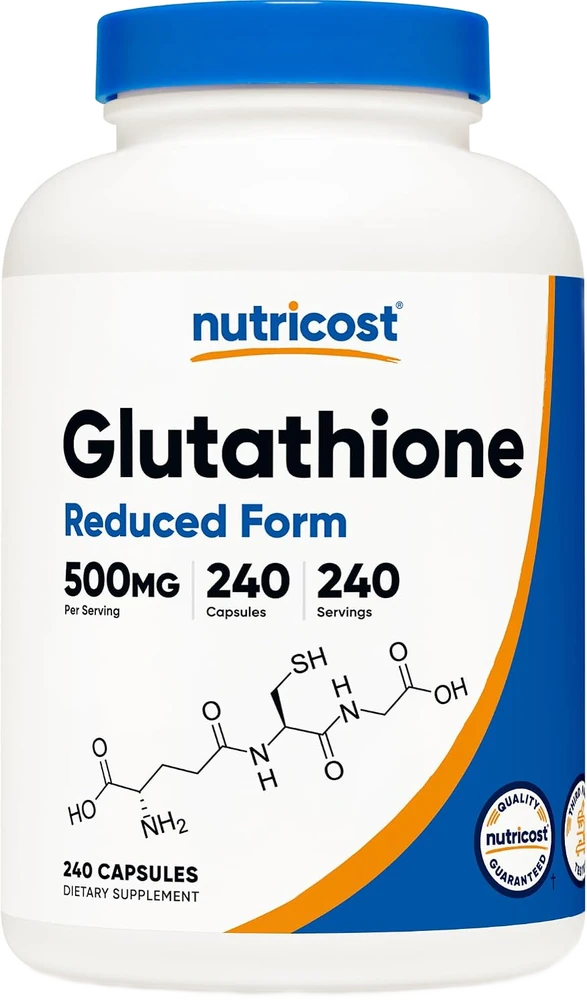 #7 of 10 · Best bulk value✓ Label verified · Supplement Facts read Sep 7, 2026
Real retailer photo, cut out. Label unedited.
Buy it. The bulk-value champion — 240 caps at 500 mg, about a dime a day. 240 capsules at a full 500 mg dose for the lowest cost-per-serving on the list (~$0.10/day) — decisively the cheapest way to run a real glutathione dose over the months repletion takes.
$25 / 240 capsules (~8-month supply at 1/day)≈ $0.10 / 500 mg capsule
Why It Scores 7.6 — And The Label Line Behind Each Number
Form & absorption strategy
30% of scorePlain reduced glutathione — the most-debated oral absorption (Witschi 1992, Allen 2011) — AND a generic, non-named source, so it scores lowest of the reduced-form picks on this axis. The form is the same plain GSH as the named-Setria capsules; what it lacks is the verifiable provenance that lifts those a notch.
- Active form
- Reduced L-glutathione
Dose vs studied range
25% of scoreA full 500 mg per capsule, squarely in the 250-1000 mg/day Richie 2015 range. No under-dosing — on dose alone it matches the best plain-form picks, and the 240-count means you can run it consistently for months, which is exactly what the repletion evidence requires.
- Per serving
- 500 mg (1 capsule)
- Studied-dose alignment
- Squarely in the 250-1000 mg/day Richie 2015 range
Testing & label transparency
20% of scoreNon-GMO, gluten-free, and 'third-party tested per the brand' — a reasonable assurance, but it's a brand claim with no public batch-level COA or NSF/USP seal documented, and it's a generic (unbranded) source. Lower on verifiable provenance than the Setria/OPITAC picks. The testing claim is the main quality signal and rests on the brand's word.
- Source
- Generic (non-Setria) reduced GSH
- Testing
- Third-party tested per brand; non-GMO, gluten-free (no public COA / NSF-USP seal)
Value per day
15% of scoreAt roughly $0.10 per 500 mg serving, it's the lowest cost-per-serving on the entire list — cheaper even than the low-sticker Jarrow because of the 240-count bulk. For running a real glutathione dose over the long haul, nothing here is more economical. The axis it wins outright.
- Count
- 240 capsules (~8-month supply at 1/day)
- Price
- $25 / 240 caps ≈ $0.10 per 500 mg serving (lowest cost-per-serving on the list)
Real-world fit
10% of scoreOne capsule a day, single-ingredient, and a 240-count bottle that lasts about eight months — minimal re-order friction for a long protocol. Loses a touch only because, like every plain capsule, it carries the absorption caveat into daily use, and the budget-brand packaging is utilitarian.
- More Specs
- Absorption note
- Plain reduced form — oral absorption genuinely debated
Label verified. Every figure read from the Supplement Facts photo, Sep 7, 2026.
Marketing Claims Vs. Reality
500 mg of reduced glutathione per capsule, 240 capsules per bottle.
The full 500 mg reduced-GSH dose and 240-count bottle are as stated — the combination that produces the lowest cost-per-serving on the list and a roughly eight-month supply at one a day.
Third-party tested for quality and purity.
Nutricost states third-party testing, which is a positive signal — but it's a brand claim with no public, batch-level certificate of analysis or NSF/USP seal documented to independently verify it. 'Partial': a reasonable assurance from a high-volume brand, not a fully auditable certification.
Non-GMO and gluten-free.
The product is non-GMO and gluten-free as stated — standard, verifiable formulation attributes appropriate to the single-ingredient budget capsule.
Boosts your body's glutathione levels.
Not reliably or quickly. Witschi 1992 saw no plasma rise after a single dose; Allen 2011 saw no biomarker change over 4 weeks; only Richie 2015 showed body stores rising, over six months. 'Boosts your levels' is unverified as a fast or guaranteed effect — slow repletion appears possible but isn't assured.
High-quality glutathione at the best value.
'Best value' on cost-per-serving is verified — it's the cheapest per serving here. 'High-quality' is qualified: it's a clean generic with a brand testing claim, but no named branded source and no independent seal, so it's solid budget quality rather than verifiably premium. Accurate on value, generous on 'high-quality.'
What Our Test Actually Found
On cost-per-serving, nothing here beats it
The entire case for Nutricost is economics, and the economics are excellent: a 240-count bottle at a full 500 mg works out to roughly a dime a day, the lowest cost-per-serving on the list. Because glutathione repletion takes months of consistent dosing (Richie 2015 ran six months), that low running cost genuinely matters — it makes it realistic to actually sustain the long protocol the evidence is based on, rather than running out or rationing. For the committed, cost-focused plain-GSH user, this is the value champion.
The savings come from a generic source — that's the honest catch
You save partly through bulk and partly because this is generic reduced glutathione, not a named branded material like Setria. There's no evidence the generic works worse — it's the same plain reduced GSH facing the same absorption debate — but you give up verifiable provenance, the ability to point to a specific clinically-referenced raw material. That's a fair trade for a cost-optimizer: what you give up is trust and traceability, not a proven efficacy gap.
'Third-party tested' is reassurance, not auditable certification
Nutricost's third-party-testing claim is a genuine positive, but it's the brand's word — there's no public batch-level COA or NSF/USP seal to independently check (which is true across this whole list, not unique to Nutricost). For a budget brand moving high volume, that's a reasonable level of assurance, but a buyer who wants independently-verifiable quality should know the testing claim isn't auditable here, and the named-source picks at least give you provenance you can confirm.
It only makes sense once you've accepted the form debate
The crucial framing: a dime a day is only a bargain if the form does something for you, and plain oral glutathione's absorption is genuinely debated. So Nutricost is the right pick specifically for someone who has already decided to run plain-form GSH — either because they responded to a cheaper trial (Jarrow #4) or because they accept the slow-repletion reading of Richie 2015 — and now wants to do it as cheaply as possible long-term. For a first-time buyer still unsure whether plain glutathione works for them, a smaller bottle or a different form (or NAC) is the more rational starting point.
Full analysis: all pros & cons (7), buy if / skip if
- Lowest cost-per-serving on the list — 240 caps at 500 mg, about a dime a day
- Full 500 mg dose, squarely in the 250-1000 mg/day studied range (Richie 2015)
- Single-ingredient, non-GMO, gluten-free; ~8-month bottle minimizes re-order friction
- Third-party tested per the brand — a reasonable assurance for the budget tier
- Generic (non-Setria) source — no verifiable named provenance
- Plain reduced form — the most-debated oral absorption (Witschi 1992, Allen 2011)
- 'Third-party tested' is a brand claim with no public COA / NSF-USP seal to audit
- You want the lowest cost-per-serving and plan to run plain glutathione long-term
- You're a high-volume daily user who wants a big bottle and a full 500 mg dose
- You've already accepted the plain-form absorption debate and just want maximum servings per dollar
- You're comfortable with a reputable generic source rather than a named branded one
- You want a named Setria source — that's Healthy Origins (#9), though its Supplement Facts panel could not be verified
- The plain-form absorption debate bothers you — go liposomal (#1, #2) or S-acetyl (#3)
- You want an independently-auditable certification (NSF/USP) — no pick here has one, but this is a budget brand
240 capsules at a full 500 mg dose for the lowest cost-per-serving on the list (~$0.10/day) — decisively the cheapest way to run a real glutathione dose over the months repletion takes. Buy it IF you've accepted the form debate: it's generic (non-Setria) reduced glutathione, with the same debated oral absorption (Witschi 1992 negative; Richie 2015 positive only over 6 months), no named source, and no NSF/USP seal. Want a named Setria source? See Healthy Origins (#9). Want to solve absorption? Go liposomal (#1, #2). Want the cheapest route to glutathione status overall? Weigh NAC.
Nutricost Glutathione 500 mg wins one axis decisively: cost-per-serving. A 240-count bottle at a full 500 mg dose works out to roughly a dime a day — by far the cheapest way to run a real glutathione dose long enough to matter, and Richie 2015 says months of consistent dosing is what it takes. It's single-ingredient, third-party tested per the brand, and exactly what a high-volume daily user wants. The trade-offs that put it at #7 rather than higher are honest and specific: it's generic reduced glutathione with no named branded source, no NSF/USP seal, and the same plain-form absorption caveat that hangs over every reduced capsule here. So it's a conditional 'buy' — the value champion IF you've already accepted that plain-form glutathione's absorption is debated and you want maximum servings per dollar. Here's the full breakdown.
The bulk-value champion — buy it if you've accepted the form debate and want maximum servings per dollar.

Nutricost Glutathione 500 mg is the right pick for one specific buyer: the cost-optimizer who has already decided to run plain-form glutathione and wants to do it as cheaply as possible. On cost-per-serving it wins outright — 240 capsules at a full 500 mg dose, about a dime a day — and that low running cost genuinely helps, because glutathione only works over months of consistent dosing, which a big cheap bottle makes realistic to sustain. It sits at #7 for transparent reasons, not poor quality. It's generic reduced glutathione with no named branded source (you trade Setria's verifiable provenance for the saving), the plain-form absorption debate applies in full (Witschi 1992 and Allen 2011 negative short-term; Richie 2015 positive only over six months), and its 'third-party tested' claim isn't independently auditable. So buy it once you've accepted the form debate and want the most servings per dollar; if you want a named Setria source, see Healthy Origins (#9); if you want to solve absorption, go liposomal (#1, #2); and if you simply want the cheapest route to glutathione status, weigh NAC. For the committed bulk plain-GSH user, though, this is the value pick.
If This Doesn’t Fit — Try These
 09
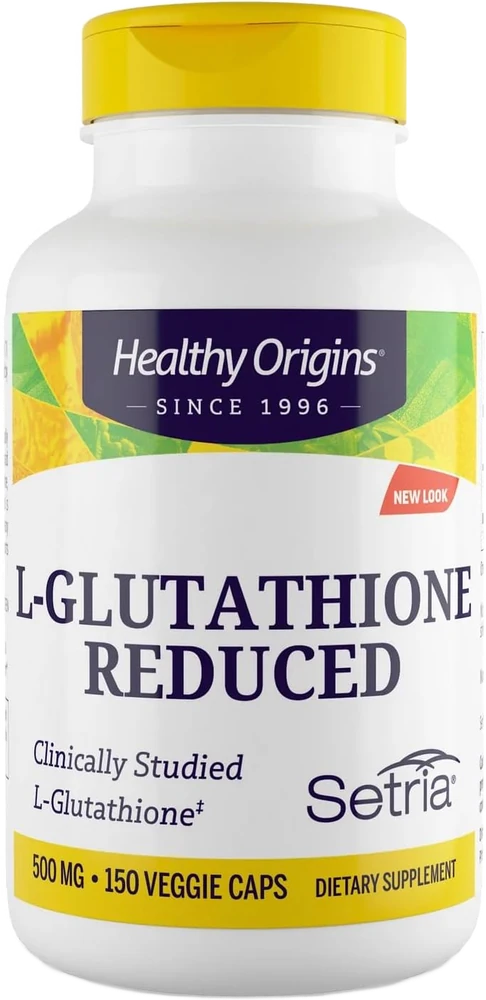
Healthy Origins Setria Glutathione
If you want a single-ingredient glutathione with a named Setria source and you trust the slow-repletion reading of the evidence, this is the one to consider.
 04
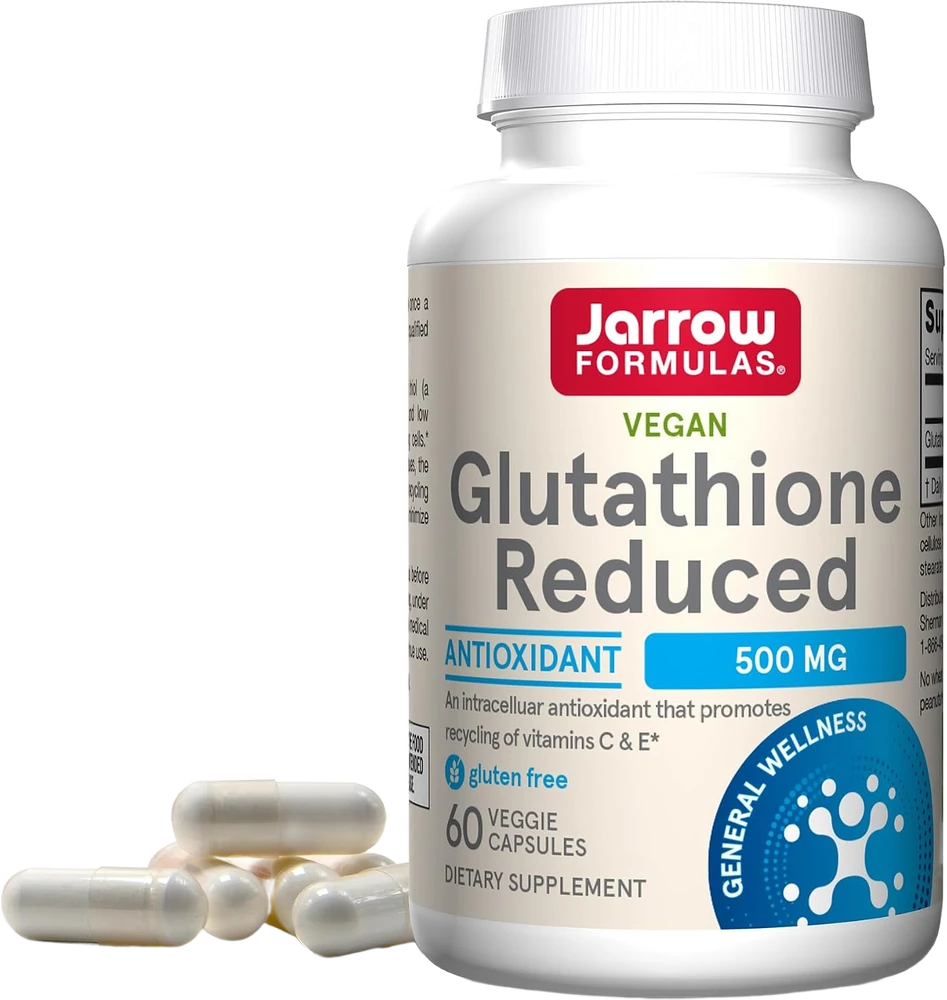
Jarrow Glutathione Reduced
Jarrow is the honest budget pick: a full 500 mg of reduced glutathione, vegan and single-ingredient, from a brand people already trust, at the lowest sticker price on the list.
 02
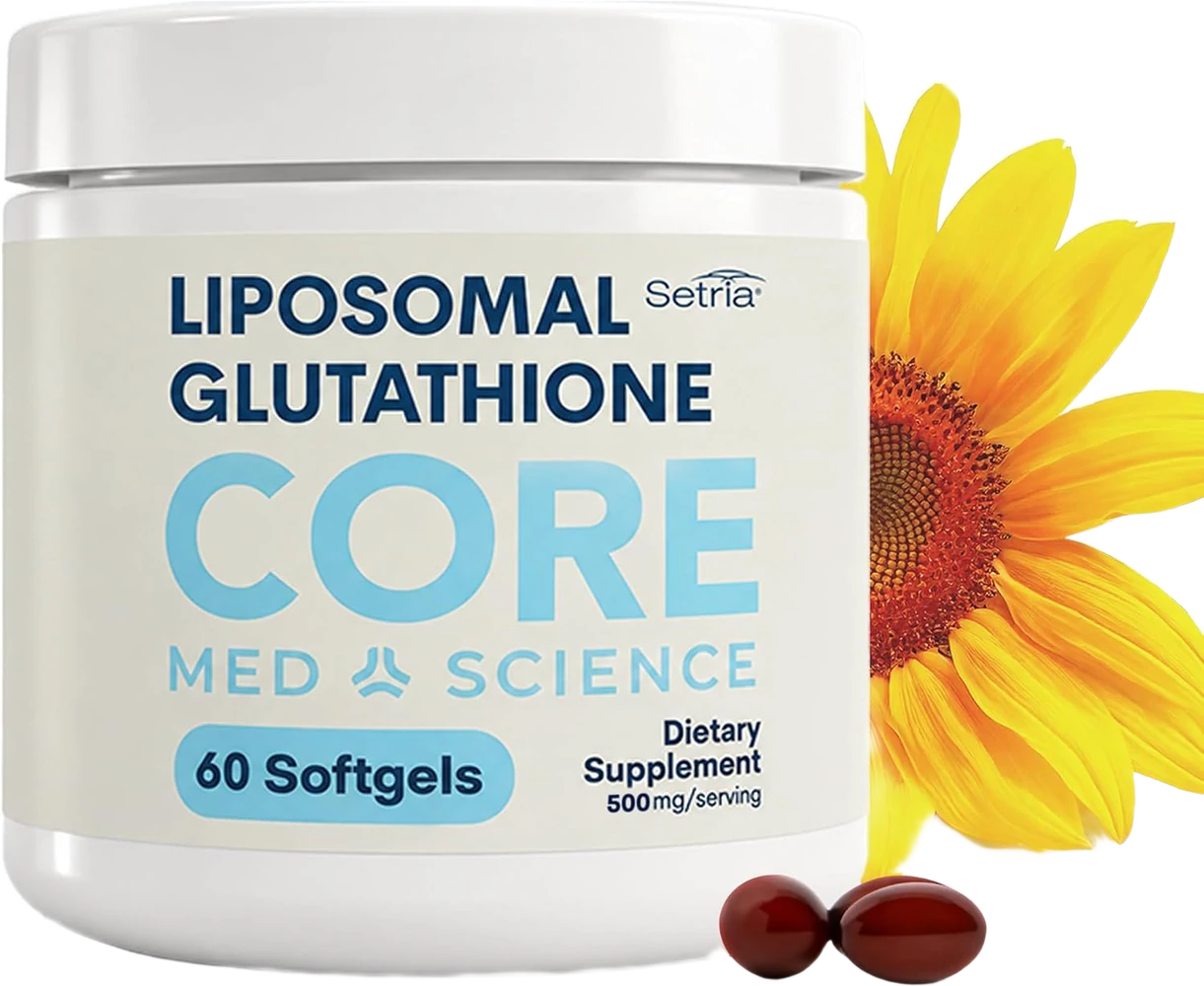
Core Med Science Liposomal Glutathione
Core Med Science is what you buy when you want the liposomal delivery advantage but balk at Pure Encapsulations' price-per-milligram.
Quick Answers
Is this the best value glutathione?
On cost-per-serving, yes — decisively. A 240-count bottle at a full 500 mg dose works out to roughly a dime a day, the lowest cost-per-serving of anything on the list, beating even the cheap-sticker Jarrow (#4) because of the bulk count. For a high-volume daily user who wants plain reduced glutathione and nothing else, it's the value champion. The honest qualifier is that 'best value' assumes you've accepted the plain-form absorption debate — paying a dime a day for a form that may not absorb well is only a bargain if the form works for you, which is genuinely uncertain.
How is it so much cheaper than the other capsules?
Two reasons: bulk count and generic source. The 240-count bottle spreads packaging and overhead across far more servings, and Nutricost uses generic reduced glutathione rather than a named branded source like Setria, which costs less per milligram. That's the trade-off in plain sight — you save a lot, and you give up the named-source provenance the Setria picks (#1, #2, #9) offer. For the cost-optimizer who's comfortable with an unbranded source, it's a rational saving; for someone who wants to know exactly which raw material they're taking, it's the catch.
Does generic reduced glutathione work as well as Setria?
There's no evidence it works worse — and no evidence it works better. Setria is the named, clinically-referenced material, which gives it verifiable provenance, but both Setria and generic versions are plain reduced glutathione facing the same debated oral absorption (Witschi 1992 negative on plasma, Richie 2015 positive on body stores over six months). The practical difference is trust and traceability, not a proven efficacy gap. If you value being able to verify the source, pay up for Setria; if you're comfortable with a reputable generic and want maximum servings per dollar, this is fine.
What does 'third-party tested' mean here?
Nutricost states the product is third-party tested, which is a positive signal — but it's a brand claim, and there's no public, batch-level certificate of analysis or NSF/USP seal documented to independently verify it (true of every pick on this list, not just Nutricost). So treat 'third-party tested' as a reasonable assurance from a high-volume budget brand rather than a fully independent, publicly-auditable certification. The named-source picks give you provenance you can check; here, the testing claim is the main quality signal and it rests on the brand's word.
Should I consider NAC instead at this price point?
Given this is the budget/bulk tier, NAC is an especially fair comparison. NAC supplies cysteine for your body to build its own glutathione, absorbs well, and is cheap — so if your goal is simply to support glutathione status at the lowest cost, NAC may deliver more per dollar than plain oral GSH, whose absorption is debated. Nutricost's appeal is maximum direct-glutathione servings for the money. If you specifically want to supply glutathione itself in bulk cheaply, this is the pick; if you just want the cheapest route to glutathione status, weigh NAC first.
Sources & Further Reading
3 peer-reviewed sources, each linked to PubMed
- [1] Richie 2015 PMID 24791752 — Randomized controlled trial of oral glutathione supplementation on body stores of glutathione. 250-1000 mg/day oral glutathione raised body stores over 6 months — the repletion evidence behind this 500 mg capsule, and the reason a cheap, sustainable long-term supply matters.
- [2] Witschi 1992 PMID 1362956 — The systemic availability of oral glutathione. A single 3 g oral dose didn't raise plasma glutathione — 'negligible' availability. The plain-form absorption caveat that a low price does not resolve.
- [3] Allen 2011 PMID 21875351 — Effects of oral glutathione supplementation on systemic oxidative stress biomarkers in human volunteers. 500 mg/day for 4 weeks moved no oxidative-stress biomarkers — the short-term null result that means even the cheapest plain capsule should be judged over months.
Affiliate disclosure: every Amazon link uses our Associates tag (superachieverclub-20). We earn a small commission at no cost to you; it funds independent reviews. We never accept payment to change a ranking.