
Top 10 Best Glutathione Supplements (2026)
 01 · Best overall
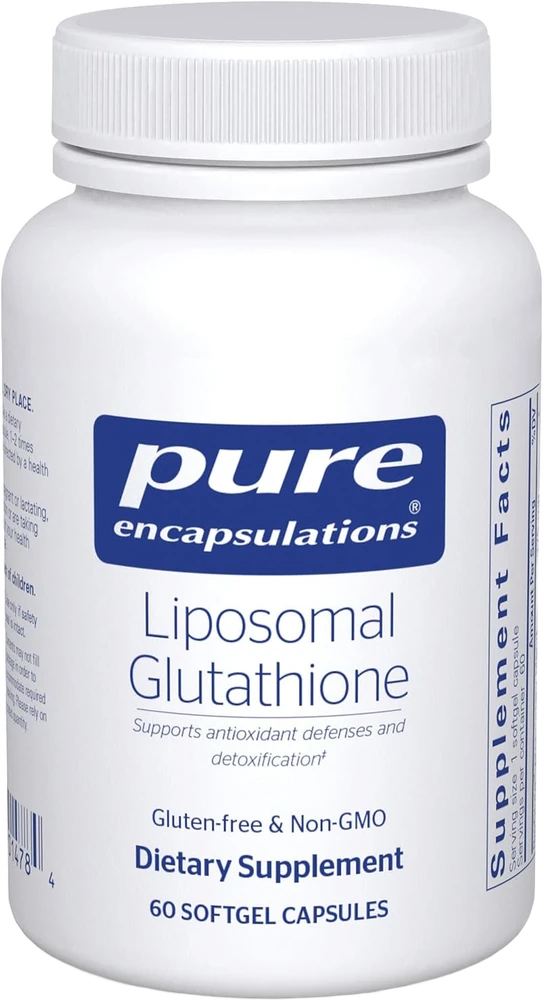
Best overall: Pure Encapsulations Liposomal Glutathione
Setria glutathione wrapped in a liposomal phospholipid complex — the cleanest practitioner-grade answer to the absorption objection. You pay for the delivery system, not for more milligrams.
$55 / 60 softgels (~2-month supply at 1/day)≈ $0.92 / 375 mg softgel
Why it wins: all five scores, pros & cons, full label
- Liposomal phospholipid delivery directly targets the core bioavailability objection to oral glutathione
- Uses Setria branded glutathione; hypoallergenic, practitioner-channel brand reputation
- Free-from formulation philosophy — no unnecessary additives
- Premium price per serving — among the most expensive picks here
- Contains soy (from the phospholipid/lecithin matrix); softgels are gelatin, so not vegan
- Dose
- 375 mg Setria glutathione per softgel (label allows 1-2/day)
- Absorption note
- Liposomal delivery targets the GSH bioavailability problem (cf. Sinha 2018)
- Form
- Liposomal softgel — phospholipid-encapsulated Setria glutathione
- Count
- 60 softgels

Our take — This is the pick for the buyer who reads the absorption debate and decides to pay to sidestep it. The liposomal phospholipid shell is the most-studied delivery answer to glutathione's gut problem (Sinha 2018 showed liposomal GSH raised body stores), and Pure Encapsulations pairs it with the named Setria material and its practitioner-grade clean-label pedigree. The trade-offs are real: it is the priciest pick per serving, it carries 375 mg rather than a full 500 mg, and the soy-and-gelatin softgel rules out vegans. If you want the liposomal idea at a higher dose and lower price, Core Med Science (#2) is the value alternative; if you just want maximum cheap milligrams, a plain reduced capsule (#9, #4) is the other end of the spectrum.
 02
 03
 04
 05
 06
 07
 08
 09
 10
Who Wins Which Aspect
Sorted by overall SAC Product Score™ — the official ranking.
| # | Pick | Score | Form & absorption strategy30% | Dose vs studied range25% | Testing & label transparency20% | Value per day15% | Real-world fit10% | Cost Per Dose | Buy |
|---|---|---|---|---|---|---|---|---|---|
| 01 | | 8.5 | 9.51 | 8.53 | 9.01 | 6.0 | 8.52 | ≈ $0.92 / 375 mg softgel | Check price |
| Liposomal phospholipid delivery directly targets the core bioavailability objection to oral glutathionePremium price per serving — among the most expensive picks here | |||||||||
| 02 | | 8.4 | 9.02 | 9.02 | 8.03 | 7.5 | 7.0 | ≈ $1.33 / 500 mg serving | Check price |
| Higher 500 mg Setria glutathione per serving in a liposomal phospholipid formatFull dose requires 2 softgels, halving the bottle to a 30-day supply | |||||||||
| 03 | | 8.1 | 8.73 | 7.0 | 8.03 | 8.53 | 9.01 | ≈ $0.47 / 100 mg capsule | Check price |
| S-acetyl (acetylated) form specifically addresses the oral-stability problem of plain glutathione100 mg per capsule is a lower elemental dose than the 500 mg reduced-form picks (the forms are not 1:1 comparable) | |||||||||
| 04 | | 8.0 | 7.0 | 9.51 | 6.5 | 9.02 | 9.01 | ≈ $0.23 / 500 mg capsule | Check price |
| Full 500 mg reduced (non-oxidized) glutathione in a single daily capsuleNot labelled as Setria or any other branded glutathione (the brand's own product page does not mention Setria) | |||||||||
| 05 | | 7.9 | 7.0 | 9.02 | 8.03 | 7.5 | 8.52 | ≈ $0.42 / capsule | Check price |
| Adds alpha lipoic acid and milk thistle — a coherent detox/antioxidant-recycling stack rather than glutathione aloneNot a single-ingredient product and not a branded (Setria) glutathione source — harder to compare mg-for-mg | |||||||||
| 06 | | 7.8 | 9.51 | 7.0 | 8.52 | 5.0 | 7.5 | ≈ $1.80 / 100 mg serving | Check price |
| Liquid nanoliposomal, sublingual delivery — intended to bypass much of digestive breakdownHighest cost-per-mg in the lineup and a small 50 mL bottle | |||||||||
| 07 | | 7.6 | 6.0 | 9.51 | 6.0 | 9.51 | 8.03 | ≈ $0.10 / 500 mg capsule | Check price |
| 240-count at 500 mg/cap = the lowest cost-per-serving in this lineupGeneric (non-Setria) reduced glutathione with the debated oral-absorption caveat | |||||||||
| 08 | | 7.5 | 8.73 | 6.5 | 7.0 | 7.5 | 7.5 | ≈ $0.80 / 100 mg serving | Check price |
| Liquid liposomal delivery bonded to phospholipids for enhanced absorptionListing does not specify a branded (Setria/OPITAC) glutathione source | |||||||||
| 09 | | 7.4 | 7.5 | 9.51 | 2.0 | 9.51 | 9.01 | ≈ $0.27 / 500 mg capsule | Check price |
| Genuine Setria branded reduced L-glutathione — the named, clinically-referenced raw material, stated on the listingOral absorption of plain reduced glutathione capsules is genuinely debated versus liposomal/S-acetyl forms | |||||||||
| 10 | | 7.0 | 6.5 | 8.0 | 6.0 | 8.0 | 6.5 | ≈ $0.42 / 2,000 mg serving | Check price |
| 2,000 mg reduced glutathione per serving, every figure printed on the panel2,000 mg is twice the highest dose studied, and the plain form's absorption is debated | |||||||||
The Other 9, Ranked
- 02
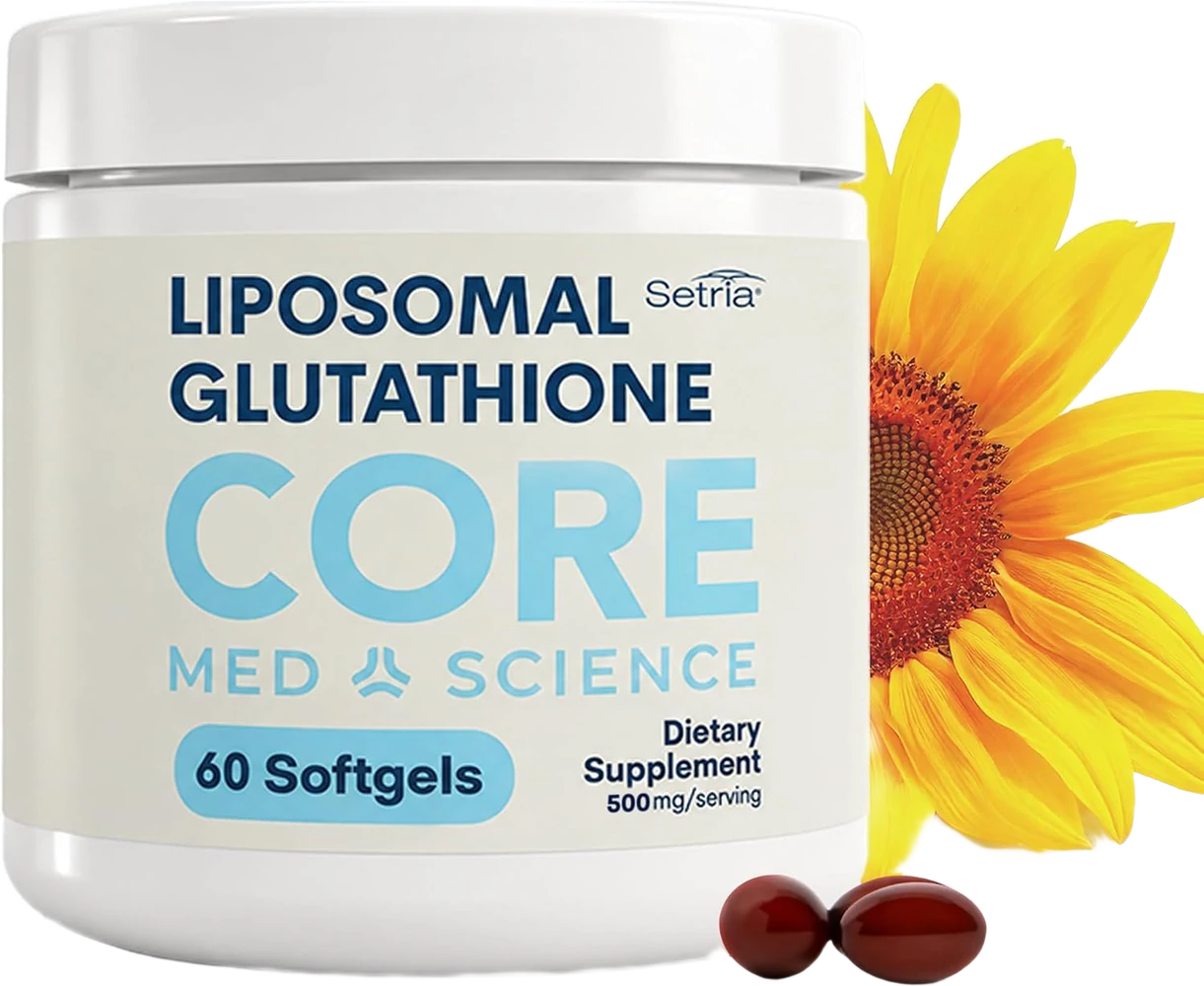
Best liposomal value: Core Med Science Liposomal Glutathione
8.4SAC Score™A physician-developed liposomal that delivers a higher 500 mg Setria dose per serving — the higher-strength, better-value alternative to boutique liposomal brands.
StrongestForm & absorption strategy9.02WeakestReal-world fit7.0- Dose
- 500 mg Setria glutathione per 2-softgel serving
- Absorption note
- Liposomal form + full 500 mg — the highest-dose liposomal here
All five scores, pros & cons, full label
What We Like- Higher 500 mg Setria glutathione per serving in a liposomal phospholipid format
- Physician-developed; made in USA, non-GMO, free from dairy, egg, shellfish, wheat, tree nuts and fish
- Better cost-per-mg than most softgel liposomal competitors
What You Live With- Full dose requires 2 softgels, halving the bottle to a 30-day supply
- Manufacturer dosing asks you to wait 45-60 minutes before eating, which some users find inconvenient
- Form
- Liposomal softgel — phospholipid-encapsulated reduced Setria glutathione
- Count
- 60 softgels (30 servings)
Our take — Core Med Science is what you buy when you want the liposomal delivery advantage but balk at Pure Encapsulations' price-per-milligram. It carries the named Setria material at a full 500 mg per serving — the highest-dose liposomal on the list — in a clean, physician-developed, broad-allergen-free softgel. The catch is that the full dose is two softgels, so a 60-count bottle is really a 30-day supply, and the brand wants you to wait 45-60 minutes before eating. For the liposomal buyer chasing the best dose-per-dollar, it is the one to choose over #1; for the buyer who wants one softgel a day and the cleanest practitioner label, #1 is the better fit.
- 03
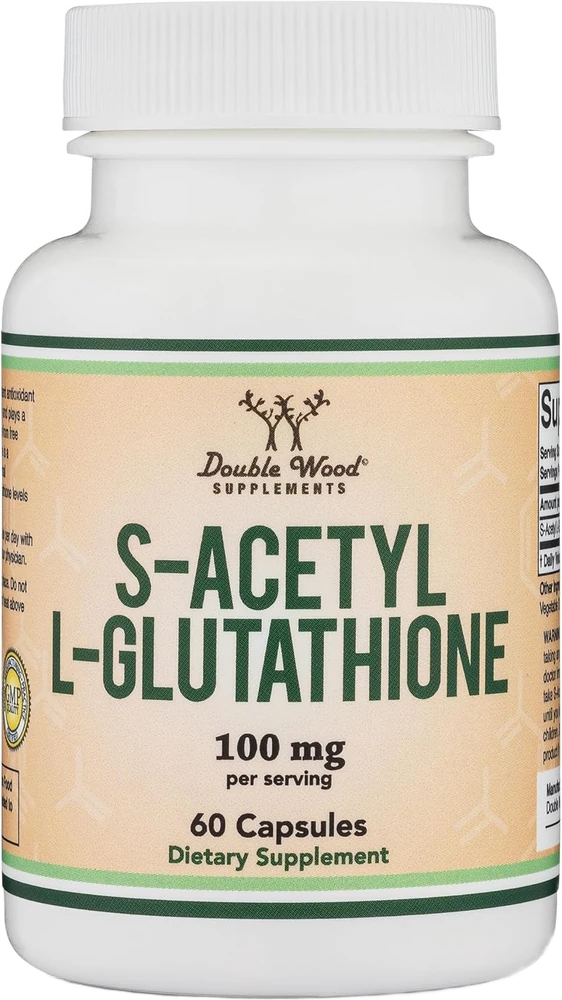
Best S-acetyl form: Double Wood S-Acetyl L-Glutathione
8.1SAC Score™The acetylated form — engineered with an acetyl group designed to survive the gut and be cleaved inside the cell. A distinct absorption mechanism from the reduced-form crowd, at a friendly price.
StrongestReal-world fit9.01WeakestDose vs studied range7.0- Dose
- 100 mg per capsule (label allows 1-2/day)
- Absorption note
- Acetyl group designed for gut stability + intracellular cleavage (mechanism, human outcome data thin)
All five scores, pros & cons, full label
What We Like- S-acetyl (acetylated) form specifically addresses the oral-stability problem of plain glutathione
- Made in New York and tested for purity; non-GMO and gluten-free
- Single-ingredient formula; strongly reviewed established value brand
What You Live With- 100 mg per capsule is a lower elemental dose than the 500 mg reduced-form picks (the forms are not 1:1 comparable)
- S-acetyl raw material commands a higher price per mg than commodity reduced glutathione
- Form
- S-Acetyl L-glutathione (acetylated)
- Count
- 60 capsules
Our take — S-acetyl glutathione is the third answer to the absorption question, distinct from both plain reduced and liposomal: the acetyl group is meant to shield the molecule through digestion and then be cleaved off inside your cells. Double Wood is the best-value S-acetyl pick — single-ingredient, purity-tested, from a brand with a strong review base. Be clear-eyed about two things: the dose is 100 mg, far below the 500 mg plain capsules (the form is the point, so don't read that as under-dosing), and the human outcome evidence for S-acetyl specifically is thinner than for plain or liposomal GSH — its case is mostly mechanistic. If the acetylated mechanism appeals to you, this is the one; if you want the better-evidenced delivery route, liposomal (#1, #2) has the human trial behind it.
- 04
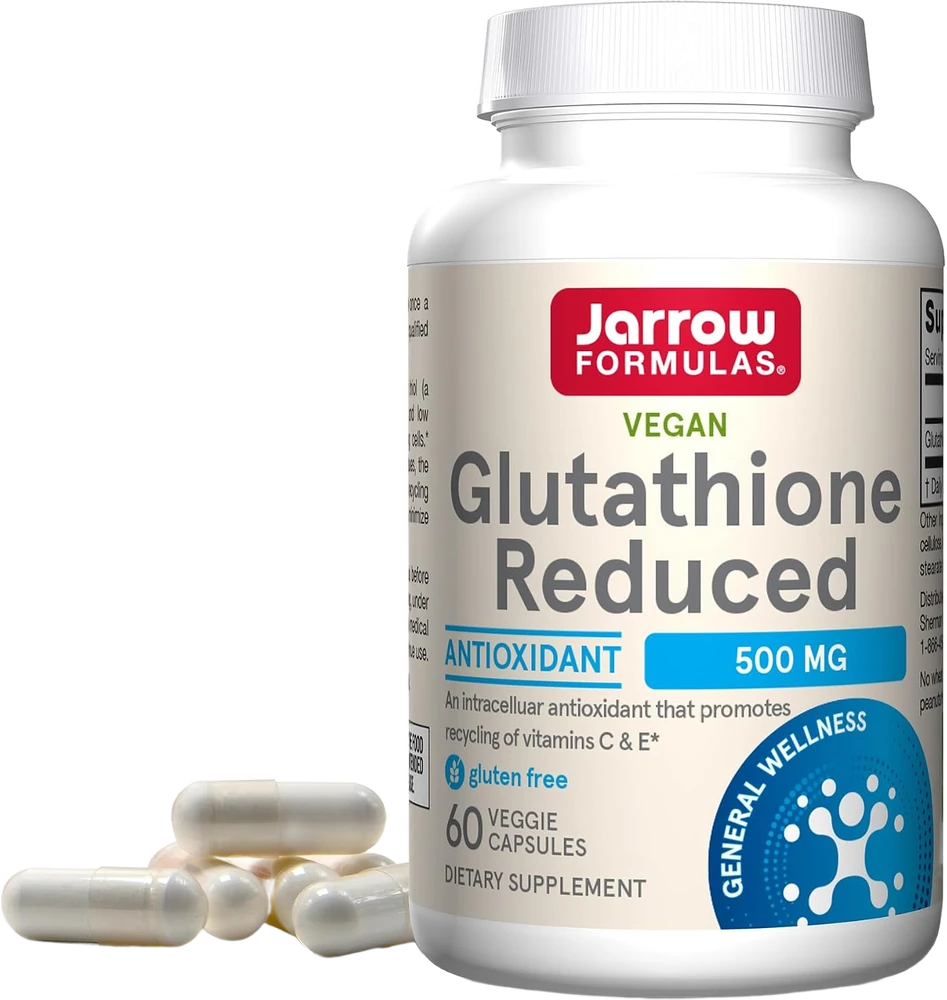
Best budget reduced: Jarrow Formulas Glutathione Reduced
8.0SAC Score™A clean, low-cost reduced-glutathione benchmark from a trusted brand at a full 500 mg in one capsule — the easy budget entry point. Honestly NOT labelled Setria, and we don't pretend otherwise.
StrongestDose vs studied range9.51WeakestTesting & label transparency6.5- Dose
- 500 mg per capsule
- Source note
- Brand product page does NOT state a Setria designation — no Setria claim made
All five scores, pros & cons, full label
What We Like- Full 500 mg reduced (non-oxidized) glutathione in a single daily capsule
- Non-GMO, vegan, gluten-free; single-ingredient, very low sticker price
- Long-established, widely trusted supplement brand
What You Live With- Not labelled as Setria or any other branded glutathione (the brand's own product page does not mention Setria)
- Plain oral reduced glutathione has the most-debated absorption of the forms in this lineup
- Form
- Reduced (non-oxidized) L-glutathione
- Count
- 60 veggie capsules
Our take — Jarrow is the honest budget pick: a full 500 mg of reduced glutathione, vegan and single-ingredient, from a brand people already trust, at the lowest sticker price on the list. The two things we will not dress up: its own product page does not claim Setria, so we don't either — you're buying clean generic reduced GSH, not the named branded material Healthy Origins (#9) carries. And it is the plain reduced form, the one with the most-debated absorption. If $14 to run a real 500 mg dose for two months and see how you respond is the experiment you want, this is the rational way to run it cheaply. For the named Setria source, see Healthy Origins (#9); for the absorption hedge, go liposomal (#1, #2); for the cheapest precursor route entirely, weigh NAC.
- 05
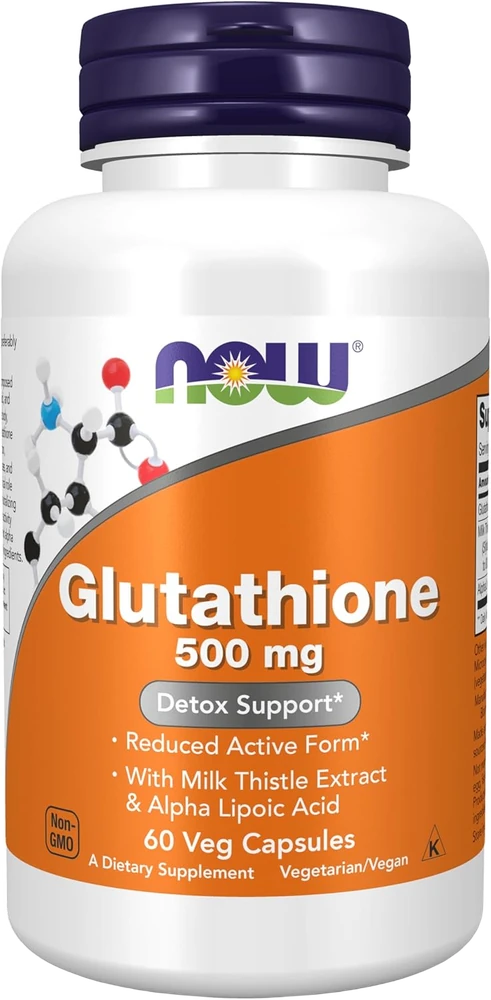
Best detox stack: NOW Foods Glutathione 500 mg
7.9SAC Score™Bundles glutathione with milk thistle and alpha lipoic acid — a glutathione-recycling cofactor — for a liver-and-detox-oriented formula from a brand with strong in-house QC.
StrongestDose vs studied range9.02WeakestForm & absorption strategy7.0- Dose
- 500 mg glutathione per capsule
- Source note
- Not a Setria-branded source; multi-ingredient (harder to compare mg-for-mg)
All five scores, pros & cons, full label
What We Like- Adds alpha lipoic acid and milk thistle — a coherent detox/antioxidant-recycling stack rather than glutathione alone
- NOW runs ISO/IEC-accredited in-house labs and is GMP quality-assured; vegan, non-GMO, kosher
- Reasonable price for a multi-ingredient formula
What You Live With- Not a single-ingredient product and not a branded (Setria) glutathione source — harder to compare mg-for-mg
- Plain oral reduced glutathione absorption remains debated; the added cofactors do not make it liposomal
- Form
- Reduced L-glutathione + milk thistle extract 100 mg + alpha lipoic acid 50 mg
- Count
- 60 veg capsules
Our take — NOW takes a different, defensible angle: instead of chasing absorption with an exotic delivery form, it surrounds plain 500 mg glutathione with cofactors that support the same job. Alpha lipoic acid helps regenerate oxidised glutathione back to its active form, and milk thistle (silymarin) is a classic liver-support botanical — so for the liver-and-detox buyer this is a coherent little stack, backed by NOW's genuinely strong in-house QC. The honest limits: it is still plain reduced glutathione (the cofactors don't solve the absorption debate), and being multi-ingredient makes it harder to compare milligram-for-milligram with the single-ingredient picks. Buy it for the liver-support stack concept; if you want glutathione alone, #4 or #9 are cleaner comparisons.
- 06
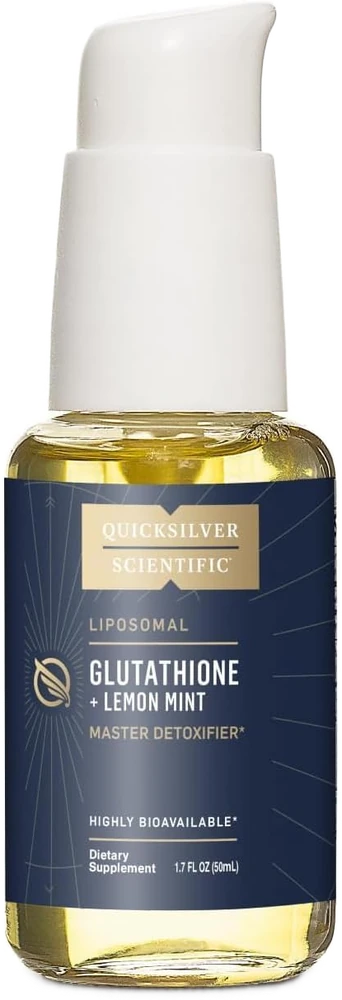
Best sublingual liquid: Quicksilver Scientific Liposomal Glutathione
7.8SAC Score™The most aggressive absorption play on the list — a liquid nanoliposomal you hold under the tongue, designed to bypass much of digestion before you swallow. Uses OPITAC (Kyowa), not Setria.
StrongestForm & absorption strategy9.51WeakestValue per day5.0- Dose
- 100 mg glutathione per 2-pump serving, held sublingually
- Source note
- OPITAC branded (Kyowa's oral grade), NOT Setria; contains ethanol
All five scores, pros & cons, full label
What We Like- Liquid nanoliposomal, sublingual delivery — intended to bypass much of digestive breakdown
- Uses OPITAC branded glutathione (Kyowa) with sunflower-derived phosphatidylcholine; gluten- and dairy-free
- Flexible pump dosing; well-regarded premium liposomal specialist brand
What You Live With- Highest cost-per-mg in the lineup and a small 50 mL bottle
- Contains ethanol; the sublingual hold-then-swallow ritual and taste are not for everyone
- Form
- Liquid nanoliposomal, sublingual — OPITAC glutathione (Kyowa) + sunflower phosphatidylcholine
- Count
- 1.7 fl oz (50 mL)
Our take — Quicksilver is the connoisseur's absorption play: a liquid nanoliposomal you hold under the tongue so some of the dose can absorb across the oral mucosa before the gut ever sees it. It uses OPITAC — Kyowa's oral-grade glutathione, a sibling to Setria but a different branded grade, which we flag because it's a real distinction — in a sunflower-phosphatidylcholine matrix. It is also the most expensive per milligram, comes in a small 50 mL bottle, carries ethanol, and asks you to tolerate a hold-then-swallow ritual. If you believe in sublingual delivery and want the most theoretically bioavailable route regardless of cost, this is it; for most buyers the softgel liposomals (#1, #2) deliver the same idea more cheaply and conveniently.
- 07
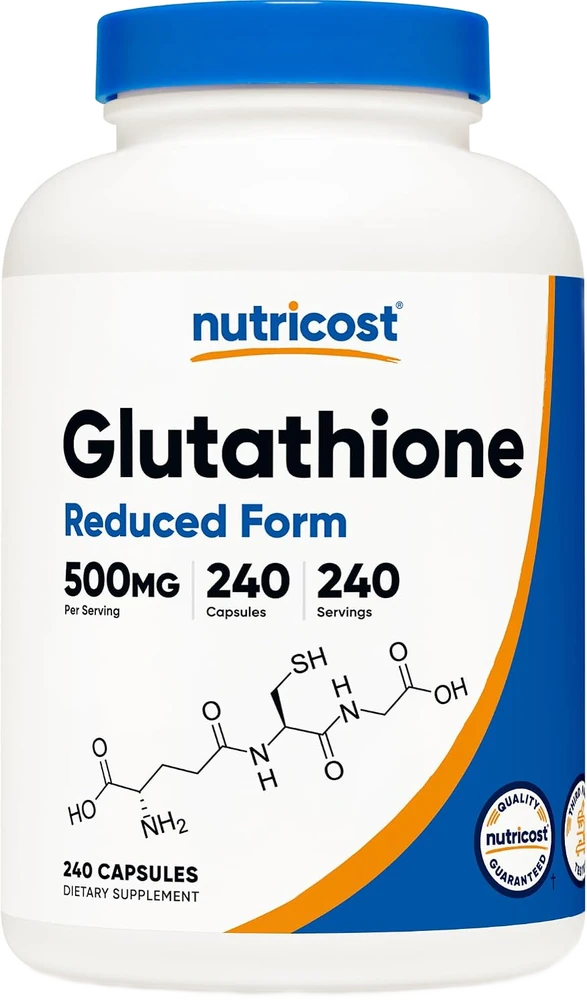
Best bulk value: Nutricost Glutathione 500 mg
7.6SAC Score™The bulk-value play: 240 capsules at a full 500 mg dose for the lowest cost-per-serving on the list — for high-volume daily users who want plain reduced glutathione and nothing else.
StrongestDose vs studied range9.51WeakestForm & absorption strategy6.0- Dose
- 500 mg per capsule
- Source note
- Generic (non-Setria) reduced glutathione; third-party tested per brand
All five scores, pros & cons, full label
What We Like- 240-count at 500 mg/cap = the lowest cost-per-serving in this lineup
- Non-GMO, gluten-free, and third-party tested per the brand
- Simple single-ingredient formula
What You Live With- Generic (non-Setria) reduced glutathione with the debated oral-absorption caveat
- Budget brand without an NSF/USP certification seal on-pack
- Form
- Reduced L-glutathione
- Count
- 240 capsules
Our take — Nutricost wins on one axis decisively: cost-per-serving. A 240-count bottle at a full 500 mg works out to roughly a dime a day — by far the cheapest way to run a real glutathione dose long enough to matter (and Richie 2015 says months is what it takes). It is single-ingredient, third-party tested per the brand, and exactly what a high-volume daily user wants. The trade-offs put it at #7 rather than higher: it is generic reduced glutathione with no named branded source, no NSF/USP seal, and the same plain-form absorption caveat that hangs over every reduced capsule here. For the cost-optimiser who has already accepted the form debate, it's the value champion; for a named Setria source, see Healthy Origins (#9).
- 08
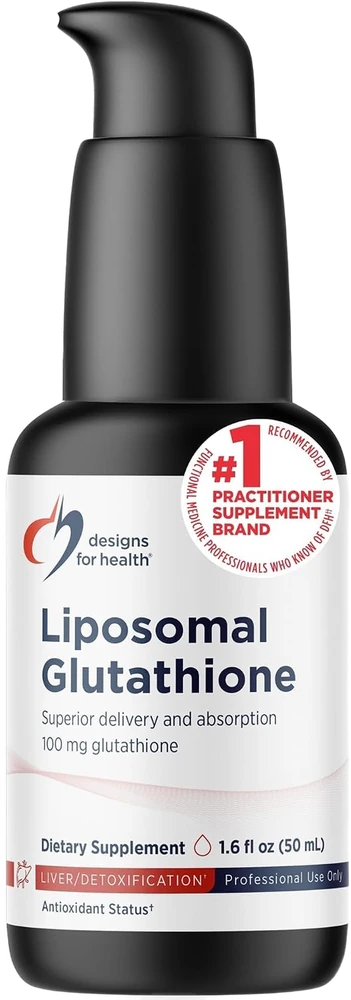
Best liquid alternative: Designs for Health Liposomal Glutathione
7.5SAC Score™A practitioner-brand liquid liposomal alternative to Quicksilver — lemon-peppermint flavor, dropper/pump dosing, 50 servings per bottle for those who prefer liquids over softgels.
StrongestForm & absorption strategy8.73WeakestDose vs studied range6.5- Dose
- 100 mg glutathione per 1 mL serving, held in mouth then swallowed
- Source note
- Listing does not specify a branded (Setria/OPITAC) glutathione source
All five scores, pros & cons, full label
What We Like- Liquid liposomal delivery bonded to phospholipids for enhanced absorption
- Practitioner-channel brand; non-GMO, gluten- and dairy-free, naturally flavored
- 50 servings per bottle at a flexible 100 mg/mL dose
What You Live With- Listing does not specify a branded (Setria/OPITAC) glutathione source
- 100 mg/serving is a lower elemental dose; liquid liposomals carry a price premium over capsules
- Form
- Liquid liposomal — glutathione in a phospholipid matrix
- Count
- 1.7 fl oz (50 servings)
Our take — Designs for Health is the practitioner-brand liquid liposomal for people who simply prefer a flavored dropper to a softgel or capsule. The liposomal delivery is the same bioavailability strategy as #1, #2 and #6, the lemon-peppermint format is pleasant, and 50 servings is a decent runway. It lands at #8 rather than higher for two honest reasons: its listing doesn't name a branded glutathione source the way the Setria and OPITAC picks do, so you can verify less about the raw material, and at 100 mg per serving with a liquid-liposomal price premium it's neither the cheapest nor the best-documented option. If you want a liquid liposomal and like the flavor and format, it's a fine choice; if source transparency or dose-per-dollar matters more, look up the list.
- 09
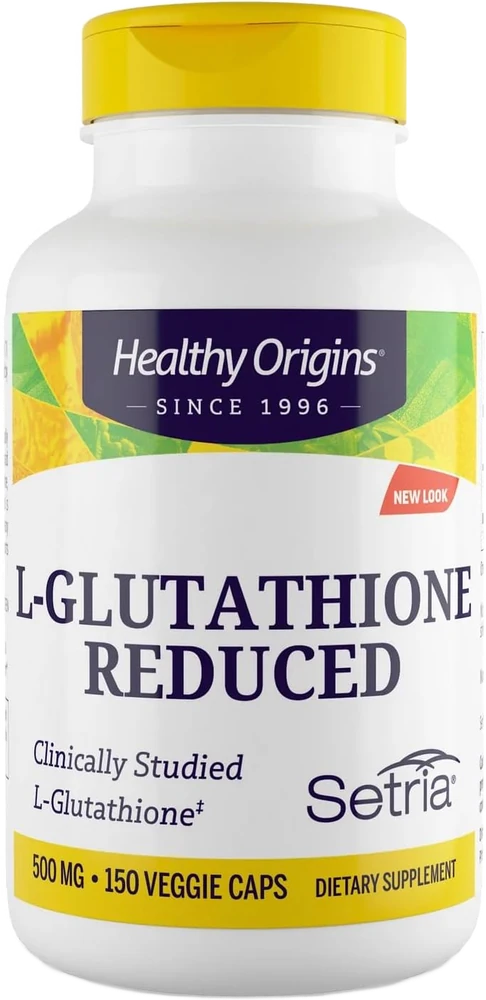
Named Setria source (label unverified): Healthy Origins Setria L-Glutathione
7.4SAC Score™A full 500 mg of the clinically-referenced Setria branded reduced glutathione, 150 capsules deep, at the lowest cost-per-day of any named-source pick. A single-ingredient option — with the plain-form absorption caveat stated openly, and no legible Supplement Facts panel in the listing to check it against.
StrongestDose vs studied range9.51WeakestTesting & label transparency2.0- Dose
- 500 mg per capsule (label allows 1-2/day)
- Absorption note
- Plain reduced form — debated oral absorption (see Richie 2015 vs Witschi 1992)
All five scores, pros & cons, full label
What We Like- Genuine Setria branded reduced L-glutathione — the named, clinically-referenced raw material, stated on the listing
- Full 500 mg dose, squarely in the 250-1000 mg studied range; 150-count gives the lowest cost-per-day among named-source picks
- Single-ingredient, gluten-free, vegetarian; long-established family-owned brand
What You Live With- Oral absorption of plain reduced glutathione capsules is genuinely debated versus liposomal/S-acetyl forms
- No independent third-party seal (NSF/USP) called out on the listing
- Form
- Reduced L-glutathione — Setria branded (Kyowa, Japan)
- Count
- 150 veggie capsules
Our take — If you want a single-ingredient glutathione with a named Setria source and you trust the slow-repletion reading of the evidence, this is the one to consider. The listing claims the named Setria material at a full 500 mg, it is the cheapest named-source pick per day, and a 150-count bottle lets you run the multi-month protocol Richie 2015 suggests is what actually moves body stores. The honest catch is the form: this is plain reduced glutathione, the version whose absorption Witschi 1992 and Allen 2011 questioned. If that worries you, step up to a liposomal (#1, #2) or S-acetyl (#3) form — or consider NAC as the precursor route. It sits at #9 because no photo in its listing shows a legible Supplement Facts panel, which cut its Testing & label transparency score to 2.0 despite strong dose and value scores; buy it if you are comfortable with an unverified label and a months-long timeline.
- 10
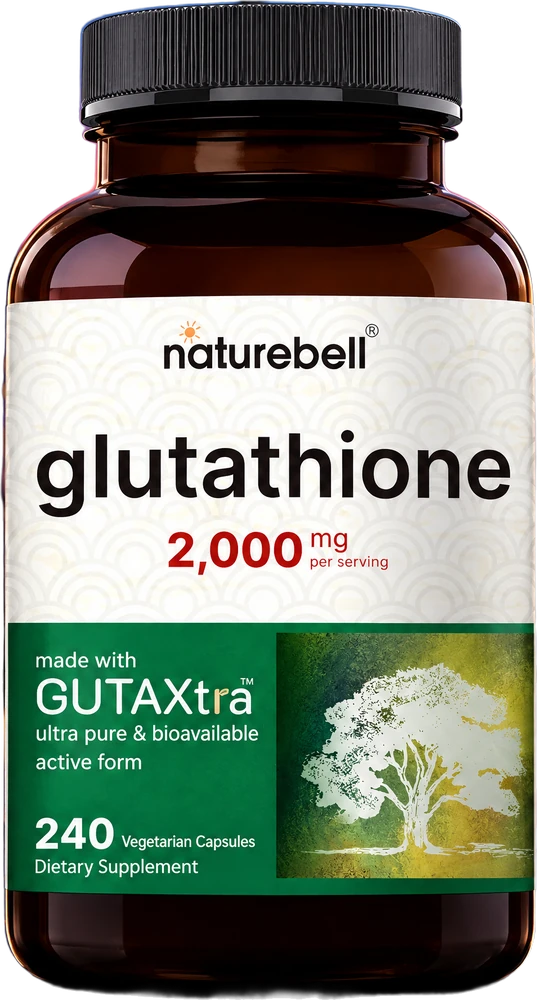
Highest dose per serving: NatureBell Glutathione 2,000 mg, 240 Veggie Capsules
7.0SAC Score™The biggest dose on the list: 2,000 mg of plain reduced glutathione per 4-capsule serving at about $0.42 a serving, but that is twice the highest dose studied and the test claims name no lab.
StrongestDose vs studied range8.0WeakestTesting & label transparency6.0- Dose
- 2,000 mg per 4 vegetarian capsules (500 mg per capsule)
- Source note
- No Setria or OPITAC wording on the panel; no source found for GUTAXtra
- Testing
- Third-party lab badges name no lab · not in the NSF International listing (checked Oct 18, 2026)
All five scores, pros & cons, full label
What We Like- 2,000 mg reduced glutathione per serving, every figure printed on the panel
- About $0.42 a serving, the same cost per 500 mg as the bulk-value pick; 60-day bottle
- Single ingredient in a vegetarian capsule, free of wheat, gluten, soy, dairy and tree nuts per the back label
What You Live With- 2,000 mg is twice the highest dose studied, and the plain form's absorption is debated
- Four capsules a day, against one for the other plain-form picks
- Third-party badges name no lab, and NatureBell is not in the NSF International listing
- Form
- Glutathione (Reduced form), printed under the name GUTAXtra
- Count
- 240 capsules = 60 servings (60 days at 4 a day)
Our take — The pick for a buyer who wants a high-dose plain glutathione in a long-lasting bottle and has accepted the form debate. The panel prints 2,000 mg of reduced glutathione per 4-capsule serving at about $0.42, the same cost per 500 mg as Nutricost. What holds it at 7.0 is what the pack cannot show: the dose is twice the highest one studied, the GUTAXtra name has no source we could find, and the test badges name no lab. Choose Nutricost for one capsule a day, or Core Med Science if absorption is your concern.
Glutathione In Four Short Lessons
Choose the delivery form before the dose.
Plain oral glutathione did little in two short trials (Witschi 1992, Allen 2011). Liposomal, S-acetyl and branded Setria forms are the industry's answer to the absorption problem.
Plan on months at a real dose.
250 mg and 1000 mg a day raised body stores over six months (Richie 2015). It is slow repletion, not an instant antioxidant infusion.
Consider NAC if cost is the constraint.
NAC, the cysteine precursor, is the cheaper route many clinicians reach for first.
Four PubMed-verified human trials define the file's bioavailability spine: Witschi 1992 (PMID 1362956), Allen 2011 (PMID 21875351), Richie 2015 (PMID 24791752), and Sinha 2018 (PMID 28853742). Nine picks ranked on form & absorption strategy (30%), dose vs the 250-1000 mg studied range (25%), testing & label transparency (20%), value per day (15%), and real-world fit (10%) — full scoring in the methodology below.
Glutathione can't be ranked on milligrams alone, because the central question is whether those milligrams survive your gut. So form and absorption strategy carries the most weight: liposomal encapsulation, S-acetyl (acetylated) glutathione, and clinically-referenced branded reduced GSH (Setria) all exist specifically to answer the bioavailability objection that plain reduced glutathione faces — the objection raised by Witschi 1992 (a 3 g oral dose didn't raise plasma GSH) and Allen 2011 (500 mg/day moved no biomarkers), and only partly answered by Richie 2015 (250-1000 mg/day raised body stores over six months). Dose comes second, scored against that 250-1000 mg/day studied range — but with a crucial caveat: a 100 mg liposomal or S-acetyl dose is NOT directly comparable to a 500 mg plain capsule, because the form is doing the heavy lifting. Testing and label transparency act as the trust filter — is the source named (Setria/OPITAC), is the form honestly stated, is there third-party testing. Value per day is the tiebreaker within a form tier. Real-world fit — capsule vs softgel vs sublingual liquid, daily-dose convenience, additives — settles the rest.
Form & absorption strategy · 30%
The defining axis. Liposomal (phospholipid-encapsulated), S-acetyl (acetylated to survive the gut), and named branded reduced GSH (Setria, Kyowa) all score higher than plain reduced glutathione, because plain oral GSH is the form with the most-debated absorption (Witschi 1992, Allen 2011). Sinha 2018 is the reason liposomal earns its premium. Plain reduced capsules can still rank well on dose + value, but they carry the absorption caveat openly.
Dose vs studied range · 25%
Scored against the 250-1000 mg/day range used in the human repletion work (Richie 2015 used 250 mg and 1000 mg/day). A full 500 mg plain capsule sits squarely in range. Liposomal and S-acetyl picks at 100-375 mg score on dose with an explicit note: the lower elemental milligrams are offset by the delivery form, so they are not penalised the way an under-dosed plain capsule would be.
Testing & label transparency · 20%
Is the raw material named and verifiable (Setria from Kyowa, OPITAC from Kyowa), is the form stated honestly, and is there any third-party / in-house testing called out? Single-ingredient formulas with a named branded source score highest. Generic 'reduced glutathione' with no source disclosure and no NSF/USP seal scores lower — not because it's fake, but because you can verify less.
Value per day · 15%
Street price divided by a daily serving, within the product's form tier. Plain reduced capsules (especially high-count bottles) deliver the lowest cost-per-day; liposomal softgels and sublingual liquids cost several times more per serving. The tiebreaker between picks doing the same job — not a reason to pick a worse form.
Real-world fit · 10%
Capsule, softgel, or sublingual liquid; one-a-day vs two; vegetarian vs gelatin; additives like soy lecithin or ethanol; pre-meal timing demands. The practical friction that decides whether you actually take it daily — which, given that repletion takes months (Richie 2015), is what determines whether it works at all.

How glutathione supplements work — and the absorption problem
- 1
The master antioxidant
Glutathione neutralizes free radicals and supports liver detox pathways inside every cell. The appeal is real; the problem is getting swallowed glutathione past digestion intact, which is why form and absorption strategy is our heaviest axis.
- 2
The oral absorption gap
Plain reduced glutathione is largely broken down in the gut. Two work-arounds dominate: liposomal glutathione (shielded in fat spheres) and S-acetyl glutathione (a stabilized form) — both aim to survive digestion and actually raise cellular levels.
- 3
The precursor alternative
An honest option many labels skip: your body builds glutathione from cysteine (via NAC) plus glycine — sometimes cheaper and better-evidenced than swallowing glutathione itself. We keep that comparison on the table.
- 4
Dose and testing
Studied oral doses and clean third-party testing separate a working liposomal from a poorly-absorbed capsule. We rank on the delivery honesty, because in this category form beats milligrams.
What to expect from glutathione
Little to feel
Antioxidant support is not a sensation. Any early effect is subtle; the delivery form largely determines whether blood glutathione even rises.
Antioxidant margins
With an absorbable form, glutathione status and oxidative-stress markers can improve over weeks. Effects on general wellbeing are modest and individual.
Steady support
Benefits, where present, hold with continued daily use of a liposomal or S-acetyl form (or a NAC-based precursor approach). This is maintenance, not transformation.
Ignore the skin-whitening claims
The viral IV-glutathione skin-lightening promises are not what oral supplementation reliably does. Judge it as an antioxidant support, choose a genuinely absorbable form, and consider precursors as a cheaper route.
The bottom line
Pure Encapsulations Liposomal Glutathione (#1) is our top pick.
It wraps the named Setria material in a liposomal phospholipid complex — the cleanest answer to the absorption objection Witschi 1992 and Allen 2011 raised against plain reduced glutathione. The honest catch: 375 mg per softgel is below the 500 mg plain capsules, and you pay practitioner prices.
Cheaper, or hedging the absorption debate? There's a pick for each fork.
On the tightest budget, Jarrow Formulas Glutathione Reduced (#4) gives you a clean 500 mg reduced capsule at the lowest sticker price — with the honest caveat that it isn't labelled Setria. For the absorption debate, the other forms built to answer it are Core Med Science (#2) at a higher 500 mg dose for less money, Double Wood S-Acetyl (#3), and Quicksilver's sublingual liquid (#6); for the deepest bulk value, Nutricost (#7) is about a dime a day. Healthy Origins Setria (#9) is the named-source plain capsule, ranked last because its Supplement Facts panel could not be verified.
Whatever you buy, judge it over months — and weigh NAC first if cost is the real issue.
Oral glutathione's bioavailability is genuinely debated: Witschi 1992 and Allen 2011 found little to nothing from plain GSH, while Richie 2015 raised body stores only over six patient months. So set expectations from the evidence, not the label — judge it over months, not days, and don't expect a master-antioxidant infusion from a single capsule. If your real constraint is cost, NAC (N-acetylcysteine), the cysteine precursor your body uses to build glutathione, is the cheaper route many clinicians try first.
Quick Answers
What is the best glutathione pick overall?
Pure Encapsulations Liposomal Glutathione by Pure Encapsulations is our #1 pick (SAC score 8.5/10). This is the pick for the buyer who reads the absorption debate and decides to pay to sidestep it. The liposomal phospholipid shell is the most-studied delivery answer to glutathione's gut problem (Sinha 2018 showed liposomal GSH raised body stores), and Pure Encapsulations pairs it with the named Setria material and its practitioner-grade clean-label pedigree. The trade-offs are real: it is the priciest pick per serving, it carries 375 mg rather than a full 500 mg, and the soy-and-gelatin softgel rules out vegans. If you want the liposomal idea at a higher dose and lower price, Core Med Science (#2) is the value alternative; if you just want maximum cheap milligrams, a plain reduced capsule (#9, #4) is the other end of the spectrum.
What is the best budget option?
Jarrow Formulas Glutathione Reduced at $14 / 60 veggie caps (~2-month supply at 1/day). Jarrow is the honest budget pick: a full 500 mg of reduced glutathione, vegan and single-ingredient, from a brand people already trust, at the lowest sticker price on the list. The two things we will not dress up: its own product page does not claim Setria, so we don't either — you're buying clean generic reduced GSH, not the named branded material Healthy Origins (#9) carries. And it is the plain reduced form, the one with the most-debated absorption. If $14 to run a real 500 mg dose for two months and see how you respond is the experiment you want, this is the rational way to run it cheaply. For the named Setria source, see Healthy Origins (#9); for the absorption hedge, go liposomal (#1, #2); for the cheapest precursor route entirely, weigh NAC.
How much do these picks cost?
Across our ranked picks, prices run from about $14 to $55 — exact price and cost per serving are listed on every pick card above.
How were these picks ranked?
Glutathione can't be ranked on milligrams alone, because the central question is whether those milligrams survive your gut. So form and absorption strategy carries the most weight: liposomal encapsulation, S-acetyl (acetylated) glutathione, and clinically-referenced branded reduced GSH (Setria) all exist specifically to answer the bioavailability objection that plain reduced glutathione faces — the objection raised by Witschi 1992 (a 3 g oral dose didn't raise plasma GSH) and Allen 2011 (500 mg/day moved no biomarkers), and only partly answered by Richie 2015 (250-1000 mg/day raised body stores over six months). Dose comes second, scored against that 250-1000 mg/day studied range — but with a crucial caveat: a 100 mg liposomal or S-acetyl dose is NOT directly comparable to a 500 mg plain capsule, because the form is doing the heavy lifting. Testing and label transparency act as the trust filter — is the source named (Setria/OPITAC), is the form honestly stated, is there third-party testing. Value per day is the tiebreaker within a form tier. Real-world fit — capsule vs softgel vs sublingual liquid, daily-dose convenience, additives — settles the rest.
Every Claim Ranked Above Traces Back To One Of These
4 peer-reviewed sources, each linked to PubMed
- [1] Richie 2015 PMID 24791752 — Randomized controlled trial of oral glutathione supplementation on body stores of glutathione. In a 6-month randomized, placebo-controlled trial, oral glutathione at 250 mg/day and 1000 mg/day raised body stores of glutathione (in blood, erythrocytes, plasma and lymphocytes) versus placebo, with the high dose lowering an oxidative-stress marker. The key 'repletion is possible' trial — but it took months and a sustained dose, not a single-dose plasma spike.
- [2] Witschi 1992 PMID 1362956 — The systemic availability of oral glutathione. In 7 healthy volunteers, a single 3 g oral dose of glutathione did not significantly raise plasma glutathione, cysteine or glutamate over the following 270 minutes — the authors concluded the systemic availability of oral glutathione is negligible in man. The origin of the oral-bioavailability debate and the reason plain reduced GSH carries an absorption caveat.
- [3] Allen 2011 PMID 21875351 — Effects of oral glutathione supplementation on systemic oxidative stress biomarkers in human volunteers. A randomized, double-blind, placebo-controlled trial of oral glutathione (500 mg twice daily) over 4 weeks found no significant change in any biomarker of oxidative stress and no change in glutathione status. The shorter-term counterpoint to Richie 2015 — and direct evidence that plain oral GSH does not reliably move biomarkers in weeks.
- [4] Sinha 2018 PMID 28853742 — Oral supplementation with liposomal glutathione elevates body stores of glutathione and markers of immune function. In healthy adults, oral LIPOSOMAL glutathione raised body stores of glutathione and improved markers of immune function (natural-killer and T-cell activity) versus baseline. The human trial that justifies the liposomal premium — encapsulation is the delivery strategy that exists precisely because plain oral GSH is doubted.
Affiliate disclosure: every Amazon link uses our Associates tag (superachieverclub-20). We earn a small commission at no cost to you; it funds independent reviews. We never accept payment to change a ranking.