
Healthy Origins Setria L-Glutathione Review
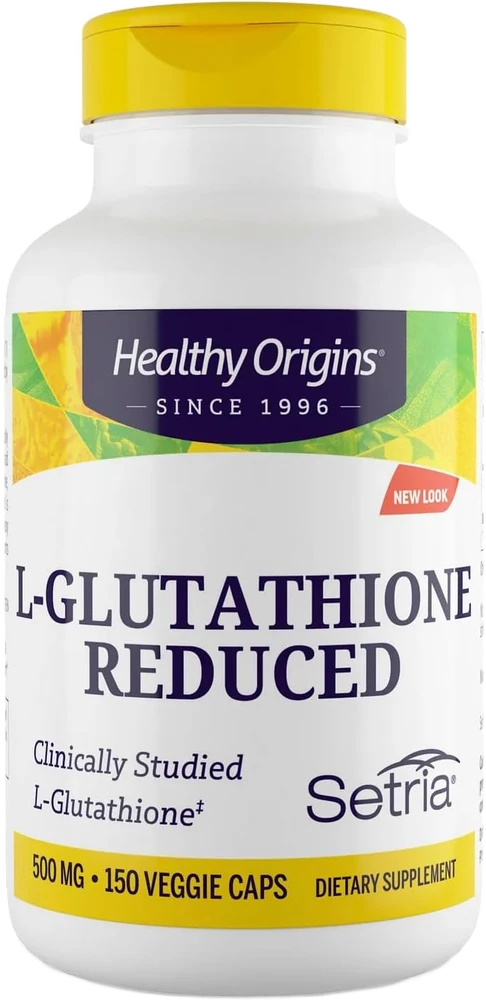 #9 of 10 · Named Setria source✓ Label verified · Supplement Facts read Sep 7, 2026
Real retailer photo, cut out. Label unedited.
Consider it. A solid single-ingredient glutathione — named Setria source claimed on the listing, full dose, lowest cost-per-day, but the panel itself is unverifiable. The listing claims a full 500 mg of the named Setria reduced glutathione, 150 veggie caps, roughly a dime-and-a-half over a quarter per day — the lowest cost-per-day of any named-source pick, in a bottle big enough to run the months-long protocol the repletion evidence calls for.
$40 / 150 veggie caps (up to a 5-month supply at 1/day)≈ $0.27 / 500 mg capsule
Why It Scores 7.4 — And The Label Line Behind Each Number
Form & absorption strategy
30% of scorePlain reduced glutathione — the form with the most-debated oral absorption (Witschi 1992 negative on plasma, Allen 2011 negative on biomarkers; Richie 2015 positive on body stores over 6 months). The named Setria raw material, as claimed on the listing (we could not verify this against a legible Supplement Facts panel), lifts confidence in WHAT you're taking somewhat, but doesn't change the delivery route, so this caps below the liposomal and S-acetyl picks that exist to solve absorption.
- Active form
- Reduced L-glutathione — Setria branded (Kyowa Hakko, Japan), as claimed on the listing; not verifiable against a panel photo
Dose vs studied range
25% of scoreThe listing's claimed 500 mg per capsule sits squarely inside the 250-1000 mg/day range Richie 2015 used to raise body stores, and the listing's own directions suggest a second capsule to reach the 1000 mg high-dose arm — we could not verify either figure against a legible Supplement Facts panel. Taken at the listing's own numbers, this isn't an under-dose: it's a full, evidence-aligned plain dose.
- Per serving
- 500 mg (1 capsule) — the listing's claim; not verifiable against a panel photo. Listing directions suggest 1-2 capsules/day.
- Studied-dose alignment
- The listing's claimed 500 mg sits squarely in the 250-1000 mg/day Richie 2015 repletion range
Testing & label transparency
20% of scoreCorrected down from 8.5 on Sep 7, 2026: this criterion previously credited a panel we never actually saw. No photo in this listing shows a legible Supplement Facts panel, so we cannot confirm the single-ingredient, gluten-free, or vegetarian claims against the panel itself, or whether 'Setria' is genuinely printed there rather than only stated in the listing copy — the named-source claim sits at the same unverifiable level as most of the category. What's left: a listing-level Setria naming (Kyowa Hakko) worth something over a totally generic 'reduced glutathione,' but no public certificate of analysis and no independent NSF/USP seal called out either.
- Label check
- Not verifiable — no legible Supplement Facts photo in the listing (checked Sep 7, 2026)
- Source
- Patented fermentation, pharmaceutical-grade reduced GSH — Kyowa Hakko's published description of the Setria raw material
Value per day
15% of scoreAt roughly $0.27 per capsule (based on the listing's claimed 500 mg dose, which we could not verify against a legible panel), it's the lowest cost-per-day of any named-source pick on the list, and the 150-count bottle is about a five-month supply at one a day. Only the unbranded bulk picks (Nutricost #7) beat it on raw cost-per-serving.
- Count
- 150 veggie capsules (up to a 5-month supply at 1/day)
- Price
- $40 / 150 caps ≈ $0.27 per capsule
Real-world fit
10% of scoreOne vegetarian capsule a day, marketed as single-ingredient, easy to stay consistent with over the months repletion actually takes. The large bottle reduces re-order friction. Loses a touch only because it carries the plain-form absorption caveat, plus the unverified-panel caveat, into daily use.
- More Specs
- Absorption note
- Plain reduced form — oral absorption genuinely debated (Witschi 1992 vs Richie 2015)
- Free-from
- Single-ingredient, gluten-free, vegetarian — per the listing; not verifiable against a panel photo
Label verified. Every figure read from the Supplement Facts photo, Sep 7, 2026.
Marketing Claims Vs. Reality
Contains genuine Setria branded reduced L-glutathione.
We could not verify this against a legible Supplement Facts panel — no photo in the listing shows one. The listing states Setria — Kyowa Hakko's named, pharmaceutical-grade reduced glutathione made by patented fermentation — which is still a more specific claim than a generic 'reduced glutathione' that never names its raw-material source, but it's a listing claim, not a panel-verified one, and sits at the same evidentiary level as most of the reduced-form category.
500 mg of glutathione per capsule.
The listing states 500 mg per capsule, which sits squarely in the 250-1000 mg/day range Richie 2015 (PMID 24791752) used. We could not verify the 500 mg figure against a legible Supplement Facts panel — no photo in the listing shows one — so this is the listing's claim, evidence-aligned for a plain oral GSH protocol if accurate.
Oral glutathione raises your body's glutathione levels.
Not reliably, and not quickly. Witschi 1992 (PMID 1362956) saw no plasma rise after a single dose and Allen 2011 (PMID 21875351) saw no biomarker change over 4 weeks; only Richie 2015 showed body stores rising — and that took six months at 250-1000 mg/day. 'Raises your levels' is unverified as a fast or guaranteed effect, though slow repletion appears possible.
Supports antioxidant defenses and detoxification.
Glutathione's biological role as the master antioxidant and a phase-II detox substrate is well established. The 'partial' is about delivery: that role only translates to benefit if the oral dose reaches your cells, which for plain reduced GSH is the debated step. Honest as biology, conditional as a supplement claim.
Best-value, long-lasting supply.
At ~$0.27 per capsule (150 capsules for about $40) it's the lowest cost-per-day of any named-source pick and roughly a five-month supply at one a day. This value-and-longevity math holds regardless of the panel-verification question, since it's price and count, not a dose figure.
What Our Test Actually Found
Label not verifiable: what we could and could not confirm
An earlier version of this review stated flatly that this product is 'a full 500 mg of Setria... the named, clinically-referenced reduced glutathione' and treated the 500 mg dose, the 'label allows a second capsule' dosing note, and the Setria/Kyowa sourcing as verified facts throughout — including an 8.5 Testing & label transparency score earned partly by a 'clean single-ingredient, gluten-free, vegetarian panel' we never actually saw. We re-checked the ASIN's listing on Sep 7, 2026: none of Amazon's gallery photos for B002EG5152 show a legible Supplement Facts table with amounts or %DV, and the one back-label photo in the gallery is framed on the Directions and disclaimer text, not the panel itself. So we could not confirm the 500 mg dose, the 1-2 capsule dosing instruction, the single-ingredient/gluten-free/vegetarian claims, or the Setria naming against an actual panel — and now treat all of them as unverified listing claims (title + product description), not label facts. We've rewritten the review to attribute those figures to the listing's own copy rather than to a panel we verified, and lowered the Testing & label transparency score from 8.5 to 2.0 to reflect that the credential which used to separate this pick from the rest of the category is unconfirmed. What remains independently verified and unchanged: the Richie 2015 / Witschi 1992 / Allen 2011 research citations and the ~$40-for-150-caps price.
The named Setria source is claimed, not panel-confirmed — but still worth something
The single thing that separates this from a commodity reduced-glutathione capsule is the named Setria (Kyowa) raw material, stated on the listing. It's the most-referenced glutathione raw material in human research, and naming it is still more specific than a generic 'reduced glutathione' that never names its raw-material source at all — but we could not verify the claim against a legible Supplement Facts panel, since no photo in the listing shows one, so it's a listing claim rather than a panel-confirmed one. You're paying a modest premium over the cheapest unbranded capsules (Nutricost #7) specifically for that named-source claim. If source naming matters to you even unverified, it's worth it; if only cost-per-serving matters, the unbranded bulk picks are cheaper.
This is a months-long repletion play, not an antioxidant hit
Set your expectations from the evidence, not the marketing. The only trial showing plain oral GSH raise body stores (Richie 2015) took six months at 250-1000 mg/day; the shorter four-week trial (Allen 2011) found nothing. So the right mental model is slow, cumulative repletion — which is exactly why the 150-count bottle is an asset: it lets you actually run the protocol long enough to matter. Judge it at the multi-month mark, not in week two.
Form is the honest ceiling on the score
We rank by form first, and plain reduced glutathione is the form whose oral absorption is most debated — which is why this caps at a 7.5 on the form axis despite the listing's claimed named source and full dose (neither of which we could verify against a legible Supplement Facts panel). The liposomal (#1, #2) and S-acetyl (#3) picks exist specifically to improve on that delivery step, and the liposomal route has the most human support (Sinha 2018). This pick scores well on dose and value; it does not win on absorption strategy or on label transparency — no photo in the listing shows a legible panel — and we don't pretend otherwise.
One capsule a day is the right default
A single capsule (the listing's claimed 500 mg) lands inside the studied range and stretches the bottle to about five months — the consistency-friendly choice for a supplement that only works cumulatively. The listing's own directions suggest a second capsule, which would nominally move you toward Richie 2015's 1000 mg high-dose arm if you want a stronger repletion push — we could not verify either dosing figure against a legible Supplement Facts panel — but a missed second cap matters far less than skipping days. Pick the dose you'll actually sustain.
Weigh NAC before you commit
The honest comparison every glutathione buyer should make: NAC supplies cysteine and lets your body build its own glutathione, absorbs well, and usually costs less — sidestepping the very absorption debate that limits plain oral GSH. This Setria capsule supplies glutathione directly from a named source, which is what some buyers specifically want. Neither is strictly 'better'; it's a direct-supply-versus-precursor decision, and it's worth making deliberately rather than defaulting to whichever you saw first.
Full analysis: all pros & cons (8), buy if / skip if
- Named Setria (Kyowa) reduced glutathione claimed on the listing — more specific than a generic 'reduced glutathione,' though we could not verify it against a legible panel
- Listing's claimed 500 mg dose squarely in the 250-1000 mg/day studied range (Richie 2015)
- Lowest cost-per-day of any named-source pick; 150-count bottle is ~a 5-month supply
- Single-ingredient, gluten-free, vegetarian per the listing; one capsule a day
- No legible Supplement Facts panel in the listing — every number in this review (the 500 mg dose, capsule-per-day instructions, ingredient claims) comes from the listing's own copy, not a panel we could check
- Plain reduced form — oral absorption is genuinely debated (Witschi 1992, Allen 2011 negative)
- No independent third-party (NSF/USP) seal called out on the listing
- Direct-supply route may be costlier/less efficient than the NAC precursor for simply raising glutathione status
- You want a single-ingredient glutathione with a named source claimed on the listing (Setria / Kyowa) — we could not verify this against a legible panel photo
- You're comfortable with a months-long repletion timeline rather than a fast effect
- You want the lowest cost-per-day among named-source picks and a ~5-month bottle
- You'd rather supply glutathione directly than take the NAC precursor route
- You need to see the actual Supplement Facts panel before buying — no photo in this listing shows one legibly
- The plain-form absorption debate bothers you — go liposomal (Pure Encapsulations #1, Core Med Science #2) or S-acetyl (Double Wood #3)
- Cost is your only constraint and you mainly want to raise glutathione status — weigh NAC, or the bulk Nutricost #7 / budget Jarrow #4 capsules
- You're buying for skin lightening — that's not a use we endorse or measure
The listing claims a full 500 mg of the named Setria reduced glutathione, 150 veggie caps, roughly a dime-and-a-half over a quarter per day — the lowest cost-per-day of any named-source pick, in a bottle big enough to run the months-long protocol the repletion evidence calls for. Two honest caveats. First, the form: plain reduced GSH has the most-debated oral absorption (Witschi 1992, Allen 2011 negative; Richie 2015 positive over 6 months). Second, the label: no photo in the listing shows a legible Supplement Facts panel, so the Setria naming and the 500 mg figure are listing claims we could not verify, not numbers read off a panel. Consider it if you trust slow repletion and accept an unverifiable label; hedge with a liposomal (#1, #2) or S-acetyl (#3) form if the absorption debate worries you, and weigh NAC if cost is your real constraint.
Healthy Origins Setria L-Glutathione is a bottle we can recommend to buyers who want a single-ingredient glutathione and don't want to get lost in the form debate — with one honesty note up front. The listing claims a full 500 mg of Setria — the named, clinically-referenced reduced glutathione made by Kyowa in Japan — in a vegetarian capsule, 150 to a bottle, at the lowest cost-per-day of any named-source pick on our list. But no photo in the listing shows a legible Supplement Facts panel, so we could not check any of those figures against the panel itself; they're the listing's claims, not numbers we verified firsthand, which puts this pick's 'verifiable source' pitch on the same footing as most of the reduced-form category rather than above it. For someone who trusts the slow-repletion reading of the evidence and is comfortable with an unverifiable label, it's still a reasonable pick. We rank by form first, and that's where the honesty has to live: this is plain reduced glutathione, the version whose oral absorption is genuinely debated. Witschi 1992 found a single large oral dose didn't raise plasma GSH; Allen 2011 found 500 mg/day moved no biomarkers in four weeks; but Richie 2015 found that 250-1000 mg/day did raise body stores over six months. So this is a months-long repletion play, not an antioxidant infusion — and if that uncertainty bothers you, the liposomal and S-acetyl forms exist precisely as the hedge. Here's the full breakdown.
A reasonable single-ingredient glutathione — consider it with months-long expectations and an unverifiable label.

Healthy Origins Setria L-Glutathione is a reasonable pick for the buyer who wants a single-ingredient glutathione and the lowest running cost among named-source picks — with one qualification the earlier version of this review glossed over. The listing claims a full 500 mg of the clinically-referenced Setria material and directions suggesting up to two capsules daily, and the dose sits squarely in the studied range if the listing's numbers are accurate — but no photo in the listing shows a legible Supplement Facts panel, so we could not verify the dose, the Setria naming, or the single-ingredient/gluten-free/vegetarian claims against the panel itself. That's a real transparency gap, not a technicality: it puts this pick's 'verifiable source' pitch on the same footing as most of the reduced-form category rather than above it, which is why the Testing & label transparency score dropped from 8.5 to 2.0 and the overall score from 8.7 to 7.4 — and why it now sits at #9 of 9 despite its strong dose and value scores. Three honest qualifications decide whether it's right for you. First, the form: this is plain reduced glutathione, the version whose oral absorption is genuinely debated — Witschi 1992 and Allen 2011 found little to nothing short-term, while Richie 2015 found body stores rose only over six patient months. If that uncertainty is a dealbreaker, the liposomal (#1, #2) and S-acetyl (#3) forms exist as the hedge, with liposomal carrying the most human support. Second, the label: if you need to see the actual Supplement Facts panel before buying, this listing doesn't give you one. Third, the alternative: if cost is your real constraint and you mainly want to raise glutathione status, NAC is the cheaper precursor route worth weighing first. For everyone else who's comfortable with an unverified label and a months-long timeline — one capsule daily, judged at the multi-month mark, is a defensible way to run this.
If This Doesn’t Fit — Try These
 01
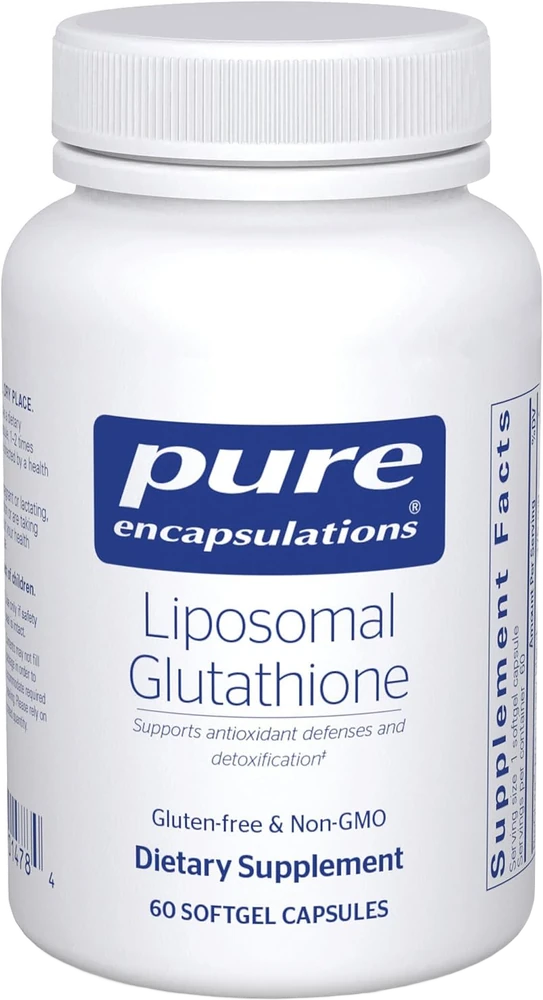
01Pure Encapsulations Liposomal Glutathione
This is the pick for the buyer who reads the absorption debate and decides to pay to sidestep it.
 04
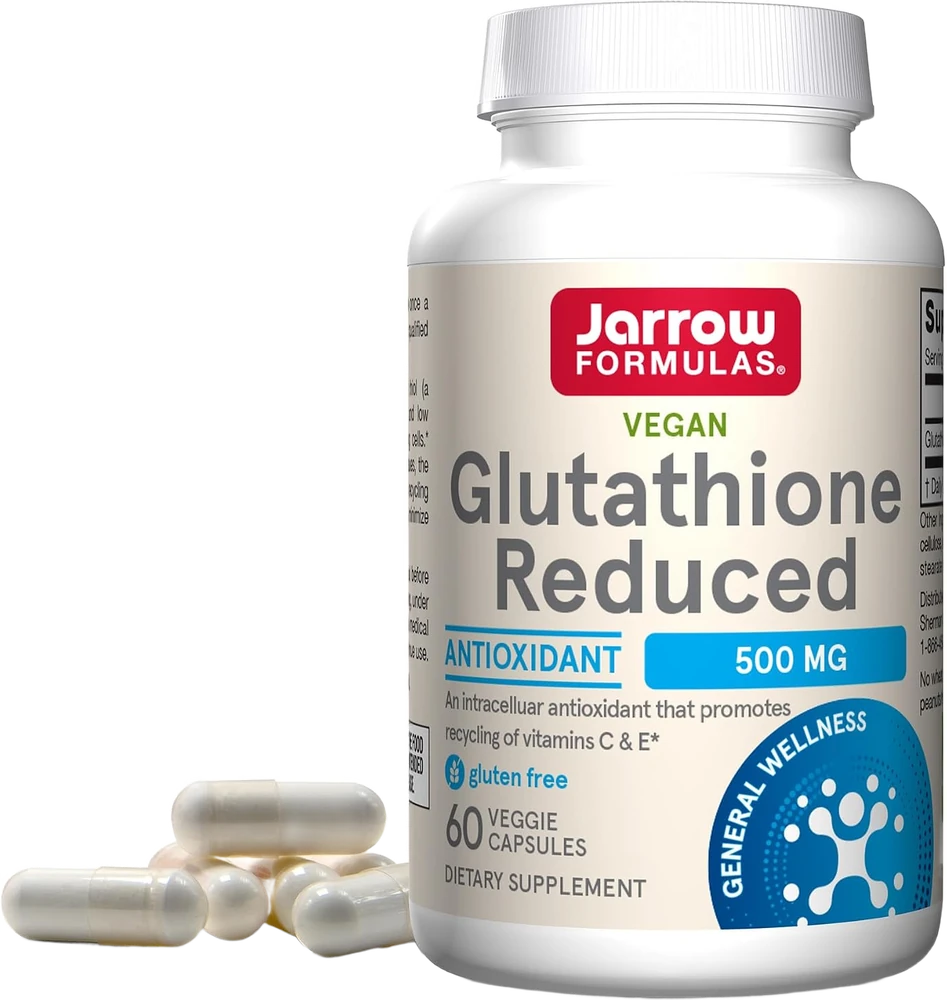
04Jarrow Glutathione Reduced
Jarrow is the honest budget pick: a full 500 mg of reduced glutathione, vegan and single-ingredient, from a brand people already trust, at the lowest sticker price on the list.
 07
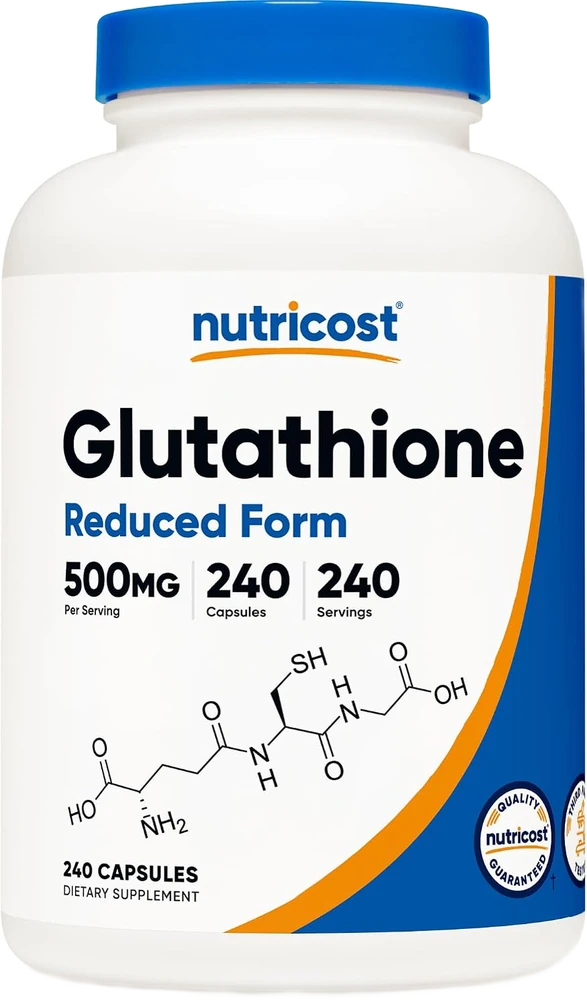
07Nutricost Glutathione 500 mg
Nutricost wins on one axis decisively: cost-per-serving.
Quick Answers
Is this really the clinically-studied Setria glutathione?
The listing states Setria branded reduced L-glutathione — we could not confirm that against a legible Supplement Facts panel, since no photo in the listing shows one, so treat it as the listing's claim rather than a panel-verified fact. Setria is the named, pharmaceutical-grade reduced glutathione made by Kyowa Hakko in Japan via a patented fermentation process, and it is the raw material behind a good deal of the better human glutathione research. Naming a source like this is still more specific than a generic 'reduced glutathione' that never names its raw-material source, even though we can't check the panel print itself. What Setria branding does NOT change is the underlying form: this is still plain reduced glutathione in a capsule, so the oral-absorption debate (below) still applies to it.
Does plain oral glutathione like this actually get absorbed?
This is the genuinely-debated heart of the category, and the honest answer is 'partly and slowly.' Witschi 1992 (PMID 1362956) found a single 3 g oral dose didn't raise plasma glutathione at all, and Allen 2011 (PMID 21875351) found 500 mg/day for 4 weeks moved no oxidative-stress biomarkers. But Richie 2015 (PMID 24791752) found that 250-1000 mg/day taken for six months DID raise body glutathione stores. So a product like this can probably replete you over months at this listing-claimed 500 mg dose (a figure we could not verify against a legible Supplement Facts panel) — it just isn't an instant plasma spike. If that uncertainty bothers you, a liposomal (Pure Encapsulations #1, Core Med Science #2) or S-acetyl (Double Wood #3) form is the hedge.
How should I dose it — one capsule or two?
One capsule a day — the listing's claimed 500 mg — is a sensible, evidence-aligned default: it sits squarely in the 250-1000 mg/day range Richie 2015 used to raise body stores, and a single cap keeps a 150-count bottle running for about five months — long enough to actually reach the repletion horizon. The listing's own directions suggest 1-2 capsules daily; we could not verify this against a legible Supplement Facts panel, since no photo in the listing shows one, so a second capsule would nominally push you toward the 1000 mg high-dose arm if you want it. Consistency over months matters far more than squeezing in a second cap; pick the dose you'll keep taking.
Should I just take NAC instead?
It's a fair question and worth weighing. NAC (N-acetylcysteine) supplies cysteine, the rate-limiting amino acid your body uses to build its own glutathione, and it absorbs well orally — so it sidesteps the very absorption problem that hangs over plain oral GSH, usually at lower cost. The trade-off is that NAC raises glutathione indirectly (your body still has to synthesise it) rather than supplying the tripeptide directly. If your goal is simply to support glutathione status as cheaply as possible, NAC belongs in your decision; if you specifically want to supply glutathione itself from a named source, this is the pick.
Will it lighten my skin?
That's not a use we endorse or measure. Glutathione is marketed for skin lightening, but SAC ranks it as an antioxidant, liver-support, and immune supplement — not a whitening agent. The oral skin-lightening evidence is limited and short-term, and intravenous glutathione for cosmetic whitening has drawn safety warnings from regulators. Buy this for its antioxidant and detox-support rationale with realistic, months-long expectations; don't buy it expecting a measured skin-tone effect.
Sources & Further Reading
3 peer-reviewed sources, each linked to PubMed
- [1] Richie 2015 PMID 24791752 — Randomized controlled trial of oral glutathione supplementation on body stores of glutathione. 6-month RCT: 250 mg AND 1000 mg/day oral glutathione raised body stores (blood, erythrocytes, lymphocytes) vs placebo. The repletion trial behind this 500 mg plain-form pick — but the effect took months, not days.
- [2] Witschi 1992 PMID 1362956 — The systemic availability of oral glutathione. Single 3 g oral dose did not raise plasma glutathione in healthy volunteers — 'negligible' systemic availability. The origin of the absorption caveat that applies to every plain reduced capsule, Setria included.
- [3] Allen 2011 PMID 21875351 — Effects of oral glutathione supplementation on systemic oxidative stress biomarkers in human volunteers. 500 mg twice daily for 4 weeks moved no oxidative-stress biomarkers and didn't change glutathione status — the short-term null result that means this pick should be judged over months, not weeks.
Affiliate disclosure: every Amazon link uses our Associates tag (superachieverclub-20). We earn a small commission at no cost to you; it funds independent reviews. We never accept payment to change a ranking.