
Double Wood S-Acetyl L-Glutathione Review
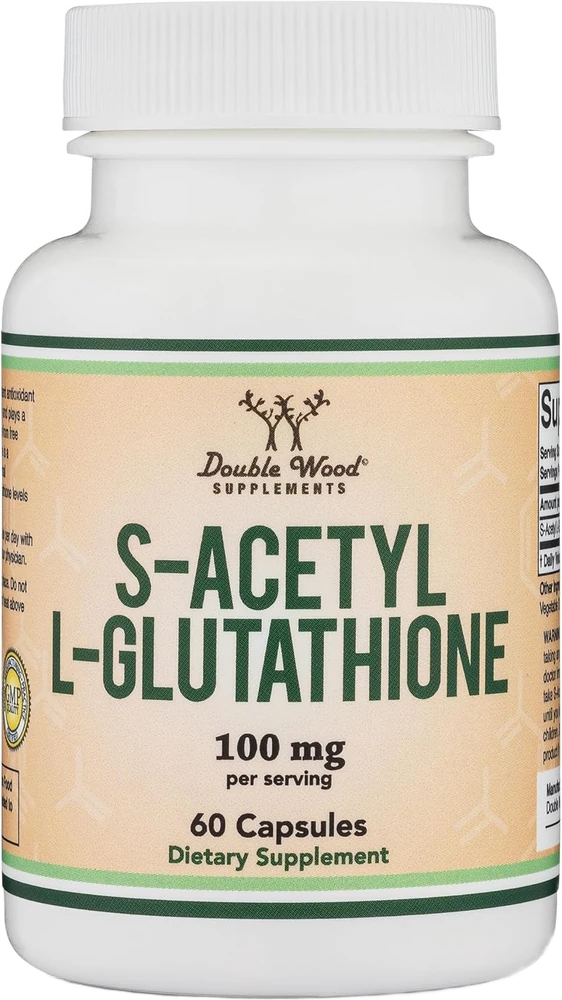 #3 of 10 · Best S-acetyl form✓ Label verified · Supplement Facts read Sep 7, 2026
Real retailer photo, cut out. Label unedited.
Consider it. A distinct, sensible acetylated mechanism — but its own human outcome evidence is thin. S-acetyl glutathione carries an acetyl group engineered to survive the gut and release glutathione inside the cell — a credible third approach to the absorption problem, and Double Wood's is the best-value version (single-ingredient, purity-tested, ~$0.47/cap).
$28 / 60 capsules (~2-month supply at 1/day)≈ $0.47 / 100 mg capsule
Why It Scores 8.1 — And The Label Line Behind Each Number
Form & absorption strategy
30% of scoreA genuinely distinct, well-reasoned mechanism: the acetyl group is engineered to protect glutathione through the gut and be cleaved intracellularly — a third route alongside plain reduced and liposomal. Scores well on novelty and rationale, but held below the liposomals because S-acetyl's HUMAN outcome evidence is thin and mechanistic, where liposomal has Sinha 2018.
- Active form
- S-Acetyl L-glutathione (acetylated)
Dose vs studied range
25% of score100 mg is a low elemental dose, and unlike plain GSH (250-1000 mg/day in Richie 2015) S-acetyl has no well-established human dose-response to validate it. Scored as reasonable-by-convention (the form is dosed lower on the survival premise) but not trial-anchored — the lower elemental milligrams are a real, honest limitation.
- Per serving
- 100 mg (1 capsule); label allows 1-2/day
- Dose caveat
- 100 mg is a low elemental dose; no established S-acetyl human dose-response
Testing & label transparency
20% of scoreMade in New York, purity-tested, single-ingredient, non-GMO and gluten-free — solid for the value tier. Held mid-pack because S-acetyl isn't a named branded raw material (less source provenance to verify than the Setria picks) and there's no third-party NSF/USP seal.
- Testing
- Made in New York, purity-tested; non-GMO, gluten-free, single-ingredient
Value per day
15% of scoreAt ~$0.47 per capsule it's strong value for S-acetyl, which is a pricier raw material per milligram than commodity reduced glutathione. Within the acetylated tier it's the affordable choice. Cheaper than the liposomals per day, dearer than a bulk plain capsule.
- Count
- 60 capsules (~2-month supply at 1/day)
- Price
- $28 / 60 capsules ≈ $0.47 per capsule
Real-world fit
10% of scoreOne small single-ingredient capsule a day — effortless to take and stay consistent with over the long haul a glutathione protocol requires. No timing demands, no two-softgel routine, no liquid ritual. The easiest daily fit in the lineup alongside the plain capsules.
- More Specs
- Mechanism
- Acetyl group designed to survive digestion + be cleaved intracellularly
- Evidence note
- Distinct mechanism, but human OUTCOME data thin/mechanistic (no S-acetyl-specific trial cited)
Label verified. Every figure read from the Supplement Facts photo, Sep 7, 2026.
Marketing Claims Vs. Reality
S-acetyl glutathione is more absorbable than standard and liposomal glutathione.
This is a common marketing claim we can't verify. The acetylated mechanism is a reasonable absorption strategy, but there's no head-to-head human OUTCOME data showing it beats liposomal — which is the form that actually has a human trial (Sinha 2018, PMID 28853742). 'More absorbable than liposomal' is unproven; treat it as a hypothesis, not a fact.
100 mg of S-Acetyl L-glutathione per capsule.
The 100 mg per-capsule S-acetyl dose is as stated. Accurate — with the honest context that it's a low elemental dose and S-acetyl lacks an established human dose-response to benchmark against.
The acetyl group survives the gut and improves cellular uptake.
Mechanistically reasonable and the explicit design rationale for the form — the acetyl modification is intended to protect the molecule through digestion and release glutathione inside the cell. 'Partial' because this is a designed/proposed mechanism supported more by chemistry than by robust human outcome trials.
Made in New York and tested for purity; non-GMO and gluten-free.
Double Wood states US (New York) manufacture, purity testing, non-GMO and gluten-free status — verifiable quality signals appropriate to the value tier, and the main trust markers here given there's no named branded source or NSF/USP seal.
Supports antioxidant defenses and detoxification.
Glutathione's antioxidant and phase-II detox roles are established biology, so IF the S-acetyl form delivers glutathione intracellularly as designed, the support rationale follows. 'Partial' because the 'if' — meaningful human delivery and outcomes for S-acetyl specifically — isn't firmly established.
What Our Test Actually Found
S-acetyl is a real, distinct strategy — credit where due
It would be unfair to lump S-acetyl in with plain reduced glutathione. The acetyl group is a genuine chemical approach to the absorption problem: shield the tripeptide through the gut, then let cellular enzymes cleave it to release glutathione inside the cell. That's mechanistically distinct from both plain GSH (which the gut degrades) and liposomal (which encapsulates physically). For the buyer who finds that chemistry compelling, S-acetyl is a legitimate third option, and Double Wood is the affordable way in.
But the human outcome evidence is the honest weak point
Here's what keeps this a 'consider': S-acetyl's case is largely mechanistic. Unlike liposomal glutathione, which has a human trial behind it (Sinha 2018 raised body stores and immune markers), S-acetyl lacks comparably robust human OUTCOME data — and we won't cite a trial we can't verify. So the appealing mechanism hasn't been matched by the same level of proof in people. If your decision rests on evidence strength, liposomal is the better-supported delivery form; S-acetyl is the better story, not the better-proven one.
The 100 mg dose is low and unanchored
Two honest dose points. First, 100 mg is a low elemental amount next to the 500 mg plain capsules — and while the forms aren't 1:1, that gap is real. Second, plain GSH has a human dose range to aim at (250-1000 mg/day, Richie 2015); S-acetyl does not, so there's no trial-validated target to say 100 mg is 'right.' It's a reasonable-by-convention dose, not an evidence-anchored one. Don't assume one 100 mg S-acetyl cap equals a 500 mg plain capsule's worth of effect.
Strong value and the easiest daily routine in its tier
Where it clearly wins: S-acetyl is a pricier raw material per milligram than commodity reduced glutathione, and Double Wood delivers it at about $0.47 a capsule — good value for the form. It's also single-ingredient and one small capsule a day, which makes it effortless to stay consistent with over the months any glutathione protocol needs. If you've decided on S-acetyl, this is the rational pick within the form; the question is whether S-acetyl itself is the form you want.
Full analysis: all pros & cons (7), buy if / skip if
- A genuinely distinct, well-reasoned acetylated mechanism — engineered for gut stability + intracellular release
- Best-value S-acetyl: ~$0.47/cap for a pricier raw material, single-ingredient
- Made in New York, purity-tested, non-GMO and gluten-free
- One small capsule a day — the easiest daily routine in its tier
- S-acetyl's own human OUTCOME evidence is thin and largely mechanistic (liposomal has the actual trial)
- 100 mg is a low elemental dose with no established S-acetyl human dose-response
- 'More absorbable than liposomal' is an unverified marketing claim; no named branded source or NSF/USP seal
- The acetylated, gut-stable mechanism specifically appeals to you and you want the best-value S-acetyl
- You want a single-ingredient, purity-tested, US-made capsule at a friendly price
- You'd rather try a distinct delivery chemistry than a plain or liposomal form
- You prefer one small capsule a day
- You want the best-evidenced delivery form — that's liposomal (Pure Encapsulations #1, Core Med Science #2), which has a human trial (Sinha 2018)
- You want a full, trial-range dose from a named source — the plain Setria capsule (#9) gives 500 mg
- Cost is your main driver and you mainly want to raise glutathione status — weigh NAC first
S-acetyl glutathione carries an acetyl group engineered to survive the gut and release glutathione inside the cell — a credible third approach to the absorption problem, and Double Wood's is the best-value version (single-ingredient, purity-tested, ~$0.47/cap). Why it's a 'consider' rather than a 'buy': S-acetyl's human OUTCOME trials are thin and mostly mechanistic (liposomal has the actual trial, Sinha 2018), the 100 mg dose is low with no established S-acetyl dose-response, and 'more absorbable than liposomal' is an unverified marketing claim. Consider it if the acetylated mechanism specifically appeals; otherwise the better-evidenced liposomal (#1, #2) or the cheaper plain Setria capsule (#9) — or NAC — are more defensible.
Double Wood S-Acetyl L-Glutathione is the best-value way to try the acetylated form — the third distinct answer to glutathione's absorption problem. Where plain reduced GSH is cheap but poorly-absorbed and liposomal physically encapsulates the molecule, S-acetyl bolts on an acetyl group engineered to survive digestion and be cleaved off inside the cell. Double Wood delivers it single-ingredient, purity-tested, and New-York-made at a friendly price. We rank by form first, and S-acetyl earns real credit for a genuinely distinct, sensible mechanism. But honesty requires the caveat that drops it below the liposomal picks: S-acetyl's own human OUTCOME evidence is thin and largely mechanistic — it's a well-reasoned approach rather than a proven one, where liposomal at least has Sinha 2018 behind it. Add a low 100 mg elemental dose with no established S-acetyl dose-response, and this becomes a 'consider,' not an automatic buy. Here's the full breakdown.
The best-value acetylated glutathione — a compelling mechanism that's still short on human proof.

Double Wood S-Acetyl L-Glutathione is the pick for the buyer specifically drawn to the acetylated form. It's a real, distinct strategy — an acetyl group engineered to carry glutathione past the gut and release it inside the cell — delivered single-ingredient, purity-tested, US-made, and at the best value in its tier. If S-acetyl is the form you want, this is the one to buy. Why it's a 'consider' rather than a clear 'buy' comes down to evidence and dose. S-acetyl's human OUTCOME data is thin and mostly mechanistic, where liposomal glutathione at least has a human trial behind it (Sinha 2018) — so the appealing chemistry isn't yet matched by proof in people, and 'more absorbable than liposomal' is an unverified claim. The 100 mg dose is also low and unanchored, with no established S-acetyl dose-response. If you value evidence strength, the liposomal picks (#1, #2) are better-supported, the named-Setria plain capsule (#9) gives a full trial-range dose for less, and NAC is the cheaper precursor route. Try S-acetyl if its mechanism genuinely appeals — just go in with realistic, evidence-honest expectations.
If This Doesn’t Fit — Try These
 01
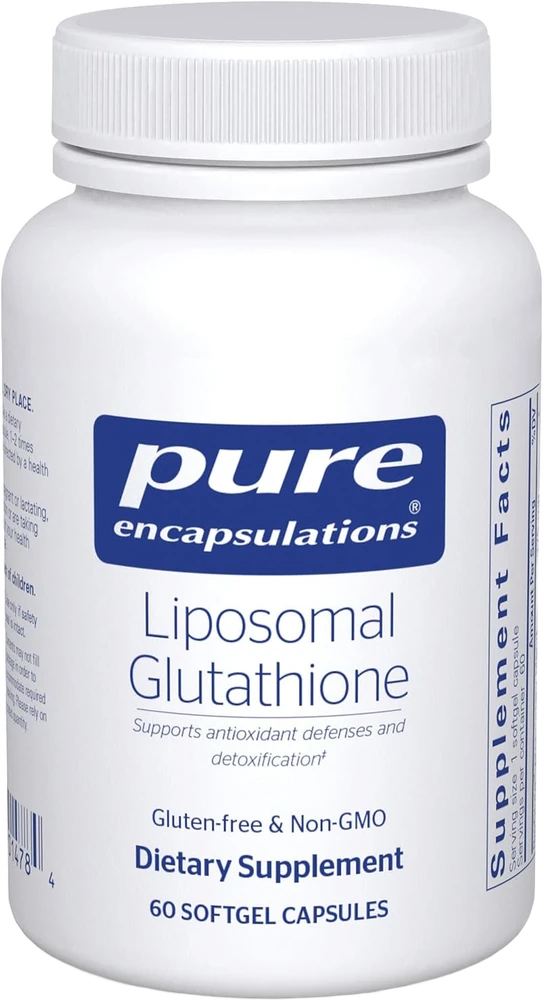
Pure Encapsulations Liposomal Glutathione
This is the pick for the buyer who reads the absorption debate and decides to pay to sidestep it.
 09
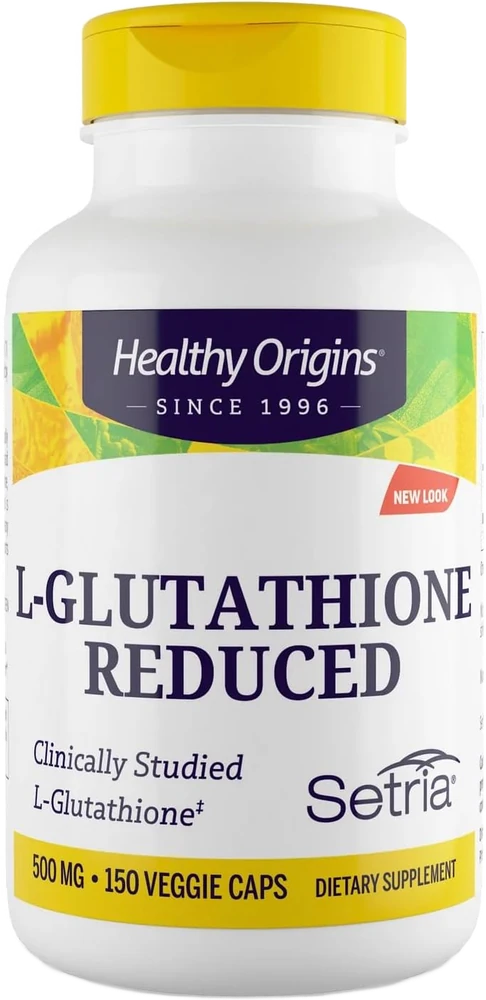
Healthy Origins Setria Glutathione
If you want a single-ingredient glutathione with a named Setria source and you trust the slow-repletion reading of the evidence, this is the one to consider.
 02
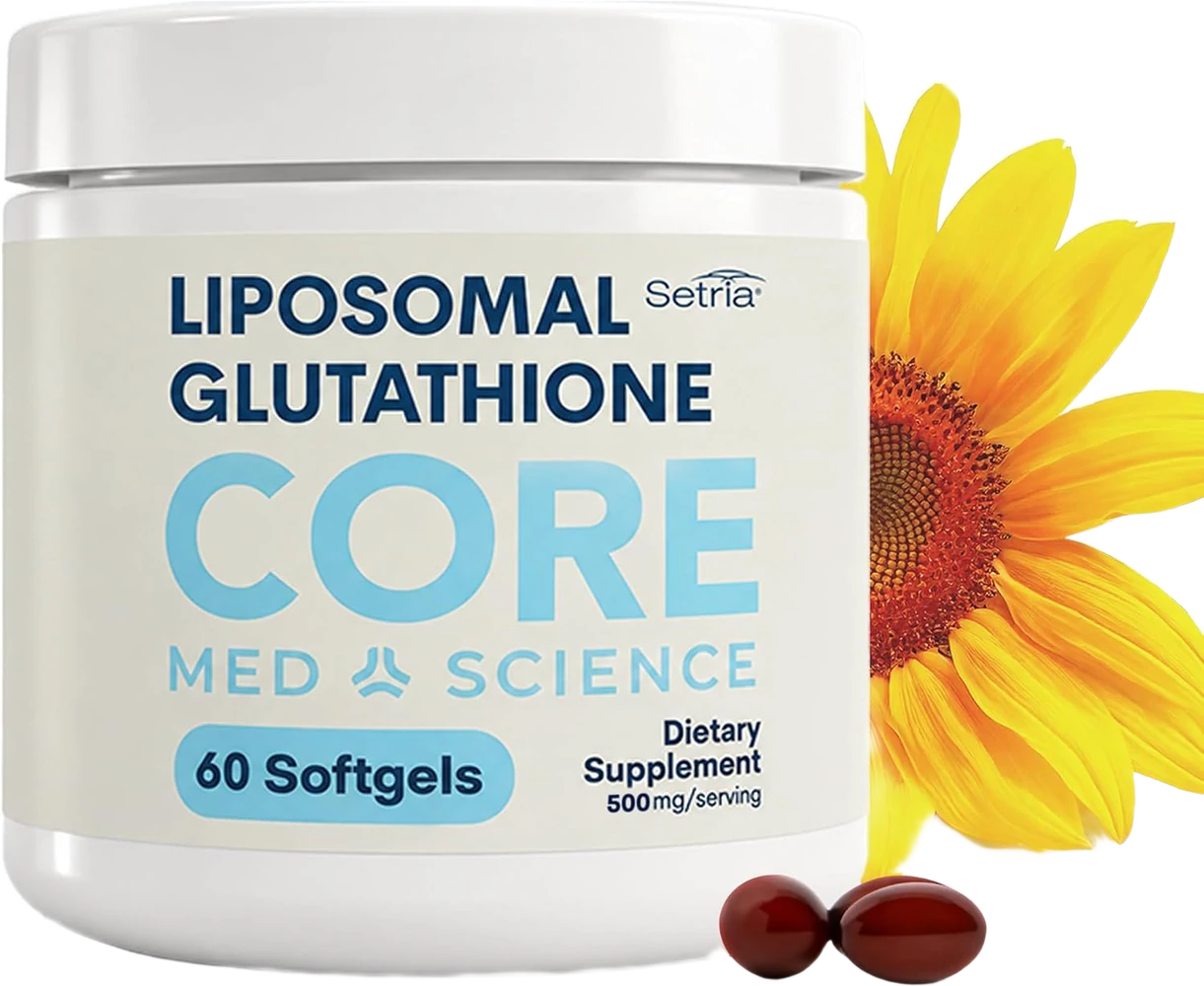
Core Med Science Liposomal Glutathione
Core Med Science is what you buy when you want the liposomal delivery advantage but balk at Pure Encapsulations' price-per-milligram.
Quick Answers
What is S-acetyl glutathione, and how is it different?
It's glutathione with an acetyl group attached, and that group is the whole point. The plain reduced tripeptide is fragile in the gut (Witschi 1992 found a large oral dose didn't reach plasma); the acetyl modification is engineered to shield the molecule through digestion and then be cleaved off inside the cell, releasing glutathione intracellularly. So it's a third, chemically distinct absorption strategy alongside plain reduced (cheap, debated absorption) and liposomal (encapsulated, best human evidence). The honest caveat: while the mechanism is appealing, S-acetyl's own human OUTCOME trials are thin — much of its case is mechanistic rather than proven in people.
Why is it only 100 mg when reduced capsules are 500 mg?
Because the forms aren't 1:1 comparable, and the dose conventions differ. S-acetyl is dosed lower on the premise that more of it survives to act, so 100 mg of S-acetyl is not meant to equal 100 mg of plain glutathione. That said, we're honest that 100 mg is a low elemental dose, and — unlike plain GSH, which has the 250-1000 mg/day Richie 2015 range — S-acetyl doesn't have a well-established human dose-response to anchor to. So treat the dose as reasonable-by-convention rather than trial-validated, and don't assume it's interchangeable with a 500 mg plain capsule.
Is it actually better absorbed than liposomal glutathione?
That's the marketing claim, and it's not something we can verify. S-acetyl is often promoted as more absorbable than both standard and liposomal glutathione, but the head-to-head human outcome data to support 'better than liposomal' isn't there — liposomal is the form with the actual human trial (Sinha 2018 raised body stores and immune markers). The fair statement is that S-acetyl is a credible, mechanistically distinct approach to the absorption problem, not a proven winner over liposomal. If you want the best-evidenced delivery form, that's liposomal (#1, #2); S-acetyl is the pick if its specific mechanism appeals to you.
Is Double Wood a trustworthy brand for this?
For the value tier, yes. Double Wood states the product is made in New York and tested for purity, and it's a single-ingredient, non-GMO, gluten-free formula from a brand with a strong, established review base. What it doesn't have — like every pick on this list — is a third-party NSF/USP certification seal, and because S-acetyl isn't a named branded raw material the way Setria is, you have a bit less source provenance to verify than with the Setria picks. The in-house purity testing and brand track record are the main quality signals here.
Should I consider NAC instead?
It's worth weighing, especially on cost. NAC supplies cysteine for your body to build its own glutathione, absorbs well, and is usually cheaper — a different way around the same absorption problem S-acetyl tries to solve chemically. The trade-off is that NAC is a precursor (indirect) while S-acetyl aims to deliver glutathione itself in a gut-stable form. Given that S-acetyl's human outcome evidence is thin, a cost-focused buyer could reasonably try NAC first; a buyer specifically drawn to the acetylated delivery mechanism would choose this.
Sources & Further Reading
3 peer-reviewed sources, each linked to PubMed
- [1] Witschi 1992 PMID 1362956 — The systemic availability of oral glutathione. A single 3 g oral dose of plain glutathione did not raise plasma GSH — 'negligible' availability. The gut-stability problem that S-acetyl's acetyl modification is engineered to overcome.
- [2] Sinha 2018 PMID 28853742 — Oral supplementation with liposomal glutathione elevates body stores of glutathione and markers of immune function. Liposomal glutathione raised body stores and immune markers in humans — cited as the contrast: the rival delivery form HAS a human outcome trial, whereas S-acetyl's outcome evidence is thin.
- [3] Richie 2015 PMID 24791752 — Randomized controlled trial of oral glutathione supplementation on body stores of glutathione. 250-1000 mg/day plain oral glutathione raised body stores over 6 months — the established human dose range that plain GSH has and S-acetyl lacks, context for why 100 mg S-acetyl is unanchored.
Affiliate disclosure: every Amazon link uses our Associates tag (superachieverclub-20). We earn a small commission at no cost to you; it funds independent reviews. We never accept payment to change a ranking.