
Top 9 Best CoQ10 for Fertility (2026)
 01 · Best overall for fertility✓ Label verified · Supplement Facts read Oct 3, 2026
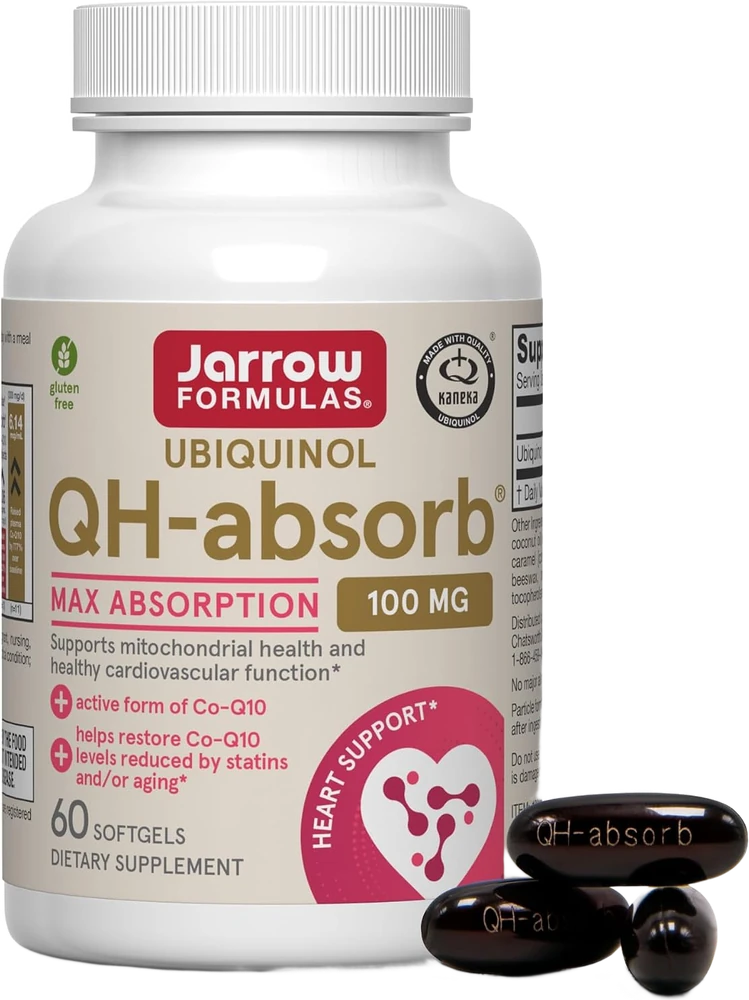
Best overall for fertility: Jarrow Formulas Ubiquinol QH-Absorb 100 mg
Licensed Kaneka QH ubiquinol at 100 mg per softgel — the form that earns its keep at the fertility dose. The default first pick for egg-quality 35+ buyers and couples.
~$81 / month at 600 mg/day (Amazon US, Oct 11, 2026)$0.45 / 100 mg Kaneka QH softgel
Why it wins: all five scores, pros & cons, full label
- Licensed Kaneka QH — the bioavailability advantage compounds at the 200-600 mg fertility dose
- 100 mg per softgel scales cleanly across egg-quality, IVF-adjunct, and sperm protocols
- Pre-formulated in carrier oil — ideal for splitting the high dose across two fatty meals
- Jarrow's 35-year science pedigree; non-GMO and gluten-free per the listing tile
- At 600 mg/day this runs ~$81/month: three bottles a month
- Bovine-gelatin softgel shell with caramel color — not vegetarian
- Per softgel
- 100 mg ubiquinol
- To hit fertility doses
- 2-4/day egg-quality (200-400 mg) · 6/day IVF (600 mg)
- Testing
- Licensed Kaneka chain-of-custody + Jarrow GMP
- Form
- Kaneka QH ubiquinol (reduced)

Our take — The safe default for fertility. You get the patent-grade Kaneka QH ubiquinol — the form whose bioavailability advantage compounds precisely at the 200-600 mg/day fertility dose — at a 100 mg per-softgel size that scales cleanly across egg-quality (2-4/day), IVF-adjunct (6/day), and sperm (2-3/day) protocols. The carrier-oil softgel makes splitting the high dose across breakfast and dinner straightforward. The only reasons to look past Jarrow: you want to restock in a store (go to NOW at #2) or you specifically want Life Extension's QC chain and will pay about 20% more for it (go to Life Extension at #4). Run it as an adjunct to your fertility team's protocol — for cross-reference, the general buying guide lives at /best/coq10-supplements and the full science at /substance/coq10.
 02
 03
 04
 05
 06
 07
 08
 09
Who Wins Which Aspect
Sorted by overall SAC Product Score™ — the official ranking.
| # | Pick | Score | Form30% | Dose accuracy at 100-200 mg25% | Testing + Kaneka chain-of-custody20% | Cost per active mg15% | Real-world response10% | Cost Per Dose | Buy |
|---|---|---|---|---|---|---|---|---|---|
| 01 | | 9.2 | 9.51 | 9.51 | 9.51 | 8.03 | 9.01 | $0.45 / 100 mg Kaneka QH softgel | Check price |
| Licensed Kaneka QH — the bioavailability advantage compounds at the 200-600 mg fertility doseAt 600 mg/day this runs ~$81/month: three bottles a month | |||||||||
| 02 | | 8.9 | 9.51 | 9.02 | 9.02 | 8.03 | 8.03 | $0.46 / 100 mg Kaneka QH softgel | Check price |
| Licensed Kaneka QH — same source as Jarrow and Healthy Origins, different labelAt 600 mg/day a month takes three bottles: ~$82 on Oct 11, 2026 | |||||||||
| 03 | | 8.9 | 9.51 | 9.02 | 8.53 | 8.03 | 8.52 | $0.50 / 100 mg Kaneka QH softgel | Check price |
| Identical Kaneka QH patent-grade ubiquinol as Jarrow — same moleculeNo price lead any more: ~$90 a month at 600 mg/day on Oct 11, 2026, above Jarrow and NOW | |||||||||
| 04 | | 8.9 | 9.51 | 8.53 | 9.51 | 7.5 | 9.01 | $0.55 / 100 mg Kaneka QH + shilajit softgel | Check price |
| Licensed Kaneka QH is the evidenced part of this bottle; the shilajit carrier stacked on top is notThe dearest ubiquinol here at the fertility dose — ~$98/month at 600 mg/day on Oct 11, 2026 | |||||||||
| 05 | | 8.2 | 8.02 | 9.02 | 6.5 | 9.51 | 8.03 | $0.16 / 100 mg ubiquinone + BioPerine softgel | Check price |
| Lowest price per softgel on the list ($0.16 on Oct 11, 2026), with BioPerine (~30% absorption boost)Gelatin softgel with soy lecithin on the panel — not vegetarian, not soy-free | |||||||||
| 06 | | 8.0 | 7.53 | 9.02 | 9.02 | 5.5 | 9.01 | $0.88 / 100 mg NSF Contents Certified ubiquinone gelcap | Check price |
| NSF Contents Certified (per the listing tile) — third-party verification of what's in the gelcapUbiquinone (not ubiquinol) at $0.88 per gelcap, about twice the price of Jarrow's Kaneka ubiquinol (#1, $0.45 on Oct 11, 2026) | |||||||||
| 07 | | 7.7 | 7.53 | 8.53 | 6.5 | 8.03 | 8.03 | $0.25 / 100 mg water-soluble softgel | Check price |
| Water-soluble emulsion does improve fasted absorption versus generic ubiquinoneSolubility premium evaporates when you take CoQ10 with the fatty meals a fertility protocol already requires (free) | |||||||||
| 08 | | 7.4 | 7.0 | 7.0 | 7.5 | 9.02 | 7.0 | $0.36 / 200 mg serving | Check price |
| The larger bags on the same listing are the cheapest CoQ10 per mg we found: 100 g for $43.97 is $0.04 per 100 mg (Oct 11, 2026), which counts at the 600 mg fertility doseA 10 g bag lasts only ~16 days at 600 mg/day — a 3-month IVF window needs about 5-6 bags, and at $17.97 a bag that costs more per mg than Doctor's Best softgels | |||||||||
| 09 | | 7.1 | 7.0 | 7.5 | 6.5 | 6.5 | 8.52 | $0.47 / 100 mg CoQsol softgel | Check price |
| Solaray is a legacy brand (since 1973) with consistent QC over five decadesUbiquinone as CoQsol (not Kaneka-licensed, not ubiquinol) — the biggest form gap on the list at fertility doses | |||||||||
The Other 8, Ranked
- 02
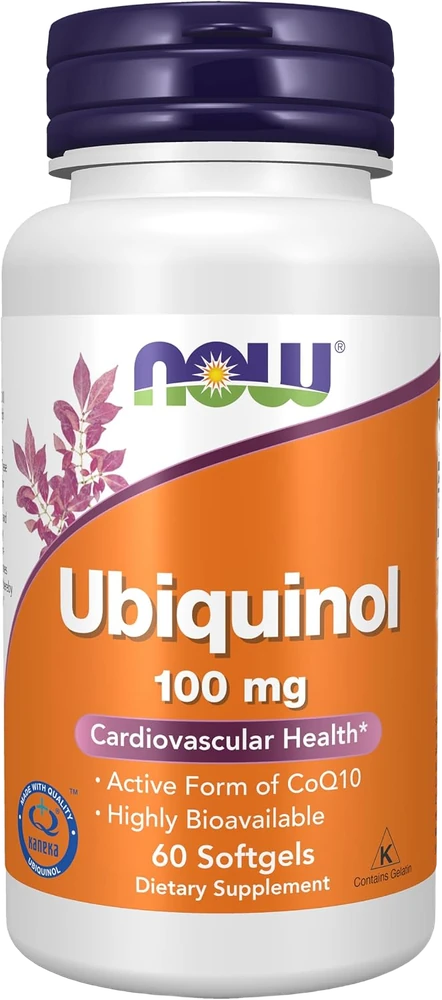
Best household-brand ubiquinol: NOW Foods Ubiquinol 100 mg
8.9SAC Score™Household-name Kaneka QH ubiquinol with three decades of QC. The reliable, offline-available ubiquinol pick — easy to restock mid-protocol when your primary runs out.
StrongestForm9.51WeakestCost per active mg8.0- Per softgel
- 100 mg ubiquinol
- To hit fertility doses
- 2-4/day egg-quality · 6/day IVF (600 mg)
- Testing
- Licensed Kaneka + NOW in-house labs, GMP, NSF-registered facility
All five scores, pros & cons, full label
What We Like- Licensed Kaneka QH — same source as Jarrow and Healthy Origins, different label
- NOW's in-house QC labs are among the most consistent in the industry — 30+ years
- Widely stocked in US health stores (Sprouts, Vitamin Shoppe, Whole Foods) — easy to restock mid-protocol
- Priced level with Jarrow: $0.46 per softgel on Oct 11, 2026
What You Live With- At 600 mg/day a month takes three bottles: ~$82 on Oct 11, 2026
- Brand identity less premium than Life Extension for the high-budget IVF buyer
- Form
- Licensed Kaneka QH ubiquinol
Our take — The reliability pick. NOW Foods is the same licensed Kaneka QH ubiquinol as Jarrow and Healthy Origins, with the practical advantage that it's stocked in most US health stores — which matters on a fertility protocol where running out mid-cycle is a real risk. On Oct 11, 2026 it cost the same as Jarrow per softgel ($0.46 against $0.45). Slot it in as your primary if offline availability and restock-ability matter to you, or as a backup to keep your 3-month window unbroken if your main brand goes out of stock. Same molecule, dependable QC, no surprises.
- 03
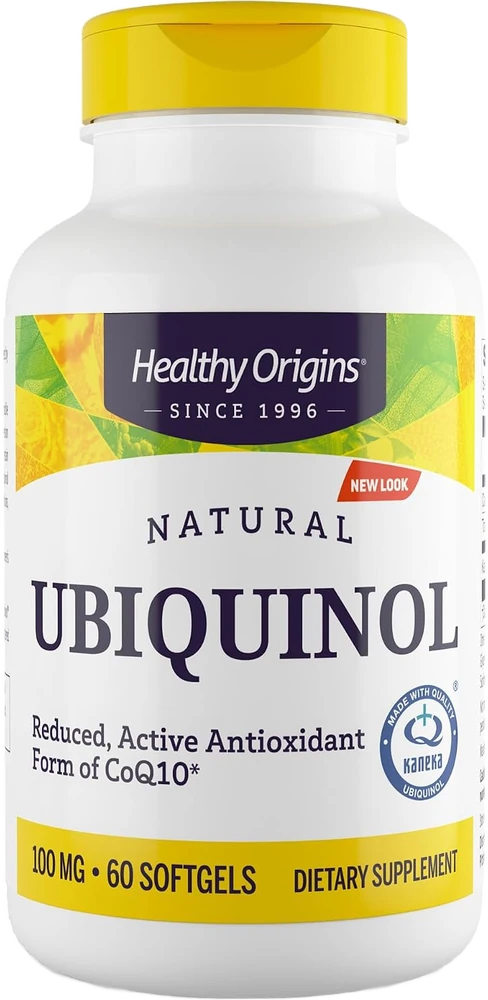
Plain Kaneka QH softgel: Healthy Origins Ubiquinol (Kaneka QH) 100 mg
8.9SAC Score™The same licensed Kaneka QH ubiquinol as Jarrow in a plain rice-bran-oil softgel from a smaller brand. It used to be the cheapest of the tier; on Oct 11, 2026 it was not.
StrongestForm9.51WeakestCost per active mg8.0- Per softgel
- 100 mg ubiquinol
- To hit fertility doses
- 2-4/day egg-quality · 6/day IVF (600 mg)
- Testing
- Licensed Kaneka chain-of-custody + Healthy Origins GMP; '3rd Party Tested' and Non-GMO seals on the label
All five scores, pros & cons, full label
What We Like- Identical Kaneka QH patent-grade ubiquinol as Jarrow — same molecule
- Clean 100 mg per softgel that scales to the 200-600 mg fertility doses
- Healthy Origins is a science-led mid-tier brand with strong QC reputation
- Single-softgel format, no fillers, kosher-gelatin softgel shell (not vegetarian)
What You Live With- No price lead any more: ~$90 a month at 600 mg/day on Oct 11, 2026, above Jarrow and NOW
- Smaller brand recognition than Jarrow or Life Extension — matters less than the molecule
- Smaller production runs mean occasional Amazon out-of-stock periods (a risk when you need a continuous 3-month supply)
- Form
- Licensed Kaneka QH ubiquinol
Our take — Sound, and no longer the bargain it was. The fertility dose is high (200-600 mg a day) over a long window, so the cost per softgel adds up, and for years that was the case for this bottle: the same Kaneka QH as Jarrow for less. On Oct 11, 2026 it cost $29.99 for 60 softgels on Amazon US, about $90 a month at 600 mg a day, against about $81 for Jarrow. The molecule is the same. Buy it if you find it cheaper on the day, and buy enough bottles up front, because the smaller production runs occasionally go out of stock.
- 04
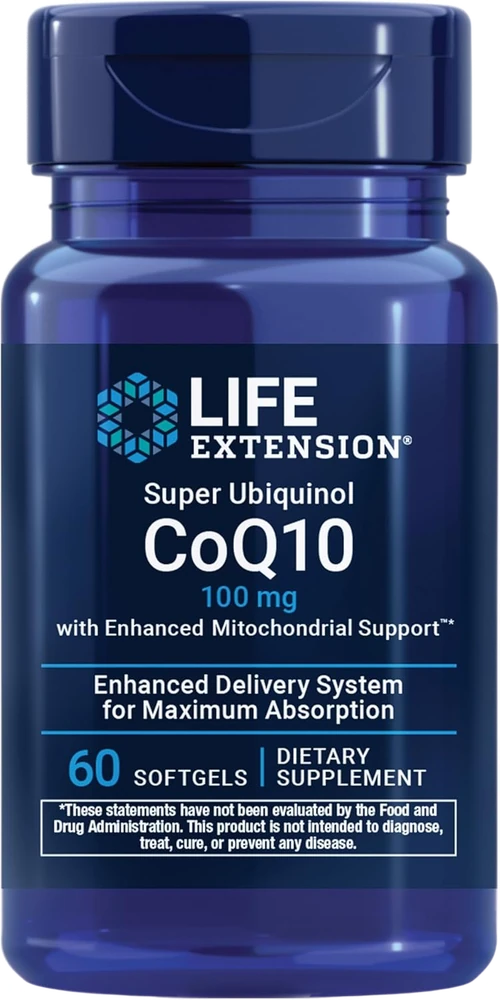
Best premium / IVF adjunct: Life Extension Super Ubiquinol CoQ10 100 mg
8.9SAC Score™Licensed Kaneka QH ubiquinol with a PrimaVie shilajit carrier whose extra absorption is manufacturer-claimed only. A defensible premium IVF-adjunct pick on QC, not on the carrier.
StrongestForm9.51WeakestCost per active mg7.5- Per softgel
- 100 mg ubiquinol + 100 mg shilajit
- To hit IVF dose
- 6 softgels/day for the 600 mg/day pre-retrieval protocol
- Testing
- Licensed Kaneka + PrimaVie + Life Extension QC
All five scores, pros & cons, full label
What We Like- Licensed Kaneka QH is the evidenced part of this bottle; the shilajit carrier stacked on top is not
- Life Extension's QC pedigree is justified when you're optimising for a retrieval cycle
- PrimaVie is the purified, heavy-metal-tested shilajit grade — it mitigates a risk the raw resin carries
- Single-softgel format, soy-free, gelatin softgel shell
What You Live With- The dearest ubiquinol here at the fertility dose — ~$98/month at 600 mg/day on Oct 11, 2026
- Premium pricing partly buys the Life Extension brand-equity, not pure formulation cost
- Shilajit adds heavy-metal-contamination QC concern if sourced poorly (PrimaVie mitigates this — verify the label)
- Form
- Kaneka QH ubiquinol + PrimaVie shilajit
Our take — The premium IVF-adjunct pick, with one correction we owe you: we used to call the PrimaVie shilajit carrier the differentiator and cite a measured lift over ubiquinol-alone formulations. That study does not exist, and no published trial pairs shilajit with CoQ10 at all. What holds up is the licensed Kaneka QH form and Life Extension's QC chain. The premium is smaller than it was (~$98 a month at 600 mg/day against ~$81 for Jarrow on Oct 11, 2026) and defensible when you're optimising for a single high-stakes cycle. Set the dose and timing with your reproductive endocrinologist — this is one adjunct inside their protocol. For egg-quality buyers on a longer, lower-dose window, Jarrow (#1) covers the same Kaneka molecule for less.
- 05
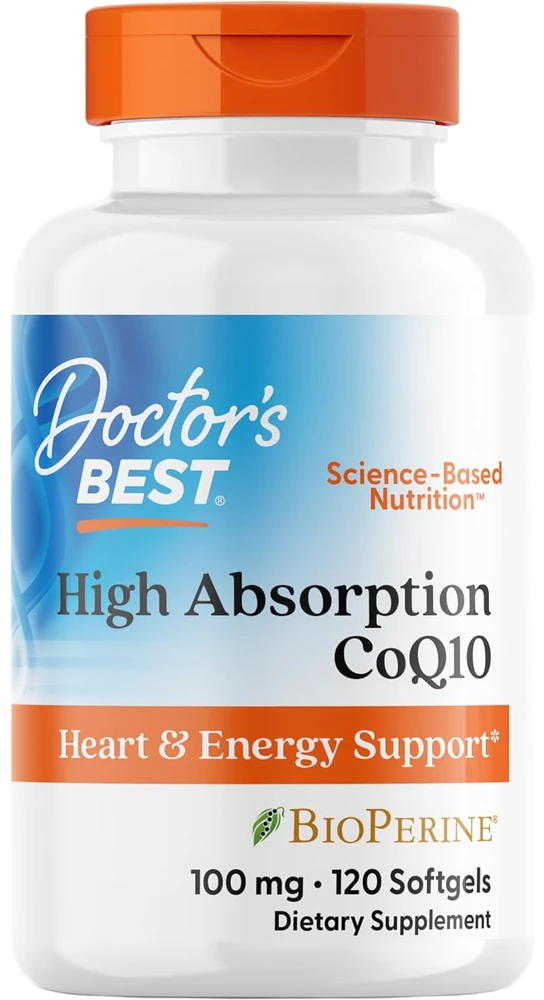
Best budget for sperm protocols: Doctor's Best High Absorption CoQ10 100 mg
8.2SAC Score™The lowest price per softgel on this list. Ubiquinone with BioPerine, 120 softgels for $18.99 on Oct 11, 2026 — an acceptable cost-driven choice for a 200-300 mg/day male sperm-quality protocol.
StrongestCost per active mg9.51WeakestTesting + Kaneka chain-of-custody6.5- Per softgel
- 100 mg ubiquinone
- To hit sperm dose
- 2-3/day for the 200-300 mg/day protocol
- Testing
- No independent seal; CoQ10 supplier not named on the label
Check price on AmazonRead the full review~$9.50-14 / month at 200-300 mg/day (Amazon US, Oct 11, 2026)All five scores, pros & cons, full label
What We Like- Lowest price per softgel on the list ($0.16 on Oct 11, 2026), with BioPerine (~30% absorption boost)
- Two 120-softgel bottles ($37.98 on Oct 11, 2026) cover a full ~74-day spermatogenesis cycle at 200-300 mg/day
- Doctor's Best is a household science-led brand with 30+ years of consistent QC
- Single-softgel 100 mg dose in an extra virgin olive oil base
What You Live With- Gelatin softgel with soy lecithin on the panel — not vegetarian, not soy-free
- Ubiquinone (not ubiquinol) — meaningfully behind the leading picks at the higher 600 mg IVF dose
- BioPerine lifts absorption but doesn't close the 2-4× ubiquinone-to-ubiquinol gap that matters at fertility doses
- Generic Q10 source (not Kaneka-licensed) — loses chain-of-custody for evidence-focused buyers
- Form
- Ubiquinone (oxidised) + BioPerine (piperine)
Our take — The budget answer for a male sperm-quality protocol. Sperm-fertility CoQ10 runs 200-300 mg/day for at least one full ~74-day spermatogenesis cycle — a dose low enough that generic ubiquinone with BioPerine is a defensible cost-driven choice, and two 120-softgel bottles cover the cycle. Where it falls down is the high IVF dose: at 600 mg/day the ubiquinol advantage compounds and Doctor's Best is outclassed by the Kaneka picks above. So: men on a sperm protocol watching cost, this is the pick (pair with zinc + selenium and run 3 months before re-testing). Egg-quality and IVF buyers should step up to ubiquinol (#1-4).
- 06
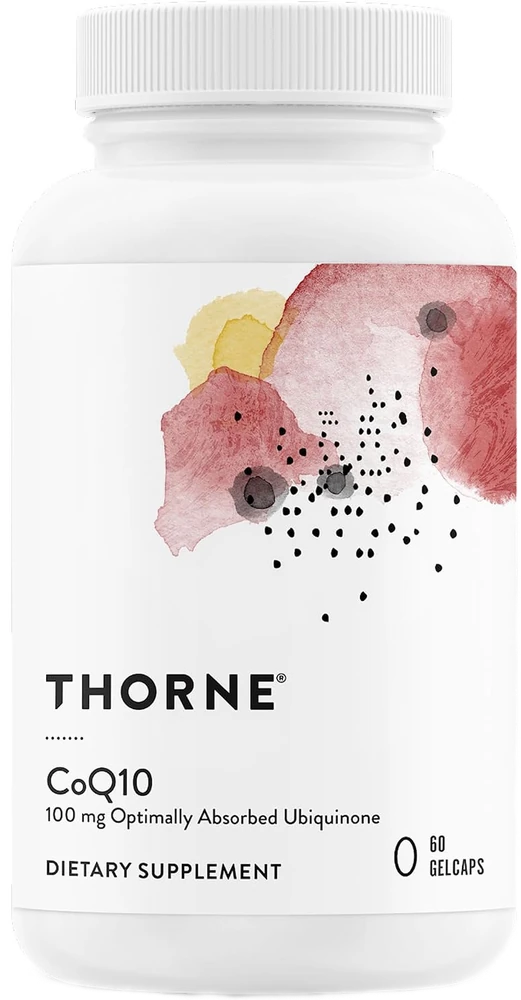
Best NSF-certified ubiquinone: Thorne CoQ10 100 mg
8.0SAC Score™NSF Contents Certified per the listing tile — third-party verification that the label matches the contents. The pick for a buyer who wants verified ubiquinone in a lipid-based gelcap; note this is the Contents Certified program, not NSF's banned-substance sport certification.
StrongestDose accuracy at 100-200 mg9.02WeakestCost per active mg5.5- Per gelcap
- 100 mg ubiquinone
- To hit fertility doses
- 2-3/day sperm · 6/day IVF (600 mg)
- Testing
- NSF Contents Certified (per the listing tile) — label contents verified; not NSF's banned-substance sport program
Check price on AmazonRead the full review~$159 / month at 600 mg/day (three 60-gelcap bottles · Amazon US, Oct 11, 2026)All five scores, pros & cons, full label
What We Like- NSF Contents Certified (per the listing tile) — third-party verification of what's in the gelcap
- Thorne's QC pedigree is among the strongest in the supplement industry (35+ years)
- Lipid-based fill (the listing describes a 'proprietary, lipid-based, non-crystalline form') — a carrier is built into the gelcap
- Colored with lycopene and turmeric rather than synthetic dyes — easy to audit for a buyer conscious of every ingredient
What You Live With- Ubiquinone (not ubiquinol) at $0.88 per gelcap, about twice the price of Jarrow's Kaneka ubiquinol (#1, $0.45 on Oct 11, 2026)
- Bovine-gelatin gelcap (not vegetarian), and the fill lists soy monoglycerides — a soy-sensitivity flag
- NSF Contents Certified adds brand price without a fertility-specific benefit
- Form
- Ubiquinone (printed on the front label) in a bovine-gelatin gelcap with a lipid-based fill
Our take — The niche verified-contents pick. If you want third-party NSF verification that the label matches what's in the gelcap, Thorne's ubiquinone is a clean choice — and Thorne's QC is among the best in the industry. Note that the listing tile says NSF Contents Certified, which is not NSF's banned-substance sport certification, so a tested athlete should not treat it as banned-substance cleared. For everyone else, the certification is a nice-to-have, the form is ubiquinone (a disadvantage at the high IVF dose), and you'd get better fertility-dose bioavailability from a Kaneka ubiquinol pick (Jarrow #1 or Healthy Origins #3) at roughly half the price per softgel (Oct 11, 2026; an earlier version of this page priced Thorne at $32 a bottle, it is $53). Buy this only if NSF-verified contents matter to you; otherwise the ubiquinol leaders are the better fertility choice.
- 07
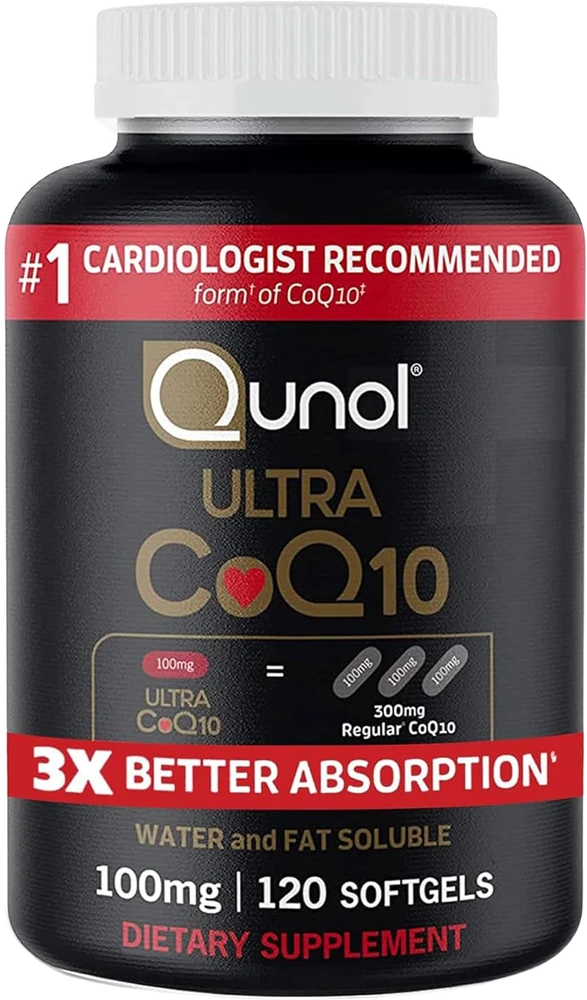
Best mass-market water-soluble: Qunol Ultra CoQ10 100 mg
7.7SAC Score™The category's mass-market household name. Water-soluble claim is surfactant-driven and real — but the same gain is free if you split the fertility dose across two fatty meals.
StrongestDose accuracy at 100-200 mg8.53WeakestTesting + Kaneka chain-of-custody6.5- Per softgel
- 100 mg ubiquinone
- To hit fertility doses
- 2-3/day sperm · 6/day IVF (600 mg)
- Testing
- GMP facility, mass-market brand QC
All five scores, pros & cons, full label
What We Like- Water-soluble emulsion does improve fasted absorption versus generic ubiquinone
- Available in every US drugstore and supermarket — easy to restock mid-protocol
- Massive consumer brand recognition — easier conversation with a skeptical partner
- 120-softgel bottle helps cover the high fertility dose with fewer re-orders
What You Live With- Solubility premium evaporates when you take CoQ10 with the fatty meals a fertility protocol already requires (free)
- Ubiquinone (not ubiquinol) — the same form gap as Doctor's Best, but at higher cost per mg
- Polysorbate-80 emulsifier — well-tolerated but an extra ingredient many fertility buyers prefer to avoid
- Form
- Ubiquinone in water-soluble emulsion (surfactant carrier)
Our take — Consider — but the solubility premium is largely redundant for fertility. Qunol's water-soluble emulsion solves CoQ10's poor fasted absorption, but a fertility protocol already requires splitting the dose across two fatty meals — which closes the same absorption gap for free. You're paying a premium over Doctor's Best (#5) for the same form (ubiquinone) and a benefit you get at the kitchen table. The form is also a disadvantage at the high IVF dose. Buy Qunol only if you genuinely can't dose with food, or specifically want the household-name brand. For most fertility buyers, the Kaneka ubiquinol leaders (#1-4) or budget Doctor's Best (#5) are the better dollar.
- 08
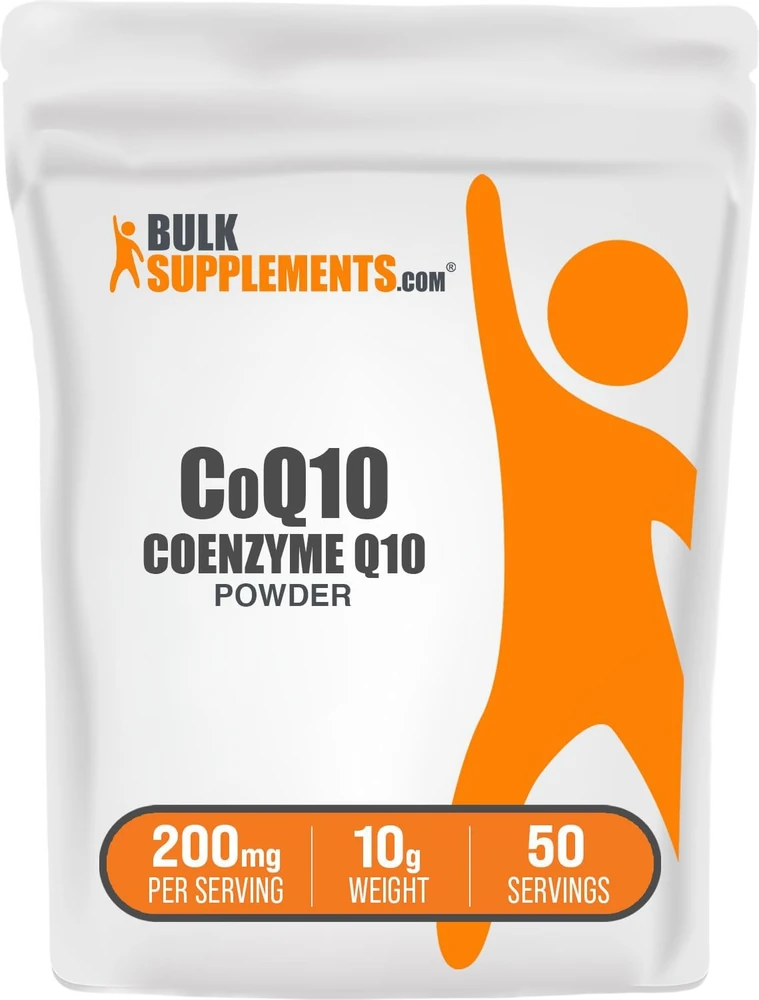
Best DIY / powder form: Bulk Supplements CoQ10 Powder
7.4SAC Score™DIY pick for the milligram-scale weigher. The 10 g bag we link costs $17.97 ($0.18 per 100 mg, a little more than Doctor's Best softgels) and is only about 16 days at the 600 mg IVF dose; the powder gets cheap in the larger bags. You must weigh each dose and combine it with a fat carrier.
StrongestCost per active mg9.02WeakestForm7.0- Per serving
- 200 mg CoQ10 (1 g of powder = 1,000 mg, DIY-measured)
- Bag
- 10 g · 50 servings of 200 mg (~16 days at 600 mg/day · ~33 days at 300 mg/day)
- Testing
- Bulk Supplements public COA, third-party tested
Check price on AmazonRead the full review$17.97 / 10 g bag (Amazon US, Oct 11, 2026) · ~$32 / month at 600 mg/dayAll five scores, pros & cons, full label
What We Like- The larger bags on the same listing are the cheapest CoQ10 per mg we found: 100 g for $43.97 is $0.04 per 100 mg (Oct 11, 2026), which counts at the 600 mg fertility dose
- 200 mg per measured serving — three servings make a 600 mg IVF dose with no capsule-counting
- Public COA on every batch with heavy-metal + microbial screening (relevant for fertility buyers)
- Additive-free powder — no carrier oils, fillers, or surfactants; dairy-, gluten-, and soy-free per the label
What You Live With- A 10 g bag lasts only ~16 days at 600 mg/day — a 3-month IVF window needs about 5-6 bags, and at $17.97 a bag that costs more per mg than Doctor's Best softgels
- DIY weighing required — you need a 0.01g milligram scale to dose accurately
- Ubiquinone (not ubiquinol) — the form disadvantage compounds at the high IVF dose
- No carrier oil — you must combine each dose with a fat-containing meal manually
- Form
- Ubiquinone (oxidised) powder, pharmaceutical-grade
Our take — Consider — niche. Because fertility CoQ10 is high-dose and long-window, the cost-per-mg gap matters more here than anywhere else, and a powder can undercut any capsule per mg. The 10 g bag we link does not: at $17.97 (Amazon US, Oct 11, 2026) it costs $0.18 per 100 mg, a little more than Doctor's Best softgels. The saving sits in the larger bags on the same listing: 100 g for $43.97 is $0.04 per 100 mg and covers about 166 days at 600 mg/day. The catch is the workflow and the bag size: you need a milligram scale, you must combine each dose with a fat carrier, a 10 g bag covers only about 16 days at 600 mg/day, and you're stuck with ubiquinone (the weaker form at the IVF dose). Worth it only for price-obsessed, DIY-comfortable buyers — most likely a man on a 200-300 mg sperm protocol. Everyone optimising egg quality or an IVF cycle should take the ubiquinol form and the convenience.
- 09
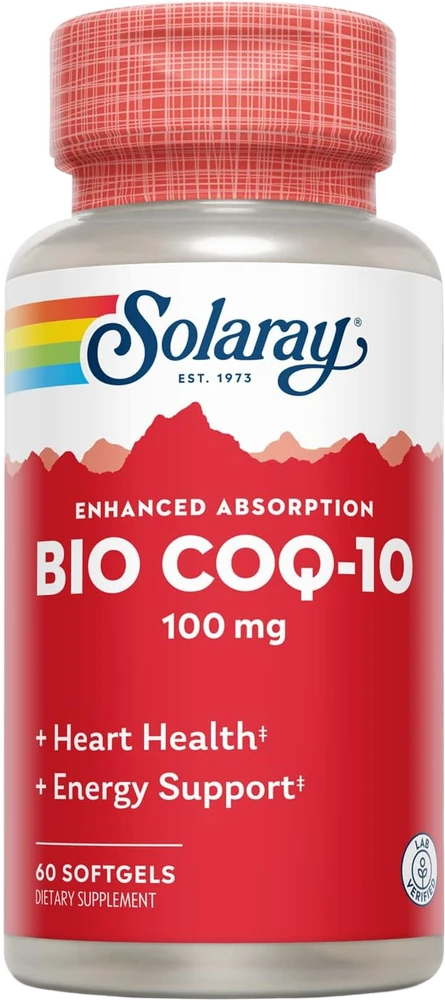
Best legacy generic: Solaray Bio CoQ-10 100 mg
7.1SAC Score™Legacy brand with consistent QC and an oil-based CoQsol softgel — but it is still ubiquinone, with vitamin A and E bundled into every softgel. An acceptable last-resort backup, not a first fertility pick.
StrongestReal-world response8.52WeakestTesting + Kaneka chain-of-custody6.5- Per softgel
- 100 mg CoQ10 (as CoQsol) + 700 mcg vitamin A (as beta-carotene) + 67 mg vitamin E
- To hit fertility doses
- 2-3/day sperm · 6/day IVF (600 mg)
- Testing
- Solaray QC, GMP-certified facility; 'Lab Verified' seal per the listing tile
Check price on AmazonRead the full review~$84 / month at 600 mg/day (three 60-softgel bottles · Amazon US marketplace seller, Oct 11, 2026)All five scores, pros & cons, full label
What We Like- Solaray is a legacy brand (since 1973) with consistent QC over five decades
- Enhanced-absorption CoQsol softgel with a rice bran oil base — a built-in fat carrier
- 100 mg per softgel maps onto egg-quality and sperm protocols
- Widely available in independent health stores nationwide for mid-protocol restocks
What You Live With- Ubiquinone as CoQsol (not Kaneka-licensed, not ubiquinol) — the biggest form gap on the list at fertility doses
- Gelatin softgel shell — not vegetarian — despite the 'vegetarian softgel' wording in the Amazon title
- Every softgel also carries 700 mcg vitamin A (as beta-carotene) and 67 mg vitamin E — at the 6-softgel IVF dose that adds up to 4,200 mcg vitamin A and ~400 mg vitamin E, so clear it with your fertility team
- Falls behind all four Kaneka-licensed ubiquinol picks (#1-4) on every fertility-relevant criterion except brand legacy
- Form
- Ubiquinone as CoQsol (oxidised) in an oil-based gelatin softgel (rice bran oil)
Our take — Consider — last resort. Solaray is a respectable legacy brand, but for fertility it lags on the two things that matter most at the high dose: it's ubiquinone in CoQsol form (not the higher-bioavailability ubiquinol the leaders use) and it bundles vitamin A and E you didn't ask for, so it trails even the budget Doctor's Best (#5) on cost-per-mg. The only reason to pick it is brand familiarity from offline shopping — and NOW Foods (#2) covers that same offline-availability use case with a superior Kaneka ubiquinol formulation. Buy Solaray only if it's the sole CoQ10 on your local shelf and you need to bridge a gap in your protocol; otherwise step up to one of the four Kaneka ubiquinol picks.
CoQ10 In Four Short Lessons
Why form + dose feasibility decides the fertility bottle
- ~600 mg
- Typical CoQ10 IVF-adjunct dose, run for the 3 months before retrieval
- 2-4×
- Ubiquinol bioavailability advantage over ubiquinone — compounds at fertility doses
- −50%
- Endogenous CoQ10 decline by age 60 — the egg-quality rationale
- ~74 days
- One full spermatogenesis cycle — plan 3 months on a sperm-quality protocol
Sources: Hernández-Camacho 2018 (PMID 29459830); Hosoe 2007 Kaneka pharmacokinetics (PMID 16919858); Mortensen 2014 Q-SYMBIO (PMID 25282031); Banach 2015 (PMID 25440725).
Run it alongside medical care, not instead of it.
CoQ10 is an adjunct to a reproductive endocrinologist's protocol or a semen-analysis workup. There are no felt effects; you are working on gamete quality over about three months.
Plan for the fertility dose.
Protocols run 200-400 mg a day for egg quality, about 600 mg a day before IVF under supervision, and 200-300 mg a day for sperm. That is far above the 100 mg a longevity buyer takes.
At that dose, choose ubiquinol and check cost per mg.
Ubiquinol's 2-4x bioavailability advantage compounds at high doses, which is why the Kaneka ubiquinol picks lead. Capsule count and cost per milligram become deciding factors.
Hernández-Camacho 2018 (PMID 29459830) — the ~50% age-related CoQ10 decline behind the egg-quality rationale; Hosoe 2007 Kaneka ubiquinol pharmacokinetics and 300 mg/day safety (PMID 16919858); Mortensen 2014 Q-SYMBIO (PMID 25282031). Full scoring in the methodology below.
We started from our general CoQ10 ranking and reordered for the fertility use case, then re-scored each pick 0-10 across five criteria weighted to a final composite. Form carries the most weight because the fertility dose (200-600 mg/day) is where the ubiquinol-vs-ubiquinone bioavailability gap compounds — so the Kaneka QH ubiquinol picks rise to the top. Dose feasibility is weighted heavily and specifically: at 600 mg/day, capsule count and cost-per-mg become genuine adherence and budget constraints, not footnotes. Kaneka chain-of-custody ensures sourcing quality at the high dose. Cost per active mg is computed at the fertility dose, not the general dose. And real-world fertility fit (10%) reflects how cleanly a product maps onto egg-quality, IVF-adjunct, or sperm-quality protocols. Price round, 11 October 2026: we re-read the Amazon US price of the four Kaneka ubiquinols on this list. At 600 mg a day a month takes three 60-softgel bottles: about $81 (Jarrow), $82 (NOW), $90 (Healthy Origins) and $98 (Life Extension). Healthy Origins had risen from $21 to $29.99 a bottle and is no longer the cheapest; Life Extension had fallen from $45 to $32.81. Three picks tie at 8.9; among equal scores the cheaper softgel ranks first. The same day we re-read the ubiquinone picks. At 600 mg a day: Doctor's Best about $28 a month ($18.99 for 120 softgels, a bottle and a half), Qunol Ultra about $45 ($29.97 for 120), Solaray about $84 (three bottles at $28.00, marketplace seller), Thorne about $159 (three bottles at $53.00). The 10 g bag of Bulk Supplements powder costs $17.97 and lasts about 16 days at this dose, about $32 a month. Their scores follow the reviews: Doctor's Best 8.6, Thorne 8.0, Qunol Ultra 7.9, Bulk Supplements 7.4, Solaray 7.1. The order did not change. Kirkland Signature CoQ10 300 mg is off the list: the 75-softgel listing we linked was unavailable on Amazon US on Aug 19 and again on Oct 11, 2026, and we could never read its Supplement Facts panel.
Form (ubiquinol vs ubiquinone at fertility doses) · 30%
Licensed Kaneka ubiquinol scores highest because the 200-600 mg/day fertility dose makes the 2-4× bioavailability advantage compound. Generic ubiquinol scores middling. Ubiquinone scores acceptable for budget sperm protocols (200-300 mg) but loses ground at the IVF dose. This is the single biggest driver of the reorder versus the general list.
Dose feasibility at 200-600 mg/day · 25%
At the IVF dose of ~600 mg/day you take ~6 softgels/day for 3 months — so per-softgel dose, capsule count, and bottle size directly determine whether a buyer can adhere. Products that make the high fertility dose practical and affordable score higher.
Testing + Kaneka chain-of-custody · 20%
Licensed Kaneka Q10 or Kaneka QH on the label (or listing), backed by public COA, NSF certification, or GMP-facility manufacturing. Sourcing quality matters more when you're consuming high quantities over a long fertility window.
Cost per active mg (at the fertility dose) · 15%
Monthly cost computed at the actual fertility dose (e.g. 600 mg/day), not the general 100 mg dose. A few cents per 100 mg compounds into real money at fertility quantities, so this criterion carries more practical weight here than on the general list.
Real-world fertility fit · 10%
How cleanly the product maps onto the three fertility protocols — egg quality (women 35+), IVF/ICSI adjunct (~600 mg/day), and sperm quality (men, 200-300 mg/day). Single-softgel Kaneka ubiquinol that scales across all three scores highest.

How CoQ10 supports egg and sperm mitochondrial function
- 1
Lipid-soluble absorption with a fat meal
Ubiquinol clears the gut wall packaged inside chylomicrons — the same lymphatic carriers that absorb dietary fat. At the 600 mg fertility dose, splitting across two fatty meals (breakfast + dinner) maximises plasma uptake and keeps GI tolerance high. Fasted absorption drops 3-5×.
- 2
Plasma uptake + gamete distribution
Plasma CoQ10 rises over 6-8 hours and distributes to mitochondria-dense tissues. In fertility, the target cells are the oocyte — the most mitochondria-dense cell in the body — and the spermatozoon, whose midpiece mitochondria fuel flagellar motion. Both decline in mitochondrial output with age.
- 3
Mitochondrial electron transport in the gamete
Inside gamete mitochondria, CoQ10 shuttles electrons between Complex I/II and Complex III — every aerobic ATP molecule depends on it. In the oocyte, that ATP powers meiotic spindle assembly and early embryo development; in sperm, it powers motility. Supporting this rate-limiting step is the entire fertility rationale — as an adjunct to medical care.
What to expect on a 3-month CoQ10 fertility protocol
Establish the dose + habit
Dial in your split-dose routine (breakfast + dinner, both with fat) at your goal dose. Nothing to feel — CoQ10 isn't a stimulant, and gamete effects take a full maturation cycle. Tell your fertility team you've started.
Plasma CoQ10 plateaus
Serum CoQ10 reaches steady state. Gametes maturing in this window begin developing under improved mitochondrial substrate availability. Stay consistent — adherence over the full window is what counts.
Spermatogenesis cycle completes
Sperm that began maturing near the start of the protocol complete the ~74-day cycle. For male-fertility protocols, this is the earliest point a re-test semen analysis reflects the supplementation period.
Retrieval / re-test window
For IVF, this is the ~3-month pre-retrieval window the ~600 mg/day adjunct targets; for sperm protocols, the re-test point. Outcomes are judged by clinical markers — antral follicle count, retrieval results, semen analysis — interpreted by your fertility team, not by anything you feel.
The bottom line for fertility
For egg quality on a normal budget, the default is Jarrow Ubiquinol QH-Absorb (#1).
Get Jarrow Ubiquinol QH-Absorb (#1) — licensed Kaneka QH, scales cleanly to 200-400 mg/day. Its 100 mg per softgel maps onto egg-quality, IVF-adjunct, and sperm protocols alike, and the carrier-oil softgel makes splitting the high dose across two fatty meals straightforward.
The honest alternatives are matched to who you are and what you can spend.
For an IVF / ICSI cycle adjunct where you want Life Extension's QC chain, Super Ubiquinol (#4) at the physician-supervised ~600 mg/day — but note that is ~$98/month (Oct 11, 2026) for the same licensed molecule. Healthy Origins (#3) is the same Kaneka molecule in a plain softgel; for a male sperm-quality protocol on a budget, Doctor's Best (#5) ubiquinone at 200-300 mg/day is an acceptable cost-driven choice.
Whatever you buy, the rule is the same — and so is the caveat.
Lead with Kaneka QH ubiquinol at the fertility dose, take it split across two fatty meals to maximise absorption and tolerance, run it for a full spermatogenesis or oocyte-maturation cycle, and judge it by clinical markers, not by anything you feel. Above all, CoQ10 is an adjunct to medical fertility care, never a substitute — if you are trying to conceive over 35 or after 6-12 months of trying, see a specialist and use CoQ10 as one supporting input inside their plan.
Quick Answers
Should I take ubiquinol or ubiquinone for fertility?
For fertility, ubiquinol is the better default — and the reason is dose. Fertility protocols run at 200-600 mg/day, which is 3-6× the general longevity dose. At that level, ubiquinol's 2-4× bioavailability advantage over ubiquinone compounds, and you want maximum plasma CoQ10 reaching mitochondria-dense gametes (the oocyte and the spermatozoon). Egg-quality (women 35+) and IVF-adjunct buyers should lead with Kaneka QH ubiquinol (Jarrow #1, Life Extension #4, Healthy Origins #3, NOW Foods #2). The one exception: if you're a man running a 200-300 mg sperm-quality protocol on a tight budget, generic ubiquinone (Doctor's Best #5) is an acceptable cost-driven choice.
How does CoQ10 help with egg quality?
The rationale is mitochondrial. The oocyte (egg) is the most mitochondria-dense cell in the human body, and the energy those mitochondria produce drives meiotic spindle assembly, chromosome segregation, and early embryo development. Mitochondrial output declines with maternal age, and endogenous CoQ10 — the rate-limiting electron shuttle in the mitochondrial respiratory chain — falls roughly 50% by age 60 (Hernández-Camacho 2018). CoQ10 supplementation is used as an egg-quality / oocyte-mitochondrial-function adjunct in women 35+, commonly at 200-600 mg/day, run for the ~90-day window over which an oocyte cohort matures. It is an adjunct to fertility care, not a guarantee — coordinate dose and timing with your reproductive endocrinologist.
What's the right CoQ10 dose for IVF?
IVF / ICSI adjunct protocols commonly cluster around 600 mg/day, run for the 3 months before egg retrieval. That's a high dose by general-supplement standards — at 100 mg per softgel you're taking ~6 softgels/day, which is exactly why form (ubiquinol), capsule count, and cost-per-mg become the deciding factors. Split the 600 mg across two fatty meals (breakfast + dinner) to maximise absorption and minimise GI upset. Critically: IVF dosing should be set and supervised by your reproductive endocrinologist as part of your cycle protocol — CoQ10 is one adjunct inside a much larger medical process, not a standalone fertility treatment.
How much CoQ10 should men take for sperm health?
Male-fertility CoQ10 protocols typically run 200-300 mg/day, targeting sperm motility, count, and morphology. The mechanism is the same mitochondrial story: sperm are mitochondria-powered swimmers, and the midpiece mitochondria fuel the flagellar motion that drives motility. The key timing detail is the spermatogenesis cycle — sperm take roughly 74 days to mature, so any CoQ10 effect on a semen analysis requires at least one full cycle. Plan a 3-month course before re-testing. As with egg quality, this is an adjunct to a proper andrology workup, not a substitute — pair it with the standard male-fertility cofactor base (zinc, selenium) and run it past your physician.
Why does cost per mg matter so much for fertility CoQ10?
Because the dose is high and the window is long. A general longevity buyer takes 100 mg/day; a fertility buyer might take 600 mg/day for 3+ months. That's 18× the monthly CoQ10 of a longevity protocol. At those quantities, a few cents difference per 100 mg compounds into real money, and the capsule count becomes a genuine adherence problem (six softgels a day is a lot to remember). This is why the ranking weights dose feasibility and cost-per-mg heavily: a $0.35/100mg Kaneka ubiquinol (Healthy Origins #3) costs ~$63/month at 600 mg/day, while a $0.75/100mg premium (Life Extension #4) costs ~$135/month. Both are legitimate — but at the fertility dose the gap is large enough to drive the decision.
Can CoQ10 replace IVF or fertility treatment?
No — and this is the most important thing on the page. CoQ10 is an adjunct to medical fertility care, not a substitute for it. It does not treat tubal factors, severe male-factor infertility, ovulatory disorders, or any structural cause of subfertility. The honest positioning is that CoQ10 is a low-risk mitochondrial-support supplement that some fertility specialists add to a protocol to support egg or sperm quality — alongside, never instead of, proper diagnosis and treatment. If you're trying to conceive, especially over 35 or after 6-12 months of trying, see a reproductive endocrinologist. Use CoQ10 as one supporting input inside their plan.
Are there side effects or interaction warnings at fertility doses?
CoQ10 is well-tolerated even at the higher fertility doses, but a few cautions apply. Mild GI upset (nausea, loose stool) is the most common complaint at 600 mg/day — splitting the dose across two fatty meals largely resolves it. The clinically meaningful interaction is with warfarin: CoQ10's structural similarity to vitamin K can blunt anticoagulant effect, so coordinate with your physician and monitor INR. Always disclose CoQ10 to your fertility team so it's accounted for in your protocol. The Hosoe 2007 pharmacokinetic study established a safety profile for Kaneka ubiquinol up to 300 mg/day over 4 weeks; higher IVF-adjunct doses should be physician-supervised.
Every Claim Ranked Above Traces Back To One Of These
6 peer-reviewed sources, each linked to PubMed
- [1] Hernández-Camacho 2018 (review) PMID 29459830 — Coenzyme Q10 supplementation in aging and disease. Comprehensive review of CoQ10 in aging, mitochondrial function, and disease. Establishes the age-related decline curve (~50% drop by age 60 in heart and skeletal muscle) and the rationale for ubiquinol supplementation as mitochondrial output falls with age — the foundational rationale for CoQ10 egg-quality and oocyte-mitochondrial-function support in women 35+.
- [2] Hosoe 2007 (Kaneka pharmacokinetics) PMID 16919858 — Study on safety and bioavailability of ubiquinol (Kaneka QH) after single and 4-week multiple oral administration to healthy volunteers. Pharmacokinetic study of Kaneka ubiquinol in healthy adults. Established the dose-response curve, the safety profile up to 300 mg/day for 4 weeks, and the bioavailability advantage of the reduced (ubiquinol) form — the reference for why ubiquinol is preferred at the higher doses used in fertility protocols.
- [3] Mortensen 2014 (Q-SYMBIO) PMID 25282031 — The effect of coenzyme Q10 on morbidity and mortality in chronic heart failure: results from Q-SYMBIO: a randomized double-blind trial. 420 patients randomised to 3×100 mg/day Kaneka ubiquinone vs placebo for 2 years, showing a 43% reduction in major adverse cardiovascular events. The pivotal outcome trial demonstrating that CoQ10 supplementation produces measurable mitochondrial-mediated clinical effects, and the reference for the Kaneka chain-of-custody used in the leading picks.
- [4] Banach 2015 (statin myopathy meta) PMID 25440725 — Effects of coenzyme Q10 on statin-induced myopathy: a meta-analysis of randomized controlled trials. Meta-analysis of 12 RCTs (n=575) showing CoQ10 supplementation significantly reduces statin-induced muscle symptoms versus placebo. Demonstrates CoQ10's mitochondrial-support effect on a high-energy-demand tissue (skeletal muscle), the same mechanistic basis invoked for mitochondria-dense gametes in fertility protocols.
- [5] Rosenfeldt 2007 (BP meta) PMID 17287847 — Coenzyme Q10 in the treatment of hypertension: a meta-analysis of the clinical trials. Meta-analysis of 12 clinical trials (n=362) on CoQ10 in hypertensive subjects, showing modest but consistent blood-pressure reduction at 100-200 mg/day. Included as part of the broader CoQ10 evidence base establishing systemic effects and the dose-tolerability picture relevant to higher fertility doses.
- [6] Sandor 2005 (high-dose tolerability) PMID 15728298 — Efficacy of coenzyme Q10 in migraine prophylaxis: a randomized controlled trial. RCT (n=42) running 3×100 mg/day CoQ10 vs placebo for 3 months. Cited here as a tolerability + dosing reference: it establishes that a 300 mg/day split-dose CoQ10 protocol is well-tolerated over a multi-month course — directly relevant to the 200-300 mg sperm and 200-600 mg egg-quality/IVF fertility protocols.
More CoQ10 Guides
- Best CoQ10 SupplementsCoQ10 ranked by ubiquinol vs ubiquinone form (critical after 40), Kaneka patent verification, dose, fat-meal protocol — the bottles statin users and CHF patients actually need.
- Best Form of CoQ10: Ubiquinol vs UbiquinoneUbiquinol (reduced) vs ubiquinone (oxidized) — which CoQ10 form to buy. Under-40 healthy adults convert ubiquinone fine; 40+ and statin users absorb ubiquinol better. All forms compared by bioavailability + cost.
- Best CoQ10 for StatinsStatins deplete CoQ10 and drive muscle pain; CoQ10 reduces statin myalgia (Banach 2015). Ubiquinol is the form for the 40+ statin user — ranked by form, the 100-200 mg dose, Kaneka sourcing, and fat-paired absorption.
Affiliate disclosure: every Amazon link uses our Associates tag (superachieverclub-20). We earn a small commission at no cost to you; it funds independent reviews. We never accept payment to change a ranking.