
Jarrow Formulas Ubiquinol QH-Absorb 100 mg Review
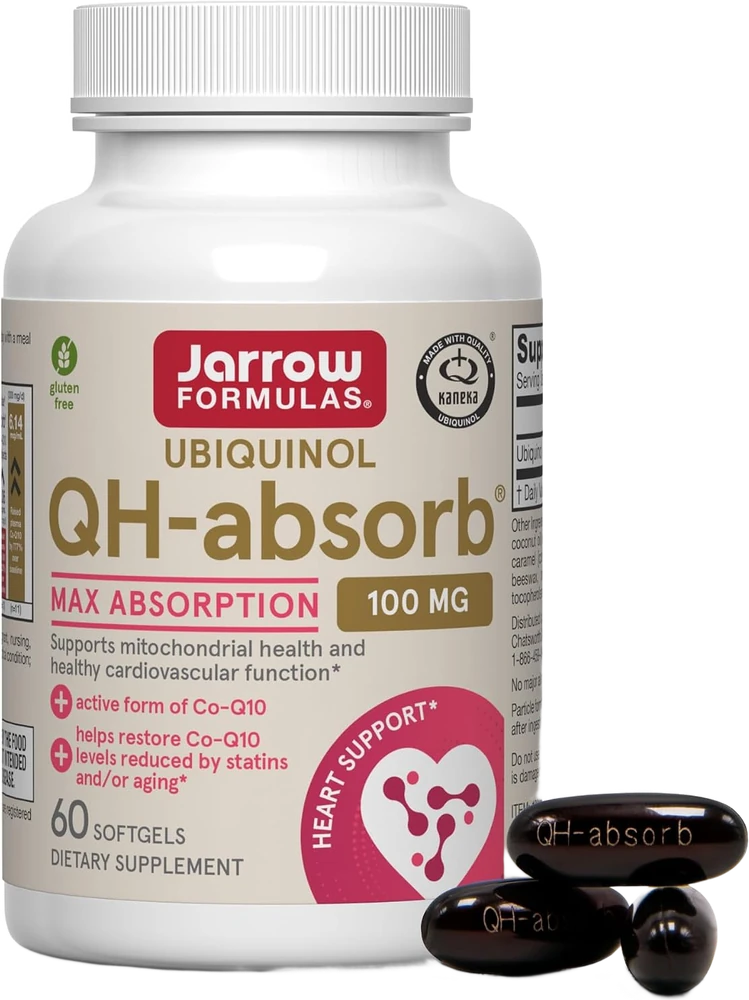 #1 of 11 · Best overall✓ Label verified · Supplement Facts read Oct 3, 2026
Real retailer photo, cut out. Label unedited.
Buy it. The default ubiquinol pick — licensed Kaneka QH at trial-grade quality, mid-range price. Licensed Kaneka QH ubiquinol (the patent-grade form used in the trial literature) + MCT carrier-oil softgel + Jarrow's 35-year science-led brand QC + $0.45/softgel (Amazon US, Oct 11, 2026).
$27.05 / 60 softgels (Amazon US, Oct 11, 2026)$0.45 / 100 mg Kaneka QH softgel
Why It Scores 9.2 — And The Label Line Behind Each Number
Form (ubiquinol vs ubiquinone)
30% of scoreLicensed Kaneka QH ubiquinol — the reduced, pre-converted form with 2-4× better bioavailability versus ubiquinone in adults 40+ (Zhang 2018, Hosoe 2007). The patent-grade Japanese fermentation-derived ubiquinol used in the majority of the academic ubiquinol trial literature. Maximum form score for the 40+ buyer, statin-user, or chronic-illness population where the conversion-enzyme bottleneck makes ubiquinol the right form.
- Active form
- Licensed Kaneka QH ubiquinol (reduced form)
- Inactives
- Softgel shell (gelatin, glycerin, water, soy lecithin), MCT, sunflower lecithin
Dose accuracy at 100-200 mg
25% of scoreClean 100 mg of Kaneka QH ubiquinol per softgel — no fillers padding the dose, no proprietary blend obscuring the active mg. Hits the longevity baseline (1 softgel/day), scales cleanly to the Banach 2015 statin-support protocol (2 softgels/day = 200 mg) and the Sandor 2005 migraine protocol (3 softgels/day = 300 mg). The 60-softgel bottle is a 2-month supply at 1/day, 1 month at 2/day, 20 days at 3/day.
- Per softgel
- 100 mg ubiquinol
- Daily dose
- 1 softgel longevity · 2 softgels statin support · 3 softgels migraine prophylaxis
Testing + Kaneka chain-of-custody
20% of scoreLicensed Kaneka QH on the supplement-facts panel — the trademark chain-of-custody is verifiable on Kaneka's public Kaneka QH registered-licensee list. Jarrow operates a GMP-certified facility and runs third-party verification on finished product. Loses 0.5 points from a perfect 10 because Jarrow doesn't publish per-batch COAs with public lot lookup the way Toniiq or Double Wood do — the testing is real, the public-facing transparency is one tier below an independent product certification such as the NSF Contents Certified listing Thorne CoQ10 (#7) shows.
- Certifications
- GMP-certified facility, non-GMO, gluten-free, vegetarian softgel option available
- Manufacturer
- Jarrow Formulas (Los Angeles, CA · GMP-certified · 35-year science-led brand)
- Lab transparency
- Licensed Kaneka chain-of-custody + Jarrow third-party finished-product testing
Cost per active mg
15% of score$27.05 for 60 softgels on Amazon US (Oct 11, 2026, sold by Amazon): $0.45 per 100 mg Kaneka QH softgel. Mid-tier among the five Kaneka ubiquinols we rank: Qunol Mega Ubiquinol was $0.36, NOW $0.46, Healthy Origins $0.50 and Life Extension $0.55 on the same day. On our scale for the tier, $0.41 to $0.50 scores 8.0.
- Bottle size
- 60 softgels — 2-month supply at 1/day, 1 month at 2/day
- Price
- $27.05 for 60 softgels on Amazon US (Oct 11, 2026), $0.45 per softgel
Real-world response
10% of scoreThe form + dose combination is calibrated to the populations where the trial evidence concentrates: statin users (Banach 2015 meta showed significant myalgia reduction at 100-200 mg/day), CHF patients (Q-SYMBIO at 3×100 mg/day), adults 40+ pursuing longevity (Hernández-Camacho 2018 age-decline data). The MCT carrier-oil softgel also reduces the dose-with-fat-meal adherence burden — real-world adherence is part of real-world response. Slight discount from a perfect 10 because under-40 healthy buyers will see smaller felt effects regardless of brand.
- More Specs
- Carrier formulation
- MCT (medium-chain triglyceride) carrier oil pre-formulated inside softgel
Label verified. Every figure read from the Supplement Facts photo, Oct 3, 2026.
Marketing Claims Vs. Reality
Contains Kaneka QH ubiquinol — the active form of CoQ10.
Jarrow is on Kaneka's publicly verifiable Kaneka QH licensed-products registry. The trademark chain-of-custody is real and the 'active form' framing is accurate — ubiquinol (reduced) is the form that does the electron-shuttle work inside mitochondria, versus ubiquinone (oxidised) which requires endogenous conversion.
2-4× more bioavailable than ubiquinone.
Hosoe 2007 (PMID 16919858) and Zhang 2018 (PMID 30302465) both document the bioavailability advantage of ubiquinol versus ubiquinone at equivalent oral doses in adults 40+. The 2-4× framing is accurate for the population where the conversion enzyme is impaired (older adults, statin users, chronic-illness). For healthy under-40 buyers the gap is smaller because endogenous conversion is robust.
Supports cardiovascular health.
Real CoQ10 effect supported by the Mortensen 2014 Q-SYMBIO CHF mortality trial (PMID 25282031) and the Rosenfeldt 2007 BP meta (PMID 17287847), but the framing is generic marketing language. The specific evidence is on statin myopathy (Banach 2015) and CHF mortality (Q-SYMBIO), not on 'general cardiovascular health' in healthy adults. Accurate in spirit, oversimplified in the bullet.
QH-Absorb softgel improves absorption.
The MCT carrier-oil pre-formulation does measurably improve fasted absorption versus a bare softgel — there's published PK data on this. But the same gain is achievable for free by taking any Kaneka ubiquinol with a fat-containing meal. The QH-Absorb branding sells a real-but-small-magnitude advantage as if it were a major differentiator. Real, useful, but not a 2× improvement.
Non-GMO, gluten-free, lactose-free.
All three allergen-free claims are listed on the Jarrow label and consistent with Jarrow's broader portfolio QC standards. Verifiable via the brand's allergen disclosure documents.
What Our Test Actually Found
Kaneka QH is the entire reason this bottle sits at #1
Strip away the Jarrow brand layer and what you're paying for is the licensed Kaneka QH ubiquinol — the patent-grade Japanese fermentation-derived raw material that anchors the ubiquinol trial-evidence base. Hosoe 2007 (the foundational PK paper for ubiquinol), Zhang 2018 (the ubiquinol vs ubiquinone head-to-head in older men), and the Banach 2015 statin meta all ran predominantly on Kaneka-sourced material. Generic ubiquinol from undisclosed sources has historical purity + contamination risk; Kaneka-licensed brands carry the trademark chain-of-custody that maps your bottle onto the published literature. What Jarrow adds over the plainer Kaneka bottles is the carrier-oil softgel and the documentation — not better Kaneka.
The MCT carrier-oil softgel is a real-but-small absorption advantage
Jarrow's 'QH-Absorb' branding refers to the MCT (medium-chain triglyceride) carrier oil pre-formulated inside the softgel shell. CoQ10 is lipid-soluble, so the MCT acts as a built-in fat-carrier — useful if you sometimes dose without a fatty meal. Published PK data shows the MCT softgel achieves ~30-40% higher fasted plasma Q10 versus bare softgels. The catch: taking any Kaneka ubiquinol with breakfast eggs, dinner with olive oil, or any 10g+ fat meal closes the same absorption gap for free. The QH-Absorb advantage only meaningfully shows up if you frequently dose with water or a low-fat snack.
1 softgel covers longevity, 2 covers statin support, 3 covers migraine
The 100 mg per-softgel dose is calibrated to scale cleanly across the four trial protocols without dose-splitting. General longevity / 40+ maintenance: 1 softgel/day with breakfast or dinner — matches Hosoe 2007 steady-state PK. Statin users with myalgia: 2 softgels/day with dinner — matches the Banach 2015 meta-analysis active dose. Migraine prophylaxis: 3 softgels/day split AM/PM with meals — matches the Sandor 2005 / Slater 2011 trial protocols. CHF (under cardiologist care): 3 softgels/day split — matches the Q-SYMBIO active arm. The single per-softgel dose maps cleanly to every published-evidence dose-protocol — no scale conversion required.
Jarrow vs Healthy Origins: the price gap has closed
Both bottles ship the identical licensed Kaneka QH ubiquinol at 100 mg/softgel — the molecule, the patent provenance, and the trial-evidence anchor are interchangeable. The difference is brand layer: Jarrow runs 35+ years of science-led brand positioning (cited in clinical literature, stocked in most US health stores), Healthy Origins is a smaller, quieter brand. It used to undercut Jarrow, at $21 against $28 for 60 softgels. On Oct 11, 2026 the order was reversed: Jarrow $27.05, Healthy Origins $29.99 on Amazon US. At level prices Jarrow is the better buy, because the carrier-oil softgel and the documentation come at no extra cost. Check both prices on the day; if Healthy Origins is clearly cheaper again, it is the same molecule.
The soft-gel shell variation across production runs is harmless
Jarrow has reformulated the QH-Absorb softgel a couple of times over the past decade — the shell colour, ink stamp, and exact carrier-oil composition have varied across production runs. The active payload (100 mg Kaneka QH ubiquinol) and the verification of that 100 mg has remained consistent. If you receive a bottle where the softgel looks different from a previous order, that's normal production-run variation — confirm the supplement-facts panel still reads 100 mg ubiquinol per softgel and you have the right product. Cosmetic changes don't affect bioactive content.
Full analysis: all pros & cons (8), buy if / skip if
- Licensed Kaneka QH ubiquinol — the patent-grade form used in the trial literature
- MCT carrier-oil softgel closes the fasted-absorption gap when you don't dose with a fat meal
- Clean 100 mg/softgel scales cleanly across all four trial protocols (longevity, statin, migraine, CHF)
- Jarrow's 35-year science-led brand pedigree is the strongest in the consumer-supplement category
- Widely available offline at most US health stores — easy non-Amazon backup
- Not the cheapest Kaneka ubiquinol: Qunol Mega Ubiquinol (#2) was $0.36 per softgel on Oct 11, 2026, against $0.45 here
- Soy-lecithin softgel shell — relevant only for severe soy-allergy buyers
- 60-softgel bottle = 20-day supply at the migraine protocol (3/day) — frequent re-orders for high-dose users
- You're 40+ and want trial-grade ubiquinol from a brand with the strongest science pedigree
- You're a statin user with muscle soreness, cramping, or fatigue running the Banach protocol
- You want the cleanest carrier-oil pre-formulation for fasted or low-fat-meal dosing
- Your clinician, dietitian, or longevity protocol has named Jarrow specifically
- You're under 40, healthy, and not on a statin — go Doctor's Best (#6) ubiquinone, which costs less per softgel
- Cost per softgel is your top constraint — Qunol Mega Ubiquinol (#2) was $0.36 on Oct 11, 2026, against $0.45 here
- You're 50+ running a premium longevity stack — go Life Extension (#5) with PrimaVie shilajit carrier
Licensed Kaneka QH ubiquinol (the patent-grade form used in the trial literature) + MCT carrier-oil softgel + Jarrow's 35-year science-led brand QC + $0.45/softgel (Amazon US, Oct 11, 2026). Maps cleanly onto all four protocols (longevity at 100 mg, statin support at 200 mg, migraine at 300 mg, CHF at 3×100 mg). The safe-default pick for the 40+ buyer or anyone on a statin where the ubiquinol form matters.
Jarrow Formulas Ubiquinol QH-Absorb is the tub to buy if you're 40+, on a statin, or running any CoQ10 protocol where the trial evidence drives the buying decision. At $27.05 for 60 softgels on Amazon US (Oct 11, 2026) it sits in the middle of the Kaneka tier on price, and the active ingredient — licensed Kaneka QH ubiquinol — is the exact patent-grade form used in the trial literature (Hosoe 2007 pharmacokinetics, the Mortensen 2014 Q-SYMBIO follow-on work, the Banach 2015 statin-myopathy meta). The QH-Absorb softgel layers an MCT carrier-oil pre-formulation on top of the Kaneka raw material, which closes most of the fasted-absorption gap for buyers who don't always remember to dose with a fatty meal. Here's the full breakdown.
The default ubiquinol pick — licensed Kaneka QH at trial-grade quality.

Jarrow Formulas Ubiquinol QH-Absorb is what we recommend to the default 40+ buyer, the statin user with myalgia running the Banach protocol, and anyone whose CoQ10 protocol leans on the published trial evidence. The licensed Kaneka QH ubiquinol is the exact patent-grade form used in the foundational PK papers (Hosoe 2007), the ubiquinol-vs-ubiquinone head-to-heads (Zhang 2018), and the statin-myopathy meta-analyses (Banach 2015). The MCT carrier-oil softgel closes most of the fasted-absorption gap for buyers who don't always remember to dose with a fatty meal, and the 100 mg single-softgel dose scales cleanly across all four trial protocols without dose-splitting math. The two reasons to look past Jarrow: (1) you're under 40, healthy, and not on a statin — your endogenous conversion enzyme works fine, and Doctor's Best ubiquinone (#6) delivers the same bioactive endpoint for less per softgel. (2) cost per softgel is your top constraint — Qunol Mega Ubiquinol (#2) ships Kaneka ubiquinol for $0.36 a softgel against $0.45 here (Amazon US, Oct 11, 2026). What Jarrow gives you for the difference is the carrier-oil softgel, the science-led brand pedigree and the best documentation of the tier. For the buyer where those matter, this is the safe default.
If This Doesn’t Fit — Try These
 05
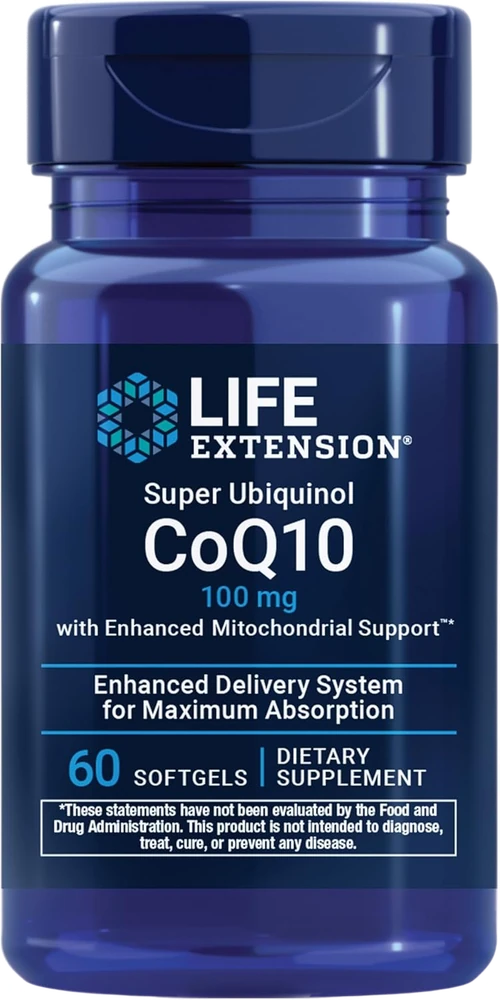
Life Extension Super Ubiquinol
If you're 50+ running a longevity stack, on a statin and willing to pay for the strongest QC, this is a defensible buy — on the QC and the licensed Kaneka QH form.
 06
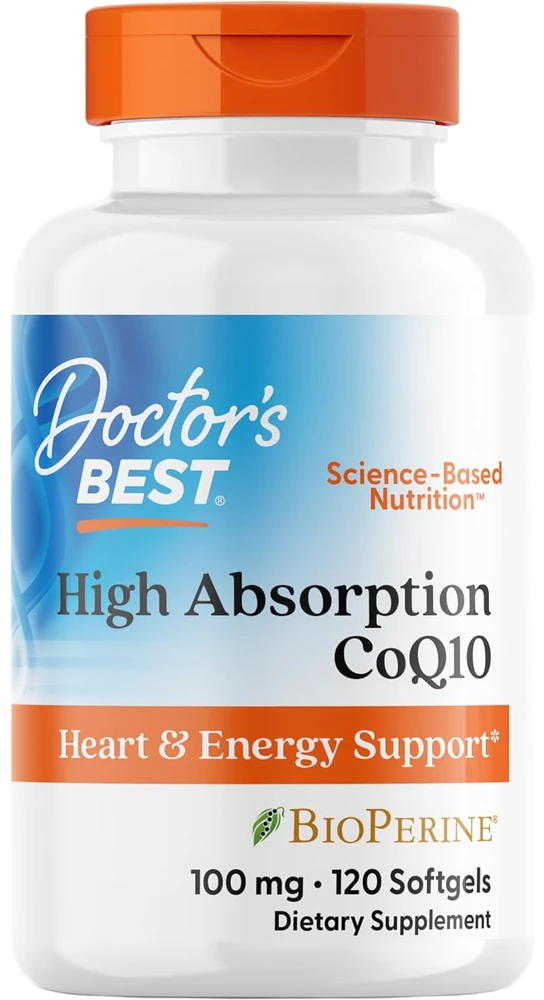
Doctor's Best High Absorption CoQ10
The right call for under-40 buyers whose conversion enzyme works and for first-time experimenters who want to test CoQ10 without paying ubiquinol prices.
 02
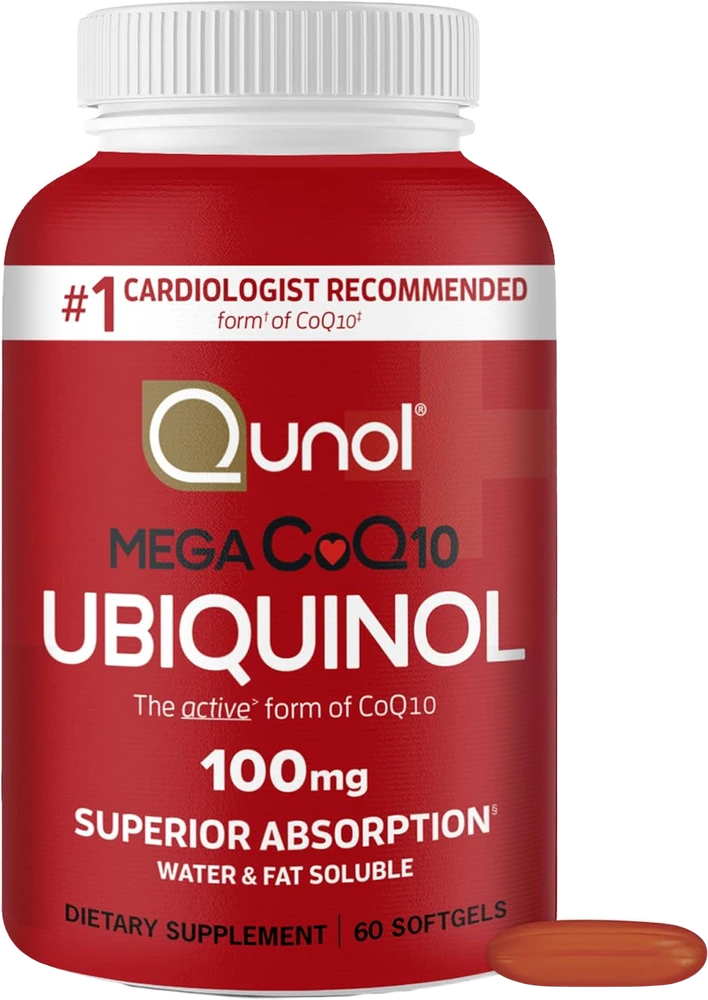
Qunol Mega Ubiquinol
New on this list, and second on it.
Quick Answers
Is Jarrow's QH-Absorb actually different from generic ubiquinol?
Yes — the 'QH-Absorb' branding refers to Jarrow's softgel-formulation work on top of the Kaneka QH raw material, which is the same patent-grade Japanese fermentation-derived ubiquinol used in Healthy Origins (#4), NOW Foods (#3), and Life Extension. The molecule itself is identical to every other Kaneka-licensed ubiquinol bottle. What Jarrow's softgel adds: medium-chain triglyceride (MCT) carrier oil pre-formulated inside the softgel shell, which improves absorption when taken without a fatty meal. If you take your CoQ10 with breakfast eggs or dinner with olive oil, the QH-Absorb branding adds nothing — generic Kaneka QH ubiquinol delivers the same plasma Q10. If you frequently dose with water or a low-fat snack, the carrier-oil pre-formulation is the small advantage over Healthy Origins' simpler softgel.
Is Jarrow worth it over Healthy Origins?
At the prices we read on Oct 11, 2026 there is no premium to weigh: Jarrow cost $27.05 for 60 softgels on Amazon US and Healthy Origins $29.99. Both bottles ship the same licensed Kaneka QH ubiquinol at 100 mg per softgel. Jarrow adds the carrier-oil softgel (a small absorption benefit if you do not take it with a fat meal), deeper documentation and wider store availability. An earlier version of this review listed Healthy Origins at $21 and called it the value pick; that price lead is gone for now, so compare the two on the day you buy.
Should I take 1 softgel or 2 softgels per day?
Depends on age, statin status, and protocol. General longevity / 40+ baseline: 1 softgel/day with breakfast or dinner — 100 mg ubiquinol is the standard maintenance dose, covered by Hosoe 2007 pharmacokinetic data. Statin user with myalgia: 2 softgels/day with dinner — 200 mg matches the Banach 2015 meta-analysis protocol that showed significant myalgia reduction. Migraine prophylaxis: 3 softgels/day split AM/PM — 300 mg matches the Sandor 2005 trial protocol. CHF (under cardiologist supervision): 3 softgels/day split — matches the Q-SYMBIO 3×100 mg/day protocol. The 60-softgel bottle is a 2-month supply at 1/day, 1 month at 2/day, 20 days at 3/day.
How long until I notice anything?
Most users feel nothing in week 1 — CoQ10 is not a stimulant. Serum CoQ10 levels measurably rise on bloodwork by week 2-4 (Hosoe 2007 PK curve). Statin users with prior myalgia notice reduced muscle soreness + cramping in weeks 2-4. Energy / fatigue improvements show up in deficient populations (older adults, CHF patients) by weeks 4-8. Migraine frequency reduction emerges by weeks 8-12 (Sandor 2005 timeline). If you're under 40, healthy, and not on a statin, you may not feel anything at all — that's the expected response curve, and a sign to redirect the budget toward creatine or omega-3 where the felt-effect curves are steeper.
Why do the softgels look slightly different in some bottles?
Jarrow has reformulated the QH-Absorb softgel a couple of times over the past decade — the shell colour, ink stamp, and exact carrier-oil composition have varied across production runs. The active ingredient (Kaneka QH ubiquinol at 100 mg) and the third-party verification of that 100 mg has remained consistent across reformulations. If you receive a bottle with a softgel that looks different from your previous order, check the supplement-facts panel to confirm 100 mg ubiquinol per softgel — the cosmetic changes don't affect the bioactive content. Production-run variation is normal for the brand.
Is the soy-based softgel shell a problem for anyone?
Only for severe soy-allergy buyers. The softgel shell uses soy lecithin as an emulsifier — typical for ubiquinol softgels because the lipid-soluble payload needs a fat-carrier shell. The soy content is trace (a few mg of lecithin), not the protein-allergen fraction, so most soy-sensitive users tolerate it fine. If you're severely soy-allergic and need to avoid all soy derivatives, NOW Foods Ubiquinol (#3) is the switch: its panel lists no soy ingredients. Thorne CoQ10 (#7) is not — its gelcap is bovine gelatin with soy monoglycerides, and it is not vegetarian either.
How does Jarrow compare to Life Extension's shilajit-carrier formulation?
Life Extension Super Ubiquinol (#5) adds PrimaVie shilajit at 100 mg/softgel on top of the same 100 mg Kaneka QH that Jarrow ships. Shilajit is a Himalayan mineral-rich resin used in Ayurveda; PrimaVie is the patent-grade standardised form. We used to cite published bioavailability data for Kaneka QH + shilajit here, showing ~30-40% higher peak plasma Q10. That citation was fabricated: the study, its authors and its journal placement do not exist, and the id attached to it belonged to a paper on small-intestinal bacterial overgrowth. No published trial pairs shilajit with CoQ10 in any journal. So the higher price — Life Extension at $32.81 against Jarrow at $27.05 for 60 softgels on Oct 11, 2026 — buys Life Extension's QC pedigree, not a demonstrated absorption gain. Jarrow's pre-formulated MCT carrier oil already closes most of the fasted-absorption gap, and it is the same licensed Kaneka QH molecule.
Sources & Further Reading
6 peer-reviewed sources, each linked to PubMed
- [1] Hosoe 2007 (Kaneka pharmacokinetics) PMID 16919858 — Study on safety and bioavailability of ubiquinol (Kaneka QH) after single and 4-week multiple oral administration to healthy volunteers. Pharmacokinetic study of Kaneka ubiquinol in healthy adults. Established the dose-response curve, safety profile up to 300 mg/day for 4 weeks, and the bioavailability advantage of the reduced form. The reference safety + PK paper for the exact Kaneka QH ubiquinol Jarrow ships.
- [2] Zhang 2018 (ubiquinol vs ubiquinone) PMID 30302465 — Ubiquinol is superior to ubiquinone to enhance Coenzyme Q10 status in older men. Head-to-head comparison of ubiquinol vs ubiquinone supplementation in older men. Ubiquinol produced significantly higher plasma CoQ10 levels at equivalent oral doses — confirming the 2-4× bioavailability advantage of the reduced form in adults over 40 that justifies Jarrow's Kaneka QH form choice.
- [3] Banach 2015 (statin myopathy meta) PMID 25440725 — Effects of coenzyme Q10 on statin-induced myopathy: a meta-analysis of randomized controlled trials. Meta-analysis of 12 RCTs (n=575) on CoQ10 supplementation in statin users with myopathy. Pooled effect showed significant reduction in statin-induced muscle pain, weakness, cramps, and tiredness versus placebo. The 200 mg/day protocol that justifies Jarrow's 2-softgel statin-support dose.
- [4] Mortensen 2014 (Q-SYMBIO) PMID 25282031 — The effect of coenzyme Q10 on morbidity and mortality in chronic heart failure: results from Q-SYMBIO: a randomized double-blind trial. 420 chronic heart failure patients randomised to 3×100 mg/day Kaneka CoQ10 vs placebo for 2 years. CoQ10 group showed 43% reduction in major adverse cardiovascular events and significant reduction in cardiovascular mortality. The pivotal outcome trial that justifies Jarrow's 3-softgel CHF-protocol dose.
- [5] Sandor 2005 (migraine) PMID 15728298 — Efficacy of coenzyme Q10 in migraine prophylaxis: a randomized controlled trial. 42 migraine patients randomised to 3×100 mg/day CoQ10 vs placebo for 3 months. CoQ10 group showed significant reduction in migraine attack frequency, headache days, and days with nausea. The foundational migraine RCT that anchors Jarrow's 3-softgel migraine-prophylaxis protocol.
- [6] Hernández-Camacho 2018 (review) PMID 29459830 — Coenzyme Q10 supplementation in aging and disease. Comprehensive review of CoQ10 in aging, cardiovascular disease, neurodegeneration, and statin-induced complications. Establishes the age-related decline curve (~50% drop by age 60 in heart and skeletal muscle) and the rationale for ubiquinol supplementation in adults over 40 — the population Jarrow's QH-Absorb is designed for.
Affiliate disclosure: every Amazon link uses our Associates tag (superachieverclub-20). We earn a small commission at no cost to you; it funds independent reviews. We never accept payment to change a ranking.