
Thorne CoQ10 100 mg Review
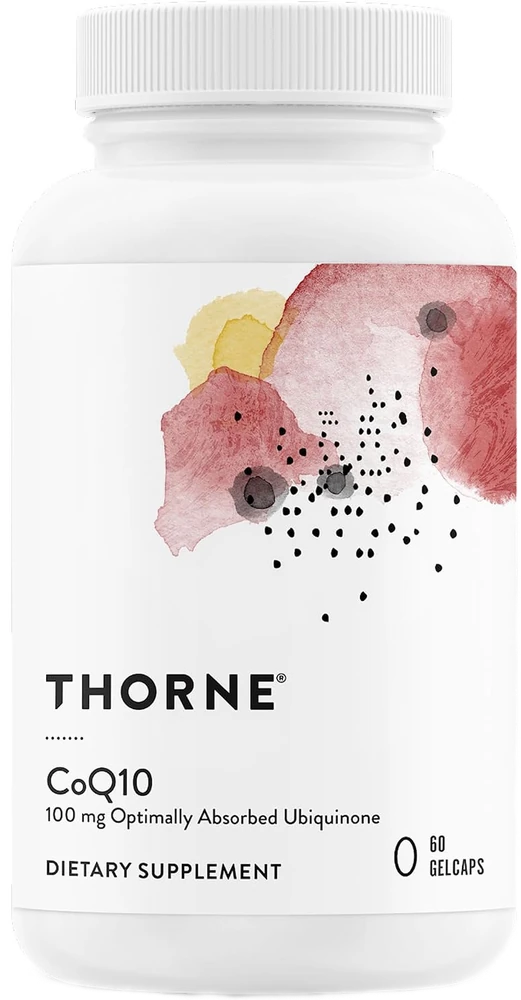 #7 of 11 · Best NSF-certified contents✓ Label verified · Supplement Facts read Oct 1, 2026
Real retailer photo, cut out. Label unedited.
Consider it. The practitioner-brand ubiquinone gelcap — NSF Contents Certified, at $0.88 a gelcap. Ubiquinone in a lipid-based gelcap + NSF Contents Certified (per the listing) + Thorne's clinical-grade brand QC + $0.88/gelcap (Oct 11, 2026).
$53.00 / 60 gelcaps (Amazon US, Oct 11, 2026)$0.88 / 100 mg NSF-contents-certified ubiquinone gelcap
Why It Scores 8.0 — And The Label Line Behind Each Number
Form (ubiquinol vs ubiquinone)
30% of scoreUbiquinone (oxidised), printed on the front label as 'Optimally Absorbed Ubiquinone', delivered in a lipid-based gelcap — the listing describes a 'proprietary, lipid-based, non-crystalline form of coenzyme Q10'. The form is the right choice for under-40 buyers where endogenous conversion is robust; for 40+ buyers it is a partial undershoot versus pure ubiquinol. Form-score reflects this calculus: solid within the ubiquinone class, capped because the form isn't ubiquinol-optimal for the 40+ subset.
- Active form
- Ubiquinone (oxidised), printed on the front label — a lipid-based, non-crystalline form per the listing
- Inactives
- Gelatin (bovine), purified water, glycerin (vegetable source), lycopene and turmeric (color), conjugated linoleic acid, flaxseed oil, soy monoglycerides
Dose accuracy at 100-200 mg
25% of scoreClean 100 mg of coenzyme Q10 per gelcap, one gelcap per serving, 60 servings per bottle — no proprietary blend. Hits the longevity / endurance baseline (1 gelcap/day) and scales cleanly to higher protocols (2 gelcaps/day = 200 mg matches Banach 2015 active dose). The fill is oil-based — conjugated linoleic acid and flaxseed oil, with soy monoglycerides in the mix — so it is a 'with food' product like every CoQ10. Slight 1-point discount versus a perfect 10 because the gelcap carries added fats and a gelatin shell rather than a bare-ingredient fill.
- Daily dose
- 1 gelcap longevity / endurance athlete · 2 gelcaps statin protocol · 3 gelcaps migraine
Testing + Kaneka chain-of-custody
20% of scoreNSF Contents Certified per the listing tile — an independent verification that the label matches the contents — layered on Thorne's broader QC pedigree (FDA-registered facility, Mayo Clinic partnership, Cleveland Clinic affiliation, USOC official partner). It is not NSF Certified for Sport, which tests for banned substances; earlier versions of this review credited that seal in error. Scored top-of-class on the strength of an independent NSF certification plus Thorne's QC story; this is the criterion most worth revisiting if the sport-specific question matters to you.
- Certifications
- NSF Contents Certified (per the listing tile) — not NSF Certified for Sport; bovine gelatin and soy monoglycerides, so not vegetarian and not soy-free
- Manufacturer
- Thorne (Summerville, SC · FDA-registered facility · UFC + CrossFit + USOC partner)
- Lab transparency
- NSF Contents Certified per the listing tile + Thorne in-house clinical-grade QC
Cost per active mg
15% of score$53.00 for 60 gelcaps on Amazon US on Oct 11, 2026 (sold by Pattern., shipped by Amazon), and the same $53 on thorne.com = $0.88 per 100 mg gelcap. The most expensive CoQ10 per 100 mg on the entire list: about 5.6 times Doctor's Best (#6, $0.16) for the same form, and more than any of the five Kaneka ubiquinols ($0.36 to $0.55). On the list's ubiquinone scale anything above $0.60 per 100 mg scores 5.5. The premium reflects the NSF contents certification and the brand, not more Q10. An earlier version of this review said $32 a bottle and scored the line 7.0.
- Bottle size
- 60 gelcaps — 2-month supply at 1/day, 1 month at 2/day
- Price
- $53.00 / 60 gelcaps on Amazon US and thorne.com, Oct 11, 2026 ($0.88 per 100 mg gelcap)
Real-world response
10% of scoreThorne's brand discipline drives adherence — it is the brand most likely to be recommended by team dietitians and integrative physicians — and a single gelcap a day is easy to sustain. The oil-based gelcap is also easier to take than a dry hard capsule. Strong real-world response for the practitioner-brand buyer; lower if the certification and brand don't matter to you.
- More Specs
- Per gelcap
- 100 mg coenzyme Q10 (10 calories, 1 g fat)
- Carrier formulation
- Oil-based gelcap fill (conjugated linoleic acid, flaxseed oil) in a bovine-gelatin shell — take with a fat-containing meal like any CoQ10
Label verified. Every figure read from the Supplement Facts photo, Oct 1, 2026.
Marketing Claims Vs. Reality
NSF Contents Certified.
The listing tile shows NSF Contents Certified; we did not pull the NSF registry entry for this lot. Contents Certified is NSF's label-verification program — it checks that what the label says is what is in the product — and it is a different program from NSF Certified for Sport, which also tests for banned substances. Earlier versions of this review credited Certified for Sport; the listing does not show it.
Trusted by US Olympic athletes and professional sports teams.
Thorne has publicly verifiable partnerships with the US Olympic Committee, UFC, and CrossFit, and its product line is widely used in sport and integrative-medicine settings. Those are brand-level partnerships; they do not by themselves certify this particular SKU for sport.
Optimally Absorbed Ubiquinone — a proprietary, lipid-based, non-crystalline form of coenzyme Q10.
The front label says 'Optimally Absorbed Ubiquinone' and the listing describes a lipid-based, non-crystalline form. Oil-based delivery is a sound strategy for a lipid-soluble molecule, but we found no head-to-head absorption data for this specific formulation, so 'optimally absorbed' is the brand's claim.
Supports cardiovascular function and energy production.
Real CoQ10 effects supported by Q-SYMBIO (Mortensen 2014) for cardiovascular outcomes and the broader mitochondrial-energy literature. Generic 'cardiovascular function' framing is marketing language; the underlying mechanism is well-supported. Standard CoQ10 claim, accurate in spirit.
Hypoallergenic vegetarian capsule.
An earlier version of this review described a hypoallergenic vegetarian (HPMC) capsule. The panel's other ingredients show a bovine-gelatin gelcap with soy monoglycerides, so the product is neither vegetarian nor soy-free.
Pharmaceutical-grade QC across the product line.
Thorne operates an FDA-registered manufacturing facility (one of the few in consumer supplements) and runs pharmaceutical-grade QC standards including in-house assay verification, raw-material identity testing, and finished-product release testing. The 'pharmaceutical-grade' framing is documented and consistent across Thorne's broader product line. Real, verifiable.
What Our Test Actually Found
The NSF certification and the brand are what justify the premium
Strip away the NSF contents certification and the Thorne brand and this is ubiquinone at $0.88 per gelcap competing against Doctor's Best (#6) at $0.16 per softgel (Amazon US, Oct 11, 2026). The roughly 5.6× premium buys independent label-to-contents verification and a practitioner brand — useful, but not better Q10. For buyers who value those, it's worth it; for recreational and value-tier buyers it's certification and brand you don't use. The form (ubiquinone) is interchangeable with cheaper alternatives.
Tested athletes: this is NSF Contents Certified, not NSF Certified for Sport
A nuance earlier versions of this review got wrong: the listing shows NSF Contents Certified, which verifies the label against the contents, not the NSF Certified for Sport program that tests batches against banned-substance lists. If you compete under a drug-testing federation, look this exact product up in NSF's Certified for Sport registry before relying on it. The form question stacks on top: for 40+ athletes ubiquinone is also a partial undershoot versus Jarrow Ubiquinol (#1).
The gelcap is oil-based delivery, not a hard vegetarian capsule
Thorne ships this CoQ10 as a bovine-gelatin gelcap with a lipid fill (conjugated linoleic acid, flaxseed oil) and soy monoglycerides — the listing calls the CoQ10 a 'proprietary, lipid-based, non-crystalline form'. That is closer to the softgel delivery of Jarrow (#1) than to the dry HPMC hard-capsule format earlier versions of this review described. The trade-offs: it is not vegetarian (bovine gelatin), not soy-free, and still best taken with a fat-containing meal like any CoQ10.
The Thorne stack-discipline advantage is brand-level, not certification-level
A common mistake when building a stack from one practitioner brand: assuming a certification on one SKU carries to the rest. Thorne's QC discipline is consistent across a wide product line, which is the real value for single-brand stacks and simplifies a clinician's review of what you take. But certifications are product-level — Thorne Creatine is the NSF Certified for Sport pick on our creatine lists, while this CoQ10's listing shows Contents Certified — so verify each product rather than assuming it carries across the stack.
For buyers who aren't brand-driven, the practitioner-brand premium has a narrow audience
Outside the independent-verification and practitioner-brand context, Thorne CoQ10's value proposition narrows substantially. The brand's broader pedigree (FDA-registered facility, Mayo Clinic partnership, Cleveland Clinic affiliation, USADA-recognised supplement supplier) is real and meaningful for buyers who specifically value 'practitioner brand' positioning — the brand a Functional Medicine doc or integrative physician would recommend. For everyone else (recreational athletes, general longevity buyers, value-tier shoppers), the form-correctness math wins: Jarrow Ubiquinol (#1) or Qunol Mega Ubiquinol (#2) delivers the right form (ubiquinol) at lower cost. The brand-driven audience is real but narrow.
Full analysis: all pros & cons (9), buy if / skip if
- NSF Contents Certified on the listing — an independent label-to-contents check
- Thorne's clinical-grade brand QC (FDA-registered facility, USOC partner, Mayo Clinic affiliation)
- Lipid-based, non-crystalline CoQ10 in an oil-containing gelcap rather than a dry hard capsule (per the listing)
- 100 mg per gelcap, one gelcap per serving, 60 servings per bottle — no proprietary blend
- Brand consistency across a wide product line for single-brand stacks
- Ubiquinone, not ubiquinol — wrong form for 40+ buyers (Jarrow ubiquinol at lower cost)
- $0.88/gelcap (Oct 11, 2026) = about 5.6× Doctor's Best (#6) for the same ubiquinone form
- Bovine gelatin and soy monoglycerides in the gelcap — not vegetarian, not soy-free
- NSF Contents Certified is not NSF Certified for Sport — tested athletes must verify sport-specific status separately
- You want an independent check that the label matches the contents (NSF Contents Certified on the listing)
- You're building a multi-supplement stack from one practitioner brand and value the consistency
- Your clinician, dietitian or coach recommends Thorne specifically
- You value Thorne's clinical-grade brand pedigree (FDA-registered facility, Mayo/Cleveland Clinic partnerships)
- You're drug-tested and need NSF Certified for Sport — the listing shows Contents Certified, not Sport; check NSF's registry first
- You're not brand-driven and want the right form — go Jarrow Ubiquinol (#1) for ubiquinol at about half the price per softgel
- You're vegetarian or soy-free — the gelcap is bovine gelatin with soy monoglycerides
- Cost per active mg is your top constraint — Doctor's Best (#6) at $0.16 per softgel is the value pick
Ubiquinone in a lipid-based gelcap + NSF Contents Certified (per the listing) + Thorne's clinical-grade brand QC + $0.88/gelcap (Oct 11, 2026). Not NSF Certified for Sport — tested athletes must verify that status separately. The right pick for buyers who want independent label verification from a practitioner brand and are under 40; the wrong form for 40+ buyers — go Jarrow (#1) or Healthy Origins (#4) for ubiquinol at lower cost.
Thorne CoQ10 is the practitioner-brand pick in the CoQ10 category: 100 mg of ubiquinone ('Optimally Absorbed Ubiquinone' on the front label) in a bovine-gelatin gelcap with flaxseed oil and conjugated linoleic acid, 60 gelcaps per bottle, and NSF Contents Certified on the listing. NSF Contents Certified is an independent check that what the label says is what is in the bottle — it is not the NSF Certified for Sport banned-substance seal that earlier versions of this review attributed to the product, so drug-tested athletes should confirm the sport-specific status before relying on it. CoQ10 itself isn't a banned substance, but cross-contamination from shared manufacturing facilities is the documented risk that any independent certification mitigates. At $53.00 for 60 gelcaps (Amazon US and thorne.com, Oct 11, 2026), Thorne is the most expensive CoQ10 on our list per gelcap — the price of the Thorne brand and its QC discipline. The catch: it's ubiquinone, not ubiquinol — the wrong form for the 40+ buyer who wants the pre-converted form.
The practitioner-brand ubiquinone gelcap — NSF Contents Certified, not NSF Sport.

Thorne CoQ10 is what we recommend to buyers who want a practitioner-brand ubiquinone with independent label verification: 100 mg of ubiquinone per gelcap, a lipid-based gelcap fill, NSF Contents Certified on the listing, and Thorne's broader clinical-grade QC (FDA-registered facility, USOC partnership, Mayo Clinic and Cleveland Clinic affiliations). That combination is the strongest testing-and-brand story in the ubiquinone class. Two caveats matter. First, tested athletes: the listing shows NSF Contents Certified, not NSF Certified for Sport — confirm the sport-specific registry before relying on this bottle for competition, and note that earlier versions of this review credited the Sport seal in error. Second, form and format: it is ubiquinone, so 40+ adults who want the pre-converted form are better served by Jarrow Ubiquinol (#1) or Healthy Origins Ubiquinol (#4) at lower cost, and the gelcap is bovine gelatin with soy monoglycerides, so vegetarians and soy-avoiders should look elsewhere. For non-tested buyers who don't specifically value the brand, Thorne CoQ10 is overkill: the form is the wrong default for 40+ adults, and at $53.00 for 60 gelcaps it costs about 5.6× Doctor's Best (#6) per 100 mg for the same form (Oct 11, 2026). The verdict is 'consider', and only for one use case: practitioner-brand, independent-verification buyers under 40, yes. Non-brand-driven 40+ ubiquinol buyers, no.
If This Doesn’t Fit — Try These
 01
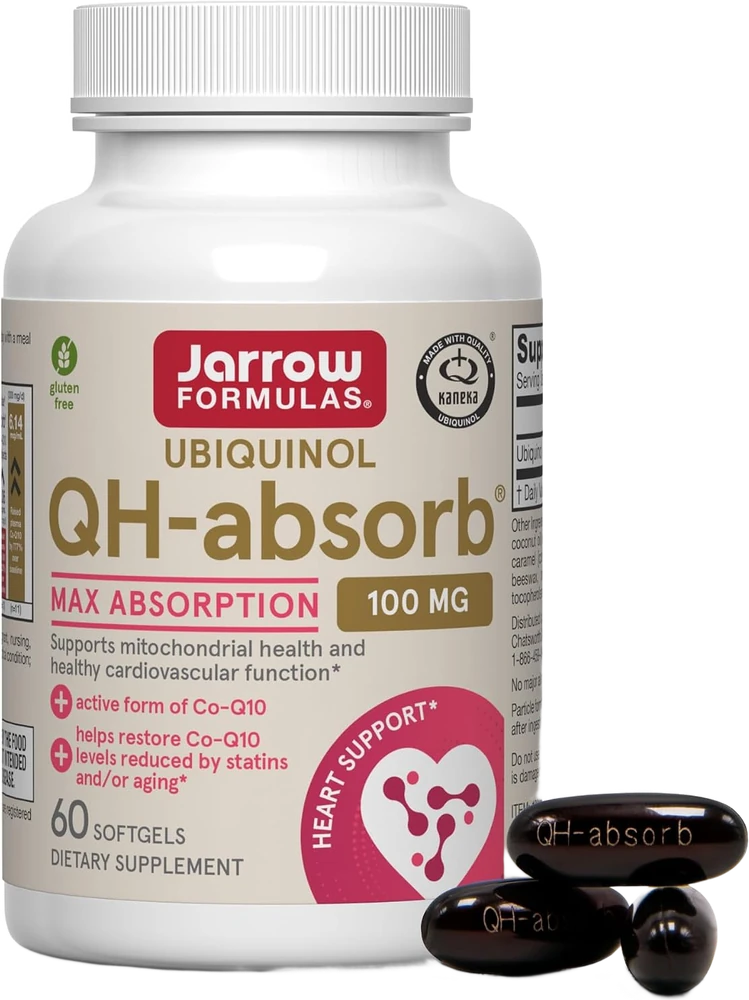
Jarrow Ubiquinol QH-Absorb
The brand-name Kaneka option.
 06
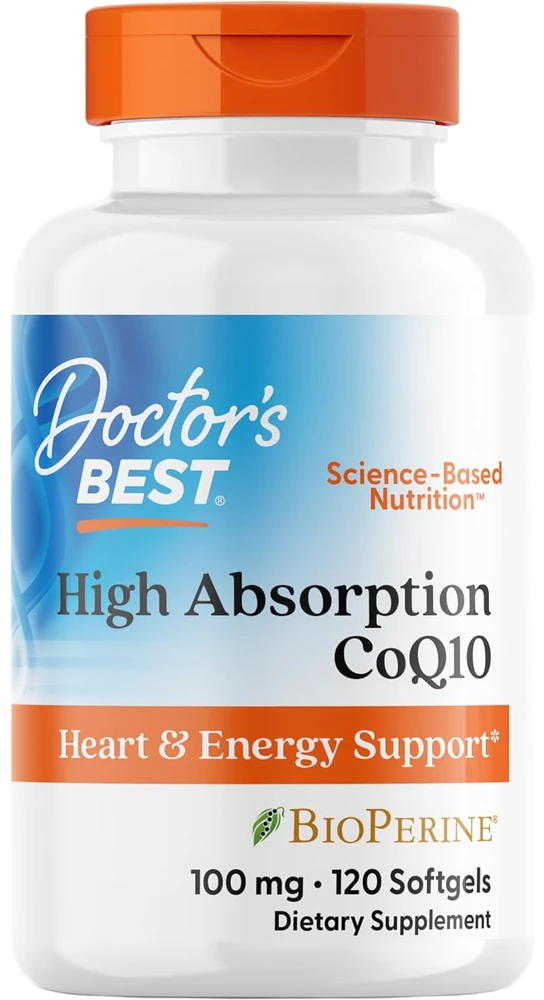
Doctor's Best High Absorption CoQ10
The right call for under-40 buyers whose conversion enzyme works and for first-time experimenters who want to test CoQ10 without paying ubiquinol prices.
 02
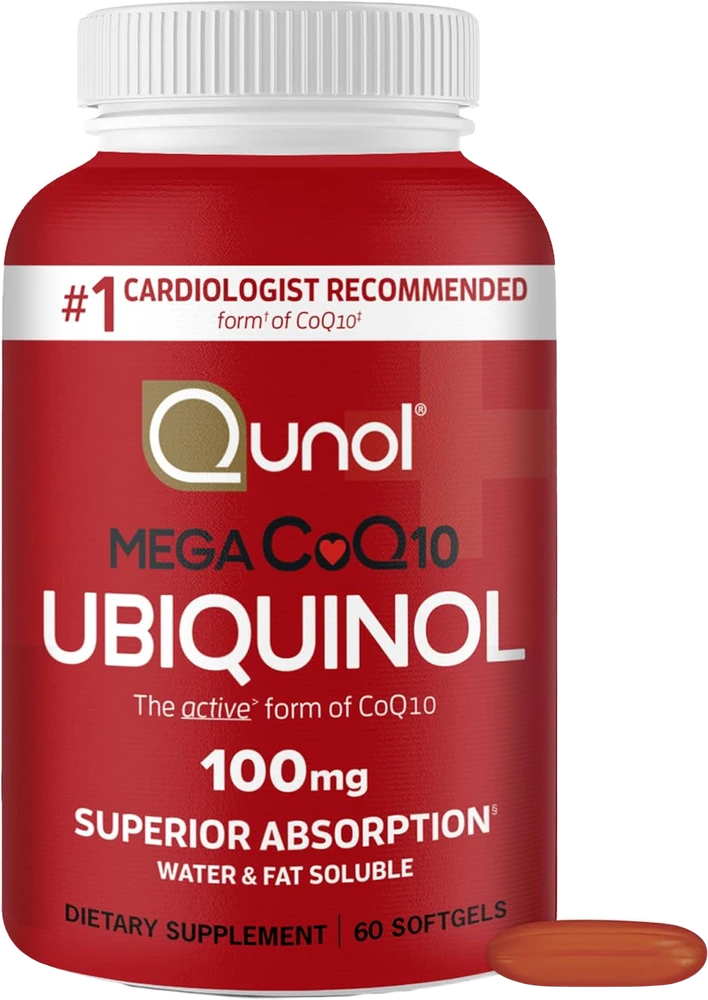
Qunol Mega Ubiquinol
New on this list, and second on it.
Quick Answers
Is NSF Contents Certified worth the premium for a CoQ10 product?
Depends on how much you value independent verification. NSF Contents Certified is NSF's label-verification program — an outside check that what the label says is what is in the product — and the listing shows it for this bottle. It is a different program from NSF Certified for Sport, which tests every batch for banned substances; the listing does not show the Sport seal, and earlier versions of this review credited it in error. CoQ10 itself isn't a banned substance, but cross-contamination from shared manufacturing facilities is a documented risk for any supplement, and an independent certification mitigates part of it. For recreational and non-tested buyers, you're paying for certification and brand you may not need. On Amazon US on Oct 11, 2026 Thorne CoQ10 cost $0.88 per gelcap ($53.00 for 60) and Doctor's Best (#6) ubiquinone $0.16 per softgel ($18.99 for 120), so about $0.72 per 100 mg buys you the certification and the practitioner brand.
Why is this ubiquinone instead of ubiquinol?
The front label prints 'Optimally Absorbed Ubiquinone', and the listing describes a 'proprietary, lipid-based, non-crystalline form of coenzyme Q10'. For healthy adults under 40 the endogenous conversion enzyme is robust, so ubiquinone delivers the same bioactive endpoint as ubiquinol at lower raw-material cost. The trade-off is that for 40+ adults, statin users and chronic-illness populations, ubiquinone is a partial undershoot — pure ubiquinol would deliver higher plasma Q10 at the same dose. For those buyers the choice is Thorne ubiquinone (with its NSF contents certification and brand) or Jarrow Ubiquinol (#1) / Healthy Origins Ubiquinol (#4) for the right form at lower cost. For the 40+ buyer, the form usually wins.
How is Thorne CoQ10 different from Thorne Creatine (which is NSF Certified for Sport)?
Different products, different certification programs. On our creatine lists Thorne Creatine is the NSF Certified for Sport pick; Thorne CoQ10's listing shows NSF Contents Certified instead. The differentiation: Thorne Creatine ships in a tub for powder-format dosing (5 g/day scoop); Thorne CoQ10 ships as a 100 mg gelcap. Both share Thorne's clinical-grade brand QC (FDA-registered facility, USOC partnership, Mayo Clinic affiliation). For a tested athlete building a stack, don't assume the Sport seal carries from one Thorne SKU to the next — check each product in NSF's Certified for Sport registry.
Is it a vegetarian capsule or a softgel?
Neither, exactly — it's a gelcap. The panel's other ingredients are bovine gelatin, purified water and glycerin for the shell, lycopene and turmeric for color, plus conjugated linoleic acid, flaxseed oil and soy monoglycerides — so it is not vegetarian and not soy-free, and earlier versions of this review described it wrongly as an HPMC vegetarian capsule. The upside is that the fill is oil-based, closer to the softgel delivery of Jarrow (#1) than to a dry hard capsule. As with every CoQ10, take it with a fat-containing meal.
Should non-tested buyers still consider Thorne for the QC pedigree?
Only if Thorne's broader brand discipline matters to you. Thorne is the supplement brand integrative physicians stock by default — FDA-registered manufacturing facility, partnerships with Mayo Clinic and Cleveland Clinic, USADA-recognised supplement supplier. The clinical-grade brand pedigree is real even outside the certification context. For non-tested buyers who specifically value 'practitioner brand' positioning (the brand a Functional Medicine doc would name), Thorne CoQ10 is the right pick even at the premium price. For everyone else, Jarrow (#1) and Qunol Mega Ubiquinol (#2) ship the right form (ubiquinol) at lower cost, and Doctor's Best (#6) at $0.16 per softgel is the budget pick. The 'practitioner brand' premium has a narrow but real audience.
Does Thorne CoQ10 carry NSF Certified for Sport?
The listing shows NSF Contents Certified, not NSF Certified for Sport. Thorne is a UFC and CrossFit sports-supplement partner and supplies multiple US Olympic teams, and some Thorne products are Certified for Sport — but those are brand-level partnerships and product-level registry entries, not a blanket statement about every SKU. If you compete under a drug-testing federation, look this exact product up in NSF's Certified for Sport registry before buying, and treat the Contents Certified mark as a label-verification layer rather than a banned-substance clearance.
Is there a Thorne Ubiquinol version coming?
Thorne has not announced a CoQ10 product line extension to ubiquinol as of this writing. Thorne's product strategy for this SKU targets the broader adult population where the ubiquinone form is adequate. Until a ubiquinol version launches, the form-vs-brand trade-off stands: 40+ buyers either accept ubiquinone with Thorne's certification and brand (this product) or choose ubiquinol from Jarrow or Healthy Origins. Most 40+ buyers choose the form.
Sources & Further Reading
5 peer-reviewed sources, each linked to PubMed
- [1] Mortensen 2014 (Q-SYMBIO) PMID 25282031 — The effect of coenzyme Q10 on morbidity and mortality in chronic heart failure: results from Q-SYMBIO: a randomized double-blind trial. 420 chronic heart failure patients randomised to 3×100 mg/day CoQ10 ubiquinone vs placebo for 2 years — 43% reduction in major adverse cardiovascular events. The pivotal CHF trial used ubiquinone form, validating Thorne's form choice for protocols where ubiquinone is adequate.
- [2] Banach 2015 (statin myopathy meta) PMID 25440725 — Effects of coenzyme Q10 on statin-induced myopathy: a meta-analysis of randomized controlled trials. Meta-analysis of 12 RCTs on CoQ10 supplementation in statin users — significant reduction in muscle symptoms. Cited because Thorne's 2-gelcap/day dose maps to the 200 mg/day Banach protocol, though ubiquinol form is the better fit for this indication.
- [3] Zhang 2018 (ubiquinol vs ubiquinone) PMID 30302465 — Ubiquinol is superior to ubiquinone to enhance Coenzyme Q10 status in older men. Head-to-head trial showing ubiquinol's 2-4× bioavailability advantage over ubiquinone in older men. The reference paper that defines the form-gap Thorne ubiquinone undershoots for the 40+ buyer — cited to explain the form trade-off.
- [4] Hosoe 2007 (Kaneka pharmacokinetics) PMID 16919858 — Study on safety and bioavailability of ubiquinol (Kaneka QH) after single and 4-week multiple oral administration to healthy volunteers. PK study documenting safety up to 300 mg/day for 4 weeks. Establishes the safety floor that underwrites long-term use of CoQ10 at the protocol doses Thorne supports.
- [5] Hernández-Camacho 2018 (review) PMID 29459830 — Coenzyme Q10 supplementation in aging and disease. Comprehensive review of CoQ10 supplementation across aging, cardiovascular disease, and neurodegeneration. Confirms safety and efficacy across multiple populations including endurance athletes.
Affiliate disclosure: every Amazon link uses our Associates tag (superachieverclub-20). We earn a small commission at no cost to you; it funds independent reviews. We never accept payment to change a ranking.