
Solaray CoQ10 100 mg Review
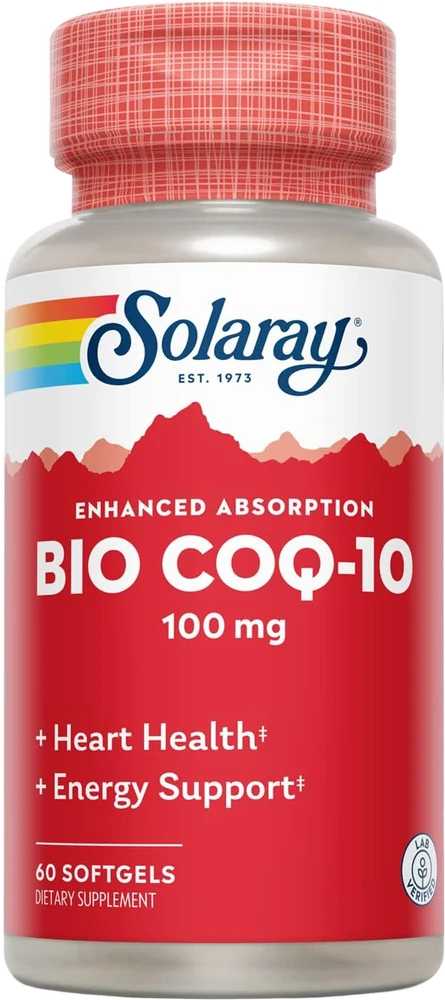 #10 of 11 · Best legacy generic✓ Label verified · Supplement Facts read Oct 1, 2026
Real retailer photo, cut out. Label unedited.
Consider it. Legacy brand — Solaray's 50-year reputation behind a CoQsol ubiquinone softgel. CoQsol ubiquinone in a rice-bran-oil softgel + Solaray 50-year US brand legacy + GMP-certified manufacturing + $0.47/softgel (Amazon US marketplace seller, Oct 11, 2026).
$28.00 / 60 softgels (Amazon US marketplace seller, Oct 11, 2026)$0.47 / 100 mg ubiquinone softgel
Why It Scores 7.1 — And The Label Line Behind Each Number
Form (ubiquinol vs ubiquinone)
30% of scoreUbiquinone (oxidised) as CoQsol — an oil-based softgel formulation the front label calls 'Enhanced Absorption' — not Kaneka-licensed and not ubiquinol. The form is acceptable for under-40 buyers with intact endogenous conversion, and a partial undershoot for 40+ buyers and statin users where ubiquinol's 2-4× bioavailability matters (Zhang 2018). The rice-bran-oil softgel gives the ubiquinone an oil carrier, which partly offsets the gap compared with a bare hard capsule, but there is no BioPerine and no ubiquinol, so the form-score reflects a middle position.
- Active form
- Ubiquinone (oxidised) as CoQsol — not Kaneka-licensed
- Inactives
- Rice bran oil, gelatin, glycerin, purified water, yellow beeswax, annatto extract, titanium dioxide
Dose accuracy at 100-200 mg
25% of scoreA clean 100 mg of coenzyme Q-10 (as CoQsol) per softgel, one softgel per serving, 60 servings per bottle. Hits the longevity baseline (1 softgel/day), scales to statin protocols (2/day = 200 mg, Banach 2015) and migraine (3/day = 300 mg, Sandor 2005). Each softgel also carries 700 mcg vitamin A (as beta carotene) and 67 mg vitamin E, a fixed load that is fine at 1 softgel a day but adds up at 2-3 softgels. Slight discount for that fixed vitamin load and for the lack of a published trial-dose match for this exact formulation.
- Per softgel
- 100 mg coenzyme Q-10 (as CoQsol) + 700 mcg vitamin A (as beta carotene) + 67 mg vitamin E (mixed tocopherols)
- Daily dose
- 1 softgel longevity · 2 softgels statin protocol · 3 softgels migraine prophylaxis (each WITH FOOD)
Testing + Kaneka chain-of-custody
20% of scoreLab Verified and Non-GMO tiles on the listing, GMP-certified manufacturing, and 50-year Solaray brand QC discipline. The brand-level legacy is real (no major CoQ10 recalls in 50 years on market), but the panel names CoQsol as the form rather than Kaneka or any other trial-anchored raw-material supplier. Fine if you trust Solaray's brand-level QC implicitly, less defensible if you specifically value supplier-tier chain-of-custody. Significantly behind the four Kaneka-licensed picks (Jarrow, Healthy Origins, NOW Foods, Life Extension) on this criterion.
- Certifications
- Lab Verified and Non-GMO per the listing tiles; GMP-certified facility. The listing also shows a Vegan tile, but the panel lists gelatin — not vegetarian
- Manufacturer
- Solaray (under Nutraceutical Corporation · Park City, UT · operating since 1973)
- Lab transparency
- GMP-certified facility documentation; per-batch COA not publicly listed
Cost per active mg
15% of score$28.00 for 60 softgels on Amazon US on Oct 11, 2026 = $0.47 per 100 mg softgel. The only offer came from a marketplace seller (shipped by Amazon); there was none from Solaray or from Amazon itself. That is about three times Doctor's Best (#6, $0.16) for the same form, and more than three of the Kaneka ubiquinols (Qunol Mega $0.36, Jarrow $0.45, NOW $0.46). On the list's ubiquinone scale $0.46 to $0.60 per 100 mg scores 6.5. An earlier version of this review said $18 a bottle and scored the line 8.0.
- Bottle size
- 60 softgels — 2-month supply at 1/day, 1 month at 2/day
- Price
- $28.00 / 60 softgels on Amazon US, Oct 11, 2026, marketplace seller ($0.47 per 100 mg softgel)
Real-world response
10% of scoreReal-world response in under-40 buyers using the form correctly (with fat-containing meals) matches other ubiquinone products at the same dose. Solaray's strong offline availability in independent US health stores is a genuine adherence advantage for buyers who prefer local pickup over Amazon shipping — adherence is the variable that decides whether any protocol works. The brand-familiarity layer also drives adherence for buyers who specifically value 'the bottle I've been buying for years' for their supplement routine.
- More Specs
- Carrier formulation
- Rice bran oil base in a gelatin softgel — 'Enhanced Absorption' per the front label
Label verified. Every figure read from the Supplement Facts photo, Oct 1, 2026.
Marketing Claims Vs. Reality
Supports cellular energy production and heart health.
Real CoQ10 effects in specific populations (CHF: Q-SYMBIO; mitochondrial energy: well-established mechanism), but generic 'cellular energy and heart health' framing oversimplifies the indication-specific evidence. The underlying mechanism is accurate. Standard CoQ10 claim, marketing oversimplification.
Yeast-derived CoQ10 — natural fermentation source.
An earlier version of this review asserted a yeast-fermentation source. The panel names the form as CoQsol and states no raw-material source, so we could not confirm a fermentation claim against the label and have stopped asserting one.
Enhanced Absorption (CoQsol, oil-based softgel).
The front label says 'Enhanced Absorption' and the panel names CoQsol in a rice-bran-oil softgel. Oil-based delivery is a sound approach for a lipid-soluble molecule, but we found no head-to-head data for this exact formulation against Kaneka ubiquinol, so treat it as a plausible improvement over a bare capsule, not a proven one.
Vegan / vegetarian softgel.
The listing tile says Vegan and the title says 'Vegetarian Softgel Capsules', but the panel's other ingredients list gelatin, so the softgel is neither vegetarian nor vegan. An earlier version of this review described an HPMC vegetarian capsule; that was wrong.
Made in the USA — 50 years of brand legacy.
Solaray manufactures in Park City, UT under the Nutraceutical Corporation umbrella. Founded in 1973, continuously operating for 50+ years. The 'made in USA' and 'brand legacy' framings are accurate and documented. Real, verifiable.
GMP-certified manufacturing facility.
GMP certification is documented. Standard manufacturing claim, real and verifiable. Note that GMP-certified is one tier below NSF-registered (NOW Foods #3) and below an independent NSF contents certification (Thorne #7) — the certification reflects basic process discipline, not per-batch testing rigour.
What Our Test Actually Found
The 50-year brand legacy is real but doesn't compensate for the chain-of-custody gap
Solaray has been operating continuously since 1973 with no major CoQ10 recalls — a real legacy advantage that reflects consistent GMP-certified manufacturing discipline over five decades. The brand has strong relationships with independent US health stores and a generation of supplement buyers who associate Solaray with 'health food store quality'. The legacy is genuine. The catch is that 'no major recalls' is a low bar in the supplement industry, and the absence of specific differentiators (Kaneka licensing, ubiquinol, water-soluble carrier, independent certification) means the bottle competes largely on legacy. For most informed buyers in 2026, legacy-brand-trust isn't a sufficient differentiator versus the specific QC layers competitors offer.
Behind most other picks on this list on at least one meaningful criterion
The Solaray vs alternatives comparison breaks unfavourably across most of the board. Behind Jarrow (#1), Healthy Origins (#4), NOW Foods (#3) and Life Extension (#5) on form chain-of-custody (no Kaneka licensing). Behind Doctor's Best (#6) on documented absorption help (BioPerine) and on cost per active mg ($0.47 vs $0.16 per softgel on Oct 11, 2026). Behind Qunol (#8) on water-soluble carrier for fasted dosers. Behind Thorne (#7) on independent certification (NSF Contents Certified). Behind Bulk Supplements (#9) on absolute cost-per-mg. The brand legacy and offline availability are where Solaray leads — and brand legacy alone is rarely the right buying criterion in 2026.
The Bio CoQ-10 softgel is the one real differentiator — and it adds vitamins A and E
Solaray's CoQsol softgel — ubiquinone in a rice-bran-oil base, labelled 'Enhanced Absorption' — is where this product differs from a bare generic capsule: it is an oil-delivered softgel like Jarrow's and Healthy Origins', which partly reduces the dependence on a fat-containing meal (you should still take it with food). It also carries 700 mcg vitamin A (as beta carotene) and 67 mg vitamin E in every softgel — a fixed load that is fine at 1 softgel a day but adds up at the 2-3 softgels used for statin and migraine protocols, so count it against your multivitamin. The shell is gelatin, so it is not vegetarian despite the listing's Vegan tile.
Independent health-store distribution is the operational moat
Solaray's distribution at independent US health stores is genuinely strong — better than the Amazon-centric Healthy Origins, better than Bulk Supplements which is mostly online-only. For buyers who prefer to pick up supplements locally rather than wait for shipping, Solaray is reliably stocked at independent health stores nationwide. The brand-familiarity also drives adherence: buyers who've used Solaray for years are more likely to maintain consistent dosing routines with a familiar bottle than with a newly-introduced brand. This is the use case where Solaray's positioning makes sense — local pickup at health stores where Solaray has the strongest shelf presence among the picks on this list.
For most buyers in most contexts, Doctor's Best is the better ubiquinone choice
The most relevant direct comparison: Solaray at $28.00 for 60 CoQsol ubiquinone softgels vs Doctor's Best (#6) at $18.99 for 120 ubiquinone softgels with BioPerine absorption enhancement (Amazon US, Oct 11, 2026). Doctor's Best wins on the criteria that matter most (sourcing is a draw: neither label names its CoQ10 supplier): BioPerine carrier (~30% absorption boost), lower cost per active mg ($0.16 vs $0.47 per 100 mg), and arguably better real-world response for most buyers due to the absorption advantage. The only categories where Solaray wins are brand legacy and offline availability. For 95% of buyers, Doctor's Best is the rational choice. Solaray's narrow win conditions (offline emergency, brand loyalty, wanting the bundled vitamins A and E) cover a small subset of the buying population.
Full analysis: all pros & cons (8), buy if / skip if
- 50-year Solaray US brand legacy — continuous manufacturing since 1973 with no major recalls
- Oil-based CoQsol softgel labelled 'Enhanced Absorption' — a rice-bran-oil carrier rather than a bare hard capsule
- Strong offline distribution at independent US health stores — easy local pickup
- Also supplies 700 mcg vitamin A (as beta carotene) and 67 mg vitamin E per softgel
- Lab Verified and Non-GMO listing tiles + GMP-certified manufacturing
- Generic ubiquinone (as CoQsol) — no Kaneka licensing, no chain-of-custody to the trial-literature supply chain
- Gelatin softgel — not vegetarian despite the listing's Vegan tile — with a fixed vitamin A and E load in every softgel
- About three times the price of Doctor's Best (#6) per softgel: $0.47 vs $0.16 on Oct 11, 2026
- Offline emergency — Solaray is the only CoQ10 on your local independent health-store shelf
- Brand legacy trust matters — 50-year track record and brand-familiarity outweigh other criteria
- You want an oil-based 'Enhanced Absorption' softgel from a health-store brand
- You're fine with the added vitamin A and E, and you reliably dose with a fat-containing meal
- You're 40+ or on a statin — go Jarrow Ubiquinol (#1): the right form for less per softgel ($0.45 against $0.47 on Oct 11, 2026)
- You're a budget-tier buyer — go Doctor's Best (#6) at $0.16 per softgel, with BioPerine
- You're vegetarian or vegan — the softgel is gelatin, whatever the listing tile says
- You already take vitamin A or E elsewhere — every softgel adds 700 mcg and 67 mg
CoQsol ubiquinone in a rice-bran-oil softgel + Solaray 50-year US brand legacy + GMP-certified manufacturing + $0.47/softgel (Amazon US marketplace seller, Oct 11, 2026). No Kaneka licensing, no BioPerine, a fixed 700 mcg vitamin A and 67 mg vitamin E in every softgel, and a gelatin shell despite the listing's Vegan tile. Acceptable backup when it's the only CoQ10 on your local health-store shelf. Behind all four Kaneka-licensed picks and the BioPerine budget pick on chain-of-custody and cost.
Solaray Bio CoQ-10 is the legacy-brand pick — a 50-year US health-store brand behind a CoQsol ubiquinone softgel labelled 'Enhanced Absorption', with 700 mcg vitamin A (as beta carotene) and 67 mg vitamin E in every softgel and no Kaneka licensing. Solaray was founded in 1973, has operated continuously under the Nutraceutical Corporation umbrella, and has 50+ years of GMP-certified manufacturing discipline without significant recalls. The brand's offline distribution at independent US health stores is its meaningful moat — stocked at health stores nationwide that don't carry newer or more Amazon-centric brands. The catch: on the criteria that matter most, Solaray lags behind the better-positioned alternatives. Behind the four Kaneka-licensed picks (Jarrow #1, Healthy Origins #4, NOW Foods #3, Life Extension #5) on form chain-of-custody. Behind Doctor's Best (#6) on cost and on documented absorption help (BioPerine). Behind Qunol (#8) on water-soluble carrier for fasted dosers. Behind Thorne (#7) on independent certification. At $28.00 for 60 softgels from a marketplace seller (the only Amazon US offer on Oct 11, 2026), Solaray costs more per softgel than three of the Kaneka ubiquinols.
Consider — legacy brand. Solaray's reputation behind a CoQsol softgel, behind the Kaneka picks on chain-of-custody.

Solaray Bio CoQ-10 is a respectable legacy-brand product that lags most other picks on this list on at least one meaningful criterion. The 50-year US brand legacy is real — Solaray has operated continuously since 1973 with consistent GMP-certified manufacturing and no major CoQ10 recalls. The CoQsol rice-bran-oil softgel, labelled 'Enhanced Absorption', is a step above a bare hard capsule, and the brand's offline distribution at independent US health stores is strong — the bottle you can grab at a local health-food store on a Sunday morning. The catch is that on the criteria that matter most, Solaray is behind. No Kaneka licensing means the chain-of-custody to the trial-literature supply chain is broken. No BioPerine means the bottle competes with Doctor's Best (#6) — which has a BioPerine carrier — at about three times the price per softgel ($0.47 vs $0.16 on Amazon US, Oct 11, 2026). Every softgel adds a fixed 700 mcg vitamin A and 67 mg vitamin E, and the shell is gelatin, so it is not vegetarian whatever the listing tile says. No NSF certification, no water-soluble carrier, no ubiquinol form option — Solaray is CoQsol ubiquinone from a legacy brand, full stop. The narrow buyer who wins with Solaray combines three traits: (1) offline-shopping preference at independent US health stores where Solaray has shelf presence Doctor's Best may not, (2) brand-legacy loyalty — 50 years of consistent operation matters to them, (3) no objection to gelatin or to the bundled vitamins A and E. For this narrow buyer, Solaray is a defensible choice. For everyone else, Doctor's Best (#6) wins on cost and absorption help. The 'consider' verdict reflects the legacy positioning: real, just no longer the rational default in a category where Kaneka ubiquinol and absorption enhancers cost less per softgel.
If This Doesn’t Fit — Try These
 06
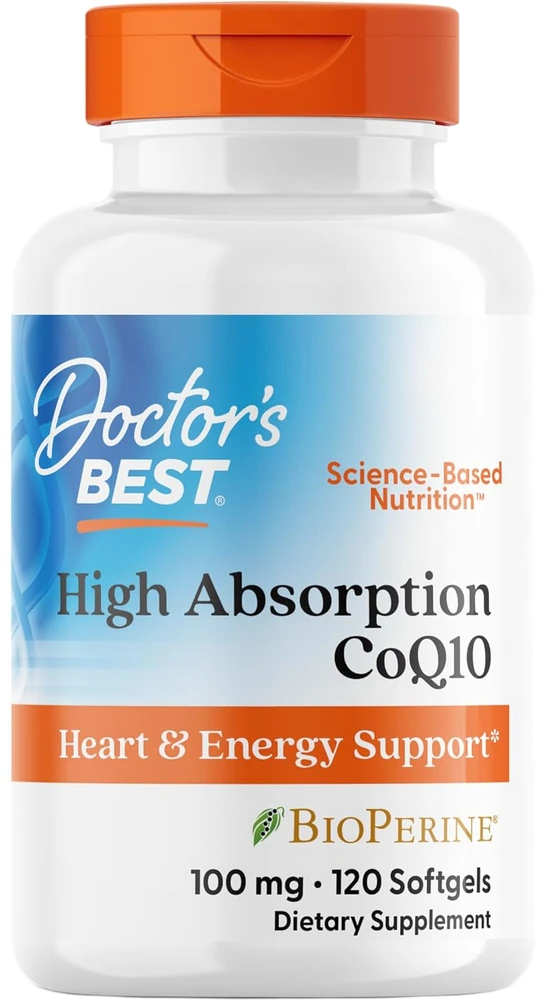
06Doctor's Best High Absorption CoQ10
The right call for under-40 buyers whose conversion enzyme works and for first-time experimenters who want to test CoQ10 without paying ubiquinol prices.
 03
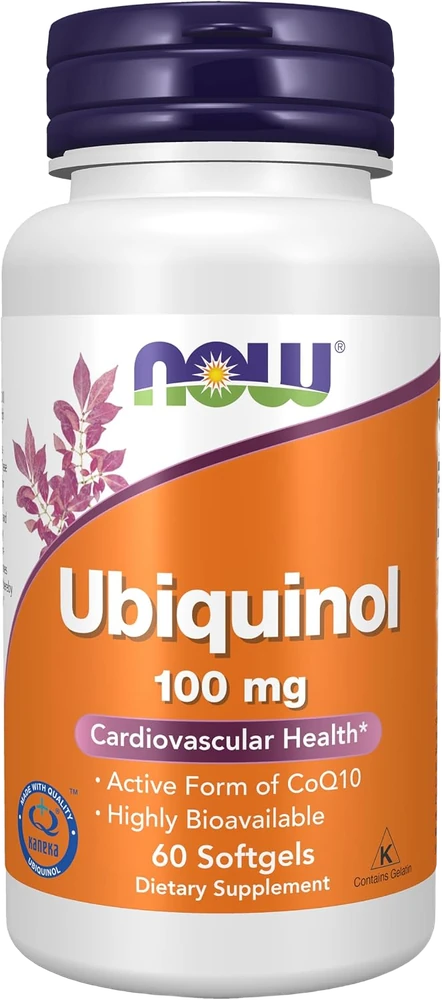
03NOW Ubiquinol
If you want to walk into a Sprouts or Vitamin Shoppe and grab a bottle of Kaneka ubiquinol you trust, NOW Foods is the answer.
 07
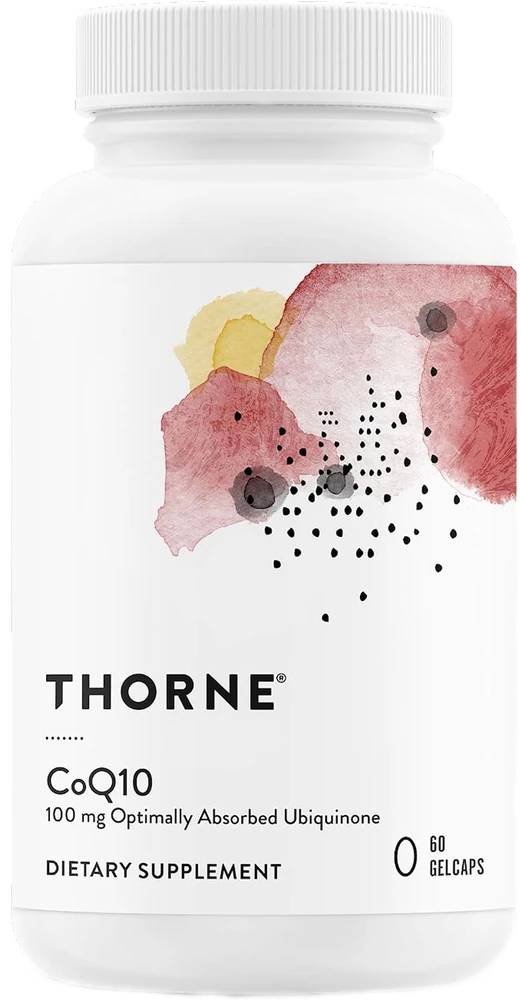
07Thorne CoQ10
The right pick if documented label-to-contents verification matters to you: the listing shows NSF Contents Certified.
Quick Answers
Is Solaray's CoQ10 actually Kaneka-licensed?
No — the panel names the form as CoQsol, not Kaneka or Kaneka QH, and nothing on the label points to Kaneka (Kaneka publishes no licensee list to check against). The molecule is structurally identical to Kaneka ubiquinone (CoQ10 is a defined compound), but the supply chain provenance differs. Solaray runs GMP-certified manufacturing and has 50 years of consistent brand reputation, so the QC discipline is real — the chain-of-custody gap is at the raw-material supplier tier, not the manufacturing tier. For buyers anchoring purchases to the trial-evidence base (Q-SYMBIO, Banach 2015 statin meta — both used Kaneka product), Solaray isn't the right pick. For buyers who value brand legacy and don't need the trial-supply-chain link, the chain-of-custody gap is less material.
Is Solaray cheaper than the Kaneka-licensed brands?
Not when we checked. On Amazon US on Oct 11, 2026 the only offer for the 60-softgel bottle came from a marketplace seller at $28.00, which is $0.47 per softgel. Three Kaneka ubiquinols cost less per softgel the same day (Qunol Mega $0.36, Jarrow $0.45, NOW $0.46), and Doctor's Best ubiquinone cost $0.16. An earlier version of this review put Solaray at $18 a bottle and called it the cheaper option; at the price we read it is not. The shelf price in a health store may differ, so compare per softgel before you buy.
Does it have an absorption enhancer?
Not BioPerine or a surfactant — but it isn't a bare capsule either. The front label says 'Enhanced Absorption' and the panel names CoQsol in a rice-bran-oil softgel with yellow beeswax, an oil-based delivery system that helps a lipid-soluble molecule. We found no head-to-head data against Kaneka ubiquinol or BioPerine formulations, so treat it as a plausible improvement over a dry hard capsule, not a proven one. Take it with a fat-containing meal anyway: with breakfast eggs or dinner with olive oil, absorption is fine; fasted with water, you'll waste a large share of the dose. For buyers who sometimes dose fasted or with low-fat snacks, Doctor's Best (#6) with BioPerine (~30% absorption boost) or Qunol (#8) with its water-soluble surfactant carrier (~3× fasted absorption boost) are better matched.
Should I take 1 softgel or 2 softgels per day?
Same dose-scaling math as other 100 mg ubiquinone products. General longevity / under-40 baseline: 1 softgel/day with breakfast eggs or dinner with olive oil — 100 mg of ubiquinone is converted to active ubiquinol endogenously. Statin users with myalgia (note: ubiquinol is the better form for this indication; consider upgrading to Jarrow #1): 2 softgels/day with dinner = 200 mg matches the Banach 2015 protocol. Migraine prophylaxis: 3 softgels/day split AM/PM with meals = 300 mg matches the Sandor 2005 protocol. One thing to count: each softgel also carries 700 mcg vitamin A (as beta carotene) and 67 mg vitamin E, so at 2-3 softgels a day add those to whatever your multivitamin already supplies.
Is it a vegetarian capsule or a softgel?
A gelatin softgel. The listing title says 'Vegetarian Softgel Capsules' and a tile says Vegan, but the panel's other ingredients list gelatin, so it is not vegetarian or vegan — earlier versions of this review wrongly described an HPMC vegetarian capsule. The oil base (rice bran oil, yellow beeswax) is a carrier like the ones in the Jarrow, Healthy Origins and Doctor's Best softgels. If you need a genuinely vegetarian CoQ10, check the panel for gelatin before you buy.
When does Solaray make sense vs Doctor's Best (#6)?
Three specific cases. (1) Offline emergency — your local independent health store stocks Solaray but not Doctor's Best, and you need a bottle today. Solaray's offline distribution in independent stores is strong. (2) Brand legacy trust — you've been using Solaray for years and trust the 50-year track record more than newer brand positioning. (3) You specifically want the vitamin A and E that ride along in this softgel. For all three cases, Solaray is a defensible pick. For everyone else, Doctor's Best wins on its BioPerine carrier and a much lower price; neither label names its CoQ10 supplier. The cost gap is real.
Is the 50-year brand legacy worth anything in 2026?
Yes, for specific buyers. Solaray was founded in 1973 and has operated continuously for over 50 years under the Nutraceutical Corporation umbrella (also owns Action Labs, KAL, others). The legacy translates to: (1) consistent GMP-certified manufacturing protocols refined over decades, (2) strong relationships with independent health stores nationwide (the 'health food store brand' that owners know personally), (3) low-controversy operating history — no major recalls on CoQ10 in 50 years on market. The legacy isn't a substitute for Kaneka licensing or BioPerine absorption enhancement, but it's not nothing. For buyers who specifically value 'brand that's been here all my life' positioning over 'brand with the strongest trial-literature anchoring', Solaray has a defensible niche. It just doesn't apply to most informed buyers.
Sources & Further Reading
5 peer-reviewed sources, each linked to PubMed
- [1] Mortensen 2014 (Q-SYMBIO) PMID 25282031 — The effect of coenzyme Q10 on morbidity and mortality in chronic heart failure: results from Q-SYMBIO: a randomized double-blind trial. 420 CHF patients randomised to 3×100 mg/day Kaneka ubiquinone vs placebo for 2 years — 43% reduction in major adverse cardiovascular events. The pivotal trial used Kaneka chain-of-custody that Solaray's CoQsol ubiquinone doesn't anchor to. Cited to clarify the chain-of-custody gap for trial-anchored buyers.
- [2] Banach 2015 (statin myopathy meta) PMID 25440725 — Effects of coenzyme Q10 on statin-induced myopathy: a meta-analysis of randomized controlled trials. Meta-analysis of 12 RCTs on CoQ10 supplementation in statin users — significant reduction in muscle symptoms at 100-200 mg/day. Cited to clarify that Solaray's ubiquinone form is a partial undershoot versus the ubiquinol products preferred for this indication.
- [3] Zhang 2018 (ubiquinol vs ubiquinone) PMID 30302465 — Ubiquinol is superior to ubiquinone to enhance Coenzyme Q10 status in older men. Head-to-head trial of ubiquinol vs ubiquinone in older men — 2-4× bioavailability advantage for the reduced form. The reference paper defining the form-gap that Solaray's ubiquinone undershoots for 40+ buyers.
- [4] Sandor 2005 (migraine) PMID 15728298 — Efficacy of coenzyme Q10 in migraine prophylaxis: a randomized controlled trial. 42 migraine patients randomised to 3×100 mg/day CoQ10 vs placebo for 3 months. Significant reduction in attack frequency. The protocol that Solaray's 3-softgel migraine-prophylaxis dose maps to.
- [5] Hernández-Camacho 2018 (review) PMID 29459830 — Coenzyme Q10 supplementation in aging and disease. Comprehensive review of CoQ10 supplementation across aging, cardiovascular disease, and neurodegeneration. Confirms safety and efficacy at 100-400 mg/day across multiple populations — the protocol foundation underwriting any 100 mg/day product including Solaray.
Affiliate disclosure: every Amazon link uses our Associates tag (superachieverclub-20). We earn a small commission at no cost to you; it funds independent reviews. We never accept payment to change a ranking.