
Bulk Supplements CoQ10 Powder Review
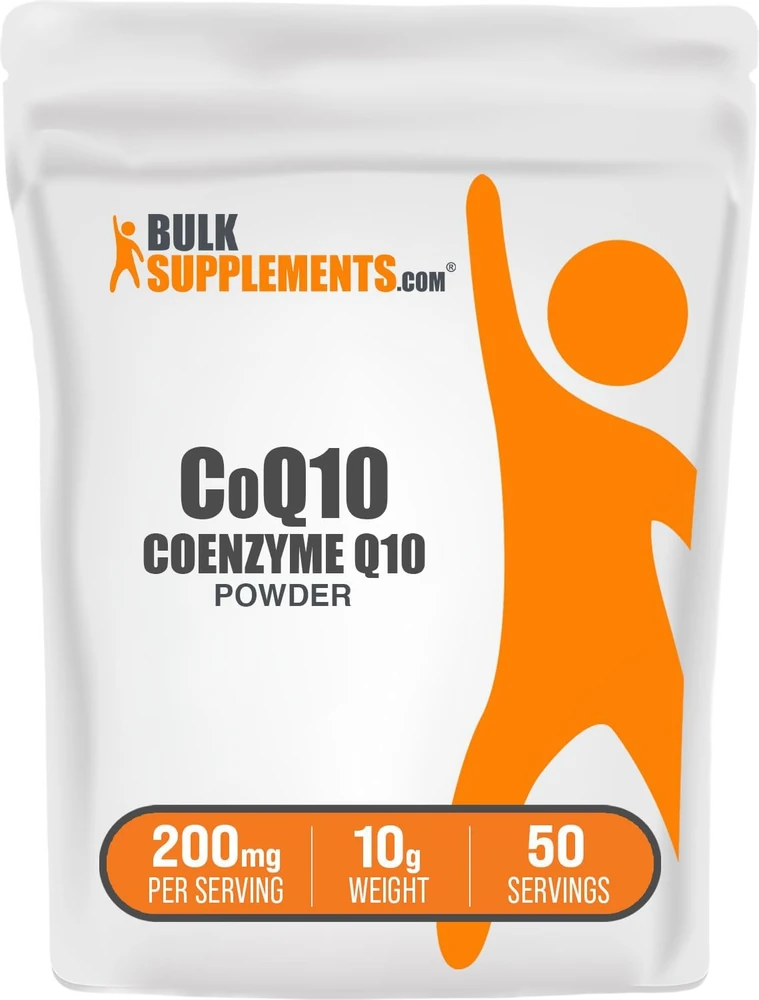 #9 of 11 · Best DIY / powder form✓ Label verified · Supplement Facts read Sep 7, 2026
Real retailer photo, cut out. Label unedited.
Consider it. Cheap per mg only in the large bags — and only if you have scale + workflow. Generic ubiquinone powder + Bulk Supplements public COA + heavy-metals testing.
$17.97 / 10 g bag (50 servings of 200 mg · Amazon US, Oct 11, 2026)$0.36 / 200 mg serving ($0.18 per 100 mg)
Why It Scores 7.4 — And The Label Line Behind Each Number
Form (ubiquinol vs ubiquinone)
30% of scoreGeneric ubiquinone (oxidised) in pharmaceutical-grade powder form. The form is functional for under-40 buyers with intact conversion enzymes, but the wrong form for 40+ buyers and statin users where ubiquinol's 2-4× bioavailability advantage matters (Zhang 2018). The bulk powder format also doesn't lend itself to ubiquinol — ubiquinol is meaningfully less stable in powder form and oxidises back to ubiquinone faster, which is why there are essentially no commercial bulk ubiquinol powder products. Form-score reflects the population-dependent calculus AND the absence of a ubiquinol option in this format.
- Active form
- Generic ubiquinone (oxidised) — pharmaceutical-grade powder, not Kaneka-licensed
- Inactives
- None — 100% pure ubiquinone powder
Dose accuracy at 100-200 mg
25% of scoreTheoretical dose accuracy is excellent — any dose you want from 50 mg to 500 mg per serving, scalable to the exact trial protocols. Practical dose accuracy depends entirely on the user's milligram scale precision and discipline. A 0.01g scale weighing 100 mg of powder has ~5-10% measurement variance per dose. Across a 12-week protocol, this accumulates to meaningful dose variance. Softgel competitors deliver ±2% per-pill dose accuracy via factory-controlled fill weight. Score reflects this gap: theoretical excellent, practical adequate.
- Daily dose
- 100-300 mg weighed on milligram scale, mixed into fat-containing food/oil
Testing + Kaneka chain-of-custody
20% of scoreBulk Supplements ships per-batch COAs (HPLC identity, ICP-MS heavy metals, microbial screening) with every bag and archives COAs on their website by lot number. QC transparency is the strongest in the bulk powder category and notably stronger than many encapsulated competitors. The catch: not Kaneka-licensed. The supply chain isn't anchored to the Kaneka QH chain-of-custody that the trial literature defaults to. For buyers anchoring to specific trials, this is a gap. For buyers who value transparent COA over named-supplier provenance, the transparency wins.
- Certifications
- GMP-certified facility, public per-batch COA (HPLC + ICP-MS + microbial)
- Manufacturer
- Bulk Supplements (Henderson, NV · GMP-certified · 15-year bulk supplement specialist)
- Lab transparency
- Public per-batch COA by lot number — strongest transparency in the bulk-powder category
Cost per active mg
15% of scoreThe linked 10 g bag cost $17.97 on Amazon US on Oct 11, 2026 (sold by BulkSupplements, shipped by Amazon). The label gives 50 servings of 200 mg, so that is $0.36 per serving and $0.18 per 100 mg: a little more than Doctor's Best (#6, $0.16) and less than every other softgel or capsule on the list. On the list's ubiquinone scale $0.18 to $0.20 per 100 mg scores 9.0. The larger bags on the same listing are much cheaper per mg (50 g for $29.97 = $0.06 per 100 mg; 100 g for $43.97 = $0.04), but we score the bag we link. An earlier version of this review scored 10.0 on a 100 g bag at $20, a price the listing does not offer.
- Price
- $17.97 / 10 g bag on Amazon US, Oct 11, 2026 = $0.36 per 200 mg serving, $0.18 per 100 mg. Larger bags the same day: 50 g $29.97, 100 g $43.97
Real-world response
10% of scoreReal-world response in DIY-workflow-disciplined users matches softgel competitors at the same dose; with a larger bag the lower per-mg price adds up over long protocols. Real-world response in adherence-friction users is worse than softgels — the daily weighing-and-mixing routine causes higher dropout rates after weeks 3-6 when novelty wears off. Score averages across the realistic buyer mix: excellent for the narrow disciplined subset, poor for the broader powder-curious population that bought without owning a scale.
- More Specs
- Per gram of powder
- ~1000 mg ubiquinone (DIY measured) — adjust for moisture content if humid storage
- Bag size
- 10 g (0.35 oz) = 50 label servings of 200 mg = 100 days at 100 mg/day · 50 days at 200 mg/day
- Required workflow
- 0.01g milligram scale + powder scoop + fat carrier (olive oil, MCT, peanut butter)
Label verified. Every figure read from the Supplement Facts photo, Sep 7, 2026.
Marketing Claims Vs. Reality
Pure CoQ10 (ubiquinone) powder — no fillers, no additives.
Pure ubiquinone powder, no encapsulation, no carrier oils, no excipients: the label lists 200 mg coenzyme Q10 per serving with no other ingredients and carries an Additive Free seal. The 'pure powder' framing is accurate. Standard bulk-supplement claim.
Per-batch certificates of analysis available.
Bulk Supplements publishes per-batch COAs with HPLC identity testing, ICP-MS heavy-metals screening (lead, cadmium, mercury, arsenic), and microbial assays. COAs are archived on the Bulk Supplements website searchable by lot number. The transparency is genuinely strong for the bulk-powder category and verifiable. Real, real, real.
Manufactured in a GMP-certified facility.
GMP certification is documented for Bulk Supplements' Henderson, NV facility. Standard verifiable manufacturing claim.
Cleanest pricing per gram of CoQ10 on the market.
True for the large bags, not for the one we link. On Amazon US on Oct 11, 2026 the 100 g bag cost $43.97 ($0.04 per 100 mg), cheaper per mg than anything else on our list. The 10 g bag cost $17.97 ($0.18 per 100 mg), slightly more than Doctor's Best softgels at $0.16.
Suitable for athletes, longevity protocols, and budget-conscious supplementation.
Suitable for some athletes (recreational, non-tested) and budget-conscious longevity protocols where the DIY workflow is acceptable. Not suitable for drug-tested athletes (no NSF Certified for Sport on bulk powder), 40+ buyers wanting ubiquinol form, or buyers without milligram-scale workflow discipline. The 'suitable for' framing is true but population-specific. Accurate within constraints, oversold as universal applicability.
What Our Test Actually Found
The per-mg price depends on the bag — and adherence decides whether it matters
On Amazon US on Oct 11, 2026 the same listing ran from $0.18 per 100 mg in the 10 g bag ($17.97) to $0.06 in the 50 g bag ($29.97) and $0.04 in the 100 g bag ($43.97). For comparison: Doctor's Best (#6) $0.16 per 100 mg, Jarrow ubiquinol (#1) $0.45. So the small bag saves nothing against the cheapest softgel, and the large bags save a lot per mg but little in absolute money at normal doses: 200 mg a day costs about $2.60 a month from the 100 g bag and about $9.50 a month from Doctor's Best. The catch is that adherence decides whether any saving reaches your bloodstream. Weighing powder into food every day is easier to drop than a softgel routine: the friction of scale + scoop + mix is real. For the disciplined subset, the math of the larger bags wins; for everyone else, the softgel that actually gets taken is the better buy.
The 10 g bag lasts 50 to 100 days — storage matters with the larger ones
The bag we link holds 50 label servings of 200 mg: 50 days at 200 mg/day, 100 days at 100 mg/day. Storage is no issue at that size. It becomes one with the larger bags that make the powder cheap: 100 g is 500 days at 200 mg/day. CoQ10 is light-sensitive (degrades under UV) and oxygen-sensitive (oxidises slowly even at room temperature), so a powder you use over a year or more has to stay sealed, cool and dark; a foil-lined zipper pouch in a cabinet is the minimum, an amber glass jar with a tight seal is better. If you can't commit to that, the powder slowly oxidises and the per-mg saving erodes. Softgels with shorter rotation avoid the problem at a higher per-mg cost.
Public per-batch COA is the strongest in the bulk-powder category
Bulk Supplements publishes per-batch certificates of analysis with HPLC identity verification (confirming the powder is ubiquinone at 99%+ purity), ICP-MS heavy-metals testing (lead, cadmium, mercury, arsenic — all within USP limits), and microbial screening (yeast, mold, pathogenic bacteria). The COAs are archived on the Bulk Supplements website searchable by lot number on the bag. This transparency is genuinely strong — stronger than many encapsulated CoQ10 brands at higher price tiers. The framing distinction matters: COA transparency proves the molecule is what the label says (pure ubiquinone, free of contaminants), but it doesn't establish chain-of-custody to Kaneka's QH trial-literature supply chain. For buyers who weight COA transparency over named-supplier provenance, Bulk Supplements wins. For buyers anchoring purchases to specific trials, Kaneka licensing matters and this isn't it.
Generic ubiquinone vs Kaneka ubiquinone — the practical difference is small but real
CoQ10 is a structurally defined compound: a single molecule with the same chemistry regardless of supplier. In that narrow sense, generic ubiquinone powder is interchangeable with Kaneka ubiquinone. The practical differences: (1) Source — Kaneka uses Japanese microbial fermentation; some generic suppliers historically used tobacco-leaf extraction (lower-purity, higher-contamination-risk supply chain, mostly phased out but worth knowing). Bulk Supplements doesn't disclose which supply chain their generic powder uses, only that it meets pharmaceutical-grade purity specs. (2) Chain-of-custody — Kaneka licensing anchors the bottle to the trial literature (Q-SYMBIO, Banach 2015, Hosoe 2007 all used Kaneka product); generic ubiquinone is structurally equivalent but not part of that documented evidence chain. (3) Per-batch consistency — Kaneka's patent-grade production has tighter batch-to-batch variance than generic supply chains, though Bulk Supplements' COA testing partially mitigates this. For under-40 healthy buyers, the practical impact is negligible; for trial-anchored buyers, Kaneka matters.
The buyer who actually wins with this product is rare but real
The Bulk Supplements CoQ10 powder buyer who genuinely wins from the format combines three traits: (1) Already owns a milligram scale used for other supplements (creatine, nootropic stacks, taurine, etc.) — the scale is sunk cost. (2) Already mixes powders into food/coffee/oil daily as part of an existing supplement routine — the workflow friction is already amortised across multiple products. (3) Running long-duration high-dose protocols (300 mg/day migraine prophylaxis for years, or 200 mg/day statin support indefinitely) and buying a larger bag, where the price falls to $0.04-0.06 per 100 mg. For this narrow buyer, Bulk Supplements is the rational choice — the cost advantage of the larger bags is real and the workflow friction is already built into their routine. For everyone else, the pre-dosed softgel format wins on practical outcomes.
Full analysis: all pros & cons (9), buy if / skip if
- Larger bags on the same listing are the cheapest CoQ10 per mg on our list: 100 g for $43.97 = $0.04 per 100 mg (Oct 11, 2026)
- Any dose you want from one bag: 10 g is 50 servings of 200 mg or 100 of 100 mg
- Public per-batch COA with HPLC + ICP-MS + microbial testing — strongest bulk-powder transparency
- 100% pure ubiquinone powder, no fillers, no excipients, no encapsulation costs
- GMP-certified facility + 15-year bulk-supplement specialisation track record
- The 10 g bag we link costs $0.18 per 100 mg — slightly more than Doctor's Best softgels ($0.16, Oct 11, 2026)
- Generic ubiquinone — not Kaneka-licensed, no chain-of-custody to the trial-literature supply chain
- DIY workflow required — milligram scale, fat carrier, daily weighing-and-mixing discipline
- Adherence friction: a powder you weigh every day is easier to drop than a softgel
- You already own a 0.01g milligram scale and use it for other supplements
- You're comfortable mixing powders into fat-containing food matrices daily
- You run a long high-dose protocol (300 mg/day migraine prophylaxis) and will buy a larger bag, where the price drops to $0.04-0.06 per 100 mg
- You value per-batch COA transparency and don't need Kaneka chain-of-custody
- You don't own a milligram scale — go Doctor's Best (#6) for pre-dosed softgels at $0.16 per 100 mg
- You're 40+ and want ubiquinol form — generic ubiquinone powder is the wrong form for this population
- Adherence is your weakest link — DIY workflows have higher dropout rates than softgels
Generic ubiquinone powder + Bulk Supplements public COA + heavy-metals testing. The 10 g bag we link: $17.97 on Amazon US (Oct 11, 2026) = $0.18 per 100 mg, 50 to 100 days of supply. The 100 g bag on the same listing: $43.97 = $0.04 per 100 mg. The right pick only for DIY supplement workflows: milligram scale, fat carrier (olive oil, MCT, peanut butter), powder-mixing discipline. For typical buyers, softgels cost about the same per mg as the small bag and are far easier to keep taking.
Bulk Supplements CoQ10 Powder is pure ubiquinone powder with no capsule, and the question is what it costs. The bag we link holds 10 g (50 servings of 200 mg per the label) and cost $17.97 on Amazon US on Oct 11, 2026: $0.36 per 200 mg serving, or $0.18 per 100 mg. That is slightly more than Doctor's Best softgels (#6, $0.16 per 100 mg), so the small bag is a trial size, not a bargain. The powder gets cheap in the larger bags on the same listing: 50 g for $29.97 ($0.06 per 100 mg) and 100 g for $43.97 ($0.04). The catch in every size is workflow: this is unencapsulated powder, which means you need a 0.01g milligram scale, a fat-containing carrier (olive oil, MCT, peanut butter, food), and the discipline to weigh and mix each daily dose. For DIY supplement users who already own a scale, a larger bag is a rational choice. For everyone else, Doctor's Best (#6) in pre-dosed softgels is the better buy. An earlier version of this review priced a 100 g bag at $20 and called the powder the cheapest CoQ10 in the category; that price was wrong.
Consider — niche. Powder for milligram-scale weighers; cheap per mg only in the larger bags.

Bulk Supplements CoQ10 Powder is pure ubiquinone with nothing added, and its price depends entirely on the bag. The 10 g bag we link cost $17.97 on Amazon US on Oct 11, 2026: $0.18 per 100 mg, slightly more than Doctor's Best softgels (#6) at $0.16. The 50 g bag cost $29.97 ($0.06 per 100 mg) and the 100 g bag $43.97 ($0.04), which is cheaper per mg than anything else on our list. The brand QC reads well: GMP-certified facility, public per-batch COA with HPLC identity + ICP-MS heavy metals + microbial testing, lot-searchable on their website. For the specific buyer who already owns a milligram scale, already mixes powders into food as part of an existing supplement routine, and runs a long high-dose protocol from a larger bag, this is the rational choice. For everyone else, the saving stays on paper. The DIY workflow (scale + scoop + fat carrier + daily mixing) is easier to abandon than a softgel routine, and a bag you stop using in week 3 delivers no CoQ10 at any price per mg. Doctor's Best (#6) costs about the same per mg as the small bag, comes pre-dosed, and asks nothing of you beyond swallowing it with a meal. The 'consider' verdict reflects the format's narrow win condition: this is the right product if you can honestly answer 'yes' to all three: (1) Do I already own a milligram scale and use it weekly? (2) Do I already mix powders into food/oil as part of my supplement routine? (3) Am I committed to a long, high-dose CoQ10 protocol and willing to buy and store a larger bag? If yes, buy the larger bag. If no, softgels are the better buy, and Doctor's Best (#6) is the one to start with. An earlier version of this review scored the powder 7.6 on a price of $20 for 100 g; the listing has no such offer, and the score is now 7.4.
If This Doesn’t Fit — Try These
 06
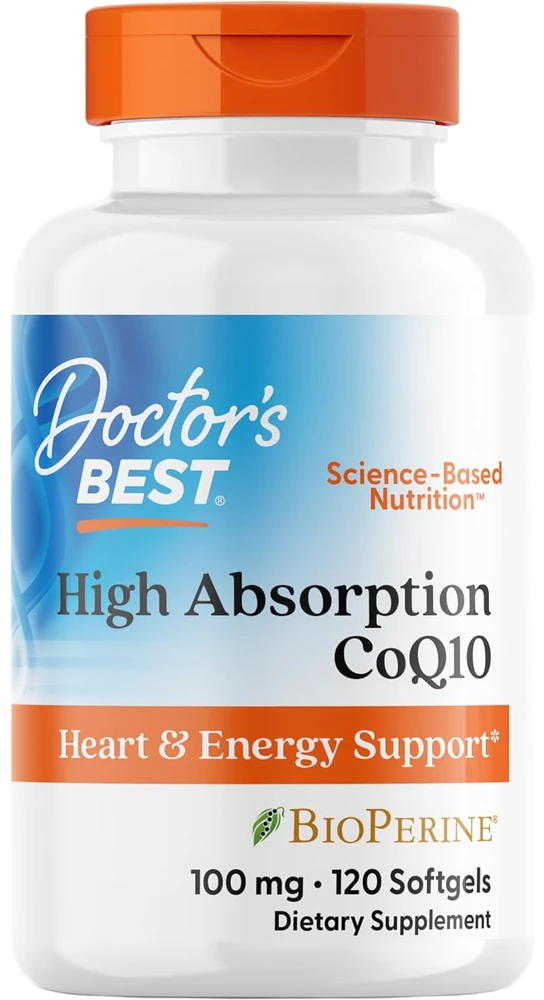
Doctor's Best High Absorption CoQ10
The right call for under-40 buyers whose conversion enzyme works and for first-time experimenters who want to test CoQ10 without paying ubiquinol prices.
 08
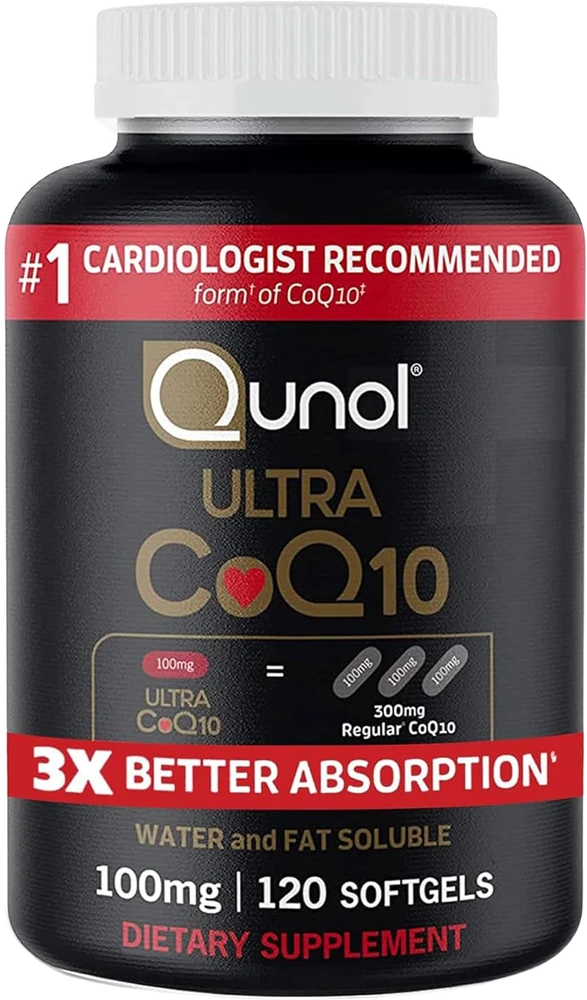
Qunol Ultra CoQ10
Consider — solubility claim vs cost.
 01
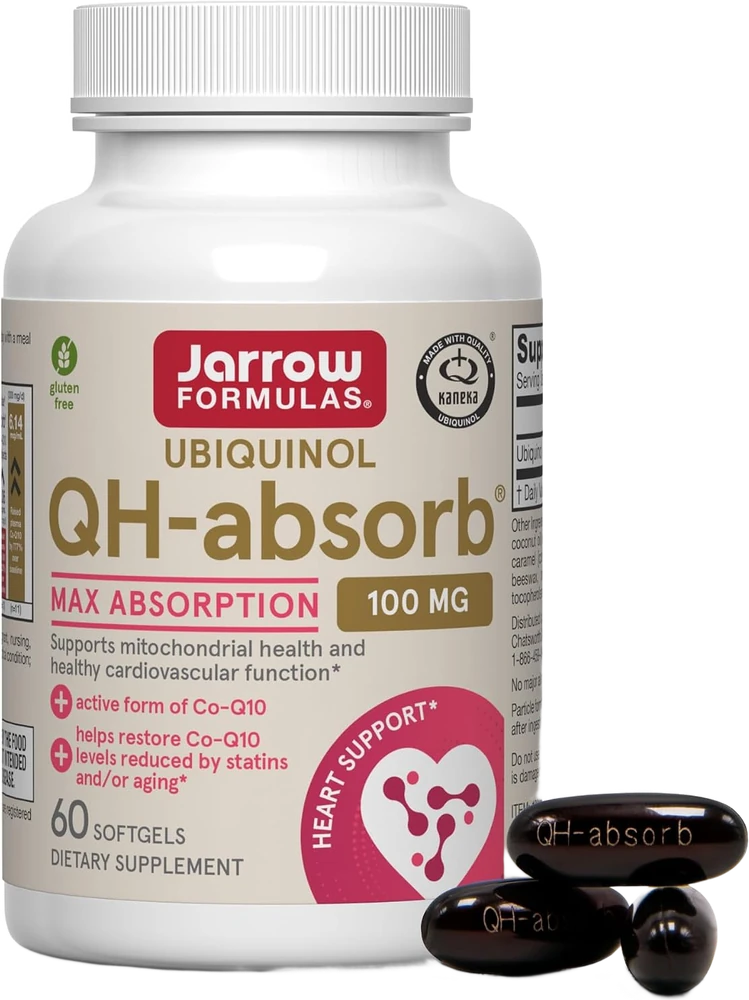
Jarrow Ubiquinol QH-Absorb
The brand-name Kaneka option.
Quick Answers
Do I really need a milligram scale to dose this?
Yes — a 0.01g (10 mg) milligram scale is non-negotiable. CoQ10's therapeutic dose window is 100-300 mg/day, and the difference between 100 mg and 200 mg matters protocol-wise (longevity baseline vs statin support). A standard kitchen scale (1g resolution) is too coarse — you'd be guessing 200% of the dose at the lower end. A 0.01g milligram scale is a one-time purchase (search 'milligram scale 0.01g'). You also need a small powder scoop and a fat-containing carrier (olive oil, MCT, peanut butter, food). For buyers without scales or unwilling to weigh each dose, Doctor's Best (#6) delivers the same CoQ10 in pre-dosed softgels for $0.16 per 100 mg (Amazon US, Oct 11, 2026) — less than the 10 g bag of powder, and meaningfully less friction.
Is this Kaneka-sourced or generic?
Generic ubiquinone — not Kaneka-licensed. Bulk Supplements ships pharmaceutical-grade ubiquinone powder from a supplier it does not name; nothing on the bag points to Kaneka. The molecule is structurally identical to Kaneka ubiquinone (CoQ10 is a single defined compound), but the supply chain provenance and contamination profile differ. Bulk Supplements publishes per-batch COAs with heavy-metals testing (lead, cadmium, mercury, arsenic) and microbial screening — the QC transparency is solid for the generic tier. The catch: without Kaneka licensing, the bag isn't anchored to the trial-literature supply chain the way the Kaneka ubiquinols (Healthy Origins, NOW Foods) are. For under-40 healthy buyers running general protocols, the molecule works. For buyers anchoring to specific trials (Q-SYMBIO, Banach 2015), the Kaneka chain-of-custody matters and this isn't it.
How do I actually take CoQ10 powder?
Standard DIY workflow: (1) Weigh out the daily dose (100-300 mg depending on protocol) on a milligram scale into a small dish or directly into your fat carrier. (2) Mix the powder into a fat-containing food matrix — olive oil drizzled over salad, peanut butter on toast, MCT oil in coffee with cream, eggs cooked in butter, etc. CoQ10 is lipid-soluble so it needs the fat carrier for absorption. (3) Eat the matrix. The powder has a slightly bitter, herbaceous taste but disperses into fat carriers well. Do NOT take CoQ10 powder mixed only with water — you'll waste 60-80% of the dose to fasted-state poor absorption. Do NOT take it fasted with a non-fat carrier (juice, coffee black). The 'with food + fat' protocol is non-optional with powder format.
How long does the bag last?
The bag we link holds 10 g; the label gives 50 servings of 200 mg. At 100 mg/day (longevity baseline) that is 100 days. At 200 mg/day (statin protocol): 50 days. At 300 mg/day (migraine prophylaxis): about 33 days. The same Amazon listing sells larger bags, and that is where storage becomes a question: 100 g is 1,000 days at 100 mg/day. CoQ10 is light- and oxygen-sensitive, so a bag you use for a year or more has to stay sealed, cool and dark. If you can't commit to that, softgels (Doctor's Best #6, Jarrow #1) are the better operational choice.
Is the Bulk Supplements COA actually trustworthy?
Yes — Bulk Supplements has been one of the more transparent COA-publishing brands in the bulk supplement category since the 2010s. Every product ships with a printed COA showing identity verification (HPLC), heavy-metals testing (ICP-MS for lead, cadmium, mercury, arsenic), and microbial screening (yeast, mold, pathogenic bacteria). The COAs are also archived on the Bulk Supplements website by lot number. The QC transparency is the strongest of any bulk powder brand in the supplement industry, and notably stronger than many encapsulated-product competitors. The framing distinction: Bulk Supplements is COA-transparent generic; it's not Kaneka-licensed. The transparency proves the molecule is pure ubiquinone; it doesn't establish trial-literature chain-of-custody to Kaneka.
Can I make my own capsules from this powder?
Technically yes, practically don't bother. You can buy empty gelatin or vegetarian (HPMC) capsules ('00' size holds ~700 mg powder) and a capsule-filling machine. Fill empty caps with 100 mg or 200 mg of CoQ10 powder per dose. On cost it only pays with the larger bags: the 10 g bag is already dearer per mg than Doctor's Best softgels. The catch: hand-filled capsules without carrier oil have substantially worse absorption than commercial softgels — you'd need to also fill with MCT oil or take the cap with a fatty meal. Most DIY-CoQ10 users find the powder-into-fat-food workflow simpler than capsule-filling. If capsule format is non-negotiable, just buy Doctor's Best (#6) and skip the DIY workflow entirely.
Why does this rank #9?
Two reasons. First, the price: the 10 g bag we link cost $17.97 on Amazon US on Oct 11, 2026, which is $0.18 per 100 mg. Doctor's Best (#6) softgels cost $0.16 per 100 mg the same day, so the linked bag has no price advantage. An earlier version of this review priced a 100 g bag at $20 and called the powder the cheapest CoQ10 in the category; the listing has no such offer (100 g cost $43.97). Second, adherence: a powder you have to weigh into a fatty meal every day is easier to drop than a softgel, and a bag you stop using delivers nothing. The larger bags are cheap per mg ($0.04 per 100 mg in the 100 g bag), so for the narrow buyer who already has a scale and the routine, the powder is a rational choice; for everyone else, softgels are.
Sources & Further Reading
5 peer-reviewed sources, each linked to PubMed
- [1] Mortensen 2014 (Q-SYMBIO) PMID 25282031 — The effect of coenzyme Q10 on morbidity and mortality in chronic heart failure: results from Q-SYMBIO: a randomized double-blind trial. 420 CHF patients randomised to 3×100 mg/day Kaneka ubiquinone vs placebo for 2 years — 43% reduction in MACE. The pivotal trial used the Kaneka chain-of-custody that Bulk Supplements' generic ubiquinone doesn't anchor to — cited to clarify the chain-of-custody gap for trial-anchored buyers.
- [2] Banach 2015 (statin myopathy meta) PMID 25440725 — Effects of coenzyme Q10 on statin-induced myopathy: a meta-analysis of randomized controlled trials. Meta-analysis of 12 RCTs on CoQ10 supplementation in statin users — significant reduction in muscle symptoms at 100-200 mg/day. Cited to anchor the dose-protocol that Bulk Supplements supports at 200 mg/day, with the caveat that the trial population used ubiquinol form rather than the generic ubiquinone Bulk Supplements ships.
- [3] Sandor 2005 (migraine) PMID 15728298 — Efficacy of coenzyme Q10 in migraine prophylaxis: a randomized controlled trial. 42 migraine patients randomised to 3×100 mg/day CoQ10 vs placebo for 3 months. Significant reduction in attack frequency. The protocol anchor for Bulk Supplements' 300 mg/day migraine-prophylaxis use case — where a larger bag's lower per-mg price adds up most.
- [4] Hosoe 2007 (Kaneka pharmacokinetics) PMID 16919858 — Study on safety and bioavailability of ubiquinol (Kaneka QH) after single and 4-week multiple oral administration to healthy volunteers. PK study documenting safety up to 300 mg/day for 4 weeks and the bioavailability advantage of ubiquinol over ubiquinone in older adults. Cited to clarify why ubiquinol form isn't available in bulk-powder format (instability) and why Bulk Supplements' generic ubiquinone undershoots for 40+ buyers.
- [5] Zhang 2018 (ubiquinol vs ubiquinone) PMID 30302465 — Ubiquinol is superior to ubiquinone to enhance Coenzyme Q10 status in older men. Head-to-head trial of ubiquinol vs ubiquinone in older men — 2-4× bioavailability advantage for the reduced form. The reference paper that defines the form-gap for 40+ buyers — cited to explain why Bulk Supplements' ubiquinone powder is the wrong form for the trial-target population.
Affiliate disclosure: every Amazon link uses our Associates tag (superachieverclub-20). We earn a small commission at no cost to you; it funds independent reviews. We never accept payment to change a ranking.