
Top 10 Best Peppermint Oil Capsules for IBS (2026)
10 picks — ranked by our 50/50 methodology
- #1Best overall / clinical IBS
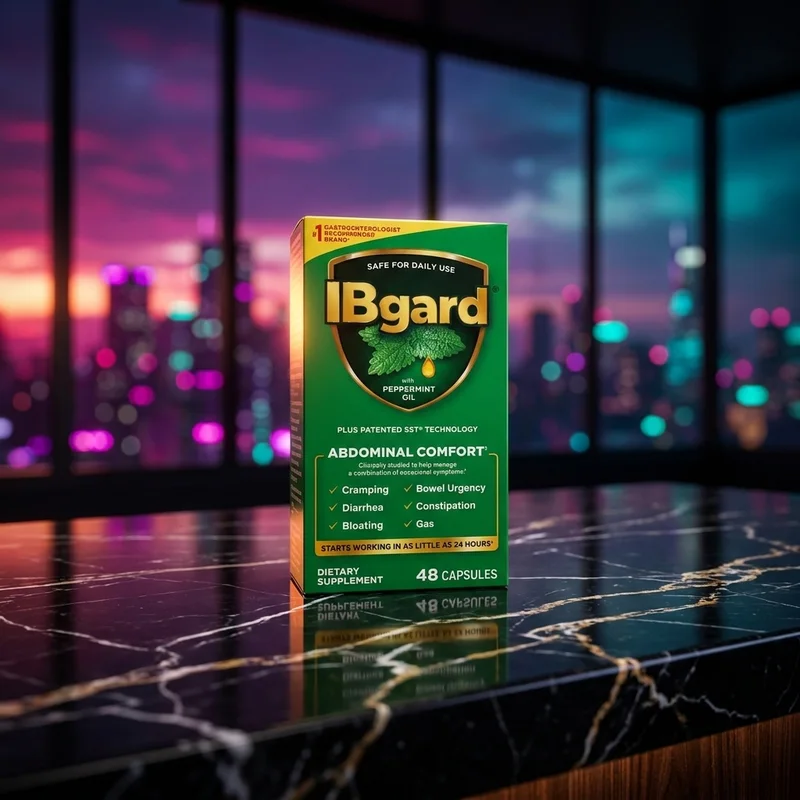
IBgard Peppermint Oil Capsules, 48ct
IBgard · ultra-purified peppermint oil in SST triple-coated sustained-release microspheres, 90 mg/capsule, 48 capsules9.6/10SAC Product Score™SAC Product Score™ — how it breaks down- Enteric coating / gut-targeted delivery40%9.9
- Clinical-dose alignment + label honesty25%9.4
- Third-party testing + manufacturing quality15%9.4
- Cost per effective dose12%9.3
- Real-world IBS/bloating response + tolerability8%9.4
The most-studied IBS-specific peppermint oil — patented Site-Specific Targeting (SST) microspheres deliver ultra-purified oil to the small intestine, fast relief without the stomach release that causes heartburn.
- Form
- SST triple-coated sustained-release microspheres (ultra-purified peppermint oil)
- Per serving
- 180 mg peppermint oil (2 capsules, 90 mg each)
- Bottle
- 48 capsules (~12 days at flare dosing, longer for daily support)
- Testing
- Ultra-purified peppermint oil; #1 gastroenterologist-recommended peppermint brand; made under cGMP
Pros- The exact formulation studied in Cash 2016 — 40% reduction in Total IBS Symptom Score at 4 weeks, with relief beginning as early as 24 hours
- SST microsphere technology spreads ultra-purified oil across the small intestine rather than dumping it, which targets the antispasmodic effect and minimizes the LES-relaxation that causes heartburn
- 180 mg peppermint oil per 2-capsule serving lands squarely in the clinical dose range
- The #1 gastroenterologist-recommended brand among GIs who recommend peppermint oil — the trust signal in this category
Cons- Most expensive per dose on the list — the SST technology is a real premium over classic enteric softgels
- 48-capsule box runs down fast at flare dosing (2 caps, 3×/day), so monthly cost climbs during a bad stretch
Our take — If you want the peppermint oil with the strongest IBS-specific evidence and the lowest heartburn risk, IBgard is the pick. The SST delivery system was built specifically to solve peppermint's two problems at once — get the oil to the intestine and keep it out of the stomach — and it's the formulation behind the best modern trial in the category. You pay for it, and the small box empties quickly during a flare. But for a first serious attempt at controlling IBS pain, urgency, and bloating with peppermint, this is the most reliable place to start.
- #2Best for sensitive stomachs
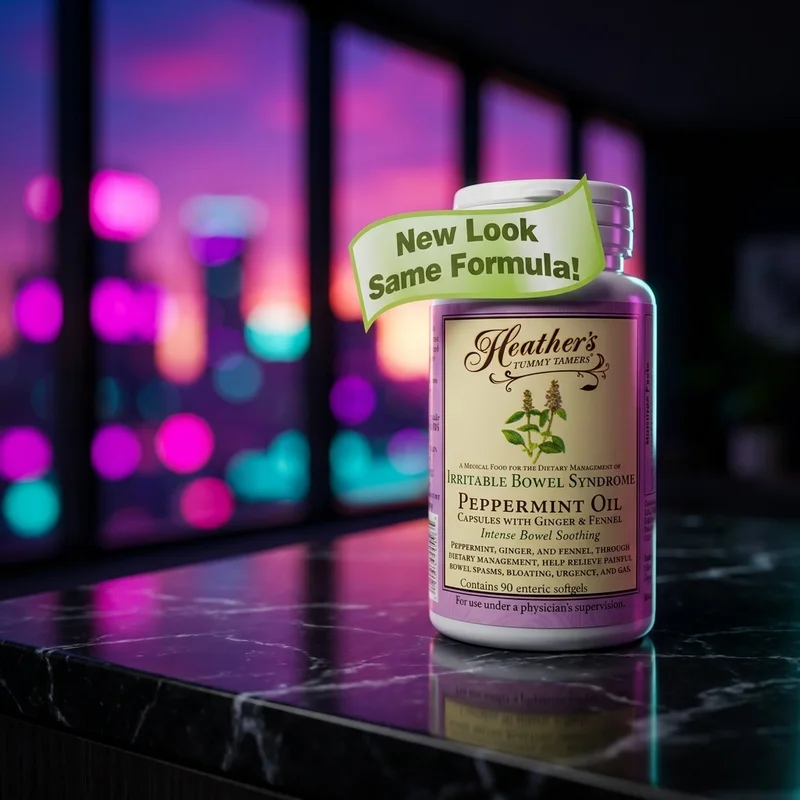
Heather's Tummy Tamers Peppermint Oil, 90ct
Heather's Tummy Care · enteric-coated (extra coat) peppermint oil + ginger + fennel, 90 softgels9.2/10SAC Product Score™SAC Product Score™ — how it breaks down- Enteric coating / gut-targeted delivery40%9.8
- Clinical-dose alignment + label honesty25%8.9
- Third-party testing + manufacturing quality15%8.9
- Cost per effective dose12%8.5
- Real-world IBS/bloating response + tolerability8%8.9
The IBS-dietitian favorite — a high-dose enteric peppermint with 50% more enteric coating than standard plus ginger and fennel, built for people who can't tolerate peppermint in other forms.
- Form
- Enteric-coated softgel (50% more enteric coating than industry standard)
- Per serving
- Peppermint oil + fennel oil + ginger oil (1 softgel, 1-3×/day)
- Bottle
- 90 softgels (~1-3 months depending on dosing)
- Testing
- Formulated specifically for IBS; designed for reflux-sensitive users
Pros- Extra enteric coating (50% more than standard) makes it the most reflux-tolerant enteric option here — the pick for people who get heartburn from other peppermint
- Adds fennel and ginger, both carminatives that target gas and bloating, on top of peppermint's antispasmodic effect
- Created within an IBS-focused brand (Heather's Tummy Care) with strong dietitian and patient following
- 90-softgel bottle gives a long runway at the typical 1-3/day dose
Cons- Per-capsule peppermint-oil milligrams are not as transparently stated as the simple 0.2 mL enteric picks
- Combination formula means you can't isolate the peppermint dose if you only want peppermint
Our take — Heather's Tummy Tamers is the sensitive-stomach answer. The signature 50%-extra enteric coat is purpose-built for the exact people peppermint oil usually fails — those who get reflux or heartburn from standard softgels — and the added fennel and ginger broaden it from a pure antispasmodic into a bloating-and-gas formula too. The trade-off is label transparency on the precise peppermint milligrams and the fact that it's a blend. If plain enteric peppermint has burned you before, this is the one to try next.
- #3Best value / gold-standard enteric
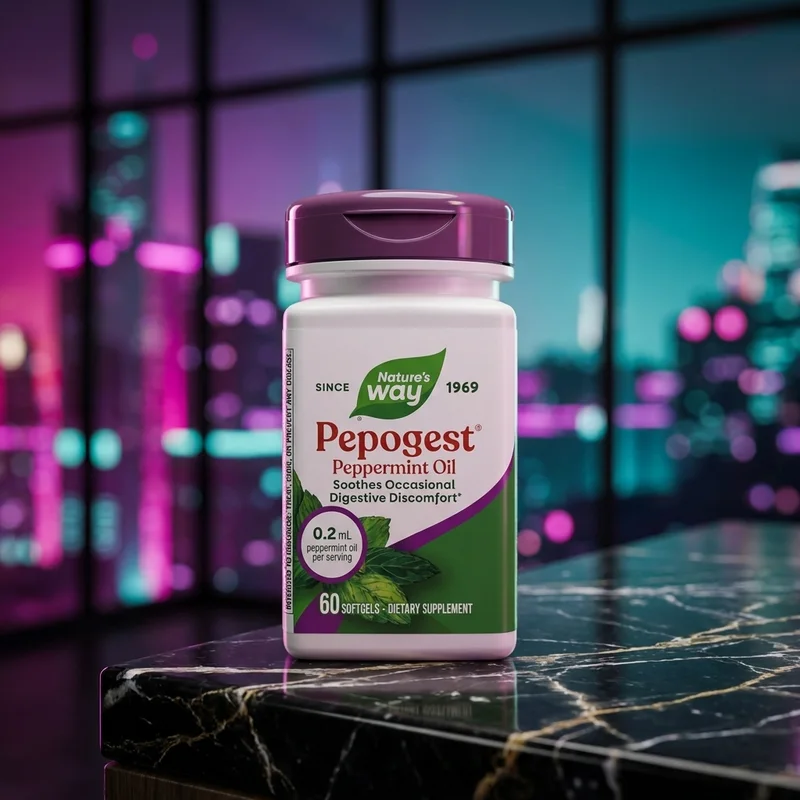
Nature's Way Pepogest Enteric Peppermint Oil, 60ct
Nature's Way · enteric-coated peppermint oil, 0.2 mL (~187 mg)/softgel, 60 softgels8.8/10SAC Product Score™SAC Product Score™ — how it breaks down- Enteric coating / gut-targeted delivery40%8.8
- Clinical-dose alignment + label honesty25%8.8
- Third-party testing + manufacturing quality15%8.1
- Cost per effective dose12%9.4
- Real-world IBS/bloating response + tolerability8%8.8
The classic enteric peppermint at the exact 0.2 mL trial dose — reliable, transparent, and one of the cheapest legitimate enteric options on the shelf.
- Form
- Enteric-coated softgel (releases in the intestine, not the stomach)
- Per serving
- 0.2 mL peppermint oil (~187 mg) per softgel, up to 3×/day
- Bottle
- 60 softgels (~20 days at 3/day, longer at maintenance)
- Testing
- Nature's Way QC, cGMP-manufactured, gluten-free
Pros- Delivers the exact 0.2 mL (~187 mg) enteric dose used across the classic peppermint-oil IBS trials — the textbook clinical dose, no guesswork
- Genuinely enteric-coated to survive stomach acid and release in the intestine, so it works for IBS and minimizes heartburn
- One of the lowest costs per effective dose of any real enteric peppermint on the market
- Simple single-oil formula with a clear, honest dose — easy to dial 1-3×/day to your symptoms
Cons- Plain softgel with no extra coat — the most reflux-sensitive users may still prefer Heather's extra-enteric version (#2)
- 60-count bottle empties in about three weeks at full 3×/day flare dosing
Our take — Pepogest is the value gold standard and the smartest default for most buyers. It hits the precise 0.2 mL enteric dose the trials used, it's honestly labeled, and it costs a fraction of the engineered options — there's no cheaper way to get the clinically validated peppermint dose into your intestine intact. The only reasons to spend more are IBgard's stronger evidence and SST delivery (#1) or Heather's extra coat for severe reflux sensitivity (#2). For everyone else weighing cost against efficacy, start here.
- #4Best peppermint + caraway combo
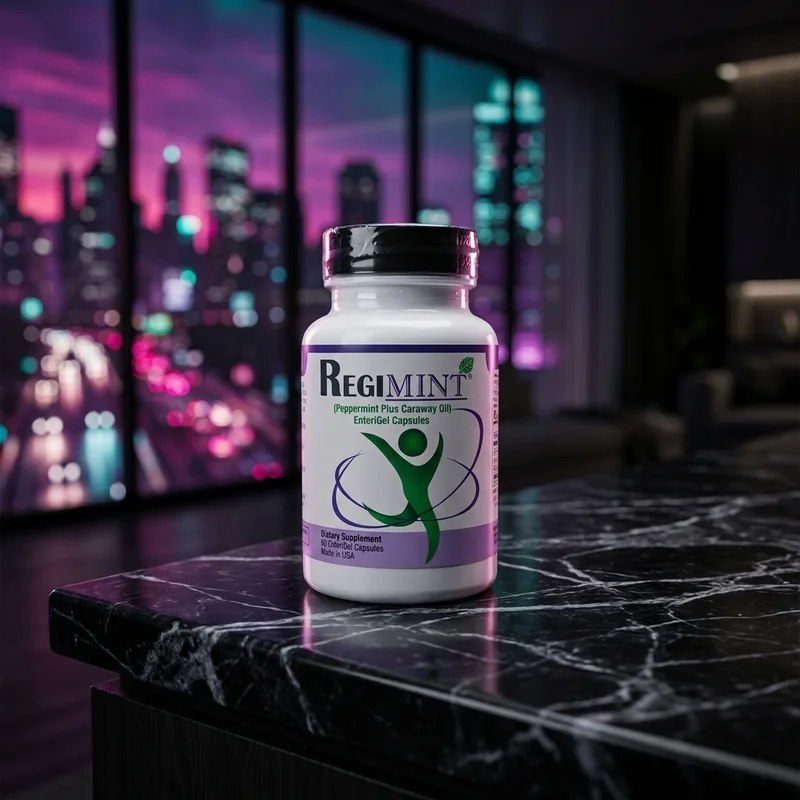
Regimint Peppermint Oil Plus Caraway, 60ct
Regimint · enteric-coated peppermint oil 200 mg + caraway oil 100 mg/capsule, 60 capsules8.4/10SAC Product Score™SAC Product Score™ — how it breaks down- Enteric coating / gut-targeted delivery40%8.3
- Clinical-dose alignment + label honesty25%9.0
- Third-party testing + manufacturing quality15%7.7
- Cost per effective dose12%8.3
- Real-world IBS/bloating response + tolerability8%8.3
Mirrors the European clinical peppermint-caraway combination for functional dyspepsia and IBS — a genuine enteric coat plus caraway's complementary antispasmodic action.
- Form
- Enteric-coated capsule (releases past the stomach)
- Per serving
- 200 mg peppermint oil + 100 mg caraway oil (1 capsule, up to 3×/day)
- Bottle
- 60 capsules (~20 days at 3/day)
- Testing
- Made in USA, gluten-free, soy-free, no pork (bovine gelatin)
Pros- Pairs 200 mg peppermint with 100 mg caraway oil — the same combination repeatedly studied in Europe for functional dyspepsia and IBS
- Solid 200 mg peppermint dose per capsule sits inside the clinical range on its own
- Genuinely enteric-coated to protect the oils and target release past the stomach
- Caraway adds a second antispasmodic/carminatic action, useful for overlapping dyspepsia and bloating
Cons- More expensive than the plain enteric softgels for a similar peppermint dose
- The peppermint-caraway combo is best matched to dyspepsia-overlap IBS; pure-IBS buyers may not need the caraway
Our take — Regimint is the pick if your symptoms straddle IBS and functional dyspepsia (upper-gut fullness, early satiety, bloating after meals). The peppermint-caraway pairing is one of the better-studied combinations in European gastroenterology, and Regimint delivers it with a real enteric coat and a clinical-range 200 mg peppermint dose. You pay a bit more than for a single-oil softgel, and the caraway is redundant if your problem is purely lower-gut IBS — but for the dyspepsia overlap, this combination earns its place.
- #5Best bulk value
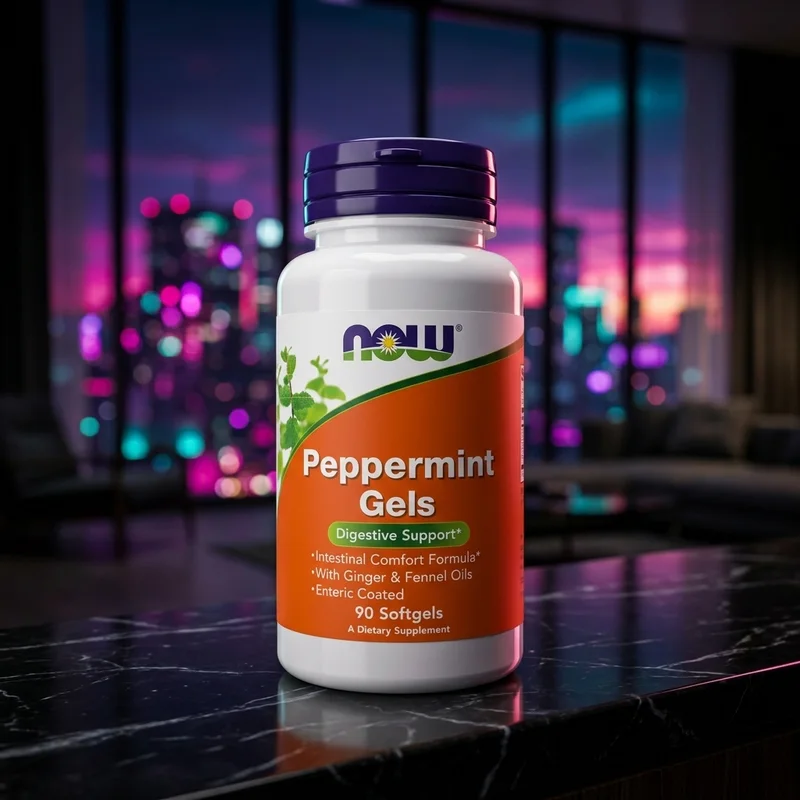
NOW Peppermint Gels with Ginger & Fennel, Enteric, 90ct
NOW Foods · enteric-coated peppermint oil 362 mg + ginger + fennel per serving, 90 softgelsSAC Product Score™ — how it breaks down- Enteric coating / gut-targeted delivery40%8.0
- Clinical-dose alignment + label honesty25%8.0
- Third-party testing + manufacturing quality15%7.3
- Cost per effective dose12%8.6
- Real-world IBS/bloating response + tolerability8%8.0
A trusted budget brand done right — genuinely enteric-coated, a generous peppermint dose, plus gas-targeting ginger and fennel at a low cost per softgel.
- Form
- Enteric-coated softgel (releases in the intestine)
- Per serving
- 362 mg peppermint oil + 35.2 mg ginger oil + 38.6 mg fennel oil (per serving)
- Bottle
- 90 softgels (1-2 softgels, 1-3×/day)
- Testing
- NOW in-house QC labs, GMP-certified facility, non-GMO
Pros- Genuinely enteric-coated — far better for IBS than the non-enteric budget bottles at a similar price
- Generous peppermint dose per serving plus ginger and fennel for gas and bloating
- NOW's in-house QC is among the most consistent in the industry, with decades of household-brand trust
- One of the lowest costs per softgel on the entire list — excellent bulk value
Cons- Combination formula — you can't isolate a pure peppermint dose if that's all you want
- Standard enteric coat (not an extra coat or SST), so very reflux-sensitive users may prefer #1 or #2
Our take — NOW Peppermint Gels are the bulk-value pick — proof that a budget brand can still get the fundamentals right. It's genuinely enteric-coated, carries a solid peppermint dose, and folds in ginger and fennel for bloating, all at one of the lowest per-softgel prices here. The only reasons to climb higher are IBgard's evidence and SST delivery, Heather's extra coat for severe sensitivity, or a desire for single-oil simplicity. For a trustworthy, enteric, gas-and-bloating-friendly peppermint at minimal cost, this is the value workhorse.
- #6Best botanical blend
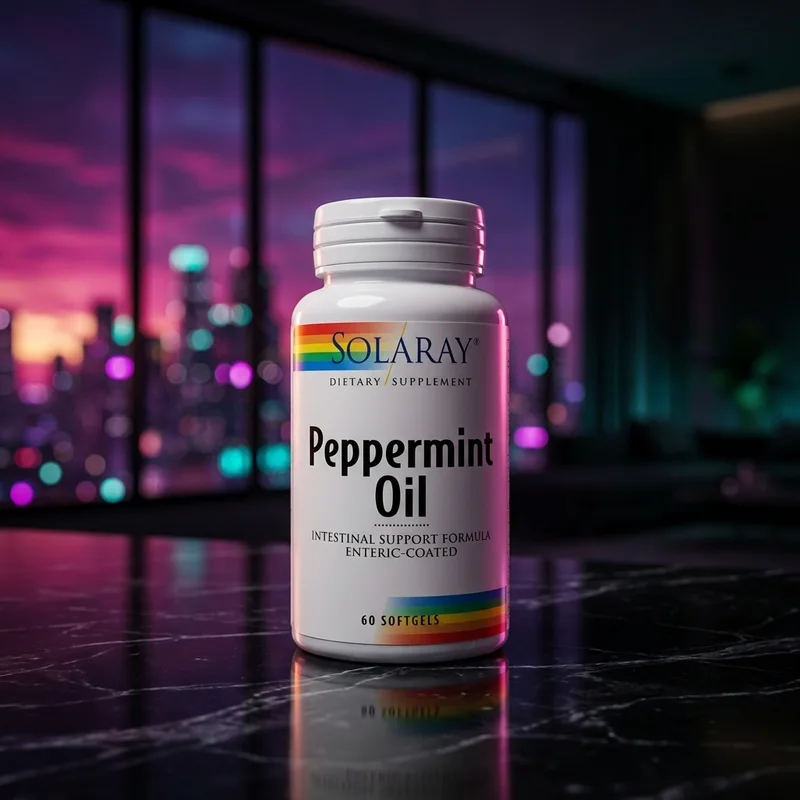
Solaray Peppermint Oil, Enteric, 60ct
Solaray · enteric-coated peppermint oil 250 mg + quercetin + rosemary/thyme/chamomile, 60 softgels7.5/10SAC Product Score™SAC Product Score™ — how it breaks down- Enteric coating / gut-targeted delivery40%6.8
- Clinical-dose alignment + label honesty25%7.9
- Third-party testing + manufacturing quality15%7.9
- Cost per effective dose12%8.1
- Real-world IBS/bloating response + tolerability8%7.9
A higher 250 mg peppermint dose in a genuine enteric softgel, rounded out with quercetin and supporting botanicals for gut comfort.
- Form
- Enteric-coated softgel (targets release in the intestine)
- Per serving
- 250 mg peppermint oil + 100 mg quercetin + 50 mg each rosemary/thyme/chamomile oil (1 softgel)
- Bottle
- 60 softgels (1 softgel up to 2×/day)
- Testing
- Solaray in-house facility, lab-verified for potency/purity/identity
Pros- Higher 250 mg peppermint dose per softgel — comfortably inside the clinical range in a single capsule
- Genuinely enteric-coated to bypass the stomach and release in the intestine
- Adds quercetin plus rosemary, thyme, and chamomile oils for supporting gut and anti-inflammatory comfort
- Solaray lab-verifies for potency, purity, and identity in its own facility
Cons- The supporting botanicals are not as evidence-backed for IBS as peppermint itself — you're partly paying for extras
- More moving parts in the formula means more potential for sensitivity in reactive users
Our take — Solaray Peppermint Oil is the botanical-blend option for buyers who want a higher single-capsule peppermint dose with some supporting herbs. The 250 mg of enteric-coated peppermint is the real engine here and it's well dosed; the quercetin and rosemary/thyme/chamomile are reasonable additions but carry far less IBS evidence than peppermint. If you like the idea of a fuller botanical formula and want a strong peppermint dose in one enteric softgel, it's a fair pick — just know the peppermint is doing the heavy lifting.
- #7Commission E heritage
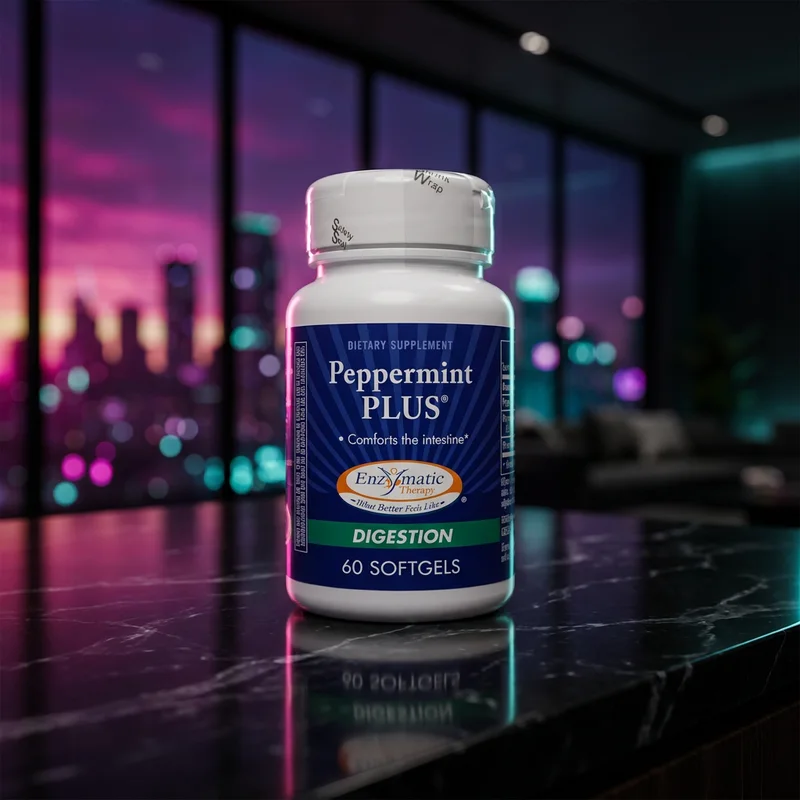
Nature's Way Peppermint Soothe, 60ct
Nature's Way · enteric-coated peppermint oil + rosemary + thyme, 60 softgels (formerly Enzymatic Therapy Peppermint Plus)7.1/10SAC Product Score™SAC Product Score™ — how it breaks down- Enteric coating / gut-targeted delivery40%6.4
- Clinical-dose alignment + label honesty25%7.5
- Third-party testing + manufacturing quality15%7.5
- Cost per effective dose12%7.7
- Real-world IBS/bloating response + tolerability8%7.5
The long-running Enzymatic Therapy Peppermint Plus formula, built to German Commission E botanical standards — a heritage enteric peppermint with rosemary and thyme.
- Form
- Enteric-coated softgel (releases in the intestine)
- Per serving
- Peppermint oil + rosemary oil + thyme oil (1 softgel, up to 3×/day)
- Bottle
- 60 softgels (~20 days at 3/day)
- Testing
- Nature's Way QC; legacy Enzymatic Therapy formula; gluten-free
Pros- A heritage formula (the old Enzymatic Therapy Peppermint Plus) built to German Commission E botanical-medicine standards
- Genuinely enteric-coated to protect the oil through the stomach
- Adds rosemary and thyme oils for supporting digestive comfort
- Backed by Nature's Way's established manufacturing and QC
Cons- Per-capsule peppermint milligrams are less clearly stated than the simple 0.2 mL Pepogest softgel from the same parent brand
- Rebrand from Enzymatic Therapy to Nature's Way Peppermint Soothe can confuse buyers looking for the original
Our take — Peppermint Soothe is the heritage pick — the well-regarded old Enzymatic Therapy Peppermint Plus, now under the Nature's Way label, formulated to German Commission E standards with rosemary and thyme alongside the peppermint. It's a genuine enteric softgel with a long track record. The catch is that its sibling, Pepogest (#3), states a cleaner 0.2 mL dose at a lower price from the same parent company — so unless you specifically want the rosemary/thyme blend or the legacy formula, Pepogest is the more transparent value. Still a solid, trustworthy enteric choice.
- #8Budget enteric pick
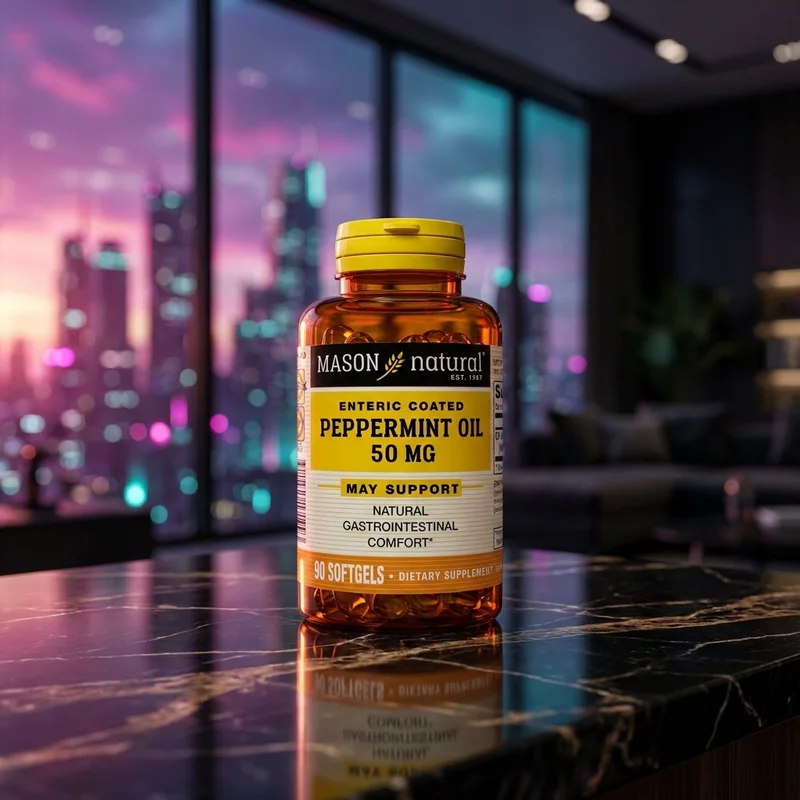
Mason Natural Peppermint Oil 50mg Enteric, 90ct
Mason Natural · enteric-coated peppermint oil, 50 mg/softgel, 90 softgels6.6/10SAC Product Score™SAC Product Score™ — how it breaks down- Enteric coating / gut-targeted delivery40%5.9
- Clinical-dose alignment + label honesty25%7.0
- Third-party testing + manufacturing quality15%7.0
- Cost per effective dose12%7.2
- Real-world IBS/bloating response + tolerability8%7.0
The cheapest true enteric option on the list — correctly coated to reach the intestine, but at a low 50 mg dose, so you'll likely need several softgels to hit a clinical dose.
- Form
- Enteric-coated softgel (releases in the intestine, not the stomach)
- Per serving
- 50 mg peppermint oil per softgel
- Bottle
- 90 softgels (low dose — multiple softgels needed per clinical dose)
- Testing
- Mason cGMP manufacturing; gluten-free, soy-free; 50+ years in market
Pros- Genuinely enteric-coated despite the rock-bottom price — it gets the one thing that matters right
- Among the cheapest peppermint bottles available, and correctly targets the intestine
- Gluten-free and soy-free, made under cGMP by a long-established brand
- Fine as a low, gentle starting dose for first-time or very sensitive users
Cons- At only 50 mg per softgel you need roughly 3-4 softgels to reach a single clinical (~180-200 mg) dose, which erodes the price advantage and the count
- Low per-capsule dose makes consistent therapeutic dosing more cumbersome than the 0.2 mL softgels
Our take — Mason Natural is the budget enteric pick — and it deserves credit for being genuinely enteric-coated at a price where many competitors quietly aren't. The honest catch is the dose: at 50 mg per softgel, you'd need three or four to match one 0.2 mL Pepogest capsule, which means the real cost per clinical dose and the pill count are less favorable than the sticker suggests. Buy it as a gentle low-dose starter or if you want fine dose control; for efficient clinical dosing, Pepogest (#3) is the better value.
- #9Budget high-count
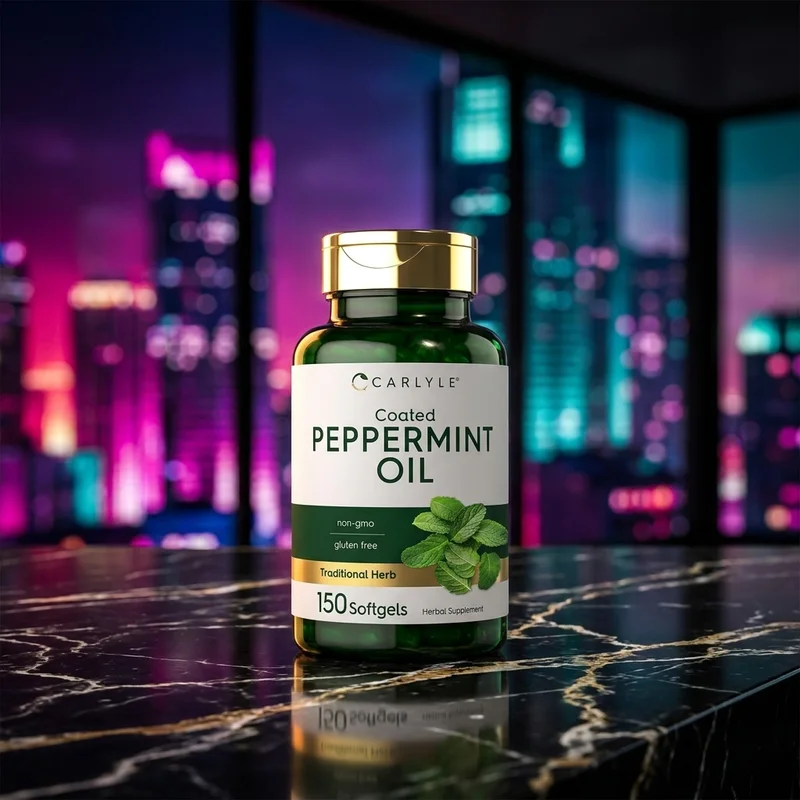
Carlyle Peppermint Oil, 150ct
Carlyle · coated softgel, peppermint oil 50 mg + rosemary + thyme, 150 softgels6.3/10SAC Product Score™SAC Product Score™ — how it breaks down- Enteric coating / gut-targeted delivery40%6.5
- Clinical-dose alignment + label honesty25%4.5
- Third-party testing + manufacturing quality15%6.5
- Cost per effective dose12%6.5
- Real-world IBS/bloating response + tolerability8%5.5
A budget high-count coated peppermint from a value house brand — correctly coated and very cheap per softgel, but a low 50 mg peppermint dose with added rosemary and thyme.
- Form
- Coated softgel (rosemary and thyme oils added)
- Per serving
- 50 mg peppermint oil + rosemary oil + thyme oil (1 softgel)
- Bottle
- 150 softgels (high count; low dose, so several per clinical dose)
- Testing
- Carlyle (NaturaLife/Vitamer house brand), non-GMO, gluten-free
Pros- Very high 150-count bottle at one of the lowest per-softgel prices on the list
- Coated softgel with added rosemary and thyme oils for supporting digestive comfort
- Non-GMO and gluten-free from a high-volume value house brand
- Big count gives a long runway even when taking multiple softgels per dose
Cons- Low 50 mg peppermint dose per softgel — like Mason, you need several to reach a clinical dose
- Coating detail is less rigorously documented than the dedicated enteric IBS brands, so it's a notch below the verified-enteric picks for IBS reliability
Our take — Carlyle is the budget high-count pick — a coated peppermint-plus-rosemary-and-thyme softgel at a very low per-unit price, in a generous 150-count bottle. It's a reasonable cheap option, but it shares Mason's low-dose problem (50 mg means several softgels per clinical dose) and its coating is less rigorously documented than the dedicated IBS enteric brands. Fine as an inexpensive, gentle daily-comfort peppermint; for trial-grade IBS dosing with verified enteric delivery, the 0.2 mL softgels (#3) or IBgard (#1) are the surer bets.
- #10Budget NON-enteric — form caveat
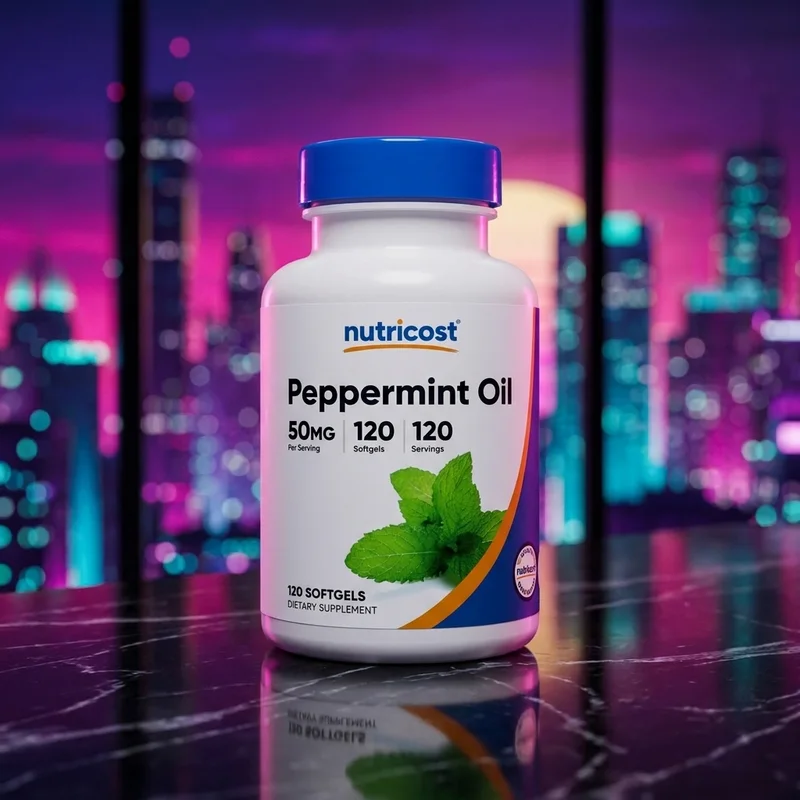
Nutricost Peppermint Oil 50mg, 120ct
Nutricost · NON-enteric softgel, peppermint oil 50 mg, 120 softgels, third-party testedSAC Product Score™ — how it breaks down- Enteric coating / gut-targeted delivery40%2.0
- Clinical-dose alignment + label honesty25%5.0
- Third-party testing + manufacturing quality15%9.0
- Cost per effective dose12%4.5
- Real-world IBS/bloating response + tolerability8%3.0
Cheap, high-count, and cleanly third-party tested — but NOT enteric-coated, which makes it weak for IBS and a common cause of heartburn. The form to avoid for gut symptoms.
- Form
- NON-enteric softgel (releases in the stomach — the wrong place for IBS)
- Per serving
- 50 mg peppermint oil per softgel
- Bottle
- 120 softgels (high count, but non-enteric)
- Testing
- Third-party tested, gluten-free, GMO-free, GMP-compliant facility
Pros- Genuinely third-party tested with a clean, transparent label — Nutricost's quality control is good
- Very cheap and high-count, with a clearly stated 50 mg peppermint dose
- Fine for non-gut uses where stomach release doesn't matter (e.g. general aromatic/oral use)
- GMO-free and gluten-free from a GMP-compliant facility
Cons- NOT enteric-coated — it releases peppermint oil in the stomach, the single thing the whole category exists to avoid, so it works poorly for IBS
- Stomach release relaxes the esophageal valve and is a common cause of the heartburn/reflux peppermint is notorious for
- Low 50 mg dose on top of the wrong delivery makes it the weakest option here for gut symptoms
Our take — Nutricost Peppermint Oil is a well-made product that illustrates exactly the mistake this whole list is built to prevent. Its testing and label are genuinely good — but it is NOT enteric-coated, which means the oil releases in your stomach, where it works poorly for IBS and commonly triggers the heartburn peppermint is infamous for. For gut symptoms, delivery is the entire game, and this one delivers to the wrong place. It sits last on purpose: cheap and clean, but the wrong form. If your goal is IBS, bloating, or cramps, choose any enteric pick above instead.

▸ Affiliate disclosure: every Amazon link uses our Associates tag (superachieverclub-20). We earn a small commission at no cost to you; it funds independent reviews. We never accept payment to change a ranking.
Peppermint oil works for IBS — but only if it survives your stomach
- 01
Peppermint oil is one of the best-evidenced things you can buy off a drugstore shelf for IBS.
The mechanism is real and specific: menthol acts as a calcium-channel blocker on intestinal smooth muscle, relaxing the spasms that drive IBS pain, urgency, and cramping. Meta-analyses (Khanna 2014, Ford 2008) put it ahead of fibre and antispasmodics for symptom relief.
- 02
The entire category lives or dies on one feature: the enteric coating.
Swallow plain peppermint oil and it releases in your stomach, relaxing the lower esophageal sphincter — causing the reflux and heartburn peppermint is notorious for — while burning off the dose before it reaches the gut. An enteric coat survives stomach acid and dissolves further down, delivering the oil to the intestine intact.
- 03
Every clinical trial that found a benefit used a gut-targeted delivery at the trial dose.
That means classic enteric softgels at the ~0.2 mL (187 mg) trial dose, or IBgard's newer SST microspheres. So the milligrams on the label are secondary to whether the capsule survives the stomach.
- 04
One rule overrides everything: a non-enteric peppermint softgel is the form to avoid.
It releases in your stomach, works poorly for the gut, and is the single most common cause of peppermint heartburn. Cheap, but the wrong form for IBS, bloating, or cramps.
Ranked on the file's three verified studies: Khanna 2014 (PMID 24100754), Ford 2008 (PMID 19008265, BMJ), and Cash 2016 (PMID 26319955) — full scoring in the methodology below.
How we ranked these ten
Each pick was scored 0-10 across five criteria, then weighted to a final composite. Enteric coating / gut-targeted delivery carries by far the most weight because peppermint oil is the textbook case of a supplement whose label dose is meaningless if it releases in the wrong place — oil freed in the stomach relaxes the esophageal valve and causes the reflux/heartburn that peppermint is notorious for, and burns off before reaching the intestine where the antispasmodic effect lives. Clinical-dose alignment and label honesty is second: the trial-validated dose is roughly 180-225 mg of peppermint oil per capsule (the classic 0.2 mL softgel), taken up to three times daily, and we reward bottles that hit that range and clearly state their enteric claim. Third-party testing is the quality gate. Cost per effective (gut-delivered) dose is the tiebreaker, and real-world IBS/bloating response and tolerability anchor the math against the trial record.
- Enteric coating / gut-targeted delivery40%
The gate. Gut-targeted delivery systems — IBgard's SST microspheres and genuine enteric coatings — get the top tier because each is designed to survive the stomach and release peppermint oil in the small intestine, which is both where it works and how it avoids the reflux/heartburn that plain oil causes. Standard enteric softgels score strongly; an 'extra' enteric coat for sensitive stomachs scores higher still. A NON-enteric peppermint softgel scores at the bottom — it releases in the stomach, is weak for IBS, and commonly triggers heartburn.
- Clinical-dose alignment + label honesty25%
The trial-validated dose is roughly 180-225 mg peppermint oil per capsule — the classic 0.2 mL (~187 mg) enteric softgel — taken up to three times daily. Bottles that land in that window and clearly declare their peppermint-oil milligrams and enteric status score full marks; very low single-digit-percentage or under-dosed bottles (e.g. 50 mg) lose points because you must take several to reach a clinical dose, and any bottle vague about its coating is penalized.
- Third-party testing + manufacturing quality15%
GMP manufacturing, third-party testing, a public COA, non-GMO/gluten-free verification, or ultra-purification of the peppermint oil. Peppermint oil quality and purity vary, and the enteric coat must actually be applied correctly to work — so manufacturing rigor is a real differentiator, not a formality.
- Cost per effective dose12%
Monthly cost divided by the gut-delivered dose at the label serving — not raw price. A cheap non-enteric bottle that releases in the stomach is not cheap per effective dose. The classic 0.2 mL enteric softgels win this axis on value; the engineered SST and extra-coat formulations cost more but justify it on delivery and tolerability.
- Real-world IBS/bloating response + tolerability8%
Alignment with Khanna 2014 (enteric peppermint oil superior to placebo for IBS), Ford 2008 (peppermint oil effective for IBS, ahead of fibre and antispasmodics), and Cash 2016 (IBgard SST, 40% symptom reduction at 4 weeks). Formulations that match the trial form and dose — and that add carminatives like ginger/fennel for bloating — score higher than under-dosed or non-enteric bottles.



The bottom line
- 01
IBgard (#1) is the pick for the most-studied IBS-specific peppermint oil.
Ultra-purified peppermint oil in patented SST microspheres targets the small intestine — the formulation behind the best modern trial (Cash 2016, 40% symptom reduction at 4 weeks) — with the lowest heartburn risk. It's the most expensive per dose, around $30/month.
- 02
Pepogest (#3) is the smartest default value; Heather's (#2) if peppermint has given you reflux before.
Nature's Way Pepogest (#3) hits the exact 0.2 mL clinical enteric dose at the best value. Heather's Tummy Tamers (#2) adds an extra enteric coat plus ginger and fennel for sensitive stomachs; Regimint (#4) is the European peppermint-caraway combo for dyspepsia overlap, and NOW Gels (#5) the best enteric bulk value.
- 03
Buy an enteric or SST form, hit the clinical dose, and give it a few weeks.
The trial range is roughly 180-225 mg per dose up to three times daily, so a 50 mg softgel means taking three or four to reach one clinical dose. Take it 30-90 minutes before meals and judge it only after the weeks the trials needed. The one disqualifying caveat: never buy a non-enteric softgel for gut symptoms.
Every claim ranked above traces back to one of these
Peer-reviewed studies, meta-analyses and clinical trials behind the picks. Click any citation to read the abstract on PubMed.
- [1]Khanna 2014
Peppermint oil for the treatment of irritable bowel syndrome: a systematic review and meta-analysis
Systematic review and meta-analysis of randomized placebo-controlled trials: enteric-coated peppermint oil was significantly superior to placebo for global improvement of IBS symptoms and for abdominal pain. The core modern evidence base for peppermint oil in IBS — and the reason the ranking treats the enteric-coated form as the validated one.
- [2]Ford 2008
Effect of fibre, antispasmodics, and peppermint oil in the treatment of irritable bowel syndrome: systematic review and meta-analysis
Systematic review and meta-analysis in the BMJ: fibre, antispasmodics, and peppermint oil were all effective for IBS, with peppermint oil showing the strongest treatment effect of the three (number needed to treat of about 2.5). Establishes peppermint oil as a front-line, evidence-backed IBS therapy rather than a fringe remedy.
- [3]Cash 2016
A Novel Delivery System of Peppermint Oil Is an Effective Therapy for Irritable Bowel Syndrome Symptoms
4-week randomized, double-blind, placebo-controlled trial (IBSREST) of an ultra-purified, sustained-release small-intestine-targeted peppermint oil (the IBgard SST formulation) in IBS-M/IBS-D: 40% reduction in Total IBS Symptom Score at 4 weeks vs 24.3% for placebo (P=0.0246), with relief beginning within 24 hours and good tolerability. The evidence behind the #1 pick's SST delivery system.