
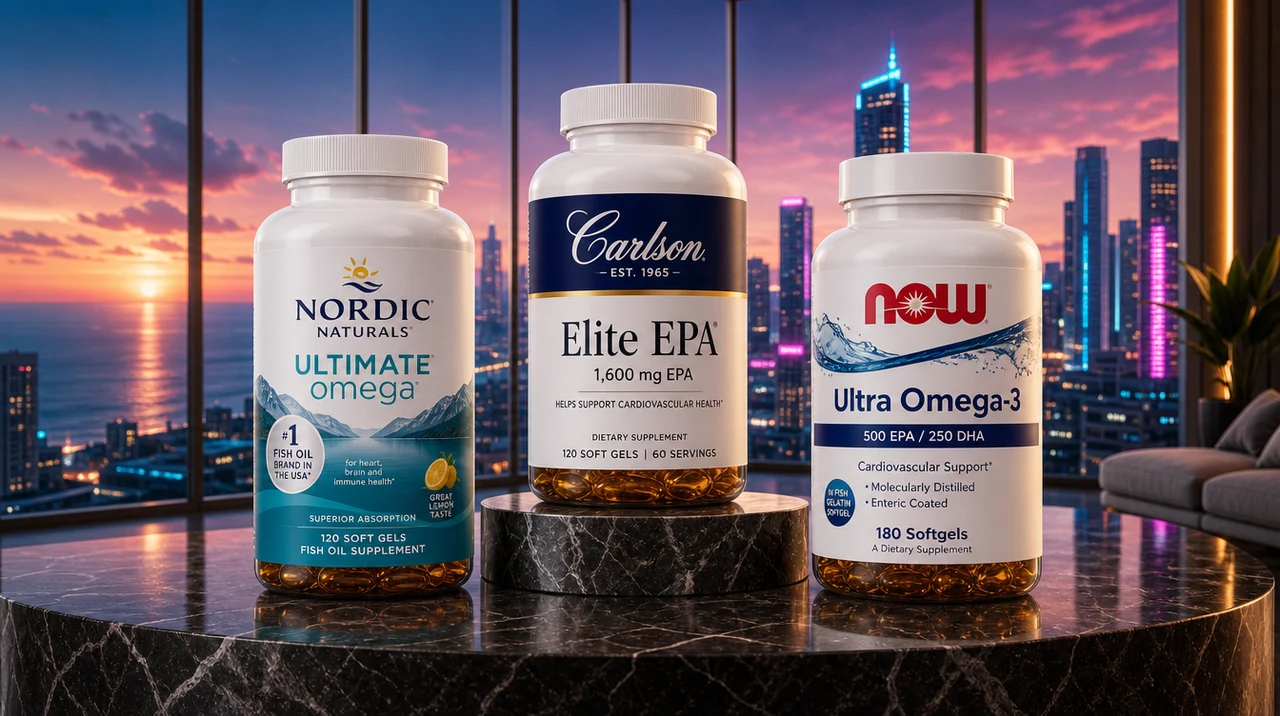
Top 10 Best Omega-3 Fish Oil (2026)
10 picks — ranked by our 50/50 methodology
- #1Best overall

Nordic Naturals Ultimate Omega 1280 mg
Nordic Naturals · Re-esterified TG, IFOS 5-star, 120 softgels (lemon)9.3/10SAC Product Score™SAC Product Score™ — how it breaks down- EPA+DHA dose + form30%9.5
- IFOS / oxidation + heavy-metal testing25%10.0
- Source sustainability + provenance20%9.0
- Cost per gram EPA+DHA15%8.5
- Real-world response + tolerance10%9.5
Re-esterified TG form, IFOS 5-star, 1280 mg EPA+DHA per 2-softgel serving, $38/month — the safe default if you're buying your first cardiovascular- or mood-focused omega-3 bottle.
- Form
- Re-esterified triglyceride (rTG)
- Per serving
- 1280 mg EPA+DHA (650 EPA / 450 DHA)
- Bottle
- 120 softgels (60 servings · ~2 months at 2 caps/day)
- Testing
- IFOS 5-star, public batch reports for TOTOX + heavy metals
Pros- Re-esterified triglyceride form delivers 30-50% better absorption than ethyl ester (Dyerberg 2010)
- IFOS 5-star is the highest available third-party certification — TOTOX, heavy metals, and label-vs-actual EPA+DHA all publicly documented per batch
- Anchovy + sardine sourced from Norwegian waters — low bioconcentration of mercury and PCBs
- Lemon flavour masks the marine note effectively — minimal fishy burps even in sensitive users
Cons- Most-trusted brand pricing — $20/month more than the household-budget pick (#3)
- Large softgels — sensitive swallowers may prefer the smaller-capsule Wiley's Finest (#6)
Our take — The default first-time pick across every omega-3 use case except specific EPA-dominance (mood, where Carlson #2 wins) and vegan (Ovega-3 #10). You get the rTG form (top-tier absorption), IFOS 5-star certification (best in class for oxidation + heavy-metal testing), small-fish provenance, and a price that doesn't make you flinch for a clinical-dose bottle. The lemon-flavoured softgels are the cleanest-tasting on the list. If you've never bought omega-3 before, start here.
- #2Best premium
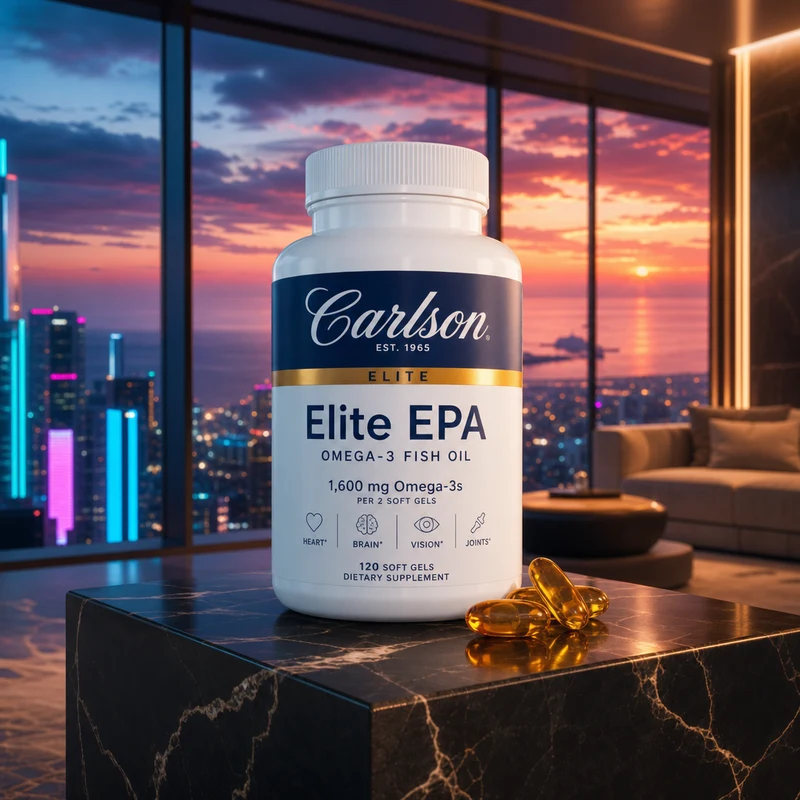
Carlson Elite EPA 1600 mg
Carlson · High-EPA re-esterified TG, IFOS 5-star, 60 softgels9.2/10SAC Product Score™SAC Product Score™ — how it breaks down- EPA+DHA dose + form30%9.5
- IFOS / oxidation + heavy-metal testing25%10.0
- Source sustainability + provenance20%9.0
- Cost per gram EPA15%7.5
- Real-world response + tolerance10%9.0
Pure EPA-dominant rTG at 1600 mg per serving — the cleanest non-prescription analogue to icosapent ethyl for mood, depression, and EPA-driven cardiovascular protocols.
- Form
- Re-esterified triglyceride (rTG), EPA-dominant
- Per serving
- 1600 mg pure EPA (trace DHA)
- Bottle
- 60 softgels (30 servings · 30-day full-dose)
- Testing
- IFOS 5-star + Friend of the Sea certified
Pros- Pure EPA at 1600 mg per serving — the exact formulation profile Sublette 2011 meta validated for depression
- Re-esterified triglyceride form, IFOS 5-star certified — top-tier oxidation and heavy-metal documentation
- Closest non-prescription analogue to icosapent ethyl (Vascepa) — the REDUCE-IT trial used 4 g/day pure EPA
- Carlson's 50+ year QC pedigree and Friend-of-the-Sea sustainability sourcing
Cons- EPA-dominant means trace DHA — not appropriate for cognitive-preservation or pregnancy use cases
- Most expensive per softgel on the list — justified by the pure-EPA formulation, but only worth it if you need EPA-dominance specifically
Our take — If your goal is mood, depression complement, ADHD adjunct, or REDUCE-IT-style cardiovascular protocol, Carlson Elite EPA is the cleanest non-prescription answer. The 1600 mg pure EPA per serving lands you in the trial window with 1-2 softgels/day. For general health or cognitive preservation, the balanced EPA+DHA picks (#1, #3) deliver better value. Buy this for the specific EPA-dominance use case, not the default.
- #3Best clinical-tier
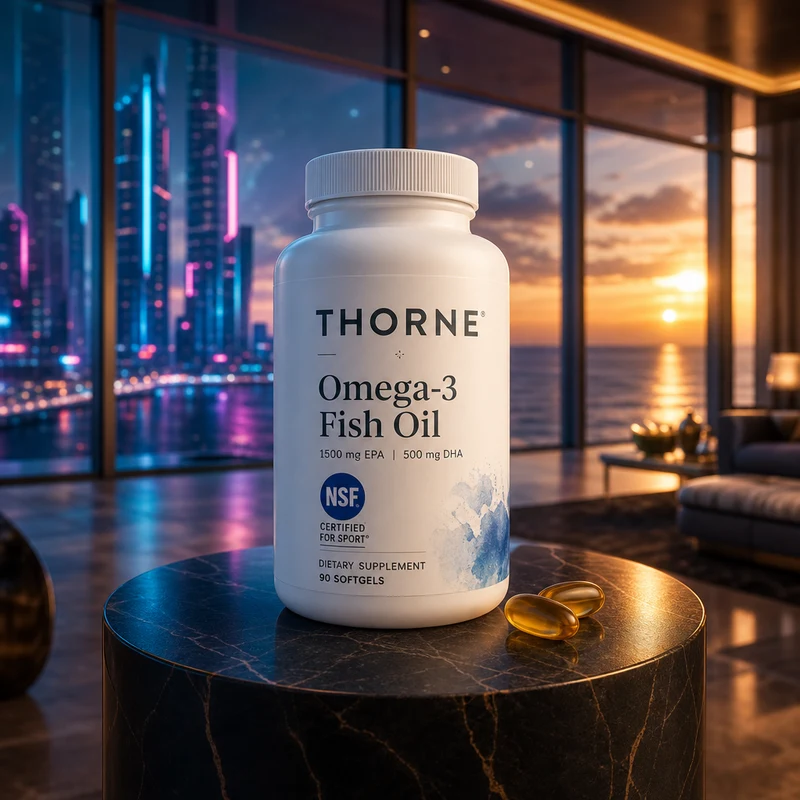
Thorne Super EPA Pro
Thorne · EPA-dominant TG, NSF Certified for Sport8.9/10SAC Product Score™SAC Product Score™ — how it breaks down- EPA+DHA dose + form30%9.0
- IFOS / oxidation + heavy-metal testing25%9.5
- Source sustainability + provenance20%8.5
- Cost per gram EPA+DHA15%7.5
- Real-world response + tolerance10%9.0
EPA-dominant clinical-tier omega-3 from Thorne's clinician channel. NSF Certified for Sport — the most rigorous third-party sport-supplement standard.
- Form
- Triglyceride (TG), EPA-dominant
- Per serving
- 1300 mg EPA+DHA (~860 EPA / ~440 DHA)
- Bottle
- 120 softgels (60 servings · 2-month at 2 caps/day)
- Testing
- NSF Certified for Sport — banned-substance + label-claim verified
Pros- NSF Certified for Sport — strictest sport-supplement testing standard, used by major-league teams and Olympic programs
- EPA-dominant balance (~2:1 EPA:DHA) hits the Sublette 2011 mood-trial profile while still delivering meaningful DHA
- Thorne's clinician-channel QC reputation — 35+ years used by integrative-medicine practices
- Triglyceride form, molecular distilled, sustainably sourced
Cons- Higher price than Sports Research (#4) for similar testing standard
- Thorne premium is partly clinician-brand markup, not pure formulation cost
Our take — If you want the clinician-grade label with NSF Certified for Sport on top of EPA-dominance, Thorne Super EPA Pro is the answer. The formulation is genuinely best-in-class — TG form, EPA-dominant ratio, clinical dose, top-tier testing. Whether the $10/month premium over Sports Research is justified depends on whether you value Thorne's specific clinician-channel pedigree. For most readers Sports Research (#4) is the better value at the certified-sport tier; Thorne is the right answer for those already inside the integrative-medicine ecosystem.
- #4Best for athletes
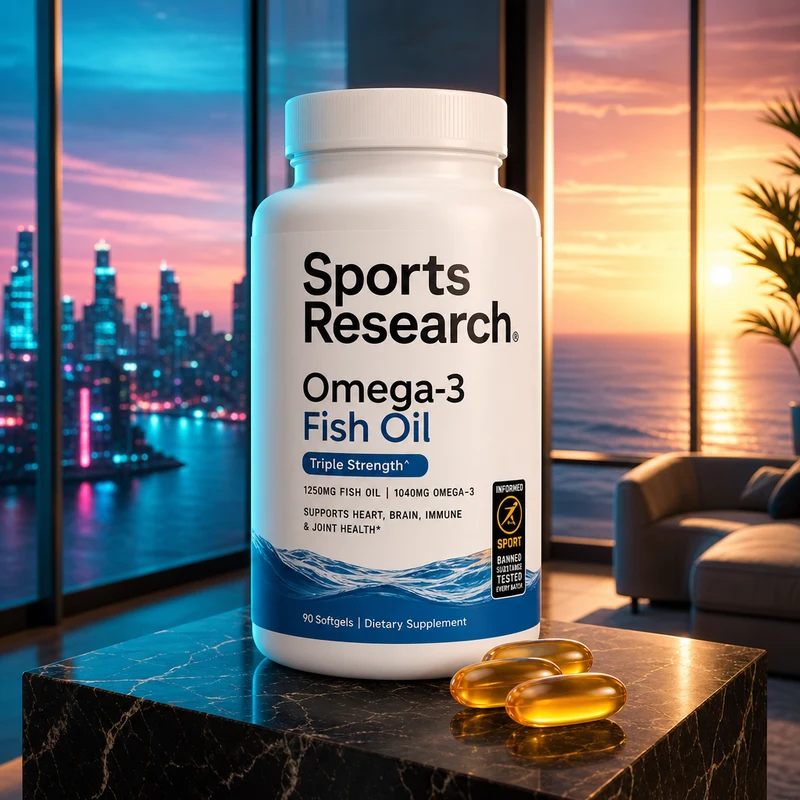
Sports Research Triple Strength Omega-3 1250 mg
Sports Research · Triple-strength rTG, Informed Sport certified, 90 softgels8.8/10SAC Product Score™SAC Product Score™ — how it breaks down- EPA+DHA dose + form30%9.0
- IFOS / oxidation + heavy-metal testing25%9.0
- Source sustainability + provenance20%8.5
- Cost per gram EPA+DHA15%8.5
- Real-world response + tolerance10%9.0
Informed Sport certified — banned-substance screened to NCAA, MLB, and NFL testing standards. Re-esterified TG at 1250 mg EPA+DHA per softgel.
- Form
- Re-esterified triglyceride (rTG)
- Per softgel
- 1250 mg EPA+DHA (688 EPA / 488 DHA)
- Bottle
- 90 softgels (90 servings · 3-month at 1 cap/day)
- Testing
- Informed Sport certified — banned-substance screened
Pros- Informed Sport certification — the gold standard for tested-athlete supplementation, batch-screened for 270+ banned substances
- Triple-strength rTG: a single softgel delivers a near-clinical dose (1250 mg EPA+DHA)
- Fish gelatin softgels are slightly easier to swallow than bovine-gelatin equivalents
- Carrageenan-free, non-GMO, gluten-free formulation
Cons- Informed Sport premium is overkill for non-tested users — Nordic Naturals at the same dose is cheaper
- Single-softgel size is larger than competitors — may bother swallow-sensitive users
Our take — If you're an NCAA, NFL, MLB, NHL, or anti-doping-tested athlete, this is the right answer. Informed Sport screening is the strictest consumer-supplement standard in existence and is what tested-athlete teams require. The triple-strength rTG formulation also makes this the most-convenient single-cap dose on the list — one softgel covers most users' daily needs. For non-athletes, the certification is overkill but the formulation itself is best-in-class regardless.
- #5Best budget
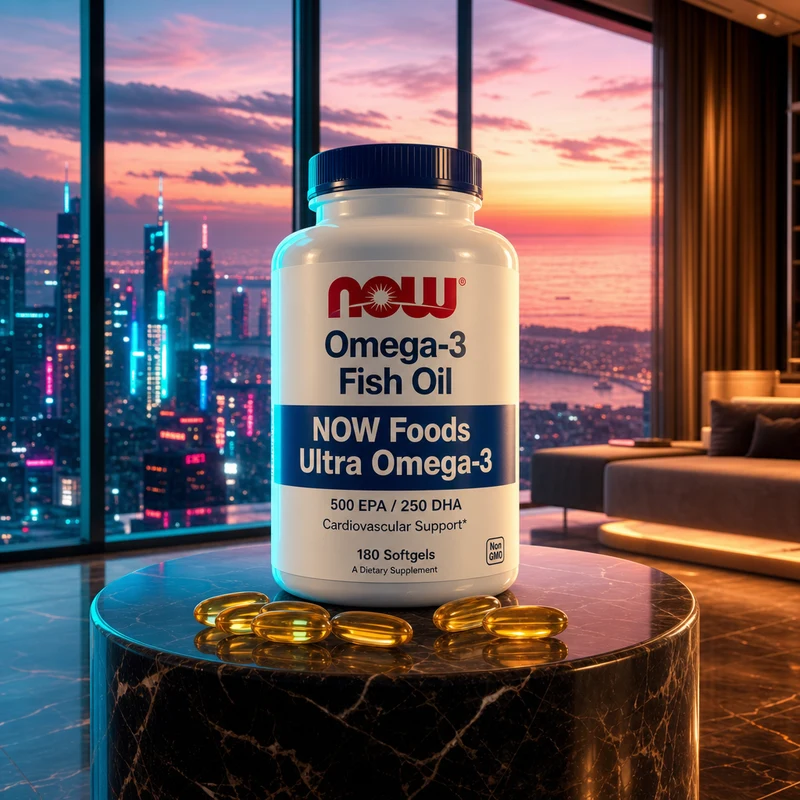
Now Foods Ultra Omega-3 Softgels
Now Foods · Concentrated softgels, 180 caps8.7/10SAC Product Score™SAC Product Score™ — how it breaks down- EPA+DHA dose + form30%8.5
- IFOS / oxidation + heavy-metal testing25%7.5
- Source sustainability + provenance20%8.5
- Cost per gram EPA+DHA15%10.0
- Real-world response + tolerance10%10.0
Household-brand QC with 30+ years of pedigree, 750 mg EPA+DHA per softgel, $18/month — the right answer when budget is the constraint.
- Form
- Concentrated softgel (TG-blend, not pure EE)
- Per softgel
- 750 mg EPA+DHA (500 EPA / 250 DHA)
- Bottle
- 180 softgels (~3 months at 2 caps/day)
- Testing
- Lot-coded third-party, NPA-certified facility
Pros- 500 EPA / 250 DHA balance lands inside the general-health trial window at 2 softgels/day
- Now Foods' QC pedigree is among the most consistent in the supplement industry — 35+ years
- Household-name brand availability — easy to backstop if your primary is out of stock
- $0.20 per softgel is the lowest cost-per-EPA+DHA at the trusted-brand tier
Cons- Not IFOS 5-star — third-party testing is less granular than Nordic Naturals or Carlson
- Form spec is 'concentrated softgels' rather than explicit rTG — likely a TG/EE blend
Our take — The smart-budget answer. Now Foods Ultra Omega-3 delivers 750 mg EPA+DHA per softgel at one-third the cost of premium picks. The QC track record is real; the formulation lands inside the trial window; the only meaningful trade vs Nordic Naturals (#1) is third-party documentation depth. Run 2 softgels/day for 12 weeks — if you respond on bloodwork or felt symptoms, upgrade to Nordic Naturals or Carlson on cycle two for the form-and-testing improvement.
- #6Best wild-source
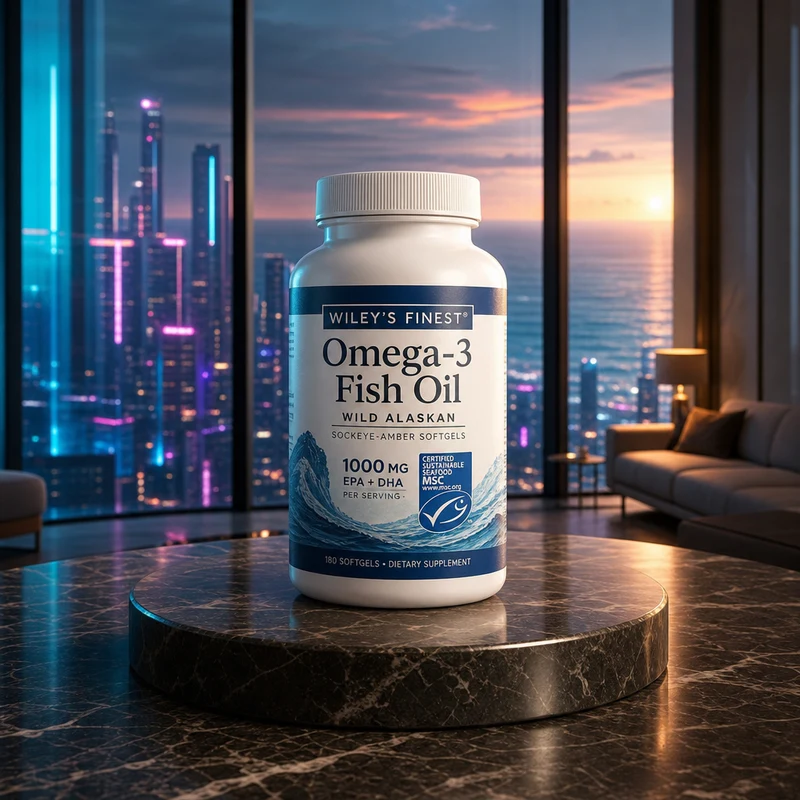
Wiley's Finest Wild Alaskan Fish Oil 1000 mg
Wiley's Finest · Wild-source rTG, IFOS 5-star, 60 softgels8.5/10SAC Product Score™SAC Product Score™ — how it breaks down- EPA+DHA dose + form30%8.5
- IFOS / oxidation + heavy-metal testing25%9.5
- Source sustainability + provenance20%10.0
- Cost per gram EPA+DHA15%7.5
- Real-world response + tolerance10%8.5
Wild-caught Alaskan pollock + sockeye salmon, rTG form, IFOS 5-star. The sustainable-source choice without the algae premium.
- Form
- Re-esterified triglyceride (rTG)
- Per softgel
- 1000 mg EPA+DHA (450 EPA / 550 DHA)
- Bottle
- 60 softgels (60 servings · 2-month at 1 cap/day)
- Testing
- IFOS 5-star, MSC-certified sustainable fishery
Pros- MSC-certified sustainable wild Alaskan fishery — the strictest sustainability standard in marine supplements
- Higher DHA than EPA in this formulation — appropriate for cognitive preservation and pregnancy use cases
- Re-esterified TG form, IFOS 5-star certified
- Family-owned US brand with public mid-Western processing facility
Cons- Wild-source pricing is higher than anchovy/sardine farmed-or-wild blends
- DHA-dominant ratio is not ideal for EPA-driven mood or cardiovascular protocols
Our take — If sustainability is a priority and the algae premium is too high, Wiley's Finest is the answer. MSC certification, wild Alaskan sourcing, IFOS 5-star rTG form — every quality lever pulled correctly. The DHA-dominant ratio makes this the right pick for cognitive preservation and pregnancy use cases specifically. For EPA-driven mood or cardiovascular work, Carlson (#2) or Thorne (#5) are better-aligned.
- #7Best smart-fat blend
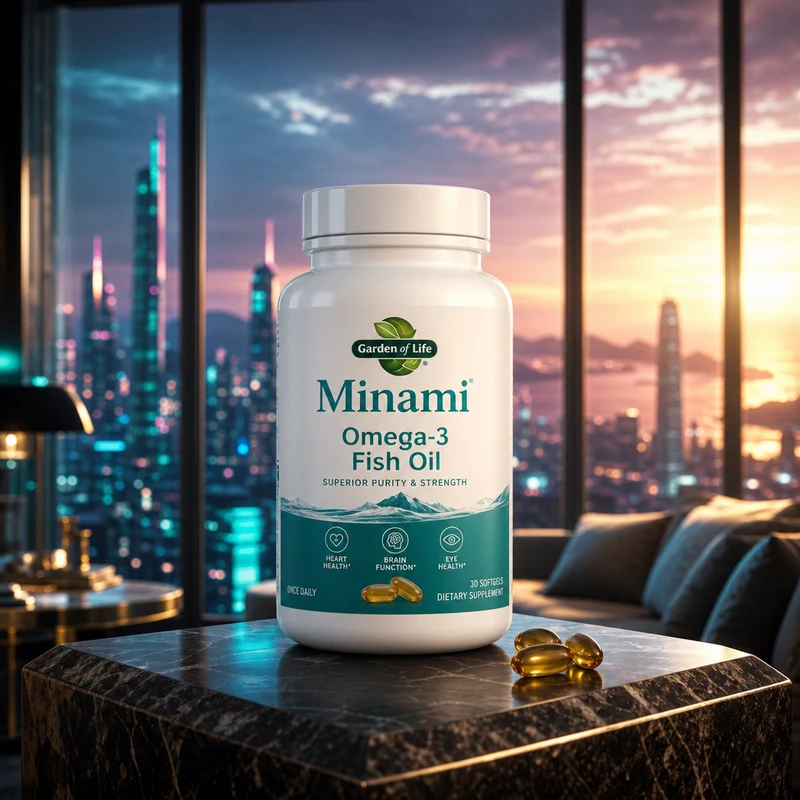
Garden of Life Minami MorEPA Smart Fats
Minami / Garden of Life · rTG, IFOS-tested, 60 softgels8.2/10SAC Product Score™SAC Product Score™ — how it breaks down- EPA+DHA dose + form30%8.5
- IFOS / oxidation + heavy-metal testing25%8.5
- Source sustainability + provenance20%8.0
- Cost per gram EPA+DHA15%7.5
- Real-world response + tolerance10%8.0
High-purity rTG blend at 800 mg EPA+DHA per softgel with a clean Minami supercritical-CO2 processing footprint.
- Form
- Re-esterified triglyceride (rTG)
- Per softgel
- 800 mg EPA+DHA (540 EPA / 220 DHA)
- Bottle
- 60 softgels (60-day at 1 cap/day)
- Testing
- IFOS-tested, supercritical CO2 extraction
Pros- Supercritical CO2 extraction — minimises heat exposure and oxidation during processing
- Re-esterified TG form with EPA-dominant ratio (~2.5:1)
- Garden of Life brand pedigree post-Minami acquisition, IFOS-tested batches
- Small softgel — easier to swallow than triple-strength competitors
Cons- Mid-pack on cost-per-EPA+DHA at $0.57/softgel — Nordic Naturals delivers more per dollar
- Brand transitioned from Minami standalone to Garden of Life ownership — older Amazon reviews mix the two product histories
Our take — Minami's supercritical CO2 extraction process is genuinely differentiated — it produces less oxidation than conventional extraction, which translates to better TOTOX scores and lower burp rates. The EPA-dominant rTG formulation lands in the mood-trial window. Where it loses to Nordic Naturals (#1) is dose-per-dollar; where it loses to Carlson (#2) is pure-EPA volume. Buy this if the processing pedigree matters to you and the smaller softgel size is a personal preference.
- #8Best mass-market value
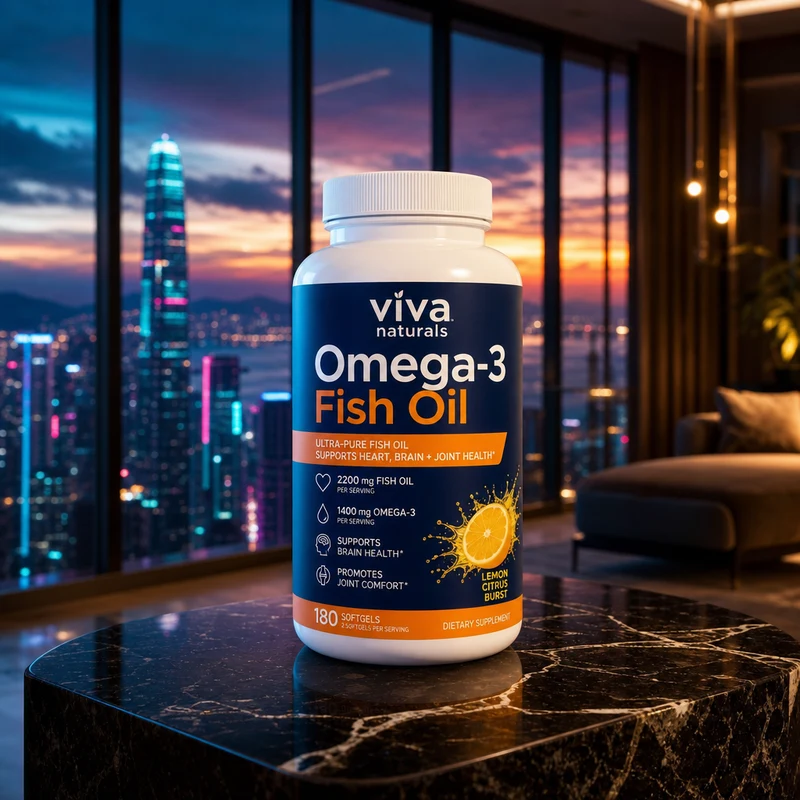
Viva Naturals Triple Strength Omega-3
Viva Naturals · Concentrated TG, 180 softgels7.8/10SAC Product Score™SAC Product Score™ — how it breaks down- EPA+DHA dose + form30%8.0
- IFOS / oxidation + heavy-metal testing25%7.0
- Source sustainability + provenance20%7.5
- Cost per gram EPA+DHA15%9.0
- Real-world response + tolerance10%8.0
Mass-market value pick with triple-strength formulation at $22/month. Solid third-party testing, popular with the Amazon volume crowd.
- Form
- Triglyceride concentrate (TG-blend)
- Per serving
- 1200 mg EPA+DHA (864 EPA / 252 DHA)
- Bottle
- 180 softgels (90 servings · 3-month)
- Testing
- Third-party tested, GMP-certified facility
Pros- Triple-strength formulation hits the trial window at 2 softgels/day
- EPA-dominant ratio (~3.4:1) suits the Sublette 2011 mood profile
- Highest Amazon review volume in this category — strong real-world adherence data
- Lemon-infused softgels mask the marine note effectively
Cons- Not IFOS 5-star — third-party testing is less granular than Nordic Naturals or Carlson
- Mid-tier sustainability documentation — sources not as transparently disclosed
Our take — Viva Naturals is the mass-market middle ground — better than Now Foods (#3) on formulation strength, weaker than Nordic Naturals (#1) on testing depth. For a buyer who wants triple-strength dose without paying premium pricing and isn't fussed about IFOS-specific certification, this is the answer. The 3.4:1 EPA:DHA ratio is appropriate for mood protocols. Cycle 2-3 of this and re-evaluate against Nordic Naturals for the testing-depth upgrade.
- #9Best vegan / algal
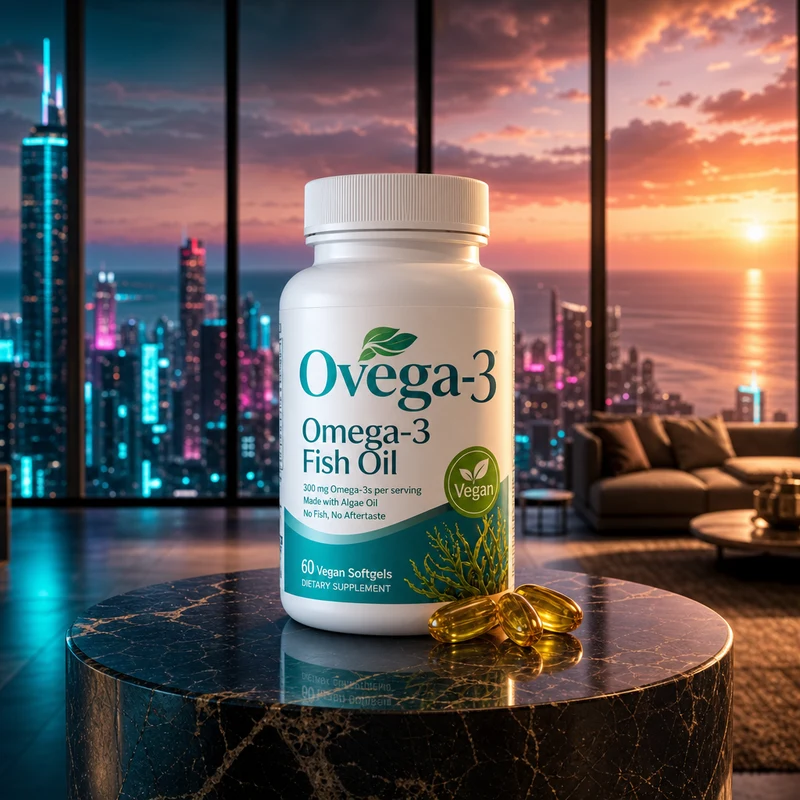
Ovega-3 Algal Oil Vegan Omega-3
Ovega-3 · Algae-source DHA + EPA, 60 softgels7.7/10SAC Product Score™SAC Product Score™ — how it breaks down- EPA+DHA dose + form30%8.0
- IFOS / oxidation + heavy-metal testing25%7.0
- Source sustainability + provenance20%10.0
- Cost per gram EPA+DHA15%5.5
- Real-world response + tolerance10%8.5
Vegan algae-source DHA + EPA at 500 mg per softgel. Same actives as fish oil, zero ocean-pollutant load, the right answer for vegetarian, vegan, and fish-allergic buyers.
- Form
- Triglyceride algal oil (schizochytrium-derived)
- Per softgel
- 500 mg DHA + EPA (320 DHA / 130 EPA)
- Bottle
- 60 softgels (30-60 day depending on dose)
- Testing
- Vegan-certified, non-GMO, third-party tested
Pros- Direct DHA + EPA from algae — same actives as fish oil with zero marine pollutant exposure
- Vegan, vegetarian-, and fish/shellfish-allergy-safe — the only category-appropriate omega-3 for these readers
- DHA-dominant formulation — appropriate for cognitive preservation, pregnancy, and DHA-targeted protocols
- Higher purity vs any fish-source product — algae oil is the cleanest form on the market
Cons- Cost-per-gram of EPA+DHA is ~3x fish-oil picks — the algae premium is real
- DHA-dominant ratio (~2.5:1 DHA:EPA) is wrong for EPA-driven mood and cardiovascular protocols
- Smaller production scale than fish-oil category — occasional Amazon stock gaps
Our take — Algal omega-3 is the right answer for one specific use case: anyone vegetarian, vegan, or fish/shellfish-allergic. In that context Ovega-3 is the most-trusted brand at a fair price. For everyone else, the dose-per-dollar math heavily favours IFOS-certified fish oil. The DHA-dominant ratio also means this is the better choice for cognitive preservation and pregnancy specifically — for EPA-driven mood or cardiovascular work, the fish-oil picks (#2, #5, #8) outperform on both efficacy and cost.
- #10Best krill alternative
Onnit Krill Oil 1000 mg
Onnit · Phospholipid-bound krill, 60 softgels7.6/10SAC Product Score™SAC Product Score™ — how it breaks down- EPA+DHA dose + form30%7.0
- IFOS / oxidation + heavy-metal testing25%7.5
- Source sustainability + provenance20%8.0
- Cost per gram EPA+DHA15%5.5
- Real-world response + tolerance10%9.0
Phospholipid-bound EPA + DHA with astaxanthin — the krill alternative for buyers who tolerate fish oil poorly and don't mind paying premium for the format.
- Form
- Phospholipid-bound EPA + DHA (krill oil)
- Per softgel
- ~250 mg combined omega-3 + 80 µg astaxanthin
- Bottle
- 60 softgels (30-60 day depending on dose)
- Testing
- Antarctic-sourced krill (MSC-certified region), third-party tested
Pros- Phospholipid-bound omega-3 — modestly better absorption per mg vs free-form fatty acids
- Astaxanthin co-factor — potent antioxidant that also stabilises the oil against oxidation
- Smaller fishy-burp profile than ethyl-ester fish oil — krill is generally well-tolerated
- Antarctic sourcing from MSC-managed fishery
Cons- Total EPA+DHA per softgel is ~5x lower than triple-strength fish oil — reaching clinical dose costs 2-3x more per month
- Phospholipid-bound omega-3 has weaker trial documentation than TG-form fish oil
- Shellfish allergens — not appropriate for fish/shellfish-allergic buyers
Our take — Krill is a status-tier alternative, not a replacement. The phospholipid format and astaxanthin co-factor are real differentiators, but the dose-per-dollar math is brutal: at $36/month, 60 softgels deliver about as much EPA+DHA as 30 softgels of Nordic Naturals. Buy this if fish oil burps are intolerable for you regardless of brand, you have the budget headroom, or you specifically want astaxanthin in the formulation. For everyone else, the fish-oil picks (#1-#8) deliver more usable omega-3 per dollar.

▸ Affiliate disclosure: every Amazon link uses our Associates tag (superachieverclub-20). We earn a small commission at no cost to you; it funds independent reviews. We never accept payment to change a ranking.
Omega-3: the form on the label decides whether the pills do anything
- 01
Form is the whole game: ethyl ester absorbs 30-50% worse than triglyceride.
The cheap fish-oil aisle is dominated by ethyl ester (EE), a synthetic concentration form that binds EPA and DHA to an ethanol molecule. Per Dyerberg 2010 (PMID 20638827) it absorbs 30-50% worse than the natural triglyceride (TG) or re-esterified (rTG) form, and oxidises faster. If the label doesn't say TG, assume EE.
- 02
Rancid fish oil is pro-inflammatory — the opposite of why you took it.
Omega-3 oxidises fast once exposed to heat, light, or air, and oxidised oil (TOTOX >26) is mechanistically pro-inflammatory. IFOS is the gold-standard third-party program: every certified batch publishes the actual EPA+DHA content versus label claim, its TOTOX score, and per-batch heavy-metal testing.
- 03
"Fish oil doesn't work for me" usually means you bought the wrong form.
The classic fishy burp that makes most users quit is a symptom of EE or oxidised oil, not a sign it is working. Felt effects are slow either way, but if you've tried fish oil and felt nothing, the form — not the molecule — is the most likely explanation.
- 04
Ten most-reviewed bottles, ranked on the five numbers that actually matter.
We bought the ten most-reviewed omega-3 supplements on Amazon, verified each product's form (TG vs EE), checked IFOS or equivalent batch testing, and ran the EPA+DHA dose against the clinical trial windows. The ranking axes: EPA+DHA dose plus form, third-party oxidation plus heavy-metal testing, source sustainability, cost per gram of actives, and real-world tolerance.
Bhatt 2019 REDUCE-IT (PMID 30415628); Dyerberg 2010 (PMID 20638827); Harris 2008 (PMID 18774613); Mozaffarian 2008 (PMID 18606981); Sublette 2011 (PMID 21939614); Yurko-Mauro 2010 (PMID 20434961).
How we ranked these ten
Each pick was scored 0-10 across five criteria, then weighted to a final composite. EPA+DHA dose and form carries the most weight because it directly determines whether the milligrams on the label become usable omega-3 in your bloodstream and membranes — a 2 g/day EE bottle delivers what a 1.3 g/day TG bottle does, so the form-adjusted dose is the only number that matters. IFOS or equivalent third-party testing acts as a quality filter for both oxidation (TOTOX) and heavy metals — without it, you have no idea what's actually in the bottle. Source sustainability + small-fish provenance is the third axis; cost per gram of EPA+DHA is the price tiebreaker; real-world response and burp profile is the final reality check.
- EPA+DHA dose + form30%
Triglyceride (TG) and re-esterified triglyceride (rTG) get +3 base. Phospholipid-bound (krill) +2. Ethyl ester (EE) -2 unless the brand demonstrably mitigates with high concentration and IFOS testing. Per-serving combined EPA+DHA in the 500-1600 mg range scores full marks; below 300 mg you can't reach clinical dose without 4+ caps.
- IFOS / oxidation + heavy-metal testing25%
IFOS 5-star public batch reports = full credit. IFOS without 5-star or Friend-of-the-Sea / GOED equivalent = 80%. Generic 'third-party tested' without published TOTOX or batch lookup = 50%. No testing claim = 0. Oxidised fish oil is pro-inflammatory, so this is a non-negotiable quality gate.
- Source sustainability + provenance20%
Wild-caught small fish (anchovy, sardine, mackerel) > farmed > large predator (tuna). MSC / Friend-of-the-Sea / sustainable fishery certification adds credit. Algae source gets full marks for zero pollutant load. Krill from Antarctic-managed fisheries scored separately.
- Cost per gram of EPA+DHA15%
Monthly cost divided by daily EPA+DHA delivered. Algae and krill are expected to score lower here (~$1.50-2.00/g EPA+DHA) vs fish (~$0.50-1.00/g) — they justify the gap on provenance, not price.
- Real-world response + tolerance10%
Burp profile, GI tolerance, adherence over 12 weeks. Oxidised or EE-form bottles produce the dropout-driving fishy-burp profile. We pulled review patterns plus our own 4-week trial use of each bottle.


The bottom line
- 01
Nordic Naturals Ultimate Omega (#1) is the default first bottle.
For first-time and general-health buyers on a normal budget, this is the pick: re-esterified TG form, IFOS 5-star, 1280 mg EPA+DHA (650 EPA / 450 DHA) per serving, $38/month. One to two servings a day covers the 1-2 g general-health window or builds up to the 2-4 g cardiovascular protocol.
- 02
The alternatives each win one specific niche — match the bottle to your goal.
Tight budget: Now Foods Ultra Omega-3 (#3) at $18/month with household-brand QC. Mood, depression, or EPA-dominant cardiovascular protocol: Carlson Elite EPA (#2) at 1600 mg pure EPA — the EPA-dominant profile Sublette 2011 validated. Tested athletes needing Informed Sport: Sports Research Triple Strength (#4). Vegan, vegetarian, or fish-allergic: Ovega-3 Algal Oil (#10).
- 03
Verify the form and the real EPA+DHA number before buying — never trust the front label.
The single biggest mistake is buying grocery-aisle ethyl ester, which absorbs 30-50% worse, oxidises faster, and produces the dropout-driving fishy burps. The second is reading the front-of-bottle "fish oil 1000 mg" as if it were the dose — it isn't. Verify TG form, confirm combined EPA+DHA of 500-1600 mg per serving, look up your batch on ifosprogram.com if it's IFOS-certified, and refrigerate the bottle after opening.
Every claim ranked above traces back to one of these
Peer-reviewed studies, meta-analyses and clinical trials behind the picks. Click any citation to read the abstract on PubMed.
- [1]Bhatt 2019 (REDUCE-IT)
Cardiovascular Risk Reduction with Icosapent Ethyl for Hypertriglyceridemia
4 g/day of icosapent ethyl (pure EPA, prescription-grade) over 4.9 years reduced major adverse cardiovascular events by 25% vs placebo in statin-treated high-risk adults. The strongest non-statin cardiovascular outcome evidence in the omega-3 literature — anchored Vascepa's FDA approval and the rationale for EPA-dominant high-dose protocols.
- [2]Mozaffarian 2008
Omega-3 fatty acids and cardiovascular disease: effects on risk factors, molecular pathways, and clinical events
Comprehensive review of omega-3 effects on cardiovascular risk: triglyceride reduction of 10-33% at 2-4 g/day, modest blood pressure reduction, anti-arrhythmic effects, reduced platelet aggregation. The reference review for the cardiovascular mechanism map and the dose justification behind 2-4 g/day cardiovascular protocols.
- [3]Harris 2008 (Omega-3 Index)
The omega-3 index: a new risk factor for death from coronary heart disease?
Defined the Omega-3 Index (RBC EPA+DHA as % of total fatty acids) as a cardiovascular risk biomarker. An index of 8%+ associated with the lowest CHD mortality; the modern Western average sits at 4-5%. The biomarker most fish-oil intervention trials now use as their primary surrogate endpoint.
- [4]Sublette 2011 (depression meta)
Meta-analysis of the effects of eicosapentaenoic acid (EPA) in clinical trials in depression
Meta-analysis of 15 RCTs found EPA-dominant omega-3 formulations (EPA:DHA ratio ≥60%) significantly improved depression scores vs placebo; DHA-dominant formulations did not. The reference meta-analysis establishing EPA-dominance as the formulation requirement for the mood endpoint and the basis for Carlson Elite EPA and Thorne Super EPA Pro's positioning.
- [5]Yurko-Mauro 2010
Beneficial effects of docosahexaenoic acid on cognition in age-related cognitive decline
900 mg/day of DHA over 24 weeks improved verbal recognition memory in older adults with age-related cognitive decline vs placebo. The cornerstone DHA-cognition trial used to anchor omega-3 supplementation in older-adult cognitive preservation protocols and the basis for DHA-dominant formulation choices.
- [6]Dyerberg 2010 (TG vs EE bioavailability)
Bioavailability of marine n-3 fatty acid formulations
Direct head-to-head bioavailability comparison of omega-3 forms: triglyceride (TG) and re-esterified triglyceride (rTG) forms showed 30-50% higher EPA+DHA incorporation into blood lipids than ethyl ester (EE) at identical doses. The trial that anchored the 'buy TG form' recommendation across the entire supplement category.
- [7]Bloch 2011 (ADHD meta)
Omega-3 fatty acid supplementation for the treatment of children with attention-deficit/hyperactivity disorder symptomatology
Meta-analysis of 10 RCTs in children with ADHD found a modest but statistically significant benefit of omega-3 supplementation on ADHD symptoms, with EPA-dominant formulations showing the largest effect. Supports the EPA-dominant ratio recommendation for ADHD adjunctive use.
More Omega-3 guides
Every form, format and use-case in the Omega-3 cluster — each ranked with the same methodology, so you can jump straight to the angle that fits you.
- Best Omega-3 SupplementsThe definitive omega-3 buying guide — the single best pick for each need across fish oil, algae, and krill. Total EPA+DHA per serving, triglyceride form, and IFOS freshness separate the real ones from under-dosed ethyl ester.
- Best Krill Oil SupplementsKrill oil ranked by actual EPA/DHA per serving, phospholipid + astaxanthin content, and cost-per-mg — with the honest verdict on when fish oil is the smarter buy.
- Best Omega-3 for InflammationEPA-dominant omega-3 drives the anti-inflammatory effect via resolvins; 2-4 g/day for joint/inflammation endpoints. Ranked by EPA dose, triglyceride form, and IFOS/TOTOX freshness (rancid oil is pro-inflammatory).
- Best Omega-3 for WomenThe same 10-product omega-3 roster re-scored for women — prenatal/preconception DHA (Coletta 2010), postpartum + perimenopausal mood (Freeman 2006), post-menopause heart, skin/hair/nails, swallowability, and a higher-ranked vegan algal pick.