
Shilajit: Benefits, Dosage & Side Effects (2026)
Shilajit is a Himalayan mineral resin rich in fulvic acid and dibenzo-α-pyrones, with small human trials suggesting testosterone and anti-fatigue benefits — but only when properly purified, because raw resin carries a real heavy-metal contamination risk.
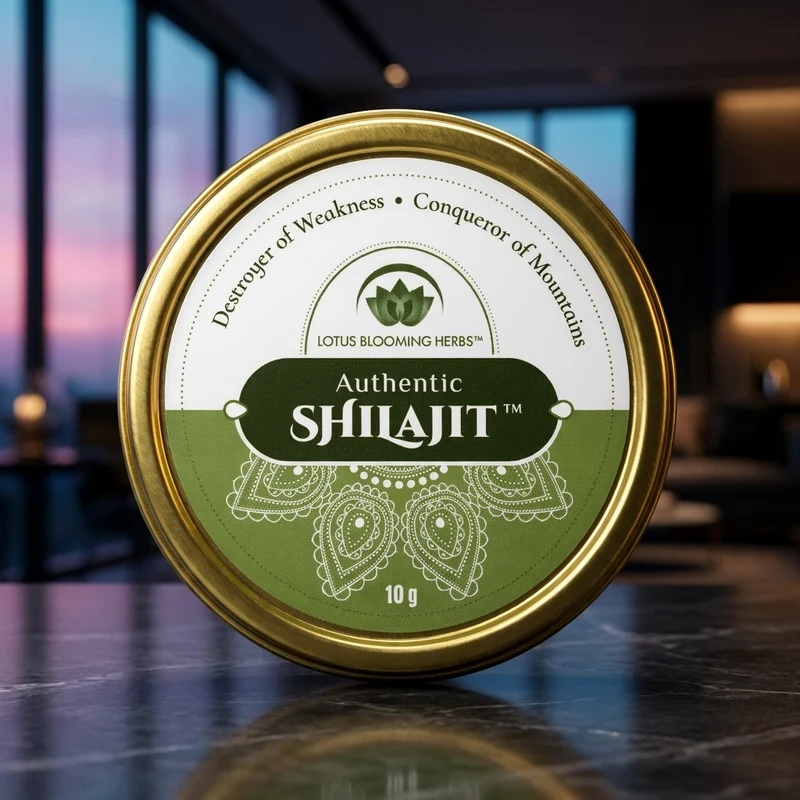
Lotus Blooming Herbs Authentic Shilajit
What is Shilajit?
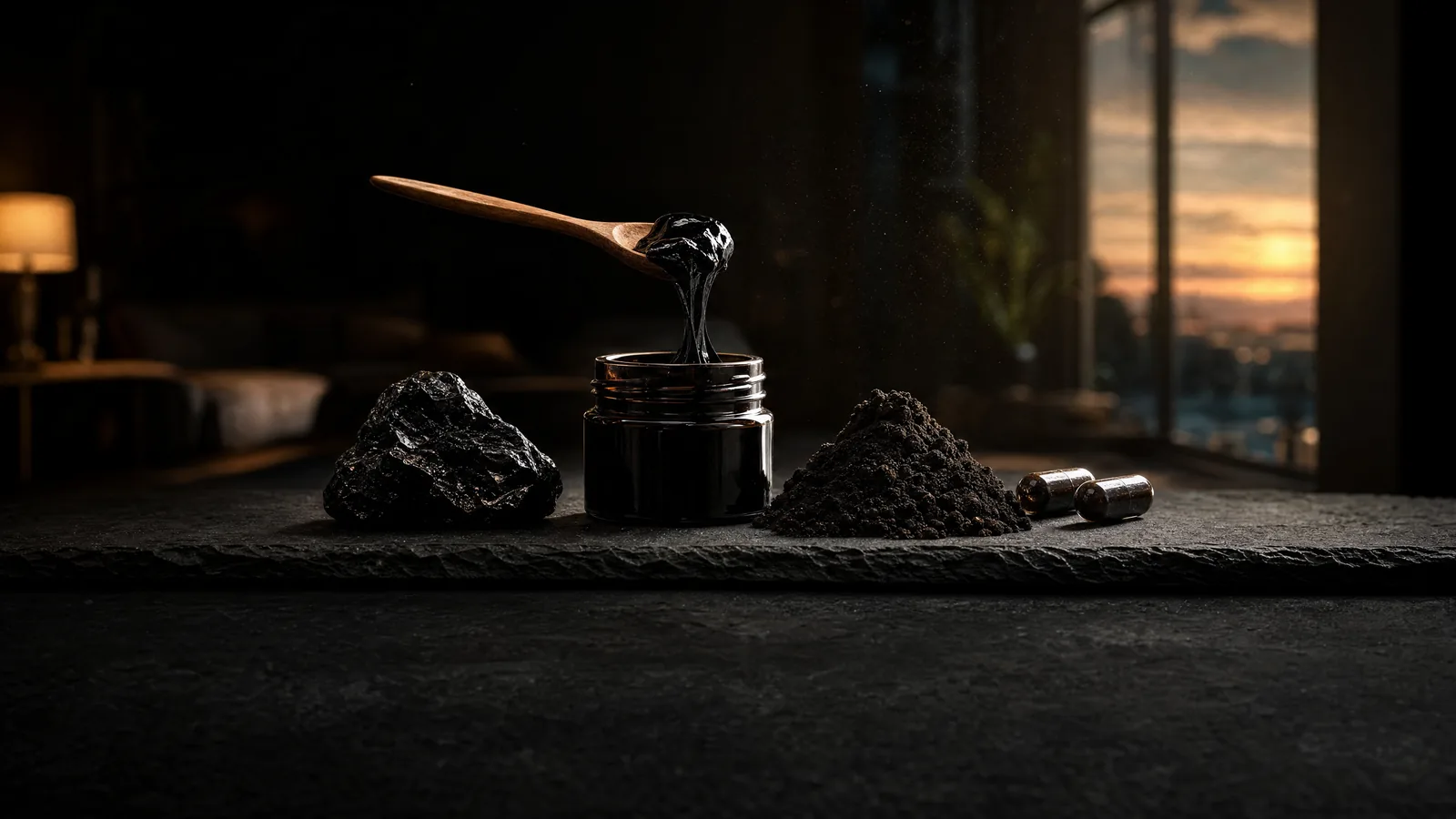
Shilajit (also called mumijo, mumie, or mineral pitch) is a sticky, tar-like resin that oozes from cracks in high-altitude rock, most famously in the Himalayas but also in the Altai (Siberian), Caucasus, and other mountain ranges. It is formed over centuries by the slow microbial decomposition of plant and humic matter compressed under rock, and the result is a dense concentrate of fulvic acid, humic substances, a family of compounds called dibenzo-α-pyrones (DBPs), and 80-plus trace minerals. In Ayurveda it has been used for centuries as a rasayana — a rejuvenating tonic — for energy, stamina, and male vitality.
The two active fractions that matter are fulvic acid and the dibenzo-α-pyrones. Fulvic acid is a low-molecular-weight organic acid with antioxidant activity that also appears to act as a carrier molecule, and the DBPs are thought to support mitochondrial energy production. In the review literature (Stohs 2014, PMID 23733436; Carrasco-Gallardo 2012, PMID 22482077), these two fractions are repeatedly identified as the constituents responsible for shilajit's effects — which is why a meaningful product should be characterized by its fulvic content, not just sold as generic 'resin.'
The non-negotiable caveat is purification. Because shilajit is a mineral concentrate pulled from raw rock, it concentrates toxic heavy metals — lead, arsenic, mercury, cadmium, and notably thallium — right alongside the beneficial ones. Raw, unprocessed shilajit can carry dangerous levels of these, and crucially, bad purification doesn't always fix it: a 2025 elemental analysis in BMC Chemistry (PMID 39827344) found thallium up to roughly 0.5 µg/g in commercial shilajit supplements, in some cases HIGHER than the raw material they were made from. That is the single most important fact about buying shilajit: this is a substance where purification is the whole ballgame, and where a credible third-party heavy-metal test is the document that actually protects you.
How it works
Shilajit's proposed mechanisms cluster around mitochondrial energy and antioxidant/carrier effects. The dibenzo-α-pyrones are thought to support the electron-transport chain and ATP production, which is the mechanistic basis for the traditional 'revitalizer' and anti-fatigue positioning; fulvic acid contributes antioxidant activity and is proposed to act as a carrier that improves the bioavailability of co-administered compounds. Stohs 2014 (PMID 23733436) summarizes the constituent picture and concludes that purified shilajit has documented antioxidant, anti-inflammatory, and adaptogenic properties in animal and human studies — while emphasizing that these conclusions apply to PURIFIED material.
For testosterone, the anchor human trial is Pandit 2016 (PMID 26395129): a randomized, double-blind, placebo-controlled study in healthy men aged 45-55 (about 75 analyzed) in which purified shilajit at 250 mg twice daily (500 mg/day) for 90 days significantly increased total testosterone, free testosterone, and DHEAS versus placebo, while the gonadotropins LH and FSH were maintained. The honest framing of that result: it is a single, modestly-sized RCT showing a real but moderate effect with a purified extract — promising, not definitive, and not a reason to expect TRT-like changes.
For fatigue and physical performance, Keller 2019 (PMID 30728074) is the key trial: an 8-week, randomized, double-blind, placebo-controlled study of 63 subjects in which 500 mg/day of a purified extract (PrimaVie) promoted the retention of maximal muscular strength after a fatiguing protocol and decreased baseline serum hydroxyproline — a marker of collagen/connective-tissue breakdown — suggesting favorable muscle and connective-tissue adaptation. Separately, fulvic acid's antioxidant and tau-aggregation-blocking activity (Carrasco-Gallardo 2012, PMID 22482077) underlies early interest in cognitive aging, though that remains preclinical and is not a basis for a clinical cognitive claim. The throughline across all of this evidence is the same: the studied material was purified, and the effects are real but rest on a small body of human work.
At-a-glance facts
- Active fractions
- Fulvic acid + dibenzo-α-pyrones (DBPs); plus humic substances and 80+ trace minerals
- Studied dose
- 500 mg/day of a PURIFIED extract (Pandit 2016 testosterone; Keller 2019 fatigue/strength)
- Forms
- Resin (traditional, full-spectrum, dosed by eye) · capsules (precise mg) · gummies (sweet micro-dose)
- #1 risk
- Heavy-metal contamination (lead, arsenic, mercury, cadmium, thallium) in raw/poorly-purified resin
- Fulvic %
- Rarely disclosed — among 9 leading products, only one (Double Wood) states a number (20%)
- Time to felt effect
- Energy: days to weeks · Testosterone/strength endpoints: the trials ran 8-12+ weeks
- Cost range (US)
- ~$11/month (budget capsules) to ~$90+ (premium gold-infused resin)
- The buying rule
- Buy purified, transparently-sourced, ideally third-party heavy-metal tested — or don't buy
Evidence: Promising but small. The testosterone signal rests on one modestly-sized RCT (Pandit 2016, PMID 26395129, ~75 men, 90 days, purified extract) and the fatigue/strength signal on one 8-week RCT (Keller 2019, PMID 30728074, n=63, purified PrimaVie). The actives (fulvic acid + dibenzo-α-pyrones) and the safety-of-purified-material picture are supported by review literature (Stohs 2014, PMID 23733436; Carrasco-Gallardo 2012, PMID 22482077). Evidence level 2 reflects a coherent mechanism and real but limited human trials — and the fact that benefits depend entirely on purification, with raw resin carrying a documented heavy-metal contamination risk (thallium up to ~0.5 µg/g in commercial supplements, Kamgar 2025, PMID 39827344).
Who it's for — and who it isn't
- Men 40+ interested in a modest, natural testosterone nudge — Pandit 2016 showed purified shilajit at 500 mg/day raised total/free T and DHEAS over 90 days
- People chasing steady energy and anti-fatigue support — the traditional 'revitalizer' use, with a mechanistic basis in dibenzo-α-pyrones and mitochondrial ATP
- Active people wanting connective-tissue/recovery support — Keller 2019 showed strength retention under fatigue and lower hydroxyproline at 500 mg/day
- Anyone drawn to fulvic-acid and trace-mineral supplementation who will buy a PURIFIED, transparently-tested product
- Buyers willing to prioritize purity and third-party testing over price — this is a 'buy purified or don't buy' category
- Anyone who won't or can't verify purity — raw and poorly-purified shilajit carries a real heavy-metal (lead/arsenic/mercury/cadmium/thallium) risk
- People expecting dramatic or TRT-like testosterone effects — the human evidence is a small number of trials showing modest changes
- Pregnant or breastfeeding women, and children — insufficient safety data, and the contamination risk makes caution essential
- People with hemochromatosis or iron-overload conditions — shilajit can be iron-rich; check with a clinician first
- Anyone on a tight budget who would buy the cheapest untested jar — in this category, cheap-and-untested is the worst combination
Week-by-week, what happens
- Week 1-2Some users report a subtle lift in daily energy first — the traditional 'revitalizer' effect. No reliable hormonal change yet; take consistently at ~500 mg/day of a purified product.
- Week 3-6Energy and anti-fatigue effects, if you respond, tend to settle in. Active users may notice better resistance to training fatigue (the Keller 2019 window begins).
- Week 8Keller 2019's 8-week endpoint: strength retention under fatigue and lower hydroxyproline emerged here at 500 mg/day of purified extract.
- Week 12 (90 days)Pandit 2016's testosterone endpoint: significant rises in total/free testosterone and DHEAS at 500 mg/day over 90 days. Judge the testosterone use case at this mark, not before.
Safety & contraindications
- HEAVY METALS are the #1 risk and the reason to buy purified. Raw and poorly-purified shilajit can carry lead, arsenic, mercury, cadmium, and thallium; a 2025 analysis (PMID 39827344) found thallium up to ~0.5 µg/g in commercial supplements, sometimes above the raw source. Buy products with credible third-party heavy-metal testing — and note that a generic 'third-party tested' claim is NOT the same as a published lead/arsenic/mercury/thallium panel.
- 'Purified' is the operative word. The human trials (Pandit 2016, Keller 2019) and the safety reviews (Stohs 2014) all used purified extracts. Never consume raw, unprocessed shilajit dug from rock, and treat ultra-purified branded extracts (e.g. PrimaVie) as the most evidence-aligned option.
- It can be iron-rich. People with hemochromatosis or iron-overload conditions should avoid it or consult a clinician before use.
- Stick to the studied dose. 500 mg/day of a purified extract is the amount used in the trials; more is not validated to do more, and with shilajit, purity matters far more than dose size — a bigger dose of a murkier product is a worse trade.
- Insufficient safety data for pregnancy, breastfeeding, and children — avoid in these groups, especially given the contamination risk.
- If you take medications (including for blood pressure, diabetes, or that affect iron), or have a chronic condition, check with a clinician first. Shilajit is a complex mineral concentrate, not a single defined molecule.
All articles on Shilajit
Best Shilajit
The 9 best shilajit products ranked by purity & source transparency, form & dose honesty, safety disclosure, value and real-world use — with the category's documented heavy-metal risk as the honest spine: no listing publishes a metals panel, so no pick scores in the 9s.
Read →Carlyle Shilajit Capsules Review
The cheapest trial — and the least disclosed, on dose and testing.
Read →Cymbiotika Shilajit (Black Gold) Review
A premium clean-label resin with a defined scoop — that says nothing about testing.
Read →Dorado Nutrition Shilajit Gummies Review
The taste fix for shilajit — a great on-ramp at a sub-clinical dose.
Read →Double Wood Shilajit Capsules Review
The only shilajit here that discloses its fulvic percentage — and the best value.
Read →Lotus Blooming Herbs Authentic Shilajit Review
The most credible authentic resin — strongest safety language in the lineup, at the steepest price.
Read →Pürblack Live Resin with True Gold Review
The most engineered premium resin — US-made and gold-infused, at the highest price in the lineup.
Read →Pure Himalayan Shilajit Resin (Grade A) Review
The resin value leader — with a 'Himalayan' name on Siberian-sourced resin.
Read →UPAKARMA Pure Shilajit Resin Review
The credible budget Ayurvedic resin — cites a NABL lab report, but doesn't show it.
Read →Youtheory Shilajit (PrimaVie) Review
The exact purified extract from the human trials, at the studied 500 mg dose.
Read →Shilajit vs Ashwagandha
Mineral resin vs adaptogen — ashwagandha's broad evidence base against shilajit's fulvic-acid energy + purity caveats.
Read →Tongkat Ali vs Shilajit
Tongkat ali's direct testosterone lever vs shilajit's mineral/energy resin — what the trials show, and why they stack.
Read →FAQ
Does shilajit have heavy metals — and how worried should I be?
It can, and this is the most important thing to understand about the category. Shilajit is a mineral concentrate from raw rock, so it concentrates toxic metals (lead, arsenic, mercury, cadmium, thallium) alongside the beneficial fulvic acid and minerals. Raw, unpurified shilajit is genuinely risky, and a 2025 elemental analysis (PMID 39827344) found thallium up to ~0.5 µg/g in commercial supplements — in some cases higher than the raw material they came from, meaning inadequate purification can leave a product dirtier than the rock. The practical takeaway: only buy PURIFIED shilajit from a brand that can show credible third-party heavy-metal testing, and be aware that a vague 'third-party tested' label is not the same as a published lead/arsenic/mercury/thallium panel with numbers. If a brand can't show real testing, don't buy it.
Does shilajit actually raise testosterone?
On the current evidence, modestly — and only as a purified product. The anchor trial is Pandit 2016 (PMID 26395129): a randomized, placebo-controlled study in about 75 healthy men aged 45-55 in which purified shilajit at 500 mg/day for 90 days significantly raised total testosterone, free testosterone, and DHEAS versus placebo, with LH and FSH maintained. That's a real, genuine signal — but it's one modestly-sized trial, the effect is moderate (not TRT-like), and it used a purified extract, not raw resin. So a fair expectation is a gradual, modest nudge over about 12 weeks in a product you've verified is purified — not a dramatic transformation. If your testosterone is clinically low, see a doctor; shilajit is a supportive lever, not a treatment for hypogonadism.
Resin or capsules — which form should I buy?
It's a trade-off between authenticity and precision, and neither changes the purity rule. Resin is the traditional, full-spectrum form purists prefer — you dissolve a pea-sized portion in warm liquid — but it's bitter, messy, and dosed by eye, with the fulvic content almost never quantified. Capsules are tasteless, effortless, and give you an exact mg; the best of them even disclose a fulvic percentage (rare in this category). Gummies solve the taste problem but deliver a tiny, sub-clinical dose. For most people who want a precise, verifiable dose, a capsule from a transparent, well-tested brand is the easiest right answer; for buyers who specifically want the traditional resin and will vet the source, a credible purified resin works too. Whatever the form, the priority is purification and testing, not resin-versus-capsule.
Why is the fulvic-acid percentage such a big deal?
Because it's the one number that tells you how potent the product actually is — and almost no brand discloses it. Fulvic acid is one of shilajit's two headline actives (with dibenzo-α-pyrones), so a product that states, say, '20% fulvic acid, 200 mg per serving' lets you compare potency instead of trusting an opaque tar blob. In a review of nine leading shilajit products, only one disclosed a fulvic percentage at all. The honest nuance: a higher fulvic percentage isn't automatically 'better,' and disclosing fulvic content is a potency measure, not a purity (heavy-metal) test — the two are different. But a brand willing to quantify its fulvic acid is at least showing you something real, which is more than most do.
How much should I take, and how long until it works?
Target 500 mg/day of a purified extract — the dose used in both the testosterone trial (Pandit 2016) and the fatigue/strength trial (Keller 2019). More isn't validated to do more, and with shilajit purity matters more than dose size. On timing: any energy/anti-fatigue effect, if you respond, tends to show up within days to a few weeks; the strength endpoint emerged at 8 weeks in Keller 2019; and the testosterone endpoint was measured at 90 days in Pandit 2016. So give it the full 8-12 weeks before judging the hormonal or performance use cases, take it consistently, and set expectations for modest, gradual changes rather than a dramatic shift.
Is the gold in 'gold-grade' or 'true gold' shilajit worth anything?
Treat it as premium positioning, not proven benefit. Several premium resins add elemental gold (e.g. 'true gold 555 PPM' or 'Black Gold') or use 'gold grade' as a quality descriptor. The gold infusions are real, specific formulation choices, but there's no human-trial evidence that adding gold to shilajit improves any outcome, and 'gold grade' is a marketing term, not a certified purity standard. So a gold-bearing resin can be a perfectly good product, but you're paying for the formulation and the brand, not for demonstrated extra efficacy — and crucially, a gold infusion is not a substitute for the one thing that actually matters here, which is credible heavy-metal testing.
Sources & further reading
- Pandit 2016 (testosterone RCT)Clinical evaluation of purified Shilajit on testosterone levels in healthy volunteers
Randomized, double-blind, placebo-controlled trial in healthy men aged 45-55 (~75 analyzed). Purified shilajit 250 mg twice daily (500 mg/day) for 90 days significantly increased total testosterone, free testosterone, and DHEAS versus placebo, with LH/FSH maintained. The anchor human testosterone trial — modestly sized, real effect, purified extract.
- Keller 2019 (fatigue/strength RCT)The effects of Shilajit supplementation on fatigue-induced decreases in muscular strength and serum hydroxyproline levels
8-week randomized, double-blind, placebo-controlled trial (n=63). 500 mg/day of purified PrimaVie shilajit promoted retention of maximal muscular strength after a fatiguing protocol and lowered baseline serum hydroxyproline (a connective-tissue breakdown marker), suggesting favorable muscle/connective-tissue adaptation. The fatigue and strength signal — with a purified extract.
- Stohs 2014 (safety & actives review)Safety and efficacy of shilajit (mumie, moomiyo)
Review concluding that PURIFIED shilajit can be used safely in clinical research (e.g., 500 mg/day for 56 days; 1,000 mg/day for 30 days without safety problems) and identifying dibenzo-α-pyrones and fulvic acid as the key active constituents. The basis for the 'purification is the whole story' framing — raw shilajit is a different, riskier product.
- Carrasco-Gallardo 2012 (phytocomplex review)Shilajit: a natural phytocomplex with potential procognitive activity
Review of shilajit as a phytocomplex whose principal actives are fulvic acid and dibenzo-α-pyrones; reports that fulvic acid blocks tau self-aggregation in vitro. Cited for the mechanism (the two active fractions) and the antioxidant/carrier role of fulvic acid — not as proof of a clinical cognitive benefit, which remains preclinical.
- Kamgar 2025 (thallium contamination)Quantifying of thallium in Shilajit and its supplements to unveil the potential risk of consumption of this popular traditional medicine
Elemental analysis detected thallium up to ~0.5 µg/g in commercial shilajit supplements — in some cases HIGHER than the raw shilajit they were made from, indicating that inadequate purification can leave a product more contaminated than the source rock. The hard evidence behind treating heavy-metal testing as the category's #1 buyer-protection requirement.