
Pure Himalayan Shilajit Resin (Grade A) Review
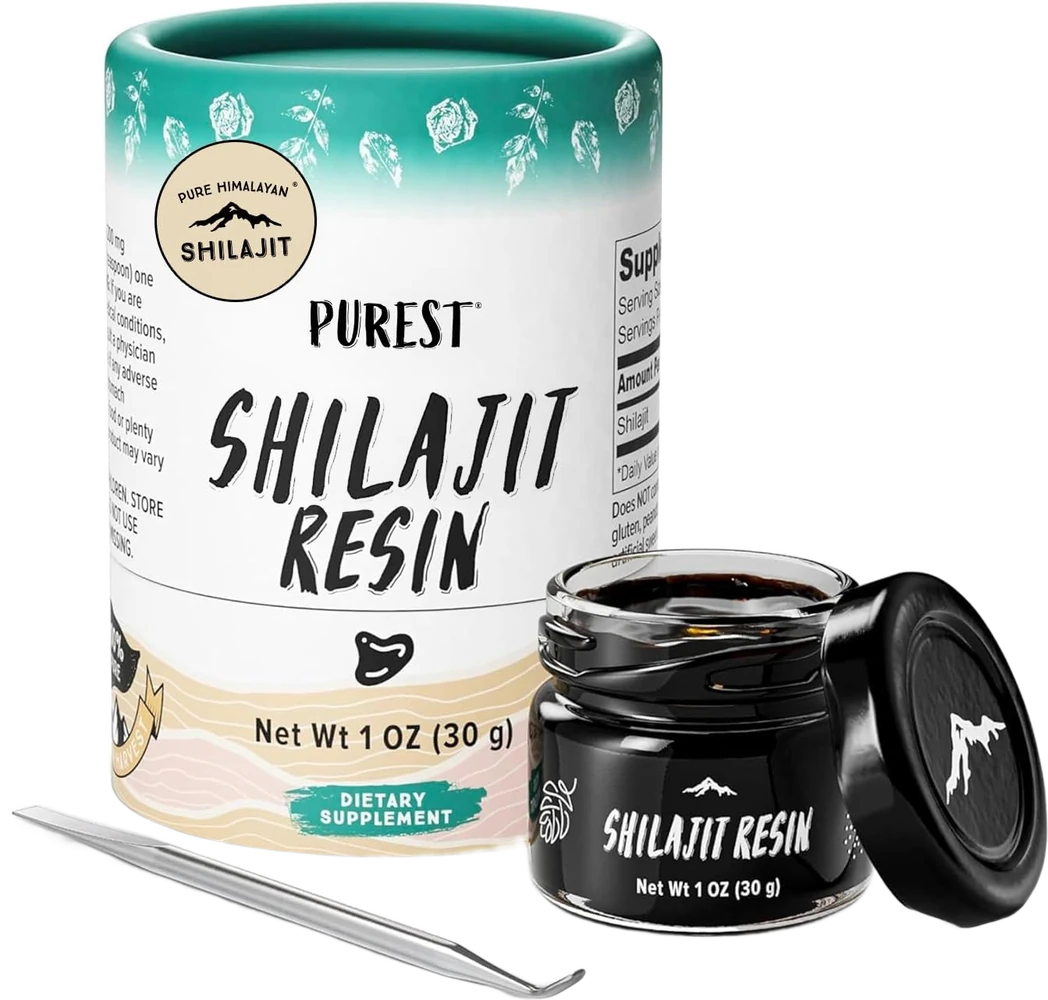 #4 of 9 · Best value resin✓ Label verified · Supplement Facts read Sep 7, 2026
Real retailer photo, cut out. Label unedited.
Consider it. The resin value leader — with a 'Himalayan' name on Siberian-sourced resin. A 30 g jar at 200 mg servings with a third-party US-lab-testing title claim, non-chemical extraction, and a light-protected glass jar with spoon — about $35, the best resin value in the lineup.
$35 / 30 g jar200 mg resin per serving (pea-sized in warm liquid)
Why It Scores 7.5 — And The Label Line Behind Each Number
Purity & source transparency
30% of scoreGrade A resin with a non-chemical extraction claim and no fillers — solid on substance. But this axis takes the hit that defines the product's ranking: the brand is named 'Pure Himalayan Shilajit' while its own listing bullet places the resin in the Siberian Mountains. Siberian/Altai shilajit is legitimate, but a name that contradicts its origin statement is a genuine transparency failure, and it's why this resin scores mid-pack here despite a clean extraction story.
- Source
- Stated as Siberian Mountains in the listing bullet — despite the 'Himalayan' brand name
- Heavy-metal panel
- Not published on the listing (no Pb/As/Hg/Cd/Tl numbers shown)
Form & dose honesty
25% of scoreCredit for stating a per-serving amount at all — 200 mg of resin, dissolved in warm liquid — which is more than the pea-sized-by-eye picks. Deductions: 200 mg is light versus the studied 500 mg/day, and no fulvic-acid percentage is disclosed. Honest about the serving size, modest about the dose, silent on potency.
- Form
- Grade A resin, non-chemical extraction, no fillers (light-protected glass jar + spoon)
- Per serving
- 200 mg resin (pea-sized, dissolved in warm liquid) — light vs the studied 500 mg/day
Safety & testing disclosure
20% of scoreThe title states '3rd-Party US Lab Tested,' which beats an in-house-only claim and signals external testing — a point in its favor. But, like every pick here, it publishes no heavy-metal panel with numbers, so it's capped. The US-lab-testing title claim is encouraging but still not the Pb/As/Hg/Tl report this category needs.
- Testing
- Title states '3rd-Party US Lab Tested' — no published heavy-metal panel shown
Value per month
15% of scoreThe best resin value in the lineup: a 30 g jar at about $35 is far cheaper per gram than the 10 g heritage resin or the ~$93 premium resin. Even accounting for the light 200 mg serving (you'll use more than one to hit the studied dose), it remains the most resin-for-your-money option here. The standout axis.
- Jar
- 30 g light-protected glass jar with dosing spoon
- Price
- ~$35 / 30 g jar — best resin value in the lineup
Real-world use
10% of scoreThoughtful packaging for a resin: a light-protected glass jar (resin degrades with light exposure) and an included dosing spoon make daily use cleaner than a bare tub. Still a sticky, bitter resin dosed by portion, but the jar-and-spoon execution is among the better real-world setups in the lineup.
- More Specs
- Fulvic %
- Not disclosed (naturally derived fulvic acid cited, no number)
- Honesty flag
- Brand named 'Pure Himalayan Shilajit' but its own bullet says Siberian-sourced
Label verified. Every figure read from the Supplement Facts photo, Sep 7, 2026.
Marketing Claims Vs. Reality
Pure Himalayan shilajit (per the brand name).
The brand name says Himalayan, but the listing's own bullet states the resin is harvested from the Siberian Mountains. By the product's own description, it is Siberian (Altai-region) shilajit, not Himalayan. We mark this FALSE as to the Himalayan implication — the source is legitimate, but the name contradicts the stated origin and buyers deserve to know.
3rd-Party US Lab Tested.
The title states third-party US lab testing, which is a stronger signal than an in-house claim. We mark it PARTIAL because the listing publishes no heavy-metal panel with numbers — a 'US lab tested' title claim is reassuring but is not the lead/arsenic/mercury/thallium report this category needs.
Non-chemical extraction with no fillers or additives.
The listing states a non-chemical extraction and a no-fillers, no-additives formula, consistent with a Grade A resin. Accurate as described, and a genuine point in the product's favor on the substance itself.
85+ trace minerals and naturally derived fulvic acid.
The 85+ minerals and fulvic-acid content are plausible and standard claims for an authentic resin, but no fulvic-acid percentage is disclosed, so the potency is unquantified. Directionally credible for real shilajit, not verifiable against a number.
What Our Test Actually Found
The name problem is the story — and it's a real transparency failure
There's no kind way to put this: a product called 'Pure Himalayan Shilajit' whose own listing bullet says the resin comes from the Siberian Mountains has a name that contradicts its origin. Siberian/Altai shilajit is a legitimate, respected source, so this isn't about quality — it's about honesty. A buyer who chose this specifically because they wanted Himalayan shilajit would be getting something else, and that's exactly the kind of gap this site exists to flag. It's the single biggest reason a resin with otherwise excellent value sits at #5 rather than challenging the top.
On pure value, it's the resin to beat
Set the name aside and the economics are genuinely strong: 30 g for about $35 is the lowest cost-per-gram of any resin in the lineup, undercutting the 10 g heritage jar (~$60) and the premium resins (~$67-93) by a wide margin. You also get a non-chemical extraction claim, a third-party US-lab-testing title claim, and a light-protected glass jar with a spoon — a thoughtful setup, since resin degrades with light. For a buyer who wants the most resin for the least money with at least a stated testing claim, nothing else here matches the value.
The 200 mg serving is light — dose up to hit the studied range
The listing's 200 mg serving is below the 500 mg/day used in the human trials (Pandit 2016, Keller 2019), so if you're targeting the testosterone or strength endpoints you'll want to take a larger portion — roughly 400-500 mg/day. That uses the jar faster than the per-serving math implies, but even at the higher dose it remains the best resin value here. The honest note is that resin dosing is always partly by eye; the stated 200 mg gives you a useful reference point, but you'll be estimating the larger portions.
Better testing language than the bottom of the lineup — same missing panel
A '3rd-Party US Lab Tested' title claim is meaningfully stronger than the in-house-only language on the cheapest picks (Carlyle, Cymbiotika says nothing at all), and it's a legitimate point in this resin's favor. But it lands in the same place as everything else here on the decisive axis: no published heavy-metal panel with numbers. With thallium found up to ~0.5 µg/g in commercial shilajit (2025 BMC Chemistry), the document buyers should want is a Pb/As/Hg/Tl report — and a title testing claim, however encouraging, isn't it.
Full analysis: all pros & cons (7), buy if / skip if
- Best resin value in the lineup — lowest cost-per-gram (30 g jar ~$35)
- Title states 3rd-party US lab testing — stronger than an in-house-only claim
- Non-chemical extraction with no fillers or additives
- Light-protected glass jar with a dosing spoon — thoughtful, resin-appropriate packaging
- Honesty flag: 'Pure Himalayan Shilajit' brand name, but its own bullet says Siberian-sourced
- 200 mg serving is light versus the studied 500 mg/day; no fulvic percentage disclosed
- A 'US lab tested' title claim is not a published heavy-metal panel — none is shown
- You want the most resin for your money — the lowest cost-per-gram of any resin here
- You want a stated third-party US-lab-testing claim and a proper light-protected glass jar with spoon
- You're comfortable with Siberian (Altai) shilajit and just want it labeled honestly in your own head
- You'll dose toward the studied 400-500 mg/day rather than the light 200 mg listed serving
- Origin transparency is a dealbreaker — the 'Himalayan' brand name contradicts its own Siberian-source bullet
- You want disclosed potency — Double Wood (#1) states 20% fulvic acid; this lists no fulvic percentage
- Your standard is a published heavy-metal panel — the 'US lab tested' title claim isn't one
A 30 g jar at 200 mg servings with a third-party US-lab-testing title claim, non-chemical extraction, and a light-protected glass jar with spoon — about $35, the best resin value in the lineup. The catch: the brand is named 'Pure Himalayan Shilajit' but its own bullet says the resin is harvested from the Siberian Mountains, the serving is light versus the studied 500 mg dose, and the title testing claim isn't a published metals panel. Great value, real asterisks.
Pure Himalayan Shilajit Resin is the resin value leader in our lineup, and the pick where we have to be most careful to separate a genuinely good deal from a genuinely misleading name. On economics it's the standout: a 30 g jar at 200 mg servings, a title that claims third-party US lab testing, a non-chemical extraction with no fillers, and a proper light-protected glass jar with a dosing spoon — all for about $35, the lowest cost-per-gram of any resin here. The reason it sits at #4 rather than higher is an honesty flag we won't paper over: the brand is named 'Pure Himalayan Shilajit,' but the listing's own bullet says the resin is harvested from the Siberian Mountains. Siberian (Altai) shilajit is a legitimate source — this isn't fake — but a brand name that contradicts its own origin statement is a real transparency problem and costs meaningful points. Add the category-wide caveat (a title testing claim is not a published heavy-metal panel) and a 200 mg serving that's light versus the studied 500 mg dose, and you have a strong-value resin with asterisks. Buy it for the value, go in clear-eyed about the origin, and here's the full breakdown.
The resin value leader — buy it for the price, but go in clear-eyed about the Siberian origin.

Pure Himalayan Shilajit Resin is the best resin value in our lineup, full stop: a 30 g jar at about $35, a third-party US-lab-testing title claim, a non-chemical extraction, and a proper light-protected glass jar with a spoon. If your priority is the most resin for your money with at least a stated testing claim, nothing else here competes on cost-per-gram. But value isn't the whole story, and we won't let the price hide the asterisks. The brand is named 'Pure Himalayan Shilajit' while its own listing bullet says the resin is harvested from the Siberian Mountains — a legitimate source, but a name that contradicts it, which is a genuine transparency failure and the reason this lands at #5. The 200 mg serving is light versus the studied 500 mg/day, no fulvic percentage is disclosed, and the title testing claim is not a published metals panel. So buy it as the value resin it is, dose toward 400-500 mg/day, understand you're taking Siberian shilajit regardless of the name, and if a numbers-on-paper heavy-metal report is your bar, request one before you commit.
If This Doesn’t Fit — Try These
 02
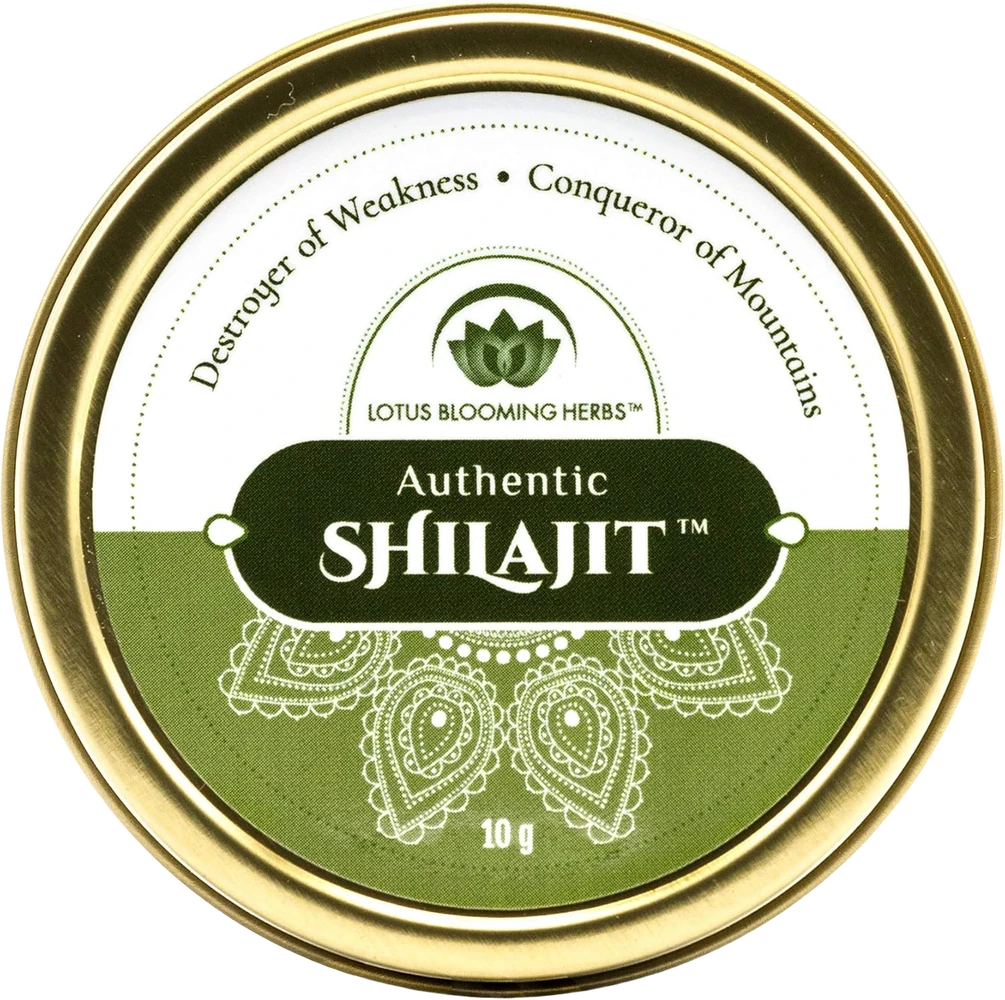
Lotus Blooming Herbs
If you want the real thing — authentic, traditionally purified Himalayan resin from a brand that has been doing this longer than almost anyone in the US — Lotus Blooming Herbs is the pick.
 01
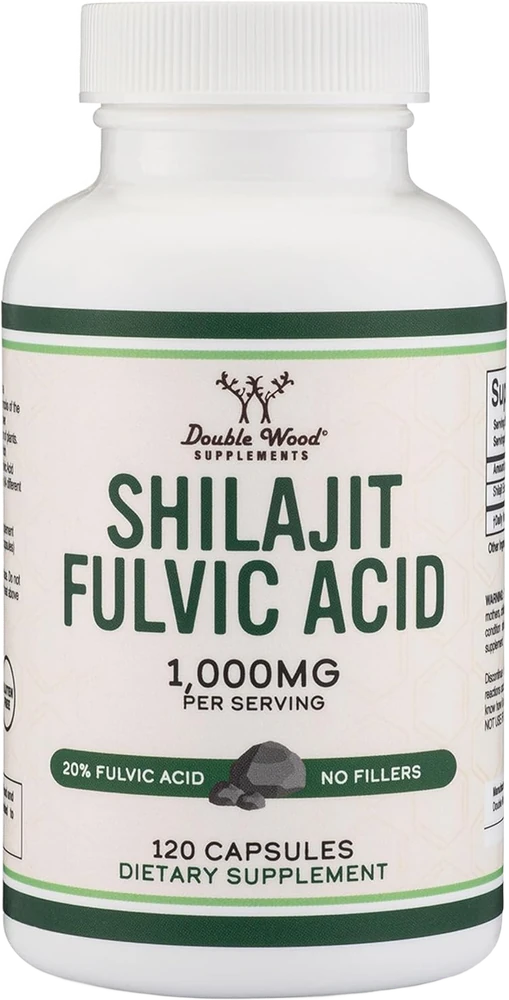
Double Wood Capsules
Double Wood is what you buy when you're tired of shilajit brands refusing to tell you anything.
 05
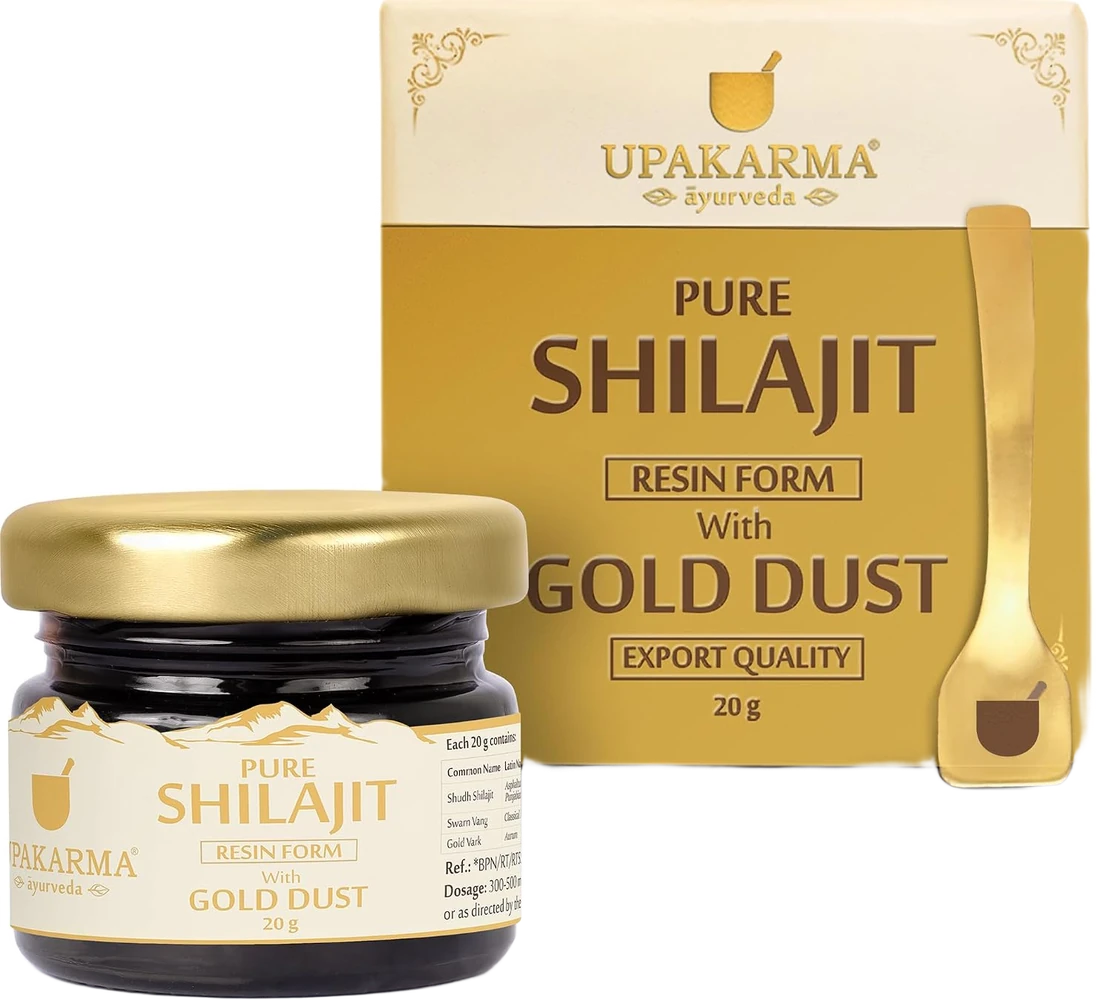
UPAKARMA Resin
UPAKARMA is the most credible of the budget Ayurvedic resins: an Indian heritage brand whose listing actually names a third-party NABL-accredited lab-test report and Ayush approval, with the traditional 85+ minerals positioning and urolithin A called out, all for around $22.
Quick Answers
Wait — is this Himalayan or Siberian shilajit?
This is the honesty flag, and we won't gloss over it: the brand is named 'Pure Himalayan Shilajit,' but the product listing's own bullet says the resin is harvested from the Siberian Mountains. So by the listing's own words, it's Siberian (Altai-region) shilajit sold under a Himalayan brand name. That doesn't make it a bad product — Siberian/Altai shilajit is a legitimate, well-regarded source — but a brand name that contradicts its own origin statement is a transparency problem, and it's the main reason this otherwise strong-value resin sits at #5 rather than higher. Buy it knowing where it actually comes from, not where the name implies.
Is it tested for heavy metals?
Its title states '3rd-Party US Lab Tested,' which is a stronger claim than an in-house-only label, but the listing does NOT publish a heavy-metal panel with numbers for lead, arsenic, mercury, cadmium, or thallium. That's the gap across this whole category — a 2025 BMC Chemistry study (PMID 39827344) found thallium up to ~0.5 µg/g in commercial shilajit, sometimes above the raw rock, so a published metals report is the ideal. The 'US lab tested' title claim is encouraging, but it's a claim, not a numbers-on-paper panel you can read. If that document is your bar, request a current COA from the brand before buying.
Is 200 mg per serving enough?
It's on the light side for resin. The human trials that found benefits used a purified extract at 500 mg/day (Pandit 2016, Keller 2019), so a single 200 mg resin serving is below that — you'd take roughly 2-2.5 servings to reach the studied dose. That stretches a 30 g jar over fewer days than the per-serving math suggests, though even then it remains the best resin value in the lineup. The practical move: if you're targeting the testosterone or strength endpoints, dose toward 400-500 mg/day (a slightly larger pea-sized portion), and recognize that resin dosing is always somewhat by eye.
How does the value compare to the other resins?
On pure cost-per-gram, this is the resin value leader. A 30 g jar at about $35 is far cheaper per gram than Lotus Blooming Herbs (10 g, ~$60), Pürblack (~30 g, ~$93), or Cymbiotika (~$67). You also get a proper light-protected glass jar with a dosing spoon, a non-chemical extraction claim, and a third-party US-lab-testing title claim. So if your priority is the most resin for your money with at least a stated testing claim, this is the pick — provided you accept the Siberian-origin reality behind the Himalayan name and understand that 'US lab tested' isn't a published metals panel.
Sources & Further Reading
3 peer-reviewed sources, each linked to PubMed
- [1] Pandit 2016 PMID 26395129 — Clinical evaluation of purified Shilajit on testosterone levels in healthy volunteers. ~75 men, 90 days: purified shilajit 500 mg/day raised total and free testosterone and DHEAS. The studied dose to aim for — above this product's light 200 mg listed serving, so dose up if targeting these endpoints.
- [2] Keller 2019 PMID 30728074 — The effects of Shilajit supplementation on fatigue-induced decreases in muscular strength and serum hydroxyproline levels. 8-week RCT (n=63): 500 mg/day purified shilajit retained strength after fatigue and lowered hydroxyproline. Again the 500 mg target, versus this product's 200 mg listed serving.
- [3] Kamgar 2025 PMID 39827344 — Quantifying of thallium in Shilajit and its supplements to unveil the potential risk of consumption of this popular traditional medicine. Thallium up to ~0.5 µg/g in commercial shilajit, sometimes above the raw source. Why a '3rd-party US lab tested' title claim is marked partial without a published metals panel.
Affiliate disclosure: every Amazon link uses our Associates tag (superachieverclub-20). We earn a small commission at no cost to you; it funds independent reviews. We never accept payment to change a ranking.