
Shilajit's testosterone case is Pandit 2016 (PMID 26395129): a randomized, double-blind, placebo-controlled trial in ~75 healthy men aged 45-55, where purified shilajit at 500 mg/day for 90 days significantly raised total testosterone, free testosterone, and DHEAS versus placebo, with LH/FSH maintained. Genuinely a direct testosterone RCT — but it's a single, modestly-sized study, and the effect requires a purified extract.
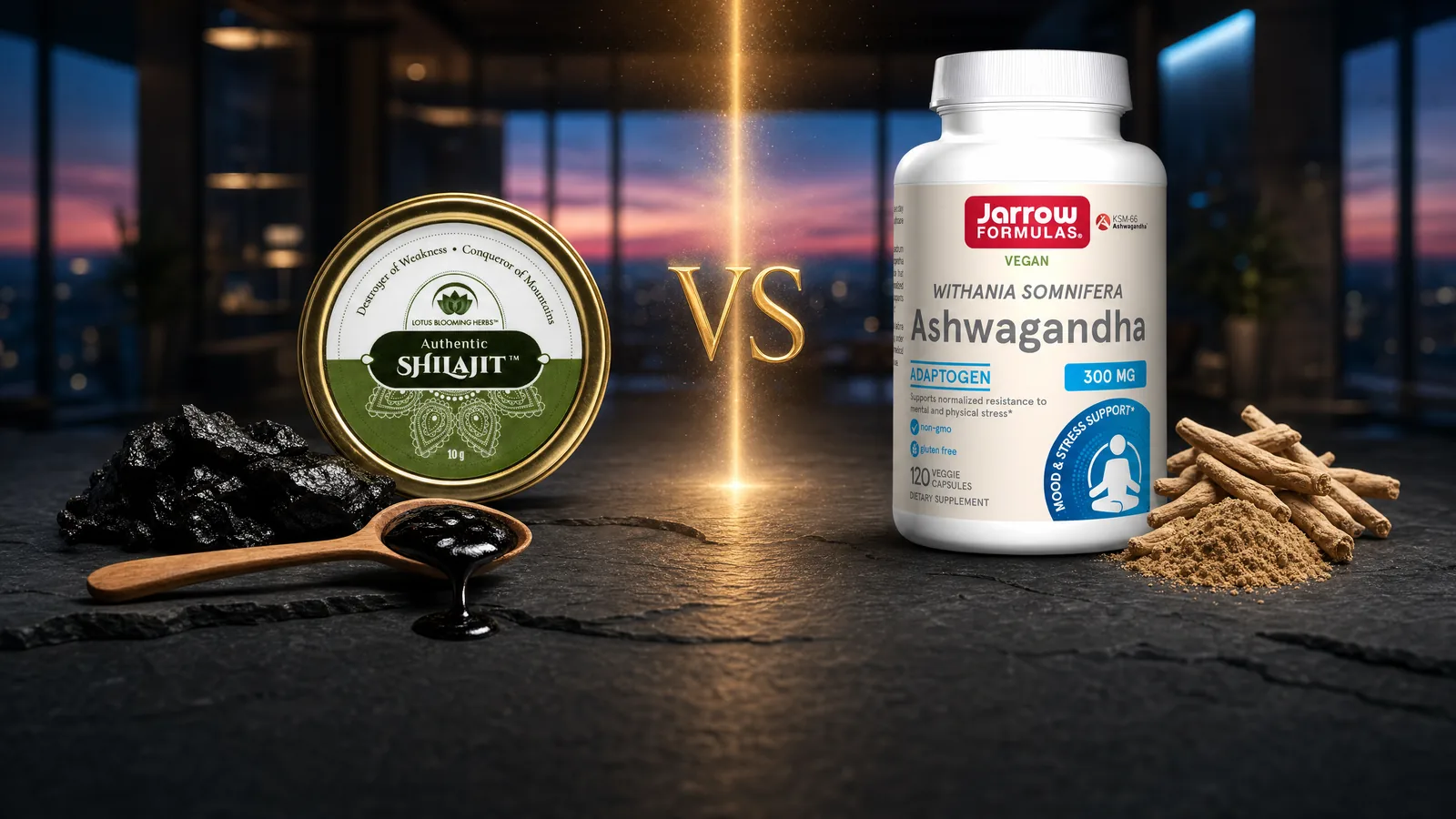
Shilajit vs Ashwagandha
Updated Oct 15, 2026 · by Felix Hesse · 8 peer-reviewed sources
Shilajit and ashwagandha both get sold as testosterone-and-energy boosters, but they're barely the same kind of thing. Shilajit is a fulvic-acid mineral resin with a real but thin human base — one testosterone RCT (Pandit 2016, ~75 men) and one fatigue/strength RCT (Keller 2019, n=63) — plus a documented heavy-metal purity caveat. Ashwagandha is the most-studied adaptogen in supplement science: 12+ placebo-controlled RCTs on standardised extracts covering cortisol, sleep, strength, and an indirect testosterone lift. Below: 6 rounds head-to-head, and an honest verdict about where each one actually earns its place.
Contender A
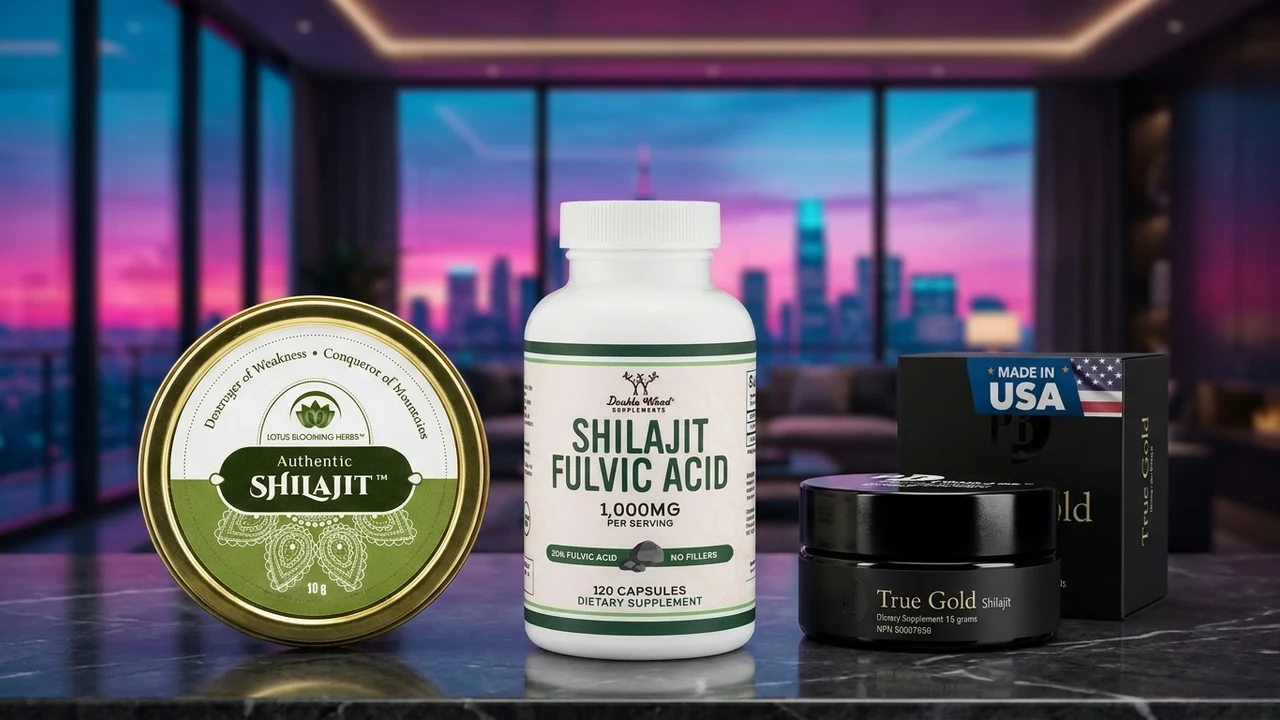
Shilajit (purified)
Mineral resin · fulvic acid + DBPs · 2 human RCTs · energy angle
A fulvic-acid mineral resin with a genuine energy/mitochondrial signal and a modest testosterone RCT — but a real heavy-metal purity caveat. Only worth it if third-party metal-tested.
7.0/10
Best forThe mineral/energy angle · buyers who verify purity
Read the full ranking →
Contender B
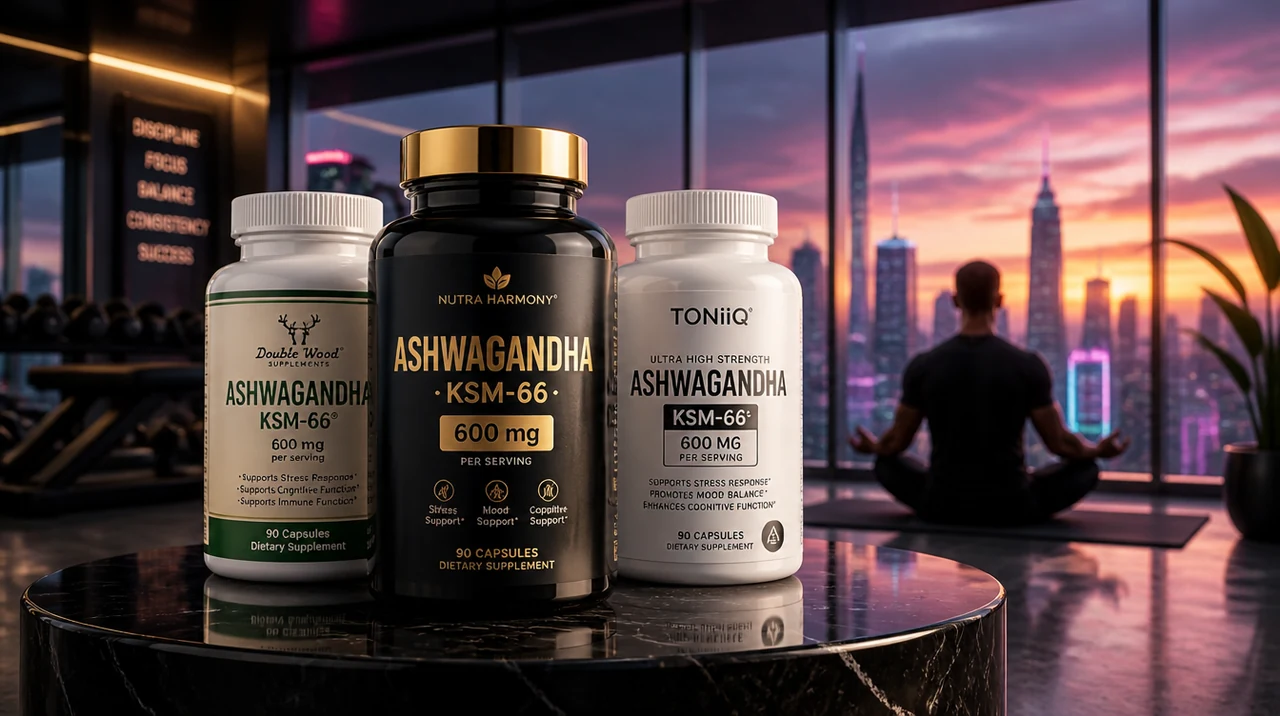
Ashwagandha (KSM-66/Sensoril)
Adaptogen · withanolides · 12+ RCTs · cortisol −16-33% · T +14.7%
The most-studied adaptogen: lowers cortisol, deepens sleep, modestly lifts testosterone, and carries a clean 12-month safety record. The broader, safer, better-evidenced pick.
8.7/10
Best forStress, sleep, broad vitality, and a lower-risk T nudge
Read the full ranking →
How we scored each round
Five criteria that matter for a real-world decision between a mineral resin and an adaptogen, weighted by what actually drives the buy. Each round, both contenders get a 0-10 score based on the published trials. The winner is whoever scores higher on that round; ties are explicit when both perform comparably.
- Testosterone effect20%
Magnitude + reliability of the testosterone signal vs placebo.
- Signature benefit25%
Each herb's strongest documented outcome — energy/fatigue for shilajit, stress/sleep for ashwagandha.
- Trial-evidence base25%
Number of placebo-controlled RCTs, sample size, meta-analysis + replication support.
- Mechanism clarity15%
How well the mechanism of action is characterised and tracks with outcomes.
- Safety + purity15%
Adverse-event profile, contraindications, and contamination risk.
6 rounds — head-to-head on the criteria that matter
- Round 1
Round 1 · Testosterone signal
Magnitude + reliability of the testosterone effect vs placeboShilajit (purified)7.5 Ashwagandha (KSM-66/Sensoril)8.0 Ashwagandha's anchor is Lopresti 2019 (PMID 30854916): a Shoden extract raised testosterone 14.7% and DHEA-S 18% more than placebo over 8 weeks in overweight men aged 40-70. Wankhede 2015 (PMID 26609282) independently reported testosterone rises alongside strength gains. The effect is indirect (cortisol-down), modest — but replicated across more than one trial.
- Round 2
Round 2 · Signature benefit
Each herb's strongest documented outcomeShilajit (purified)8.0 This is shilajit's best round. Its signature is physical energy and anti-fatigue: the dibenzo-α-pyrones are proposed to support mitochondrial ATP, and Keller 2019 (PMID 30728074, n=63, 500 mg/day, 8 weeks) showed retention of maximal muscular strength after a fatiguing protocol plus lower serum hydroxyproline (a connective-tissue-breakdown marker). That's a direct, mechanism-aligned energy/recovery signal ashwagandha doesn't match head-on.
Ashwagandha (KSM-66/Sensoril)7.0 Ashwagandha's signature is stress and sleep — and it's strong, just in a different lane. Chandrasekhar 2012 (PMID 23439798): cortisol −27.9% and perceived stress −44% over 60 days. Lopresti 2019 (PMID 31517876): morning cortisol and anxiety scores down more than on placebo at 240 mg of Shoden. But on the specific 'physical energy / mitochondrial lift' framing of this round, ashwagandha works indirectly, via sleep and cortisol, rather than as a direct energy input.
- Round 3
Round 3 · Trial-evidence base
RCT count, sample size, replication + meta-analysis supportShilajit (purified)6.0 Shilajit's human base is thin: essentially two placebo-controlled RCTs (Pandit 2016 on testosterone, Keller 2019 on fatigue/strength), each modestly sized (~63-75 subjects), supported by review literature (Stohs 2014, PMID 23733436) rather than a deep independent replication record. Promising and mechanistically coherent — but a small body of human work by any honest measure.
Ashwagandha (KSM-66/Sensoril)9.5 Ashwagandha is one of the most-studied supplements in the category: 12+ placebo-controlled RCTs on standardised extracts (KSM-66, Sensoril, Shoden), spanning cortisol (Chandrasekhar 2012), stress (Lopresti 2019), testosterone (Lopresti 2019), and strength (Wankhede 2015), with multiple independent replications. Far broader and deeper.
- Round 4
Round 4 · Mechanism clarity
How well the mechanism is characterised and tracks with outcomesShilajit (purified)6.5 Shilajit's mechanism is plausible but diffuse: dibenzo-α-pyrones proposed to support mitochondrial ATP, fulvic acid contributing antioxidant + carrier activity, and a less-defined route for the testosterone/DHEAS rise. The actives are identified (Stohs 2014; Carrasco-Gallardo 2012), but 'mineral concentrate with several bioactive fractions' is inherently murkier than a single-lever story.
Ashwagandha (KSM-66/Sensoril)8.5 Ashwagandha's HPA-axis mechanism is comparatively clean: withanolides modulate the stress axis, cortisol falls 16-33% (dose- and baseline-dependent), and the sleep, stress, and testosterone-to-cortisol effects track downstream of that drop. Mechanism and outcome move together across the trials.
- Round 5
Round 5 · Safety + purity
Adverse-event profile, contraindications, contamination riskShilajit (purified)6.0 Shilajit's benefits are real but its safety hinges entirely on purification. Because it's a mineral concentrate from raw rock, it concentrates toxic metals — and Kamgar 2025 (PMID 39827344) found thallium up to ~0.5 µg/g in commercial supplements, in some cases higher than the raw source, meaning bad purification can leave a product dirtier than the rock. Every benefit trial used a PURIFIED extract. Safe only if you verify a third-party heavy-metal panel.
Ashwagandha (KSM-66/Sensoril)8.0 Ashwagandha has a clean, well-characterised safety profile: well-tolerated at 300-600 mg/day with human data out to 12 months, most side effects mild (GI upset, drowsiness at high doses). Its cautions are specific and manageable — avoid with thyroid medication (withanolides raise T3/T4), avoid with autoimmune conditions (mild immunostimulation), and avoid in pregnancy. A patent extract with a public COA is the safe buy.
- Round 6
Round 6 · Stacking + combinability
Can these be co-administered? Does it make sense?Shilajit (purified)8.0 Shilajit's mechanism (mitochondrial/mineral + a modest androgen signal) doesn't conflict with ashwagandha's (HPA-axis/cortisol). Adding purified shilajit to an ashwagandha protocol gives you a mineral/energy layer on top of stress-axis support — a coherent 'stress + vitality' stack, and one the 'just pick one' framing misses. The only caveat is the same one as always: verify the shilajit's purity first.
Ashwagandha (KSM-66/Sensoril)8.0 Ashwagandha plus purified shilajit is a sensible pairing: ashwagandha handles cortisol, sleep, and the stress axis; shilajit adds energy and trace-mineral support through a different route. No documented adverse interaction. Cost is additive but the outcome coverage — stress AND physical energy — is broader than either alone.
After 6 rounds
1
Shilajit (purified)
1
Ties
4
Ashwagandha (KSM-66/Sensoril)
Ashwagandha for most people — Shilajit for the mineral/energy angle if you buy it clean

After 6 rounds, the scoreboard is 4-1 with 1 tie — ashwagandha takes it, and that tracks the evidence honestly. It has the broader trial base (12+ RCTs vs two), the cleaner mechanism, the safer record, and a testosterone signal that's replicated rather than resting on a single study.
But the round shilajit wins is the one that defines when it's the right call. If your actual goal is physical energy and anti-fatigue — a mitochondrial lift rather than stress relief — shilajit's dibenzo-α-pyrones and the Keller 2019 strength-retention data point at that outcome more directly than ashwagandha does. And if you're on thyroid medication or have an autoimmune condition, ashwagandha is contraindicated, which makes purified shilajit the safer lever by default.
The default pick for most people is ashwagandha. KSM-66 or Sensoril, 300-600 mg/day, standardised, with a public Certificate of Analysis. Sleep shifts in 2-3 weeks, stress in 4-6, testosterone and bloodwork at 8-16. It's the broadest, safest, best-evidenced vitality lever on the shelf.
Shilajit is worth it for the mineral/energy angle — but with one non-negotiable condition: it must be purified and, ideally, third-party heavy-metal tested. Kamgar 2025 found thallium up to ~0.5 µg/g in commercial supplements, sometimes above the raw source, so a vague 'third-party tested' badge is not enough — you want a published lead/arsenic/mercury/thallium panel. Buy that, dose 500 mg/day, and judge it at 8-12 weeks.
If both goals apply — stress-axis support AND a mineral/energy layer — stacking them is a legitimate take. Ashwagandha PM + purified shilajit, no mechanistic conflict, 8-12 weeks. The one wrong move: grabbing the cheapest untested shilajit jar expecting a safe testosterone miracle. That's where both the disappointment and the real risk live.
Every claim above traces back to one of these
- [1]Pandit 2016 (shilajit testosterone RCT)
Clinical evaluation of purified Shilajit on testosterone levels in healthy volunteers
Randomized, double-blind, placebo-controlled trial in ~75 healthy men aged 45-55. Purified shilajit 500 mg/day for 90 days significantly raised total testosterone, free testosterone, and DHEAS versus placebo, with LH/FSH maintained. The anchor human testosterone trial — modestly sized, real effect, purified extract.
- [2]Keller 2019 (shilajit fatigue/strength RCT)
The effects of Shilajit supplementation on fatigue-induced decreases in muscular strength and serum hydroxyproline levels
8-week randomized, double-blind, placebo-controlled trial (n=63). 500 mg/day of purified PrimaVie shilajit promoted retention of maximal muscular strength after a fatiguing protocol and lowered baseline serum hydroxyproline, suggesting favorable muscle/connective-tissue adaptation. The fatigue and strength signal — with a purified extract.
- [3]Stohs 2014 (shilajit safety & actives review)
Safety and efficacy of shilajit (mumie, moomiyo)
Review concluding that PURIFIED shilajit can be used safely in clinical research and identifying dibenzo-α-pyrones and fulvic acid as the key active constituents. The basis for the 'purification is the whole story' framing — raw shilajit is a different, riskier product.
- [4]Kamgar 2025 (shilajit thallium contamination)
Quantifying of thallium in Shilajit and its supplements to unveil the potential risk of consumption of this popular traditional medicine
Elemental analysis detected thallium up to ~0.5 µg/g in commercial shilajit supplements — in some cases HIGHER than the raw shilajit they were made from, indicating that inadequate purification can leave a product more contaminated than the source rock. The hard evidence behind treating heavy-metal testing as shilajit's #1 buyer-protection requirement.
- [5]Lopresti 2019 (ashwagandha testosterone)
A randomized, double-blind, placebo-controlled, crossover study examining the hormonal and vitality effects of ashwagandha (Withania somnifera) in aging, overweight males
57 overweight men aged 40-70 took Shoden (21 mg withanolide glycosides a day) or placebo for 8 weeks each in a crossover trial. Testosterone rose 14.7% and DHEA-S 18% more than on placebo; cortisol, fatigue and sexual well-being did not differ.
- [6]Lopresti 2019 (ashwagandha stress)
An investigation into the stress-relieving and pharmacological actions of an ashwagandha (Withania somnifera) extract: a randomized, double-blind, placebo-controlled study
60 stressed adults took 240 mg of Shoden or placebo once daily for 60 days. Anxiety scores (HAM-A) fell more than on placebo, as did morning cortisol and DHEA-S. Sleep was not an outcome.
- [7]Wankhede 2015 (ashwagandha strength)
Examining the effect of Withania somnifera supplementation on muscle strength and recovery: a randomized controlled trial
600 mg/day of KSM-66 for 8 weeks increased muscle strength and size, raised testosterone, and reduced exercise-induced muscle damage in resistance-trained men. The genre-defining sport-performance replication of the testosterone signal.
- [8]Chandrasekhar 2012 (ashwagandha cortisol)
A prospective, randomized double-blind, placebo-controlled study of safety and efficacy of a high-concentration full-spectrum extract of ashwagandha root in reducing stress and anxiety in adults
300 mg twice daily of KSM-66 for 60 days reduced perceived stress score by 44% and serum cortisol by 27.9% in chronically stressed adults. The cornerstone cortisol-reduction trial.