
Carlyle Shilajit Capsules Review
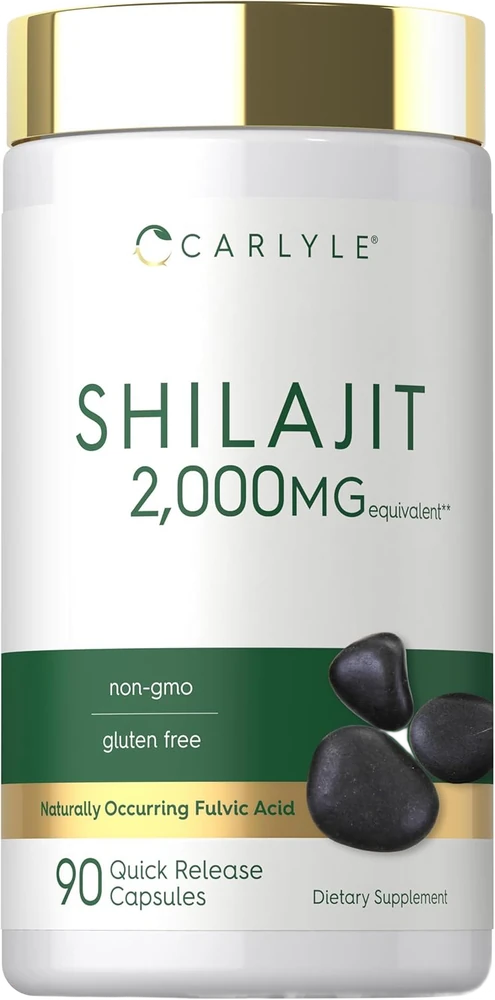 #8 of 9 · Cheapest capsule trial✓ Label verified · Supplement Facts read Sep 7, 2026
Real retailer photo, cut out. Label unedited.
Consider it. The cheapest trial — with the lineup's weakest testing disclosure. About $11 for 90 capsules from an established value brand, with a stated Indian-Himalayan source and clean allergen profile.
$11 / 90 capsules$0.12 / capsule — but mg strength not stated on the live listing
Why It Scores 6.9 — And The Label Line Behind Each Number
Purity & source transparency
30% of scoreThe listing states an Indian-Himalayan source (a legitimate, named origin) and a clean allergen profile from an established value brand — reasonable on the basics. The label does name the extract ratio (5:1, standardized to a 2,000 mg Shilajit equivalent), which is more detail than a bare mg figure. It still scores below the resins and the better capsules because there's no fulvic-acid percentage to characterize potency and no published heavy-metal data.
- Source
- Mineral-rich resin sourced along the Indian Himalayas (per listing)
- Heavy-metal panel
- Not published on the listing (no Pb/As/Hg/Cd/Tl numbers shown)
Form & dose honesty
25% of scoreThe label discloses the dose clearly: 400 mg of Shilajit Extract (Asphaltum), a 5:1 extract standardized to 'equivalent to 2,000 mg of Shilajit,' one capsule per serving — matching the front-of-label '2,000 MG equivalent' claim and Carlyle's own site. What's missing is a fulvic-acid percentage, so you know the extract dose but not its potency marker, and an 'equivalent' extract ratio isn't the same as the purified, standardized dose used in the human trials. (An earlier version of this review incorrectly said the mg wasn't stated and scored this criterion 5.0; corrected after re-reading the label.)
- Form
- Shilajit extract in quick-release capsule (Indian-Himalayan source per listing)
- Per serving
- 400 mg Shilajit Extract (Asphaltum), a 5:1 extract standardized to equivalent to 2,000 mg of Shilajit; 1 capsule per serving, 90 servings per container
- Diet
- Non-GMO; free of gluten, wheat, yeast, lactose, soy, artificial flavors and preservatives
Safety & testing disclosure
20% of scoreThe weakest in the lineup: only an in-house 'laboratory tested' claim with a 100% guarantee — no third-party seal, no badge, no published heavy-metal panel. In a category where external testing matters most for the cheapest products, an in-house claim is the lowest tier of reassurance, and several pricier picks clearly beat it on this axis.
- Testing
- In-house 'laboratory tested' claim only — no third-party seal, no heavy-metal panel
Value per month
15% of scoreThe one strong axis: at about $11 for 90 capsules (brand site $10.59), it's the cheapest pick in the lineup by a clear margin. With the per-capsule dose confirmed on the label (400 mg of a 5:1 extract, 2,000 mg equivalent), the price-per-dose math holds up — on sticker price, nothing here undercuts it. The low price is a real strength, not just a consolation.
- Count
- 90 quick-release capsules
- Price
- ~$11 / 90 capsules (brand site $10.59) — cheapest pick in the lineup
Real-world use
10% of scoreAn effortless, tasteless quick-release capsule — easy to take daily, no resin mess. The format itself is fine and convenient. It loses nothing on usability; the problems are upstream, in the missing fulvic-acid percentage and the lack of real testing, not in the experience of swallowing the capsule.
- More Specs
- Fulvic %
- Not disclosed (no number stated)
Label verified. Every figure read from the Supplement Facts photo, Sep 7, 2026.
Marketing Claims Vs. Reality
Shilajit 2,000 mg per serving.
The Supplement Facts panel confirms it: 400 mg of Shilajit Extract (Asphaltum), a 5:1 extract standardized to 'equivalent to 2,000 mg of Shilajit,' one capsule per serving — matching the front-of-label claim and Carlyle's own site (handle shilajit-2000mg-90-capsules). We mark it VERIFIED as an equivalent-extract claim: 'equivalent to 2,000 mg' describes the raw-material ratio, not a purified, standardized 2,000 mg active dose, and no fulvic-acid percentage is given to characterize potency.
Laboratory tested with a 100% guarantee.
The listing states an in-house 'laboratory tested' claim with a satisfaction guarantee — the weakest testing language in our lineup. We mark it PARTIAL: an in-house claim is some assurance, but it's not third-party testing and not a published heavy-metal panel, which is what this category needs.
Sourced from mineral-rich resin along the Indian Himalayas.
The listing states an Indian-Himalayan source, a legitimate and reasonably specific origin claim, and it's consistent with Carlyle's positioning. No reason to doubt the stated origin; the weaknesses are elsewhere (fulvic-acid disclosure, testing).
Non-GMO and free of gluten, wheat, yeast, lactose, soy, artificial flavors and preservatives.
Standard, verifiable allergen and clean-label attributes stated on the listing, consistent with Carlyle's value-brand line. Accurate as described — a genuine, if minor, point in the product's favor.
What Our Test Actually Found
Correction: the label does state the mg per capsule
An earlier version of this review said the live Amazon listing no longer states the mg per capsule and marked the 2,000 mg claim not verified. The Supplement Facts panel reads: Shilajit Extract (Asphaltum) 400 mg per capsule, a 5:1 extract standardized to 'equivalent to 2,000 mg of Shilajit,' one capsule per serving, 90 servings per container — matching the front-of-label '2,000 MG equivalent' claim. We re-read the label on Sep 7, 2026 and corrected the dose claims throughout this review, the Form & dose honesty score (5.0 to 7.5), and the overall score (6.3 to 6.9). What the label still doesn't give is a fulvic-acid percentage or a published heavy-metal panel — those remain real weaknesses.
The dose is disclosed — but only as an 'equivalent' extract claim, with no fulvic-acid percentage
The label states the dose clearly: 400 mg of Shilajit Extract (Asphaltum) per capsule, a 5:1 extract standardized to 'equivalent to 2,000 mg of Shilajit,' with one capsule per serving. That's real disclosure, and it matches the front-of-label claim. The real limitation is what's not given: a fulvic-acid percentage, so you can't characterize the extract's potency the way you can with better-disclosed picks, and an 'equivalent' extract ratio isn't the same as the purified, standardized dose used in the human trials (500 mg/day). It's a meaningful gap, but not the disqualifying one an earlier version of this review described.
In-house testing is the weakest reassurance in the lineup
Carlyle's only testing language is an in-house 'laboratory tested' claim with a satisfaction guarantee. That's the lowest tier of reassurance here — not a third-party seal, not even the generic 'third-party tested' badge several rivals carry, and nowhere near a published heavy-metal panel. This matters most precisely because it's the cheapest product: cheap shilajit is where contamination risk is highest, and external verification is what would offset that. A 2025 study found thallium up to ~0.5 µg/g in commercial shilajit, sometimes above the raw rock. An in-house claim doesn't address that, and a buyer should treat it accordingly.
The price is real — but 'cheapest' is the wrong reason to buy here
At about $11 for 90 capsules, Carlyle is genuinely the cheapest pick, and for a bare-bones trial that has some appeal. But the low price is doing too much work in the pitch. The dose is disclosed, but there's no fulvic-acid percentage, and the safety disclosure is the weakest in the lineup. In most categories 'cheapest credible option' is a fine recommendation; in shilajit, where the central risk is invisible, a cheap jar backed only by in-house testing is one to approach with some caution. The price is real, but it's not a reason to overlook the testing gap.
A few dollars more buys a vastly better-disclosed budget option
The clearest argument against Carlyle is the alternative. Double Wood (#1) costs only a little more, and for that small premium you get the exact mg stated (1,000 mg), a disclosed fulvic-acid percentage (20%, 200 mg per serving), a no-fillers vegan formula, and a cited third-party testing program. That's a transformation in disclosure for a few dollars. So unless the absolute lowest sticker price is your only criterion, the rational budget pick isn't Carlyle — it's the next rung up, which actually tells you what you're taking and who tested it.
Full analysis: all pros & cons (7), buy if / skip if
- Cheapest pick in the lineup (~$11 for 90 capsules; brand site $10.59)
- Stated Indian-Himalayan source and a clean allergen profile (non-GMO, gluten/wheat/yeast/lactose/soy-free)
- Effortless, tasteless quick-release capsule from an established value brand
- An easy, low-cost way to trial the capsule format
- No fulvic-acid percentage disclosed — you know the extract dose but not its potency marker
- In-house 'laboratory tested' claim only — the weakest safety language in the lineup, no third-party seal
- No published heavy-metal panel (no Pb/As/Hg/Cd/Tl numbers)
- You want the cheapest possible way to trial shilajit capsules and accept the disclosure trade-offs
- You value a stated Indian-Himalayan source and a clean allergen profile (non-GMO, gluten/soy/lactose-free)
- You're fine with a per-capsule dose stated on the label but not backed by a fulvic-acid percentage or third-party testing
- You treat it as a bare-bones experiment, not your long-term shilajit
- You want a dose you can directly compare to the clinical trials — this is a 5:1 'equivalent' extract claim, not a purified, standardized dose
- You want third-party testing — Carlyle offers only an in-house 'laboratory tested' claim here
- You want a disclosed fulvic percentage or stronger safety language — Double Wood (#1) is only a little more
About $11 for 90 capsules from an established value brand, with a stated Indian-Himalayan source and clean allergen profile. The label does disclose the dose — 400 mg of a 5:1 extract per capsule, standardized to 2,000 mg of Shilajit equivalent — but gives no fulvic-acid percentage, and it offers only an in-house 'laboratory tested' claim, the weakest safety language here, with no published metals panel. Cheap, and the dose is on the label — but testing disclosure is the weakest in the lineup.
Carlyle Shilajit Capsules is the cheapest way to put shilajit in your cart — about $11 for 90 capsules from an established value brand — and for a bare-bones trial of the capsule format, that's a real use case. The listing states an Indian-Himalayan source and a clean allergen profile (non-GMO; free of gluten, wheat, yeast, lactose, soy, artificial flavors, and preservatives), which is a reasonable starting point. But it trails our lineup on two honest points that outweigh the low price. First, the fulvic-acid gap: the label discloses the dose (400 mg of a 5:1 extract per capsule, standardized to 2,000 mg of Shilajit equivalent) but gives no fulvic-acid percentage, so you can't characterize the extract's potency the way you can with better-disclosed picks. Second, safety: the listing offers only an in-house 'laboratory tested' claim, the weakest language in the lineup, with no third-party seal and no published heavy-metal panel. In a category where the central risk is invisible contamination, a cheap jar backed only by in-house testing is one to approach with some caution. Here's the full breakdown.
The cheapest trial, the weakest testing disclosure — approach with some caution, or spend a little more.

Carlyle Shilajit Capsules is the cheapest way to put shilajit capsules in your cart, and for a bare-bones experiment that's a legitimate use case. The listing states a real Indian-Himalayan source and a clean allergen profile, and the quick-release capsule is effortless to take. The label also discloses the dose — 400 mg of a 5:1 extract per capsule, standardized to 2,000 mg of Shilajit equivalent — matching the front-of-label claim. If the absolute lowest sticker price is your only criterion, this is it. But it trails the lineup on two points that matter more than price. No fulvic-acid percentage is given, so you know the dose but not the extract's potency — and the only testing language is an in-house 'laboratory tested' claim, the weakest in the lineup, with no published heavy-metal panel. In a category whose central risk is invisible contamination, a cheap jar backed only by in-house testing is one to approach with some caution. So if you buy it, ask for a current third-party COA and treat it as a short trial. Honestly, though, the better move for most budget buyers is a few dollars up: Double Wood (#1) states its exact mg, discloses 20% fulvic acid, and cites third-party testing — a better-disclosed budget pick.
If This Doesn’t Fit — Try These
 02
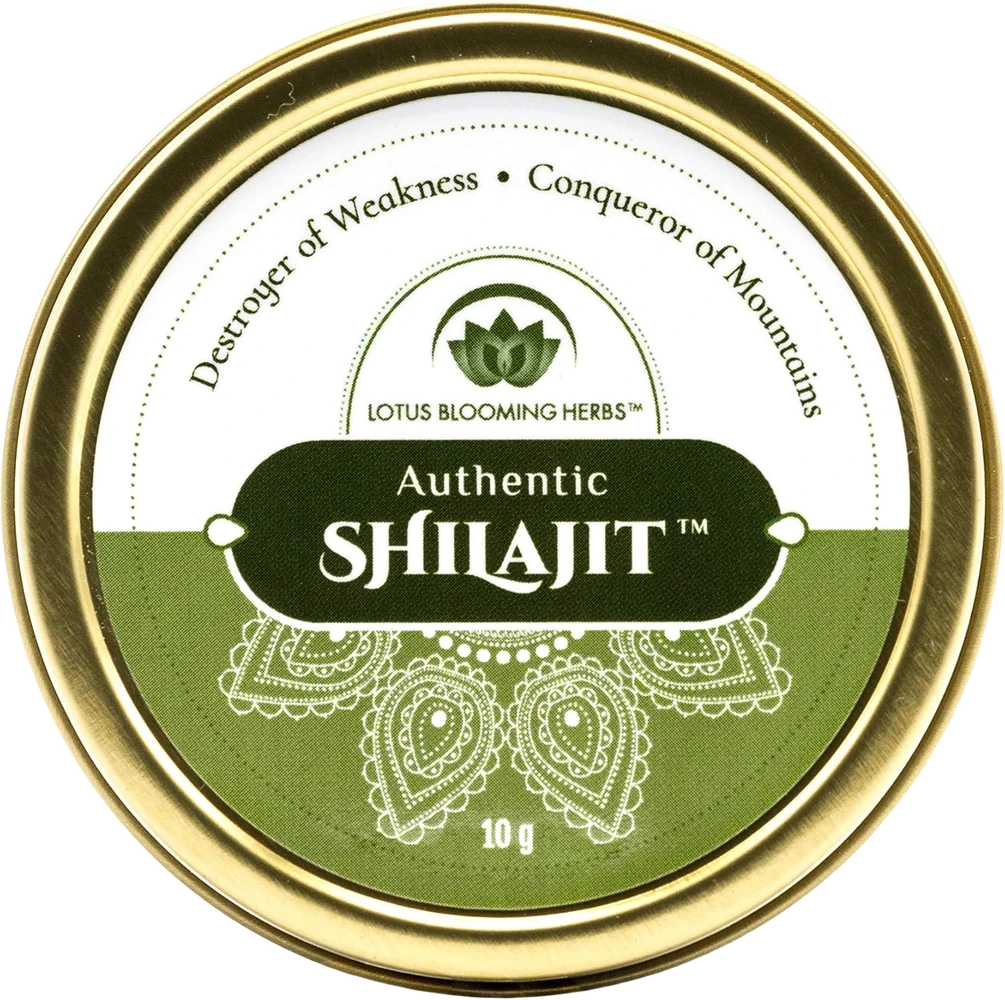
02Lotus Blooming Herbs
If you want the real thing — authentic, traditionally purified Himalayan resin from a brand that has been doing this longer than almost anyone in the US — Lotus Blooming Herbs is the pick.
 04
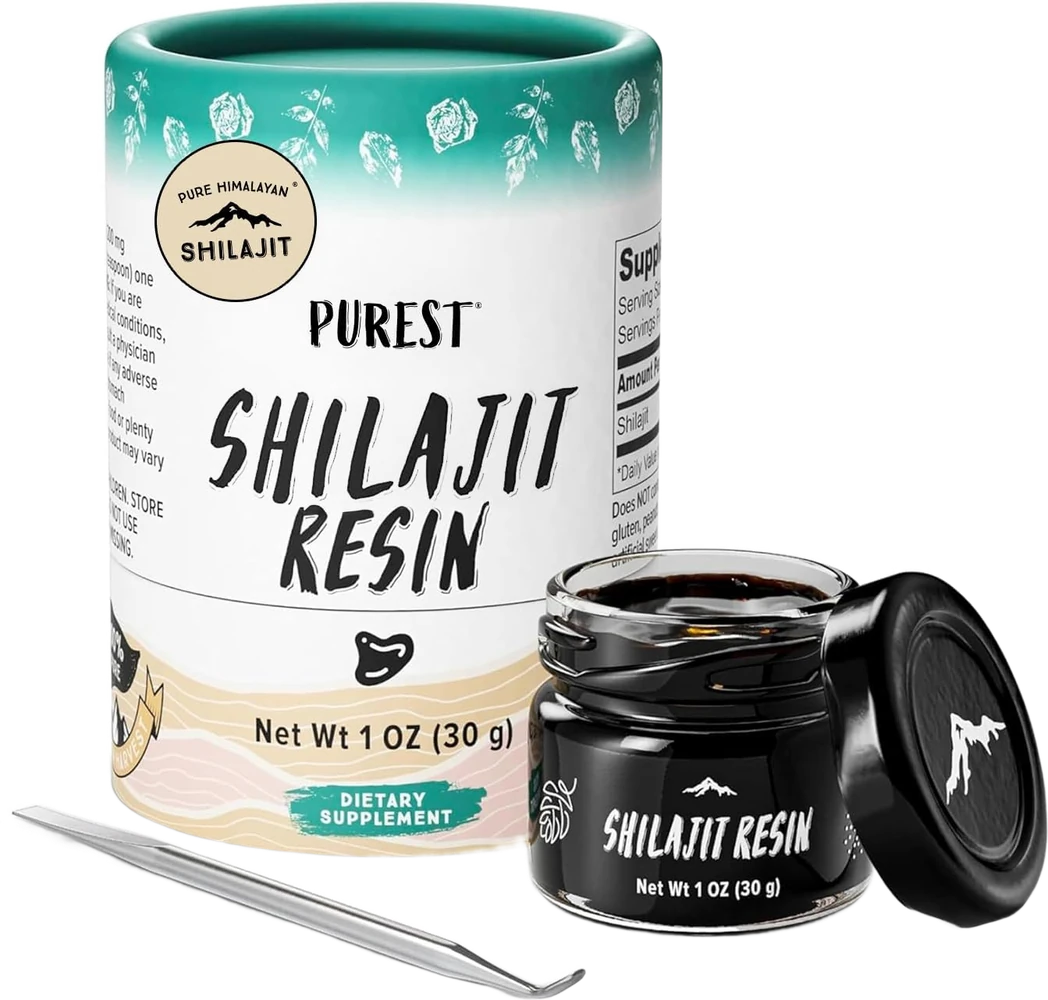
04Pure Himalayan Resin
On pure economics, this is the resin value leader: a 30 g jar at 200 mg servings, a title that claims third-party US lab testing, non-chemical extraction, and a proper light-protected glass jar with a spoon — all for about $35.
 05
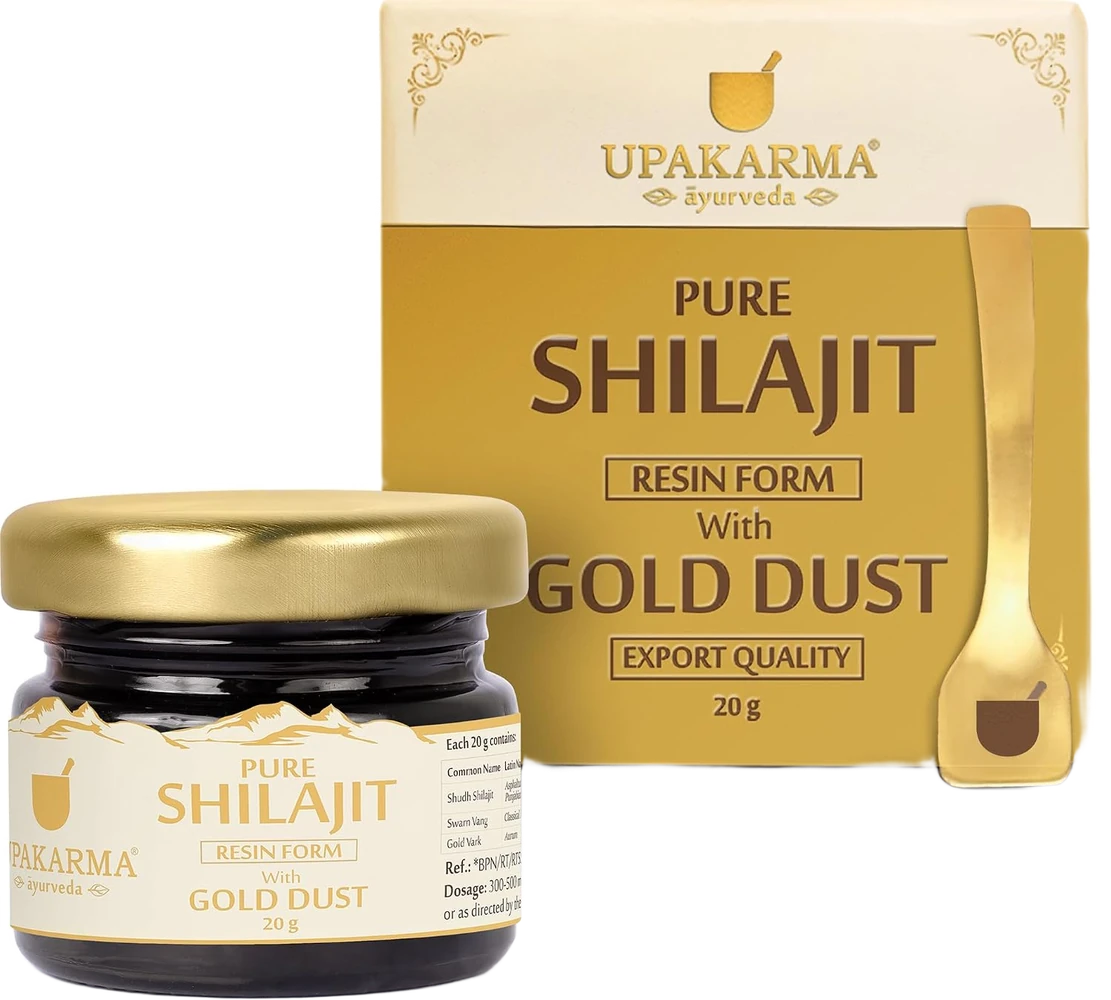
05UPAKARMA Resin
UPAKARMA is the most credible of the budget Ayurvedic resins: an Indian heritage brand whose listing actually names a third-party NABL-accredited lab-test report and Ayush approval, with the traditional 85+ minerals positioning and urolithin A called out, all for around $22.
Quick Answers
How much shilajit is actually in each capsule?
The Supplement Facts panel states it directly: each capsule contains 400 mg of Shilajit Extract (Asphaltum), a 5:1 extract standardized to 'equivalent to 2,000 mg of Shilajit,' with one capsule per serving and 90 servings per container. That matches the front-of-label claim ('Shilajit 2,000 MG equivalent') and Carlyle's own site listing (product handle shilajit-2000mg-90-capsules, listed at $10.59). What the label doesn't give you is a fulvic-acid percentage, so you can't characterize the extract's potency beyond the stated dose — and an 'equivalent' extract claim isn't the same as the purified, standardized dose used in the human trials (500 mg/day). If matching the clinical dose precisely matters to you, that's the real limitation here, not a missing number.
Is it tested for heavy metals?
No published panel, and the weakest testing language in our lineup. The listing offers only an in-house 'laboratory tested' claim with a 100% guarantee — not a third-party seal, not a badge, and certainly not a published heavy-metal panel with numbers for lead, arsenic, mercury, cadmium, or thallium. That's a real concern in this category: a 2025 BMC Chemistry study (PMID 39827344) found thallium up to ~0.5 µg/g in commercial shilajit, sometimes above the raw rock, so external testing matters most for the cheapest products. An in-house claim is the lowest tier of reassurance here — several pricier picks at least cite third-party testing. If you buy this, treat the in-house claim with appropriate skepticism and ask for a current third-party COA.
Where does Carlyle's shilajit come from?
The listing states the shilajit extract is sourced from mineral-rich resin along the Indian Himalayas, which is a legitimate, named origin — a point in its favor over a vague 'high-altitude' claim. Carlyle is an established value brand, and the listing notes the product is non-GMO and free of gluten, wheat, yeast, lactose, soy, artificial flavors, and preservatives. So the sourcing claim itself is reasonable. The weaknesses aren't about where it comes from — they're about what the label won't tell you: a fulvic-acid percentage and any third-party testing results.
Should I buy it just because it's the cheapest?
Only with eyes open, and arguably not as your real shilajit. At about $11 for 90 capsules it's by far the cheapest pick, which is a legitimate reason to use it as a bare-bones trial. But 'cheapest' is doing a lot of work here: the label discloses the dose, but there's no fulvic-acid percentage and the only testing claim is in-house. In a category where the invisible risk is heavy metals, a cheap jar backed only by in-house testing is one to approach with some caution. If you want a cheap capsule you can actually trust, Double Wood (#1) is only a few dollars more, discloses 20% fulvic acid, states its exact mg, and cites a third-party testing program — a better-disclosed budget choice.
Sources & Further Reading
3 peer-reviewed sources, each linked to PubMed
- [1] Pandit 2016 PMID 26395129 — Clinical evaluation of purified Shilajit on testosterone levels in healthy volunteers. ~75 men, 90 days: purified shilajit 500 mg/day raised total and free testosterone and DHEAS. The dose you'd want to target — but Carlyle's label states an 'equivalent to 2,000 mg' extract-ratio claim rather than a purified, trial-matched mg, so precise comparability to this study's dose isn't straightforward.
- [2] Stohs 2014 PMID 23733436 — Safety and efficacy of shilajit (mumie, moomiyo). Review concluding purified shilajit is safe in clinical use, with purification as the precondition. Underlines why an in-house testing claim on the cheapest product is the weakest reassurance in the lineup.
- [3] Kamgar 2025 PMID 39827344 — Quantifying of thallium in Shilajit and its supplements to unveil the potential risk of consumption of this popular traditional medicine. Thallium up to ~0.5 µg/g in commercial shilajit, sometimes above the raw source. Why the cheapest product with only an in-house testing claim warrants the most caution — external verification matters most here.
Affiliate disclosure: every Amazon link uses our Associates tag (superachieverclub-20). We earn a small commission at no cost to you; it funds independent reviews. We never accept payment to change a ranking.