
Lotus Blooming Herbs Authentic Shilajit Review
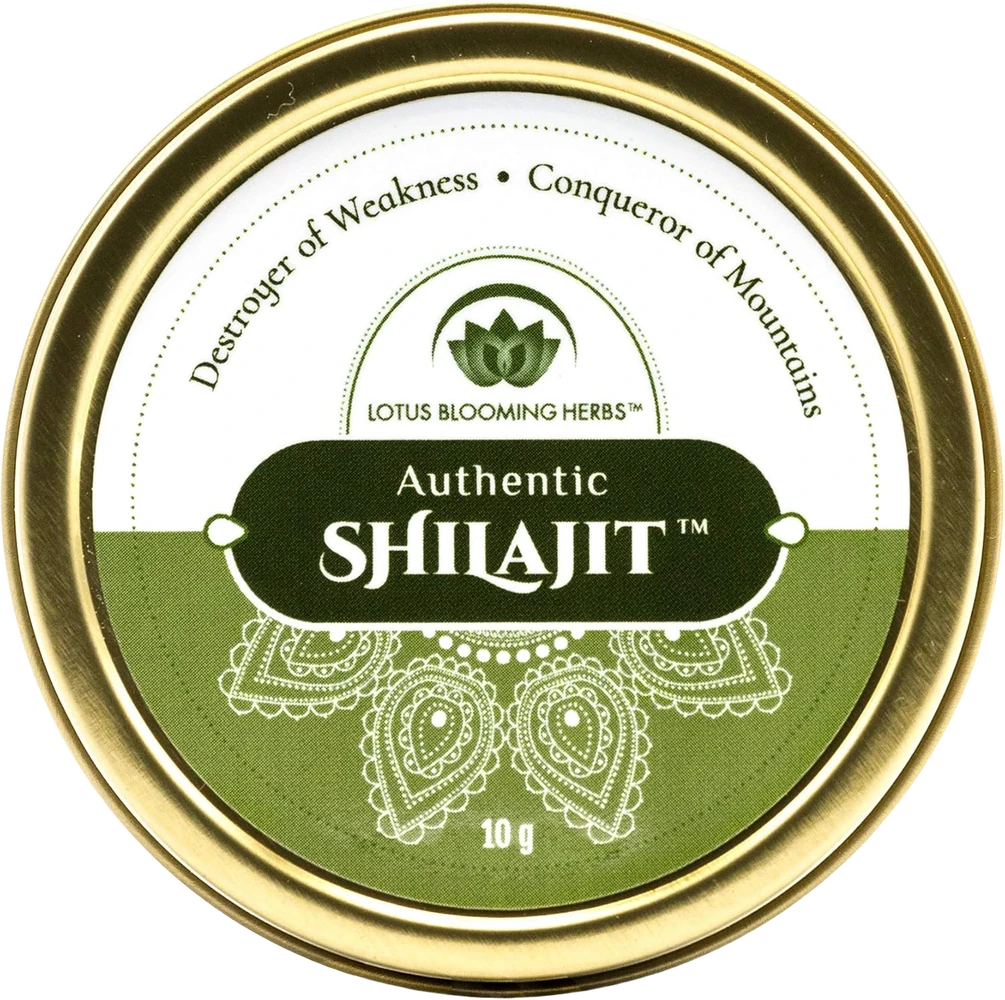 #2 of 9 · Most credible authentic resin✓ Label verified · Supplement Facts read Sep 7, 2026
Real retailer photo, cut out. Label unedited.
Buy it. The most credible authentic resin — strongest safety language in the lineup, at the steepest price. A gold-grade Himalayan resin from a heritage US brand with direct, no-middlemen sourcing and the most specific safety claim here: independent third-party, FDA-registered, cGMP lab testing 'for safety.' You pay the steepest per-gram price in the lineup (~$60 / 10 g), you dose pea-sized by eye, and there's no disclosed fulvic percentage.
$60 / 10 g jarPea-sized traditional dose; no mg standardization stated
Why It Scores 8.2 — And The Label Line Behind Each Number
Purity & source transparency
30% of scoreThe strongest sourcing story in the lineup: a heritage US brand that sources directly in the Himalayas with no middlemen, wild-crafts above 16,000 ft, and purifies traditionally to a gold grade. Origin is specific and consistent — no Himalayan-name-on-Siberian-resin contradiction like #5. Held just below a perfect mark only because the exact purification process isn't documented in detail on the listing.
- Source
- Personally sourced + purified in the Himalayas, no middlemen
- Heavy-metal panel
- Not published on the listing (no Pb/As/Hg/Cd/Tl numbers shown)
Form & dose honesty
25% of score100% pure full-spectrum resin — the unprocessed form purists prefer, with no fillers. The label does print a per-serving amount (100 mg, 100 servings per 10 g jar), which is more disclosure than we first credited it for. What's still missing is a fulvic-acid percentage, and in practice you dose it pea-sized by eye with no scale, so hitting that 100 mg exactly is guesswork even though the target number is honest and printed. Held below Double Wood's 9.5 because that pick discloses both a fulvic % and delivers its mg in a pre-measured capsule; this one discloses the mg but leaves execution to your eye.
- Form
- Pure traditional resin (gold-grade, wild-crafted above 16,000 ft)
- Per serving
- 100 mg (label-stated; 100 servings per 10 g jar), taken as a pea-sized portion by eye — no scale included
Safety & testing disclosure
20% of scoreThe best safety language here: independent third-party, FDA-registered, cGMP-certified US lab testing 'for safety' — more specific than the generic badges on rival listings. The reason it's an 8 and not higher: 'tested for safety' is still not a published heavy-metal panel with numbers, which is the one document this whole category refuses to show. Best-in-class for the lineup, capped by the category's universal gap.
- Testing
- Listing states independent third-party, FDA-registered, cGMP US lab 'tested for safety'
Value per month
15% of scoreAt about $60 for a 10 g jar, this is the steepest price per gram in the lineup. The premium buys authenticity, direct sourcing, and the strongest safety language here — not more grams. For an authenticity-first buyer it's defensible; on raw cost-per-dose it's the weakest axis, well behind the value capsules and resins.
- Jar
- 10 g
- Price
- ~$60 / 10 g jar — steepest per gram in the lineup
Real-world use
10% of scoreAuthentic resin is a genuine experience: you dissolve a sticky, tar-like, bitter portion in warm liquid daily. Purists love the ritual; newcomers may find it messy and the taste challenging. The light-on-precision dosing is the only knock. For someone who wants the real, full-spectrum form, the experience is part of the appeal.
- More Specs
- Fulvic %
- Not disclosed (cites fulvic acid, no number)
- Best for
- Authenticity-first buyers who want the real resin and the strongest safety language here
Label verified. Every figure read from the Supplement Facts photo, Sep 7, 2026.
Marketing Claims Vs. Reality
Independent third-party, FDA-registered, cGMP-certified US lab tested for safety.
The listing does state this, and it is the most specific safety language in our nine-product lineup — a genuine differentiator. We mark it PARTIAL rather than VERIFIED because 'tested for safety' is not the same as a published heavy-metal panel with numbers for lead, arsenic, mercury, cadmium, and thallium, and no such panel is shown. Strong language, but not the full document buyers ideally want.
Personally sourced and purified in the Himalayas with no middlemen, wild-crafted above 16,000 ft.
Consistent across the brand's long-standing listing and positioning; the origin story is specific (Himalayan, above 16,000 ft, direct sourcing) and does not contradict itself the way the 'Pure Himalayan Shilajit' (#4) Siberian-origin listing does. The direct, no-middlemen model is the credible basis for the brand's premium.
100% pure authentic resin — the traditional form.
This is unprocessed full-spectrum resin with no fillers, exactly as described — the form shilajit purists prefer. Accurate. The label does print a per-serving amount (100 mg), but not a fulvic percentage, and 'pure resin' still means pea-sized, by-eye dosing with no scale included.
Gold-grade shilajit.
'Gold grade' is the brand's own quality descriptor, not a regulated or independently certified standard, so we treat it as positioning rather than a verifiable spec. It's consistent with the premium sourcing and traditional purification described, but a buyer shouldn't read 'gold grade' as a third-party-certified purity tier.
What Our Test Actually Found
Correction: the label does print a per-serving mg
An earlier version of this review said the listing states no per-serving mg for this resin. The Supplement Facts panel reads Serving Size 100 mg, with Purified Himalayan Shilajit 100 mg per serving and 100 servings per 10 g jar. We re-read the label on Sep 7, 2026 and corrected the dose-honesty claims, specs, and score throughout this review. The fulvic-acid percentage is still genuinely not disclosed on this label — that part of the original review was accurate and is unchanged.
The safety language is the best in the lineup — and still not a metals panel
The single reason this resin earns #1 is that its listing says more about safety, more specifically, than any rival here: independent third-party, FDA-registered, cGMP-certified US lab testing for safety. In a category where most brands offer a vague 'third-party tested' or an in-house claim, that specificity is meaningful. But we hold the honest line: it is not a published heavy-metal panel. Given that a 2025 BMC Chemistry study found thallium up to ~0.5 µg/g in commercial shilajit — sometimes above the raw source — the document buyers really want is a Pb/As/Hg/Cd/Tl report with numbers, and that's the one thing no listing in this lineup, including this one, actually shows.
Direct, no-middlemen Himalayan sourcing is the credible basis for the premium
Lotus Blooming Herbs is one of the oldest authentic-shilajit brands in the US, and its model — sourcing and purifying directly in the Himalayas with no intermediaries, wild-crafting above 16,000 ft — is fundamentally more expensive and more traceable than buying bulk powder and capsuling it. That's why the jar costs what it does. Origin is specific and self-consistent, which is more than can be said for the 'Pure Himalayan Shilajit' (#4) listing whose own bullet places the resin in Siberia. For a buyer who cares where their shilajit actually comes from, the sourcing here is the strongest in the lineup.
It's the real, full-spectrum resin — which means imprecise dosing
This is unprocessed resin with no fillers: the authentic form purists prefer. The flip side is precision. The label does print a per-serving amount — 100 mg, 100 servings per 10 g jar — but no fulvic-acid percentage, and in practice 'pea-sized' is how you measure it at home with no scale, so that's still guesswork against the printed target. The human trials that found benefits used a measured 500 mg/day of a purified extract (Pandit 2016, Keller 2019). A pea-sized resin portion is roughly in that range, but you're estimating. If exactness matters to you, a capsule that delivers its mg pre-measured (Youtheory PrimaVie) or that also discloses fulvic percentage (Double Wood) is the more controllable choice.
The price is the honest weak point
At about $60 for 10 g, this is the most expensive shilajit per gram in our lineup. You are paying for authenticity, direct sourcing, and the strongest safety language here — not for more product. Compared with Double Wood capsules at roughly $0.17 a serving or a 30 g Pure Himalayan Shilajit resin jar at about $35, the value math is unfavorable. That's a deliberate trade: this is the premium-authenticity pick, and if cost-per-dose is your priority, it's not the one to buy.
Expect modest, gradual benefits — and dose for 90 days
Set expectations honestly. The testosterone evidence (Pandit 2016) is a single 90-day trial of about 75 men showing significant but modest rises in total and free testosterone and DHEAS at 500 mg/day of purified extract; the fatigue/strength evidence (Keller 2019) is one 8-week trial of 63 subjects. These are promising signals, not a deep evidence base, and they used purified extracts. Take a consistent pea-sized portion daily, give it the full 90 days the trial ran before judging, and treat any energy, testosterone, or recovery benefit as gradual — not dramatic.
Full analysis: all pros & cons (8), buy if / skip if
- Strongest safety language in the lineup — independent third-party, FDA-registered, cGMP US lab 'tested for safety'
- Heritage US brand with direct, no-middlemen Himalayan sourcing, wild-crafted above 16,000 ft
- 100% pure full-spectrum resin — no fillers, the authentic form purists prefer
- Specific, self-consistent origin story (no Himalayan-name-on-Siberian-resin contradiction)
- The most credible authentic-resin choice for buyers who want the real thing
- Steepest price per gram in the lineup (~$60 / 10 g)
- No disclosed fulvic percentage, and the printed 100 mg/serving still has to be eyeballed as a pea-sized portion — no scale included
- 'Tested for safety' is still not a published heavy-metal panel — none is shown
- You want authentic, traditionally purified Himalayan resin from a long-established brand
- You want the strongest safety language in the lineup (independent third-party, FDA-registered, cGMP 'tested for safety')
- You value direct, no-middlemen sourcing and the full-spectrum resin form over capsules
- You'll accept a premium price and pea-sized dosing for that authenticity
- You want the cheapest entry point — Double Wood capsules (#1) or Carlyle (#8) cost a fraction per dose
- You need a capsule that delivers its labeled dose with no eyeballing, or a disclosed fulvic percentage — Double Wood (#1) states 20% fulvic and its mg in a pre-measured capsule
- Your standard is a published lead/arsenic/mercury/thallium panel — no pick here, including this one, shows one
A gold-grade Himalayan resin from a heritage US brand with direct, no-middlemen sourcing and the most specific safety claim here: independent third-party, FDA-registered, cGMP lab testing 'for safety.' You pay the steepest per-gram price in the lineup (~$60 / 10 g), you dose pea-sized by eye, and there's no disclosed fulvic percentage. And the category caveat still holds — even this best-in-class listing stops short of a published heavy-metal panel. For an authenticity-first buyer who wants the strongest safety language available, it's the #1.
Lotus Blooming Herbs Authentic Shilajit wins our shilajit ranking the way you win a category whose central risk is invisible: by being the most credible and the most forthcoming. It's a gold-grade traditional resin from one of the oldest authentic-shilajit brands in the US, sourced directly in the Himalayas with no middlemen, wild-crafted above 16,000 ft, and purified the traditional way. Most important in a category defined by heavy-metal risk, its listing makes the strongest safety statement of any pick here: independent third-party, FDA-registered, cGMP-certified US lab testing for safety. That last point is also where we hold the line on honesty. 'Tested for safety' is more specific and more reassuring than the generic 'third-party tested' claims on rival listings — but it is still not a published heavy-metal panel with numbers for lead, arsenic, mercury, cadmium, and thallium, and Lotus Blooming Herbs doesn't show one. So this product earns #1 for being the most authentic and most transparent option available, not for proving it's clean — because in this lineup, no listing does. If you want the real thing and you'll pay for sourcing and the strongest safety language here, this is the resin. Here's the full breakdown.
The most credible authentic resin — buy it for sourcing and the strongest safety language, not for proof of purity.

Lotus Blooming Herbs is what we hand to a reader who wants real, authentic shilajit resin and wants the most reassuring listing available. It's a heritage US brand with direct, no-middlemen Himalayan sourcing, a gold-grade full-spectrum resin, and the most specific safety statement in our lineup — independent third-party, FDA-registered, cGMP lab testing for safety. On authenticity and transparency of sourcing, nothing else here beats it. Two honest limits keep this grounded. First, price: at about $60 for 10 g, it's the steepest per gram in the lineup, and pea-sized dosing with no disclosed fulvic percentage means you're estimating your dose. If you want exactness or value, Double Wood (#1) discloses 20% fulvic acid and the exact mg at a fraction of the cost. Second — and this is the rule for the entire category — even this best-in-class listing stops short of a published heavy-metal panel. So buy Lotus Blooming Herbs for what it genuinely is: the most authentic, best-sourced, most transparently-safety-worded resin here. Dose a pea-sized portion daily, give it 90 days, and if your standard is a numbers-on-paper metals report, ask the brand for one before you commit.
If This Doesn’t Fit — Try These
02Lotus Blooming Herbs
If you want the real thing — authentic, traditionally purified Himalayan resin from a brand that has been doing this longer than almost anyone in the US — Lotus Blooming Herbs is the pick.
 04
Pure Himalayan Resin
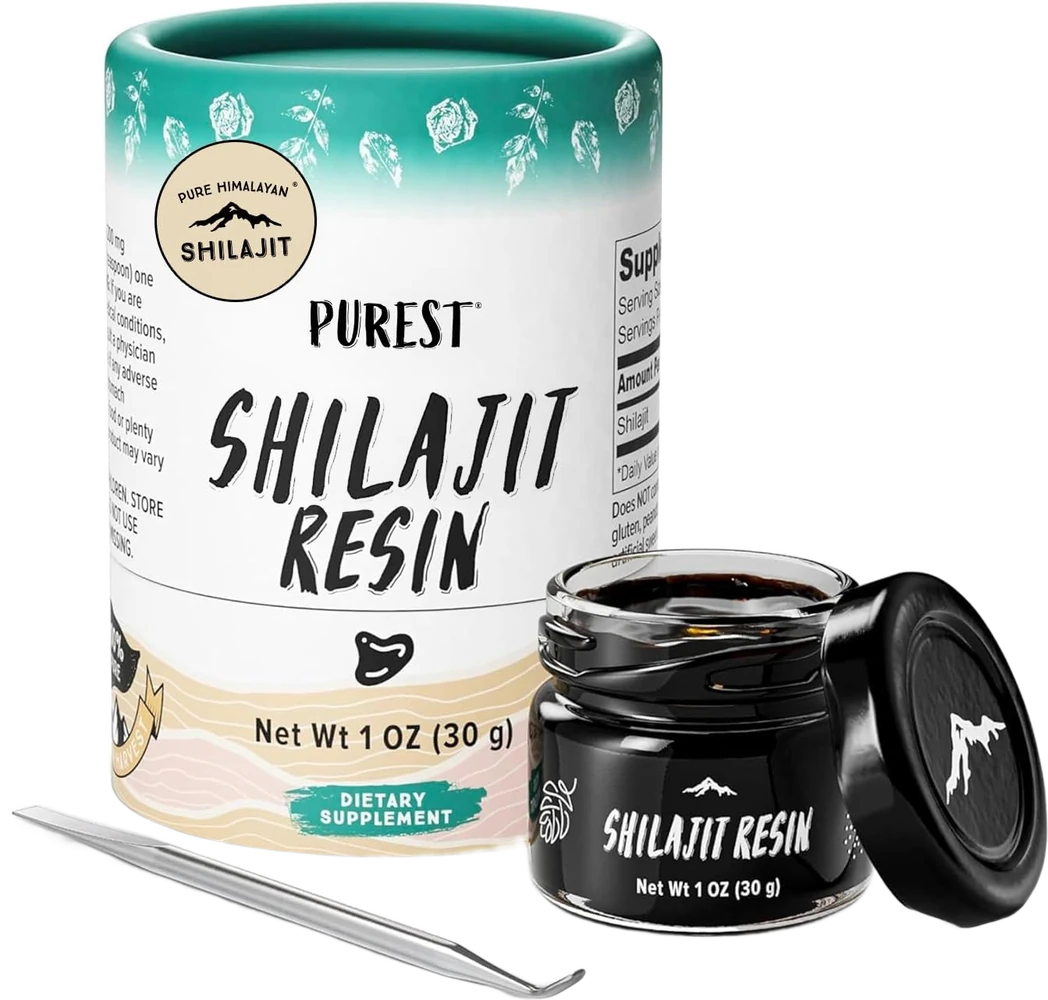
On pure economics, this is the resin value leader: a 30 g jar at 200 mg servings, a title that claims third-party US lab testing, non-chemical extraction, and a proper light-protected glass jar with a spoon — all for about $35.
 05
UPAKARMA Resin
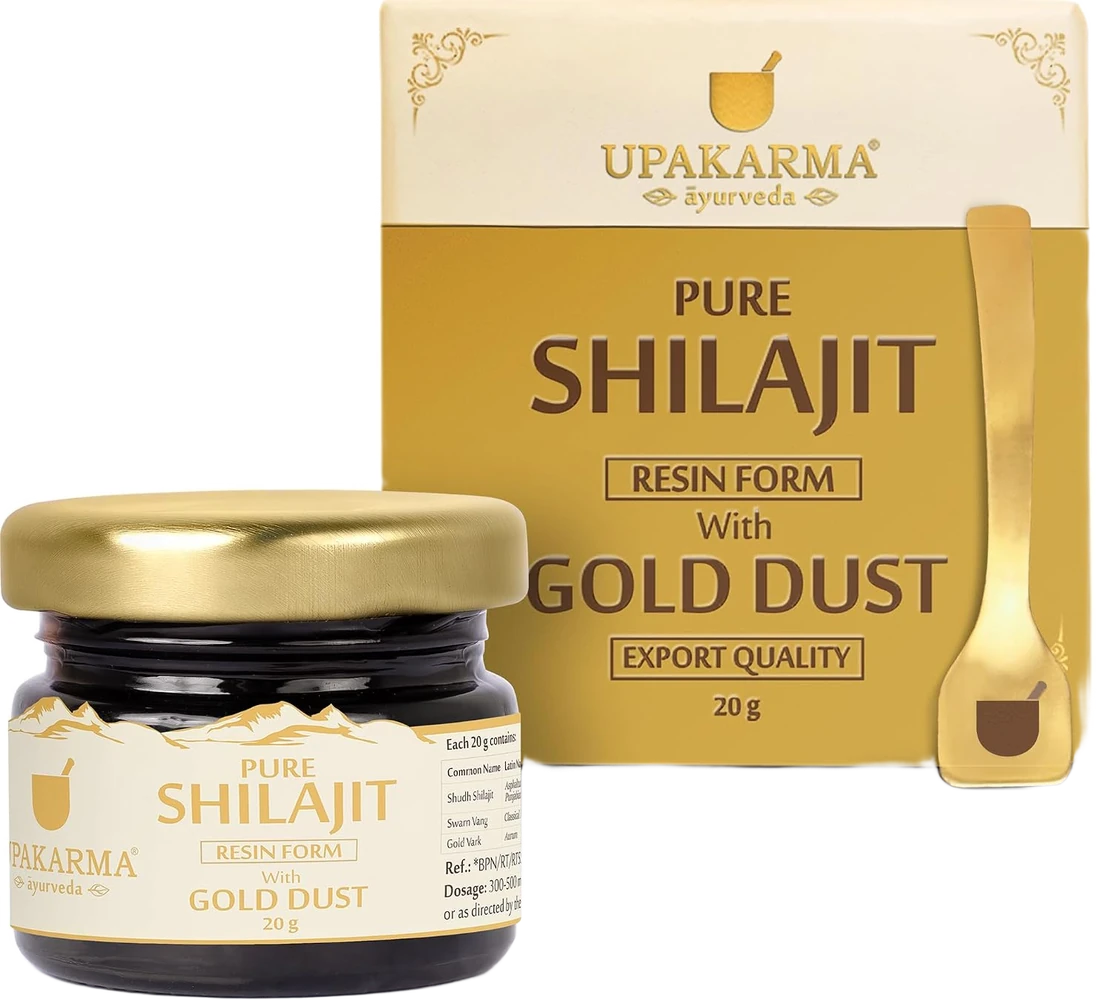
UPAKARMA is the most credible of the budget Ayurvedic resins: an Indian heritage brand whose listing actually names a third-party NABL-accredited lab-test report and Ayush approval, with the traditional 85+ minerals positioning and urolithin A called out, all for around $22.
Quick Answers
Is this shilajit actually tested for heavy metals?
Its listing makes the strongest safety statement in our nine-product lineup — independent third-party, FDA-registered, cGMP-certified US lab testing 'for safety' — but it does NOT publish an explicit heavy-metal panel with numbers for lead, arsenic, mercury, cadmium, or thallium. That distinction matters in this category: a 2025 BMC Chemistry analysis (PMID 39827344) found thallium up to ~0.5 µg/g in commercial shilajit, sometimes higher than the raw rock. Lotus Blooming Herbs' language is more specific and more reassuring than most rivals here, which is part of why it ranks #2 — but if your standard is a published Pb/As/Hg/Tl report you can read, ask the brand directly before buying.
Why is it so expensive compared to other shilajit?
You're paying for authentic resin and a short supply chain. Lotus Blooming Herbs is one of the oldest authentic-shilajit brands in the US and sources directly in the Himalayas with no middlemen, wild-crafting above 16,000 ft and purifying traditionally — that's a fundamentally more costly model than buying bulk powder and capsuling it. At about $60 for a 10 g jar, it's the steepest price per gram in our lineup. The trade is real-thing authenticity and the strongest safety language here versus the value capsules (Double Wood at ~$0.17/serving) and value resins (Pure Himalayan Shilajit at ~$35 for 30 g). If authenticity and sourcing are your priorities, the premium is defensible; if cost-per-dose is, it isn't the pick.
How do I actually take resin shilajit?
You dissolve a pea-sized portion in warm (not boiling) water, milk, or tea, once daily, ideally on a relatively empty stomach. Resin is sticky, tar-like, and bitter, so most people stir it into something with flavor. The label prints Serving Size 100 mg — Purified Himalayan Shilajit 100 mg per serving, 100 servings per 10 g jar — so the target dose is disclosed, but no fulvic-acid percentage is given, and you still have to eyeball a pea-sized portion at home since no scale is included, so hitting 100 mg exactly is guesswork even though the number is printed. The human trials that found benefits used a purified extract at 500 mg/day (Pandit 2016, Keller 2019) — a pea-sized resin portion is roughly in that ballpark but not measured. If you want exactness with zero eyeballing, a capsule like Youtheory PrimaVie or Double Wood is easier to dose.
Is resin better than capsules or gummies?
It's the most traditional and full-spectrum form, but 'better' depends on what you value. Resin like this is the unprocessed form purists prefer — nothing but purified shilajit, no fillers, no sweeteners. The cost is convenience and precision: it's messy, bitter, and dosed by eye. Capsules (Double Wood, Youtheory) are tasteless, effortless, and give you an exact mg. Gummies (Dorado) solve the taste problem but deliver a tiny 50 mg dose. For an authenticity-first buyer, resin wins; for a precision- or convenience-first buyer, it doesn't. None of those format choices changes the category's core rule: buy the most purified, most transparently-tested product you can.
Will this raise my testosterone?
The honest answer is 'possibly, modestly, on the current evidence — but don't expect a dramatic change.' The anchor human trial, Pandit 2016 (PMID 26395129), gave about 75 men aged 45-55 a purified shilajit extract at 500 mg/day for 90 days and saw significant rises in total testosterone, free testosterone, and DHEAS versus placebo, with LH and FSH maintained. That's a genuine, real signal — but it's a single trial of modest size, and it used a standardized purified extract, not a raw resin jar. Lotus Blooming Herbs is purified authentic resin dosed by eye, so the read-across is reasonable but not exact. Treat any testosterone benefit as plausible and gradual, give it the 90 days the trial ran, and don't buy it expecting TRT-like effects.
Sources & Further Reading
3 peer-reviewed sources, each linked to PubMed
- [1] Pandit 2016 PMID 26395129 — Clinical evaluation of purified Shilajit on testosterone levels in healthy volunteers. ~75 men aged 45-55, 90 days: purified shilajit 500 mg/day significantly increased total testosterone, free testosterone, and DHEAS versus placebo, with LH/FSH maintained. The anchor human testosterone trial — and it used a PURIFIED extract, supporting the 'buy purified' standard this authentic resin is sold on.
- [2] Stohs 2014 PMID 23733436 — Safety and efficacy of shilajit (mumie, moomiyo). Review concluding purified shilajit can be used safely in clinical research (e.g., 500 mg/day for 56 days), with dibenzo-α-pyrones and fulvic acid as the key actives. The basis for treating purification — exactly what this brand emphasizes — as the precondition for safe use.
- [3] Kamgar 2025 PMID 39827344 — Quantifying of thallium in Shilajit and its supplements to unveil the potential risk of consumption of this popular traditional medicine. Detected thallium up to ~0.5 µg/g in commercial shilajit supplements — sometimes higher than the raw source. Why a published heavy-metal panel is the document buyers should want, and why even this listing's strong 'tested for safety' language is marked partial without one.
Affiliate disclosure: every Amazon link uses our Associates tag (superachieverclub-20). We earn a small commission at no cost to you; it funds independent reviews. We never accept payment to change a ranking.