Bee Pollen & Royal Jelly: Benefits, Dosage & Side Effects (2026)
Bee products — bee pollen, royal jelly, propolis and fermented bee bread — are nutrient-dense hive-derived whole-foods used for energy, immune support and vitality; human clinical evidence is limited and they carry a real allergy risk.
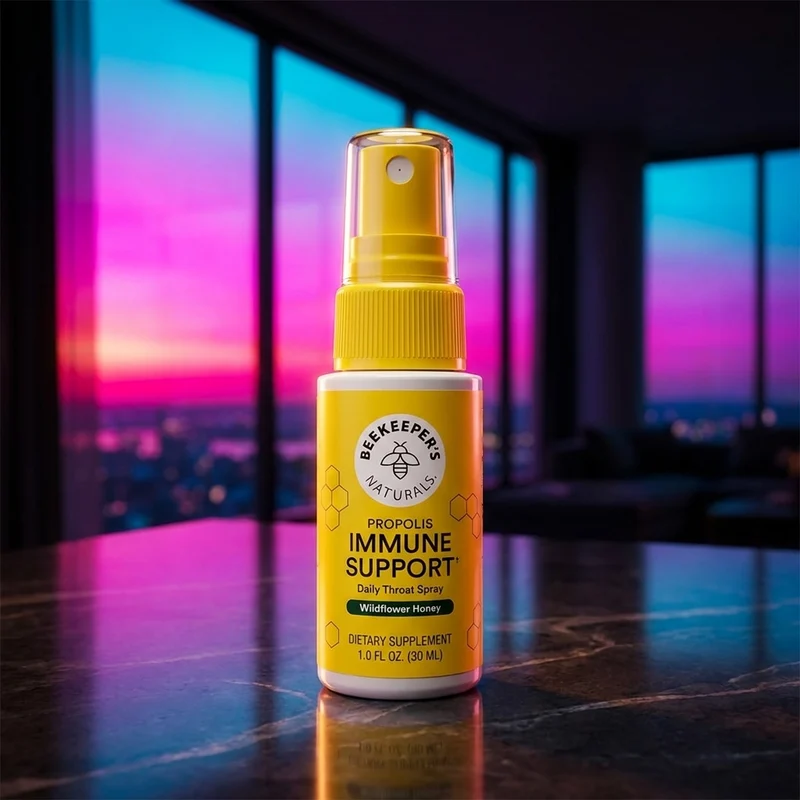
Beekeeper's Naturals Propolis Throat Spray
What is Bee Pollen & Royal Jelly?
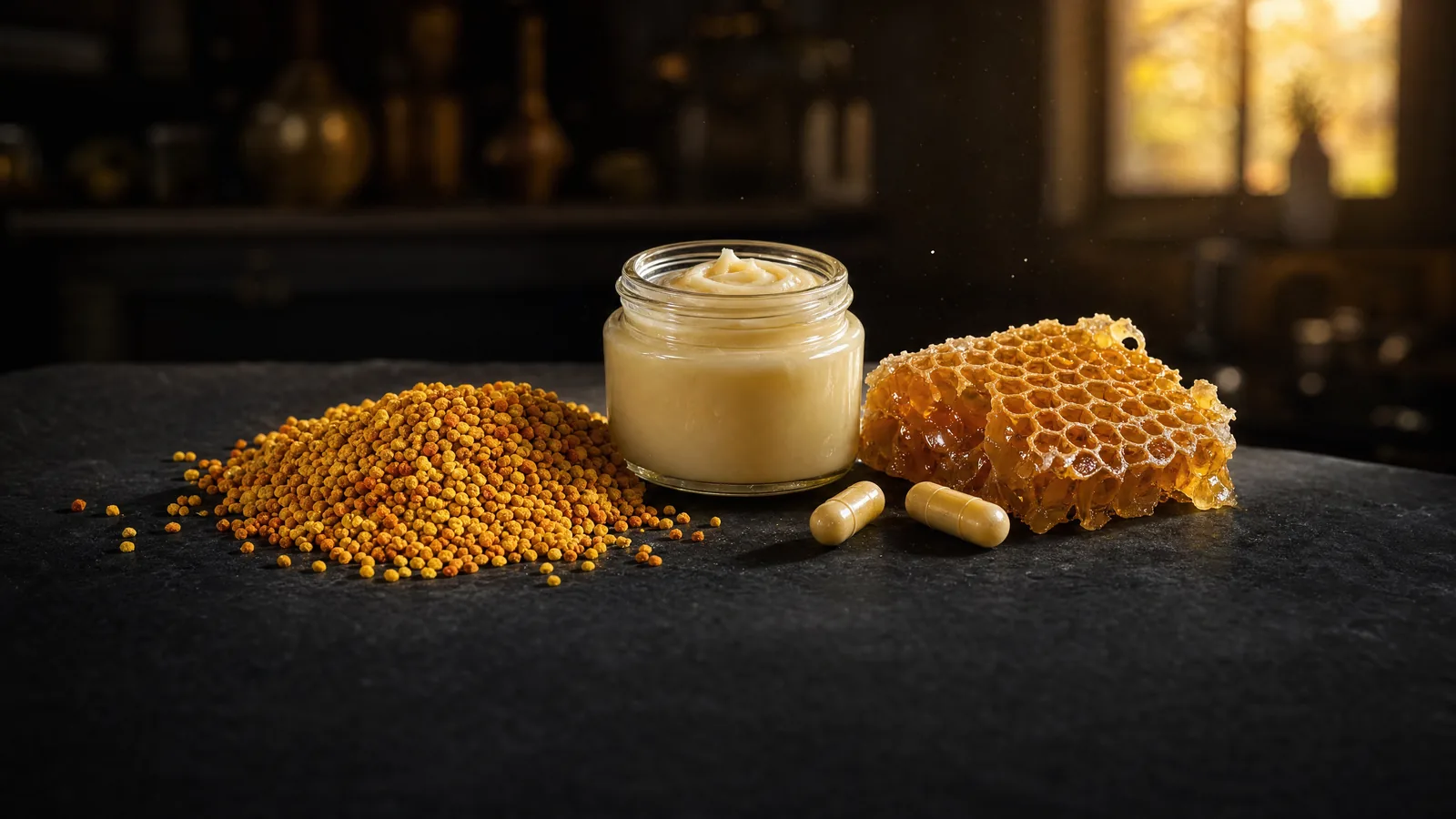
"Bee products" is a single shelf label covering four genuinely different hive-derived ingredients, and telling them apart is the first thing any buyer needs to do. BEE POLLEN is flower pollen that foraging bees pack into granules with a little nectar and saliva — a dense whole-food matrix of protein and free amino acids, B-vitamins, polyphenols and flavonoids, carotenoids, phytosterols, and enzymes (Komosinska-Vassev 2015). It's taken as a natural-energy and whole-food-multivitamin supplement. ROYAL JELLY is the milky glandular secretion worker bees feed to queen larvae; its signature, near-unique marker is 10-HDA (10-hydroxy-2-decenoic acid), a fatty acid found essentially only in royal jelly (Šedivá 2018), and the number a serious royal-jelly buyer should look for. PROPOLIS is the resin bees gather from tree buds and use to seal and sterilise the hive — rich in flavonoids and phenolic acids, and traditionally used for the throat and immune support. BEE BREAD ("perga") is bee pollen that has been packed into comb cells and lactic-fermented; the fermentation makes its nutrients more digestible and bioavailable than raw pollen, and concentrated bee bread is what's sold as a branded "bee pearl."
What unites them is that they are whole-food concentrates, not isolated actives — their value is the intact natural material, which is why purists prize raw, low-heat, and (for royal jelly) genuinely fresh, refrigerated product over heavily processed powder. What also unites them is variability and allergenicity: because bees forage real plants in real environments, the composition of pollen and propolis varies widely by floral source, region and season (Denisow 2016), and every one of these products is a recognised bee/pollen allergen.
The honest framing this hub keeps coming back to: bee products are a reasonable, nutrient-dense addition for people who tolerate them and like a whole-food hive supplement — but they are not proven medicine. The popular energy, immunity and anti-aging claims are mostly traditional or supported only by small, preliminary, or laboratory studies, with a few genuinely encouraging but narrow human results that we cite below rather than over-sell.
How it works
Each of the four works by a different mechanism, and the evidence quality differs sharply between them.
BEE POLLEN works simply by supplying nutrients: it's a concentrated whole-food source of amino acids, B-vitamins, antioxidants (polyphenols, flavonoids, carotenoids) and sterols (Komosinska-Vassev 2015). The plausible basis for the "natural energy" reputation is nutritional repletion plus antioxidant content, and laboratory work shows antioxidant, anti-inflammatory and antimicrobial activity (Denisow 2016) — but those are largely in-vitro and preliminary findings, not demonstrated clinical outcomes in healthy people.
ROYAL JELLY centres on 10-HDA and a set of unique proteins and lipids. 10-HDA has documented antibacterial activity in the lab (Šedivá 2018), and royal jelly has been studied for antioxidant and skin effects. The best controlled human data is narrow: a meta-analysis of randomized trials found royal jelly significantly lowered malondialdehyde (an oxidative-stress marker) and raised total antioxidant capacity, while NOT significantly changing the inflammation marker hs-CRP (Taheri 2025); and a double-blind RCT examined oral royal jelly's effect on skin-barrier function (Nakashima 2018). So royal jelly has real, if limited, RCT signal on oxidative-stress markers and skin — not on the broad "vitality" claims it's usually sold on.
PROPOLIS has the strongest human evidence of the four, and it's topical/oral. Its flavonoids and phenolics are antioxidant and antimicrobial, and in clinical use propolis MOUTHWASH significantly reduced cancer-therapy-induced oral mucositis in a randomized double-blind trial (Dastan 2020) and across a meta-analysis of five RCTs (Kuo 2018). That's why a propolis throat/oral format is the most evidence-backed way to use a bee product.
BEE BREAD works like pollen but pre-digested: lactic fermentation in the comb breaks down the tough pollen wall, improving digestibility and nutrient availability versus raw granules — a mechanistic advantage, though large human trials are lacking.
Across all four, the unifying caveat is that mechanism and lab activity outrun the clinical proof, so we treat these as nutrient-dense whole-foods with promising but unproven systemic benefits.
At-a-glance facts
- Four products, four jobs
- Pollen (whole-food nutrients) · Royal jelly (10-HDA 'queen food') · Propolis (throat/immune) · Bee bread (fermented, digestible pollen)
- Royal jelly marker
- 10-HDA (10-hydroxy-2-decenoic acid) — near-unique to royal jelly; only some brands disclose the %
- Best human evidence
- Propolis mouthwash for oral mucositis (RCTs + meta-analysis); royal jelly for oxidative-stress markers + skin
- Typical pollen dose
- ~½–1 tsp (~5 g) granules or 500 mg capsules; start small and build up
- Typical royal-jelly dose
- ~¼ tsp fresh, or 1,000 mg dragee (~21 mg 10-HDA equivalent in trials)
- Allergy risk
- HIGH for sensitive people — all are bee/pollen allergens; royal jelly can cause anaphylaxis. Spot-test first
- Freshness matters
- Raw/low-heat granules and refrigerated fresh royal jelly preserve heat-sensitive bioactives
- Cost range (US)
- $11–30 depending on type (bulk pollen cheapest per gram; fresh royal jelly + extracts priciest per serving)
Evidence: Limited human evidence overall. The strongest controlled data is for propolis MOUTHWASH reducing oral mucositis (Dastan 2020, PMID 33100913; Kuo 2018 meta-analysis, PMID 30022350). Royal jelly has narrow RCT signal on oxidative-stress markers (Taheri 2025, PMID 40656618) and skin barrier (Nakashima 2018, PMID 30396869). Bee pollen's composition is well-characterised (Komosinska-Vassev 2015, PMID 25861358) but its energy/immune benefits remain largely preliminary. The popular vitality claims are mostly traditional, not proven.
Who it's for — and who it isn't
- People who like the idea of a whole-food, hive-derived supplement and tolerate bee products — pollen and bee bread are dense natural micronutrient sources
- Anyone wanting a propolis throat/oral product for immune-season support — propolis-in-the-mouth has the most credible human evidence (mucositis RCTs)
- Royal-jelly seekers who want the 10-HDA-bearing 'queen food' and will buy on a disclosed 10-HDA figure and genuine freshness
- Smoothie/yogurt users who want to add raw bee-pollen granules as a whole-food topping for amino acids, B-vitamins and antioxidants
- People who prefer fermented bee bread (perga) for easier digestion and better nutrient availability than raw pollen
- ANYONE with a bee, bee-sting, or pollen allergy — and especially anyone with asthma or a history of severe allergic reactions: royal jelly in particular can cause serious reactions including anaphylaxis
- People expecting a proven energy, immunity or anti-aging 'treatment' — the strong claims are largely traditional/preliminary, not backed by large human trials
- Pregnant or breastfeeding women and infants (no honey/bee products under 1 year) without a clinician's sign-off
- Anyone wanting a precisely-standardised active — these are variable whole-foods whose potency shifts with floral source and season
Week-by-week, what happens
- Day 1 (before anything)Spot-test: take a tiny amount (a few granules / one drop of royal jelly under the tongue) and wait 24–48h for any allergic reaction. Stop immediately if you react.
- Week 1-2Begin a small daily dose and build up gradually. Pollen/bee-bread users may notice it mainly as a food/energy ritual; propolis-throat users use it acutely as needed.
- Week 3-6If using for general antioxidant/vitality support, this is the window any subjective benefit would settle in — keep expectations modest, as systemic effects are not strongly proven.
- OngoingRoyal jelly's measured antioxidant-marker effects (MDA↓, TAC↑) accrue with continued use in trials; propolis-throat benefit is acute/situational, not cumulative.
Safety & contraindications
- ALLERGY IS THE PRIMARY RISK. Every bee product here — pollen, royal jelly, propolis, bee bread — is a recognised allergen. Royal jelly especially can trigger serious reactions, including asthma exacerbation and anaphylaxis, and is documented to cause severe reactions even in people without a prior bee allergy. Spot-test a tiny amount first and stop at any sign of itching, swelling, wheeze or hives.
- Do NOT use if you have asthma or a history of severe allergic reactions, without explicit medical advice — royal jelly is specifically contraindicated for these groups.
- Avoid in pregnancy and breastfeeding without a clinician's sign-off; never give honey or bee products to infants under 12 months.
- Potency is inherently variable — pollen and propolis composition shifts with floral source, region and season (Denisow 2016), so effects and tolerability can differ batch to batch.
- Contamination matters: bees concentrate environmental residues, so choose products that are third-party tested for pesticides and contaminants.
- These are nutrient-dense whole-foods, not proven treatments — do not use them in place of evidence-based care for any medical condition, and treat the energy/immunity/anti-aging claims as unverified.
All articles on Bee Pollen & Royal Jelly
Best Bee Pollen & Royal Jelly Supplements
The 8 best bee pollen, royal jelly and propolis supplements ranked by source purity, active content (10-HDA, propolis), testing and value — with a mandatory bee-allergy caveat and honest 'mostly traditional evidence' framing.
Read →BEE&YOU Royal Jelly + Propolis + Bee Pollen Tablets Review
The transparent three-in-one that actually publishes a 10-HDA figure.
Read →Beekeeper's Naturals Propolis Throat Spray Review
The most trustworthy bee product to start with — clean, tested, evidence-aligned.
Read →Greenbow Organic Fresh Royal Jelly Review
The purest, freshest royal jelly — for those who tolerate it.
Read →NOW Foods Bee Pollen Caps, 500 mg Review
The cheap, convenient, trustworthy way into bee pollen.
Read →NOW Foods Propolis 1,500 mg Review
The concentrated daily propolis capsule, at strong value.
Read →Stakich Bee Pollen Granules Review
The bulk-value raw granule for heavy daily pollen users.
Read →Super Achiever Bee Pearl (Bee Bread, Propolis, Royal Jelly) Review
Our own bee-product blend, scored like every other pick: three hive products with each amount printed, held back by price and by missing test data.
Read →Y.S. Eco Bee Farms Fresh Bee Pollen Whole Granules Review
The raw, whole-food granule pick for pollen purists.
Read →FAQ
Bee pollen vs royal jelly vs propolis vs bee bread — which do I buy?
They're four different products. BEE POLLEN is flower pollen in granules — a whole-food source of amino acids, B-vitamins and antioxidants, taken for natural energy and as a food-based multivitamin. ROYAL JELLY is the 'queen food,' notable for 10-HDA, used for vitality and with some RCT signal on oxidative-stress markers and skin. PROPOLIS is hive resin, flavonoid-rich, best for throat/immune use — and it has the strongest human evidence (mouthwash cut oral mucositis in trials). BEE BREAD (perga) is fermented pollen, more digestible than raw pollen. If you want the most evidence-backed, easiest option, start with a propolis throat product; if you want a whole-food nutrient top-up, bee pollen; if you specifically want royal jelly, buy on a disclosed 10-HDA figure and genuine freshness.
What is 10-HDA and why does it matter?
10-HDA (10-hydroxy-2-decenoic acid) is a fatty acid found almost exclusively in royal jelly — it's effectively royal jelly's signature marker, and it has documented antibacterial activity in the lab (Šedivá 2018, PMID 30544571). Because it's near-unique to royal jelly, a disclosed 10-HDA percentage is the most meaningful potency indicator for a royal-jelly product. The catch: only some brands actually publish a number (for example, BEE&YOU states >4% 10-HDA in its royal jelly), while many — including some excellent fresh royal jellies — don't disclose it at all. We never invent the figure; where a brand doesn't state it, treat its 10-HDA strength as unverified.
Do bee products actually give you energy or boost immunity?
Be skeptical of the strong claims. The energy, immunity and 'vitality' marketing around bee products is mostly traditional use or based on small, preliminary, or test-tube studies — not large human trials. What IS reasonably supported is narrow: propolis mouthwash significantly reduced oral mucositis in randomized trials and a meta-analysis (Dastan 2020; Kuo 2018), and royal jelly modestly improved oxidative-stress markers (lower MDA, higher antioxidant capacity) in a meta-analysis of RCTs, without significantly changing the inflammation marker hs-CRP (Taheri 2025). Bee pollen's nutrient density is well-documented (Komosinska-Vassev 2015), which gives a plausible basis for an energy 'top-up,' but a proven energy effect in healthy people hasn't been established. Treat bee products as a nutrient-dense whole-food you might enjoy, not as proven medicine.
Are bee products safe? What's the allergy risk?
The allergy risk is real and is the main safety issue. All of these are bee- and pollen-derived allergens, and royal jelly in particular can cause serious reactions — including asthma flare-ups and, rarely, anaphylaxis — sometimes even in people without a known bee allergy. Anyone with asthma or a history of severe allergic reactions should avoid royal jelly unless a doctor says otherwise. For everyone, the rule is the same: spot-test a tiny amount first (a few pollen granules or one drop of royal jelly under the tongue), wait 24–48 hours, and stop immediately at any sign of itching, swelling, wheezing or hives. Also avoid in pregnancy/breastfeeding without medical advice, and never give bee products to infants under one year.
Raw granules, capsules, or fresh — does the form matter?
Yes, mainly for freshness and convenience. For bee pollen, raw low-moisture or never-heated granules preserve the heat-sensitive nutrients purists care about, but they taste strongly floral and want refrigeration; capsules trade a little 'rawness' for no taste and easy travel. For royal jelly, genuinely FRESH (refrigerated) product is more bioactive than freeze-dried powder that's been reconstituted — freshness is the main quality lever there. For propolis, a throat spray is the evidence-aligned format for the mouth/throat, while a concentrated capsule delivers a larger daily propolis dose to swallow. Bee bread (perga) comes fermented and is naturally more digestible than raw pollen. Pick the form by your priority: maximum rawness/freshness (granules, fresh royal jelly) vs convenience (capsules) vs throat use (propolis spray).
Sources & further reading
- Komosinska-Vassev 2015 (bee pollen composition)Bee pollen: chemical composition and therapeutic application
Comprehensive review of bee pollen's composition — proteins/amino acids, B-vitamins, polyphenols and flavonoids, carotenoids, phytosterols and enzymes — documenting the whole-food micronutrient matrix behind bee pollen's use, while framing therapeutic applications as still preliminary.
- Denisow 2016 (bee pollen activity + variability)Biological and therapeutic properties of bee pollen: a review
Reviews bee pollen's antioxidant, anti-inflammatory and antimicrobial activities and underscores the key practical caveat: composition and biological activity vary widely with floral source and season, so potency is inherently batch-variable.
- Nakashima 2018 (royal jelly, skin RCT)The effect of oral royal jelly administration on skin barrier function: a double-blind randomized placebo-controlled trial
A double-blind, placebo-controlled RCT of oral royal jelly on skin-barrier endpoints — one of the few controlled human royal-jelly trials. Cited as honest, narrow evidence: real RCT signal exists for specific endpoints, not for broad energy/immunity claims.
- Taheri 2025 (royal jelly meta-analysis)Effects of royal jelly consumption on inflammation and oxidative stress: a systematic review and meta-analysis of randomized controlled trials
Meta-analysis of 7 datasets from 6 RCTs: royal jelly significantly reduced malondialdehyde and increased total antioxidant capacity, but did not significantly change hs-CRP. The authors note the small trial base — the measured, limited royal-jelly claim this hub makes.
- Dastan 2020 (propolis mucositis RCT)Efficacy and safety of propolis mouthwash in management of radiotherapy induced oral mucositis; a randomized, double blind clinical trial
Randomized, double-blind, placebo-controlled trial: propolis mouthwash significantly reduced oral-mucositis severity in head-and-neck radiotherapy patients, with no serious adverse effects — the strongest controlled human evidence for any bee product, and for propolis applied in the mouth/throat.
- Kuo 2018 (propolis mucositis meta-analysis)Meta-analysis of randomized controlled trials of the efficacy of propolis mouthwash in cancer therapy-induced oral mucositis
Pooling 5 RCTs (209 participants), propolis mouthwash significantly lowered the incidence of severe oral mucositis versus control (OR 0.35, p=0.003) — meta-analytic corroboration that propolis-in-the-mouth is the one bee-product use with replicated controlled support.
- Šedivá 2018 (10-HDA characterisation)10-HDA, a major fatty acid of royal jelly, exhibits pH dependent growth-inhibitory activity against different strains of Paenibacillus larvae
Identifies 10-HDA (10-hydroxy-2-decenoic acid) as the major fatty acid near-unique to royal jelly and characterises its antibacterial activity in vitro — the basis for treating a disclosed 10-HDA % as royal jelly's meaningful marker, while noting this is laboratory, not clinical, evidence.