
Beekeeper's Naturals Propolis Throat Spray Review
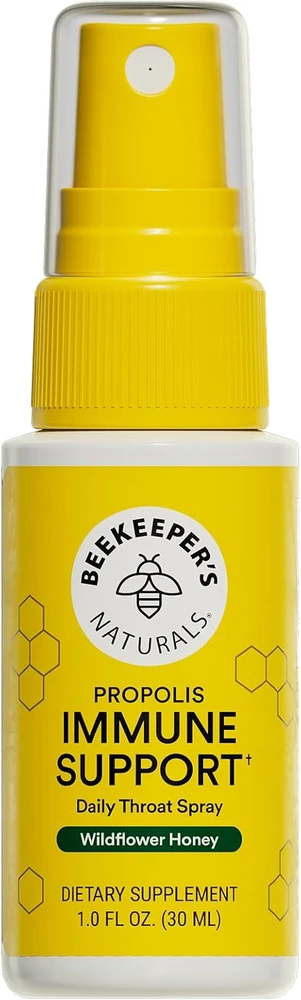 #1 of 8 · Best overall✓ Label verified · Supplement Facts read Sep 7, 2026
Real retailer photo, cut out. Label unedited.
Buy it. The most trustworthy bee product to start with — clean, tested, evidence-aligned. A 95% bee propolis extract, alcohol-free on a honey base, third-party tested for pesticides, ~85 mg propolis per 4-spray serving, ~60 servings for about $14.
$14 / 1.0 oz (~60 servings)~$0.23 / 4-spray serving (85 mg propolis)
Why It Scores 9.5 — And The Label Line Behind Each Number
Source purity & freshness
30% of scoreA 95% bee propolis extract on a honey base, with no alcohol, no refined sugar, and gluten-free — a clean, high-percentage source by category standards. Loses only a fraction because propolis composition is inherently variable by hive/region, but the formulation itself is about as clean as propolis gets.
Active content (propolis)
25% of scoreTransparent 95%-extract claim and an honest stated dose of 85 mg propolis per 4-spray serving — well above the vague 'rich in propolis' norm. Held just short of the top only because the exact flavonoid percentage (propolis's active fraction) is described qualitatively, not given as a guaranteed number.
Testing & label transparency
20% of scoreThird-party lab tested for pesticide residue and contaminants — the single trust axis bee products most often fail, since bees concentrate environmental residues. Combined with a clear 95% claim and honest per-serving dosing, this is best-in-class transparency for the category.
- Testing
- Third-party tested for pesticide residue + contaminants
Value per serving
15% of scoreRoughly $0.23 per 4-spray serving — about 60 servings for $14. Excellent value for a clean, tested propolis extract, and cheap enough to use through an immune season without thinking about cost.
- Per serving
- 85 mg propolis (4 sprays)
- Count
- 1.0 oz / ~60 servings
- Price
- $14 / 1.0 oz = ~$0.23 per 4-spray serving
Real-world use & tolerance
10% of scoreA convenient, travel-friendly spray that delivers propolis exactly where its evidence is strongest (the throat), alcohol-free so it doesn't sting, on a honey base that tastes fine. The only deduction is the universal bee-allergy caveat, which demands a spot-test.
- Form
- Liquid throat spray — alcohol-free, honey base
- More Specs
- Type
- Propolis (95% bee propolis extract)
- 10-HDA
- N/A — 10-HDA is a royal-jelly marker, not a propolis one
- Free from
- Alcohol, refined sugar, gluten
- Best for
- Throat / immune-season use — propolis's best-evidenced application
Label verified. Every figure read from the Supplement Facts photo, Sep 7, 2026.
Marketing Claims Vs. Reality
95% bee propolis extract.
A transparent, high-percentage standardisation claim that's consistent with the product's positioning and label, on an alcohol-free honey base. This is a clean, high-strength propolis source — and the disclosed percentage is itself unusual transparency for the category.
Third-party tested for pesticides and contaminants.
The product is independently lab-tested for pesticide residue and chemicals — the trust axis bee products most often skip, since bees concentrate environmental residues. This is a genuine differentiator and a real reason it ranks #1.
Soothes and supports the throat / immune system.
Strong specifically for the throat/oral use: propolis mouthwash significantly reduced oral mucositis in RCTs and a meta-analysis (Dastan 2020, PMID 33100913; Kuo 2018, PMID 30022350). The broader everyday 'immune support' claim is plausible but largely traditional — honest for throat use, over-broad if read as proven systemic immunity.
Alcohol-free, no refined sugar, gluten-free.
Formulated on a honey base with no alcohol or refined sugar, and gluten-free — a real advantage over typical alcohol-based propolis tinctures for frequent, gentle throat use.
Rich in beneficial flavonoids and polyphenols.
Propolis genuinely is a flavonoid- and phenolic-rich material, and those compounds are antioxidant/antimicrobial in the lab. But this product describes the flavonoid content qualitatively rather than giving a guaranteed mg or %, so 'rich in flavonoids' is directionally true but not numerically verifiable here.
What Our Test Actually Found
It wins on the two things you can actually verify — cleanliness and testing
Most bee products ask you to trust an adjective. This one gives you a transparent 95%-extract claim, an honest 85 mg-per-serving dose, and — crucially — third-party testing for pesticide residue. Because bees concentrate whatever is in their foraging environment, contaminant testing is the single most important trust signal in this category, and very few products provide it. That's the core reason this earns the top slot ahead of louder 'energy' pollens: it's verifiable.
The format matches the evidence — propolis belongs in the throat
The strongest human data for any bee product is propolis applied in the mouth and throat: propolis mouthwash significantly reduced oral mucositis in a randomized double-blind trial (Dastan 2020) and across a five-RCT meta-analysis (Kuo 2018). A throat spray puts propolis exactly where that evidence sits, with direct local contact. It's a rare case of a supplement's delivery format lining up with its best science rather than fighting it.
A modest dose — by design, not by accident
At 85 mg propolis per 4-spray serving, this delivers far less propolis than a concentrated capsule. For throat/oral use that's appropriate — you're after local contact, not a big systemic load. But if your goal is a large daily propolis dose for systemic flavonoid intake, this spray isn't the most efficient way to get it; NOW Propolis 1,500 mg (#3) is. Match the format to your goal: spray for the throat, capsule for a big swallowed dose.
Alcohol-free is a real, underrated advantage
Plenty of propolis comes as an alcohol tincture, which stings an irritated throat and isn't suitable for everyone. This is honey-based, alcohol-free, sugar-free and gluten-free, which makes it genuinely pleasant to use repeatedly through an immune season and broadens who can take it comfortably. It's the kind of formulation detail that doesn't show up in marketing claims but matters in daily use.
Honest limits: it's an allergen, and it's not an 'energy' product
Two things keep this grounded. First, it's a bee/pollen allergen — propolis can trigger reactions in sensitive people, so a spot-test before regular use is mandatory and anyone with asthma or severe-allergy history should check with a doctor. Second, despite the 'immune' positioning, propolis isn't a proven energy or systemic-immunity booster; its solid evidence is the throat/mucositis use. Buy it for what it actually does well, not for the broad vitality halo.
Full analysis: all pros & cons (8), buy if / skip if
- Transparent 95% bee propolis extract on a clean, alcohol-free, sugar-free honey base
- Third-party tested for pesticide residue + contaminants — the trust axis bee products usually skip
- Format matches the evidence: propolis-in-the-throat reduced oral mucositis in RCTs + a meta-analysis
- Excellent value (~$0.23/serving, ~60 servings/$14) and travel-friendly
- Alcohol-free spray is gentle for frequent throat use — better than typical tinctures
- Bee/pollen allergen — can trigger reactions; spot-test first and avoid with asthma/severe-allergy history without medical advice
- Modest 85 mg propolis dose vs a concentrated capsule (#3) for systemic intake
- Flavonoid content described qualitatively, not given as a guaranteed mg/%
- You want one trustworthy, easy-to-use bee product and don't want to overthink it
- You want propolis for the throat / immune season — the use with the most credible human evidence
- You value third-party pesticide testing and a transparent 95%-extract claim
- You prefer an alcohol-free, honey-based spray over a harsh alcohol tincture
- You have a bee, bee-sting, or pollen allergy — especially asthma or severe-reaction history (check with a doctor first)
- You want a large daily propolis dose to swallow — a concentrated capsule (#3) delivers more per serving
- You're buying for a proven energy/vitality effect — that's not what propolis (or any bee product) reliably does
A 95% bee propolis extract, alcohol-free on a honey base, third-party tested for pesticides, ~85 mg propolis per 4-spray serving, ~60 servings for about $14. It's the rare bee product where the format matches the evidence — propolis-in-the-throat reduced oral mucositis in RCTs and a meta-analysis. It won't out-dose a concentrated propolis capsule, the flavonoid % isn't disclosed, and it's a bee/pollen allergen (spot-test first). But for a clean, well-tested, easy first bee product, this is the pick.
Beekeeper's Naturals Propolis Throat Spray is the bee product we'd hand to most people first — not because of any hype, but because it's the rare one where the claims are verifiable. It's a clean, alcohol-free 95% propolis extract on a honey base, third-party tested for the pesticide residue that bee products so often carry, and it happens to be the one format whose underlying ingredient has the strongest human evidence: propolis applied in the mouth and throat. That evidence is specific and real — propolis mouthwash reduced oral mucositis in randomized controlled trials — and it's why a propolis throat product earns the top slot over louder 'energy' and 'vitality' pollens. Two honest limits keep this grounded: it's a bee/pollen allergen like everything in this category, so spot-test before regular use; and the broader everyday-immunity claims remain traditional rather than proven. As a trustworthy, transparently-labelled, easy-to-use entry to bee products, though, this is the bottle. Here's the full breakdown.
The best bee product to start with — buy it for the throat, spot-test first.

Beekeeper's Naturals Propolis Throat Spray earns the top slot by being the rare bee product where what's on the label is verifiable: a clean 95% propolis extract, third-party tested for pesticides, in the one format whose underlying ingredient has replicated human evidence — propolis applied in the mouth and throat, where mouthwash trials reduced oral mucositis. For a trustworthy, transparently-labelled, easy first bee product, this is the bottle. Keep two limits in mind. It's a bee/pollen allergen, so spot-test a single spray and wait 24–48 hours before regular use, and anyone with asthma or a history of severe allergic reactions should check with a doctor first. And it's a throat/immune product, not a proven energy or systemic-immunity booster — its real strength is the local, oral use. If you want a larger daily propolis dose to swallow, look at NOW Propolis 1,500 mg (#3); if you want bee pollen's whole-food nutrients, NOW Bee Pollen Caps (#4). But for most people wanting one clean, well-tested bee product, start here.
If This Doesn’t Fit — Try These
 03
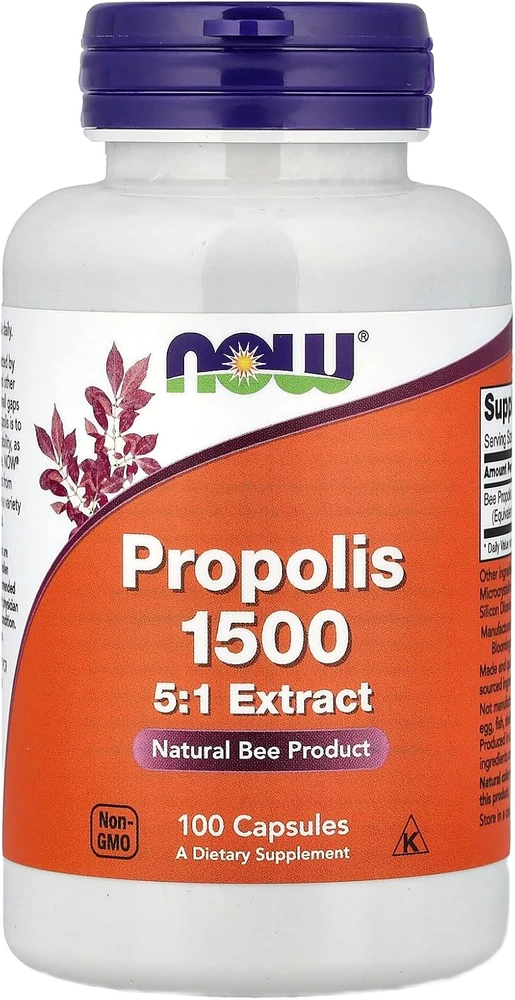
NOW Propolis 1,500 mg
When you want propolis as a swallow-and-go daily capsule rather than a throat spray, NOW's 1,500 mg (5:1 concentrate) is the sensible, affordable pick.
 04
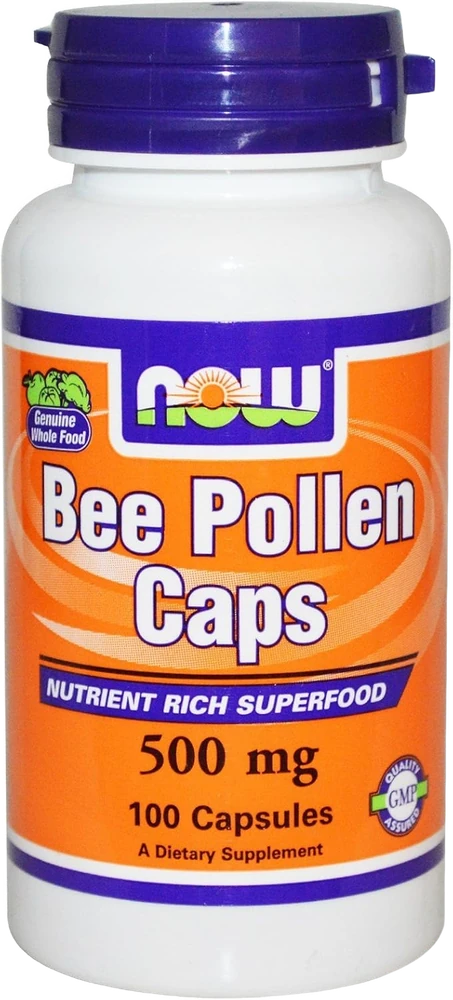
NOW Bee Pollen Caps
If bee pollen is what you're after and you don't want to chew bitter granules off a spoon, this is the obvious budget pick.
 06
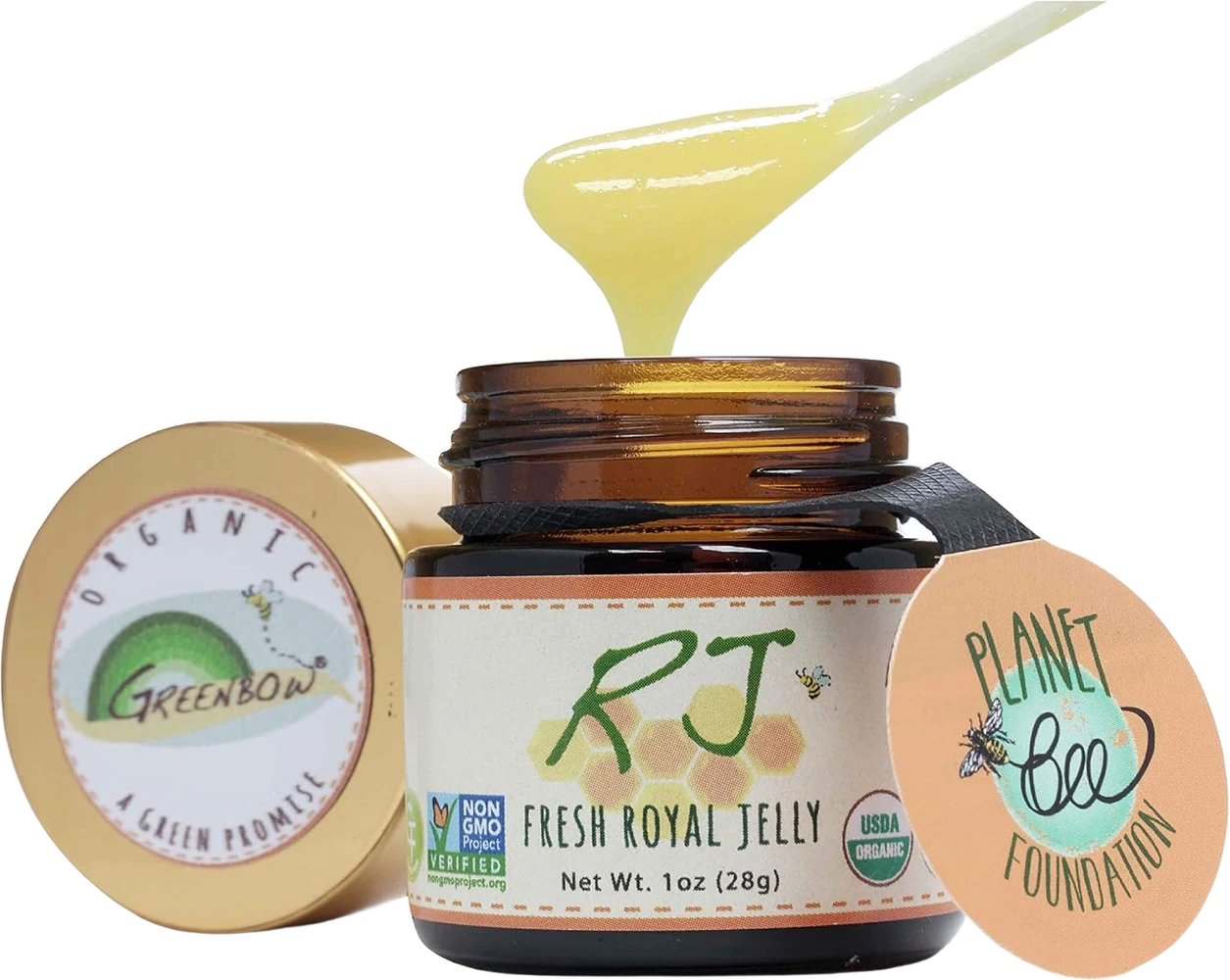
Greenbow Organic Fresh Royal Jelly
If you specifically want royal jelly in its purest form, Greenbow is the pick: genuinely fresh and refrigerated rather than reconstituted powder, USDA Organic, and a clean single ingredient.
Quick Answers
What does '95% bee propolis extract' actually mean?
It means the propolis used is a concentrated extract standardised to 95% propolis, on a honey base rather than diluted in alcohol — a transparent, high-strength claim by the standards of a category that usually just says 'rich in propolis.' Each 4-spray serving delivers about 85 mg of propolis. What it does NOT tell you is the exact flavonoid percentage; propolis's active flavonoids and phenolics are described qualitatively here, not given as a guaranteed number. So you're getting a clean, high-percentage propolis extract with an honest dose, but the precise flavonoid content is undisclosed — which is true of nearly every propolis product on the shelf.
Is there real evidence propolis does anything, or is it just tradition?
For propolis applied in the mouth and throat, the evidence is genuinely the strongest of any bee product. A randomized, double-blind, placebo-controlled trial found propolis mouthwash significantly reduced oral mucositis in head-and-neck radiotherapy patients (Dastan 2020, PMID 33100913), and a meta-analysis of five RCTs found propolis mouthwash significantly lowered the incidence of severe oral mucositis (Kuo 2018, PMID 30022350). That's a throat product whose underlying ingredient has replicated controlled human support — which is exactly why this format ranks #1. Be honest about the limits, though: that evidence is in a clinical mucositis setting, and the broader 'immune-boosting' claims for everyday propolis use remain largely traditional and unproven.
Can I use this if I'm allergic to bees or pollen?
No — not without medical advice. Propolis is a bee-derived product and can trigger allergic reactions in people sensitive to bees, bee stings, or pollen, ranging from mouth/throat irritation to more serious reactions. Even if you have no known allergy, the safe approach is to spot-test: use a single spray, wait 24–48 hours, and watch for itching, swelling, rash or any breathing change. Stop immediately and seek care if you react. People with asthma or a history of severe allergic reactions should be especially cautious and check with a doctor first.
How does the spray compare to a propolis capsule?
Different jobs. This throat spray delivers a modest 85 mg propolis dose directly to the mouth and throat — which is exactly where propolis's best evidence lies, and where a spray's local contact is the point. A concentrated propolis capsule like NOW Propolis 1,500 mg (#3 on our list) delivers a much larger propolis equivalent to swallow for a systemic daily dose, but you lose the direct throat contact. If your goal is throat/oral support or immune-season use, the spray is the evidence-aligned format; if you want a larger daily propolis dose in a swallow-and-go pill, the capsule makes more sense. Both carry the same bee-allergy caveat.
Is it really alcohol-free, and does that matter?
Yes — it's formulated on a honey base with no alcohol and no refined sugar, and it's gluten-free. That matters for a few reasons: many propolis tinctures are alcohol-based, which stings, isn't ideal for kids or people avoiding alcohol, and can be harsh on an already-irritated throat. An alcohol-free, honey-based spray is gentler for frequent throat use and broadens who can comfortably use it. It's still a bee product, so the allergy caveat is unchanged, but on the alcohol-free point the formulation is a genuine advantage over typical tinctures.
Sources & Further Reading
3 peer-reviewed sources, each linked to PubMed
- [1] Dastan 2020 PMID 33100913 — Efficacy and safety of propolis mouthwash in management of radiotherapy induced oral mucositis; a randomized, double blind clinical trial. Randomized, double-blind, placebo-controlled trial: propolis mouthwash significantly reduced oral-mucositis severity in head-and-neck radiotherapy patients with no serious adverse effects. The anchor evidence for propolis-in-the-throat — the use this spray's format is built around.
- [2] Kuo 2018 PMID 30022350 — Meta-analysis of randomized controlled trials of the efficacy of propolis mouthwash in cancer therapy-induced oral mucositis. Pooling 5 RCTs (209 participants), propolis mouthwash significantly lowered the incidence of severe oral mucositis versus control (OR 0.35, p=0.003). Meta-analytic confirmation that propolis-in-the-mouth is the one bee-product use with replicated controlled support.
- [3] Šedivá 2018 PMID 30544571 — 10-HDA, a major fatty acid of royal jelly, exhibits pH dependent growth-inhibitory activity against different strains of Paenibacillus larvae. Characterises propolis-adjacent bee-product chemistry: identifies 10-HDA as royal jelly's near-unique marker with lab antibacterial activity. Cited here for context on why bee-product actives (flavonoids in propolis, 10-HDA in royal jelly) are studied largely in vitro, not yet in large clinical trials.
Affiliate disclosure: every Amazon link uses our Associates tag (superachieverclub-20). We earn a small commission at no cost to you; it funds independent reviews. We never accept payment to change a ranking.