
NOW Foods Bee Pollen Caps, 500 mg Review
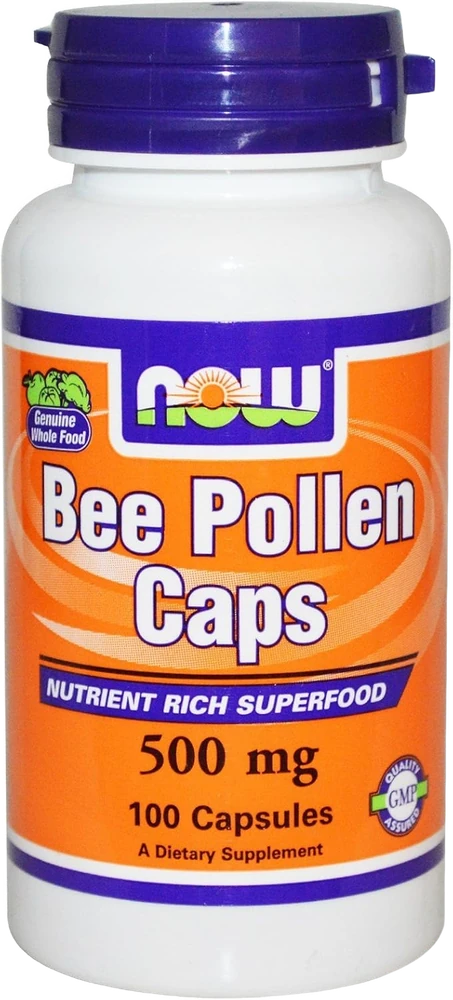 #4 of 8 · Best budget✓ Label verified · Supplement Facts read Sep 7, 2026
Real retailer photo, cut out. Label unedited.
Buy it. The cheap, convenient, trustworthy way into bee pollen. 500 mg of whole granular bee pollen per capsule, from a GMP-certified, third-party-tested brand, at about $0.11 a dose (100 caps for ~$11) — the best value entry to the whole-food pollen matrix, and it skips the bitter taste of loose granules.
$11 / 100 capsules~$0.11 / 500 mg capsule
Why It Scores 8.1 — And The Label Line Behind Each Number
Source purity & freshness
30% of scoreWhole granular bee pollen from an established GMP manufacturer — a clean, single-ingredient material. Marked down slightly only because it's encapsulated rather than fresh-frozen/never-heated, so the most rawness-focused buyers will prefer loose granules; the source quality itself is solid.
- Label check
- Not verifiable — no legible Supplement Facts photo in the listing (checked Sep 7, 2026)
Active content (pollen)
25% of scoreThe listing states a full 500 mg of whole pollen per capsule, but no gallery photo for this ASIN shows a legible Supplement Facts panel, so that figure is a listing claim, not a confirmed label read. There's no isolated standardisation to check either — and there shouldn't be, since pollen is a variable whole food with no single 'active' to standardise. The score reflects a plausible, unverified dose rather than a confirmed one.
Testing & label transparency
20% of scoreNOW's in-house QC plus broad third-party testing is a real, brand-level trust signal for a whole-food product whose main risk is contamination. The 'transparency' half of this score is downgraded, though: no gallery photo for this ASIN shows a legible Supplement Facts panel, so the 500 mg dose and 100-count are listing claims we could not confirm on the panel itself, not a verified label read.
Value per serving
15% of scoreAbout $0.11 per 500 mg capsule — roughly $11 for 100 capsules. The cheapest credible bee-pollen entry on the list, and unbeatable value for an encapsulated whole-food pollen from a trusted brand.
- Per serving
- 500 mg (1 capsule), per the listing — Supplement Facts panel not legible to confirm it
- Count
- 100 capsules
- Price
- $11 / 100 capsules = ~$0.11 per 500 mg capsule
Real-world use & tolerance
10% of scoreThe capsule sidesteps pollen's strong floral/bitter taste, doses precisely, and travels without refrigeration — genuinely easier daily-use than loose granules. The only deduction is the universal pollen-allergy caveat, which demands a cautious spot-test, especially for hay-fever sufferers.
- Form
- Capsule
- More Specs
- Type
- Bee pollen (whole granular pollen)
- 10-HDA
- N/A — 10-HDA applies only to royal jelly
- Brand QC
- NOW Foods — established GMP-certified, broadly third-party tested
- Standardisation
- None — whole food; potency varies by floral source + season
- Best for
- Cheapest, most convenient way into bee pollen
Label verified. Every figure read from the Supplement Facts photo, Sep 7, 2026.
Marketing Claims Vs. Reality
500 mg of bee pollen per capsule.
The listing states 500 mg of whole granular pollen per capsule from a GMP-certified manufacturer with third-party testing; we could not verify this on a Supplement Facts panel, since no gallery photo for this ASIN shows one — only a front-of-bottle product shot. If the listing is accurate, the dose matches what the packaging states, but that is a listing claim, not a confirmed label read.
A natural source of energy and vitality.
Bee pollen is a genuine whole-food source of amino acids, B-vitamins and antioxidants (Komosinska-Vassev 2015, PMID 25861358), which gives a plausible nutritional basis for an energy 'top-up.' But a proven energy effect in healthy people isn't established — the claim is reasonable as nutrition, overstated if read as a demonstrated energizer.
Rich in vitamins, minerals, and antioxidants.
Well-supported: bee pollen's composition includes B-vitamins, minerals, polyphenols/flavonoids and carotenoids (Komosinska-Vassev 2015; Denisow 2016, PMID 27013064). The nutrient-density claim is accurate — with the honest caveat that exact amounts vary by season and floral source.
Supports the immune system.
Bee pollen shows antioxidant and antimicrobial activity in laboratory studies (Denisow 2016), but human immune-outcome evidence is preliminary. Plausible as a nutrient-dense support, not proven as an immune treatment — directionally fair, not clinically demonstrated.
GMP quality, made by NOW.
NOW is a long-established GMP-certified brand with extensive in-house and third-party testing — a genuine quality signal that matters for a whole-food product where contamination is the main risk.
What Our Test Actually Found
Correction: we cannot confirm this product's Supplement Facts panel
An earlier version of this review presented the per-capsule dose and the capsule count as if read from a Supplement Facts panel, and credited the label with being 'clearly labelled' and 'accurate.' We re-checked the Amazon listing for this ASIN (B000WT5NXS) on Sep 7, 2026 and found only one gallery image — a front-of-bottle product photo — with no Supplement Facts panel, back label, or any other angle showing one. We rewrote the affected sentences to attribute the dose to the listing rather than a verified panel, and lowered the two criteria (Active content, Testing & label transparency) that had credited a label read we never actually saw.
Label not verifiable: what we could and could not confirm
No gallery photo for this ASIN (B000WT5NXS) shows a legible Supplement Facts panel — the listing supplies only a single front-of-bottle product photo, with no back label, ingredient panel, or any other angle. The listing states 500 mg of whole granular pollen per capsule in a 100-capsule bottle, and those numbers are presented in this review as listing claims, not verified label facts. We could not confirm the actual Supplement Facts panel — the precise serving size, the 'Other Ingredients' line, or any allergen statement — so treat every dose figure in this review as coming from the listing, not a photographed label.
The cheapest credible way to take bee pollen, full stop
At roughly $0.11 per 500 mg capsule, NOW is the value play of the entire bee category for pollen specifically. You get the whole-food pollen matrix — amino acids, B-vitamins, antioxidants — from a trusted GMP brand for about $11 a bottle. Nothing else on the list delivers encapsulated pollen this cheaply with this level of testing behind it. If pollen is what you want, this is where most people should start.
Capsules trade a little 'rawness' for a lot of convenience
The honest distinction versus loose granules (Y.S. Eco #7, Stakich #2) is freshness/rawness: never-heated, fresh-frozen granules are the purist's form. But NOW's capsule wins on practicality — it sidesteps pollen's strong floral/bitter taste, doses precisely at 500 mg, and travels without refrigeration. For most people who'd otherwise never tolerate the taste of granules, the capsule is what actually gets the pollen taken consistently.
Be realistic about the energy claim
Bee pollen's nutrient density is real and documented (Komosinska-Vassev 2015), which gives a plausible basis for an energy 'top-up.' But the strong 'natural energy' reputation is mostly traditional use plus that nutrient content — a proven energizing effect in healthy people hasn't been shown in good trials. Buy it as a nutrient-dense whole-food you might find helpful, not as a reliable energy supplement. If energy is the real problem, sleep, iron/B12 and caffeine do more.
No fake 'active %' claim — but we can't verify the panel either
Bee pollen has no single active to standardise, and its composition shifts with floral source and season (Denisow 2016). The listing describes 500 mg of whole pollen, GMP-made, tested — by amount and source quality rather than a fabricated potency figure, which is the right general approach for a whole food. But we could not check any of it against a Supplement Facts panel, since no gallery photo for this ASIN shows one — so treat this as a reasonable listing description, not a confirmed, honest label.
The allergy caveat is non-negotiable, especially with hay fever
Bee pollen is a known allergen, and the risk is higher for anyone with pollen (hay fever) or bee allergies — reactions can occasionally be serious. The rule: open a capsule, take a tiny amount, wait 24–48 hours, and watch for itching, swelling, hives or breathing changes before a full dose. Anyone with asthma or a severe-allergy history should not start without medical advice. 'Natural' does not mean safe for the pollen-sensitive.
Full analysis: all pros & cons (8), buy if / skip if
- Cheapest credible bee-pollen entry — ~$0.11 per 500 mg capsule (100 caps for ~$11)
- Whole granular pollen from a GMP-certified, broadly third-party-tested brand
- Capsule sidesteps the strong floral/bitter taste of loose granules and doses precisely
- Travel-friendly — no refrigeration needed
- Listing describes it as a variable whole food, no fabricated 'active %' claim (Supplement Facts panel not verified)
- Pollen allergen — higher risk for hay-fever/bee-allergy sufferers; spot-test and avoid with asthma/severe-allergy history without medical advice
- Encapsulated, not fresh-frozen — purists will prefer raw granules (#2, #7)
- Energy/immune benefits are preliminary and traditional, not proven; potency varies by season
- You want bee pollen specifically and want the cheapest credible way to take it
- You dislike the strong floral/bitter taste of loose granules and want a precise 500 mg capsule
- You value a GMP-certified, well-tested brand for a whole-food product where purity matters
- You want a travel-friendly capsule that doesn't need refrigeration
- You have a pollen (hay fever) or bee allergy — especially asthma/severe-reaction history (check with a doctor first)
- You're a purist who wants raw, never-heated, fresh-frozen granules — choose #2 or #7 instead
- You're buying for a proven energy or immunity effect — pollen's benefits there are preliminary, not established
500 mg of whole granular bee pollen per capsule, from a GMP-certified, third-party-tested brand, at about $0.11 a dose (100 caps for ~$11) — the best value entry to the whole-food pollen matrix, and it skips the bitter taste of loose granules. It's encapsulated rather than fresh-frozen (purists prefer raw granules), pollen potency varies by season, and it's a pollen allergen. But for value and convenience, NOW is the pick.
NOW Foods Bee Pollen Caps is the obvious starting point if bee pollen is the bee product you actually want. It's 500 mg of whole granular pollen in a capsule, from one of the most established GMP-certified, third-party-tested brands in supplements, for about eleven cents a dose — the cheapest credible way into the whole-food pollen matrix of amino acids, B-vitamins and antioxidants, without having to chew bitter granules off a spoon. What it is not is a magic energizer. Bee pollen's nutrient density is real and well-documented, which gives a plausible basis for an energy 'top-up,' but the strong energy and immunity claims that sell pollen are largely traditional and preliminary, not proven in good human trials. And like every bee product, it's a pollen allergen — meaningful especially for anyone with hay fever or a bee allergy. As a value-priced, convenient, trustworthy entry to bee pollen, though, it's exactly right. Here's the full breakdown.
The budget bee-pollen pick — buy it for value + convenience, spot-test first.

If bee pollen is the bee product you want, NOW Bee Pollen Caps is the sensible default: 500 mg of whole granular pollen from a trusted GMP, well-tested brand, at about eleven cents a capsule. It gives you the whole-food pollen matrix without the bitter taste of loose granules, doses precisely, and travels anywhere — the cheapest credible way in, with the testing pedigree that matters for a product where contamination is the main risk. Keep expectations honest. Bee pollen is nutrient-dense, but its 'natural energy' and immunity claims are largely traditional and preliminary, not proven — treat it as a whole-food supplement you might find helpful, not a reliable energizer or immune treatment. And it's a pollen allergen, so spot-test a small amount and wait 24–48 hours before a full dose, with extra caution if you have hay fever, a bee allergy, asthma, or a history of severe reactions. If you'd rather have raw, never-heated granules, choose Y.S. Eco Bee Farms (#7) or bulk Stakich (#2); if you want propolis for the throat instead, the Beekeeper's Naturals spray (#1) is the pick. But for value-priced, convenient bee pollen, NOW is the one.
If This Doesn’t Fit — Try These
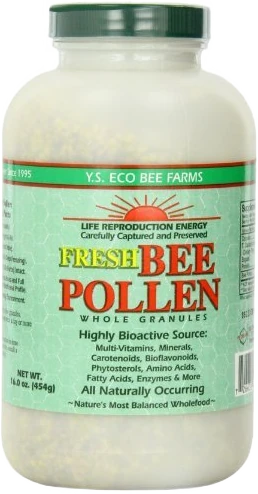 07
Y.S. Eco Bee Farms Bee Pollen
For purists who believe the point of bee pollen is to eat it as close to raw as possible, Y.S.
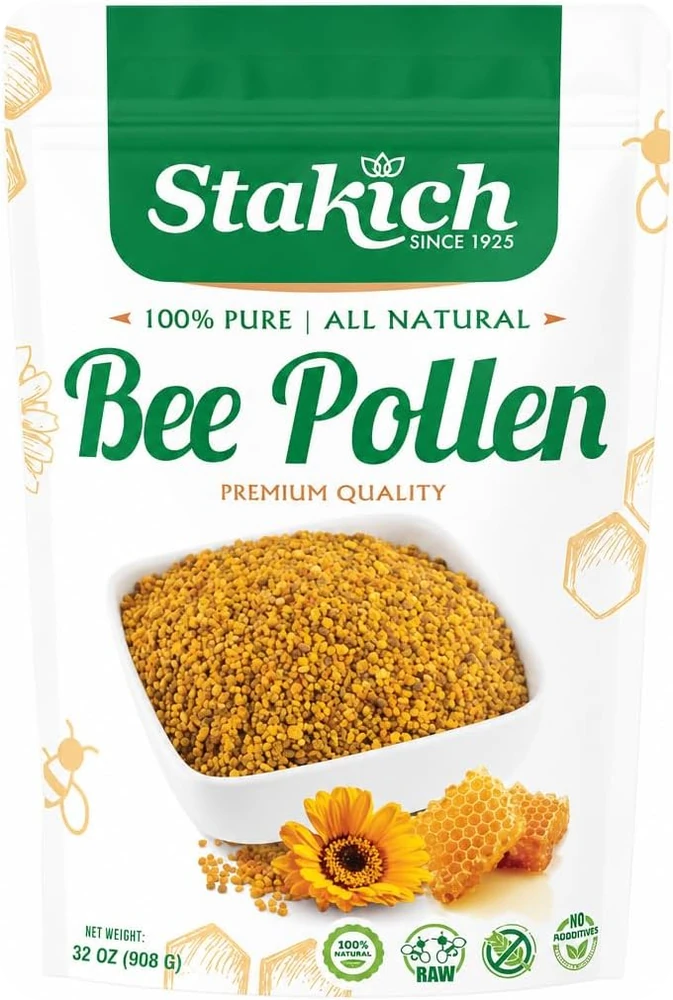 02
Stakich Bee Pollen Granules
Stakich is for the committed pollen user who blends a teaspoon into a smoothie every morning and doesn't want to re-order constantly.
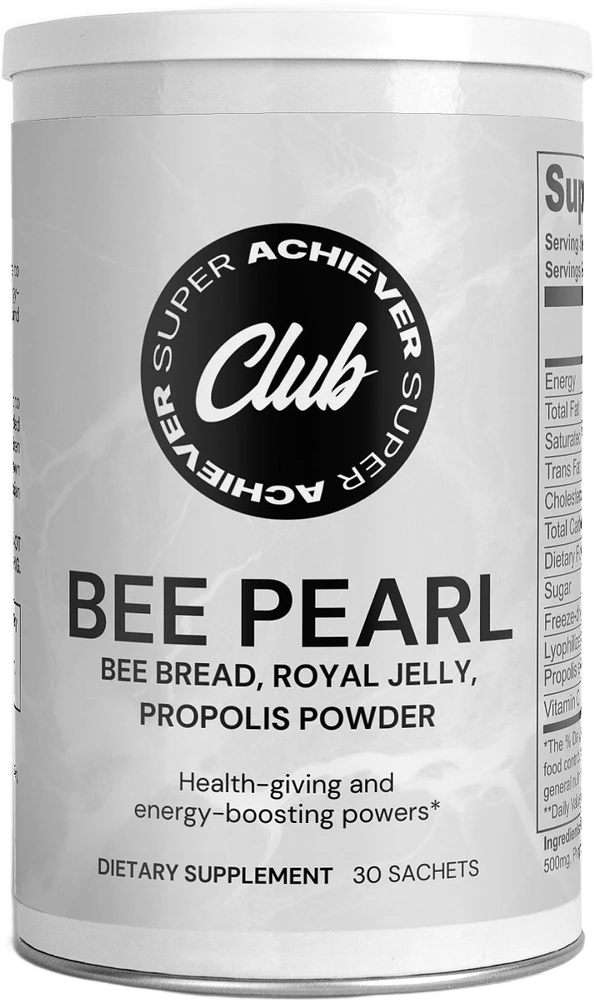 08
Super Achiever Bee Pearl
Clearly labelled and convenient, at a premium price.
Quick Answers
Is encapsulated pollen as good as raw granules?
For most people, yes — with one nuance. NOW's capsules contain whole granular bee pollen (the same material, just packed into a capsule), so you get the same whole-food matrix of amino acids, B-vitamins, polyphenols and carotenoids. The trade-off versus loose granules is 'rawness': fresh-frozen, never-heated granules (like Stakich #2 or Y.S. Eco #7) are the form purists prefer for maximum preservation of heat-sensitive nutrients. In practice, the capsule's big advantages are that it sidesteps pollen's strong floral/bitter taste, doses precisely at 500 mg, and travels without refrigeration. If you want convenience and value, capsules; if you want the closest-to-raw whole-food experience, granules.
Does bee pollen actually give you energy?
Be honest with your expectations. Bee pollen is genuinely a dense whole-food source of protein/amino acids, B-vitamins and antioxidants (Komosinska-Vassev 2015, PMID 25861358), which gives a plausible nutritional basis for an 'energy top-up' — but a proven energy effect in healthy, well-nourished people hasn't been established in good human trials. Most of the energy/vitality reputation is traditional use plus the nutrient content, not demonstrated clinical outcomes. Treat it as a nutrient-dense food supplement you might find helpful, not as a stimulant or a proven energizer. If reliable energy is your real goal, address sleep, iron/B12 status and caffeine first.
I have hay fever — can I take bee pollen?
Be very cautious and check with a doctor first. Bee pollen is a known allergen, and people with pollen allergies (including hay fever) or bee-sting allergies are at higher risk of a reaction, which can occasionally be serious. The standard precaution applies and matters more for you: open one capsule, take a tiny amount, wait 24–48 hours, and watch for itching, swelling, hives or any breathing change before taking a full dose. Anyone with asthma or a history of severe allergic reactions should not start bee pollen without medical advice. The fact that pollen is 'natural' does not make it safe for the pollen-sensitive.
Why is the potency described so vaguely — no standardised actives?
Because bee pollen is a whole food, not an isolated compound, so there's no single 'active' to standardise to — and any honest pollen product reflects that. Its composition (protein, vitamins, polyphenols, carotenoids) naturally varies with the flowers the bees foraged and the season (Denisow 2016, PMID 27013064), so a fixed potency number would be misleading. NOW's listing states 500 mg of whole granular pollen per capsule, from a GMP-certified, third-party-tested manufacturer — we could not verify this on a Supplement Facts panel, since no gallery photo for this ASIN shows one. Labeling a variable whole-food by amount and source quality, rather than a fabricated 'X% active' claim, is still the right general approach, if the listing is accurate.
Why buy NOW over a no-name bee pollen?
Quality control and testing. Bee products concentrate whatever is in the bees' environment, so contaminant screening genuinely matters — and NOW is an established GMP-certified brand with extensive in-house and third-party testing, which a random unbranded pollen may not have. You're paying a few cents more per capsule for the reassurance that the material is what it says and has been screened. For a whole-food product where purity is the main risk, that's a sensible place to not cut corners — and NOW manages it while still being the cheapest credible pollen entry on our list.
Sources & Further Reading
2 peer-reviewed sources, each linked to PubMed
- [1] Komosinska-Vassev 2015 PMID 25861358 — Bee pollen: chemical composition and therapeutic application. Comprehensive review documenting bee pollen's composition — proteins/amino acids, B-vitamins, polyphenols/flavonoids, carotenoids, phytosterols and enzymes. The basis for bee pollen's nutrient-density (and plausible energy 'top-up') claim, with therapeutic applications framed as still preliminary.
- [2] Denisow 2016 PMID 27013064 — Biological and therapeutic properties of bee pollen: a review. Reviews bee pollen's antioxidant, anti-inflammatory and antimicrobial activities and stresses that composition and biological activity vary widely with floral source and season — the reason an honest pollen product (like this one) labels by amount and source, not a fixed 'active %'.
Affiliate disclosure: every Amazon link uses our Associates tag (superachieverclub-20). We earn a small commission at no cost to you; it funds independent reviews. We never accept payment to change a ranking.