
Stakich Bee Pollen Granules Review
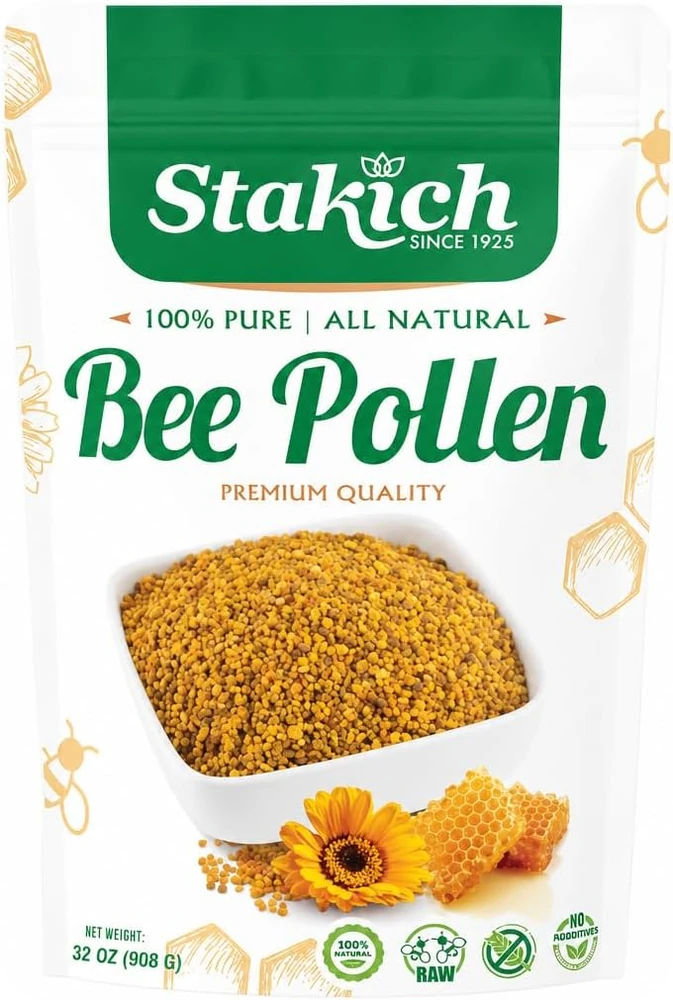 #2 of 8 · Best bulk value✓ Label verified · Supplement Facts read Sep 7, 2026
Real retailer photo, cut out. Label unedited.
Buy it. The bulk-value raw granule for heavy daily pollen users. 2 lb of 100% raw, never-heated whole pollen granules at the lowest cost-per-gram on the list (~$0.16 a serving) — the pick for people who blend pollen into smoothies daily and go through it fast.
$30 / 2 lb~$0.16 / ~5 g (1 tsp) serving
Why It Scores 8.3 — And The Label Line Behind Each Number
Source purity & freshness
30% of score100% pure, raw, unprocessed pollen — explicitly never heated or dried, with no fillers. This minimal-processing claim is exactly what the heaviest-weighted axis rewards: it's the raw whole-food form with maximum nutrient preservation. The only nuance is that 'never heated' also means more perishable, hence the cool-storage need.
Active content (pollen)
25% of scoreIntact, never-heated whole granules mean maximal preservation of the heat-sensitive nutrients in the whole-food pollen matrix — amino acids, B-vitamins, antioxidants. No isolated standardisation is possible for a variable whole food, so the score reflects the integrity of raw, unprocessed material rather than a potency figure.
Testing & label transparency
20% of scoreA pure single-ingredient pollen from a long-standing US bee brand with an honest 'raw, never heated' claim. Held below NOW's tier because explicit third-party contaminant-testing documentation isn't as prominent; the single-ingredient honesty is strong, the formal COA visibility is good rather than best-in-class.
Value per serving
15% of scoreAbout $0.16 per ~5 g serving from a 2 lb bag — the cheapest cost-per-gram on the entire list. Unbeatable value for raw whole-food pollen if you actually go through the volume, which makes a daily long-term pollen habit very affordable.
- Per serving
- ~1 tsp (~5 g) daily, work up gradually per label
- Count
- 2 lb (~6 months at 1 tsp/day)
- Price
- $30 / 2 lb = ~$0.16 per ~5 g serving
Real-world use & tolerance
10% of scoreVersatile to mix into foods, but the real-world frictions are real: a 2 lb bag must be sealed and kept cool/refrigerated (and ideally portioned) to stay fresh over months, the taste is strongly floral, and the pollen-allergy caveat demands a spot-test. Great value, but more storage responsibility than a small jar or capsule.
- Form
- Granules (raw, never heated or dried)
- More Specs
- Type
- Bee pollen (100% pure, raw, unprocessed)
- 10-HDA
- N/A — 10-HDA applies only to royal jelly
- Processing
- Never heated or dried; no fillers
- Storage
- Seal tightly + keep cool/refrigerated to preserve freshness
- Best for
- Heavy daily users wanting the lowest cost-per-gram
Label verified. Every figure read from the Supplement Facts photo, Sep 7, 2026.
Marketing Claims Vs. Reality
100% pure, raw, unprocessed bee pollen — no fillers.
A single-ingredient, pure whole-granule pollen with no added fillers, consistent with the brand's positioning. Accurate and straightforward — exactly what's in the bag.
Never heated or dried, preserving heat-sensitive nutrients.
Minimal processing (no heating or over-drying) is a recognised way to better preserve pollen's heat-sensitive vitamins, enzymes and antioxidants — which is also why cool storage is needed once opened. The preservation claim is mechanistically sound.
A natural source of energy.
Bee pollen is nutrient-dense — amino acids, B-vitamins, antioxidants (Komosinska-Vassev 2015, PMID 25861358) — a plausible nutritional basis for an energy 'top-up.' But a proven energizing effect in healthy people isn't established; accurate as nutrition, overstated if read as a demonstrated energizer.
Supports immunity and wellness.
Bee pollen shows antioxidant and antimicrobial activity in the lab (Denisow 2016, PMID 27013064), but human immune-outcome evidence is preliminary. Plausible as nutrient-dense support, not proven as an immune treatment — directionally fair, not clinically demonstrated.
Great value bulk supply.
At roughly $0.16 per serving from a 2 lb bag, this is the cheapest cost-per-gram pollen on our list — a genuine bulk-value claim, valid specifically for users who go through the volume before freshness becomes a concern.
What Our Test Actually Found
The cost-per-gram winner — if you'll actually use 2 lb
Stakich's whole pitch is value, and it delivers: 2 lb of raw pollen at about sixteen cents a serving is the cheapest cost-per-gram on the list. For someone who blends a teaspoon into a smoothie every morning, that makes a long-term daily pollen habit genuinely affordable. The single condition is that you go through the volume before freshness fades — for a heavy daily user, it's the obvious value pick.
'Never heated or dried' is a real nutrient-preservation point
Bee pollen's heat-sensitive vitamins, enzymes and antioxidants degrade with heating and over-drying, so Stakich's raw, never-heated processing genuinely helps preserve them — the purist's argument for raw granules over processed pollen. The honest corollary is perishability: minimally-processed pollen needs cool storage. It's a real quality point paired with a real storage responsibility, not a free lunch.
Storage is the catch with a bag this big
Two pounds of raw pollen is a lot to keep fresh. To get the value without sacrificing quality, seal the bag tightly and keep it cool — refrigerated, or portion some and freeze it — so it doesn't degrade or clump over its multi-month life. This is the main reason occasional users should prefer a smaller jar (Y.S. Eco #7) or capsules (NOW #4), which stay fresher by the time they're finished. Plan the storage and the value is yours.
Be realistic about energy and immunity
Bee pollen's nutrient density is real (Komosinska-Vassev 2015) and it has antioxidant/antimicrobial activity in the lab (Denisow 2016), but proven human energy or immune benefits are preliminary — the reputation is mostly traditional use plus nutrient content. Buy it as a nutrient-dense whole-food you might enjoy, not a proven energizer or immune remedy. The whole-food framing is the honest one for a value bulk granule too.
Granules make the mandatory allergy spot-test easy
Bee pollen is a known allergen with higher risk for hay-fever and bee-allergy sufferers, and reactions can occasionally be serious — so a spot-test is mandatory. The upside of a granule bag is that testing is trivial: start with a literal pinch, wait 24–48 hours, and watch for any reaction before a fuller dose. Anyone with asthma or a severe-allergy history should not start without medical advice. 'Natural' and 'cheap' don't change the allergy math.
Full analysis: all pros & cons (8), buy if / skip if
- Lowest cost-per-gram on the list — 2 lb of raw pollen at ~$0.16 per serving
- 100% pure, raw, never heated or dried — maximum preservation of heat-sensitive nutrients
- Versatile single-ingredient pollen to blend into smoothies, yogurt or oats
- Granule format makes the mandatory allergy spot-test trivially easy (start with a pinch)
- Long-standing US heritage bee brand
- Pollen allergen — higher risk for hay-fever/bee-allergy sufferers; avoid with asthma/severe-allergy history without medical advice
- A 2 lb bag must be sealed and kept cool/refrigerated to stay fresh; strong floral taste
- Less prominent third-party testing documentation than NOW; energy/immune benefits are preliminary
- You use bee pollen daily and want the cheapest cost-per-gram on the list
- You value raw, never-heated-or-dried processing for maximum nutrient preservation
- You blend pollen into smoothies, yogurt or oats and will get through a 2 lb supply
- You'll seal and refrigerate the bag and don't mind a strong floral taste
- You have a pollen (hay fever) or bee allergy — especially asthma/severe-reaction history (check with a doctor first)
- You're an occasional user — a smaller jar (#7) or capsules (#4) will be fresher by the time you finish
- You want zero prep or no taste — encapsulated pollen (#4) is the convenient choice
2 lb of 100% raw, never-heated whole pollen granules at the lowest cost-per-gram on the list (~$0.16 a serving) — the pick for people who blend pollen into smoothies daily and go through it fast. The 'never heated or dried' processing preserves heat-sensitive nutrients. The catches: a bag this big needs sealing and cool/refrigerated storage, the taste is strongly floral, it's a pollen allergen (spot-test first), and its energy/immune benefits are preliminary. Best value pollen if you'll actually use 2 lb.
Stakich Bee Pollen Granules is for the committed pollen user who blends a teaspoon into a smoothie every morning and doesn't want to re-order constantly. It's 2 lb of 100% raw, never-heated whole pollen granules at roughly sixteen cents a serving — the best raw cost-per-gram on this list — and the 'never heated or dried' processing preserves the heat-sensitive nutrients purists care about. The trade-offs come down to volume and the usual bee caveats. A bag this size needs sealing and cool storage to stay fresh over its long life, the taste is strongly floral like all pollen, and it's an allergen that demands a cautious spot-test, especially for hay-fever sufferers. And as with every bee product, the energy and immunity claims are largely traditional and preliminary, not proven. For bulk-value raw pollen, though, it's the pick. Here's the full breakdown.
The bulk-value raw pollen — buy it if you'll use 2 lb, spot-test first.

Stakich Bee Pollen Granules is the pick for the committed daily pollen user who wants the cheapest raw whole-food pollen per gram and won't be re-ordering every month. Two pounds of 100% raw, never-heated granules at about sixteen cents a serving is the best cost-per-gram on the list, and the minimal processing preserves the heat-sensitive nutrients purists care about. For heavy daily use, it's the value choice. Accept the trade-offs only if they fit you. A bag this large needs sealing and cool/refrigerated storage (portion and freeze if needed) to stay fresh over its long life, the taste is strongly floral, and — like all bee pollen — it's an allergen, so test a few granules and wait 24–48 hours before a fuller dose, with extra caution if you have hay fever, a bee allergy, asthma, or a severe-reaction history. Treat its energy and immunity claims as traditional and preliminary, not proven. If you're an occasional user, a smaller jar (Y.S. Eco #7) or capsules (NOW #4) will be fresher by the finish; if you go through pollen fast, Stakich is the cost-per-gram king.
If This Doesn’t Fit — Try These
 07
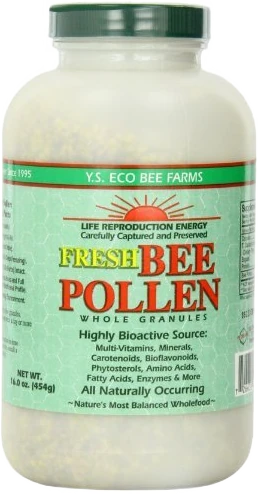
07Y.S. Eco Bee Farms Bee Pollen
For purists who believe the point of bee pollen is to eat it as close to raw as possible, Y.S.
 04
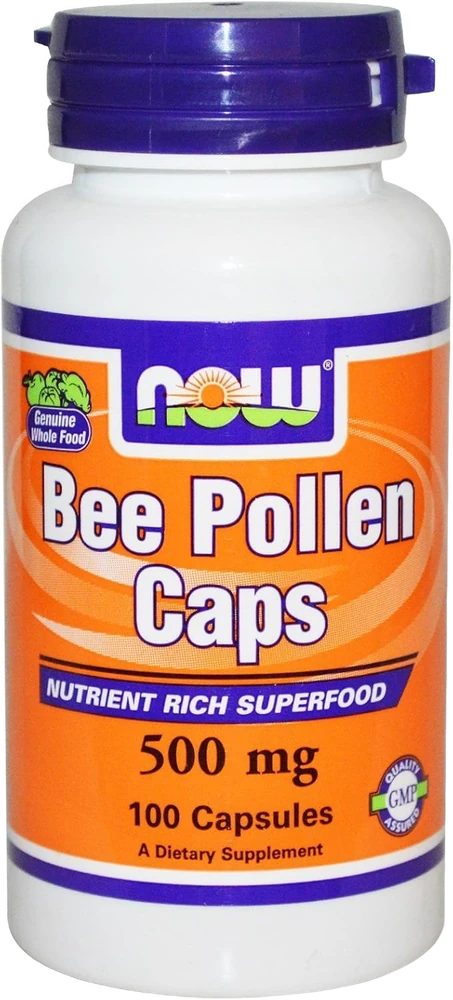
04NOW Bee Pollen Caps
If bee pollen is what you're after and you don't want to chew bitter granules off a spoon, this is the obvious budget pick.
 08
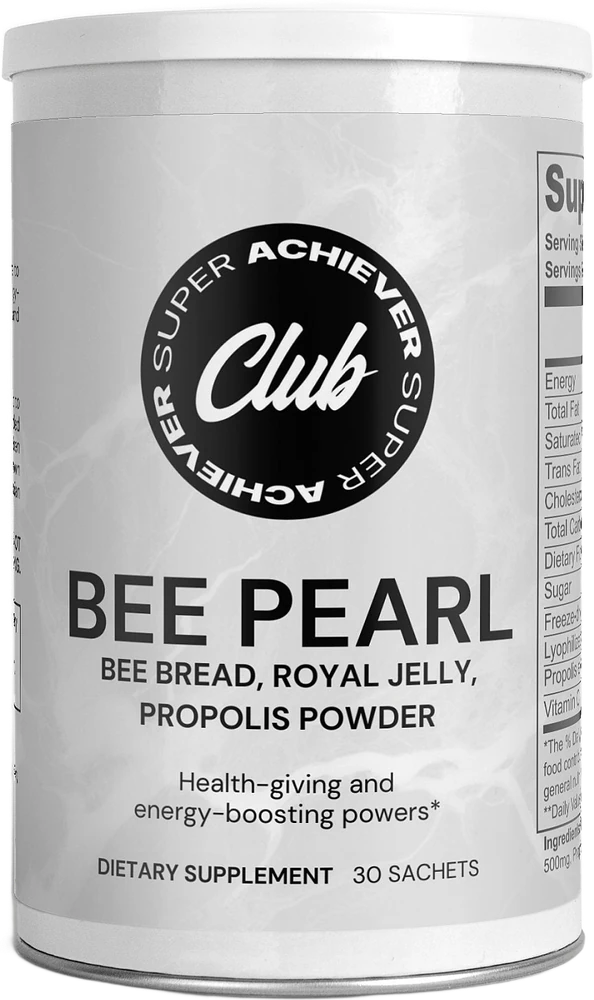
08Super Achiever Bee Pearl
Clearly labelled and convenient, at a premium price.
Quick Answers
Is 2 lb too much bee pollen to get through?
It depends on how you use it. At about a teaspoon (~5 g) a day, 2 lb (~900 g) is roughly six months of daily use — a lot, but reasonable for someone who blends pollen into a smoothie or yogurt every morning. The thing to plan for is freshness: because this is raw and never-heated, a bag that big needs to be sealed tightly and kept cool (refrigerated, or even portioned and frozen) so it doesn't degrade or clump over its long life. If you're an occasional user, a smaller jar (Y.S. Eco #7) or capsules (NOW #4) will be fresher by the time you finish them; if you go through pollen fast, the 2 lb bag is the cost-per-gram winner.
What does 'never heated or dried' actually buy me?
Better preservation of heat-sensitive nutrients. Bee pollen contains vitamins, enzymes and antioxidants that can degrade with heat and over-drying, so Stakich's 'raw, never heated or dried' processing is designed to keep more of them intact — it's the purist's argument for raw granules over processed pollen. The honest flip side is that minimally-processed pollen is also more perishable, which is exactly why it needs cool storage once opened. So 'never heated' is a genuine quality point for nutrient preservation, paired with a real storage responsibility on your end.
Does bee pollen actually boost energy or immunity?
Be realistic. Bee pollen is genuinely a dense whole-food source of amino acids, B-vitamins, polyphenols and carotenoids (Komosinska-Vassev 2015, PMID 25861358), which gives a plausible nutritional basis for an energy 'top-up,' and it shows antioxidant/antimicrobial activity in lab studies (Denisow 2016, PMID 27013064). But proven energy or immune benefits in healthy people are preliminary — most of the reputation is traditional use plus the nutrient content, not demonstrated clinical outcomes. Treat it as a nutrient-dense whole-food you might find helpful, not a proven energizer or immune remedy. If reliable energy is the goal, sleep, iron/B12 and caffeine do more.
I have hay fever or a bee allergy — is this safe?
Be cautious and check with a doctor first. Bee pollen is a known allergen, and people with pollen allergies (including hay fever) or bee-sting allergies are at higher risk of reacting — occasionally seriously. The standard precaution is essential here: start with just a few granules, wait 24–48 hours, and watch for itching, mouth tingling, swelling, hives or any breathing change before taking a fuller dose. Anyone with asthma or a history of severe allergic reactions should not start bee pollen without medical advice. The good news with granules is that spot-testing is easy — you can begin with a literal pinch from the bag.
How does Stakich compare to Y.S. Eco Bee Farms granules?
They're close cousins, with different sweet spots. Both are pure, raw, minimally-processed whole pollen granules from heritage US bee brands, and both want refrigeration after opening. The main differences are size and emphasis: Stakich is the bulk-value play (2 lb, lowest cost-per-gram, explicitly 'never heated or dried'), best for heavy daily users; Y.S. Eco's 16 oz jar is a more manageable quantity that stays fresher for lighter users and emphasises low-moisture handling. If you go through pollen fast and want the cheapest per gram, Stakich; if you want a smaller, fresher-by-finish jar, Y.S. Eco. Either is a legitimate raw whole-food choice.
Sources & Further Reading
2 peer-reviewed sources, each linked to PubMed
- [1] Komosinska-Vassev 2015 PMID 25861358 — Bee pollen: chemical composition and therapeutic application. Documents bee pollen's whole-food composition — proteins/amino acids, B-vitamins, polyphenols, carotenoids, sterols and enzymes — the heat-sensitive nutrient matrix that raw, never-heated granules are designed to preserve, with therapeutic applications framed as preliminary.
- [2] Denisow 2016 PMID 27013064 — Biological and therapeutic properties of bee pollen: a review. Reviews bee pollen's antioxidant, anti-inflammatory and antimicrobial activities and stresses that potency varies widely with floral source and season — why raw pollen is honestly sold by purity, freshness and value rather than a fixed 'active %'.
Affiliate disclosure: every Amazon link uses our Associates tag (superachieverclub-20). We earn a small commission at no cost to you; it funds independent reviews. We never accept payment to change a ranking.