
Top 10 Best Zinc Supplements (2026)
 01 · Best overall✓ Label verified · Supplement Facts read Sep 7, 2026
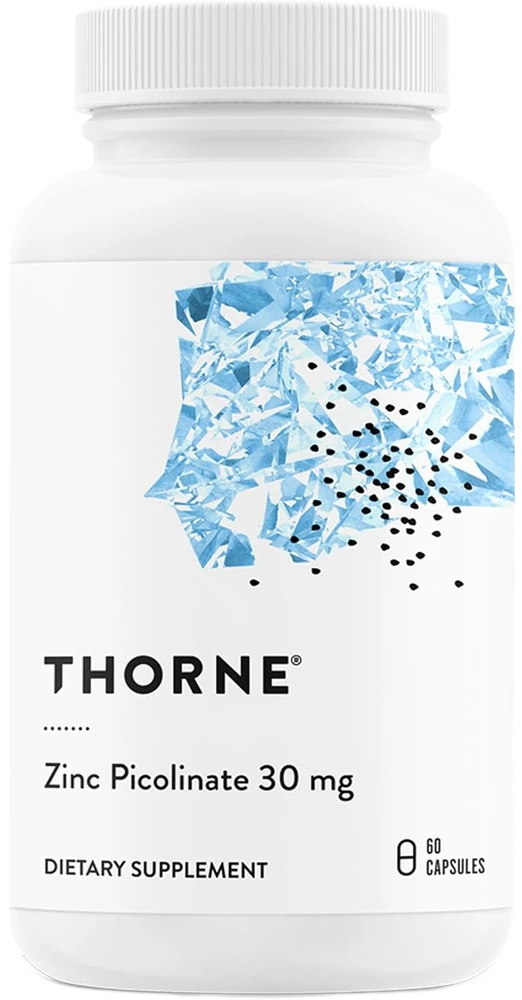
Best overall: Thorne Zinc Picolinate 30 mg
NSF Certified for Sport zinc picolinate at the trial-validated 30 mg single-cap dose, $14/month — the safe default for testosterone, immune, or general supplementation.
$14 / month$0.23 / 30 mg elemental cap
Why it wins: all five scores, pros & cons, full label
- NSF Certified for Sport — the highest third-party testing standard in existence, used by MLB / NFL / NHL teams
- Single-cap 30 mg dose matches the Prasad 1996 testosterone protocol exactly
- Picolinate is one of the two top-tier chelates — ~25-30% absorbable
- Thorne's clinician-brand QC pedigree is among the strongest in the supplement industry
- More expensive than NOW or Nutricost for an equivalent elemental dose
- 60-cap bottle requires more frequent re-orders than the 120- and 180-capsule competitors
- Per serving
- 30 mg elemental zinc (1 cap)
- Bottle
- 60 capsules (~2 months at 30 mg/day)
- Testing
- NSF Certified for Sport — banned-substance screened
- Form
- Zinc picolinate (chelate)

Our take — The default first-time pick. You get the cleanest top-tier chelate, NSF Certified for Sport testing (overkill for non-athletes but a real fraud filter for the whole supplement industry), single-cap 30 mg trial-aligned dosing, and a price that's $5/month higher than the budget tier — worth it for the testing standard alone. If you've never bought a chelated zinc before, start here.
 02
02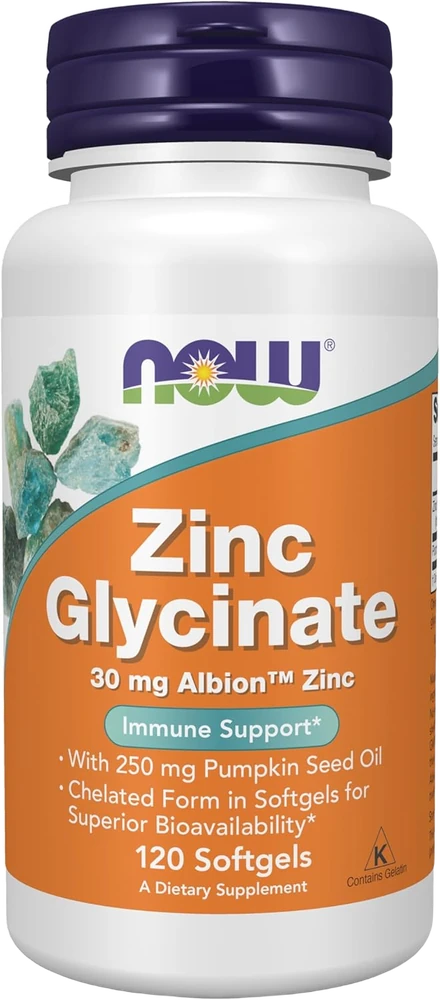 03
03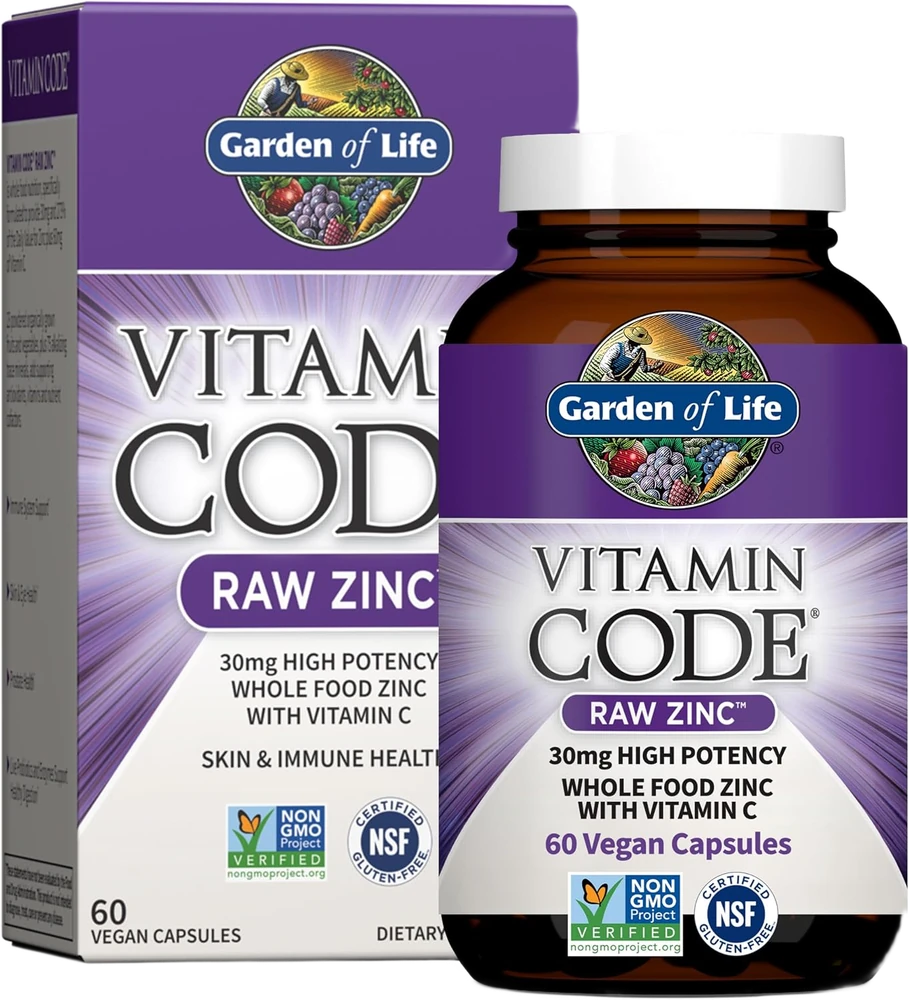 04
04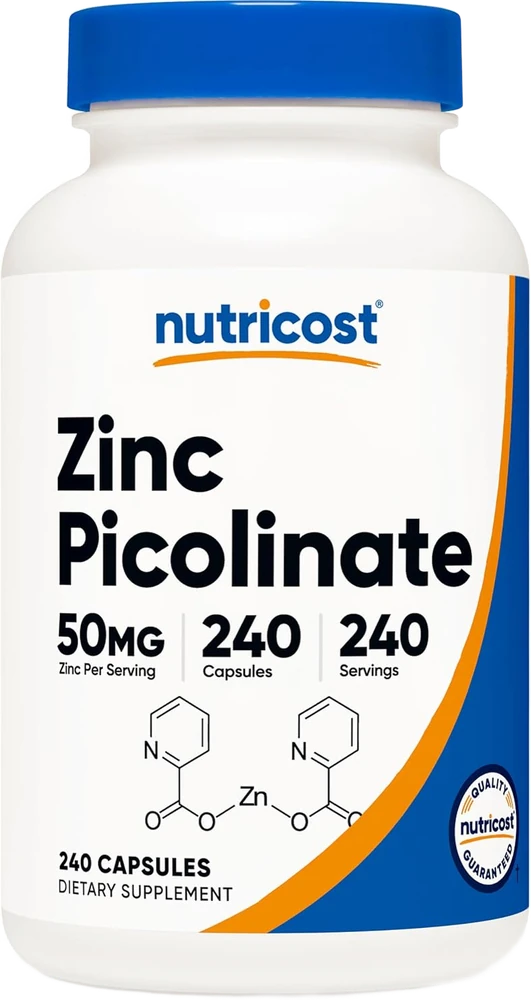 05
05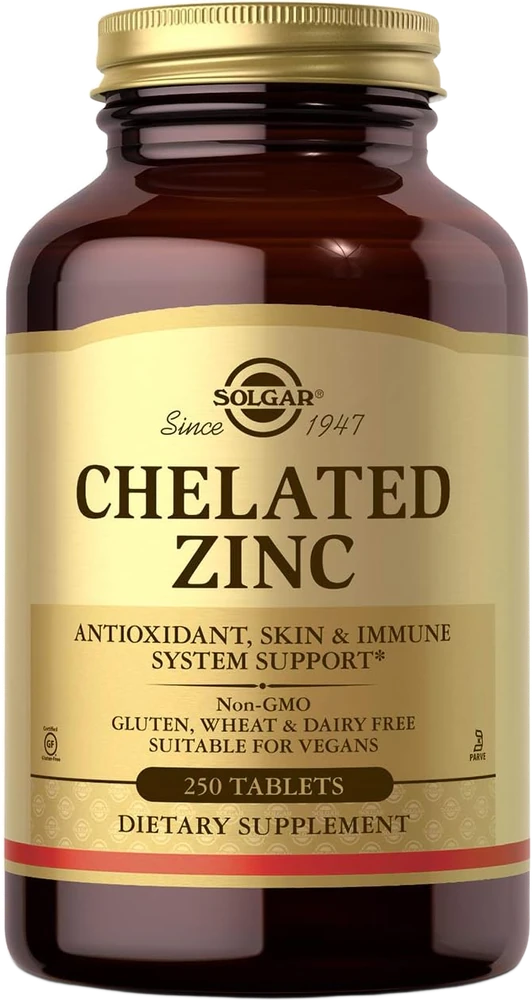 06
06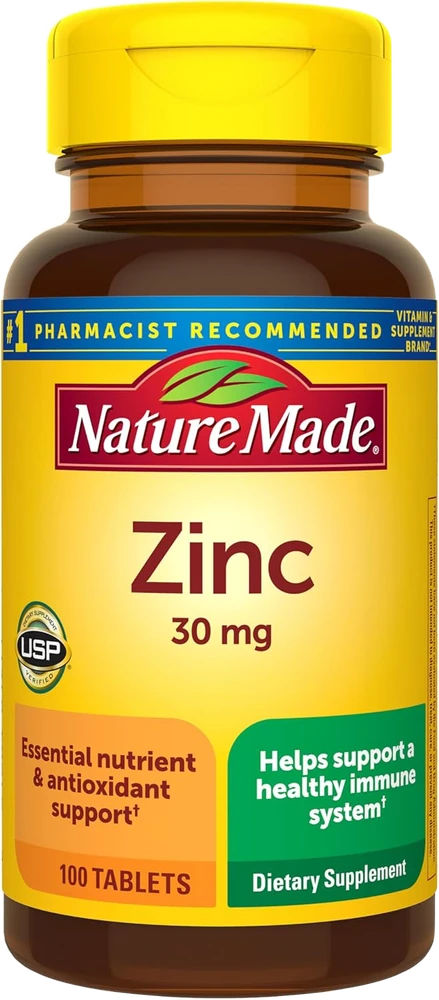 07
07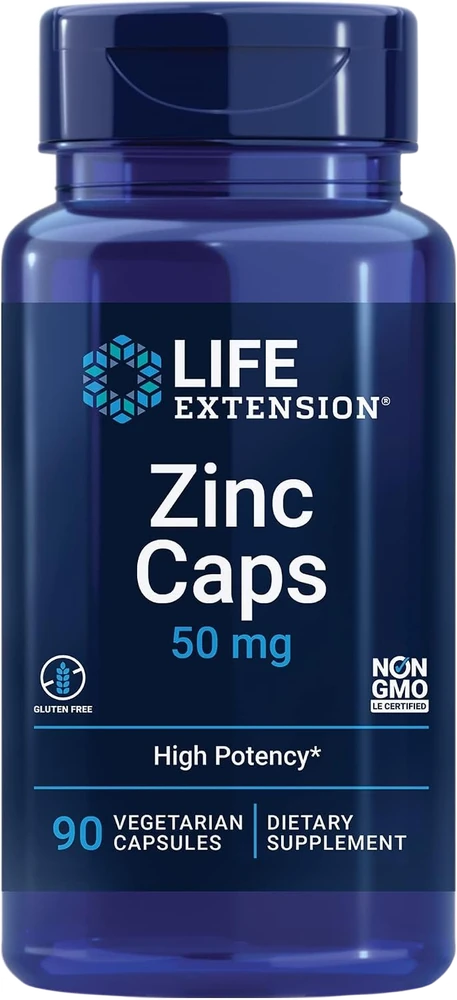 08
08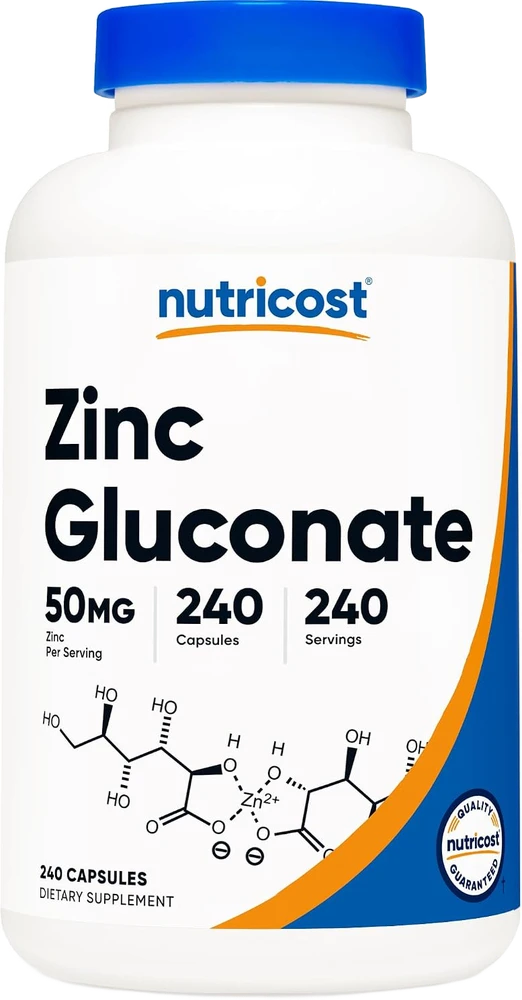 09
09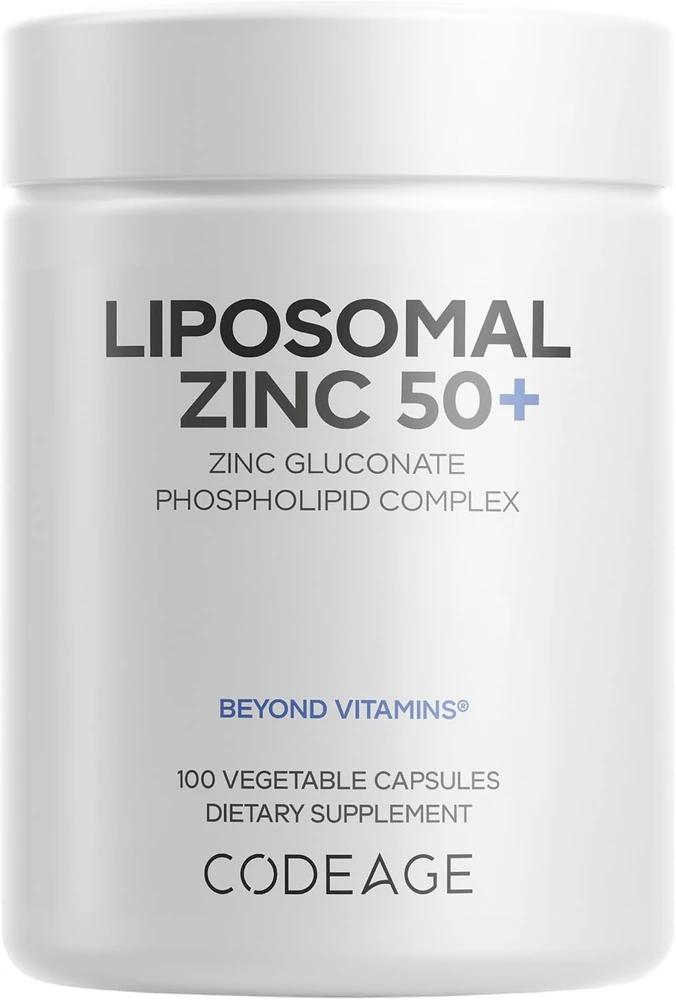 10
10Who Wins Which Aspect
Sorted by overall SAC Product Score™ — the official ranking.
| # | Pick | Score | Form bioavailability30% | Dose accuracy + cofactor compatibility25% | Third-party testing20% | Cost per active mg15% | Real-world response evidence10% | Cost Per Dose | Buy |
|---|---|---|---|---|---|---|---|---|---|
| 01 | | 9.2 | 9.51 | 9.51 | 10.01 | 7.5 | 9.01 | $0.23 / 30 mg elemental cap | Check price |
| NSF Certified for Sport — the highest third-party testing standard in existence, used by MLB / NFL / NHL teamsMore expensive than NOW or Nutricost for an equivalent elemental dose | |||||||||
| 02 | | 8.9 | 9.51 | 9.51 | 9.02 | 6.5 | 9.01 | — | Check price |
| Hypoallergenic label — gluten-free (GFCO), dairy-free, soy-free, non-GMO and vegan; only plant fiber, ascorbyl palmitate and a vegetarian capsule besides the zincA 180-capsule bottle is a bigger upfront commitment than Thorne's 60 capsules for the same 30 mg | |||||||||
| 03 | | 8.9 | 9.02 | 9.02 | 8.0 | 10.01 | 8.52 | $0.08 / 30 mg elemental softgel | Check price |
| Cheapest verified chelated bisglycinate on Amazon — most $6-9 budget bottles are oxide or gluconateBovine-gelatin softgel with soy lecithin — not vegetarian, not soy-free | |||||||||
| 04 | | 8.3 | 7.53 | 9.51 | 8.53 | 7.5 | 8.52 | $0.27 / 30 mg elemental cap | Check price |
| Whole-food matrix appeals to buyers who distrust isolated synthetic chelatesWhole-food matrix exact bioavailability less precisely characterised than picolinate or bisglycinate | |||||||||
| 05 | | 8.2 | 9.51 | 6.5 | 7.5 | 10.01 | 7.5 | $0.05 / 50 mg elemental cap | Check price |
| Cheapest cost-per-elemental-mg on the list50 mg/day chronic exceeds the 40 mg Tolerable Upper Intake Level — requires copper co-supplementation or cycling | |||||||||
| 06 | | 8.1 | 9.02 | 7.0 | 8.0 | 8.53 | 8.03 | — | Check price |
| Legacy clinician-shelf brand with 75+ years of consumer reputation22 mg elemental sits below the 30 mg Prasad protocol — need to double-dose or stack a multivitamin to hit the trial window | |||||||||
| 07 | | 7.9 | 6.0 | 8.53 | 9.02 | 9.52 | 7.0 | $0.08 / 30 mg elemental tablet | Check price |
| USP Verified — strong third-party testing for a mass-market brandGluconate absorbs ~15% vs ~25-30% for picolinate / bisglycinate — you're losing roughly half the elemental zinc on the label | |||||||||
| 08 | | 7.4 | 7.53 | 6.5 | 8.0 | 8.53 | 7.0 | $0.11 / 50 mg elemental cap | Check price |
| Life Extension's QC pedigree is strong in the longevity-supplement categoryThe citrate portion absorbs less efficiently than picolinate or bisglycinate (~18-20% vs ~25-30%) | |||||||||
| 09 | | 7.0 | 6.0 | 6.5 | 7.0 | 9.52 | 7.0 | ~$0.06 / 50 mg capsule | Check price |
| One active ingredient: 50 mg zinc (as gluconate) per capsule50 mg is above the 40 mg adult upper limit; the label gives no end date | |||||||||
| 10 | | 6.5 | 6.5 | 6.5 | 6.5 | 7.0 | 6.0 | — | Check price |
| Vegan, non-GMO, soy-free, dairy-free and gluten-free per the listingZinc gluconate is a weaker chelate than picolinate or bisglycinate — the liposomal wrap does not change the zinc salt | |||||||||
The Other 9, Ranked
- 02
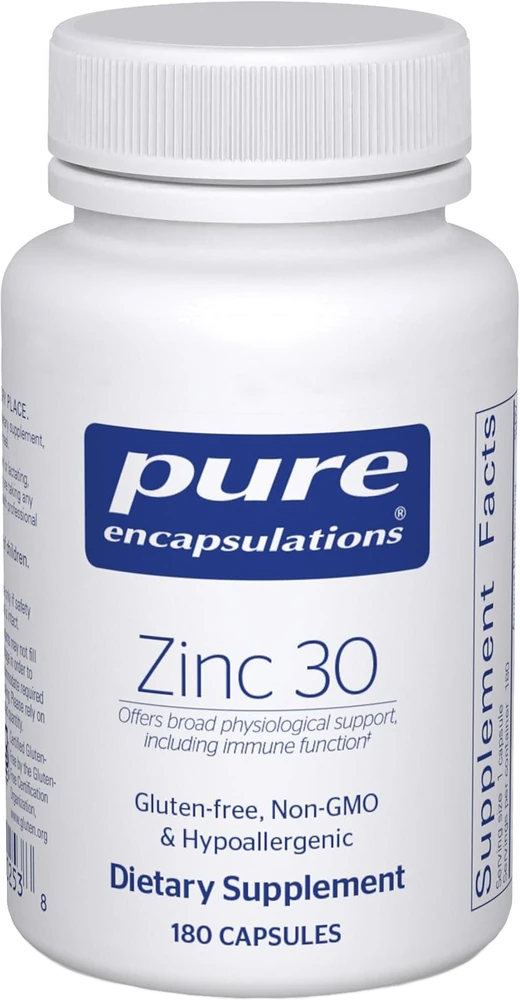
Best premium: Pure Encapsulations Zinc 30
8.9SAC Score™Clinician-grade hypoallergenic label, USP-style zinc picolinate at the trial dose. The cleanest zinc bottle money can buy.
StrongestForm bioavailability9.51WeakestCost per active mg6.5- Per serving
- 30 mg elemental zinc (1 cap)
- Bottle
- 180 capsules (~6 months at 30 mg/day)
- Testing
- Hypoallergenic, USP-style purity, third-party verified
All five scores, pros & cons, full label
What We Like- Hypoallergenic label — gluten-free (GFCO), dairy-free, soy-free, non-GMO and vegan; only plant fiber, ascorbyl palmitate and a vegetarian capsule besides the zinc
- Zinc picolinate is one of the two top-tier chelates — well tolerated with food
- Clinician-preferred brand used by integrative medicine practices for 30+ years
- 30 mg single-cap dose lands inside the trial window exactly
What You Live With- A 180-capsule bottle is a bigger upfront commitment than Thorne's 60 capsules for the same 30 mg
- Premium pricing partly clinician-brand markup, not pure formulation cost
- Form
- Zinc picolinate (chelate)
Our take — If you have allergen concerns or just want the cleanest label on the planet, this is it. Pure Encapsulations delivers what every clinician brand promises — a hypoallergenic, vegan label with only plant fiber and a vegetarian capsule around the zinc, USP-style raw material, and picolinate (a top-tier chelate). The downside is clinician-brand pricing — compare the listed price per capsule with the budget pick. Worth it for chemically sensitive buyers or anyone who wants absolute label transparency.
- 03
Best budget: NOW Foods Zinc Glycinate 30 mg
8.9SAC Score™Real chelated bisglycinate at the lowest price on the list. $9/month, 120 softgels, NOW's 30-year QC pedigree.
StrongestCost per active mg10.01WeakestThird-party testing8.0- Per serving
- 30 mg elemental zinc from 150 mg zinc bisglycinate (1 softgel)
- Bottle
- 120 softgels (~4 months at 30 mg/day)
- Testing
- NOW in-house QC labs, GMP-certified facility
All five scores, pros & cons, full label
What We Like- Cheapest verified chelated bisglycinate on Amazon — most $6-9 budget bottles are oxide or gluconate
- 120-softgel bottle stretches further than any premium competitor at this elemental dose
- NOW's in-house QC is among the most consistent in the industry — 30+ years
- Softgel with 250 mg cold-pressed pumpkin seed oil — absorbs cleanly with food
What You Live With- Bovine-gelatin softgel with soy lecithin — not vegetarian, not soy-free
- No NSF / USP certification — only in-house QC + GMP-facility
- Brand identity less premium than Thorne or Pure Encapsulations for the same elemental dose
- Form
- Zinc bisglycinate (Albion chelate) + 250 mg cold-pressed pumpkin seed oil
Our take — If you want to test a real chelated zinc without committing $14+/month, NOW Foods is the right starting point. The supply chain is real, the dose is real, the bisglycinate chelate is real. You're trading NSF certification theatrics for ~40% lower cost. Run 30 mg with breakfast for 8 weeks — if you respond, you can upgrade to Thorne (#1) or Pure Encapsulations (#2) on cycle two, but most buyers stay here.
- 04
Best whole-food form: Garden of Life Vitamin Code Raw Zinc 30 mg
8.3SAC Score™Whole-food-matrix zinc for buyers who prioritise raw-food brand identity over pure molecular efficiency. Co-formulated with 60 mg vitamin C and a probiotic + enzyme blend.
StrongestDose accuracy + cofactor compatibility9.51WeakestForm bioavailability7.5- Per serving
- 30 mg elemental zinc (1 cap)
- Bottle
- 60 capsules (~2 months at 30 mg/day)
- Testing
- Non-GMO Project Verified, gluten-free certified, raw-food certified
All five scores, pros & cons, full label
What We Like- Whole-food matrix appeals to buyers who distrust isolated synthetic chelates
- Co-formulated 60 mg vitamin C supports zinc absorption + immune use case
- Probiotic + enzyme blend may aid gut tolerance for sensitive users
- Strong brand transparency on sourcing + certification chain
What You Live With- Whole-food matrix exact bioavailability less precisely characterised than picolinate or bisglycinate
- Higher cost than NOW for similar elemental dose and weaker testing pedigree
- Form
- Whole-food zinc complex (raw food matrix)
Our take — If you're a raw-food / whole-food buyer who refuses isolated chelates on principle, Garden of Life delivers the cleanest version of that philosophy in the zinc category. The elemental dose is right, the co-factors are sensible, the brand certification chain is strong. The trade-off versus picolinate or bisglycinate is precision — the absorption math is less exactly measured. For most buyers, picks #1-3 are better value; for buyers with strong whole-food preferences, this is the right answer.
- 05
Best high-dose budget: Nutricost Zinc Picolinate 50 mg
8.2SAC Score™High-dose picolinate at the lowest cost-per-mg on the list. Best for short-term deficiency-repletion protocols — NOT a chronic maintenance bottle.
StrongestCost per active mg10.01WeakestDose accuracy + cofactor compatibility6.5- Per serving
- 50 mg elemental zinc (1 cap)
- Bottle
- 240 capsules (~8 months at 50 mg/day)
- Testing
- GMP-certified facility, third-party tested
All five scores, pros & cons, full label
What We Like- Cheapest cost-per-elemental-mg on the list
- Real picolinate chelate at the high-dose tier
- 240-cap bottle is enormous — 8+ months of supply
- Useful for verified-deficient adults running an 8-12 week repletion protocol
What You Live With- 50 mg/day chronic exceeds the 40 mg Tolerable Upper Intake Level — requires copper co-supplementation or cycling
- Single-cap 50 mg dose can't be easily titrated down without splitting
- Not the right bottle for first-time buyers or maintenance use
- Form
- Zinc picolinate (chelate)
Our take — High-dose picolinate has a specific niche: short-term repletion in verified-deficient adults. At 50 mg/day for 8-12 weeks with 2 mg co-supplemented copper, you can move serum zinc from deficient to repleted faster than the 30 mg standard dose. For chronic maintenance, drop to a 15-30 mg bottle (Thorne or NOW). Don't run this as a permanent floor without cycling and copper.
- 06
Legacy glycinate pick: Solgar Chelated Zinc 22 mg
8.1SAC Score™The classic clinician-shelf glycinate chelate. Real chelate, slightly sub-trial dose (22 mg vs 30 mg), legacy brand with 75+ years of consumer trust.
StrongestForm bioavailability9.02WeakestDose accuracy + cofactor compatibility7.0- Per serving
- 22 mg elemental zinc (1 tab)
- Bottle
- 250 tablets (~8 months at 22 mg/day)
- Testing
- Solgar Gold Standard QC, GMP-certified
All five scores, pros & cons, full label
What We Like- Legacy clinician-shelf brand with 75+ years of consumer reputation
- Real glycinate amino acid chelate, vegan-suitable per the label
- 250-tablet bottle gives excellent runway
- 22 mg dose splits well — pair with a multivitamin for a clean ~30 mg total
What You Live With- 22 mg elemental sits below the 30 mg Prasad protocol — need to double-dose or stack a multivitamin to hit the trial window
- Tablet format (not capsule or softgel) slightly slower onset
- Form
- Zinc glycinate amino acid chelate
Our take — Solgar Chelated Zinc is the bottle your integrative-medicine clinician likely recommended a decade ago — still a legitimately good product, just slightly off the trial dose. If you take a multivitamin with 10-15 mg zinc already, this 22 mg tab brings you cleanly into the 30+ mg therapeutic window. Standalone, you'd want to double-dose. Buy for brand familiarity and the legacy clinician-trust pedigree.
- 07
Mass-market household-brand pick: Nature Made Zinc 30 mg
7.9SAC Score™Pharmacy-shelf household brand at the lowest mass-market price. Gluconate is the form trade-off — meaningfully better than oxide, meaningfully worse than picolinate or bisglycinate.
StrongestCost per active mg9.52WeakestForm bioavailability6.0- Per serving
- 30 mg elemental zinc (1 tab)
- Bottle
- 100 tablets (~3+ months at 30 mg/day)
- Testing
- USP Verified
All five scores, pros & cons, full label
What We Like- USP Verified — strong third-party testing for a mass-market brand
- Available in every drugstore in America — easy offline backup
- Cheap at $8/month — competitive with NOW at the budget tier
- Trial-aligned 30 mg elemental dose per tablet
What You Live With- Gluconate absorbs ~15% vs ~25-30% for picolinate / bisglycinate — you're losing roughly half the elemental zinc on the label
- More likely to cause nausea on an empty stomach than the top chelates
- Tablet format slower onset than softgel or capsule
- Form
- Zinc gluconate
Our take — Nature Made is the pharmacy-aisle option — what your pharmacist hands you when you ask about zinc. It's not bad; USP Verified is real testing, and gluconate is meaningfully better than oxide. But picolinate and bisglycinate (picks #1, #2, #3) absorb roughly twice as well at similar or slightly higher cost. Buy this if convenience wins (you need a bottle today from a CVS) or if it's $4/month cheaper than the chelates at your local store. Otherwise upgrade.
- 08
Best citrate / decent legacy form: Life Extension Zinc Caps 50 mg
7.4SAC Score™High-dose zinc from a respected longevity-supplement brand, as OptiZinc (zinc monomethionine + zinc citrate). The citrate portion sits one tier below picolinate but well above gluconate or oxide.
StrongestCost per active mg8.53WeakestDose accuracy + cofactor compatibility6.5- Per serving
- 50 mg elemental zinc (1 cap)
- Bottle
- 90 capsules (~3 months at 50 mg/day)
- Testing
- Life Extension QC, GMP-certified
All five scores, pros & cons, full label
What We Like- Life Extension's QC pedigree is strong in the longevity-supplement category
- The label form includes zinc citrate, which is genuinely better than oxide or gluconate (Maares & Haase 2020)
- Vegetarian capsules — works for plant-based buyers
- 50 mg high-dose suits short-term repletion protocols
What You Live With- The citrate portion absorbs less efficiently than picolinate or bisglycinate (~18-20% vs ~25-30%)
- 50 mg/day chronic exceeds the 40 mg UL — same copper-antagonism caveat as Nutricost #5
- Higher per-elemental-mg cost than Nutricost picolinate at the same dose tier
- Form
- OptiZinc (zinc monomethionine + zinc citrate)
Our take — Life Extension Zinc Caps are a respectable middle-tier option — better than the oxide / gluconate mass-market picks, less efficient than the picolinate or bisglycinate top tier. Buy this if you specifically want the Life Extension brand or if citrate fits your gut better than the top chelates. For pure absorption-per-dollar at the high-dose tier, Nutricost picolinate (#5) outperforms it. For chronic maintenance, drop to Thorne or NOW at 30 mg.
- 09
Budget 50 mg Gluconate: Nutricost Zinc Gluconate 50 mg
7.0SAC Score™A one-ingredient zinc gluconate capsule: 50 mg of zinc, about 6 cents a capsule, 240 days at one a day. Cheap and easy to read, but 50 mg is above the 40 mg adult limit with no end date on the label, the panel declares no copper, and the testing claim names no lab.
StrongestCost per active mg9.52WeakestForm bioavailability6.0- Per serving
- 50 mg zinc per capsule (455% DV), one active ingredient
- Bottle
- 240 capsules · 240 servings of 1 capsule
- Testing
- Third Party Tested printed, no lab named · not on the NSF lists we checked
Check price on AmazonRead the full review$14.95 / 240 capsules (240 servings · 240 days at one a day)All five scores, pros & cons, full label
What We Like- One active ingredient: 50 mg zinc (as gluconate) per capsule
- About 12.5 cents per 100 mg of zinc, $14.95 for 240 days
- Vegetarian capsule, three other ingredients, no dyes or sweeteners
What You Live With- 50 mg is above the 40 mg adult upper limit; the label gives no end date
- The panel declares no copper
- Third Party Tested names no lab and has no NSF listing
- Gluconate sits below picolinate and bisglycinate; Nutricost's own picolinate has the same dose
- Form
- Zinc gluconate (capsule, hypromellose, vegetarian)
Our take — The pick for a buyer who wants a low-cost 50 mg zinc for a planned, limited stretch and is fine with gluconate. The panel is one line, 50 mg of zinc as gluconate, and about 6 cents a capsule is cheap. What holds it back is a dose above the 40 mg adult limit with a label that says one capsule daily and nothing about copper, a Third Party Tested claim with no lab behind it, and a form below Nutricost's own picolinate (8.2), which has the same dose. For everyday use, a 30 mg bottle is the better fit.
- 10
Liposomal — niche only: Codeage Liposomal Zinc 50 mg
6.5SAC Score™Liposomal zinc gluconate in Codeage's sunflower-phospholipid Helix delivery matrix. The question is whether liposomal delivery adds anything for a mineral that already absorbs fine — the published evidence says no.
StrongestCost per active mg7.0WeakestReal-world response evidence6.0- Per serving
- 50 mg elemental zinc (1 vegetable capsule)
- Bottle
- 100 capsules (~3 months at 1 capsule/day)
- Testing
- cGMP-certified manufacturing (per the listing)
Check price on AmazonPrice varies — 100 capsules (50 mg zinc each)All five scores, pros & cons, full label
What We Like- Vegan, non-GMO, soy-free, dairy-free and gluten-free per the listing
- Sunflower-lecithin phospholipids rather than soy — a clean liposomal wrapper
- 50 mg in a single capsule — fits short repletion protocols
- 100 capsules per bottle — about 3 months at one a day
What You Live With- Zinc gluconate is a weaker chelate than picolinate or bisglycinate — the liposomal wrap does not change the zinc salt
- No published evidence liposomal delivery improves zinc absorption beyond standard chelates
- 50 mg per capsule is above the 40 mg Tolerable Upper Intake Level for chronic use — needs copper co-supplementation or cycling
- Liposomal technology is the right answer for problem absorption (CoQ10, glutathione) — zinc isn't one of those
- Form
- Zinc gluconate in a liposomal delivery matrix (Codeage Helix, sunflower phospholipids)
Our take — Liposomal zinc is a marketing solution chasing a non-problem. Picolinate and bisglycinate already clear ~25-30% absorption — wrapping zinc in phospholipids adds cost without measurable clinical gain in the published literature. Codeage's Helix matrix (sunflower phospholipids) is a clean, vegan wrapper, but it surrounds zinc gluconate — the weaker chelate — and at 50 mg per capsule it sits above the 40 mg chronic upper limit. For a high-dose repletion bottle, Nutricost picolinate (#5) is the better-form option; for daily use, a 30 mg picolinate or bisglycinate. Hard to recommend on pure value.
Zinc In Four Short Lessons
Why form bioavailability is the entire game
- ~2×
- Bioavailability gap between chelate (picolinate/bisglycinate) and oxide
- +93%
- Serum testosterone rise in marginally zinc-deficient men at 30 mg/day for 6 months (Prasad 1996)
- −33%
- Cold duration on zinc acetate lozenges started within 24 h (Hemilä 2017 meta-analysis)
- ~17%
- Global population at risk of inadequate zinc intake (Wessells & Brown 2012)
Sources: Prasad 1996 testosterone (PMID 8875519); Hemilä 2017 cold meta-analysis (PMID 28515951); Cervantes 2019 acne review (PMID 29193602); Wessells & Brown 2012 deficiency prevalence (PMID 23209782); Maares & Haase 2020 absorption review (PMID 32183116).
Check the form on the label.
Most consumer bottles use oxide or gluconate, with roughly half the absorbability of picolinate and bisglycinate.
Aim for 25-30 mg of elemental zinc.
That is the trial dose window. The RDA of 11 mg for men and 8 mg for women is a deficiency-prevention floor.
Do not stay above 40 mg a day.
Above the upper limit, zinc blocks copper absorption and over months can cause anemia. 50 mg bottles suit short repletion only.
Prasad 1996 (PMID 8875519), Hemilä 2017 (PMID 28515951), Cervantes 2019 (PMID 29193602), Wessells & Brown 2012 (PMID 23209782), Maares & Haase 2020 (PMID 32183116), and Netter 1981 (PMID 7271365).
Each pick was scored 0-10 across five criteria, then weighted to a final composite. Form bioavailability carries the most weight because it directly determines whether the milligrams on the label become usable zinc in your bloodstream — picolinate and bisglycinate absorb roughly twice as well as gluconate or oxide. Dose accuracy and cofactor compatibility together ensure the product hits the 25-30 mg elemental trial window without stacking against calcium, iron, or copper. Third-party testing acts as a fraud filter — heavy-metals contamination has hit budget mineral supplements before. Cost per active mg is the tiebreaker. Real-world response (the testosterone, acne, and immune RCT base) confirms the dose math.
Form bioavailability · 30%
Picolinate / bisglycinate get +3 base. Citrate +1.5. Sulfate +1. Gluconate alone +0.5. Oxide / "zinc" unspecified: -3. The form decides everything — if you fail this criterion you fail the bottle.
Dose accuracy + cofactor compatibility · 25%
Elemental zinc per serving must sit at 15-30 mg for chronic daily use (the trial window). 50+ mg high-dose bottles get a partial credit for repletion protocols but lose points on long-term safety without co-supplemented copper. Bottles that co-formulate competing minerals (high calcium, iron) lose more.
Third-party testing standards · 20%
NSF Certified for Sport, USP-grade verification, ConsumerLab approval, or public COA. Patented chelates (e.g. TRAACS) get a half-point credit for supplier-level testing on top of brand QC. GMP-only manufacturing without public testing data scores lower.
Cost per active mg · 15%
Monthly cost divided by elemental zinc per day at the recommended dose. The category is cheap overall ($6-18/month productive range) — the spread between the budget and premium picks is real but narrow. Tiebreaker for picks in the same form tier.
Real-world response evidence · 10%
Trial-dose alignment with Prasad 1996 (T), Cervantes 2019 (acne), and Hemilä 2017 (immune lozenges). Bottles that match the trial protocol exactly score higher than those that miss the dose or the form.

How chelated zinc supports testosterone + immunity
- 1
Picolinic acid chaperone clears the gut wall
Picolinic acid (a tryptophan metabolite) clamps the zinc ion and shields it from competitive binding by phytates, fibre, and other minerals. The chelate enters the enterocyte intact — oxide and gluconate cannot do this efficiently.
- 2
Plasma zinc rises + aromatase normalises
Within 4-8 weeks serum zinc rebuilds. In deficient men, aromatase activity (the enzyme converting T → estradiol) was up-regulated — it now reverts to baseline. Less free testosterone leaks into estrogenic conversion.
- 3
Leydig cells get their cofactor + T synthesis ramps
Zinc is a direct cofactor for steroidogenic enzymes in the testicular Leydig cells. With adequate zinc the synthesis pathway is no longer rate-limited; testosterone production rises measurably. Prasad 1996 saw T nearly double over 6 months in deficient subjects.
What to expect on a 12-week zinc protocol
Acute immune response (lozenge protocol only)
If dosing acutely for a cold via 75-80 mg lozenges, symptom duration shrinks ~33% (Hemilä 2017). Daily tablets do not produce a felt acute shift.
Subtle baseline improvements
Most users feel no acute shift on daily dosing — zinc is a cofactor, not a stimulant. Athletes report mild recovery improvements first.
Testosterone trends move
In deficient men, free T rises measurably on bloodwork. Aromatase normalises. Wound healing accelerates. Replete men: no measurable shift — confirming serum testing is critical.
Skin + acne response
Inflammatory acne lesion counts drop measurably (Cervantes 2019 RCT timeline). Keratinocyte turnover normalises. Drop to 15 mg/day maintenance once serum is back in range.
The bottom line
Thorne Zinc Picolinate (#1) is the default pick for first-time buyers and most use cases.
It pairs NSF Certified for Sport testing — the strictest consumer-supplement standard — with a single-cap 30 mg elemental dose that matches the Prasad 1996 protocol exactly, at $14/month. Picolinate is one of the two top-tier chelates at ~25-30% absorbability. If you've never bought a chelated zinc, start here.
The honest alternatives are matched to budget, gut, and philosophy.
Money tight but real chelation: NOW Foods Zinc Glycinate (#3), bisglycinate at $9. Hypoallergenic, clinician-grade label: Pure Encapsulations Zinc 30 (#2), picolinate, 180 capsules. Whole-food brand identity over molecular efficiency: Garden of Life Vitamin Code Raw Zinc (#4).
Avoid the three big mistakes: wrong form, chronic high-dose, and skipping the blood test.
The biggest error is buying oxide or pure gluconate at the budget tier — a 50 mg oxide tablet delivers less elemental zinc than a 15 mg picolinate capsule. The second is running 50 mg+ chronically without copper, which over 6-12 months produces clinically relevant copper deficiency. The third is supplementing without testing serum zinc first, since zinc-replete adults see essentially nothing.
Quick Answers
Is zinc picolinate really that much better than oxide?
By roughly a factor of two on absorption. The Maares & Haase 2020 review (PMID 32183116) catalogues the form-by-form gap: picolinate and bisglycinate both clear ~25-30% absorbability; gluconate sits around 15%; oxide bottoms out near 10% and pulls extra water into the gut as a side effect. A 50 mg zinc oxide tablet delivers less elemental zinc to your bloodstream than a 15 mg picolinate capsule. If you've been running a multivitamin with 50 mg zinc oxide and felt nothing, the form is why.
How is picolinate different from bisglycinate?
Both are top-tier chelates with effectively identical clinical performance. Picolinate is zinc bound to picolinic acid (a tryptophan metabolite) — slightly older form, edge in a few absorption trials. Bisglycinate is zinc clamped between two glycine molecules — gentler on the stomach for the most-sensitive guts, slightly cheaper at the budget tier. Either one is fine; the form decision matters far less than verifying it's NOT oxide or gluconate. Pick by price and brand testing standards rather than agonising over the chelate.
How much zinc should I actually take?
25-30 mg elemental zinc per day is the productive range for testosterone, acne, and structural deficiency repletion — the dose the trial record uses (Prasad 1996 used 30 mg; Cervantes 2019 catalogued 30-50 mg for acne). The US RDA is 11 mg for men, 8 mg for women, but the RDA is a deficiency-prevention floor, not an optimal therapeutic dose. The Tolerable Upper Intake Level is 40 mg/day chronic — above it, copper antagonism becomes clinically relevant. "High-dose" 50 mg or 75 mg bottles make sense for short-term repletion protocols, not as a permanent floor.
Why does zinc compete with copper?
Both minerals share the same intestinal transporter (DMT1 / Menkes protein). Chronic zinc above 40 mg/day occupies the transporter and competitively blocks copper uptake. Over 6-12 months this produces copper-deficiency anemia, neutropenia, and in extreme long-term cases neurological symptoms (the documented failure mode in gram-dose denture-cream toxicity reports). The fix is simple: at 15-30 mg/day no copper supplementation is needed (the antagonism is dose-dependent and clinically negligible). If your protocol runs 50+ mg chronically, co-supplement 2 mg copper bisglycinate at a separate meal.
Will zinc cause nausea?
On an empty stomach, in about 30% of users — especially on the older sulfate and gluconate forms. Take it with a meal containing protein and fat and the rate drops to single digits. Bisglycinate is the gentlest chelate; picolinate is also well-tolerated. If a specific bottle nauseates you persistently even with food, you've likely got a sulfate-based product or you're at the top of the dose range; halve the dose for a week and titrate back up.
Is liposomal zinc worth the premium?
No, for almost everyone. Liposomal delivery is a real technology — it genuinely helps with some compounds that don't absorb well as free molecules (CoQ10, glutathione, vitamin C at gram doses). Zinc isn't one of them. A basic picolinate or bisglycinate chelate already clears 25-30% absorbability; wrapping it in phospholipids adds cost without meaningful clinical gain in the published literature. Liposomal zinc is a marketing solution chasing a problem that doesn't exist. Save the premium for a real liposomal candidate.
What about lozenges for colds?
Different protocol, different mechanism. The Hemilä 2017 individual-patient-data meta-analysis (PMID 28515951) of zinc acetate / gluconate lozenges shrank cold duration by ~33% when started within 24 hours of symptom onset and dosed every 2-3 hours while awake at 75-80 mg/day. The mechanism is local — zinc ions bathe the throat and inactivate rhinovirus on contact, plus mild systemic immune support. Don't run lozenges chronically (the daily dose far exceeds the UL) and don't expect daily tablets to shorten an active cold meaningfully. They're different tools.
Every Claim Ranked Above Traces Back To One Of These
6 peer-reviewed sources, each linked to PubMed
- [1] Prasad 1996 PMID 8875519 — Zinc status and serum testosterone levels of healthy adults. 30 mg/day zinc for 6 months in marginally zinc-deficient men raised serum testosterone from 8.3 to 16.0 nmol/L — nearly doubling baseline. Zinc-replete subjects showed no T uplift. The cornerstone trial for zinc's mechanism in deficient populations and the anchor of the testosterone-zinc evidence base.
- [2] Hemilä 2017 PMID 28515951 — Zinc acetate lozenges for treating the common cold: an individual patient data meta-analysis. Individual patient data meta-analysis of zinc acetate lozenge trials: cold duration cut ~33% when lozenges started within 24 hours of symptom onset at 75-80 mg/day dosed every 2-3 hours. The reference paper for acute-zinc immune protocols and the lozenge-vs-tablet distinction.
- [3] Cervantes 2019 PMID 29193602 — The role of zinc in the treatment of acne: A review of the literature. Comprehensive review of zinc-in-acne RCTs: 30-50 mg elemental zinc daily reduced inflammatory acne lesion counts comparable to low-dose oral antibiotics across multiple trials, without antibiotic-resistance risk. The reference review for zinc's skin/looksmaxxing mechanism.
- [4] Wessells & Brown 2012 PMID 23209782 — Estimating the global prevalence of zinc deficiency: results based on zinc availability in national food supplies and the prevalence of stunting. Global prevalence model: ~17% of the world population is at risk of inadequate zinc intake. Risk concentrated in plant-based-diet populations where phytate-zinc binding blocks absorption. The reference paper for understanding why structural deficiency is the default state in vegetarian + vegan diets.
- [5] Maares & Haase 2020 PMID 32183116 — A guide to human zinc absorption: general overview and recent advances of in vitro intestinal models. Catalogues bioavailability by zinc form: bisglycinate and picolinate consistently outperform sulfate and gluconate, which both outperform oxide by roughly 2×. The reference paper for form-selection in supplemental zinc — the foundation of the 'bisglycinate ≈ picolinate > citrate >> oxide' hierarchy.
- [6] Netter 1981 PMID 7271365 — Effect of zinc administration on plasma testosterone, dihydrotestosterone, and sperm count. Early controlled trial: 220 mg zinc sulfate (50 mg elemental) daily for 45-50 days raised plasma testosterone and improved sperm count in men with idiopathic infertility. Predates Prasad 1996; established the zinc-T-fertility connection that the 1996 paper formalised mechanistically.
More Zinc Guides
- Best Form of Zinc: Absorption Ranked by Use CaseEvery zinc form mapped to a use case — picolinate + bisglycinate for daily absorption, acetate lozenges for colds, oxide to skip. Ranked by bioavailability with the best product for each form.
- Best Zinc for AcneOral zinc reduces inflammatory acne (anti-inflammatory + sebum + C. acnes), strongest in deficient skin. Ranked by the 30-50 mg dose, form, copper safety, and acne-trial evidence.
- Best Zinc for Immune SupportZinc lozenges (acetate/gluconate, 75 mg/day) cut cold duration ~33% (Hemilä 2017); daily 15-30 mg supports baseline immunity in deficiency. Ranked by form, dose, and the acute-vs-daily distinction.
- Best Zinc for MenTen zinc supplements ranked for men — testosterone (aromatase + Leydig support in deficient men), prostate, fertility, immune recovery — by form bioavailability + copper safety.
- Best Zinc for TestosteroneZinc only raises testosterone in deficient men (Prasad 1996: 30 mg/day ~doubled T) — ranked by the trial 30 mg dose, bioavailable form (picolinate/bisglycinate), and copper balance.
- Best Zinc for WomenTen zinc supplements ranked for women — hormonal acne, hair shedding, immune, and PCOS — by form bioavailability, gut tolerance, testing, and price.
Affiliate disclosure: every Amazon link uses our Associates tag (superachieverclub-20). We earn a small commission at no cost to you; it funds independent reviews. We never accept payment to change a ranking.