
Top 5 Best Form of Zinc: Absorption Ranked by Use Case (2026)
 01 · Best overall form✓ Label verified · Supplement Facts read Sep 7, 2026
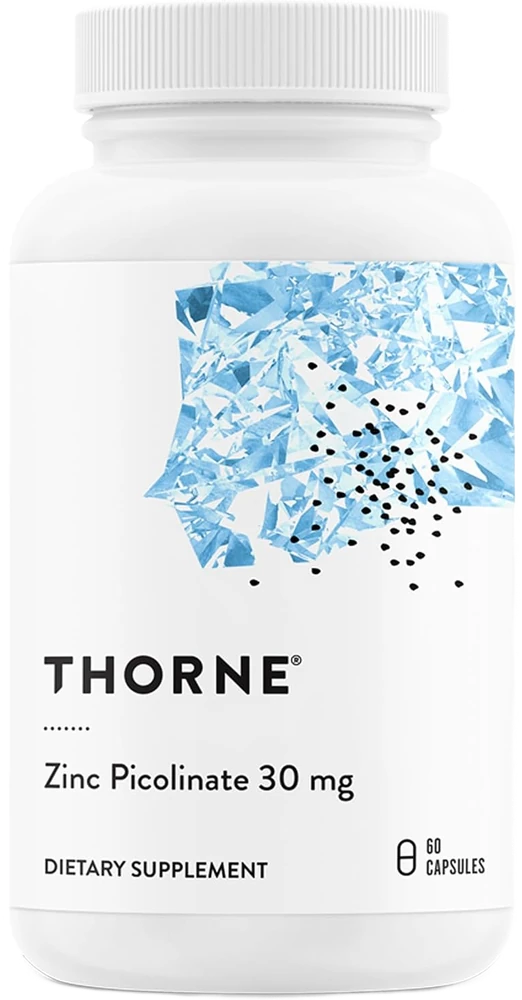
Best overall form: The best-absorbed daily form Picolinate — represented by Thorne Zinc Picolinate 30 mg
If you buy one daily zinc and have no specific complaint, buy this form. Picolinate is ~25-30% absorbed, neutral on cofactor competition, and the form behind the testosterone and acne trial evidence.
Rep product: $14 / month30 mg elemental zinc per cap
Why it wins: all five scores, pros & cons, full label
- Highest absorption tier (~25-30%) alongside bisglycinate — roughly double oxide or gluconate
- Single-cap 30 mg dose matches the Prasad 1996 testosterone protocol exactly
- Neutral on cofactor competition — doesn't fight calcium or iron the way some salts do
- The best-evidenced form for its two flagship daily use cases (acne + testosterone)
- Not the form for an active cold (a swallowed tablet can't bathe the throat — use an acetate lozenge)
- Effect on testosterone only shows in deficient men — test serum zinc first
- Absorption
- ~25-30%
- Best for
- Daily repletion, acne, testosterone
- Rep product
- Thorne (NSF Certified for Sport), B0012ZQPKG
- Form
- Zinc picolinate (chelate)

Our take — Picolinate is the right default for daily use for roughly 90% of people. It wins on bioavailability, tolerability, and use-case breadth — it's the form you can recommend to a stranger without knowing their goal, as long as that goal isn't an active cold. The representative product, Thorne, gives you the cleanest top-tier chelate with NSF Certified for Sport testing at a fair price, but the form is the point: any reputable picolinate or bisglycinate works. For the full product ranking and dose protocol, see our zinc-for-men and zinc-supplements guides.
Who Wins Which Aspect
Sorted by overall SAC Product Score™ — the official ranking.
| # | Pick | Score | Form bioavailability30% | Dose accuracy + cofactor compatibility25% | Third-party testing20% | Cost per active mg15% | Real-world response evidence10% | Buy |
|---|---|---|---|---|---|---|---|---|
| 01 | | 9.2 | 9.51 | 9.51 | 10.01 | 7.53 | 9.01 | Check price |
| Highest absorption tier (~25-30%) alongside bisglycinate — roughly double oxide or gluconateNot the form for an active cold (a swallowed tablet can't bathe the throat — use an acetate lozenge) | ||||||||
| 02 | 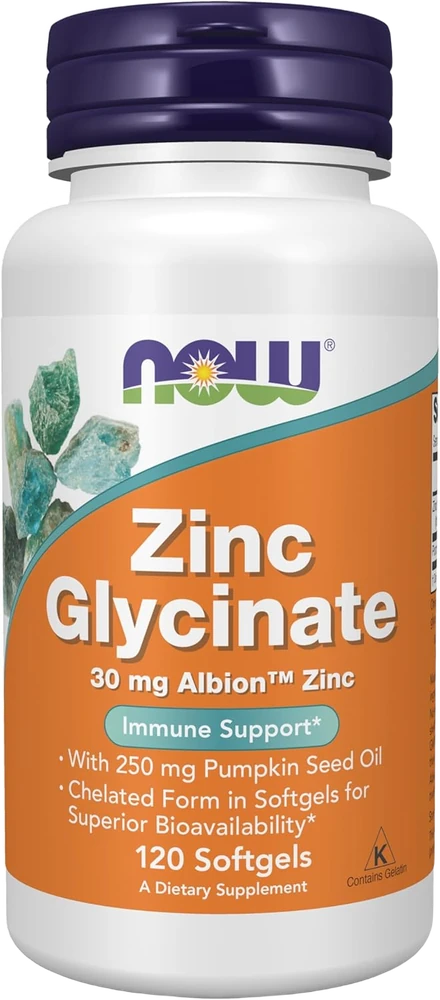 | 8.9 | 9.02 | 9.02 | 8.03 | 10.01 | 8.52 | Check price |
| Same chelate tier and same ~25-30% absorption as picolinate — clinically interchangeableNo NSF / USP certification — only NOW's in-house QC and GMP-facility (vs Thorne's NSF) | ||||||||
| 03 | 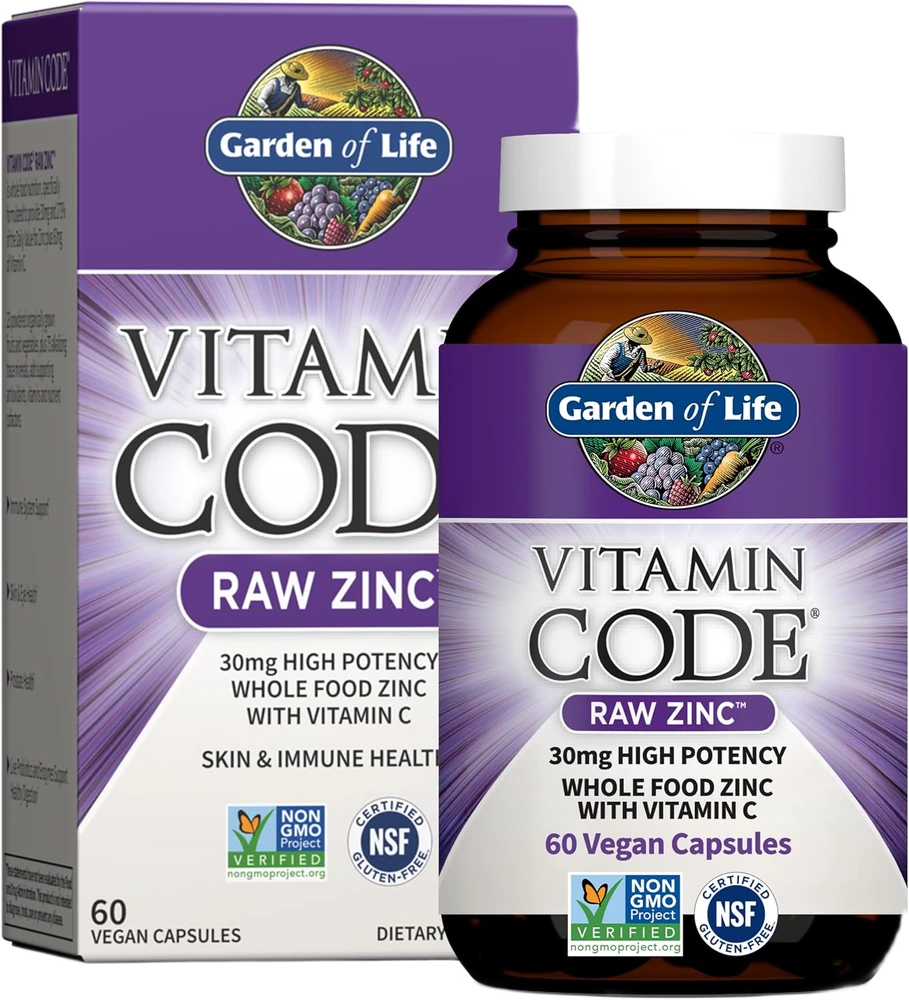 | 8.3 | 7.53 | 9.51 | 8.52 | 7.53 | 8.52 | Check price |
| Whole-food matrix appeals to buyers who refuse isolated synthetic chelates on principleWhole-food matrix absorption is less exactly measured than picolinate or bisglycinate | ||||||||
| 04 | 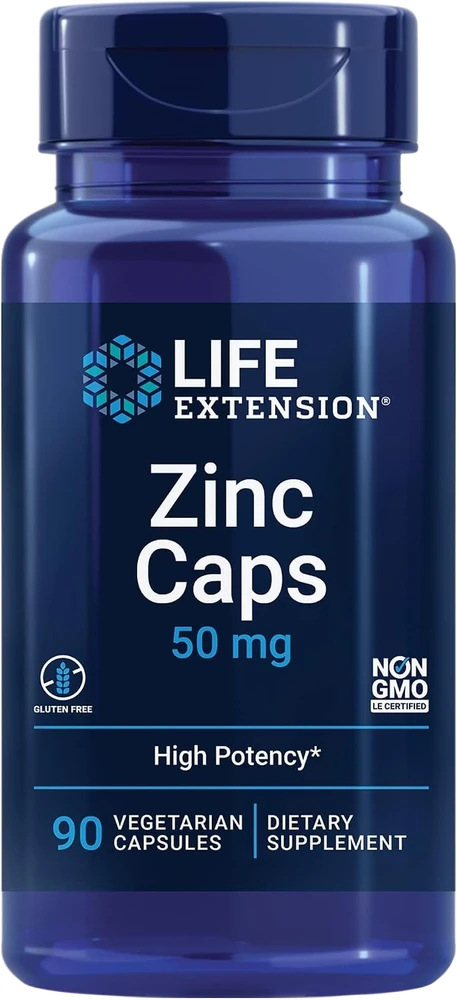 | 7.4 | 7.53 | 6.53 | 8.03 | 8.52 | 7.03 | Check price |
| A genuine step above oxide — citrate and gluconate are real, usable daily forms (Maares & Haase 2020)Roughly half the absorption of picolinate/bisglycinate — you lose elemental zinc per mg on the label | ||||||||
| 05 | 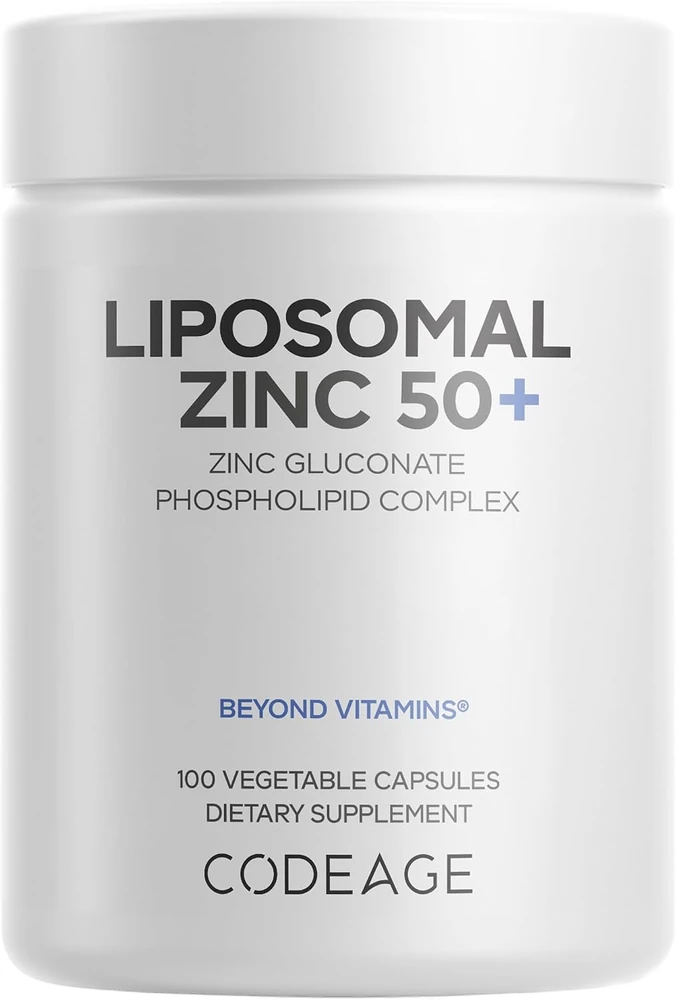 | 6.5 | 6.5 | 6.53 | 6.5 | 7.0 | 6.0 | Check price |
| Vegan, non-GMO capsule with a short excipient list (methylcellulose capsule, L-leucine, sunflower phospholipids, cellulose)You pay a premium over a basic picolinate chelate for a delivery system zinc doesn't need | ||||||||
The Other 4, Ranked
- 02
Best gentle chelate: Bisglycinate — represented by NOW Foods Zinc Glycinate 30 mg
8.9SAC Score™The same top-tier chelate tier as picolinate — two glycines, ~25-30% absorbed — but the gentlest form on the stomach, and the cheapest verified chelate on Amazon.
StrongestCost per active mg10.01WeakestThird-party testing8.0- Absorption
- ~25-30% (same tier as picolinate)
- Best for
- Sensitive guts; first-time chelate trial on a budget
- Rep product
- NOW Foods, B002JNCXME
All five scores, pros & cons, full label
What We Like- Same chelate tier and same ~25-30% absorption as picolinate — clinically interchangeable
- The gentlest top-tier chelate on the stomach — best for buyers with GI sensitivity
- Cheapest verified chelated bisglycinate on Amazon; most $6-9 budget bottles are oxide or gluconate
- 120-softgel bottle stretches to ~4 months at 30 mg/day
What You Live With- No NSF / USP certification — only NOW's in-house QC and GMP-facility (vs Thorne's NSF)
- Same caveat as picolinate: not the form for an active cold, and T effect only in deficient men
- Form
- Zinc bisglycinate (chelate)
Our take — Bisglycinate is the same chelate tier as picolinate, so this isn't a worse form — it's the best form at the lowest price, and the gentlest on the gut. NOW Foods trades the NSF certification of Thorne for a ~35% lower cost, which makes it the ideal way to start the chelate before deciding whether premium testing is worth it. Run 30 mg elemental with food for 8 weeks; if you respond, you can stay here or upgrade. See our zinc-supplements guide for the full product ranking.
- 03
Best whole-food form: Whole-food complex — represented by Garden of Life Vitamin Code Raw Zinc
8.3SAC Score™Whole-food-matrix zinc for buyers who prioritise raw-food brand identity over pure molecular efficiency. Co-formulated with vitamin C and a probiotic + enzyme blend at the trial-aligned 30 mg dose.
StrongestDose accuracy + cofactor compatibility9.51WeakestForm bioavailability7.5- Absorption
- Less precisely characterised than chelates
- Best for
- Raw-food / whole-food buyers; immune use case (co-formulated vitamin C)
- Rep product
- Garden of Life Vitamin Code Raw Zinc, B0098U0QC0
All five scores, pros & cons, full label
What We Like- Whole-food matrix appeals to buyers who refuse isolated synthetic chelates on principle
- Co-formulated 60 mg vitamin C supports both zinc absorption and the immune use case
- Probiotic + enzyme blend may aid gut tolerance; strong sourcing + certification transparency
- Trial-aligned 30 mg elemental dose per capsule
What You Live With- Whole-food matrix absorption is less exactly measured than picolinate or bisglycinate
- Higher cost than NOW for a similar elemental dose, with a weaker testing pedigree than Thorne
- Form
- Whole-food zinc complex (raw food matrix)
Our take — If you're a raw-food / whole-food buyer who refuses isolated chelates on principle, Garden of Life delivers the cleanest version of that philosophy in the zinc category. The elemental dose is right, the co-factors are sensible, and the certification chain is strong. The trade-off versus picolinate or bisglycinate is precision — the absorption math is less exactly measured. For most buyers, picks #3-2 are better value; for buyers with strong whole-food preferences, this is the right answer.
- 04
Standard, fine: The value daily forms Gluconate / Citrate — represented by Life Extension Zinc Caps
7.4SAC Score™The standard, perfectly fine daily forms. Citrate (~18-20%) and gluconate (~15%) are a clear step above oxide — legit value picks if convenience or price wins, just not chelate-tier absorption.
StrongestCost per active mg8.52WeakestDose accuracy + cofactor compatibility6.5- Absorption
- Citrate ~18-20% · gluconate ~15%
- Best for
- Value daily dosing; pharmacy-aisle convenience
- Rep product
- Life Extension Zinc Caps (citrate), B004S8CNMS
All five scores, pros & cons, full label
What We Like- A genuine step above oxide — citrate and gluconate are real, usable daily forms (Maares & Haase 2020)
- Gluconate is USP-verified in mass-market brands and available in every drugstore — easy offline backup
- Citrate is often the cheapest legitimate form per dose; the rep product is a respected longevity brand
What You Live With- Roughly half the absorption of picolinate/bisglycinate — you lose elemental zinc per mg on the label
- Gluconate is more nausea-prone on an empty stomach than the chelates
- The 50 mg rep cap exceeds the 40 mg UL if taken whole daily — split it or dose every other day
- Form
- Zinc citrate (rep) / gluconate (mass-market)
Our take — Gluconate and citrate are the 'standard, fine' tier: clearly better than oxide, clearly below the chelates. Buy this tier if convenience wins (you need a bottle today from a CVS) or if price is the deciding factor and the few extra absorbed percent of a chelate don't matter to you. The representative product, Life Extension Zinc Caps, is a respectable citrate from a trusted longevity brand — just dose it carefully given the 50 mg cap. For the best absorption-per-dollar, picks #1 and #2 still win.
- 05
Liposomal — niche only: Thin evidence Liposomal — represented by Codeage Liposomal Zinc 50 mg
6.5SAC Score™Liposomal zinc in capsule form: 50 mg zinc gluconate wrapped in sunflower phospholipids. The honest question is whether liposomal delivery adds anything for a mineral that already absorbs fine — the published evidence says no.
StrongestCost per active mg7.0WeakestReal-world response evidence6.0- Absorption
- No proven edge over a basic chelate
- Best for
- Buyers who specifically want a liposomal format
- Rep product
- Codeage Liposomal Zinc 50 mg, B09F8BNW8B
Check price on AmazonRep product: price varies (100 capsules)All five scores, pros & cons, full label
What We Like- Vegan, non-GMO capsule with a short excipient list (methylcellulose capsule, L-leucine, sunflower phospholipids, cellulose)
- 100 capsules per bottle — over three months at one capsule a day
- cGMP-certified manufacturing per the listing
What You Live With- You pay a premium over a basic picolinate chelate for a delivery system zinc doesn't need
- No published evidence liposomal delivery improves zinc absorption beyond a standard chelate
- 50 mg per capsule is above the 40 mg Tolerable Upper Intake Level — not a chronic daily dose without copper
- Gluconate is a weaker form than picolinate or bisglycinate before the liposomal wrapper is even considered
- Liposomal tech is the right answer for problem-absorption compounds (CoQ10, glutathione) — zinc isn't one
- Form
- Liposomal zinc gluconate (sunflower-phospholipid complex)
Our take — Liposomal zinc is a marketing solution chasing a non-problem: picolinate and bisglycinate already clear ~25-30% absorption, so wrapping zinc in phospholipids adds cost without measurable clinical gain in the published literature. The representative product, Codeage Liposomal Zinc, pairs that wrapper with zinc gluconate — a weaker form than the top chelates — at 50 mg per capsule, which is above the 40 mg upper limit for chronic use. If you want the liposomal format anyway, it is a clean vegan capsule from a cGMP facility; if you are buying for absorption, a plain Thorne or NOW chelate does more for less. Hard to recommend on pure value; included so the form map is complete.
Zinc In Four Short Lessons
Why the form decides everything
- ~2×
- Bioavailability gap between chelate (picolinate/bisglycinate) and oxide (Maares & Haase 2020)
- +93%
- Serum testosterone rise in marginally zinc-deficient men at 30 mg/day for 6 months (Prasad 1996)
- −33%
- Cold duration on zinc acetate lozenges started within 24 h (Hemilä 2017 meta-analysis)
- 9
- Distinct zinc forms on shelves — only 2-3 are worth buying for daily use
Sources: Maares & Haase 2020 form-by-form absorption review (PMID 32183116); Prasad 1996 testosterone (PMID 8875519); Hemilä 2017 cold-lozenge meta-analysis (PMID 28515951); Cervantes 2019 acne review (PMID 29193602).
Buy picolinate or bisglycinate.
Both are about 25-30% absorbed, roughly double oxide, and they are the forms behind the testosterone and acne evidence. Pick between them by price and testing.
Avoid unspecified 'zinc'.
It is usually oxide, about 10% absorbed, which dominates cheap multivitamins because it is cheap to make. Orotate and liposomal are also forms to skip.
For an active cold, use an acetate lozenge.
Zinc acetate lozenges cut cold duration by about 33% when started within 24 hours (Hemilä 2017). That is a different tool from a daily tablet.
Maares & Haase 2020 (PMID 32183116), Prasad 1996 (PMID 8875519), Hemilä 2017 (PMID 28515951), and Cervantes 2019 (PMID 29193602).
This is a form ranking, not a product ranking — each form was scored on how useful it is for the average buyer, then represented by the single best product to obtain it. Bioavailability carries the most weight because it determines whether the milligrams on the label ever reach your bloodstream — picolinate and bisglycinate absorb roughly twice as well as gluconate or oxide. Use-case fit is next: a form earns its rank by having a real mechanism for a real goal (the acetate lozenge ranks for colds despite zero systemic relevance, because the throat-contact mechanism is real). Tolerability captures nausea and copper antagonism at dose; evidence weights how much human data backs the form's headline claim; cost is the tiebreaker. The form with no product worth buying (oxide) still appears in the comparison table so the map is complete.
Bioavailability of the form · 35%
Picolinate / bisglycinate score top (~25-30% absorbed). Citrate ~18-20%, gluconate ~15%. Oxide bottoms out near ~10%. Acetate is scored on its local throat action, not systemic uptake. The form's absorption is the foundation of everything else (Maares & Haase 2020).
Use-case fit · 25%
Does the form's mechanism map onto a real goal? Picolinate/bisglycinate → daily repletion / acne / testosterone. Acetate lozenge → acute colds (local throat action). A form with no distinctive job (orotate) gets penalised regardless of its claims.
Tolerability · 20%
Nausea on an empty stomach, copper antagonism at dose, and dose ceiling. Bisglycinate scores highest (gentlest chelate). Sulfate and gluconate lose points for nausea. High-dose forms lose a point for copper antagonism above the 40 mg UL without co-supplemented copper.
Trial evidence · 10%
How much human evidence backs the form's headline claim. Picolinate/bisglycinate (testosterone, acne) and acetate (cold lozenges, Hemilä 2017) are the best-evidenced. Citrate/gluconate are well established as standard forms. Orotate and liposomal have thin human data.
Cost per usable mg · 10%
Monthly cost divided by usable elemental zinc at the form's typical dose. Tiebreaker only — bisglycinate (NOW Foods) wins it; orotate and liposomal are the most expensive per usable mg.

Why bioavailability splits the forms apart
- 1
Inorganic salts mostly fail the gut wall
Oxide carries lots of zinc by weight but dissolves poorly and survives gastric pH inefficiently. Only ~10% is absorbed — so a 50 mg oxide pill delivers less elemental zinc than a 15 mg picolinate cap, and the rest is wasted. It's the cheapest form to make, which is why it fills budget multivitamins.
- 2
Chelates ride a carrier across intact
Picolinate and bisglycinate clamp zinc inside an organic molecule (picolinic acid, glycine) that shields it from phytates and competing minerals and shuttles it across the gut wall whole. Absorption jumps to ~25-30% — roughly double the inorganic salts — with far less nausea.
- 3
The form decides the destination
A swallowed chelate's job is systemic: rebuild plasma zinc for testosterone, acne, and repletion. An acetate LOZENGE's job is local: bathe the throat in zinc ions that inactivate rhinovirus on contact during a cold. Same element — different job — because of the form and how you take it.
What to expect once you pick the right form
Acute immune response (lozenge only)
If dosing acutely for a cold via 75-80 mg acetate lozenges started early, symptom duration shrinks ~33% (Hemilä 2017). Daily swallowed tablets do NOT produce this acute shift — different form, different mechanism.
Wrong-form symptoms resolve
If you switched off oxide, the 'felt nothing on bloodwork' problem starts to fix as real elemental zinc finally lands. Most users feel no acute shift on daily dosing — zinc is a cofactor, not a stimulant.
Testosterone trends move (deficient men)
On a chelate, free T rises measurably on bloodwork in deficient men; aromatase normalises; wound healing accelerates. Replete men: no measurable shift — which is why serum testing matters. Re-evaluate your dose here.
Skin + acne response
Inflammatory acne lesion counts drop measurably (Cervantes 2019 timeline) on 30-50 mg elemental. Keratinocyte turnover normalises. Drop to 15 mg/day maintenance once serum is back in range.
The bottom line: match the form to the goal
Picolinate (#1) is the right daily default for roughly 90% of people.
For daily use — repletion, acne, testosterone — that's picolinate or bisglycinate (#1 and #2): ~25-30% absorbed, neutral on cofactors, and the forms behind the trial evidence. They're clinically interchangeable, so pick by price and testing: Thorne picolinate ($14, NSF Certified) or NOW bisglycinate ($9, the gentlest chelate).
The alternatives are standard-but-fine or niche — know when to reach for each.
The whole-food complex (#3) is right only for buyers who refuse isolated chelates on principle. Gluconate and citrate (#4) are legit value daily forms, a clear step above oxide and a clear step below the chelates — fine if convenience or price wins. Liposomal (#5) is a 3-4x markup for a delivery technology zinc doesn't need.
Read the label, confirm the named form, and skip oxide outright.
Oxide is the one to skip — ~10% absorbed, useful for nothing, dominant in cheap multivitamins only because it's the cheapest to manufacture. The single biggest mistake is taking an unspecified "zinc" that turns out to be oxide and wondering why bloodwork never moves. Read the supplement facts panel, confirm the named form, check the elemental zinc per serving — and buy the form that matches your goal.
Quick Answers
What is the single best form of zinc?
For most people, most of the time: zinc picolinate or zinc bisglycinate. Both are top-tier chelates, both clear ~25-30% absorption (roughly twice oxide or gluconate), and they're effectively interchangeable in clinical performance. Bisglycinate is the gentlest on the stomach; picolinate has a slight edge in a few absorption trials. But 'best' is goal-dependent — for an active cold the best form is a zinc ACETATE lozenge, because the mechanism is local throat contact, not systemic absorption. If you can only own one daily bottle and have no specific complaint, buy picolinate or bisglycinate.
What's the difference between picolinate and bisglycinate?
Almost nothing that matters. Both are top-tier chelates with effectively identical clinical performance. Picolinate is zinc bound to picolinic acid (a tryptophan metabolite) — slightly older form, edge in a few absorption trials. Bisglycinate is zinc clamped between two glycine molecules — gentlest on the stomach for the most-sensitive guts, often slightly cheaper. Either one is fine; the form decision matters far less than verifying it's NOT oxide or pure gluconate. Pick by price and brand testing standards rather than agonising over the chelate. See our full zinc-supplements ranking for the head-to-head products.
Which form of zinc is best for testosterone?
Picolinate or bisglycinate — the top-tier chelates that deliver the most elemental zinc to your bloodstream per dose. Prasad 1996 (PMID 8875519) used 30 mg/day for 6 months and nearly doubled serum testosterone (8.3 → 16.0 nmol/L) in marginally deficient men. The crucial caveat: zinc-replete men saw no T uplift. The mechanism is aromatase inhibition (less T leaks into estradiol) plus restored Leydig-cell synthesis. Get a serum zinc test first. See our dedicated guides for zinc-for-men and zinc-supplements for the full product rankings and dose protocol.
Which form of zinc is best for acne?
Picolinate or bisglycinate at 30-50 mg elemental daily. Cervantes 2019 (PMID 29193602) found oral zinc at 30-50 mg/day matched the inflammatory-lesion reduction of oral antibiotics for acne, by dampening the inflammatory cascade and Cutibacterium acnes activity. The form matters because absorption sets the delivered dose — a chelate (picolinate/bisglycinate) clears ~25-30% across the gut wall, so the milligrams on the label actually land, whereas oxide delivers too little to reach the trial dose. Take it with food to blunt nausea at the higher acne dose, and step down to ~15 mg/day maintenance once lesions clear. This is a longer game than the testosterone or cold protocols — give it 8-12 weeks.
Which form is best for a cold?
A zinc ACETATE lozenge (gluconate lozenges also work). This is a different protocol with a different mechanism: the Hemilä 2017 individual-patient-data meta-analysis (PMID 28515951) of zinc acetate / gluconate lozenges cut cold duration ~33% when started within 24 hours of symptom onset and dosed every 2-3 hours at 75-80 mg/day. The lozenge works because zinc ions bathe the throat and inactivate rhinovirus on contact, plus mild systemic immune support — a swallowed picolinate tablet can't do this. Don't run lozenges chronically (the daily dose far exceeds the 40 mg UL) and don't expect daily tablets to shorten an active cold.
Is zinc picolinate really that much better than oxide?
By roughly a factor of two on absorption. The Maares & Haase 2020 review (PMID 32183116) catalogues the form-by-form gap: picolinate and bisglycinate both clear ~25-30% absorbability; citrate sits around ~18-20%; gluconate around ~15%; oxide bottoms out near ~10%. A 50 mg zinc oxide tablet delivers less elemental zinc to your bloodstream than a 15 mg picolinate capsule. Oxide dominates big-box multivitamins because it's the cheapest form to manufacture, not because it works. If you've 'taken zinc' from a multivitamin and felt nothing on bloodwork, oxide is the most likely culprit.
What about gluconate and citrate — are they fine?
Yes, they're standard and fine — meaningfully better than oxide, meaningfully worse than the chelates. Gluconate (~15% absorbed) is the mass-market pharmacy form; a USP-verified gluconate bottle is a legitimate product, just less efficient per mg. Citrate (~18-20%) is the value pick — a clear step above oxide and often under $0.10 a dose. Neither is a clear upgrade over picolinate or bisglycinate, but if convenience or price wins (you need a bottle today from a drugstore), gluconate or citrate at the trial-aligned 30 mg elemental dose will do the job. Just don't expect the chelate-tier absorption.
Is liposomal zinc worth the premium?
No, for almost everyone. Liposomal delivery is a real technology — it genuinely helps with some compounds that don't absorb well as free molecules (CoQ10, glutathione, vitamin C at gram doses). Zinc isn't one of them. A basic picolinate or bisglycinate chelate already clears ~25-30% absorbability; wrapping it in phospholipids adds cost without meaningful clinical gain in the published literature. Liposomal zinc is a marketing solution chasing a problem that doesn't exist — and you'll pay 3-4x for it. Save the premium for a real liposomal candidate. The representative product, Cymbiotika, is genuinely premium on brand and aesthetics — but not on zinc delivery.
Does zinc orotate or sulfate do anything special?
Not enough to choose them. Orotate (zinc bound to orotic acid) is marketed on 'superior cellular uptake' claims that the human evidence doesn't really support — it's expensive and hype-heavy, so skip it. Sulfate is the historical research form (Prasad 1996 actually used zinc sulfate), so it genuinely works — but it's the most nausea-prone form, especially on an empty stomach, which is why the chelates replaced it for consumer use. If you want what the trial record validated with the best tolerability, picolinate or bisglycinate gives you the same elemental zinc without the GI cost.
Every Claim Ranked Above Traces Back To One Of These
4 peer-reviewed sources, each linked to PubMed
- [1] Maares & Haase 2020 PMID 32183116 — A guide to human zinc absorption: general overview and recent advances of in vitro intestinal models. Catalogues bioavailability by zinc form: bisglycinate and picolinate consistently outperform sulfate and gluconate, which both outperform oxide by roughly 2×. The foundational form-selection paper behind the 'bisglycinate ≈ picolinate > citrate > gluconate >> oxide' hierarchy that drives this ranking.
- [2] Prasad 1996 PMID 8875519 — Zinc status and serum testosterone levels of healthy adults. 30 mg/day zinc for 6 months in marginally zinc-deficient men raised serum testosterone from 8.3 to 16.0 nmol/L — nearly doubling baseline. Zinc-replete subjects showed no T uplift. The dose-and-outcome anchor for the testosterone use case that the picolinate/bisglycinate forms serve best.
- [3] Hemilä 2017 PMID 28515951 — Zinc acetate lozenges for treating the common cold: an individual patient data meta-analysis. Individual patient data meta-analysis of zinc acetate lozenge trials: cold duration cut ~33% when lozenges started within 24 hours of symptom onset at 75-80 mg/day dosed every 2-3 hours. Establishes why the acetate-lozenge form — acting locally in the throat — is the right tool for an active cold and the wrong one for daily dosing.
- [4] Cervantes 2019 PMID 29193602 — The role of zinc in the treatment of acne: A review of the literature. Comprehensive review of zinc-in-acne RCTs: 30-50 mg elemental zinc daily reduced inflammatory acne lesion counts comparable to low-dose oral antibiotics across multiple trials, without antibiotic-resistance risk. The reference review for the acne use case that the chelated forms serve.
More Zinc Guides
- Best Zinc SupplementsZinc forms ranked by bioavailability (picolinate ≈ bisglycinate >> gluconate > oxide), dose, copper-balance, third-party testing — picks that actually move T and immune markers.
- Best Zinc for AcneOral zinc reduces inflammatory acne (anti-inflammatory + sebum + C. acnes), strongest in deficient skin. Ranked by the 30-50 mg dose, form, copper safety, and acne-trial evidence.
- Best Zinc for Immune SupportZinc lozenges (acetate/gluconate, 75 mg/day) cut cold duration ~33% (Hemilä 2017); daily 15-30 mg supports baseline immunity in deficiency. Ranked by form, dose, and the acute-vs-daily distinction.
- Best Zinc for MenTen zinc supplements ranked for men — testosterone (aromatase + Leydig support in deficient men), prostate, fertility, immune recovery — by form bioavailability + copper safety.
- Best Zinc for TestosteroneZinc only raises testosterone in deficient men (Prasad 1996: 30 mg/day ~doubled T) — ranked by the trial 30 mg dose, bioavailable form (picolinate/bisglycinate), and copper balance.
- Best Zinc for WomenTen zinc supplements ranked for women — hormonal acne, hair shedding, immune, and PCOS — by form bioavailability, gut tolerance, testing, and price.
Affiliate disclosure: every Amazon link uses our Associates tag (superachieverclub-20). We earn a small commission at no cost to you; it funds independent reviews. We never accept payment to change a ranking.