
Top 7 Best Zinc for Women (2026)
 01 · Best overall for women✓ Label verified · Supplement Facts read Sep 7, 2026
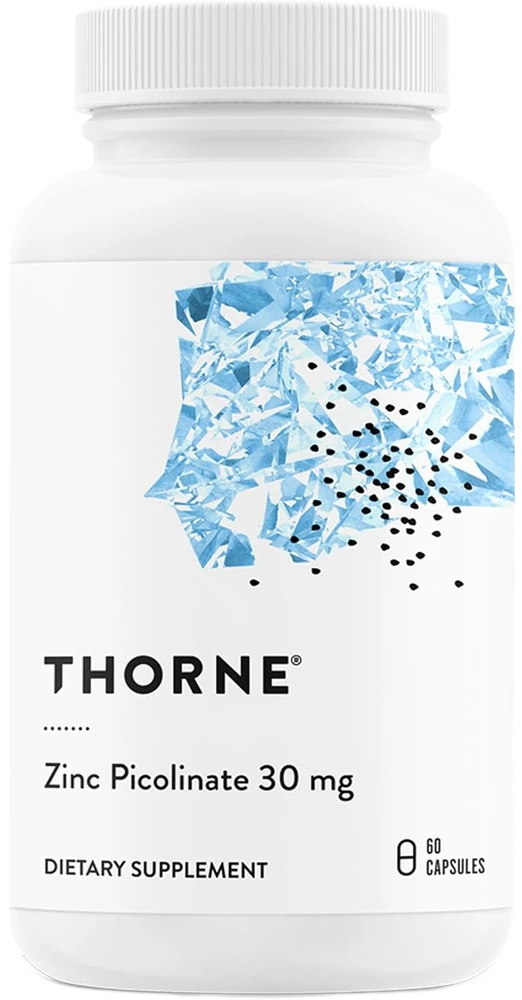
Best overall for women: Thorne Zinc Picolinate 30 mg
NSF Certified for Sport zinc picolinate sitting exactly on the Cervantes 2019 inflammatory-acne dose (30 mg), $14/month — the cleanest, best-tested bottle for a focused skin protocol.
$14 / month$0.23 / 30 mg elemental cap
Why it wins: all five scores, pros & cons, full label
- Single-cap 30 mg dose sits squarely in the Cervantes 2019 acne window (30-50 mg)
- NSF Certified for Sport — the highest third-party testing standard in existence, a real fraud filter for the whole supplement industry
- Picolinate is one of the two top-tier chelates — ~25-30% absorbable
- Thorne's clinician-brand QC pedigree is among the strongest in the supplement industry
- Picolinate is marginally less gentle on a sensitive stomach than bisglycinate (take with food)
- 60-cap bottle requires more frequent re-orders than the 120-cap budget competitor across an 8-12 week skin cycle
- Per serving
- 30 mg elemental zinc (1 cap)
- Bottle
- 60 capsules (~2 months at 30 mg/day)
- Testing
- NSF Certified for Sport — banned-substance screened
- Form
- Zinc picolinate (chelate)

Our take — If your main reason for buying zinc is inflammatory or hormonal acne, this is the sharpest pick. The 30 mg single-cap dose lands exactly on the Cervantes 2019 trial window, NSF Certified for Sport testing is the strongest fraud filter in the category. Take it with food (picolinate is a touch less gentle than bisglycinate), run a full 8-12 week skin cycle, and pair it with a dermatology consult if the breakouts clearly track your cycle.
 02
02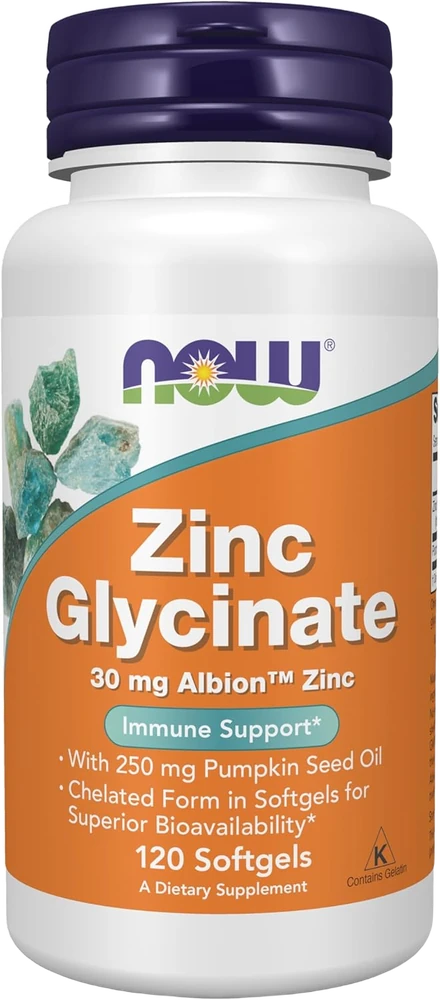 03
03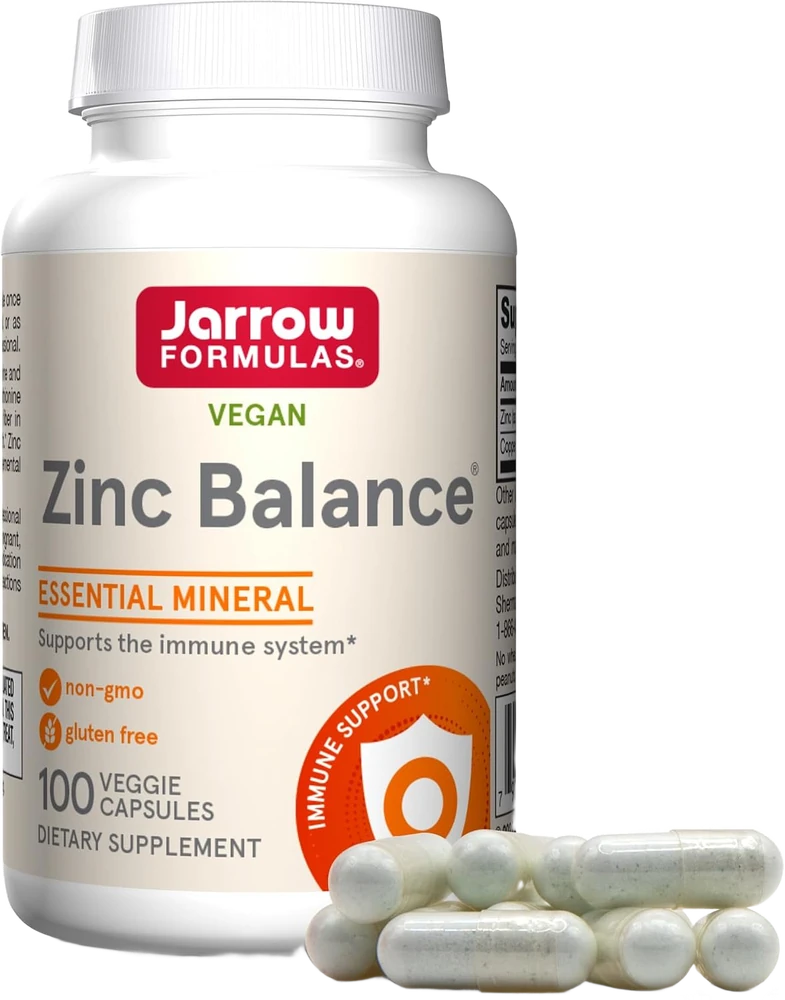 04
04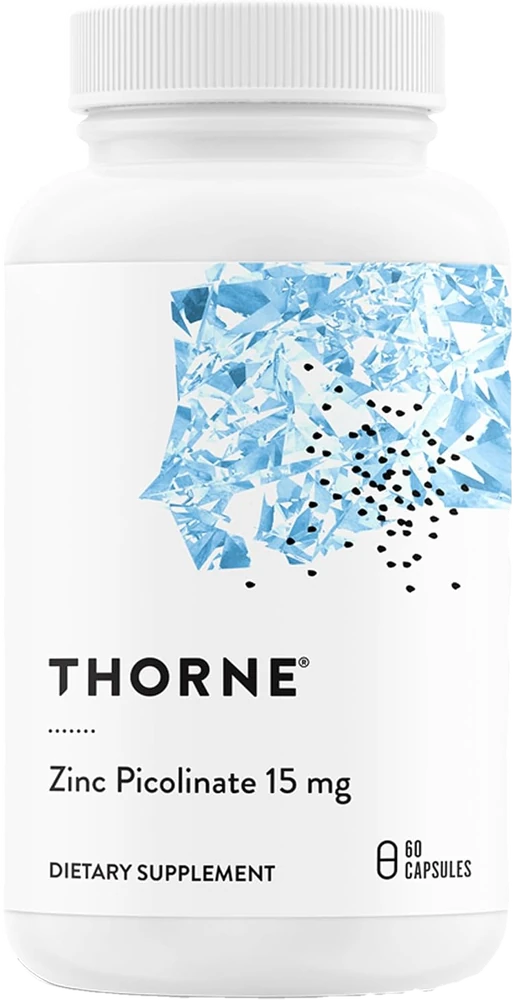 05
05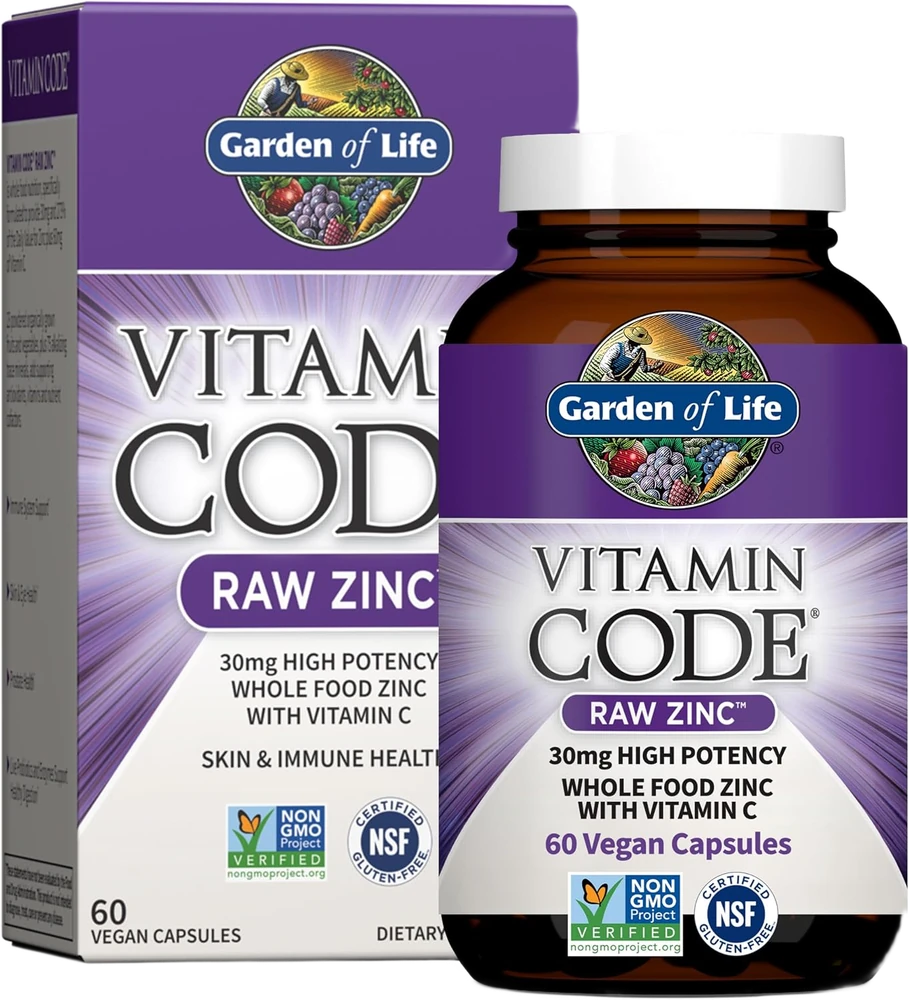 06
06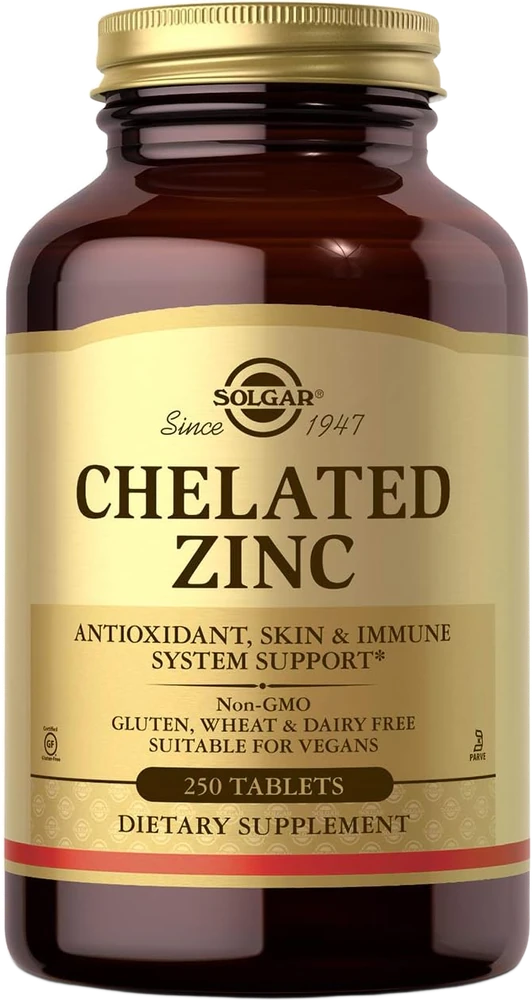 07
07Who Wins Which Aspect
Sorted by overall SAC Product Score™ — the official ranking.
| # | Pick | Score | Form bioavailability30% | Dose accuracy + cofactor compatibility25% | Third-party testing20% | Cost per active mg15% | Real-world response evidence10% | Cost Per Dose | Buy |
|---|---|---|---|---|---|---|---|---|---|
| 01 | | 9.2 | 9.51 | 9.51 | 10.01 | 7.53 | 9.01 | $0.23 / 30 mg elemental cap | Check price |
| Single-cap 30 mg dose sits squarely in the Cervantes 2019 acne window (30-50 mg)Picolinate is marginally less gentle on a sensitive stomach than bisglycinate (take with food) | |||||||||
| 02 | | 8.9 | 9.51 | 9.51 | 9.02 | 6.5 | 9.01 | — | Check price |
| Zinc picolinate is a top-tier chelate (~25-30% absorbable), and this 30 mg capsule sits right on the acne dosePicolinate is marginally less gentle on a sensitive stomach than bisglycinate — take it with food | |||||||||
| 03 | | 8.9 | 9.02 | 9.02 | 8.0 | 10.01 | 8.52 | $0.08 / 30 mg elemental softgel | Check price |
| Cheapest verified chelated bisglycinate on Amazon — most $6-9 budget bottles are oxide or gluconateNo NSF / USP certification — only in-house QC + GMP-facility | |||||||||
| 04 | | 8.5 | 9.02 | 8.53 | 8.0 | 8.52 | 8.03 | $0.10 / capsule | Check price |
| Copper in the same capsule, 15:1 ratio printed on the labelBelow the 30 mg used in the acne studies | |||||||||
| 05 | | 8.3 | 9.51 | 8.0 | 9.02 | 5.5 | 8.03 | $0.25 / capsule | Check price |
| 15 mg fits the female requirement better than 30 mgHighest price per mg of zinc on this list | |||||||||
| 06 | | 8.3 | 7.53 | 9.51 | 8.53 | 7.53 | 8.52 | $0.27 / 30 mg elemental cap | Check price |
| Whole-food matrix appeals to women who distrust isolated synthetic chelatesWhole-food matrix exact bioavailability less precisely characterised than picolinate or bisglycinate | |||||||||
| 07 | | 8.1 | 9.02 | 7.0 | 8.0 | 8.52 | 8.03 | — | Check price |
| Legacy clinician-shelf brand with 75+ years of consumer reputation22 mg elemental sits at the lower end for an active acne protocol — the 30 mg picks are better for clearing inflammatory lesions | |||||||||
The Other 6, Ranked
- 02
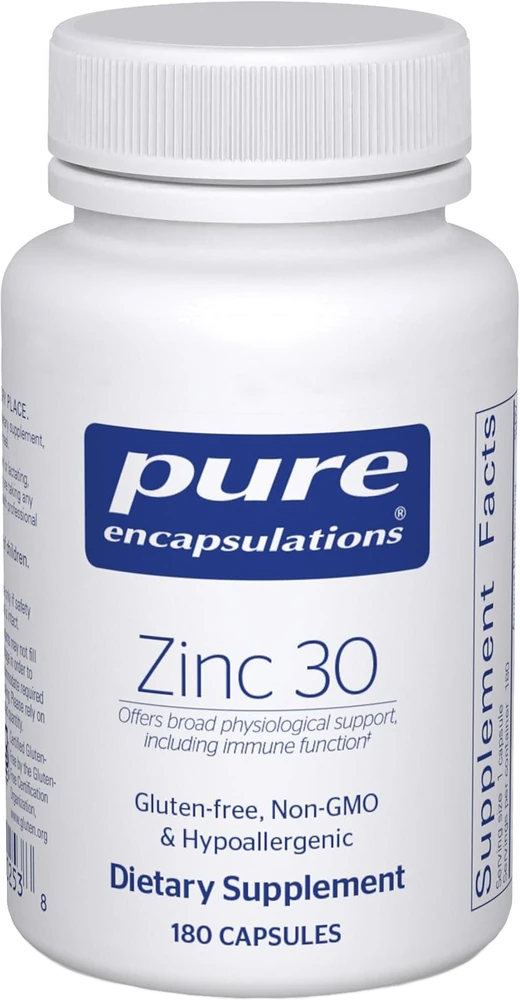
Best allergen-free label: Pure Encapsulations Zinc 30
8.9SAC Score™Clinician-grade hypoallergenic zinc picolinate at the trial dose — a top-tier chelate on one of the cleanest labels a woman can buy (vegan, gluten-free, no dairy or soy), and the default pick for daily skin and immune support.
StrongestForm bioavailability9.51WeakestCost per active mg6.5- Per serving
- 30 mg elemental zinc (1 capsule; 30 mg per capsule)
- Bottle
- 180 capsules (~6 months at 30 mg/day)
- Testing
- Hypoallergenic positioning; vegan, GFCO gluten-free, non-GMO, dairy- and soy-free seals on the label
All five scores, pros & cons, full label
What We Like- Zinc picolinate is a top-tier chelate (~25-30% absorbable), and this 30 mg capsule sits right on the acne dose
- Hypoallergenic, vegan label — gluten-free (GFCO), non-GMO, no dairy or soy; the only other ingredients are cellulose plant fiber, the capsule shell and ascorbyl palmitate
- 180 capsules per bottle — about six months at one a day, so one purchase covers several full skin cycles
- Clinician-preferred brand used by integrative medicine practices for 30+ years
What You Live With- Picolinate is marginally less gentle on a sensitive stomach than bisglycinate — take it with food
- Premium pricing partly clinician-brand markup, not pure formulation cost
- Form
- Zinc picolinate (chelate)
Our take — The default pick for women. Picolinate is a top-tier chelate, the hypoallergenic vegan label is among the cleanest available, and the 30 mg capsule sits right on the acne window — with a 180-capsule bottle that covers roughly six months at the labeled serving. Take it with food (picolinate is a touch less gentle than bisglycinate; if your stomach rebels, NOW's bisglycinate is the gentler route). For allergen concerns, or anyone who wants absolute label transparency on a long skin or hair protocol, it's worth the clinician-brand premium. If you're not sure where to start, start here.
- 03
Best budget: NOW Foods Zinc Glycinate 30 mg
8.9SAC Score™Real chelated bisglycinate at the lowest price on the list. $9/month, 120 softgels, NOW's 30-year QC pedigree — and the big bottle covers a full skin cycle and beyond.
StrongestCost per active mg10.01WeakestThird-party testing8.0- Per serving
- 30 mg elemental zinc from 150 mg zinc bisglycinate (1 softgel) + 250 mg pumpkin seed oil
- Bottle
- 120 softgels (~4 months at 30 mg/day)
- Testing
- NOW in-house QC labs, GMP-certified facility
All five scores, pros & cons, full label
What We Like- Cheapest verified chelated bisglycinate on Amazon — most $6-9 budget bottles are oxide or gluconate
- Gentle bisglycinate form — the gentlest chelate on this list — at the lowest price
- 120-softgel bottle covers a full 8-12 week acne cycle (and a hair workup) in one purchase
- NOW's in-house QC is among the most consistent in the industry — 30+ years
What You Live With- No NSF / USP certification — only in-house QC + GMP-facility
- Softgel shell is bovine gelatin and the softgel contains soy lecithin — not vegetarian, not soy-free
- Brand identity less premium than Pure Encapsulations or Thorne for the same elemental dose
- Form
- Zinc bisglycinate (chelate)
Our take — If you want to test a real chelated zinc without committing $14+/month, NOW Foods is the right starting point for women. The supply chain is real, the dose is real, and the bisglycinate chelate is the gentlest form on this list — at a lower price. The 120-softgel bottle happens to cover a full skin cycle in a single buy. You're trading NSF certification theatrics for ~50% lower cost. Run it with food; if you respond, you can upgrade to Thorne (#1) or Pure Encapsulations (#2) on cycle two, but most women stay here.
- 04
Best for long-term use: Jarrow Zinc Balance
8.5SAC Score™15 mg of zinc with 1 mg of copper in the same capsule. For a woman who takes zinc every day for months, for skin or hair, this is the one product here that also protects copper.
StrongestForm bioavailability9.02WeakestThird-party testing8.0- Per serving
- 15 mg zinc and 1 mg copper (1 capsule)
- Bottle
- 100 capsules, over three months
- Testing
- Brand quality testing; no NSF listing found (checked Oct 13, 2026)
All five scores, pros & cons, full label
What We Like- Copper in the same capsule, 15:1 ratio printed on the label
- 15 mg is almost twice the 8 mg a woman needs a day and far below the 40 mg upper limit
- 100 capsules for $9.99
- Vegan capsule, nine major allergens excluded
What You Live With- Below the 30 mg used in the acne studies
- No third-party certifier listing found
- Copper is unnecessary if your multivitamin already has it
- Form
- Zinc L-methionine sulfate, copper gluconate
Our take — Long zinc courses are common in women: three months for acne, longer for hair. Zinc taken that long lowers copper (Fosmire 1990), and low copper causes anemia. Jarrow Zinc Balance is the only product on this list that deals with it in the same capsule. At 15 mg it is a daily dose, not the 30 mg acne dose, so use a 30 mg pick for the first months of an acne course and this for everything after.
- 05
Best daily dose for women: Thorne Zinc Picolinate 15 mg
8.3SAC Score™The half-strength version of our top pick. 15 mg of zinc picolinate covers a woman's daily requirement of 8 mg with room to spare, and the label allows a second capsule when you want the 30 mg study dose.
StrongestForm bioavailability9.51WeakestCost per active mg5.5- Per serving
- 15 mg zinc (1 capsule)
- Bottle
- 60 capsules
- Testing
- NSF/ANSI 173 contents listing; not on the NSF Certified for Sport list (checked Oct 13, 2026)
All five scores, pros & cons, full label
What We Like- 15 mg fits the female requirement better than 30 mg
- Stays under the 40 mg upper limit even with a multivitamin
- Label allows one or two capsules a day
- NSF lists the label contents as tested
What You Live With- Highest price per mg of zinc on this list
- One capsule is below the 30 mg used in the acne studies
- Not on the NSF Certified for Sport list
- Form
- Zinc picolinate
Our take — Most zinc capsules are dosed for the male studies. A woman needs 8 mg a day, and many women's multivitamins already contain zinc. Thorne's 15 mg capsule is the strength that fits that picture: enough for daily cover, and two capsules when you want the 30 mg used in the acne trials. It ranks below the 30 mg capsule because you pay about the same for half the zinc.
- 06
Best whole-food form: Garden of Life Vitamin Code Raw Zinc 30 mg
8.3SAC Score™Whole-food-matrix zinc for women who prioritise raw-food brand identity over pure molecular efficiency. Co-formulated with 60 mg vitamin C and a probiotic + enzyme blend that may ease gut tolerance.
StrongestDose accuracy + cofactor compatibility9.51WeakestForm bioavailability7.5- Per serving
- 30 mg elemental zinc (1 cap)
- Bottle
- 60 capsules (~2 months at 30 mg/day)
- Testing
- Non-GMO Project Verified, gluten-free certified, raw-food certified
All five scores, pros & cons, full label
What We Like- Whole-food matrix appeals to women who distrust isolated synthetic chelates
- Co-formulated 60 mg vitamin C supports zinc absorption + the immune and skin use cases
- Probiotic + enzyme blend may aid gut tolerance for sensitive women
- Strong brand transparency on sourcing + certification chain
What You Live With- Whole-food matrix exact bioavailability less precisely characterised than picolinate or bisglycinate
- Higher cost than NOW for similar elemental dose and weaker testing pedigree
- Form
- Whole-food zinc complex (raw food matrix)
Our take — If you're a raw-food / whole-food buyer who refuses isolated chelates on principle, Garden of Life delivers the cleanest version of that philosophy in the zinc category. The elemental dose is right, the co-factors (vitamin C, probiotics) are sensible for the skin and immune use cases, and the brand certification chain is strong. The trade-off versus picolinate or bisglycinate is precision — the absorption math is less exactly measured. For most women, the three top picks are better value; for buyers with strong whole-food preferences, this is the right answer.
- 07
Best lower-dose chelate: Solgar Chelated Zinc 22 mg
8.1SAC Score™The classic clinician-shelf glycinate chelate — and its 22 mg dose lands neatly in the female window. Real chelate, legacy brand with 75+ years of consumer trust, in a 250-tablet bottle.
StrongestForm bioavailability9.02WeakestDose accuracy + cofactor compatibility7.0- Per serving
- 22 mg elemental zinc (1 tab)
- Bottle
- 250 tablets (~8 months at 22 mg/day)
- Testing
- Kosher (Parve); Non-GMO, vegan-suitable, gluten-, wheat- and dairy-free per the front label; Solgar QC
All five scores, pros & cons, full label
What We Like- Legacy clinician-shelf brand with 75+ years of consumer reputation
- Real glycinate amino-acid chelate at a fair price
- 22 mg sits squarely in the female maintenance-to-immune window — no splitting needed
- 250-tablet bottle gives excellent runway — about eight months at one a day
What You Live With- 22 mg elemental sits at the lower end for an active acne protocol — the 30 mg picks are better for clearing inflammatory lesions
- Tablet format (not capsule or softgel) slightly slower onset
- Form
- Zinc glycinate (amino acid chelate)
Our take — Solgar Chelated Zinc is the bottle your integrative-medicine clinician likely recommended a decade ago — and for a woman, its 22 mg dose is arguably better-pitched than the 30 mg picks for plain maintenance and immune support, no splitting required. For an active inflammatory-acne push you'd want the 30 mg end, but as a gentle everyday chelate at a fair price from a trusted legacy brand, it's a solid, low-fuss choice. Buy for brand familiarity and a dose that fits the female window out of the box.
Zinc In Four Short Lessons
Why zinc earns its place in a woman's stack
- = antibiotics
- 30-50 mg/day zinc matched low-dose oral antibiotics for inflammatory acne, no resistance risk (Cervantes 2019)
- ~2×
- Bioavailability gap between chelate (picolinate/bisglycinate) and the oxide most women's multivitamins use
- −33%
- Cold duration on zinc acetate lozenges started within 24 h (Hemilä 2017 meta-analysis)
- 8 mg
- Female RDA — the deficiency-prevention floor; 15-30 mg is the productive range for skin and immune support
Sources: Cervantes 2019 acne review (PMID 29193602); Hemilä 2017 cold meta-analysis (PMID 28515951); Maares & Haase 2020 absorption review (PMID 32183116); Wessells & Brown 2012 deficiency prevalence (PMID 23209782); Prasad 1996 zinc/hormone cornerstone (PMID 8875519).
Choose a chelated form.
The zinc in most women's multivitamins is oxide or gluconate, with about half the absorbability of picolinate and bisglycinate.
Skip the high-dose and 'women's brand' bottles.
Women rarely need 50 mg; the female RDA is 8 mg. Liposomal and direct-to-consumer women's zinc is markup, not absorption.
Set the dose with your clinician if you are pregnant or have PCOS.
For inflammatory acne, 30-50 mg a day matched low-dose oral antibiotics in trials (Cervantes 2019).
Cervantes 2019 acne-RCT review (PMID 29193602); Hemila 2017 cold-lozenge meta-analysis (PMID 28515951); Maares & Haase 2020 form-absorption review (PMID 32183116); Wessells & Brown 2012 deficiency-prevalence model (PMID 23209782).
Each pick was scored 0-10 across five criteria, then weighted to a final composite. Form bioavailability carries the most weight because it directly determines whether the milligrams on the label become usable zinc in a woman's bloodstream — picolinate and bisglycinate absorb roughly twice as well as the gluconate or oxide in most women's multivitamins. Dose flexibility and gut tolerance together ensure the product hits the 15-30 mg elemental female window and sits gently on a sensitive stomach — bisglycinate is favoured for exactly that reason. Third-party testing acts as a fraud filter. Cost per active mg is the tiebreaker. Female-outcome evidence (the acne, hair, immune, and PCOS base) confirms the dose math maps onto female physiology rather than generic 'wellness'.
Form bioavailability · 30%
Picolinate / bisglycinate get +3 base. Citrate +1.5. Sulfate +1. Gluconate alone +0.5. Oxide / 'zinc' unspecified: -3. The form decides everything — if you fail this criterion you fail the bottle, no matter how female-targeted the marketing.
Dose flexibility + gut tolerance · 25%
Elemental zinc per serving should land in the 15-30 mg female window, with bonus for splittable doses (so one bottle covers both an acne protocol and a step-down maintenance). Gentlest chelate (bisglycinate) scores highest on tolerance; bottles that co-formulate competing minerals (high calcium, iron) lose points. 50+ mg high-dose bottles lose points for women specifically — they rarely need them.
Third-party testing standards · 20%
NSF Certified for Sport, USP-grade verification, ConsumerLab approval, or public COA. Patented chelates (e.g. TRAACS) get a half-point credit for supplier-level testing on top of brand QC. GMP-only manufacturing without public testing data scores lower.
Cost per active mg · 15%
Monthly cost divided by elemental zinc per day at the recommended dose. The category is cheap overall ($6-18/month productive range) — the spread between budget and premium is real but narrow. DTC women's-brand markup is penalised hardest here, since it buys nothing chemical.
Female-outcome evidence · 10%
Trial-dose alignment with Cervantes 2019 (acne), Hemilä 2017 (immune lozenges), and the deficiency-repletion case for hair and PCOS. Bottles that match the female trial window exactly score higher than those that miss the dose or the form.

How chelated zinc supports skin + immunity in women
- 1
Glycine chaperone clears the gut wall — gently
In bisglycinate, two glycine molecules clamp the zinc ion and shield it from competitive binding by phytates, fibre, and other minerals, carrying it across the gut wall intact. Crucially for women's sensitive stomachs, the glycine buffer also makes it the gentlest chelate — far easier to tolerate than the oxide in most women's multivitamins.
- 2
Plasma zinc rises + inflammation and sebum settle
Within 4-8 weeks serum zinc rebuilds. Zinc's anti-inflammatory action damps the inflammatory cascade behind tender cyclical breakouts, and it helps regulate sebaceous-gland sebum output — the two drivers of the hormonal-acne pattern. This is the mechanism behind the Cervantes 2019 lesion-count reductions.
- 3
Follicle + immune cofactor roles come back online
Zinc is a cofactor for the protein machinery of the hair follicle and for normal immune-cell function. In a verified-deficient woman, repleting removes a fixable contributor to telogen-effluvium shedding and restores a defended immune baseline — without the copper-antagonism risk that only appears at chronic high doses.
What a woman should expect on a 12-week zinc protocol
Acute immune response (lozenge protocol only)
If dosing acutely for a cold via 75-80 mg lozenges, symptom duration shrinks ~33% (Hemilä 2017). Daily capsules do not produce a felt acute shift.
Subtle baseline improvements
Most women feel no acute shift on daily dosing — zinc is a cofactor, not a stimulant. The gentlest sign is simply better tolerance once you switch off oxide onto a chelate taken with food.
Skin starts to settle
Inflammatory acne calms as zinc's anti-inflammatory and sebum-regulating effects take hold. Serum zinc rebuilds to range. Replete women see little here — which is exactly why a serum test up front is worth it.
Acne response consolidates + shedding settles
Inflammatory lesion counts drop measurably on the Cervantes 2019 timeline, and in a verified-low woman repleting zinc the telogen-effluvium shed eases over a similar window (alongside iron + thyroid correction). Drop to 15 mg/day maintenance once serum is back in range.
The bottom line for women
Pure Encapsulations Zinc 30 (#2) is the all-round pick for women.
It is a top-tier picolinate chelate on one of the cleanest hypoallergenic, vegan labels, in a 30 mg capsule that sits on the acne dose and a 180-capsule bottle that lasts about six months at one a day. That is why it is the all-round buy for daily skin and immune support.
The honest alternatives track your goal and budget: #1 for acne, #3 for budget, #6 for whole-food.
Fighting inflammatory or hormonal acne, Thorne Zinc Picolinate (#1) sits exactly on the Cervantes 2019 dose with NSF testing at $14. Tight budget: NOW Foods Zinc Glycinate (#3) at $9, the same gentle bisglycinate in a 120-softgel bottle that covers a full skin cycle. Garden of Life Raw Zinc (#6) for whole-food brand identity.
Buy the right form, don't over-dose, and don't treat zinc as a standalone cure.
A 50 mg oxide tablet delivers less elemental zinc than a 15 mg picolinate capsule, and chronic dosing past the 40 mg UL produces copper-deficiency problems over months. Test serum zinc first (a $30 blood-panel add-on), rule out iron and thyroid in parallel for hair, and loop in a dermatologist or gynecologist for persistent skin, PCOS, or anything around pregnancy.
Quick Answers
Does zinc actually help with hormonal acne?
Yes, for inflammatory acne specifically, and the evidence is the strongest female-relevant case for zinc. The Cervantes 2019 review (PMID 29193602) catalogued multiple RCTs in which 30-50 mg elemental zinc daily reduced inflammatory acne lesion counts to a degree comparable with low-dose oral antibiotics — without the antibiotic-resistance risk. The mechanism fits the hormonal-acne pattern women see: zinc is anti-inflammatory and helps regulate sebum production, the two drivers behind the deep, tender cyclical breakouts. It works best on inflammatory papules and pustules rather than pure blackheads, and it takes 8-12 weeks. If your acne is clearly cycle-linked, treat zinc as an adjunct alongside a dermatology consult rather than a standalone cure.
Can zinc help with hair loss or thinning?
It can remove one correctable contributor, but it is not a regrowth drug. Diffuse shedding — telogen effluvium — has several fixable drivers in women, and the big three on a blood panel are iron (ferritin), thyroid, and zinc. Zinc is a cofactor for the protein machinery of the hair follicle, so a woman who is genuinely zinc-deficient and shedding can stop one of the leaks by repleting to a normal serum level. The catch is the same as everywhere with zinc: if your serum zinc is already normal, more won't grow hair, and over-dosing zinc can actually worsen things by inducing copper deficiency. Test first; if low, replete to range; and rule out the iron and thyroid drivers in parallel rather than assuming it's all zinc.
How much zinc should a woman take?
Less than a man. The US RDA is 8 mg for women (11 mg for men), and that's the deficiency-prevention floor. For maintenance and immune support, 15-25 mg elemental zinc per day is plenty for most women. For an active inflammatory-acne protocol, the 30 mg end of the Cervantes 2019 range is the productive dose, run with food for 8-12 weeks. The Tolerable Upper Intake Level is 40 mg/day chronic — most women never need to approach it, so the 50 mg high-dose bottles on this list are usually overkill unless a clinician has flagged a documented deficiency to replete. Factor in any zinc already in your multivitamin so you don't double up unintentionally.
Is zinc safe to take when pregnant or trying to conceive?
Adequate zinc matters during the reproductive years, and most prenatal multivitamins already include a sensible amount precisely because zinc supports normal cell division and immune function. That's general-wellness adequacy, not a reason to layer a high-dose standalone zinc on top. If you're pregnant, breastfeeding, or trying to conceive, the right move is to let your prenatal or your clinician set the total zinc dose rather than self-stacking — too much zinc can disturb copper balance, which matters more when you're supporting two. Treat this article as guidance for general female supplementation; for pregnancy specifically, your obstetrician or midwife has the final say on dose.
Can zinc help with PCOS?
Zinc is a reasonable low-risk adjunct in the PCOS picture, not a treatment for it. The interest comes from two angles women with PCOS care about: insulin sensitivity, where zinc is involved in insulin signalling and storage, and the skin and hair symptoms (acne, shedding) that zinc independently helps. Some small trials suggest a modest metabolic and dermatologic benefit, but the evidence is far thinner than zinc's acne case, and PCOS is a clinical diagnosis that needs a proper management plan. Use zinc at 15-30 mg as a sensible add-on if you're already deficient or fighting the skin symptoms — but build it into a plan with your gynecologist or endocrinologist rather than expecting it to fix the underlying hormonal pattern alone.
Is zinc picolinate really that much better than the oxide in my multivitamin?
By roughly a factor of two on absorption. The Maares & Haase 2020 review (PMID 32183116) catalogues the form-by-form gap: picolinate and bisglycinate both clear ~25-30% absorbability; gluconate sits around 15%; oxide bottoms out near 10%. Most women's multivitamins list their zinc as oxide because it's the cheapest form — and a 50 mg oxide dose delivers less elemental zinc to your bloodstream than a 15 mg picolinate capsule. If you've been relying on the zinc in a women's multi for your skin and felt nothing, the form is almost certainly why. Bisglycinate is the gentlest top-tier chelate, which is why it leads this list for women.
Will zinc cause nausea?
On an empty stomach, in about 30% of users — especially on the older sulfate and gluconate forms. Take it with a meal containing protein and fat and the rate drops to single digits. Bisglycinate is the gentlest chelate and the best choice if you have a sensitive stomach; picolinate is also well-tolerated. If a specific bottle nauseates you persistently even with food, you've likely got a sulfate-based product or you're at the top of the dose range; halve the dose for a week and titrate back up. For women prone to nausea (including early pregnancy), the lower 15 mg dose with food is the gentlest entry point.
Every Claim Ranked Above Traces Back To One Of These
6 peer-reviewed sources, each linked to PubMed
- [1] Cervantes 2019 PMID 29193602 — The role of zinc in the treatment of acne: A review of the literature. Comprehensive review of zinc-in-acne RCTs: 30-50 mg elemental zinc daily reduced inflammatory acne lesion counts comparable to low-dose oral antibiotics across multiple trials, without antibiotic-resistance risk. The cornerstone evidence for zinc's female skin use case — anti-inflammatory action plus sebum regulation against the hormonal-acne pattern.
- [2] Hemilä 2017 PMID 28515951 — Zinc acetate lozenges for treating the common cold: an individual patient data meta-analysis. Individual patient data meta-analysis of zinc acetate lozenge trials: cold duration cut ~33% when lozenges started within 24 hours of symptom onset at 75-80 mg/day dosed every 2-3 hours. The reference paper for acute immune protocols and the lozenge-vs-capsule distinction.
- [3] Maares & Haase 2020 PMID 32183116 — A guide to human zinc absorption: general overview and recent advances of in vitro intestinal models. Catalogues bioavailability by zinc form: bisglycinate and picolinate consistently outperform sulfate and gluconate, which both outperform oxide by roughly 2×. The reference paper for form-selection — the foundation of why this list ranks bisglycinate and picolinate above the oxide in most women's multivitamins.
- [4] Wessells & Brown 2012 PMID 23209782 — Estimating the global prevalence of zinc deficiency: results based on zinc availability in national food supplies and the prevalence of stunting. Global prevalence model: ~17% of the world population is at risk of inadequate zinc intake, concentrated in plant-based-diet populations where phytate-zinc binding blocks absorption. Explains why structural deficiency is common in low-meat, vegetarian, and vegan women.
- [5] Prasad 1996 PMID 8875519 — Zinc status and serum testosterone levels of healthy adults. Cornerstone trial establishing that zinc repletion shifts hormone levels only in marginally deficient adults — zinc-replete subjects showed no change. The anchor for the 'test before you supplement' principle that applies just as much to women: repleting a normal serum level does nothing for skin, hair, or immunity.
- [6] Netter 1981 PMID 7271365 — Effect of zinc administration on plasma testosterone, dihydrotestosterone, and sperm count. Early controlled trial showing zinc administration shifted reproductive-hormone and tissue parameters in deficient adults. Included here as part of the broader zinc-and-hormone evidence base; the female relevance is the general principle that zinc status interacts with the endocrine system, supporting its low-risk-adjunct role in PCOS rather than any standalone treatment claim.
More Zinc Guides
- Best Zinc SupplementsZinc forms ranked by bioavailability (picolinate ≈ bisglycinate >> gluconate > oxide), dose, copper-balance, third-party testing — picks that actually move T and immune markers.
- Best Form of Zinc: Absorption Ranked by Use CaseEvery zinc form mapped to a use case — picolinate + bisglycinate for daily absorption, acetate lozenges for colds, oxide to skip. Ranked by bioavailability with the best product for each form.
- Best Zinc for AcneOral zinc reduces inflammatory acne (anti-inflammatory + sebum + C. acnes), strongest in deficient skin. Ranked by the 30-50 mg dose, form, copper safety, and acne-trial evidence.
- Best Zinc for Immune SupportZinc lozenges (acetate/gluconate, 75 mg/day) cut cold duration ~33% (Hemilä 2017); daily 15-30 mg supports baseline immunity in deficiency. Ranked by form, dose, and the acute-vs-daily distinction.
- Best Zinc for MenTen zinc supplements ranked for men — testosterone (aromatase + Leydig support in deficient men), prostate, fertility, immune recovery — by form bioavailability + copper safety.
- Best Zinc for TestosteroneZinc only raises testosterone in deficient men (Prasad 1996: 30 mg/day ~doubled T) — ranked by the trial 30 mg dose, bioavailable form (picolinate/bisglycinate), and copper balance.
Affiliate disclosure: every Amazon link uses our Associates tag (superachieverclub-20). We earn a small commission at no cost to you; it funds independent reviews. We never accept payment to change a ranking.