
Garden of Life Vitamin Code Raw Zinc 30 mg Review
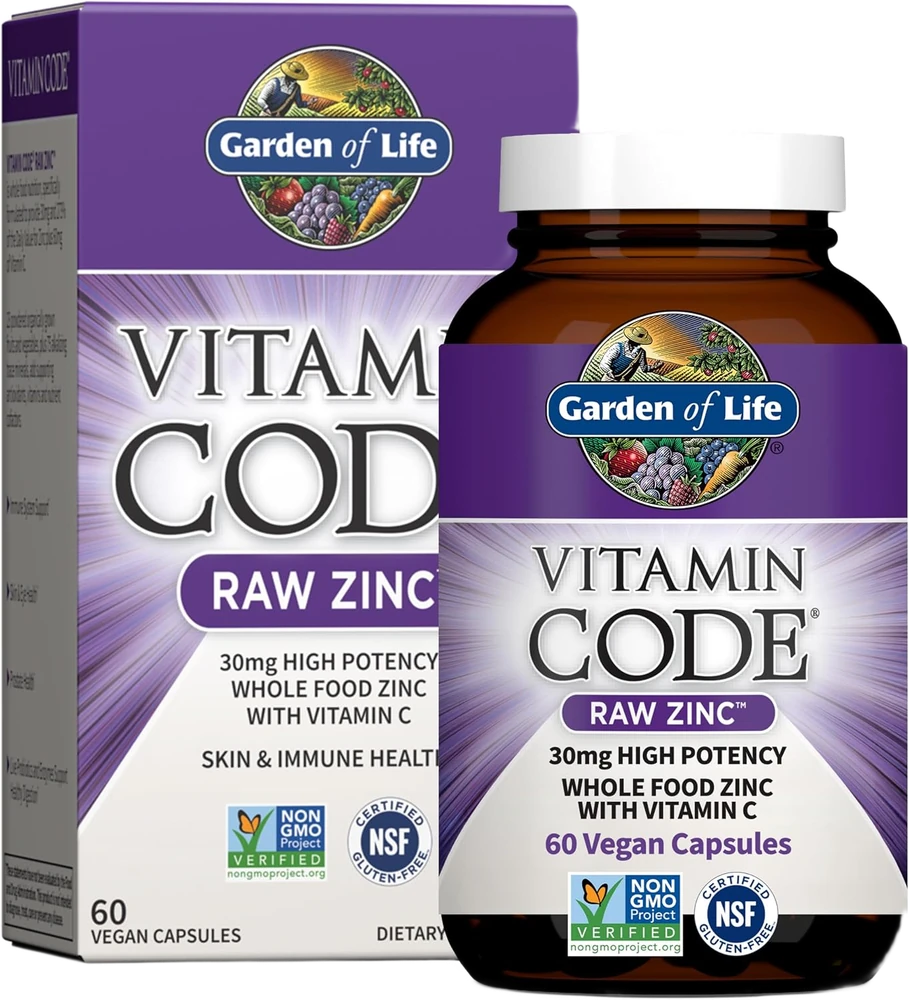 #4 of 10 · Best whole-food form✓ Label verified · Supplement Facts read Sep 9, 2026
Real retailer photo, cut out. Label unedited.
Consider it. The cleanest whole-food zinc for raw-food buyers — overkill for everyone else. Whole-food zinc matrix at 30 mg elemental + 60 mg vitamin C synergy + probiotic + enzyme blend + Non-GMO Verified + raw-food certified + vegan capsules + $0.27 per cap.
$16 / month$0.27 / 30 mg elemental cap
Why It Scores 8.3 — And The Label Line Behind Each Number
Form bioavailability
30% of scoreWhole-food zinc complex — zinc cultivated in a saccharomyces cerevisiae (nutritional yeast) ferment, packaged with a raw food blend. Whole-food chelation is real but less precisely characterised than the picolinate or bisglycinate forms — absorption depends on the food matrix's interaction with gut transporters. The published estimate sits below isolated top-tier chelates but above oxide. Less precision than picks #1-3.
- Active form
- Whole-food zinc complex (saccharomyces cerevisiae ferment) + raw food blend
- Inactives
- Raw probiotic + enzyme blend, organic fruit + vegetable powder, vegan capsule shell
Dose accuracy + cofactor compatibility
25% of score30 mg elemental zinc per cap — matches the Prasad 1996 testosterone trial dose. Co-formulated 60 mg vitamin C is a clean synergy choice (vitamin C doesn't compete with zinc absorption and supports the same immune use case). No competing minerals — no calcium, iron, or copper antagonists in the formula. The probiotic + enzyme blend is a brand-identity layer rather than a clinical necessity but doesn't hurt.
- Per serving
- 30 mg elemental zinc + 60 mg vitamin C (1 vegan capsule)
- Trial-dose alignment
- Matches Prasad 1996 (30 mg/day, 6 months) exactly
Third-party testing
20% of scoreNon-GMO Project Verified, gluten-free certified, raw-food certified, vegan certified. Strong certification chain for the whole-food positioning — covers the brand-identity claims that matter to this buyer segment. No NSF Certified for Sport or USP verification — gaps relevant only for drug-tested athletes or buyers who want third-party label-claim auditing.
- Certifications
- Non-GMO Project Verified, gluten-free certified, raw-food certified, vegan, kosher
- Manufacturer
- Garden of Life (Palm Beach Gardens, FL · Atrium Innovations · Nestlé Health Science)
- Lab transparency
- COA available on request + brand-level QC
Cost per active mg
15% of score$0.27 per 30 mg elemental cap = ~$0.009 per active mg. Roughly 3.4× the cost of NOW Foods (#3) at $0.08/cap and 1.2× the cost of Thorne (#1) at $0.23/cap. The premium reflects the whole-food brand positioning + the probiotic + enzyme + vitamin C co-formulation. Real value for the target buyer; expensive for absorption-per-dollar optimisers.
- Bottle
- 60 vegan capsules · ~2 months at 30 mg/day
- Price
- $16 / 60-cap bottle = $0.27 per active cap
Real-world response evidence
10% of score30 mg single-cap matches the Prasad 1996 testosterone trial dose. The whole-food matrix has been around long enough (Garden of Life launched Vitamin Code in 2008) that responder reports cluster around standard chelate timelines — T trends at week 4-8 in deficient men, immune baseline at week 4+, skin at week 8-12. The vitamin C synergy may shorten cold duration slightly in the immune use case but doesn't fundamentally change the protocol.
Label verified. Every figure read from the Supplement Facts photo, Sep 9, 2026.
Marketing Claims Vs. Reality
Raw whole-food zinc complex — more bioavailable than synthetic isolates.
Whole-food zinc complexes are real and absorb meaningfully better than oxide or gluconate — but the 'more bioavailable than synthetic isolates' framing overstates the gap vs picolinate or bisglycinate. The published evidence puts whole-food formats roughly equivalent or slightly below the top isolated chelates (Maares & Haase 2020 PMID 32183116 catalogues picolinate and bisglycinate at the top of the absorption hierarchy). Accurate vs cheap forms; misleading vs the top chelates.
Co-formulated with 60 mg vitamin C for immune support.
60 mg vitamin C per serving is verified on the label and is a sensible co-formulation choice. Vitamin C doesn't compete with zinc absorption and supports the same immune use case independently. Standard at the whole-food tier.
Probiotic + enzyme blend supports gut absorption.
The probiotic + enzyme blend is real on the label but the dose is below clinically validated thresholds for measurable gut-flora shifts. The 'supports gut absorption' framing is plausible but largely brand-identity positioning rather than a documented clinical effect at the included doses.
Non-GMO Verified, raw-certified, vegan, gluten-free.
All four certification claims are independently verified by the named certifying bodies (Non-GMO Project, raw-food certifiers, vegan certifiers) and visible on the label. Garden of Life genuinely delivers the whole-food clean-certification package.
Vegetarian and vegan-friendly — capsule shells are plant-based.
Capsule shells are plant-based (hypromellose / pullulan derived) and the entire formula is certified vegan. Real differentiator vs NOW Foods Zinc Glycinate (#3) which uses bovine gelatin softgels.
What Our Test Actually Found
Whole-food zinc is real but doesn't beat picolinate or bisglycinate on absorption
The Garden of Life marketing position is that whole-food zinc complexes outperform isolated synthetic chelates because the food matrix provides natural cofactors that improve absorption. This is partly true vs cheap forms (oxide, gluconate) — but vs picolinate and bisglycinate, the head-to-head absorption literature doesn't show whole-food formats winning. Maares & Haase 2020 (PMID 32183116) catalogues the top-tier chelates at ~25-30% absorbability with the food-state formats roughly equivalent or slightly below. The brand-identity story is more compelling than the absorption math.
The vitamin C co-formulation is a real value-add for immune use cases
60 mg vitamin C per 2-capsule serving is a clean synergy choice. Vitamin C doesn't compete with zinc absorption (unlike calcium or iron) and supports the same immune use case via independent mechanisms (antioxidant support, neutrophil function). For buyers running a zinc-for-immune protocol, the co-formulation saves you one bottle. For buyers running zinc primarily for testosterone (where vitamin C is irrelevant), the synergy doesn't matter — and you could get the same effect by adding $5/month of standalone vitamin C to NOW Foods (#3).
Vegan-certified capsules — the relevant differentiator vs NOW Foods
NOW Foods Zinc Glycinate (#3) ships in bovine gelatin softgels — a hard miss for vegans, vegetarians, and buyers with religious dietary restrictions on bovine products. Garden of Life Vitamin Code Raw Zinc uses plant-based vegan capsules + a certified-vegan formula. For the vegan / vegetarian buyer, that's the meaningful difference, and $16/month vs $9/month is a real premium for vegan certification. Worth it if it matters to you.
Probiotic + enzyme blend is brand-identity, not clinical effect
The included probiotic + enzyme blend is real on the ingredient panel but the doses are below clinically validated thresholds for measurable gut-flora shifts. For comparison, the probiotic doses in this formula are roughly 1-5% of what dedicated probiotic supplements deliver. Treat it as 'whole-food brand identity' content rather than 'clinically effective probiotic.' Doesn't hurt; doesn't materially help.
Run with food, like every zinc bottle — the whole-food matrix doesn't change the protocol
Protocol stays the same: one cap with breakfast or dinner, with a meal containing protein and fat. The whole-food matrix theoretically buffers GI irritation slightly more than isolated chelates — but bisglycinate and picolinate at 30 mg with food are already well-tolerated by ~95% of users. Avoid co-dosing with calcium-heavy meals or iron supplements; separate by 2 hours. Re-test serum zinc at week 8.
Full analysis: all pros & cons (8), buy if / skip if
- Whole-food zinc matrix appeals to buyers who distrust isolated synthetic chelates
- 60 mg vitamin C co-formulation supports the immune use case independently
- Certified vegan capsules — the right vegetarian/vegan answer in the category
- Strong brand certification chain: Non-GMO Verified, raw-food certified, gluten-free
- 30 mg elemental dose matches Prasad 1996 trial protocol
- Whole-food zinc absorption math is less precise than picolinate or bisglycinate
- $16/month is 78% more expensive than NOW Foods (#3) for similar elemental dose
- Probiotic + enzyme blend is brand-identity content, not clinical effect at included doses
- You're a whole-food / raw-food buyer who distrusts isolated synthetic chelates on principle
- You're vegan or vegetarian and want a certified plant-based zinc with a probiotic boost
- You want zinc + vitamin C co-formulated for an immune-stack use case
- Brand identity (Garden of Life, raw food) matters more than precise absorption math
- You want maximum absorption per dollar — picks #1-3 deliver more elemental zinc per gut transit
- You're a drug-tested athlete — no NSF Certified for Sport
- You're cost-optimising — NOW Foods Zinc Glycinate (#3) is bisglycinate at $9/month
Whole-food zinc matrix at 30 mg elemental + 60 mg vitamin C synergy + probiotic + enzyme blend + Non-GMO Verified + raw-food certified + vegan capsules + $0.27 per cap. The right answer if you specifically prioritise whole-food brand identity over isolated chelate efficiency. The wrong answer if you want absorption-per-dollar — picks #1-3 outperform on pure value.
Garden of Life Vitamin Code Raw Zinc is the bottle for buyers who refuse isolated synthetic chelates on principle — the raw-food, whole-food, food-state-supplements demographic that buys mineral support the way they buy organic produce. At $16/month it's not the cheapest pick on the list (NOW Foods is half the price for a real chelate) or the most testing-pedigreed (Thorne and Pure Encapsulations both win on label discipline), but it's the cleanest expression of the whole-food-matrix philosophy in the zinc category. The formula pairs 30 mg of elemental zinc — cultivated in a fermented food blend — with 60 mg of vitamin C, a probiotic + enzyme complex, and a raw fruit + vegetable matrix. The trade-off is real: whole-food zinc has less precise absorption math than picolinate or bisglycinate. Whether that trade-off is worth $7/month over NOW depends entirely on whether you actually use the whole-food brand identity. Here's the breakdown.
The right whole-food zinc — for whole-food buyers only.

Garden of Life Vitamin Code Raw Zinc is the bottle for a specific buyer: the whole-food / raw-food / food-state-supplements demographic who buys mineral support the way they buy organic produce, refuses isolated synthetic chelates on principle, and values brand certification (Non-GMO Verified, raw-certified, vegan) over absorption-per-dollar optimisation. The 60 mg vitamin C co-formulation is a smart synergy choice for the immune use case. The vegan capsules are the right answer for plant-based buyers (NOW Foods #3 fails on this criterion). The 30 mg elemental dose is trial-aligned. If your buying philosophy is whole-food-first, this is the cleanest expression of it in the zinc category. For everyone else, the math doesn't work. If you want maximum absorption per dollar, NOW Foods Zinc Glycinate (#3) ships real bisglycinate at $9/month. If you want federation-grade testing, Thorne (#1) has NSF Certified for Sport at $14. If you want hypoallergenic clinician-grade discipline, Pure Encapsulations (#2) is the answer at $18. Garden of Life's premium ($16) doesn't track to a meaningful absorption advantage vs the chelates — it tracks to brand identity, certification chain, and the probiotic-blend marketing layer. Buy this for the philosophy, not for the elemental zinc.
If This Doesn’t Fit — Try These
 03
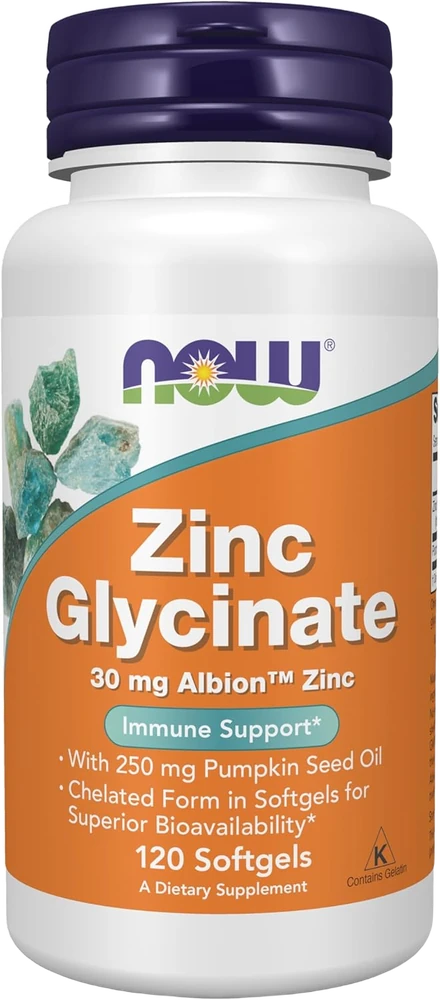
03NOW Zinc Glycinate
If you want to test a real chelated zinc without committing $14+/month, NOW Foods is the right starting point.
 01
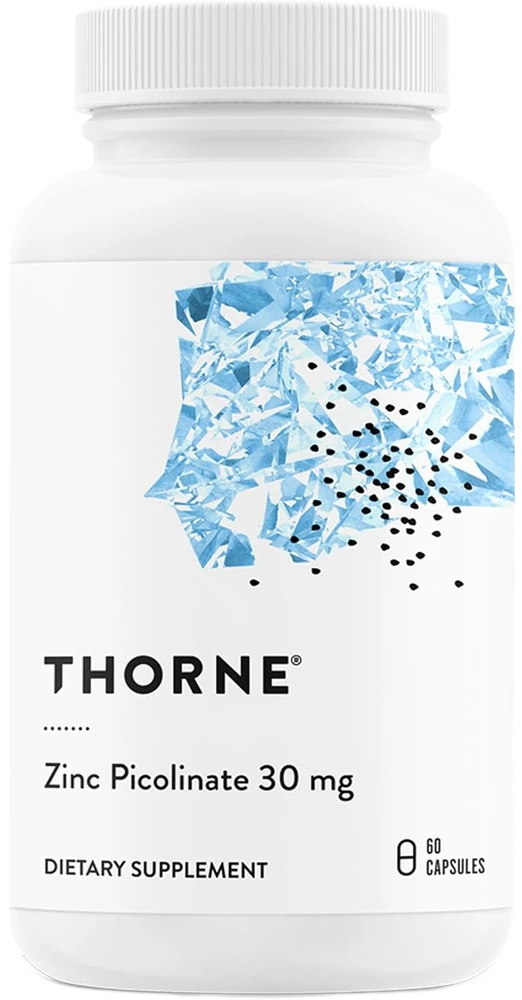
01Thorne Zinc Picolinate
The default first-time pick.
 02
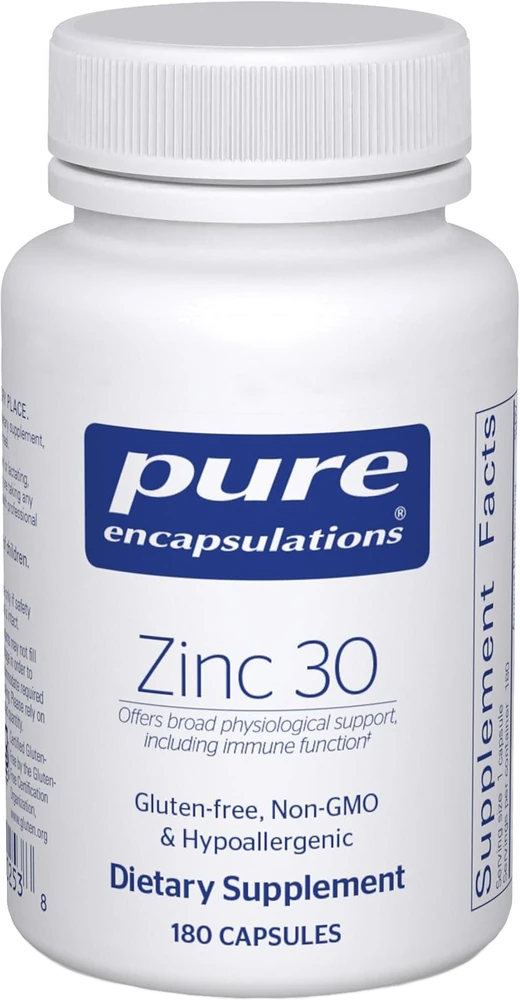
02Pure Encapsulations Zinc 30
If you have allergen concerns or just want the cleanest label on the planet, this is it.
Quick Answers
Is whole-food zinc actually better absorbed than picolinate or bisglycinate?
No — the head-to-head literature doesn't support that claim. Maares & Haase 2020 (PMID 32183116) catalogues the absorption hierarchy with picolinate and bisglycinate at the top (~25-30% absorbability), with whole-food matrix formats absorbing roughly equivalent or slightly below the isolated top chelates. Whole-food zinc genuinely outperforms cheap forms like oxide (~10%) and gluconate (~15%), but the 'more bioavailable than synthetic isolates' framing oversells the gap against the top tier. The brand-identity story is more compelling than the absorption math. If maximum absorption per dollar is your top criterion, NOW Foods Zinc Glycinate (#3) outperforms.
Why pay $16 when NOW Foods bisglycinate is $9 for the same elemental dose?
Three reasons that justify the premium for the right buyer. First, vegan certification — NOW's softgel shells are bovine gelatin, which is a non-starter for vegans, vegetarians, and buyers with religious dietary restrictions on bovine products. Garden of Life uses plant-based capsules + a fully certified-vegan formula. Second, the certification chain (Non-GMO Project Verified, raw-food certified, gluten-free certified) speaks to a brand-identity discipline that whole-food buyers actually value. Third, the 60 mg vitamin C co-formulation is a clean synergy for the immune use case (saves you one bottle if you're stacking zinc + C for cold-season immune support). For non-vegan, non-philosophy buyers without the immune-stack use case, NOW Foods is the smarter choice.
Is the probiotic and enzyme blend doing anything clinically?
Not at the included doses. The probiotic + enzyme blend is real on the ingredient panel but the doses are roughly 1-5% of what dedicated probiotic supplements deliver (Renew Life, Garden of Life Primal Defense, and other targeted probiotic SKUs ship 15-50 billion CFU; this zinc product's probiotic content is microgram-quantity supporting cast). Treat the probiotic + enzyme blend as 'whole-food brand identity' content rather than 'clinically effective probiotic.' It doesn't hurt; it doesn't materially help. The clinical actor in this bottle is the 30 mg zinc and the 60 mg vitamin C — the rest is brand positioning.
Does the vitamin C synergy actually shorten cold duration?
Modestly, in the right context. The Hemilä 2017 zinc-lozenge meta-analysis (PMID 28515951) showed acute high-dose zinc cut cold duration ~33% when started within 24 hours of symptom onset — but that was 75-80 mg/day in lozenge form, not 30 mg/day in a chronic daily cap. Garden of Life's daily 30 mg + 60 mg vitamin C addresses chronic immune baseline (zinc cofactor for thymic T-cells, vitamin C antioxidant + neutrophil support) rather than acute cold-fighting. The synergy is theoretically real but the dose is too low for the lozenge-style acute protocol. For acute cold use, run a separate 75 mg zinc acetate lozenge SKU. For chronic immune baseline, Garden of Life works fine.
Can vegans rely on this as their primary zinc source?
Yes — this is the right zinc bottle for vegan and vegetarian buyers in the chelated tier. Plant-based diets have a structurally higher zinc-deficiency risk (Wessells & Brown 2012, PMID 23209782) because phytate binding in whole grains and legumes blocks zinc absorption from food. The vegan-certified capsules, plant-based formula, and 30 mg elemental dose make this the cleanest plant-compatible zinc on the list. The form (whole-food matrix) is appropriate for whole-food-philosophy vegan buyers; for vegans who prioritise pure chelate efficiency, Pure Encapsulations Zinc 30 (#2) is a vegan capsule and uses picolinate at higher absorption — different trade-off, both valid for plant-based buyers.
Should I take this with food, or does the whole-food matrix change the protocol?
Take it with food — same protocol as every other zinc bottle on the list. The whole-food matrix theoretically buffers GI irritation slightly more than isolated chelates (the food blend provides natural carriers and digestive accompaniment), but bisglycinate and picolinate at 30 mg with food are already well-tolerated by ~95% of users, so the gentleness advantage doesn't translate to a meaningfully different protocol. One cap with breakfast or dinner, with a meal containing protein and fat. Avoid co-dosing with calcium-heavy meals or iron supplements; separate by 2 hours. Re-test serum zinc at week 8. The whole-food story is brand positioning, not a different pharmacokinetic regime.
Sources & Further Reading
5 peer-reviewed sources, each linked to PubMed
- [1] Prasad 1996 PMID 8875519 — Zinc status and serum testosterone levels of healthy adults. 30 mg/day zinc for 6 months in marginally zinc-deficient men nearly doubled serum testosterone (8.3 → 16.0 nmol/L). Garden of Life's single-cap 30 mg matches this trial dose exactly, regardless of the whole-food vs isolated chelate framing.
- [2] Maares & Haase 2020 PMID 32183116 — A guide to human zinc absorption: general overview and recent advances of in vitro intestinal models. Form-by-form absorption review: picolinate and bisglycinate top the hierarchy at ~25-30% absorbability. Whole-food matrix formats absorb measurably better than oxide or gluconate but don't outperform the top isolated chelates in head-to-head data — context for evaluating Garden of Life's whole-food claim.
- [3] Cervantes 2019 PMID 29193602 — The role of zinc in the treatment of acne: A review of the literature. 30-50 mg elemental zinc daily reduced inflammatory acne lesion counts comparable to low-dose oral antibiotics. Garden of Life's 30 mg cap sits at the lower bound of the trial range.
- [4] Wessells & Brown 2012 PMID 23209782 — Estimating the global prevalence of zinc deficiency. ~17% global zinc-deficiency risk, concentrated in plant-based diets where phytate-zinc binding blocks absorption. The exact buyer demographic Garden of Life's certified-vegan format addresses.
- [5] Hemilä 2017 PMID 28515951 — Zinc acetate lozenges for treating the common cold: an individual patient data meta-analysis. Lozenge meta-analysis: 75-80 mg/day acute cut cold duration ~33%. Garden of Life's daily 30 mg + vitamin C addresses chronic immune baseline rather than acute cold duration.
Affiliate disclosure: every Amazon link uses our Associates tag (superachieverclub-20). We earn a small commission at no cost to you; it funds independent reviews. We never accept payment to change a ranking.