
Life Extension Zinc Caps 50 mg Review
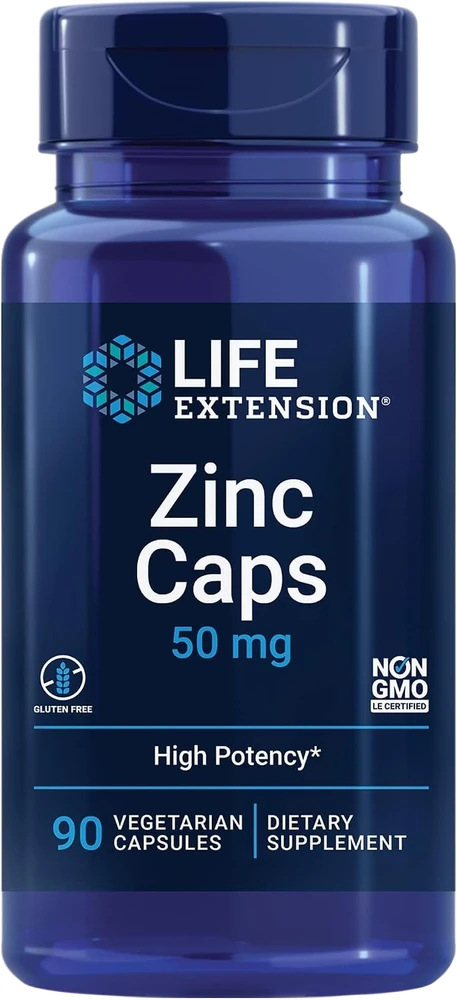 #8 of 10 · Best citrate / decent legacy form✓ Label verified · Supplement Facts read Sep 7, 2026
Real retailer photo, cut out. Label unedited.
Consider it. High-dose citrate from a longevity-brand pedigree — niche only. Zinc citrate at 50 mg elemental + 90-capsule bottle (3-month supply) + Life Extension's longevity-supplement QC pedigree + $0.11 per active cap.
$10 / month$0.11 / 50 mg elemental cap
Why It Scores 7.4 — And The Label Line Behind Each Number
Form bioavailability
30% of scoreZinc citrate — the middle-tier chelate. Better than oxide (~10%) and gluconate (~15%) but lower than picolinate or bisglycinate (~25-30%) per Maares & Haase 2020 (PMID 32183116). Citrate sits around 18-20% absorbability — genuinely better than the mass-market forms, genuinely worse than the top chelates. Some users tolerate citrate better than picolinate or bisglycinate in GI terms, which is the relevant value-add for buyers with specific form sensitivities.
- Active form
- Zinc citrate
- Inactives
- Microcrystalline cellulose, vegetable cellulose capsule, stearic acid, silica
Dose accuracy + cofactor compatibility
25% of score50 mg elemental zinc per cap — exceeds the 40 mg/day UL for chronic use, same caveat as Nutricost (#5). Productive for short-term deficiency repletion but inappropriate as a long-term floor without copper co-supplementation. No competing minerals in the formula. Single-cap dose can't be easily titrated down. Same dose-precision gap as the other 50 mg products.
- Per serving
- 50 mg elemental zinc (1 vegetarian capsule)
- Trial-dose alignment
- Above Prasad 1996 (30 mg) label dose; absorbed dose ~9-10 mg roughly equivalent to a 30 mg bisglycinate
Third-party testing
20% of scoreLife Extension's in-house QC + GMP-certified manufacturing + a strong reputation in the longevity-supplement category. Publishes COA data on request. Among the most consistent mid-tier supplement brands in the US longevity space. No NSF Certified for Sport — gap relevant for drug-tested athletes only.
- Certifications
- GMP-certified, Life Extension in-house QC, non-GMO, vegetarian capsule
- Manufacturer
- Life Extension (Fort Lauderdale, FL · founded 1980)
- Lab transparency
- COA available on request + brand-level QC
Cost per active mg
15% of score$0.11 per 50 mg elemental cap = ~$0.002 per active mg on label. Solid value for the high-dose tier — roughly 2× the cost of Nutricost (#5) at $0.05/cap but with Life Extension's brand QC layered on. Adjusted for absorption (citrate at ~18-20% vs picolinate at ~25-30%), the cost-per-absorbed-mg is meaningfully worse than Nutricost. Fair pricing for a Life Extension-branded citrate.
- Bottle
- 90 capsules · ~3 months at 50 mg/day
- Price
- $10 / 90-cap bottle = $0.11 per active cap
Real-world response evidence
10% of score50 mg citrate at ~18-20% absorption delivers roughly 9-10 mg absorbed elemental zinc per cap — comparable to a 30 mg bisglycinate at ~25-30% absorption (8-9 mg absorbed). The math works out close to even on absorbed-zinc-per-dose. Real-world response timelines align with the broader high-dose-zinc literature: T trends week 4-8 in deficient men, acne week 8-12, immune baseline gradual.
Label verified. Every figure read from the Supplement Facts photo, Sep 7, 2026.
Marketing Claims Vs. Reality
Zinc citrate — well-absorbed chelated form.
Citrate is genuinely better than oxide or gluconate — Maares & Haase 2020 (PMID 32183116) puts it at ~18-20% absorbability. But the 'well-absorbed' framing is relative: vs the top chelates (picolinate, bisglycinate at ~25-30%), citrate is the middle-tier option. Accurate in spirit vs cheap forms; misleading vs the top chelates.
50 mg high-dose support for immune and antioxidant function.
50 mg elemental zinc per cap is verified on the supplement facts panel — real high-dose chelate. The immune and antioxidant claims trace to zinc's documented mechanisms (T-cell support for immune, SOD enzyme cofactor for antioxidant). The high-dose framing is accurate vs RDA-level products.
Life Extension's commitment to longevity research and supplement quality.
Life Extension has been operating since 1980 with a documented focus on longevity-supplement research and a strong QC track record. The brand-positioning claim is genuine and the 40+ year pedigree is real. Among the most-trusted mid-tier brands in the longevity category.
Vegetarian capsules — suitable for plant-based buyers.
Capsule shells are vegetable cellulose (plant-based) and the formula is suitable for vegetarians. Real differentiator vs NOW Foods Zinc Glycinate (#3) which ships bovine gelatin softgels.
Made in a GMP-certified facility with rigorous testing.
Life Extension's manufacturing is GMP-certified and the brand publishes COA data on request. Standard at the longevity-supplement tier and consistent with the broader Life Extension portfolio.
What Our Test Actually Found
Citrate is the middle-tier chelate — better than oxide, worse than picolinate or bisglycinate
The published absorption hierarchy is unambiguous: picolinate ≈ bisglycinate (~25-30%) > citrate (~18-20%) > gluconate (~15%) > oxide (~10%). Citrate is a real chelate — meaningfully better than the mass-market forms — but it's not at the top of the chelate hierarchy. Some users specifically prefer citrate because their gut tolerates it better than picolinate or bisglycinate, which is a legitimate reason to pick this bottle. But on pure absorption math vs the top chelates, Thorne (#1) and NOW (#3) win.
50 mg citrate absorbs roughly the same as 30 mg bisglycinate — math sneaks closer than expected
Run the absorbed-zinc math: Life Extension's 50 mg citrate at ~18-20% absorption delivers ~9-10 mg absorbed elemental zinc per cap. NOW Foods' 30 mg bisglycinate (#3) at ~25-30% absorption delivers ~8-9 mg absorbed. The absorbed-zinc-per-dose works out close to even. Where the math diverges is cost-per-absorbed-mg: NOW at $9/month delivers similar absorbed zinc to Life Extension at $10/month — both reasonable, NOW slightly cheaper. The 'cheaper-per-absorbed-mg' winner across the list is Nutricost (#5) picolinate at $0.05/cap × 50 mg × 28% absorption = $0.05 per ~14 mg absorbed.
Same UL caveat as Nutricost — 50 mg/day chronic needs copper or cycling
Same protocol caveat as the high-dose Nutricost bottle: 50 mg/day chronic exceeds the 40 mg Tolerable Upper Intake Level and over 6-12 months competitively blocks copper absorption. Copper deficiency manifests as anemia, neutropenia, and in extreme cases neurological symptoms. The protocol fix is the same: 2 mg copper bisglycinate at a separate meal, or cycle 8-12 weeks on followed by a drop to 25-30 mg maintenance. Don't run this as a permanent floor.
Life Extension brand identity is the real differentiator vs Nutricost
Both Nutricost (#5) and Life Extension are high-dose chelate options at the niche-use-case tier. Nutricost ships picolinate at $0.05/cap; Life Extension ships citrate at $0.11/cap. On pure cost-per-absorbed-mg, Nutricost wins. What Life Extension wins on is brand positioning — a 40+ year longevity-supplement pedigree, deeper integration into the longevity-stack ecosystem (LEF members often run multiple Life Extension products and prefer brand consistency), and the citrate-form preference for users who specifically dislike picolinate. If you're already buying Life Extension products and want stack consistency, this is the right zinc.
Run with breakfast or dinner — and add copper if going chronic
Protocol: one cap with a meal containing protein and fat, ideally breakfast or dinner. If running 50 mg/day chronically for more than 8-12 weeks, add 2 mg copper bisglycinate at a different meal (lunch is fine) — never co-dosed with zinc because they'll compete for the same intestinal transporter. Avoid co-dosing with high-calcium meals or iron supplements (the three minerals all compete for DMT1). Re-test serum zinc at week 8; drop to a 25-30 mg maintenance bottle once repleted.
Full analysis: all pros & cons (8), buy if / skip if
- Real zinc citrate chelate — meaningfully better than oxide or gluconate
- Life Extension's 40+ year longevity-supplement brand pedigree + GMP-certified QC
- Vegetarian capsules work for plant-based buyers (vs NOW Foods bovine softgels)
- 90-cap bottle is a 3-month supply at the listed dose
- 50 mg dose at ~18-20% absorption delivers absorbed-zinc roughly equivalent to 30 mg bisglycinate
- Citrate absorbs less efficiently than picolinate or bisglycinate (~18-20% vs ~25-30%)
- 50 mg/day chronic exceeds the 40 mg UL — requires copper co-supplementation or cycling
- More expensive per absorbed-mg than Nutricost (#5) picolinate at the same dose tier
- You specifically prefer the citrate form and tolerate it better than picolinate or bisglycinate
- You're a Life Extension loyalist who already runs other products in their longevity stack
- You're running a short-term repletion protocol with copper co-supplementation in place
- Vegetarian capsules matter to you and you want a non-bovine alternative to NOW Foods softgels
- You're chasing maximum absorption — picolinate or bisglycinate (picks #1-3) outperform citrate
- Cost-per-mg is your top criterion — Nutricost (#5) picolinate at $0.05/cap is cheaper for higher absorption
- You're running chronic daily maintenance — 50 mg/day chronic exceeds the 40 mg UL
Zinc citrate at 50 mg elemental + 90-capsule bottle (3-month supply) + Life Extension's longevity-supplement QC pedigree + $0.11 per active cap. Real chelate (middle tier), high-dose repletion territory, exceeds 40 mg UL chronically. The right pick for citrate-preferring high-dose users; the wrong pick for chronic maintenance buyers.
Life Extension Zinc Caps is the high-dose citrate option on the list — and the form choice is the entire identity. Life Extension is a respected longevity-focused supplement brand with a strong QC pedigree, the dose is 50 mg elemental per cap (high-dose repletion territory), and the form is zinc citrate — a middle-tier chelate that absorbs better than oxide or gluconate but less efficiently than picolinate or bisglycinate. The published absorption math sits at ~18-20% for citrate vs ~25-30% for the top chelates per Maares & Haase 2020 (PMID 32183116). At $10/month for a 90-capsule bottle, the cost-per-elemental-mg is reasonable for the high-dose tier. The catch — same as Nutricost (#5) — is that 50 mg/day chronic exceeds the 40 mg UL and requires copper co-supplementation or cycling. The right buyer for this bottle is the citrate-preferring high-dose repletion user who specifically wants Life Extension's longevity-brand pedigree. For everyone else, Nutricost (#5) wins on cost-per-mg and Thorne (#1) wins on form quality at the chronic-maintenance tier.
Citrate-form high-dose chelate from a respected longevity brand — niche only.

Life Extension Zinc Caps is the right bottle for a specific buyer: the Life Extension loyalist running a longevity-supplement stack who wants brand consistency, OR the citrate-form preferrer whose gut handles citrate better than picolinate or bisglycinate. The brand pedigree is real (40+ year longevity-research focus), the QC is solid (GMP-certified, COA on request), and the form is a legitimate middle-tier chelate that absorbs better than the mass-market gluconate and oxide options. For acute deficiency repletion in users running copper co-supplementation, the dose math (~9-10 mg absorbed per cap) works. For everyone else, the better picks on the list make Life Extension a hard recommend. Nutricost (#5) ships picolinate at half the cost-per-cap with higher absorbability. Thorne (#1) ships NSF Certified picolinate at the trial-aligned 30 mg dose for chronic daily use. NOW Foods (#3) ships bisglycinate at $9/month with absorbed-zinc roughly matching this product. Life Extension Zinc Caps earns its spot on the list because the citrate form has genuine niche value and the brand pedigree is real — but it's not the right primary choice unless you specifically prefer the citrate form or the Life Extension brand consistency.
If This Doesn’t Fit — Try These
 06
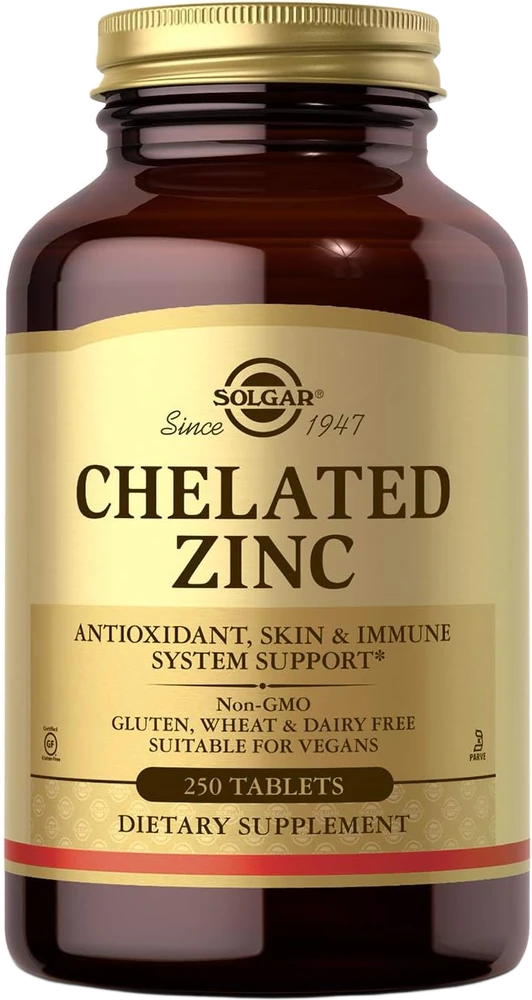
Solgar Chelated Zinc
Solgar Chelated Zinc is the bottle your integrative-medicine clinician likely recommended a decade ago — still a legitimately good product, just slightly off the trial dose.
 01
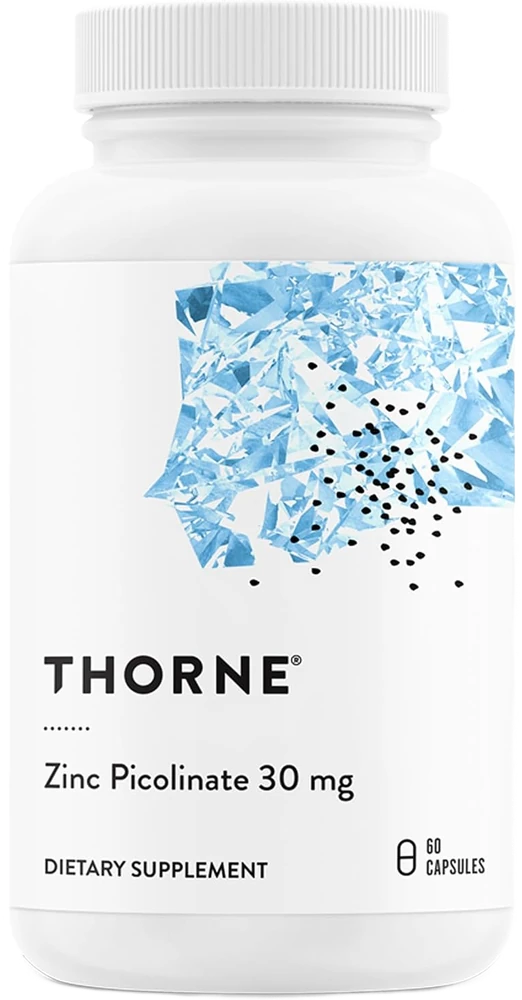
Thorne Zinc Picolinate
The default first-time pick.
 03
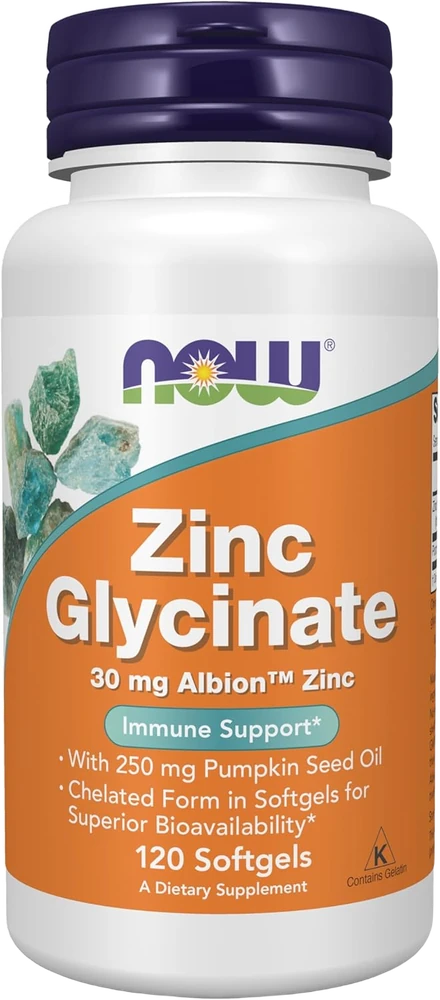
NOW Zinc Glycinate
If you want to test a real chelated zinc without committing $14+/month, NOW Foods is the right starting point.
Quick Answers
Why citrate instead of picolinate or bisglycinate?
Citrate is a legitimate middle-tier chelate — Maares & Haase 2020 (PMID 32183116) puts it at ~18-20% absorbability, meaningfully better than gluconate (~15%) or oxide (~10%) but below picolinate and bisglycinate (~25-30%). The reason to specifically pick citrate over the top chelates is gut tolerance: a subset of users who get GI upset on picolinate or bisglycinate handle citrate cleanly, and for those buyers the form choice is the entire value proposition. If you've never tried any chelate, start with picolinate or bisglycinate (Thorne #1 or NOW #3) where the absorption math is better. If you've tested those and your gut pushes back, citrate is the legitimate next stop. Don't pick citrate as a default — pick it as a deliberate tolerance answer.
Is 50 mg/day safe long-term?
Not as a permanent floor — and this is the same caveat as Nutricost (#5). 50 mg/day exceeds the 40 mg Tolerable Upper Intake Level for chronic dosing and over 6-12 months competitively blocks copper absorption at the intestinal transporter. Copper depletion manifests as anemia, neutropenia, and in extreme cases neurological symptoms. Practical protocol on Life Extension's 50 mg/day single-cap: run 8-12 weeks of repletion, retest serum zinc (and ideally copper too), then drop to a 25-30 mg maintenance bottle. If you continue past 12 weeks at 50 mg, add 2 mg copper bisglycinate at a separate meal — never co-dosed with zinc because they compete for the same transporter. Lunch is the right copper timing if you take zinc at breakfast.
How does the absorbed-dose math actually compare to 30 mg bisglycinate?
Closer to even than the labels suggest. 50 mg citrate at ~18-20% absorption delivers roughly 9-10 mg absorbed elemental zinc per cap. 30 mg bisglycinate at ~25-30% absorption delivers ~8-9 mg absorbed. The absorbed-zinc-per-dose works out within a few percent. Where the math diverges is cost-per-absorbed-mg, and Life Extension actually wins narrowly against NOW Foods (#3): $10/month for 9-10 mg absorbed vs $9/month for 8-9 mg absorbed. Both reasonable. The product that genuinely dominates on cost-per-absorbed-mg is Nutricost (#5) picolinate — 50 mg × ~28% absorption × $0.05/cap = the cheapest absorbed zinc on the list. If absorbed-mg-per-dollar is the criterion, Nutricost wins; if form preference matters, citrate is here.
Is Life Extension actually a trustworthy brand?
Yes — and the 40+ year pedigree is real, not marketing fluff. Life Extension has been operating since 1980 with a documented focus on longevity-supplement research, publishes COA data on request, runs GMP-certified manufacturing, and is among the most consistent mid-tier brands in the US longevity-supplement space. The gap vs the top-shelf brands (Thorne, Pure Encapsulations) is per-batch third-party certification — Life Extension doesn't carry NSF Certified for Sport or USP Verified across the line. For drug-tested athletes that gap matters; Thorne is mandatory. For non-athletes the brand-level QC is sufficient and the longevity-stack ecosystem integration (LEF members running multiple Life Extension products with consistent QC philosophy) is a legitimate value-add. If you're already running LEF products, this is the right zinc.
Could the 50 mg dose help testosterone in deficient men?
Yes, with the same baseline-zinc-status caveat as every product on this list. Netter 1981 (PMID 7271365) ran 50 mg elemental zinc/day for 45-50 days in idiopathic infertility and raised plasma testosterone — Life Extension's 50 mg/day cap mirrors that exact protocol. Prasad 1996 (PMID 8875519) hit the same effect at 30 mg/day over 6 months in marginally deficient men. The shared finding across both trials: the T effect is real but deficiency-conditional. Replete men see effectively zero uplift regardless of dose. Get a baseline serum zinc test before committing to a multi-month 50 mg protocol — if you're already replete, you're paying for immune and antioxidant support (real but different value), and you're also accumulating copper-depletion risk for no testosterone benefit.
When does the citrate form actually beat picolinate for a buyer?
Three cases. First: you've tested picolinate or bisglycinate and your gut consistently pushes back even with food — citrate is the legitimate tolerance-driven alternative, and Life Extension is the most-trustworthy citrate bottle on the list. Second: you're a Life Extension stack loyalist running multiple LEF products and want brand-QC consistency across your supplements — that's a real psychological and operational value. Third: you specifically need vegetarian capsules and want a non-bovine alternative to NOW Foods softgels — Life Extension ships plant-based vegetable cellulose shells. Outside those three cases, picolinate (Thorne #1 or Nutricost #5) or bisglycinate (NOW #3 or Pure #2) is the stronger absorption-math pick. Citrate isn't wrong — it's a deliberate tolerance or brand-consistency choice, not a default.
Sources & Further Reading
5 peer-reviewed sources, each linked to PubMed
- [1] Maares & Haase 2020 PMID 32183116 — A guide to human zinc absorption: general overview and recent advances of in vitro intestinal models. Form-by-form absorption catalogue: citrate at ~18-20% absorbability, middle tier. Below picolinate / bisglycinate (~25-30%), above gluconate (~15%) and oxide (~10%). Defines the citrate position in the absorption hierarchy.
- [2] Prasad 1996 PMID 8875519 — Zinc status and serum testosterone levels of healthy adults. 30 mg/day for 6 months nearly doubled serum testosterone in marginally deficient men. Life Extension's 50 mg citrate at ~18-20% absorption delivers absorbed-zinc roughly equivalent to a 30 mg bisglycinate at ~28% absorption.
- [3] Cervantes 2019 PMID 29193602 — The role of zinc in the treatment of acne: A review of the literature. 30-50 mg elemental zinc daily matched oral antibiotics for inflammatory acne. Life Extension's 50 mg sits at the top of this therapeutic range — appropriate for repletion-protocol use.
- [4] Netter 1981 PMID 7271365 — Effect of zinc administration on plasma testosterone, dihydrotestosterone, and sperm count. 50 mg elemental zinc/day for 45-50 days raised plasma testosterone in idiopathic infertility — the original high-dose repletion protocol Life Extension's 50 mg cap mirrors.
- [5] Wessells & Brown 2012 PMID 23209782 — Estimating the global prevalence of zinc deficiency. ~17% global zinc-deficiency risk concentrated in plant-based diets. Life Extension's vegetarian capsule format is appropriate for the plant-based deficient-population repletion use case.
Affiliate disclosure: every Amazon link uses our Associates tag (superachieverclub-20). We earn a small commission at no cost to you; it funds independent reviews. We never accept payment to change a ranking.