
Top 10 Best Psyllium Fiber Supplements (2026)
 01 · Best overall✓ Label verified · Supplement Facts read Sep 7, 2026
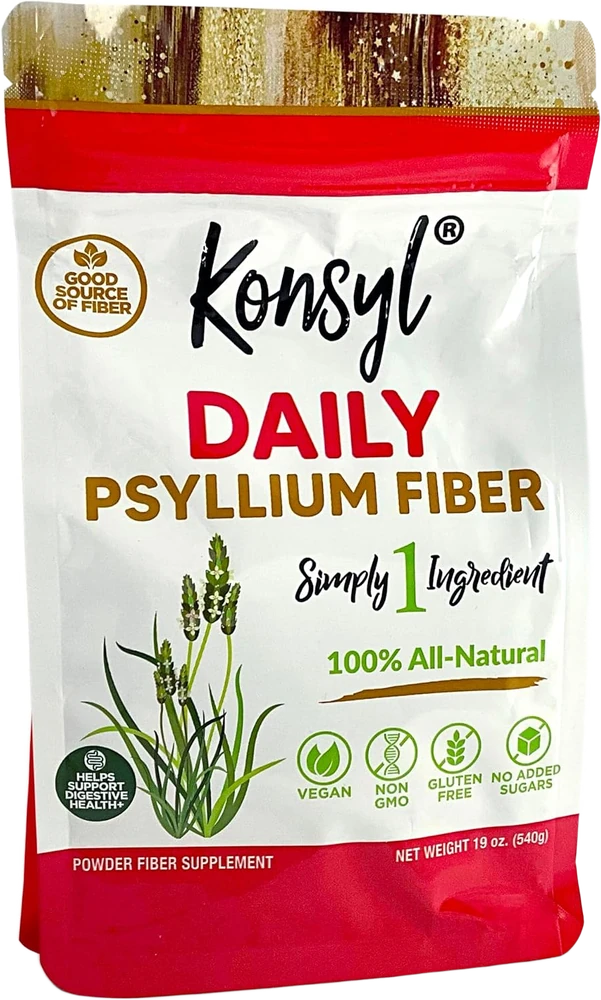
Best overall: Konsyl Daily Psyllium Fiber Powder, Unflavored
A pharmacist favorite that packs one of the highest psyllium doses per scoop — pure, unflavored husk for people who want grams, not flavor.
$24 / 19 oz tub (~90 servings)$0.27 / ~6 g psyllium serving
Why it wins: all five scores, pros & cons, full label
- ~6 g psyllium per serving is one of the highest single-scoop doses here — you reach the Anderson 2000 ~10 g LDL range in fewer servings
- 100% pure psyllium husk with no sugar, sweeteners, flavors, or colors — exactly what's on the label and nothing else
- Pharmacist-recommended heritage brand with strong trust for a no-frills medical-grade fiber
- Unflavored powder mixes into water, juice, or smoothies and adapts to any dose you need
- Unflavored + high-dose means it gels fast and thick — stir and drink immediately or it clumps, and the texture is grittier than flavored powders
- Plain husk has no taste masking, so flavor-sensitive users may prefer Metamucil (#1)
- Per serving
- ~6 g psyllium husk per scoop
- Bottle
- 19 oz (~90 servings)
- Testing
- Long-standing pharmacist-recommended brand; GMP-manufactured pure psyllium
- Form
- Pure unflavored powder

Our take — The pick when grams matter most. Konsyl delivers about 6 g of pure psyllium per scoop, so it's the efficient choice for cholesterol lowering, blood-sugar blunting, or satiety where you actually need to reach a higher daily dose without choking down five capsules or three flavored servings. It's pure husk, pharmacist-trusted, and excellent value per gram. The cost is texture: high-dose unflavored psyllium gels quickly and goes down gritty, so mix it fresh, drink it fast, and chase it with more water.
 02
 03
 04
 05
 06
 07
 08
 09
 10
Who Wins Which Aspect
Sorted by overall SAC Product Score™ — the official ranking.
| # | Pick | Score | Soluble-fiber dose + form fit30% | Purity + label honesty25% | Cost per effective gram20% | Third-party testing + manufacturing15% | Mixability + adherence10% | Cost Per Dose | Buy |
|---|---|---|---|---|---|---|---|---|---|
| 01 | | 9.2 | 9.81 | 9.81 | 8.52 | 9.02 | 7.5 | $0.27 / ~6 g psyllium serving | Check price |
| ~6 g psyllium per serving is one of the highest single-scoop doses here — you reach the Anderson 2000 ~10 g LDL range in fewer servingsUnflavored + high-dose means it gels fast and thick — stir and drink immediately or it clumps, and the texture is grittier than flavored powders | |||||||||
| 02 | | 9.1 | 9.02 | 9.52 | 10.01 | 9.02 | 7.0 | $0.13 / ~4 g psyllium serving | Check price |
| Lowest cost per gram of actual psyllium on the list — pure husk with no brand or flavor markupUnflavored and gritty — no taste masking, so you have to be okay drinking plain husk in water | |||||||||
| 03 | | 8.9 | 9.02 | 9.03 | 7.03 | 10.01 | 10.01 | $0.24 / ~3.4 g psyllium dose | Check price |
| The most clinically studied psyllium brand, and the one primary-care doctors recommend first — maximum trust for a first-time fiber buyerContains flavoring and a sweetener (sugar-free uses aspartame) and costs more per gram of fiber than pure bulk husk (#3) | |||||||||
| 04 | | 8.6 | 9.02 | 9.52 | 7.03 | 8.53 | 8.03 | $0.28 / ~5 g serving | Check price |
| Finely-ground texture dissolves cleaner and clumps less than coarse whole husk — far nicer in smoothies and drinksFinely-ground organic husk costs more per gram than conventional coarse husk (#3) | |||||||||
| 05 | | 8.5 | 9.02 | 9.52 | 7.03 | 9.02 | 6.5 | $0.22 / 5 g whole-husk serving | Check price |
| USDA Organic certified whole-husk psyllium — the cleanest sourcing chain of the high-dose powders hereCosts more per gram than conventional bulk husk (#3) — you pay for the organic certification | |||||||||
| 06 | | 8.5 | 8.53 | 9.52 | 8.52 | 8.0 | 7.0 | $0.22 / ~5 g serving | Check price |
| Four decades as a dedicated colon-health brand — deep trust and consistency in pure psyllium huskPlain unflavored husk is gritty with no taste masking | |||||||||
| 07 | | 8.3 | 8.0 | 9.52 | 8.52 | 7.5 | 6.5 | $0.18 / ~5 g serving | Check price |
| Large 1.5 lb organic bag is excellent cost per gram for heavy daily users who want certified-organic huskBulk bag (not a canister) is less convenient to scoop and store, and can absorb humidity if not sealed well | |||||||||
| 08 | | 7.7 | 6.5 | 8.5 | 5.5 | 10.01 | 10.01 | $0.40 / serving | Check price |
| Zero mixing, zero grit, zero taste — the most convenient way to take psyllium, ideal for travel and the officeLow psyllium per capsule means a serving is several caps and a full cholesterol dose can be a large handful — by far the highest cost per effective gram of the powders-vs-caps comparison | |||||||||
| 09 | | 7.4 | 5.0 | 9.03 | 6.5 | 9.02 | 9.52 | $0.06 / 2-cap serving | Check price |
| Vegetarian capsule shell — a vegan-friendly no-mix option, unlike some gelatin-based capsulesOnly ~1 g psyllium per 2-capsule serving means reaching a regularity dose takes several caps and a cholesterol dose takes a large handful — inefficient per effective gram | |||||||||
| 10 | | 6.6 | 6.5 | 8.5 | 3.0 | 8.0 | 7.0 | $1.00 / ~9 g fiber serving | Check price |
| Psyllium-FREE by design — a genuinely useful alternative for people who bloat, cramp, or simply don't tolerate concentrated psyllium gelNot a psyllium product at all — included as the disclosed alternative, so if you specifically want psyllium's bile-acid LDL effect (Anderson 2000) this is not it | |||||||||
The Other 9, Ranked
- 02
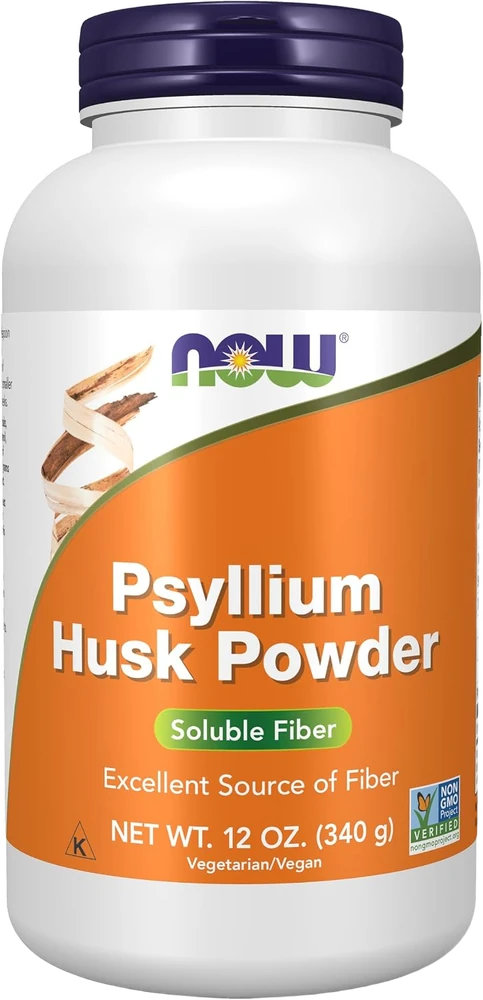
Best value: NOW Psyllium Husk Powder, Non-GMO
9.1SAC Score™Bulk pure psyllium at a fraction of branded price-per-gram — the smartest value on the shelf if you'll stir your own scoop.
StrongestCost per effective gram10.01WeakestMixability + adherence7.0- Per serving
- ~4 g psyllium husk per scoop
- Bottle
- 12 oz (dose-flexible)
- Testing
- NOW in-house QC labs, GMP-certified facility, Non-GMO, identity-tested
All five scores, pros & cons, full label
What We Like- Lowest cost per gram of actual psyllium on the list — pure husk with no brand or flavor markup
- NOW's in-house QC is among the most consistent in the industry, with decades of household-brand trust
- Non-GMO and 100% pure psyllium husk — clean label, dose exactly as much as your goal needs
- Dose-flexible powder scales from a small regularity dose up to a full cholesterol-range dose
What You Live With- Unflavored and gritty — no taste masking, so you have to be okay drinking plain husk in water
- Smaller 12 oz package than the bulk organic bags (#8) if you're a heavy daily user
- Form
- Pure unflavored powder
Our take — The value champion. If you don't need flavoring and you're willing to stir a scoop into water, NOW Psyllium Husk delivers pure, Non-GMO, lab-checked psyllium for the lowest cost per gram here — there's simply no cheaper honest way to take this fiber. The only thing you give up versus Metamucil is taste, and versus Konsyl a slightly lower per-scoop dose. For a no-nonsense daily fiber habit on a budget, this is the one to buy. Take it with a full glass of water.
- 03
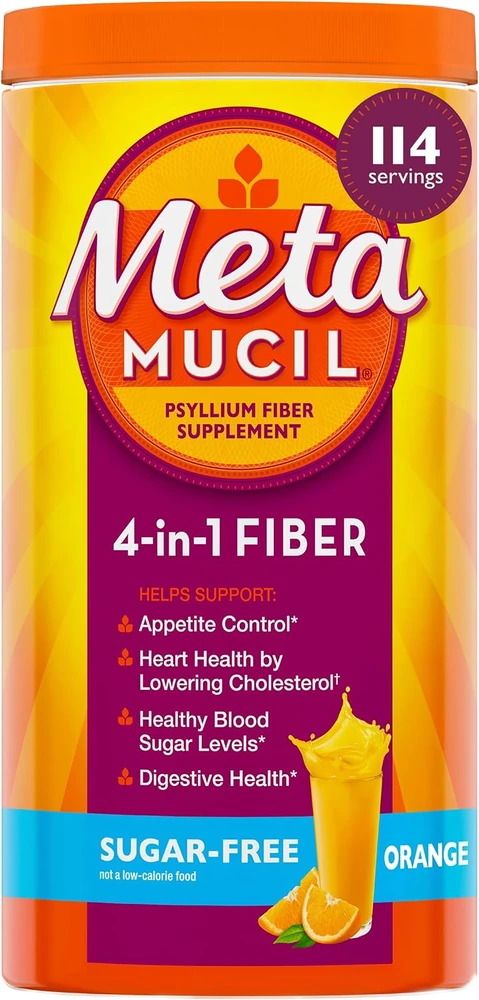
Highest potency: Metamucil 4-in-1 Psyllium Fiber, Sugar-Free, Orange
8.9SAC Score™The category benchmark — clinically studied psyllium at a sensible regularity dose, sugar-free, and the brand most doctors name first when someone needs fiber.
StrongestThird-party testing + manufacturing10.01WeakestCost per effective gram7.0- Per serving
- ~3.4 g psyllium husk (1 rounded tsp)
- Bottle
- ~114 servings per canister
- Testing
- Established brand QC; clinically studied psyllium; FDA heart-health qualified claim eligible
All five scores, pros & cons, full label
What We Like- The most clinically studied psyllium brand, and the one primary-care doctors recommend first — maximum trust for a first-time fiber buyer
- Sugar-free version avoids the added-sugar load of the classic orange formula while keeping it palatable enough to take daily
- ~3.4 g psyllium per dose is a textbook regularity dose; take 2-3 doses to reach the ~7-10 g LDL/satiety range
- Dissolves into a familiar orange drink that's easy to build a daily habit around — adherence is psyllium's real bottleneck
What You Live With- Contains flavoring and a sweetener (sugar-free uses aspartame) and costs more per gram of fiber than pure bulk husk (#3)
- Per-dose psyllium is modest, so cholesterol or appetite goals mean multiple servings a day
- Form
- Flavored powder (orange), sugar-free
Our take — The default pick for almost everyone. Metamucil is the psyllium that the clinical literature and your doctor both already trust, the sugar-free orange formula is genuinely easy to drink every day, and a ~3.4 g dose is exactly right for regularity. The trade-offs are honest: you pay a brand premium per gram, and you'll need two to three doses a day to hit a cholesterol-lowering or satiety dose. If you want the safest, most-studied, easiest-to-stick-with way into psyllium, start here — and take it with a full glass of water.
- 04
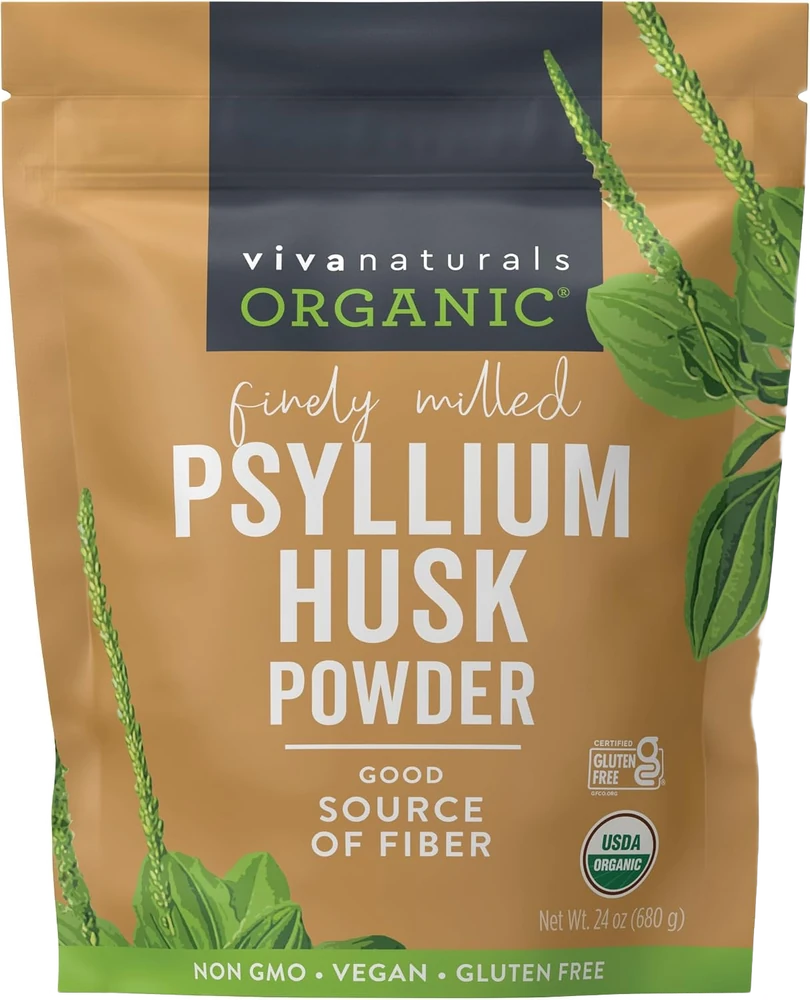
Best for baking & smoothies: Viva Naturals Organic Psyllium Husk Powder
8.6SAC Score™Finely-ground organic husk that dissolves cleaner than coarse whole husk — the one for smoothies and keto baking where texture matters.
StrongestPurity + label honesty9.52WeakestCost per effective gram7.0- Per serving
- ~5 g psyllium per scoop
- Bottle
- 24 oz (large)
- Testing
- USDA Organic certified, GMP-manufactured
All five scores, pros & cons, full label
What We Like- Finely-ground texture dissolves cleaner and clumps less than coarse whole husk — far nicer in smoothies and drinks
- USDA Organic certified, so you get clean sourcing plus the better texture
- The fine grind is the preferred psyllium form for keto and gluten-free baking, where it acts as a binder
- Large 24 oz bag gives a long runway and good value for daily users
What You Live With- Finely-ground organic husk costs more per gram than conventional coarse husk (#3)
- Fine powder can thicken very fast in liquid — work quickly or it sets before you drink it
- Form
- Finely-ground powder, USDA Organic
Our take — The texture-first organic pick. Viva Naturals' finely-ground husk is the psyllium to buy if you mostly use it in smoothies or as a baking binder, where coarse whole husk turns gritty or gloopy — the fine grind blends smoother and is the keto-baker's default. It's organic and comes in a generous 24 oz bag. You pay a bit more per gram for the grind and certification, and it gels fast, so add it last and drink or bake right away.
- 05
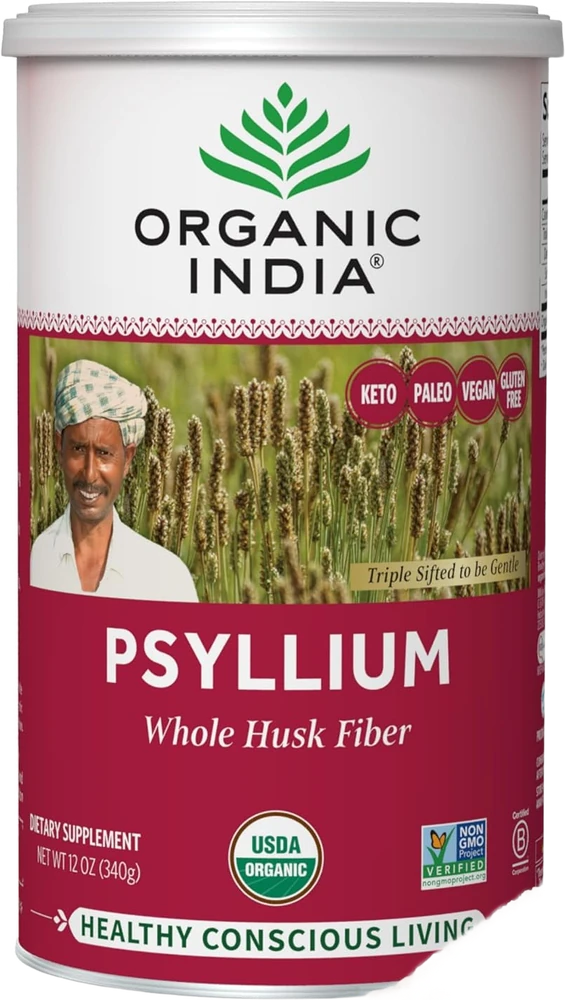
Best organic: Organic India Whole Husk Psyllium Powder, USDA Organic
8.5SAC Score™Certified-organic whole-husk psyllium from a trusted clean-label brand — the pick when you want organic sourcing without giving up dose.
StrongestPurity + label honesty9.52WeakestMixability + adherence6.5- Per serving
- 5 g whole-husk psyllium per tablespoon = 4 g dietary fiber (3 g soluble, 1 g insoluble)
- Bottle
- 12 oz (340 g) · 68 servings of 1 tablespoon
- Testing
- USDA Organic, Non-GMO Project Verified, Certified B Corporation
All five scores, pros & cons, full label
What We Like- USDA Organic certified whole-husk psyllium — the cleanest sourcing chain of the high-dose powders here
- 5 g of whole husk per tablespoon (4 g of dietary fiber) keeps it efficient for both regularity and the higher cholesterol/satiety doses
- Organic India is a respected clean-label, sustainability-focused brand — Non-GMO Project Verified and Certified B Corporation on the label
- Whole-husk format is minimally processed for buyers who prefer the least-refined fiber
What You Live With- Costs more per gram than conventional bulk husk (#3) — you pay for the organic certification
- Whole husk gels fast, so mix it fresh and drink it promptly; it is not a finely-ground powder like Viva Naturals (#4)
- Form
- Whole-husk powder (triple sifted, per the front label), USDA Organic
Our take — The organic pick that doesn't compromise on dose. Organic India gives you USDA-certified whole-husk psyllium at 5 g per tablespoon, so you get clean-label sourcing and enough fiber per serving for cholesterol or satiety goals, not just regularity. You pay a premium over conventional bulk husk for the certification, and the whole husk gels quickly so mix it fresh. If organic matters to you and you still want grams per scoop, this is the best balance on the list.
- 06
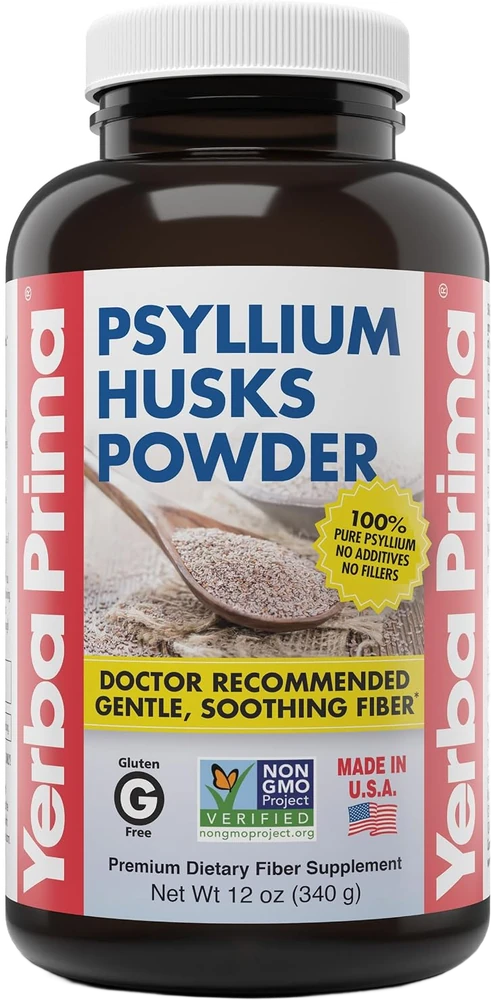
Heritage pick: Yerba Prima Psyllium Husks Powder
8.5SAC Score™A 40-year colon-health staple — lab-tested, vegan, no additives — for buyers who want a long-trusted pure-husk brand.
StrongestPurity + label honesty9.52WeakestMixability + adherence7.0- Per serving
- ~5 g psyllium husks per scoop
- Bottle
- 12 oz
- Testing
- Lab-tested, Non-GMO, vegan; 40-year category heritage
All five scores, pros & cons, full label
What We Like- Four decades as a dedicated colon-health brand — deep trust and consistency in pure psyllium husk
- Pure, lab-tested, Non-GMO, vegan, with no sugar, flavors, or fillers
- ~5 g per serving keeps it efficient across regularity and higher-dose goals
- Good value per gram for a long-established specialty brand
What You Live With- Plain unflavored husk is gritty with no taste masking
- Less mainstream availability and brand visibility than Metamucil or NOW
- Form
- Pure unflavored powder (husks)
Our take — The heritage purist's pick. Yerba Prima has been a pure-psyllium colon-health staple for forty years, and it shows: clean, lab-tested, Non-GMO, vegan husk at about 5 g a scoop and solid value per gram. It does everything the value and high-dose picks do; it just has a lower profile and the usual unflavored grit. If you specifically trust the heritage specialty brand, this is a dependable, honest choice — taken, as always, with a full glass of water.
- 07
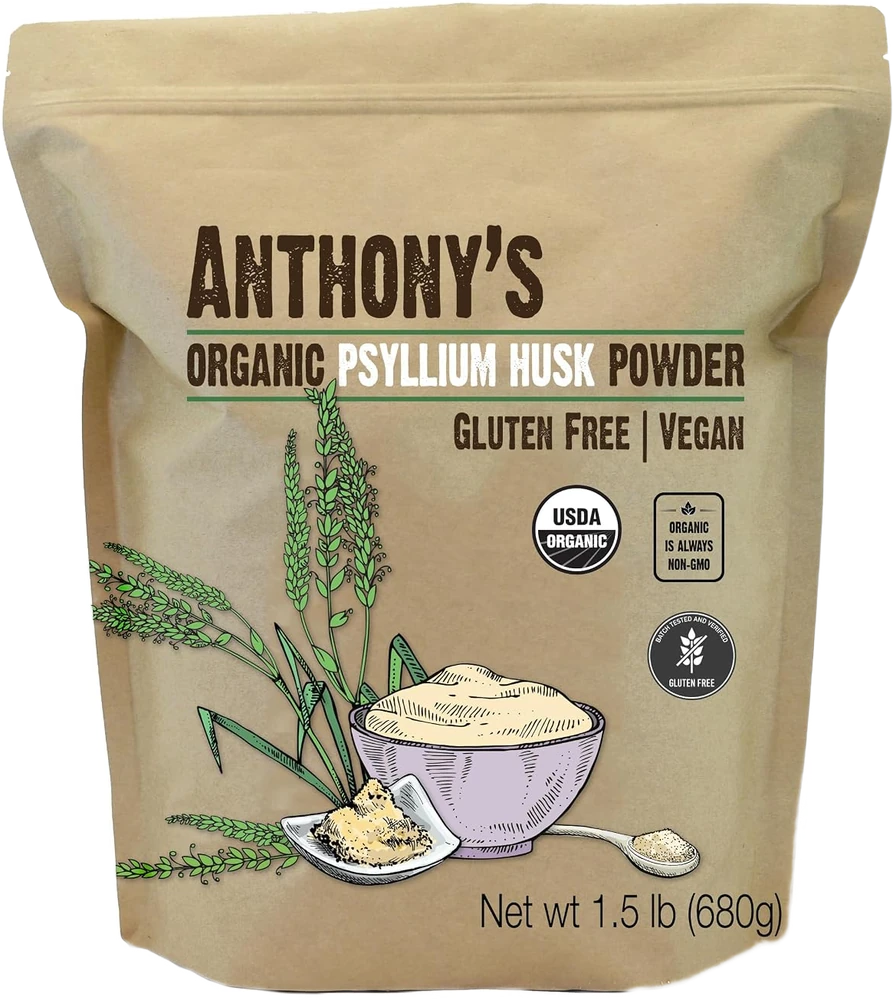
Best bulk organic: Anthony's Organic Psyllium Husk Powder
8.3SAC Score™A big organic finely-ground bag with a clean, batch-tested label — the bulk-buy for heavy daily organic users.
StrongestPurity + label honesty9.52WeakestMixability + adherence6.5- Per serving
- ~5 g psyllium per scoop
- Bottle
- 1.5 lb (bulk)
- Testing
- USDA Organic, batch-tested, gluten-free
All five scores, pros & cons, full label
What We Like- Large 1.5 lb organic bag is excellent cost per gram for heavy daily users who want certified-organic husk
- Finely-ground texture blends better into smoothies and baking than coarse whole husk
- USDA Organic and batch-tested with a clean, no-filler label
- Strong value among the organic options thanks to the bulk format
What You Live With- Bulk bag (not a canister) is less convenient to scoop and store, and can absorb humidity if not sealed well
- Finely-ground husk thickens fast in liquid — mix and drink quickly
- Form
- Finely-ground powder, USDA Organic
Our take — The organic bulk-buy. Anthony's gives you certified-organic, finely-ground, batch-tested psyllium in a 1.5 lb bag at one of the best organic price-per-gram ratios here — the pick for a committed daily user who wants organic husk and doesn't mind a resealable bag instead of a tub. The fine grind blends nicely into smoothies and baking. Keep it sealed against humidity, mix it fresh, and drink plenty of water with each dose.
- 08
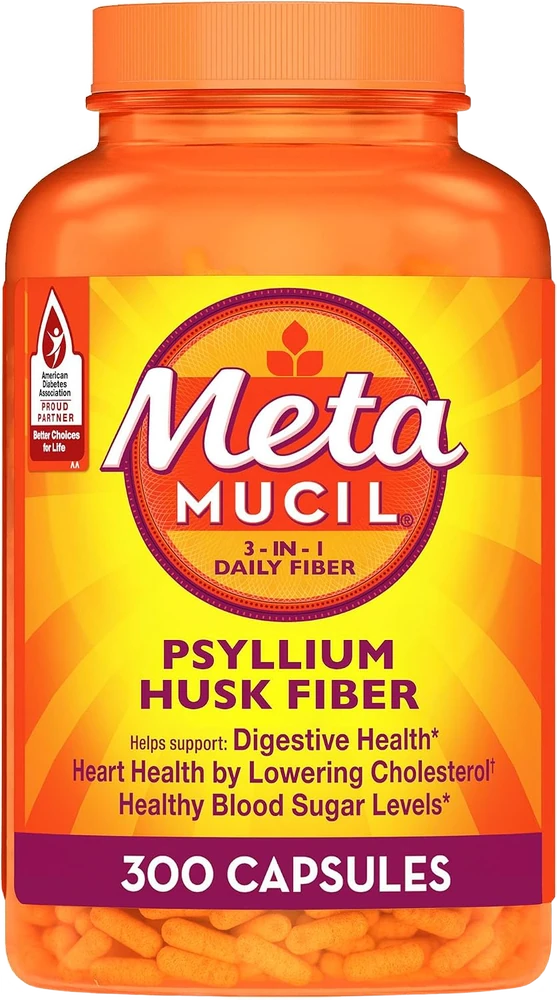
Best capsule: Metamucil Psyllium Fiber Capsules
7.7SAC Score™No-mixing convenience from the most-trusted psyllium brand — the easiest way to take fiber on the road or if you can't stand the grit.
StrongestThird-party testing + manufacturing10.01WeakestCost per effective gram5.5- Per serving
- ~1.8 g soluble fiber per serving (multiple capsules)
- Bottle
- 300 capsules
- Testing
- Established Metamucil brand QC; clinically studied psyllium
All five scores, pros & cons, full label
What We Like- Zero mixing, zero grit, zero taste — the most convenient way to take psyllium, ideal for travel and the office
- From the most clinically studied and doctor-recommended psyllium brand, so trust is high
- Pre-measured capsules make dosing consistent and portable
- Great for grit-averse users who simply won't drink a husk slurry
What You Live With- Low psyllium per capsule means a serving is several caps and a full cholesterol dose can be a large handful — by far the highest cost per effective gram of the powders-vs-caps comparison
- Still requires a full glass of water per the hydration caveat — capsules don't remove the swelling/choking risk if taken with too little fluid
- Form
- Capsules
Our take — The convenience pick, with eyes open. Metamucil capsules are the answer if you travel, work somewhere you can't mix a drink, or simply refuse the grit of powder — they make a daily psyllium habit effortless. The honest cost is efficiency: each capsule holds only a small amount of psyllium, so matching a single powder scoop takes several caps and a cholesterol-range dose takes a lot, which makes capsules the priciest route per gram of actual fiber. And the water rule still applies — take them with a full glass. Buy for convenience, not for high-dose value.
- 09
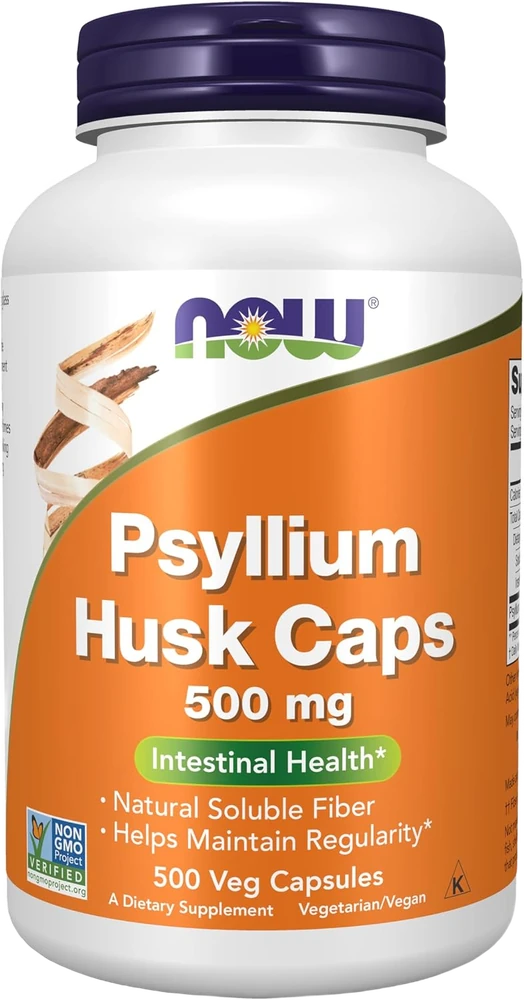
Best vegan capsule: NOW Psyllium Husk Caps 500 mg
7.4SAC Score™Vegetarian-cap pure psyllium in bulk — an affordable capsule alternative for the grit-averse who want a vegan, no-flavoring option.
StrongestMixability + adherence9.52WeakestSoluble-fiber dose + form fit5.0- Per serving
- ~1 g psyllium per 2 capsules
- Bottle
- 500 capsules
- Testing
- NOW in-house QC labs, GMP-certified, vegetarian capsule
All five scores, pros & cons, full label
What We Like- Vegetarian capsule shell — a vegan-friendly no-mix option, unlike some gelatin-based capsules
- Large 500-count bottle keeps the per-capsule price low
- Pure psyllium husk with NOW's trusted in-house QC, no flavors or sweeteners
- Convenient and grit-free for travel and on-the-go dosing
What You Live With- Only ~1 g psyllium per 2-capsule serving means reaching a regularity dose takes several caps and a cholesterol dose takes a large handful — inefficient per effective gram
- Like all capsules, still requires a full glass of water — the convenience doesn't remove the hydration/swelling caveat
- Form
- Vegetarian capsules, 500 mg each
Our take — The vegan, value-minded capsule. NOW Psyllium Caps are the pick if you want capsule convenience, a vegetarian shell, and NOW's QC at a low per-cap price. The catch is the same one every psyllium capsule shares, only more so: at ~1 g per two caps you'll swallow a lot of capsules to reach any meaningful dose, so this is for light regularity support and travel, not for hitting a cholesterol-lowering target. Take with a full glass of water, and if you need real grams, a powder (#1-#3) is far more efficient.
- 10
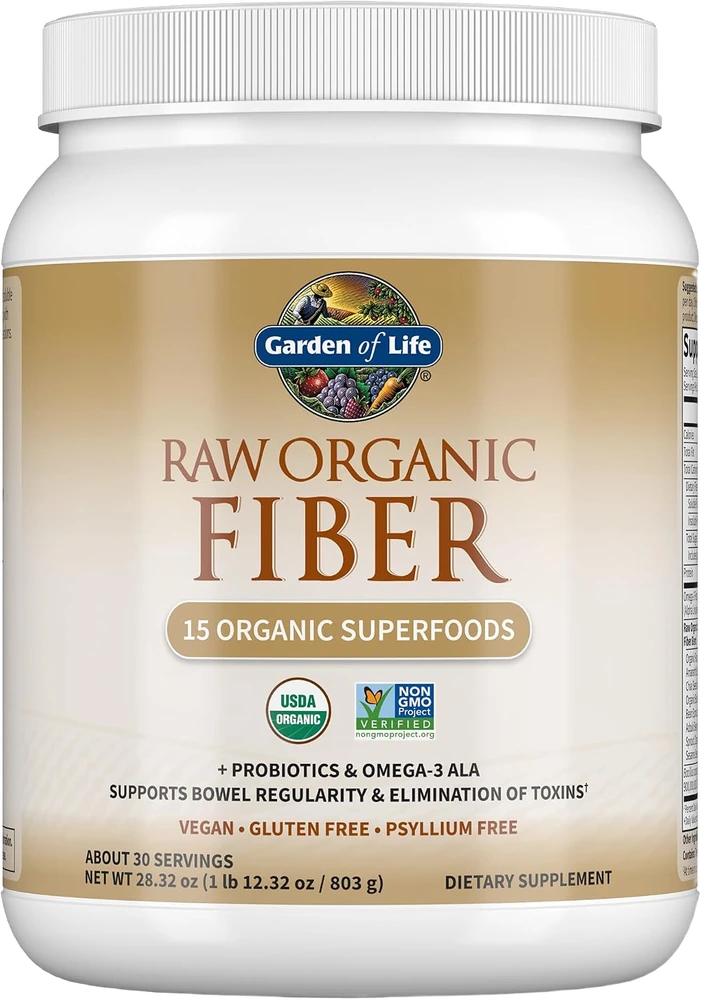
Whole-food blend (psyllium-free): Garden of Life Raw Organic Fiber, Unflavored
6.6SAC Score™The deliberate odd one out — a psyllium-FREE whole-food fiber blend with probiotics, for people whose guts don't tolerate concentrated psyllium.
StrongestPurity + label honesty8.5WeakestCost per effective gram3.0- Per serving
- ~9 g fiber from 15 organic foods + probiotics
- Bottle
- 30 servings
- Testing
- USDA Organic, Non-GMO Project Verified, probiotic blend
All five scores, pros & cons, full label
What We Like- Psyllium-FREE by design — a genuinely useful alternative for people who bloat, cramp, or simply don't tolerate concentrated psyllium gel
- ~9 g of fiber per serving from 15 organic whole foods, plus added probiotics for a broader gut-support angle
- USDA Organic and Non-GMO Project Verified with a clean whole-food label
- Blends a variety of soluble and insoluble fibers rather than a single isolate, which some sensitive guts find gentler
What You Live With- Not a psyllium product at all — included as the disclosed alternative, so if you specifically want psyllium's bile-acid LDL effect (Anderson 2000) this is not it
- By far the most expensive per serving on the list, and the multi-fiber blend lacks psyllium's depth of single-ingredient trial evidence
- Form
- Whole-food fiber blend powder, USDA Organic (psyllium-free)
Our take — The honest exception on a psyllium list. We include Garden of Life precisely because some people can't tolerate concentrated psyllium — the thick gel triggers bloating or cramping for them — and they deserve a real alternative rather than being told to push through. This is a psyllium-FREE organic blend of 15 whole-food fibers plus probiotics, gentler and more varied, at a much higher price per serving. Just be clear about the trade: you're swapping psyllium's specific, well-evidenced cholesterol and IBS effects for a broader, gentler whole-food approach. If plain psyllium agrees with you, pick #1-#9 instead.
Psyllium Husk In Four Short Lessons
Always take it with a full glass of water.
Swallowed dry or under-hydrated, psyllium can swell and choke or obstruct. This rule overrides every brand choice.
Choose powder for real doses.
Powder is the cheapest per gram and the easy way to reach the 7-10 g the cholesterol and satiety data use. Capsules travel well but take a fistful to match one scoop.
Match the grams to your goal.
About 10 g a day lowered LDL by roughly 7% on top of a low-fat diet (Anderson 2000). Psyllium is also the one fiber with positive IBS evidence (Moayyedi 2014).
Four verified peer-reviewed sources cited in the file: Ashraf 1995 (PMID 8824651) on constipation/regularity, Moayyedi 2014 (PMID 25070054) on soluble fiber in IBS, Anderson 2000 (PMID 10648260) showing ~10.2 g/day psyllium lowered LDL ~7% adjunctive to a low-fat diet, and McRorie 2015 (PMID 25972618) on gel-forming fiber pharmacology.
Each pick was scored 0-10 across five criteria, then weighted to a final composite. Soluble-fiber dose and form fit carries the most weight because psyllium is a job-to-be-done purchase: the right product depends on whether you want regularity (a modest 3-5 g daily dose is plenty), IBS relief (soluble psyllium specifically — we reward pure husk and penalize nothing here since all ten are psyllium-based except the disclosed #10), LDL lowering or satiety (you need to reach ~7-10 g/day, which favors high-dose powders over capsules). Powder generally beats capsules on this axis purely on grams-per-serving and dose flexibility; capsules earn their place on convenience, not efficiency. Purity and label honesty is second: we reward pure psyllium husk and clean organic certification, and we note added sugars, sweeteners, colors, and fillers so you know exactly what's in the scoop. Cost per effective gram of psyllium is the value engine — a flavored branded canister can cost many times what bulk husk does per gram of actual fiber. Third-party testing and manufacturing pedigree is the quality gate, and mixability/adherence is the tiebreaker, because the best fiber is the one you'll actually take. Underpinning all of it is the hydration caveat: every one of these must be taken with a full glass of water — that's a usage rule, not a ranking factor, but it's the most important sentence on the page.
Soluble-fiber dose + form fit · 30%
Grams of actual psyllium per serving, matched to the job. Regularity needs only ~3-5 g/day; LDL lowering and satiety need ~7-10 g/day (Anderson 2000 used ~10.2 g). High-dose pure powders (Konsyl ~6 g, NOW/organic husks ~4-5 g) score highest for the gram-hungry goals; clinically dosed flavored powders (Metamucil ~3.4 g) are ideal for regularity and adherence. Capsules score lower on this axis because a serving is often only ~1-2 g of psyllium, so reaching a cholesterol dose means swallowing many caps.
Purity + label honesty · 25%
Pure psyllium husk with nothing else scores top marks. We reward USDA Organic and Non-GMO verification where claimed, and we flag added sugar, artificial sweeteners, colors, and fillers — not as automatic disqualifiers (a sugar-free flavored powder can be the right adherence choice) but so the label is transparent. Whole-husk vs finely-ground is noted because it changes texture and mixability, not fiber quality.
Cost per effective gram of psyllium · 20%
Price divided by grams of actual psyllium delivered, not canister size or serving count. Bulk pure husk (NOW, Anthony's, Viva, Yerba Prima) wins this axis decisively; branded flavored powders cost more per gram for taste and trust; capsules are the most expensive per effective gram because of the low psyllium-per-cap and the cap count needed to reach a real dose.
Third-party testing + manufacturing quality · 15%
GMP manufacturing, identity and contaminant testing, batch COAs, and brand pedigree. Psyllium is an agricultural import, so identity and heavy-metal/contaminant testing matter. Established brands (Metamucil, NOW, Konsyl, Organic India, Yerba Prima) and certified-organic supply chains earn the most credit here.
Mixability + real-world adherence · 10%
How pleasant and sustainable it is to actually take day after day. Finely-ground husks dissolve cleaner in smoothies and baking; coarse whole husk gels fast and can clump. Flavored sugar-free powders win on taste-driven adherence; capsules win for the grit-averse and travelers; pure unflavored powder is the most versatile but the grittiest. The best fiber is the one you don't quit.

How psyllium works
- 1
It forms a gel
Psyllium husk absorbs water and swells into a viscous gel in the gut. That gel is the entire mechanism — it bulks and softens stool, normalizing both constipation and loose stool, which is why fiber dose and form fit is our heaviest axis.
- 2
Cholesterol binding
The gel traps bile acids and carries them out; your liver pulls cholesterol from the blood to make more bile. This is the FDA-recognized LDL-lowering effect — real, dose-dependent, and unusual for a supplement.
- 3
Blood-sugar smoothing
By slowing gastric emptying and carbohydrate absorption, the gel blunts post-meal glucose spikes — a modest but genuine metabolic benefit at adequate doses.
- 4
Water is mandatory
Psyllium needs plenty of water to gel safely; too little liquid risks it clumping. Dose it up gradually with a full glass — the practical rule behind the 'mixability and adherence' axis.
What to expect from psyllium
Regularity responds fast
Bowel regularity and stool consistency usually improve within days. Start with a small dose and lots of water; ramping too fast brings gas and bloating.
Gut settles in
Any initial gas subsides as your system adjusts. Appetite between meals often dips too — the gel is filling, a useful side effect on a diet.
Cholesterol and glucose
The LDL-lowering and post-meal glucose-smoothing effects build over weeks of consistent daily use at ~5-10 g. This is the metabolic payoff, and it needs consistency.
Cheap daily staple
Take it away from medications (the gel can slow their absorption) and always with enough water. Few supplements offer this much proven benefit per dollar.
The bottom line
Metamucil 4-in-1 Sugar-Free (#1) is the default for most people.
It is the most clinically studied, doctor-trusted psyllium, easy to drink daily at a clean ~3.4 g regularity dose. The trade-offs are honest: you pay a brand premium per gram and need two to three doses a day to reach a cholesterol or satiety dose, but it's the safest, most-studied way in.
Alternatives by goal: cheapest, highest-dose, organic, capsule, and psyllium-free.
NOW Psyllium Husk (#3) is the lowest cost per gram if you'll stir plain husk; Konsyl Daily (#2) packs the most psyllium per scoop (~6 g) to reach the ~10 g/day range efficiently for cholesterol, blood-sugar, or satiety; Organic India (#4) or Viva Naturals (#5) for organic sourcing; Metamucil (#6) or NOW (#9) capsules for travel, accepting far higher cost per effective gram. Garden of Life Raw Organic Fiber (#10) is the deliberate psyllium-FREE option for guts that don't tolerate concentrated psyllium.
Match the form to the job — and never take it dry.
The rule that actually matters for safety: never take psyllium dry or with too little liquid, since it swells on contact with water and can cause choking or obstruction — mix with a full glass and keep fluids up. For value, match form to job: a small or flavored powder scoop covers regularity, but reaching a ~7-10 g/day cholesterol or appetite dose is far cheaper with a high-dose powder than a fistful of capsules.
Quick Answers
What is the best psyllium husk pick overall?
Konsyl Daily Psyllium Fiber Powder, Unflavored by Konsyl is our #1 pick (SAC score 9.2/10). The pick when grams matter most. Konsyl delivers about 6 g of pure psyllium per scoop, so it's the efficient choice for cholesterol lowering, blood-sugar blunting, or satiety where you actually need to reach a higher daily dose without choking down five capsules or three flavored servings. It's pure husk, pharmacist-trusted, and excellent value per gram. The cost is texture: high-dose unflavored psyllium gels quickly and goes down gritty, so mix it fresh, drink it fast, and chase it with more water.
What is the best budget option?
NOW Psyllium Husk Powder at $11 / 12 oz. The value champion. If you don't need flavoring and you're willing to stir a scoop into water, NOW Psyllium Husk delivers pure, Non-GMO, lab-checked psyllium for the lowest cost per gram here — there's simply no cheaper honest way to take this fiber. The only thing you give up versus Metamucil is taste, and versus Konsyl a slightly lower per-scoop dose. For a no-nonsense daily fiber habit on a budget, this is the one to buy. Take it with a full glass of water.
How much do these picks cost?
Across our ranked picks, prices run from about $11 to $30 — exact price and cost per serving are listed on every pick card above.
How were these picks ranked?
Each pick was scored 0-10 across five criteria, then weighted to a final composite. Soluble-fiber dose and form fit carries the most weight because psyllium is a job-to-be-done purchase: the right product depends on whether you want regularity (a modest 3-5 g daily dose is plenty), IBS relief (soluble psyllium specifically — we reward pure husk and penalize nothing here since all ten are psyllium-based except the disclosed #10), LDL lowering or satiety (you need to reach ~7-10 g/day, which favors high-dose powders over capsules). Powder generally beats capsules on this axis purely on grams-per-serving and dose flexibility; capsules earn their place on convenience, not efficiency. Purity and label honesty is second: we reward pure psyllium husk and clean organic certification, and we note added sugars, sweeteners, colors, and fillers so you know exactly what's in the scoop. Cost per effective gram of psyllium is the value engine — a flavored branded canister can cost many times what bulk husk does per gram of actual fiber. Third-party testing and manufacturing pedigree is the quality gate, and mixability/adherence is the tiebreaker, because the best fiber is the one you'll actually take. Underpinning all of it is the hydration caveat: every one of these must be taken with a full glass of water — that's a usage rule, not a ranking factor, but it's the most important sentence on the page.
Every Claim Ranked Above Traces Back To One Of These
4 peer-reviewed sources, each linked to PubMed
- [1] Ashraf 1995 PMID 8824651 — Effects of psyllium therapy on stool characteristics, colon transit and anorectal function in chronic idiopathic constipation. Randomized controlled trial: psyllium increased stool frequency and stool weight and improved stool consistency in patients with chronic idiopathic constipation. The anchor trial for the regularity use case — psyllium works as a bulk-forming, water-holding fiber, not by altering colonic motor function.
- [2] Moayyedi 2014 PMID 25070054 — The effect of fiber supplementation on irritable bowel syndrome: a systematic review and meta-analysis. Systematic review and meta-analysis of RCTs: soluble fiber (ispaghula/psyllium) was beneficial in irritable bowel syndrome, while insoluble fiber (wheat bran) was not. The basis for recommending psyllium specifically for IBS and steering IBS sufferers away from bran.
- [3] Anderson 2000 PMID 10648260 — Cholesterol-lowering effects of psyllium intake adjunctive to diet therapy in men and women with hypercholesterolemia: meta-analysis of 8 controlled trials. Meta-analysis of 8 controlled trials: ~10.2 g/day of psyllium, adjunctive to a low-fat diet, lowered serum total cholesterol ~4% and LDL cholesterol ~7% versus placebo. The dose-and-effect basis for the LDL-lowering use case and the ~10 g/day target used throughout this ranking.
- [4] McRorie 2015 PMID 25972618 — Evidence-Based Approach to Fiber Supplements and Clinically Meaningful Health Benefits, Part 1 & Part 2. Evidence-based pharmacology review: psyllium is a gel-forming, non-fermented soluble fiber whose viscous gel drives its clinically meaningful effects — normalizing stool form, lowering LDL by binding bile acids, and blunting post-meal glucose. Explains why psyllium outperforms fermentable/insoluble fibers and why the water-holding gel makes adequate hydration essential.
Affiliate disclosure: every Amazon link uses our Associates tag (superachieverclub-20). We earn a small commission at no cost to you; it funds independent reviews. We never accept payment to change a ranking.