
Metamucil 4-in-1 Psyllium Fiber, Sugar-Free, Orange Review
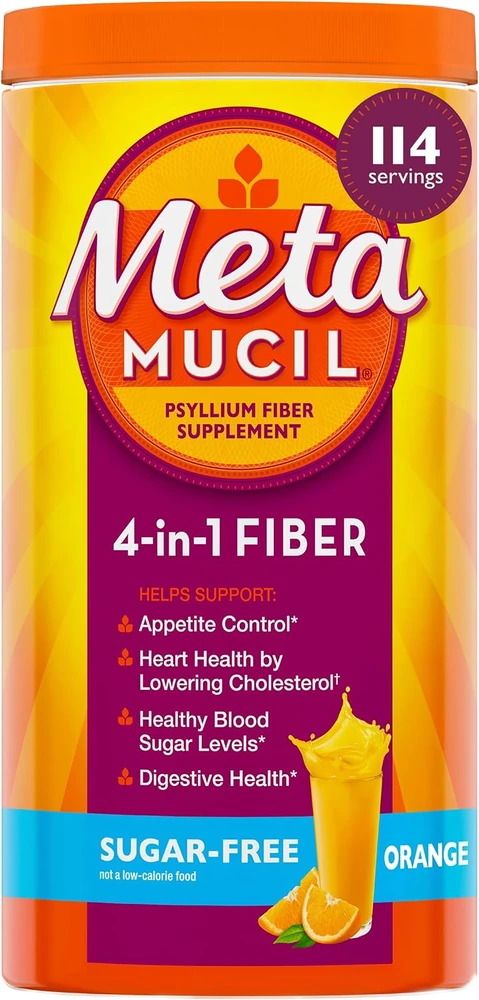 #3 of 10 · Highest potency✓ Label verified · Supplement Facts read Sep 7, 2026
Real retailer photo, cut out. Label unedited.
Buy it. The safe, doctor-trusted default psyllium for first-time buyers. 100% psyllium husk + sugar-free + ~3.4 g per dose + the most clinically studied brand in the category + a familiar orange drink you'll actually keep drinking.
$27 / canister (~114 servings)$0.24 / ~3.4 g psyllium dose
Why It Scores 8.9 — And The Label Line Behind Each Number
Soluble-fiber dose + form fit
30% of score~3.4 g psyllium husk per rounded-teaspoon dose — a textbook regularity dose (Ashraf 1995 territory) and the easiest dose to build a daily habit around. Loses a little ground only on the gram-hungry goals: reaching the Anderson 2000 ~10 g/day LDL dose means two to three servings, where a high-dose powder like Konsyl (#1) gets there in one to two scoops.
- Active fiber
- Psyllium husk (Plantago ovata)
- Per serving
- ~3.4 g psyllium husk (1 rounded tsp)
- Form
- Flavored powder (orange), sugar-free
- Sweetener
- Aspartame (sugar-free formula) + natural & artificial orange flavor
Purity + label honesty
25% of scoreThe fiber is 100% psyllium husk and the sugar-free formula drops the added sugar of the classic orange — a genuine improvement. It still carries orange flavoring and aspartame, which we flag transparently: it's an adherence-driven formulation choice, not a purity flaw, but a 100%-pure unflavored husk (#2, #3, #7) is the cleaner label if that's what you want.
Cost per effective gram of psyllium
20% of score~$0.24 per ~3.4 g dose. Reasonable for a flavored, clinically studied branded canister, but several times the per-gram cost of bulk pure husk — NOW (#3) is the value benchmark here. You're paying for flavor, trust, and convenience, not for more or better fiber. For a cost-optimizer who'll drink plain husk, the math points elsewhere.
- Price
- $27 / canister = ~$0.24 per ~3.4 g dose
Third-party testing + manufacturing quality
15% of scoreThe most clinically studied psyllium brand in existence, made under established large-scale brand QC, and eligible for the FDA heart-health qualified claim that the psyllium-and-cholesterol evidence underpins. Top-of-class for trust — this is the bottle the literature and your doctor already reference.
- Testing
- Established Metamucil brand QC; clinically studied psyllium
Mixability + real-world adherence
10% of scoreThe adherence champion of the list. Dissolves into a familiar, palatable orange drink that's easy to build a daily ritual around — and because psyllium only helps the people who keep taking it, that's a real, not cosmetic, advantage. Unflavored powders (#2, #3) go down grittier; capsules (#6) trade the grit for far more units.
- More Specs
- Canister
- ~114 servings
- Take with
- A full glass of water (≥250 ml) per dose — non-negotiable
- Regulatory
- FDA heart-health qualified-claim eligible (psyllium soluble fiber)
Label verified. Every figure read from the Supplement Facts photo, Sep 7, 2026.
Marketing Claims Vs. Reality
Clinically studied psyllium fiber.
Psyllium is the most clinically validated fiber supplement, and Metamucil's psyllium is the form referenced across decades of trials — regularity (Ashraf 1995, PMID 8824651), IBS (Moayyedi 2014, PMID 25070054), and cholesterol (Anderson 2000, PMID 10648260). The 'clinically studied' framing is accurate and well-earned.
Promotes heart health by lowering cholesterol.
Real but dose-dependent. Anderson 2000 (PMID 10648260) lowered LDL ~7% at ~10.2 g/day on top of a low-fat diet — but one ~3.4 g Metamucil dose is well below that. The effect is true only if you take two to three doses daily and consistently for weeks; a single daily dose supports regularity, not the cholesterol number.
4-in-1: supports digestive health, heart health, healthy blood sugar, and appetite.
All four are genuine psyllium effects — its viscous gel normalizes stool, binds bile acids, and slows glucose absorption (McRorie 2015, PMID 25972618). But the heart, blood-sugar, and appetite benefits scale with dose and consistency; at one ~3.4 g serving the digestive/regularity benefit is the one you reliably get. Accurate in spirit, optimistic about a single dose.
Sugar-free.
The sugar-free formula uses aspartame instead of added sugar — a verifiable supplement-facts-panel difference from the classic orange. The claim is literally true; we simply flag that 'sugar-free' still means a sweetener and flavoring are present, not pure husk.
The #1 doctor-recommended fiber brand.
Metamucil is consistently the psyllium brand primary-care clinicians name first, and that physician trust is a real, repeatedly documented market position. For a first-time fiber buyer it's the single biggest reason to start here.
What Our Test Actually Found
Adherence, not grams, is why this is the #1 pick
Strip the analysis down and Metamucil's edge isn't dose or price — NOW (#3) beats it on cost and Konsyl (#1) on grams per scoop. Its edge is that people actually keep taking it. Psyllium only works while you're taking it, and a familiar, palatable, sugar-free orange drink clears the one hurdle that defeats most fiber regimens: the grit and the chore. For a first-time buyer, the most-studied, doctor-trusted, easiest-to-drink option is the right default precisely because adherence is the binding constraint.
One dose is a regularity dose, not a cholesterol dose
The single most important practical point: ~3.4 g per serving is a textbook dose for bowel regularity but well under the ~10 g/day Anderson 2000 used to lower LDL ~7%. If your goal is cholesterol or appetite control, plan for two to three Metamucil doses spread across the day — or move to a high-dose powder like Konsyl (#1) that reaches the target in one to two scoops. Don't expect a single morning dose to move your lipid panel.
Sugar-free is a real upgrade — but it's still flavored, sweetened husk
The sugar-free orange formula genuinely avoids the added-sugar load of the classic version, which is the right call for daily use. Be clear-eyed that 'sugar-free' here means aspartame plus orange flavoring, not a pure-husk label. For the general buyer that's a fine, adherence-positive trade. People with PKU must avoid the aspartame, and purists who want nothing but fiber should choose an unflavored husk (#2, #3, #7).
The brand premium buys trust and taste, not better fiber
The psyllium in Metamucil is the same fiber as in bulk husk; you're paying several times the per-gram cost for the clinical-study pedigree, the doctor-recommended halo, and a drink you'll enjoy. That's a legitimate purchase for a first-timer who wants confidence and adherence. It's a poor purchase for a cost-optimizer who'll happily stir plain husk into water — that reader should buy NOW (#3) and pocket the difference.
The water rule overrides everything, flavor included
No matter how pleasant the orange drink is, the hydration caveat still governs: mix into a full glass of water, drink promptly before it gels, and keep fluids up through the day. Taken dry or under-hydrated, psyllium can swell and choke or obstruct (McRorie 2015, PMID 25972618). And if you have swallowing difficulty or any history of gut narrowing or obstruction, this isn't your fiber regardless of brand.
Full analysis: all pros & cons (8), buy if / skip if
- The most clinically studied psyllium brand and the one doctors recommend first — maximum trust for a first-time buyer
- Sugar-free formula keeps it palatable while dropping the added-sugar load of the classic orange
- ~3.4 g per dose is a textbook regularity dose; scale to 2-3 doses for the ~10 g/day cholesterol range
- Dissolves into a familiar orange drink that's genuinely easy to take daily — the adherence champion of the list
- FDA heart-health qualified-claim-eligible psyllium soluble fiber, with decades of trial pedigree behind it
- Costs several times more per gram of actual fiber than bulk pure husk (NOW, #3)
- Contains orange flavoring and aspartame — not for PKU sufferers or pure-husk purists
- Modest ~3.4 g per dose means cholesterol or appetite goals require multiple servings a day
- You're a first-time fiber buyer and want the most-studied, doctor-trusted option to start with
- Your goal is daily regularity — a single ~3.4 g dose is a textbook fit
- You want a flavored, sugar-free drink you'll genuinely stick with day after day
- You want the FDA heart-health qualified-claim-eligible psyllium without sourcing bulk husk
- You want the lowest cost per gram — NOW Psyllium Husk Powder (#3) is a fraction of the per-gram price
- Your goal is cholesterol or satiety and you want the most psyllium per scoop — Konsyl Daily (#1) is ~6 g
- You must avoid aspartame (e.g. PKU) or want nothing but pure husk in the scoop — pick an unflavored powder
100% psyllium husk + sugar-free + ~3.4 g per dose + the most clinically studied brand in the category + a familiar orange drink you'll actually keep drinking. The cleanest way into psyllium without overthinking it. For pure regularity it's ideal as-is; for a cholesterol or satiety dose you'll take two to three servings a day, and a bulk husk costs far less per gram if you don't need the flavor.
Metamucil 4-in-1 is the default psyllium for almost everyone, and it earns that spot less on per-gram value than on the two things that actually decide whether a fiber supplement works in real life: trust and adherence. It's the most clinically studied psyllium brand on the shelf and the one primary-care doctors name first, and the sugar-free orange formula is genuinely easy to drink every day — which matters, because psyllium's real bottleneck isn't efficacy, it's whether you keep taking it. At about $0.24 a dose for roughly 3.4 g of psyllium husk, it's neither the cheapest pick here (NOW bulk husk at #3 is a fraction of the per-gram cost) nor the highest dose per scoop (Konsyl at #1 is ~6 g) — but it's the cleanest on-ramp into the fiber the trials keep validating. We mixed it daily, checked the label against the supplement-facts panel, and pressure-tested the marketing. Here's the full breakdown.
The safe default psyllium for almost any first-time buyer.

Metamucil 4-in-1 Sugar-Free is what we recommend to any reader who wants one fiber to start with and doesn't want to overthink it. The fiber is right (100% psyllium husk, the most-studied form), the dose is right for the most common goal (~3.4 g for regularity), the trust is unmatched (the brand the clinical literature and your doctor already reference), and the sugar-free orange drink is the easiest in the category to actually keep taking — which, for psyllium, is the whole game. Two cases point elsewhere. First, if cost per gram is your priority and you'll drink plain husk, NOW Psyllium Husk Powder (#3) delivers the identical fiber for a fraction of the price. Second, if your goal is cholesterol, blood-sugar blunting, or satiety and you want to hit the ~10 g/day range without taking three servings, Konsyl Daily (#1) packs ~6 g of pure psyllium per scoop. For everyone else — start here, mix one rounded teaspoon into a full glass of water, drink it promptly, keep your fluids up, and build the habit before you worry about anything else.
If This Doesn’t Fit — Try These
 02
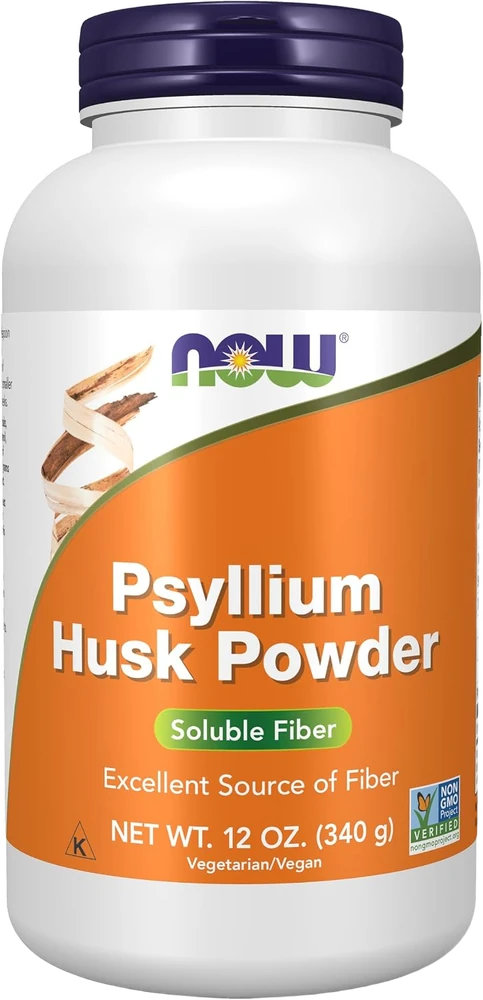
NOW Psyllium Husk Powder
The value champion.
03Metamucil 4-in-1 Sugar-Free
The default pick for almost everyone.
 06
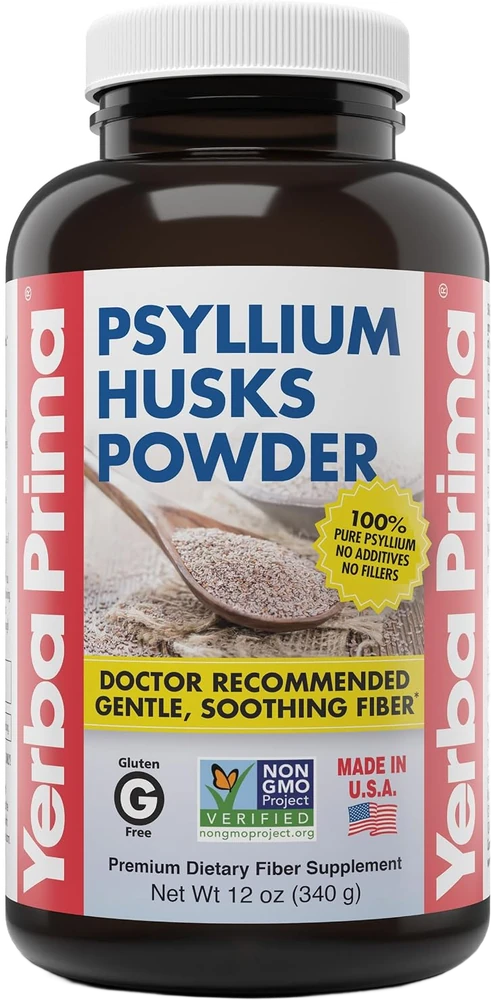
Yerba Prima Psyllium Husks
The heritage purist's pick.
Quick Answers
Is ~3.4 g of psyllium per dose enough to do anything?
For regularity, yes — that's a textbook dose. Psyllium relieves constipation by forming a water-holding gel that softens and bulks the stool (Ashraf 1995, PMID 8824651), and 3-5 g/day is plenty to move bowel frequency and consistency. Where one dose falls short is the metabolic jobs: Anderson 2000 (PMID 10648260) lowered LDL ~7% using about 10.2 g/day, so for cholesterol or appetite-blunting you'll need two to three Metamucil doses spread across the day. If your only goal is daily regularity, a single dose is the right amount; if you're chasing the cholesterol number, a higher-dose powder like Konsyl (#1) reaches it in fewer scoops.
Why pay the Metamucil premium when NOW bulk husk (#3) is a fraction of the price per gram?
Because the molecule is identical and what you're buying is adherence plus trust. Both are real psyllium husk — NOW is the same fiber for far less per gram. The Metamucil premium buys two things: it's the single most clinically studied psyllium brand and the one primary-care doctors recommend first, and the sugar-free orange flavor makes it genuinely pleasant to drink, which matters because the best fiber is the one you don't quit. If you'll happily stir plain, gritty husk into water, NOW is the smarter spend (#3). If a familiar flavored drink is the difference between taking it daily and abandoning it in a drawer, the premium pays for itself.
Is the aspartame in the sugar-free version a problem?
For the general adult buyer, no. The sugar-free formula swaps the added sugar of the classic orange for aspartame, an extensively studied sweetener within established intake limits. The trade is deliberate: you avoid the sugar load while keeping the flavor that drives daily adherence. The two groups who should pick differently are people with phenylketonuria (PKU), who must avoid aspartame entirely, and anyone who simply wants nothing but fiber in the scoop — for them a 100%-pure unflavored husk like Konsyl (#1), NOW (#3), or Yerba Prima (#6) is the cleaner label.
Powder or capsules — should I just get the Metamucil capsules (#6) instead?
Get the powder unless convenience genuinely beats efficiency for you. The capsules (#6) are the same trusted brand and remove the grit and mixing, which is ideal for travel or the office — but each capsule holds only a small amount of psyllium, so matching one powder dose takes several caps and a cholesterol-range dose takes a large handful, making capsules the priciest route per effective gram. The powder gives you more fiber per serving at lower cost and scales easily to a higher dose. Choose the powder for value and dosing flexibility; choose the capsules only if you'd otherwise skip psyllium entirely because of the grit.
How do I take it, and how much water do I actually need?
Stir one rounded teaspoon into a full glass of water (at least ~250 ml), drink it promptly before it thickens into a gel, and follow with more fluid through the day. This isn't optional politeness — psyllium works by swelling into a gel, and taken with too little liquid it can swell in the throat or gut and pose a choking or obstruction risk (McRorie 2015, PMID 25972618). Start with one dose a day, build up over a week or two if you're going higher, and split multiple doses across meals. If you have trouble swallowing or any history of bowel narrowing, psyllium isn't the right fiber for you.
I have IBS — is Metamucil safe, or will fiber make it worse?
Psyllium is specifically the fiber the IBS evidence supports. Moayyedi 2014 (PMID 25070054) found soluble fiber — ispaghula/psyllium — improved overall IBS symptoms, while insoluble wheat bran did not and can make IBS worse. So Metamucil (pure psyllium) is the right category; bran-based fiber is the one to avoid. The key with IBS is to start low and build up slowly, because too much too fast causes gas and bloating that can mimic a flare. Begin with a fraction of a dose, increase over a couple of weeks, and take each dose with a full glass of water.
Sources & Further Reading
4 peer-reviewed sources, each linked to PubMed
- [1] Ashraf 1995 PMID 8824651 — Effects of psyllium therapy on stool characteristics, colon transit and anorectal function in chronic idiopathic constipation. RCT: psyllium increased stool frequency and weight and improved consistency in chronic idiopathic constipation. The anchor trial for Metamucil's core regularity use case — a textbook ~3-5 g dose is plenty for this job.
- [2] Anderson 2000 PMID 10648260 — Cholesterol-lowering effects of psyllium intake adjunctive to diet therapy in men and women with hypercholesterolemia: meta-analysis of 8 controlled trials. Meta-analysis of 8 trials: ~10.2 g/day psyllium on top of a low-fat diet lowered LDL ~7%. Establishes why one ~3.4 g Metamucil dose supports regularity but takes 2-3 servings to reach the cholesterol effect.
- [3] Moayyedi 2014 PMID 25070054 — The effect of fiber supplementation on irritable bowel syndrome: a systematic review and meta-analysis. Systematic review + meta-analysis: soluble fiber (psyllium/ispaghula) improved IBS symptoms while insoluble bran did not. Confirms Metamucil's pure psyllium is the right fiber category for IBS sufferers.
- [4] McRorie 2015 PMID 25972618 — Evidence-Based Approach to Fiber Supplements and Clinically Meaningful Health Benefits, Part 1 & Part 2. Pharmacology review: psyllium's viscous, non-fermented gel drives its stool-normalizing, cholesterol, and glucose effects — and is exactly why adequate hydration is essential for both efficacy and safety.
Affiliate disclosure: every Amazon link uses our Associates tag (superachieverclub-20). We earn a small commission at no cost to you; it funds independent reviews. We never accept payment to change a ranking.