
Organic India Whole Husk Psyllium Powder, USDA Organic Review
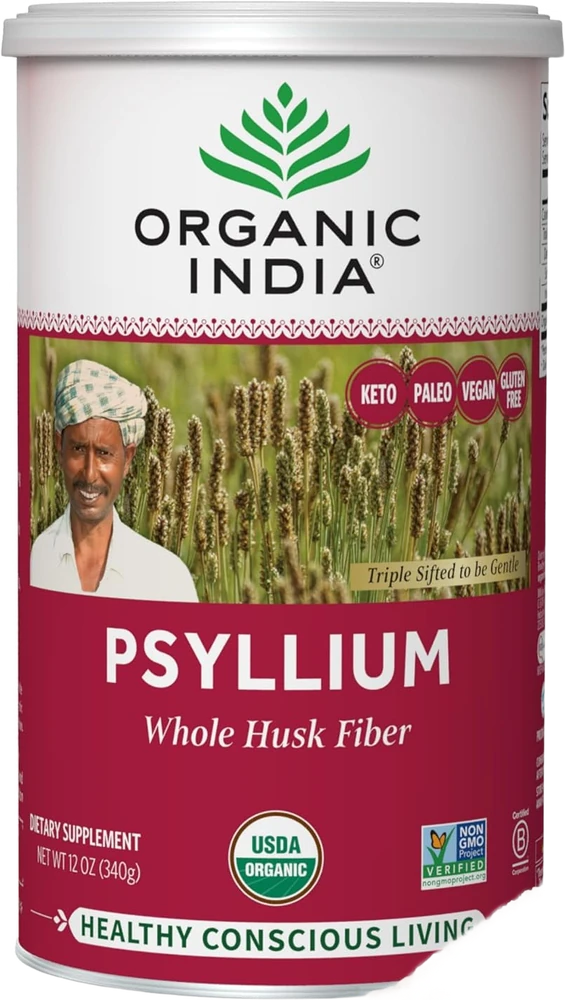 #5 of 10 · Best organic✓ Label verified · Supplement Facts read Oct 1, 2026
Real retailer photo, cut out. Label unedited.
Buy it. The organic pick that still delivers a real dose. USDA Organic whole-husk psyllium + 5 g per tablespoon (efficient for both regularity and the ~10 g/day cholesterol range) + Non-GMO Project Verified and Certified B Corporation marks + minimally processed format.
$15 / 12 oz$0.22 / 5 g whole-husk serving (68 servings at the listed price)
Why It Scores 8.5 — And The Label Line Behind Each Number
Soluble-fiber dose + form fit
30% of score5 g of whole-husk psyllium per tablespoon (4 g of dietary fiber, 3 g soluble and 1 g insoluble) — efficient for both jobs. One tablespoon covers regularity comfortably (Ashraf 1995 territory), and about two tablespoons reach the Anderson 2000 ~10 g/day cholesterol range, so this is a genuine metabolic option, not just a regularity product. Slightly behind Konsyl's ~6 g (#2) but well ahead of low-dose flavored powders and capsules.
- Active fiber
- Whole-husk psyllium (Plantago ovata), USDA Organic
- Per serving
- 1 tablespoon = 5 g whole-husk psyllium — 4 g dietary fiber (3 g soluble, 1 g insoluble), 20 calories
- Form
- Whole-husk powder ('Whole Husk', not powdered seed), triple sifted per the front label, minimally processed
Purity + label honesty
25% of scoreUSDA Organic certified whole-husk psyllium — the cleanest sourcing chain of the high-dose powders here, with a single-ingredient panel (organic psyllium seed husk) and no sugar, sweetener, flavor, or filler. The organic certification is verifiable, and the label adds Non-GMO Project Verified and Certified B Corporation marks. Nothing to flag; the texture cost of whole husk is scored under mixability.
- Certification
- USDA Organic, Non-GMO Project Verified, Certified B Corporation; single-ingredient panel, no additives; Keto, Paleo, Vegan, Gluten Free on the front label
Cost per effective gram
20% of scoreAbout $0.22 per 5 g serving at the listed price (68 servings per 12 oz bottle) — more per gram than conventional bulk husk because you're paying for the USDA Organic certification. Fair for a certified-organic product from a respected brand, but clearly a premium: if organic doesn't matter to you, NOW (#3) delivers the same fiber for noticeably less per gram. The premium is the certification, not better fiber.
- Price
- $15 / 12 oz = about $0.22 per 5 g serving (68 servings at the listed price)
Third-party testing + manufacturing
15% of scoreUSDA Organic, Non-GMO Project Verified and Certified B Corporation marks on the label, from an established clean-label brand. For an imported agricultural fiber, the certified-organic chain of custody is a meaningful quality and identity assurance, and Organic India's pedigree backs it. Firmly in the trusted tier.
- Testing
- USDA Organic, Non-GMO Project Verified, Certified B Corporation; established clean-label brand QC
Mixability + adherence
10% of scoreThe honest weak point. Whole husk gels fast and goes down thicker than finely-ground powders — it thickens into a heavy slurry quickly and clumps if you're slow, even with the front label's 'Triple Sifted to be Gentle'. Some buyers like the minimally processed texture. For smoothies or baking, the fine grind of Viva Naturals (#4) is far nicer.
- More Specs
- Bag
- 12 oz (340 g) · 68 servings of 1 tablespoon
- Take with
- A full glass of water (≥250 ml) per tablespoon — drink promptly, it gels fast
- Best for
- Organic buyers who still want a real cholesterol/satiety dose
Label verified. Every figure read from the Supplement Facts photo, Oct 1, 2026.
Marketing Claims Vs. Reality
USDA Organic certified psyllium.
The USDA Organic certification is verifiable on the label and reflects a certified-organic agricultural supply chain for the Plantago ovata husk. Accurate, and the product's core differentiator versus conventional bulk husk.
Whole-husk, minimally processed fiber.
The panel prints 'Whole Husk' (not powdered seed), and the front label adds 'Triple Sifted to be Gentle'. It is a whole-husk product rather than a finely-milled powder — genuinely less processed, which is the texture you feel when it gels fast. The claim is accurate; just note that 'minimally processed' is also why it's thicker-gelling than fine-grind organic powders (#4).
Supports digestive health and regularity.
Core, well-evidenced psyllium effect — the water-holding gel softens and bulks stool (Ashraf 1995, PMID 8824651) and normalizes both directions. Fully delivered by 5 g of pure organic husk.
Supports healthy cholesterol.
Real but dose-dependent — and reachable here. Anderson 2000 (PMID 10648260) lowered LDL ~7% at ~10.2 g/day, so the cholesterol benefit needs about two 5 g tablespoons daily, taken consistently. At a single tablespoon you get regularity, not the lipid effect.
From a sustainability-focused, transparent brand.
Organic India is a well-established clean-label brand, and the label carries Certified B Corporation and Non-GMO Project Verified marks. The positioning is genuine and is part of what the organic premium buys.
What Our Test Actually Found
Organic without the dose penalty — that's the whole point
Many organic fiber products push you toward low capsule doses or tiny servings, so you trade grams for the certification. Organic India doesn't: at 5 g a tablespoon it's efficient for regularity and reaches the Anderson 2000 ~10 g/day cholesterol range in about two tablespoons. That makes it the rare pick where you get USDA-organic sourcing and a real metabolic dose at once — the reason it's the 'best organic' choice rather than just 'an organic option.'
Whole husk vs fine grind is a texture-and-use decision, not a quality one
Organic India is whole husk (triple sifted per its label); Viva Naturals (#4) is finely ground — same psyllium, same dose, different feel. Whole husk is minimally processed and gels fast into a thick slurry, which suits buyers who take it straight and like least-refined fiber. Fine grind blends smoother and is the keto/gluten-free baker's default. Neither is 'better' fiber; pick by how you actually consume it.
The premium buys certification, not better fiber
Be clear-eyed about the cost: at about $0.22 per 5 g serving at the listed price, Organic India runs above conventional bulk husk like NOW (#3), and the difference is the USDA Organic certification, not more or better psyllium. If organic sourcing matters to you, that's a fair, deliberate spend from a respected brand. If it doesn't, you're paying extra for an assurance you don't value — buy the conventional husk and save.
Whole husk rewards good technique
The fast-gelling whole husk is the most likely complaint, and it's mostly fixable. Add the powder to a full glass of water rather than the reverse, stir hard, and drink immediately before it sets into a heavy slurry; use more water if you want it thinner. This is also the safety rule, not just comfort — psyllium must go down as a hydrated gel, never dry (McRorie 2015, PMID 25972618). Drink it promptly and keep fluids up through the day.
Start low, build up — whole husk or not
The usual psyllium on-ramp applies. Jumping to a full 5 g tablespoon on day one invites gas, bloating, and cramping; start with a fraction, build over a week or two toward your target, and split a cholesterol-range total across meals. This matters most for IBS sufferers — psyllium is the right fiber for IBS (Moayyedi 2014, PMID 25070054), but only when titrated up slowly so a big early dose doesn't feel like a flare.
Full analysis: all pros & cons (8), buy if / skip if
- USDA Organic certified whole-husk psyllium — the cleanest sourcing chain of the high-dose powders here
- 5 g per tablespoon keeps it efficient for both regularity and the higher cholesterol/satiety doses
- Organic India is a respected clean-label brand — USDA Organic, Non-GMO Project Verified and Certified B Corporation on the label
- Whole-husk format is minimally processed for buyers who prefer the least-refined fiber
- A genuine cholesterol/satiety dose without dropping to capsules to stay organic
- Costs more per gram than conventional bulk husk (NOW, #3) — you pay for the organic certification
- Whole husk gels fast and goes down thicker than finely-ground organic powders (Viva Naturals, #4)
- Slightly lower per-serving dose than Konsyl's ~6 g (#2) if you want maximum grams per serving
- Organic sourcing is important to you and you don't want to drop to a low capsule dose to get it
- You want 5 g per tablespoon — efficient for both regularity and the cholesterol/satiety range
- You prefer minimally processed whole-husk fiber with USDA Organic, Non-GMO Project Verified and B Corp marks
- You take psyllium straight in water and don't mind a thicker, grittier slurry
- You don't care about organic — conventional bulk husk (NOW, #3) is the same fiber for less per gram
- You mostly use psyllium in smoothies or baking — finely-ground Viva Naturals (#4) blends smoother
- You want the highest dose per serving — Konsyl (#1) is ~6 g of pure husk
USDA Organic whole-husk psyllium + 5 g per tablespoon (efficient for both regularity and the ~10 g/day cholesterol range) + Non-GMO Project Verified and Certified B Corporation marks + minimally processed format. The best balance of organic sourcing and dose on the list. You pay a premium over conventional bulk husk, and the whole husk gels fast, so mix it fresh.
Organic India Whole Husk is the organic pick that doesn't make you compromise on dose. It gives you USDA-certified whole-husk psyllium — the cleanest sourcing chain among the high-dose powders on this list — at 5 g a tablespoon (4 g of dietary fiber, 3 g of it soluble), which is enough fiber per serving for cholesterol or satiety goals, not just regularity. The label also carries Non-GMO Project Verified and Certified B Corporation marks, and the minimally processed whole-husk format will appeal to buyers who want the least-refined fiber. The two honest trade-offs: you pay a premium over conventional bulk husk for the certification, and the whole husk gels fast and goes down thicker than finely-ground powders. We mixed it, checked the label against the panel, and weighed the organic premium. Here's the full breakdown.
The organic pick that doesn't compromise on dose.

Organic India Whole Husk is the right call when organic sourcing matters and you still want grams per serving. It gives you USDA-certified whole-husk psyllium at 5 g a tablespoon — enough for both regularity and, at roughly two tablespoons, the Anderson 2000 ~10 g/day cholesterol range — with Non-GMO Project Verified and Certified B Corporation marks on the label. That combination of clean sourcing plus a real metabolic dose is what makes it the best organic choice here rather than just an organic also-ran. The trade-offs are honest. You pay a premium over conventional bulk husk for the certification, so if organic doesn't matter to you, NOW (#3) is the same fiber for less. And the whole husk gels fast and goes down thick — if you mostly blend psyllium into smoothies or bake with it, the finely-ground organic Viva Naturals (#4) is the smoother pick, and if you want maximum grams per serving, Konsyl (#1) edges it. But for the buyer who wants organic and dose together, this is the balance to buy — mixed fresh into a full glass of water and drunk promptly.
If This Doesn’t Fit — Try These
 04
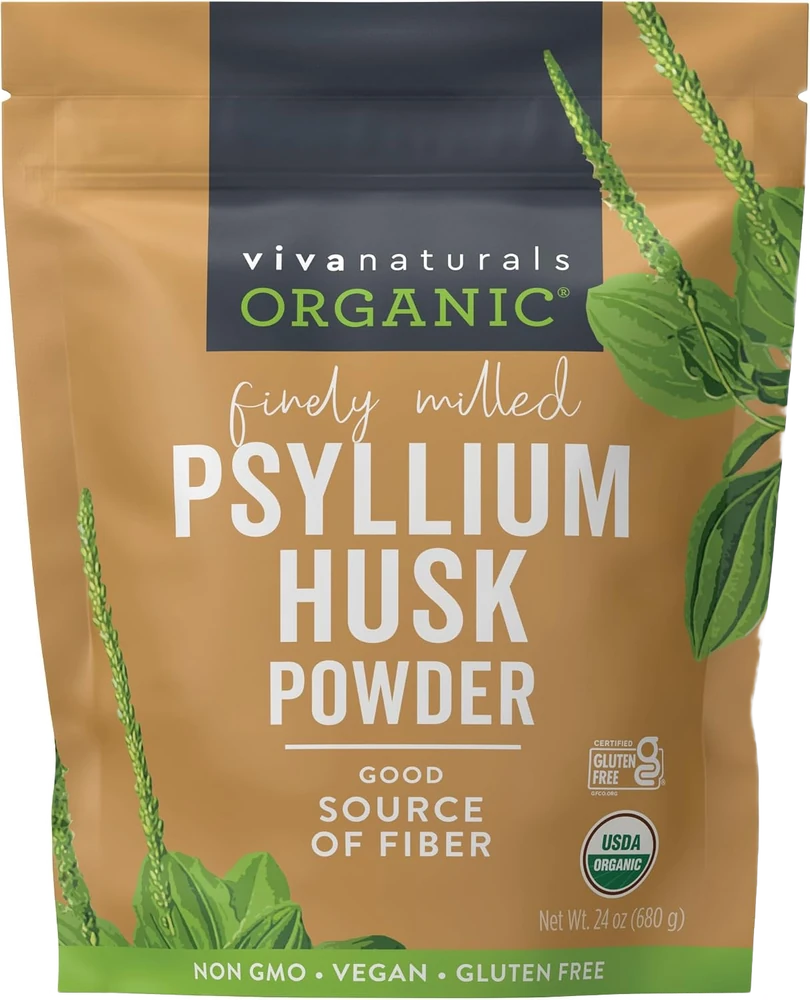
Viva Naturals Organic Psyllium
The texture-first organic pick.
 03
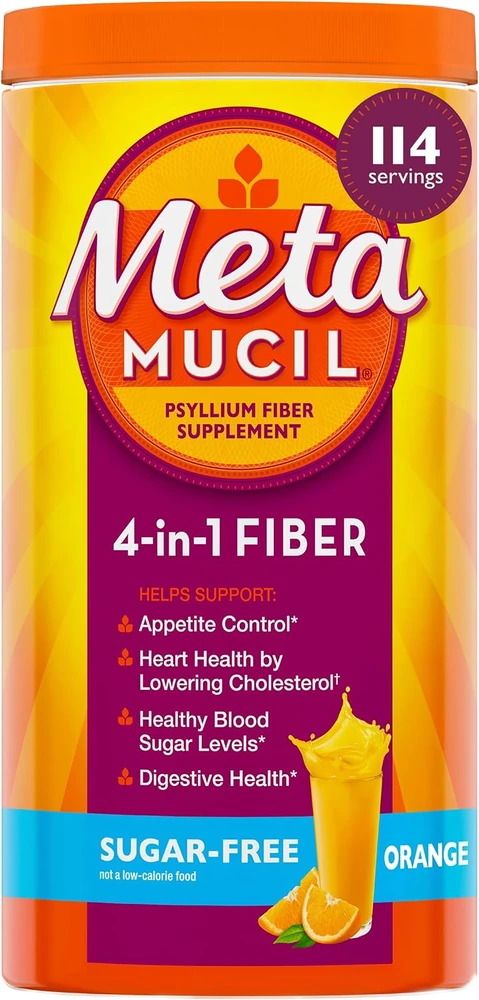
Metamucil 4-in-1 Sugar-Free
The default pick for almost everyone.
 02
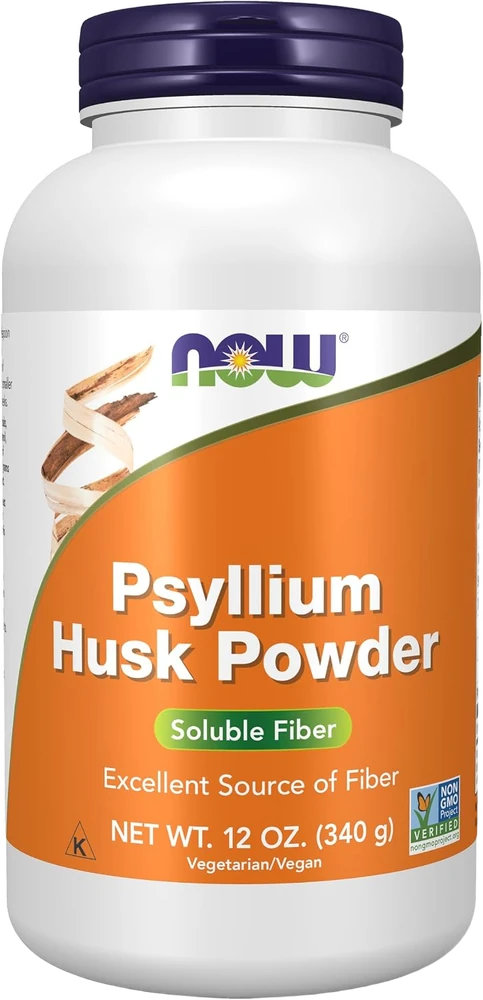
NOW Psyllium Husk Powder
The value champion.
Quick Answers
Does USDA Organic actually make psyllium better, or am I just paying more?
It changes sourcing assurance, not the fiber itself. The psyllium molecule and its effects are identical whether organic or conventional — the regularity, IBS, cholesterol, and glucose evidence (Ashraf 1995, Moayyedi 2014, Anderson 2000, McRorie 2015) is about the fiber. What USDA Organic certifies is the agricultural supply chain: how the Plantago ovata was grown and handled, with prohibitions on synthetic pesticides and a certified chain of custody. Since psyllium is an imported crop, some buyers value that assurance. If organic sourcing matters to you, Organic India delivers it without dropping to a low capsule dose; if it doesn't, conventional bulk husk (NOW, #3) is the same fiber for less.
What's the difference between 'whole husk' here and the finely-ground organic powder at #4?
Grind size, which changes texture not fiber quality. Organic India is whole husk (the front label also says 'Triple Sifted to be Gentle'); Viva Naturals (#4) is finely ground. Whole husk is minimally processed and gels fast into a thicker slurry — some buyers prefer it precisely because it's least refined. Finely ground husk dissolves cleaner and clumps less, which is far nicer in smoothies and is the preferred form for keto and gluten-free baking, where it acts as a binder. Both are the same psyllium at the same dose; pick whole husk (this one) if you take it straight in water and like minimal processing, fine grind (#4) if you blend it or bake with it.
Is 5 g a tablespoon enough for cholesterol, or do I need more?
It's an efficient base — you'll likely take two tablespoons for the full cholesterol effect. Anderson 2000 (PMID 10648260) lowered LDL ~7% at about 10.2 g/day, so at 5 g per tablespoon Organic India reaches that range in roughly two tablespoons a day, taken consistently for weeks. That's more efficient than a ~3.4 g flavored dose (#1, which needs three) and only slightly behind Konsyl's ~6 g (#2). For plain regularity, a single tablespoon is more than enough. So yes — 5 g is enough to make this a real cholesterol-and-satiety option, not just a regularity product, while staying organic.
Organic India vs Viva Naturals (#4) — which organic powder should I buy?
Decide by how you take it. Both are USDA Organic at about 5 g a serving, so dose and certification are a wash. Choose Organic India's whole husk if you drink it straight in water and prefer minimally processed fiber, and you trust its clean-label, sustainability-focused brand. Choose Viva Naturals' finely-ground husk if you mostly use psyllium in smoothies or as a keto/gluten-free baking binder, where the fine grind blends smoother and clumps less. The grind is the whole decision; everything else is essentially equivalent.
The whole husk turns to glue fast — how do I take it?
Add it to a full glass of water, stir hard, and drink immediately — whole husk gels quickly. The same water-holding gel that makes psyllium work (McRorie 2015, PMID 25972618) forms fast with minimally processed husk, so technique matters: powder into the glass (not the reverse), stir, drink before it sets, and chase with more fluid. This isn't just about texture — it's the safety rule too: psyllium must go down as a hydrated gel, because taken dry or under-hydrated it can swell in the throat or gut and cause choking or obstruction. Use plenty of water and keep fluids up through the day.
I want clean-label and I have IBS — is this a good fit?
Yes, with the standard psyllium caveats. Soluble psyllium is the fiber the IBS evidence supports — Moayyedi 2014 (PMID 25070054) found it improved IBS symptoms while insoluble bran did not — and Organic India gives you that in a USDA-organic, clean-label form, which appeals if you're sensitive about what's in the scoop. As always with IBS, start with a fraction of a scoop and build up over one to two weeks, because a big dose too soon causes gas and bloating that can mimic a flare. Take each dose with a full glass of water, and the whole husk especially needs to be drunk promptly.
Sources & Further Reading
4 peer-reviewed sources, each linked to PubMed
- [1] Ashraf 1995 PMID 8824651 — Effects of psyllium therapy on stool characteristics, colon transit and anorectal function in chronic idiopathic constipation. RCT: psyllium increased stool frequency and weight and improved consistency in chronic constipation — the regularity effect delivered by a single 5 g organic tablespoon.
- [2] Anderson 2000 PMID 10648260 — Cholesterol-lowering effects of psyllium intake adjunctive to diet therapy in men and women with hypercholesterolemia: meta-analysis of 8 controlled trials. Meta-analysis of 8 trials: ~10.2 g/day psyllium lowered LDL ~7% on top of a low-fat diet. At 5 g per tablespoon, Organic India reaches that range in about two tablespoons a day.
- [3] Moayyedi 2014 PMID 25070054 — The effect of fiber supplementation on irritable bowel syndrome: a systematic review and meta-analysis. Systematic review + meta-analysis: soluble psyllium improved IBS symptoms while insoluble bran did not. Organic India's pure husk is the right fiber category for IBS — titrate up slowly.
- [4] McRorie 2015 PMID 25972618 — Evidence-Based Approach to Fiber Supplements and Clinically Meaningful Health Benefits, Part 1 & Part 2. Pharmacology review: psyllium's viscous, non-fermented gel drives its benefits and is why whole husk gels fast and must be taken with plenty of water.
Affiliate disclosure: every Amazon link uses our Associates tag (superachieverclub-20). We earn a small commission at no cost to you; it funds independent reviews. We never accept payment to change a ranking.