
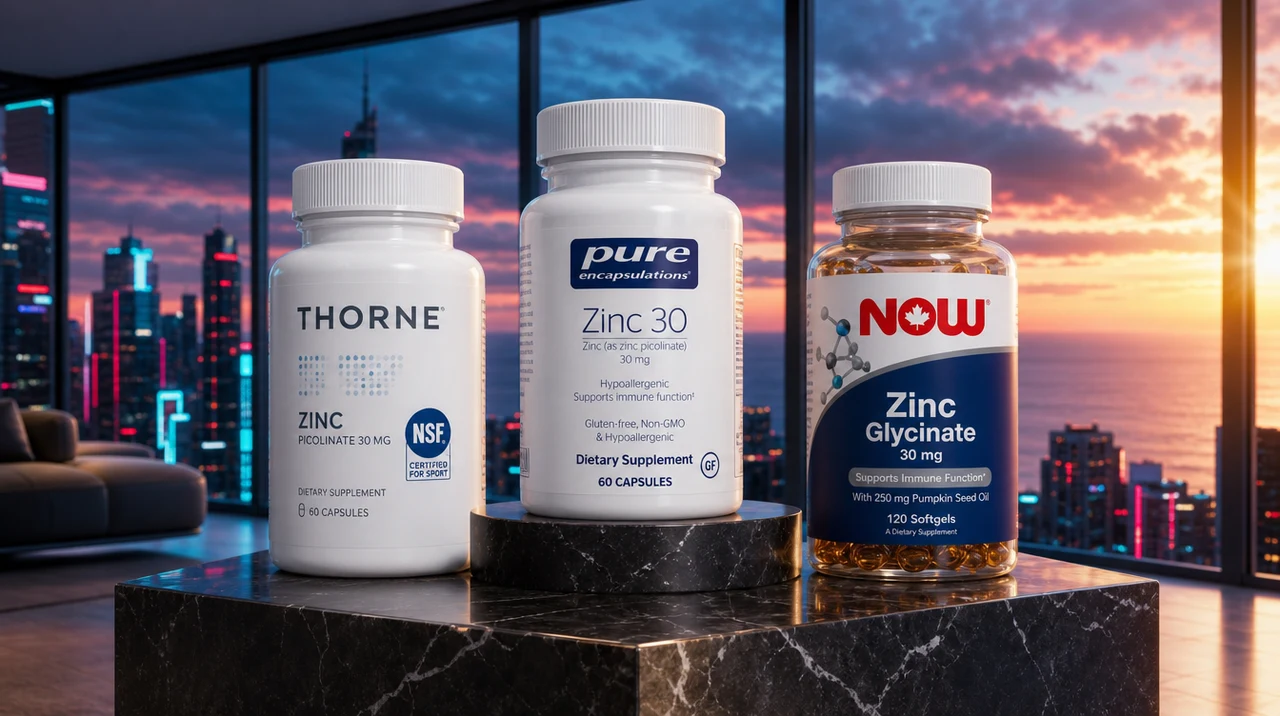
Top 7 Best Zinc for Immune Support (2026)
7 picks — ranked by our 50/50 methodology
- #1Best overall
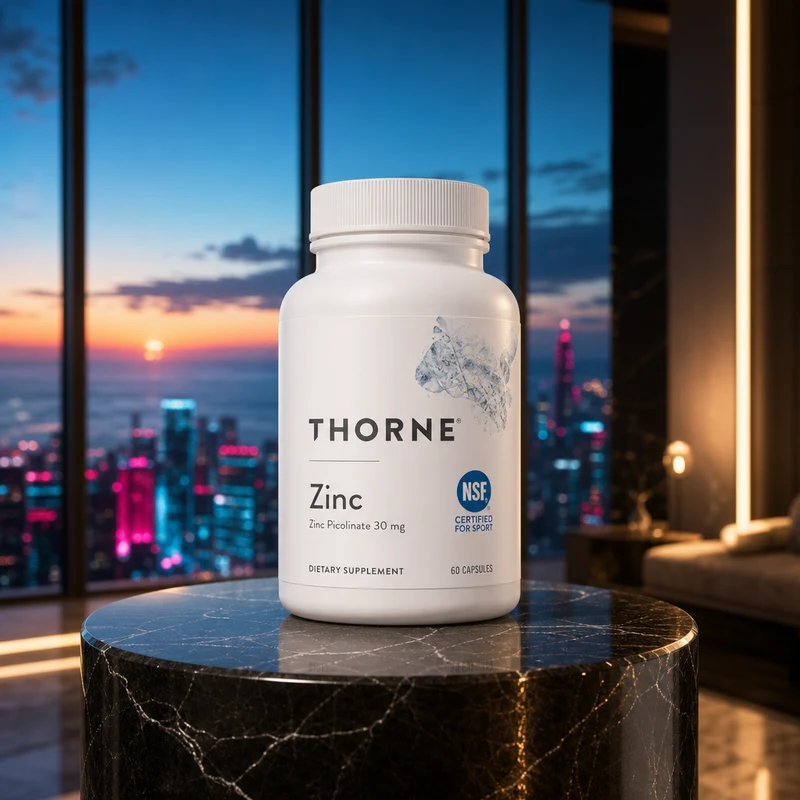
Thorne Zinc Picolinate 30 mg
Thorne · NSF Certified for Sport zinc picolinate, 60 capsules9.2/10SAC Product Score™SAC Product Score™ — how it breaks down- Form bioavailability30%9.5
- Dose accuracy + cofactor compatibility25%9.5
- Third-party testing20%10.0
- Cost per active mg15%7.5
- Real-world response evidence10%9.0
NSF Certified for Sport picolinate at 30 mg — the top of the daily immune range, well-absorbed and clean enough to run year-round. The safe default daily immune capsule.
- Form
- Zinc picolinate (chelate)
- Per serving
- 30 mg elemental zinc (1 cap)
- Immune-dose fit
- Top of 15-30 mg daily range (under the 40 mg UL)
- Testing
- NSF Certified for Sport — banned-substance screened
Pros- 30 mg elemental sits at the top of the daily immune-maintenance range and stays under the chronic UL
- Picolinate absorbs ~25-30% — roughly twice gluconate — so more of the daily dose lands as usable zinc
- NSF Certified for Sport — the highest third-party testing standard in existence
- Single-cap dosing makes a daily year-round immune routine easy to actually adhere to
Cons- Pure picolinate — no built-in immune cofactor like vitamin C (see Garden of Life #2 for that)
- Does nothing for an ACTIVE cold — that needs a separate acetate/gluconate lozenge, not this capsule
Our take — The default daily immune pick. A clean top-tier picolinate chelate at 30 mg — the top of the daily baseline range — NSF Certified for Sport, single-cap for easy year-round adherence. Take it with food as your standing immune insurance, strongest if you're plant-based, older, or otherwise at deficiency risk. The one thing it explicitly does NOT do is shorten a cold that's already started: for that, keep a zinc acetate/gluconate lozenge on hand and start it within 24 hours (75-80 mg/day). For the daily baseline job, though, this is the bottle.
- #2Best immune co-factor
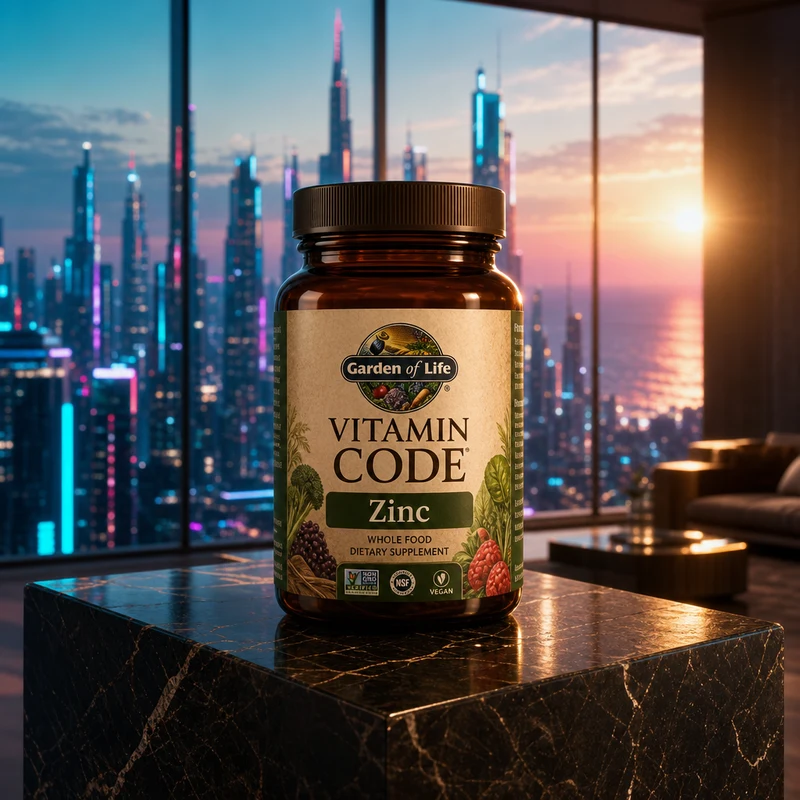
Garden of Life Vitamin Code Raw Zinc 30 mg
Garden of Life · Raw whole-food zinc + vitamin C, 60 caps8.8/10SAC Product Score™SAC Product Score™ — how it breaks down- Form bioavailability30%7.5
- Dose accuracy + cofactor compatibility25%9.5
- Third-party testing20%8.5
- Cost per active mg15%7.5
- Real-world response evidence10%8.5
Whole-food-matrix zinc at the daily immune dose, co-formulated with 60 mg vitamin C — the natural immune cofactor pairing. The pick for buyers who want one daily immune capsule that does double duty.
- Form
- Whole-food zinc complex (raw food matrix)
- Per serving
- 30 mg elemental zinc (1 cap)
- Immune-dose fit
- Top of 15-30 mg daily range (under the 40 mg UL)
- Testing
- Non-GMO Project Verified, gluten-free, raw-food certified
Pros- Co-formulated 60 mg vitamin C — the natural immune cofactor that genuinely pairs with zinc
- 30 mg elemental lands at the top of the daily immune range in a whole-food matrix
- Probiotic + enzyme blend may aid gut tolerance over a year-round daily routine
- Strong sourcing + certification transparency for whole-food buyers
Cons- Whole-food matrix absorption is less precisely characterised than picolinate or bisglycinate
- Higher cost than NOW for a similar elemental dose with weaker testing pedigree
Our take — For immunity specifically, the co-formulated 60 mg vitamin C earns Garden of Life a real promotion over its umbrella ranking — vitamin C is the most sensible single thing to pair with zinc for immune support, and getting both in one daily capsule is genuinely convenient. The whole-food matrix appeals to buyers who won't take an isolated chelate, and the certification chain is strong. The trade-off versus picolinate or bisglycinate is precision: the absorption math is less exactly measured, so you're trusting the matrix to land the 30 mg. For a daily immune capsule with a built-in cofactor, this is the pick; if you only want maximally-absorbed zinc and will get vitamin C elsewhere, Thorne (#1) is cleaner.
- #3Best budget
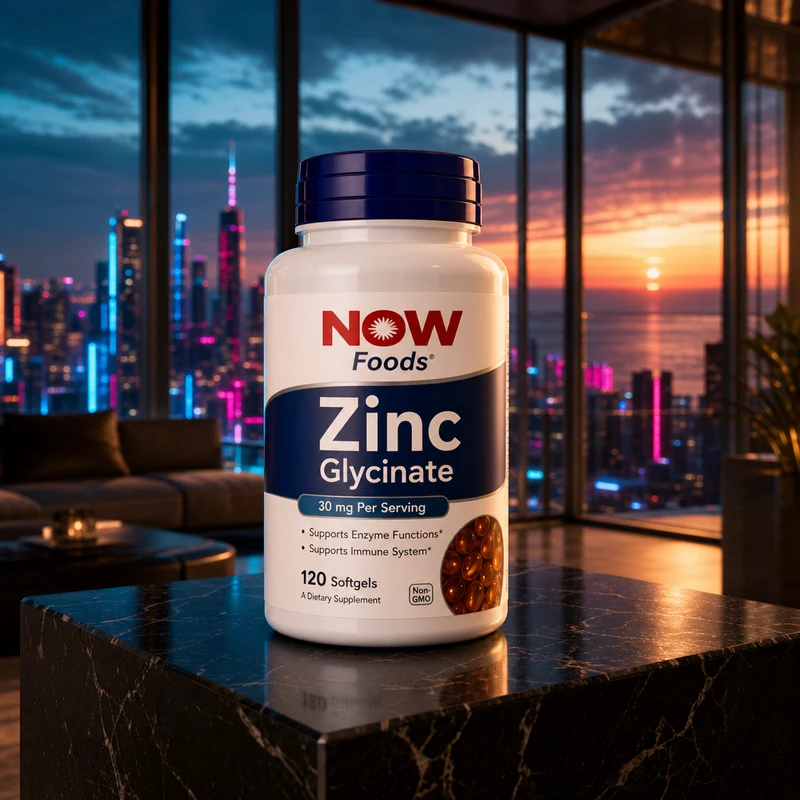
NOW Foods Zinc Glycinate 30 mg
NOW Foods · Bisglycinate softgels, 120 count8.7/10SAC Product Score™SAC Product Score™ — how it breaks down- Form bioavailability30%9.0
- Dose accuracy + cofactor compatibility25%9.0
- Third-party testing20%8.0
- Cost per active mg15%10.0
- Real-world response evidence10%8.5
Real chelated bisglycinate at the daily immune dose for $9/month — and a 120-softgel bottle that covers four months. The cheapest legitimate way to run a daily immune baseline.
- Form
- Zinc bisglycinate (chelate)
- Per serving
- 30 mg elemental zinc (1 softgel)
- Immune-dose fit
- Top of 15-30 mg daily range (under the 40 mg UL)
- Testing
- NOW in-house QC labs, GMP-certified facility
Pros- Cheapest verified chelated bisglycinate on Amazon — most $6-9 budget bottles are oxide or gluconate
- 120-softgel bottle covers four months of daily immune dosing without a re-order
- Gentle bisglycinate softgel — easy to keep down daily, year-round
- NOW's in-house QC is among the most consistent in the industry — 30+ years
Cons- No NSF / USP certification — only in-house QC + GMP-facility
- No built-in immune cofactor, and (like every capsule here) no acute-cold benefit — keep a lozenge for that
Our take — If you want a real chelated zinc for daily immune insurance without spending much, NOW Foods is the right starting point. The bisglycinate chelate is real, the 30 mg dose sits at the top of the daily immune range, and the 120-softgel bottle conveniently covers a four-month stretch. You trade NSF certification theatrics for ~40% lower cost — fine for a daily mineral you're taking to maintain zinc status. Take it with food year-round, and pair it with a separate acetate/gluconate lozenge for when a cold actually starts. For most budget-conscious immune buyers, this is where you land.
- #4Best for sensitive guts
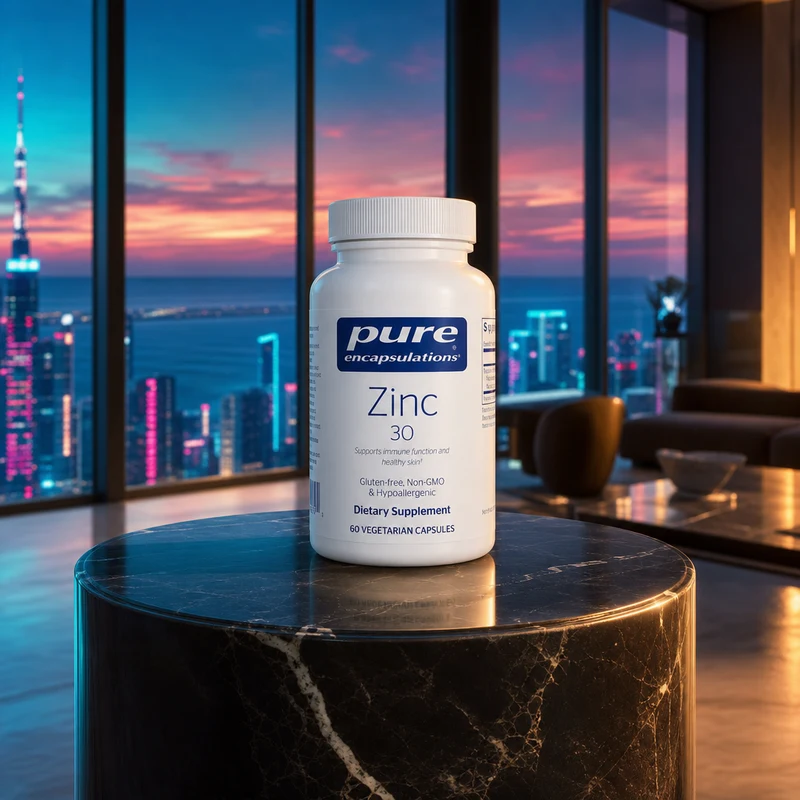
Pure Encapsulations Zinc 30
Pure Encapsulations · Hypoallergenic bisglycinate, 60 capsules8.6/10SAC Product Score™SAC Product Score™ — how it breaks down- Form bioavailability30%9.5
- Dose accuracy + cofactor compatibility25%9.5
- Third-party testing20%9.0
- Cost per active mg15%6.5
- Real-world response evidence10%9.0
The gentlest chelate with the cleanest label — bisglycinate at the daily immune dose, hypoallergenic, nothing extra to react to. Built for sensitive guts running a year-round immune routine.
- Form
- Zinc bisglycinate (chelate)
- Per serving
- 30 mg elemental zinc (1 cap)
- Immune-dose fit
- Top of 15-30 mg daily range (under the 40 mg UL)
- Testing
- Hypoallergenic, USP-style purity, third-party verified
Pros- Bisglycinate is the gentlest top-tier chelate — easiest to keep down on a daily year-round routine
- Hypoallergenic — no fillers, dyes, gluten, dairy or unnecessary excipients
- 30 mg single-cap lands at the top of the daily immune range
- Clinician-preferred brand used by integrative medicine practices
Cons- 30% more expensive than Thorne for the same elemental dose
- No built-in immune cofactor; no acute-cold benefit (lozenge territory)
Our take — If your stomach is sensitive and you want the cleanest possible daily immune capsule, this is the pick. Bisglycinate is the gentlest chelate, the hypoallergenic label strips out excipients, and the 30 mg dose is right at the top of the daily immune range. The only knock is price: at $18/month it's 2x the budget option, and unlike Garden of Life (#2) it has no built-in cofactor. Worth it for the tolerability if you'll be taking zinc daily all season. Pair with a separate lozenge for acute colds like every capsule on this list.
- #5Closest lozenge-relevant form
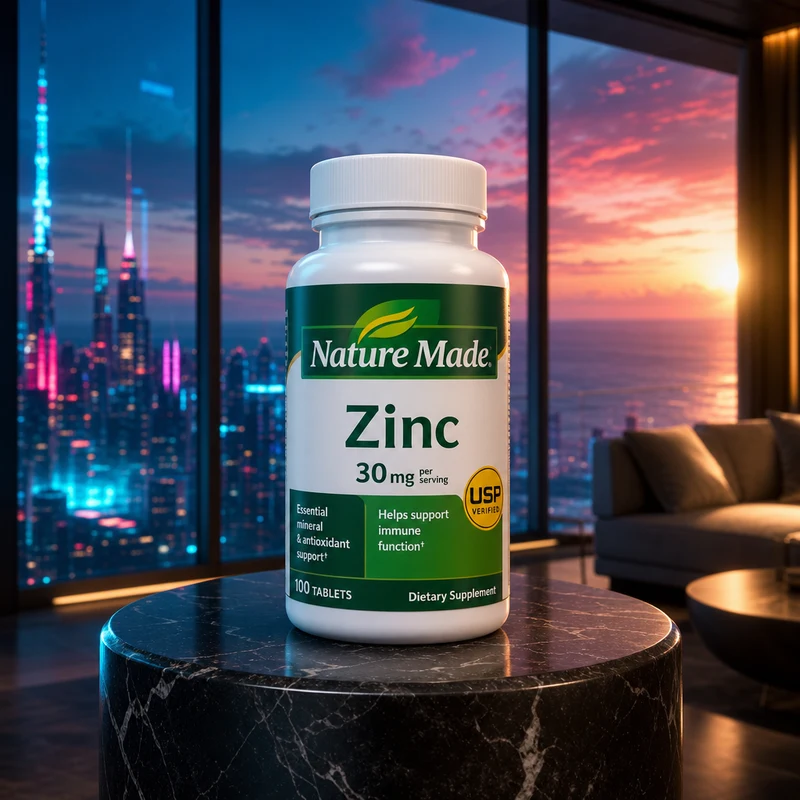
Nature Made Zinc 30 mg
Nature Made · Gluconate, 100 tablets8.2/10SAC Product Score™SAC Product Score™ — how it breaks down- Form bioavailability30%6.0
- Dose accuracy + cofactor compatibility25%8.5
- Third-party testing20%9.0
- Cost per active mg15%9.5
- Real-world response evidence10%7.0
The pharmacy-shelf gluconate — the very form the acute-cold lozenge trials used. USP Verified, cheap, drugstore-available. Lower absorption as a daily capsule, but uniquely relevant to the immune use case.
- Form
- Zinc gluconate
- Per serving
- 30 mg elemental zinc (1 tab)
- Immune-dose fit
- Top of 15-30 mg daily range (under the 40 mg UL)
- Testing
- USP Verified
Pros- Gluconate is the form the acute-cold LOZENGE trials used (Hemilä 2017) — uniquely relevant to immunity
- USP Verified — strong third-party testing for a mass-market brand
- 30 mg elemental lands at the top of the daily immune range; available in every drugstore in America
- Cheapest pick on the list at $8/month
Cons- As a SWALLOWED tablet, gluconate absorbs ~15% vs ~25-30% for picolinate / bisglycinate — much of the label dose is lost
- A tablet is NOT a lozenge — to get the acute-cold benefit you must dissolve a true lozenge in the mouth, not swallow this
- More likely to cause nausea on an empty stomach than the top chelates
Our take — Nature Made earns a real promotion in the immune cohort on an honest point: gluconate is the form the acute-cold lozenge trials actually used, and this is the drugstore-available, USP-Verified gluconate option. Two caveats keep it at #5. First, as a SWALLOWED tablet it absorbs roughly half as well as the chelates, so for the daily baseline job it's weaker than Thorne or NOW. Second — and this is the one people miss — a swallowed gluconate tablet is NOT a lozenge; to get the ~33% shorter-cold effect you need an actual lozenge you dissolve in your mouth. Buy this as a cheap daily gluconate or as a pharmacy backup; buy a true acetate/gluconate lozenge separately for acute colds.
- #6Best for deficiency repletion
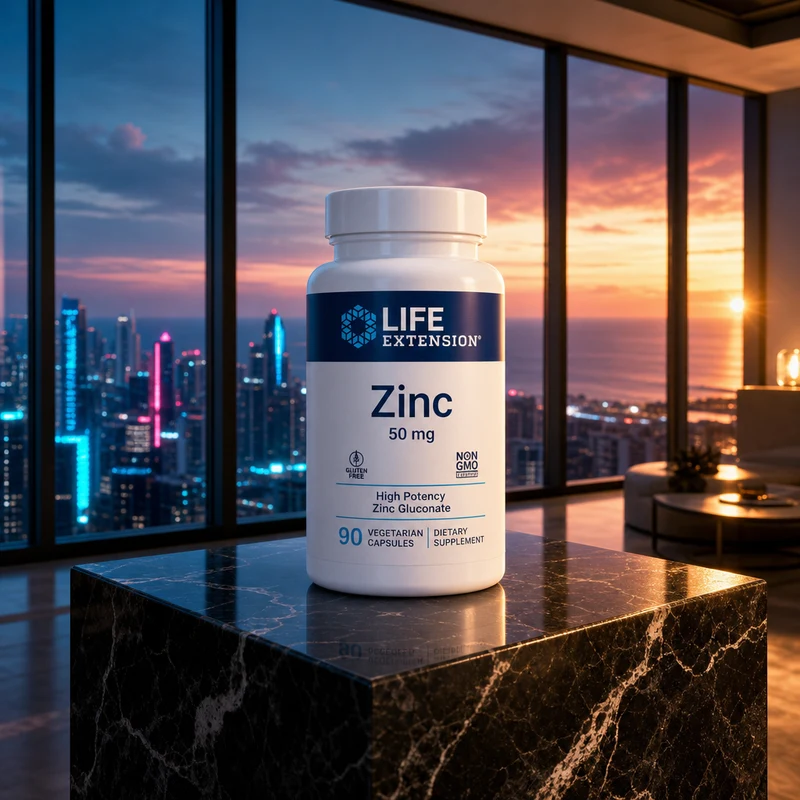
Life Extension Zinc Caps 50 mg
Life Extension · Zinc citrate, 90 vegetarian capsules7.6/10SAC Product Score™SAC Product Score™ — how it breaks down- Form bioavailability30%7.5
- Dose accuracy + cofactor compatibility25%6.5
- Third-party testing20%8.0
- Cost per active mg15%8.5
- Real-world response evidence10%7.0
High-dose zinc citrate from a respected brand — the catch-up tool for a confirmed deficiency, where immune impairment is worst. Above the daily immune range, so it comes with a copper-and-cycling caveat.
- Form
- Zinc citrate
- Per serving
- 50 mg elemental zinc (1 cap)
- Immune-dose fit
- Above the 15-30 mg daily range — repletion dose, above the 40 mg UL
- Testing
- Life Extension QC, GMP-certified
Pros- 50 mg citrate is a sensible catch-up dose for a confirmed deficiency — where immune impairment is most pronounced
- Citrate is genuinely better absorbed than oxide or gluconate (Maares & Haase 2020)
- Vegetarian capsules — works for plant-based buyers, who are also higher zinc-deficiency risk and the prime immune responders
- Life Extension's QC pedigree is strong
Cons- 50 mg/day chronic exceeds the 40 mg UL — REQUIRES 2 mg copper co-supplementation and a cycle-down, or you risk copper-deficiency anemia
- Above the everyday immune-maintenance range — a repletion tool, not a daily default
- Citrate absorbs less efficiently than picolinate or bisglycinate (~18-20% vs ~25-30%)
Our take — Where the immune cohort has a specific use for a high-dose bottle is deficiency repletion — and a confirmed low zinc level is exactly where immune function is most impaired, so correcting it fast has real value. Life Extension delivers 50 mg in a well-absorbed citrate, suited to plant-based buyers who skew deficient. The non-negotiable caveat: 50 mg breaches the 40 mg UL, so co-supplement 2 mg copper bisglycinate and cycle back to a 15-30 mg daily capsule (Thorne #1, NOW #3) after 8-12 weeks. Don't run this indefinitely on the theory that more zinc means more immunity — past repletion the marginal benefit is flat and the copper cost is real.
- #7Premium liposomal + elderberry — niche
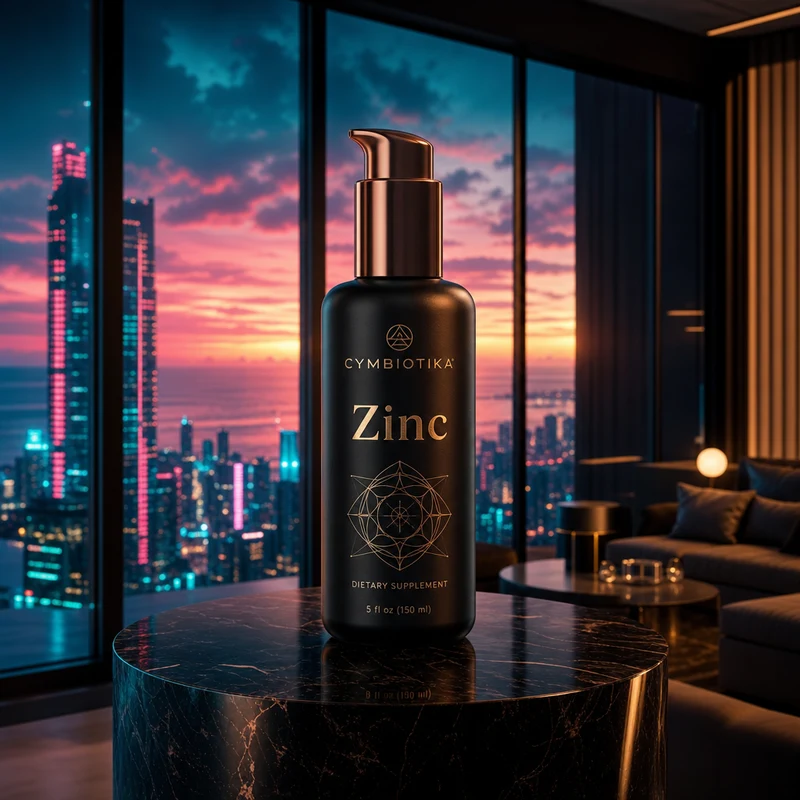
Cymbiotika Liposomal Zinc
Cymbiotika · Liposomal zinc with elderberry, 5 fl ozSAC Product Score™ — how it breaks down- Form bioavailability30%7.0
- Dose accuracy + cofactor compatibility25%6.5
- Third-party testing20%7.0
- Cost per active mg15%4.0
- Real-world response evidence10%6.5
Premium liposomal zinc co-formulated with elderberry — the most immune-themed bottle on the list. The elderberry buys it a place in the immune cohort; the 4x price and unproven liposomal premium keep it last.
- Form
- Liposomal zinc (phospholipid-encapsulated) + elderberry
- Per serving
- 15 mg elemental zinc (1 pump)
- Immune-dose fit
- Lower bound of 15-30 mg daily range
- Testing
- Cymbiotika in-house QC, GMP-certified
Pros- Elderberry co-formulation adds anthocyanin content — a genuinely immune-themed pairing
- 15 mg per pump sits at the lower bound of the daily immune-maintenance range
- Liquid pump format suits users who hate swallowing capsules for a daily routine
- Premium brand identity, clean panel, top-tier packaging and aesthetic
Cons- 3-4x the cost of a basic chelate for the same elemental zinc — the liposomal premium buys nothing proven for a mineral that already absorbs fine
- 15 mg is the floor of the daily range — lower than the 30 mg chelates above
- Elderberry's own cold evidence is modest and contested; it's a nice-to-have, not the lozenge protocol that actually shortens colds
Our take — Cymbiotika is the most overtly immune-themed bottle here — the elderberry co-formulation is why it makes the immune cohort at all (it didn't earn a skin/acne slot). But the case against it from the umbrella stands: liposomal delivery is a marketing answer to a non-problem for zinc, which already absorbs ~25-30% as a basic chelate, and at $42/month you're paying 3-4x for that and the elderberry. If the wellness aesthetic and the elderberry pairing are genuinely what you want, it's a real product at the lower-bound 15 mg daily dose. For immune value, a $14 Thorne (#1) plus a separate cheap lozenge for colds beats it comfortably.

▸ Affiliate disclosure: every Amazon link uses our Associates tag (superachieverclub-20). We earn a small commission at no cost to you; it funds independent reviews. We never accept payment to change a ranking.
Zinc and Immunity: Two Protocols, and Most People Buy the Wrong One
- 01
Zinc helps immunity two ways — and most people buy the wrong one.
Zinc supports immunity through two completely different protocols, and a swallowed daily capsule is only one of them. The other is an acute-cold lozenge. Confusing the two is the whole buying problem this page exists to fix.
- 02
The headline cold-shortening effect comes from lozenges, not any tablet on this list.
Hemilä 2017's meta-analysis found roughly 33% shorter colds from zinc acetate/gluconate lozenges dissolved every 2-3 hours at 75-80 mg/day, started within 24 hours of symptoms. The mechanism is local: ionic zinc bathes the throat and inactivates rhinovirus on contact. A swallowed daily tablet never coats the throat, so it does not reproduce that acute effect.
- 03
A daily capsule's payoff concentrates in people who are actually zinc-deficient.
A 15-30 mg/day capsule maintains the baseline zinc status that innate and adaptive immunity depend on. That benefit concentrates in zinc-deficient people — roughly 17% of the world, skewed toward plant-based diets and older adults (Wessells & Brown 2012). Already-replete adults get little marginal return.
- 04
Form decides the usable dose — and over-supplementing has a real copper cost.
For the daily capsule, picolinate and bisglycinate absorb about twice oxide/gluconate, so a chelate lands more usable zinc; gluconate's one edge is being the lozenge-relevant form for acute colds. The daily 15-30 mg dose is clean on copper. But the 50 mg repletion bottles breach the 40 mg chronic UL and need copper plus a cycle-down.
Hemilä 2017 (PMID 28515951); Maares & Haase 2020 (PMID 32079282); Wessells & Brown 2012 (PMID 23150984); Prasad 1996 (PMID 8702195).
How we re-ranked these for immunity
Each pick was scored 0-10 across five immune-specific criteria, then weighted to a final composite. Daily baseline-immune dose fit carries the most weight — a daily capsule should land in the 15-30 mg elemental window, under the 40 mg UL, where it maintains the zinc status immunity depends on. Form bioavailability is second: for the daily capsule, picolinate and bisglycinate land roughly twice the usable zinc of gluconate or oxide. Immune co-factor and acute-cold relevance is the criterion unique to this endpoint — a built-in vitamin C or elderberry co-formulation earns credit, and a lozenge-relevant gluconate form earns credit too, because gluconate is the form the acute-cold lozenge trials actually used. Third-party testing is the fraud filter. Copper safety at the dose keeps the high-dose repletion bottles honest, since immunity is a use case that tempts people into chronic over-dosing on the false theory that more zinc means more immunity.
- Daily baseline-immune dose fit30%
Does the elemental zinc per serving land in the 15-30 mg daily immune window, under the 40 mg chronic UL? 30 mg single-cap scores best for daily use. Sub-15 mg under-shoots; 50 mg repletion bottles get partial credit (deficiency catch-up) but lose points on chronic safety without a copper plan.
- Form bioavailability25%
For the daily capsule: picolinate / bisglycinate get +3 base (~25-30% absorbed). Citrate +1.5. Gluconate +1 (~15% absorption, but see the immune-relevance criterion — it's the acute-lozenge form). Oxide / unspecified 'zinc': -3.
- Immune co-factor + acute-cold relevance20%
Credit for a built-in immune cofactor (vitamin C, elderberry) that pairs with zinc, and credit for a gluconate form that's relevant to the acute-cold LOZENGE protocol Hemilä 2017 validated. This is the criterion that re-shuffles the umbrella order specifically for immunity.
- Third-party testing15%
NSF Certified for Sport, USP-grade verification, ConsumerLab, or public COA. Heavy-metals contamination has hit budget mineral supplements — and you may take this daily for a whole season. Public, named testing wins; GMP-only manufacturing scores lower.
- Copper safety at the dose10%
15-30 mg daily: clean, no copper needed. 50 mg repletion bottles: penalised unless the protocol pairs copper and cycles — chronic 50 mg breaches the 40 mg UL, and 'immunity' is exactly the rationale people use to over-dose long-term.


The bottom line
- 01
Thorne Zinc Picolinate (#1) is the default daily immune capsule.
A well-absorbed picolinate chelate at 30 mg — the top of the daily immune range — NSF Certified for Sport, $14/month, clean enough for year-round use. Take it with food as standing immune insurance, strongest if you're plant-based, older, or at deficiency risk. It explicitly does not shorten an active cold; that is the lozenge's job.
- 02
The alternatives split cleanly by need: cofactor, budget, sensitive gut, or deficiency.
Garden of Life Raw Zinc (#2) builds in 60 mg vitamin C as an immune cofactor; NOW Foods Zinc Glycinate (#3) is the $9 budget pick whose 120-softgel bottle covers four months. Pure Encapsulations (#4) is the gentlest for sensitive guts, and Nature Made (#5) is the cheap, drugstore-available, lozenge-relevant gluconate. Life Extension Zinc Caps 50 mg (#6) is the deficiency-repletion tool — copper and cycle-down required.
- 03
Buy the capsule for insurance, but keep a separate lozenge for actual colds.
There are two protocols, and a daily capsule is only one of them: the ~33% shorter-cold effect comes from acetate/gluconate lozenges at 75-80 mg/day, dosed every 2-3 hours, started within 24 hours — not from any tablet here. The daily benefit concentrates in deficient people, so a serum zinc test tells you whether you're even a responder. Respect copper: 15-30 mg daily is clean, but the 50 mg bottle breaches the 40 mg UL and needs 2 mg copper plus a cycle-down.
Every claim ranked above traces back to one of these
Peer-reviewed studies, meta-analyses and clinical trials behind the picks. Click any citation to read the abstract on PubMed.
- [1]Hemilä 2017
Zinc acetate lozenges for treating the common cold: an individual patient data meta-analysis
Individual-patient-data meta-analysis of zinc acetate/gluconate LOZENGE trials: cold duration cut ~33% when lozenges were started within 24 hours of symptom onset and dosed every 2-3 hours while awake at 75-80 mg elemental/day. The cornerstone evidence for the ACUTE-cold protocol — and the source of the lozenge-vs-swallowed-tablet distinction that defines this page. The effect is local to the throat; swallowed capsules do not reproduce it.
- [2]Maares & Haase 2020
A guide to human zinc absorption: general overview and recent advances of in vitro intestinal models
Catalogues bioavailability by zinc form: bisglycinate and picolinate consistently outperform citrate, gluconate, and sulfate, which all outperform oxide by roughly 2x. The reference paper for choosing a well-absorbed form for the daily baseline-immune capsule — the foundation of the 'bisglycinate ≈ picolinate > citrate >> gluconate ≈ oxide' hierarchy that drives the form criterion here.
- [3]Wessells & Brown 2012
Estimating the global prevalence of zinc deficiency: results based on zinc availability in national food supplies and the prevalence of stunting
Global prevalence model: ~17% of the world population is at risk of inadequate zinc intake, concentrated in plant-based-diet populations where phytate-zinc binding blocks absorption. Explains why the daily baseline-immune benefit concentrates in deficient groups — vegetarians, vegans, and (by extension) older adults — rather than in already-replete adults.
- [4]Prasad 1996
Zinc status and serum testosterone levels of healthy adults
Controlled supplementation at 30 mg/day in marginally zinc-deficient adults, with replete subjects showing no response. The canonical demonstration that zinc's clinical effects concentrate in deficient populations — which generalises directly to the immune endpoint: daily supplemental zinc helps immune function most in the deficient, and the 30 mg dose is the practical clinical ceiling for daily use.
- [5]Cervantes 2019
The role of zinc in the treatment of acne: A review of the literature
Review of the zinc-in-acne RCTs establishing the 30-50 mg elemental/day therapeutic range and zinc's anti-inflammatory action. Cited here as a reference for zinc's broader immunomodulatory/anti-inflammatory role and the dose-and-form characterisation across the supplemental-zinc literature (not for the immune-cold endpoint itself, which rests on Hemilä 2017).
More Zinc guides
Every form, format and use-case in the Zinc cluster — each ranked with the same methodology, so you can jump straight to the angle that fits you.
- Best Zinc SupplementsZinc forms ranked by bioavailability (picolinate ≈ bisglycinate >> gluconate > oxide), dose, copper-balance, third-party testing — picks that actually move T and immune markers.
- Best Form of Zinc: Absorption Ranked by Use CaseEvery zinc form mapped to a use case — picolinate + bisglycinate for daily absorption, acetate lozenges for colds, oxide to skip. Ranked by bioavailability with the best product for each form.
- Best Zinc for AcneOral zinc reduces inflammatory acne (anti-inflammatory + sebum + C. acnes), strongest in deficient skin. Ranked by the 30-50 mg dose, form, copper safety, and acne-trial evidence.
- Best Zinc for MenTen zinc supplements ranked for men — testosterone (aromatase + Leydig support in deficient men), prostate, fertility, immune recovery — by form bioavailability + copper safety.
- Best Zinc for TestosteroneZinc only raises testosterone in deficient men (Prasad 1996: 30 mg/day ~doubled T) — ranked by the trial 30 mg dose, bioavailable form (picolinate/bisglycinate), and copper balance.
- Best Zinc for WomenTen zinc supplements ranked for women — hormonal acne, hair shedding, immune, and PCOS — by form bioavailability, gut tolerance, testing, and price.