
Top 9 Best Supplements for Muscle Growth (2026)
9 picks — ranked by our 50/50 methodology
- #1The only big-effect supplement
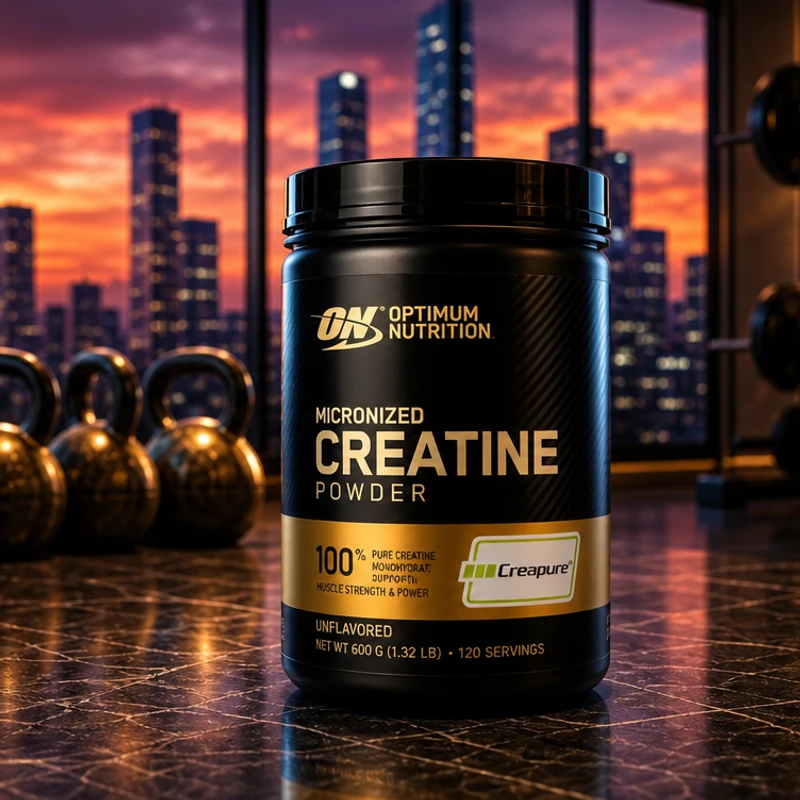
Creatine Monohydrate — Optimum Nutrition Micronized Creatine
Optimum Nutrition · Creapure micronized monohydrate, 600 g — our #1 creatine pick9.6/10SAC Product Score™SAC Product Score™ — how it breaks down- Strength of hypertrophy evidence30%9.9
- Effect size you can expect25%9.5
- Who it actually works for (honesty about conditionality)20%9.5
- Value per month15%9.5
- Stack fit & practicality10%9.3
If you buy one thing for muscle, buy this category. Creatine monohydrate is the only legal supplement with a large, replicated hypertrophy effect — roughly an extra 1.2-1.4 kg of lean mass on top of training across meta-analyses — and it costs about 23 cents a day. Represented by our #1 creatine pick: Creapure-licensed, third-party tested, no loading needed.
- Category
- Creatine monohydrate — the foundation supplement
- Effect on muscle
- ~+1.2-1.4 kg lean mass over training (meta-analyses)
- Dose
- 5 g/day, every day — no loading phase required
- Who it works for
- Essentially everyone who lifts — trained, untrained, young, older
Pros- The single largest evidence base of any sports supplement — hundreds of RCTs, multiple meta-analyses, an ISSN position stand (Kreider 2017)
- Large, replicated effect on lean mass and strength (Branch 2003: ~+1.2 kg; Chilibeck 2017: ~+1.4 kg in older adults)
- Works across the whole population — beginners, advanced lifters, men, women, and into older age (Chilibeck 2017)
- The best value on the entire page: ~$0.23/day for the only supplement that reliably moves the needle
- Creapure-licensed 99.95% pure monohydrate; just 5 g a day, no cycling, no loading
Cons- A few kilograms of the early gain is intracellular water in muscle — real and performance-relevant, but not all contractile tissue overnight
- Monohydrate is all you need — fancier 'forms' (HCl, buffered) cost more for no added muscle benefit (Kreider 2017)
- It amplifies the results of training and protein; it does not replace them
Our take — This is the one. Of every category on this page, creatine monohydrate is the only one with a large effect size, an overwhelming evidence base, and a benefit that applies to essentially everyone who trains — and it's also the cheapest thing here. The honest framing for muscle growth: creatine doesn't build muscle for you, it lets you do slightly more work and recover slightly faster, session after session, and that compounds into measurably more lean mass over months (Branch 2003, Chilibeck 2017). Buy monohydrate, not a marketed 'advanced form' — the ISSN review found none of them beat plain monohydrate at equal doses (Kreider 2017). Take 5 g a day, every day, skip the loading phase, and pair it with the training and protein that do the heavy lifting. If your supplement budget is small, the entire correct answer is: spend it here first.
- #2Only if your protein is low
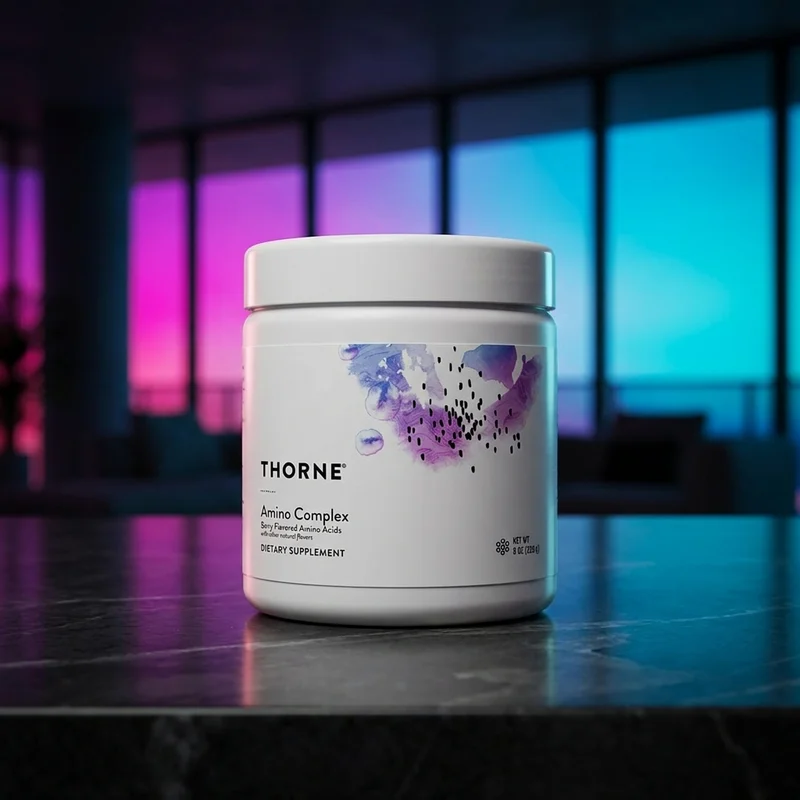
EAAs — Thorne Amino Complex
Thorne · Full-spectrum EAA + BCAA, NSF Certified for Sport — our top amino pick7.7/10SAC Product Score™SAC Product Score™ — how it breaks down- Strength of hypertrophy evidence30%7.9
- Effect size you can expect25%7.0
- Who it actually works for (honesty about conditionality)20%7.9
- Value per month15%7.9
- Stack fit & practicality10%8.3
The honest amino pick — all nine essential amino acids, not just BCAAs, because building muscle protein needs the full set (Moberg 2016). But read the condition carefully: free-form EAAs only out-perform the whole protein you should already be eating if your daily protein intake is genuinely low. For most well-fed lifters, a chicken breast or whey scoop does the same job for less.
- Category
- Essential amino acids (EAAs) — full-spectrum, leucine-led
- Effect on muscle
- Raises muscle protein synthesis — but mostly redundant with adequate protein
- Who it works for
- Lifters under-eating protein, or training fasted; NSF-tested athletes
- Honest caveat
- If protein intake is already ~1.6-2.2 g/kg, the marginal benefit is small
Pros- All nine EAAs, not just three BCAAs — mechanistically the correct choice, since BCAAs alone leave the other six aminos rate-limiting (Moberg 2016, Wolfe 2017)
- NSF Certified for Sport — the gold-standard batch testing for drug-tested athletes
- Leucine-weighted, so it still gives a strong mTORC1 / muscle-protein-synthesis trigger (Moberg 2016)
- Genuinely useful for fasted training or on days protein falls short
Cons- The big one: if you already hit your protein target, this is largely redundant with food — whole protein contains all the same aminos (Wolfe 2017)
- Pure BCAA products are worse value still — BCAAs alone don't maximise muscle protein synthesis (Jackman 2017, Wolfe 2017)
- Premium per-serving cost for a benefit that's conditional on your diet being inadequate
Our take — EAAs earn the #2 slot among the supporting cast on a technicality of honesty: they're the amino product that's actually built right (all nine essentials, leucine-led), and if your protein intake is low or you train fasted, Thorne Amino Complex is a legitimate, NSF-tested way to put a muscle-protein-synthesis signal in place (Moberg 2016). But the muscle-growth truth has to come first: free-form aminos only beat the whole protein you should already be eating when that whole protein is missing. Hit ~1.6-2.2 g/kg/day from food and whey, and this becomes a luxury rather than a lever. Buy it for the fasted-training and low-intake edge cases or for the drug-tested certification — not as a substitute for eating enough. And ignore pure-BCAA tubs entirely: three aminos can't build what nine are needed for (Wolfe 2017).
- #3Recovery & training stress
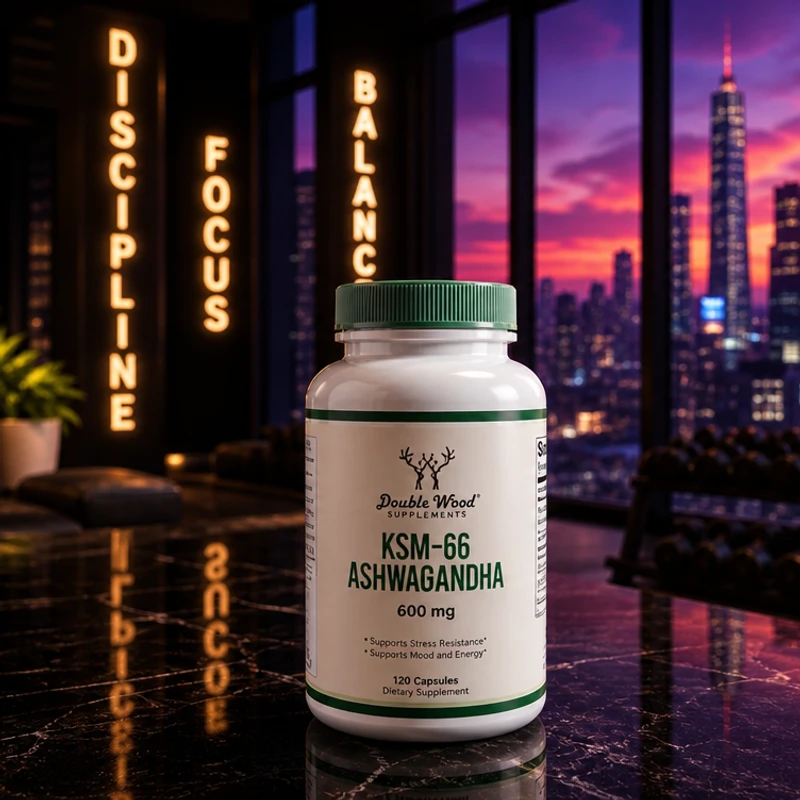
Ashwagandha — Double Wood KSM-66
Double Wood · KSM-66 600 mg, 5% withanolides — our #1 ashwagandha-for-T pick7.5/10SAC Product Score™SAC Product Score™ — how it breaks down- Strength of hypertrophy evidence30%7.6
- Effect size you can expect25%6.8
- Who it actually works for (honesty about conditionality)20%8.1
- Value per month15%7.6
- Stack fit & practicality10%7.6
An adaptogen that earns a spot on a muscle list through the side door: it lowers the cortisol and perceived stress that blunt recovery, and one resistance-training RCT at the same 600 mg KSM-66 dose measured larger strength gains and a testosterone rise versus placebo (Wankhede 2015). Read it as a recovery/training-stress lever, not a steroid — the effect is real but modest and partly downstream of just sleeping and recovering better.
- Category
- Adaptogen (KSM-66 ashwagandha) — recovery & stress
- Effect on muscle
- Modest strength/recovery edge via lower cortisol (Wankhede 2015)
- Who it works for
- Stressed, under-recovered, or high-training-load lifters
- Dose
- 600 mg/day KSM-66 — the trial-matched dose
Pros- A resistance-training RCT at 600 mg KSM-66 showed greater bench/leg strength gains and a testosterone increase vs placebo (Wankhede 2015)
- Lowers cortisol and perceived stress (Chandrasekhar 2012; Lopresti 2019), which is exactly what protects recovery between hard sessions
- Real KSM-66 patent at the trial-matched dose with a public COA on every batch
- Doubles as a stress/sleep buy — useful even on the days it isn't moving the bar
Cons- The strength signal is modest and partly indirect — better recovery, not direct anabolism
- Testosterone rises are real in the trials but small and most relevant to stressed/older men, not a TRT-like effect
- Of little extra use to a lifter who already sleeps well and isn't stressed
Our take — Ashwagandha is the most defensible 'recovery' supplement on the page, and the muscle-growth case is honest if you frame it correctly. It isn't anabolic; it's anti-stress — it lowers cortisol and perceived stress (Chandrasekhar 2012, Lopresti 2019), and a single well-known resistance-training trial at the exact 600 mg KSM-66 dose used here found greater strength gains and a modest testosterone bump versus placebo (Wankhede 2015). For a lifter grinding through high training loads, poor sleep, or life stress, that recovery edge can translate into slightly better sessions and slightly more growth. For someone already well-recovered, it does much less. Buy Double Wood KSM-66 for the recovery and stress angle — the real KSM-66 patent at the trial dose with a public COA — and treat any strength gain as a recovery dividend, not a shortcut.
- #4Modest recovery support
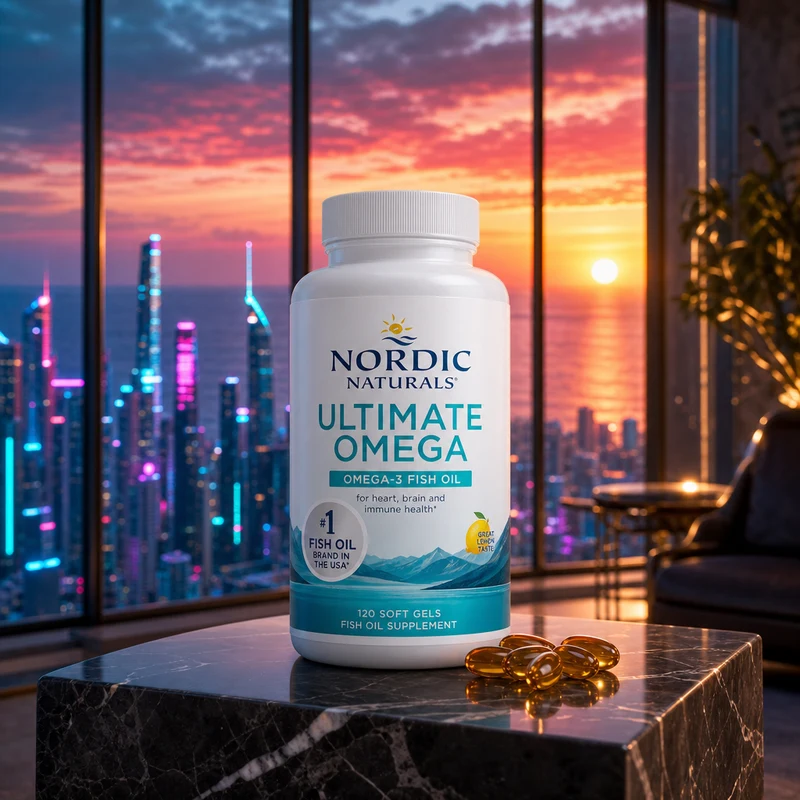
Omega-3 — Nordic Naturals Ultimate Omega
Nordic Naturals · rTG EPA+DHA 1280 mg, IFOS 5-star — our #1 fish-oil pick7.4/10SAC Product Score™SAC Product Score™ — how it breaks down- Strength of hypertrophy evidence30%8.0
- Effect size you can expect25%6.7
- Who it actually works for (honesty about conditionality)20%7.4
- Value per month15%7.4
- Stack fit & practicality10%7.4
A modest, mechanism-plausible recovery support rather than a growth driver. EPA and DHA dampen exercise-induced inflammation and may sensitise muscle to the protein you eat — small effects, most relevant if your diet is light on oily fish. Represented by our #1 omega-3 pick for its high-absorption rTG form and best-in-class IFOS purity testing.
- Category
- Omega-3 (EPA+DHA fish oil) — anti-inflammatory recovery
- Effect on muscle
- Modest: reduced inflammation, possible MPS sensitisation
- Who it works for
- Lifters with low oily-fish intake; general cardiovascular health overlap
- Dose
- ~1.3-2 g/day combined EPA+DHA
Pros- Reduces exercise-induced inflammation, which can support recovery between hard sessions (Mozaffarian 2008)
- Re-esterified triglyceride form absorbs 30-50% better than cheap ethyl ester (Dyerberg 2010)
- IFOS 5-star — the highest third-party certification for oxidation (TOTOX) and heavy metals, fully documented per batch
- A genuine dual-purpose buy: the cardiovascular and general-health evidence is far stronger than the muscle case (Mozaffarian 2008)
Cons- The direct hypertrophy effect is small and inconsistent — this is supportive, not a driver
- Most of its real value is general health, not muscle specifically
- If you already eat oily fish a few times a week, the marginal benefit shrinks
Our take — Omega-3 makes the list as honest recovery support, not as a muscle-builder. The mechanism is plausible — EPA and DHA blunt the inflammatory response to hard training and may make muscle a little more responsive to dietary protein — but the effect on lean mass itself is small and the stronger evidence is cardiovascular (Mozaffarian 2008). Where it does earn a place is as a dual-purpose buy: a lifter with low oily-fish intake gets a recovery nudge plus a well-evidenced health benefit from the same softgel. Nordic Naturals Ultimate Omega is the right representative because the muscle-relevant details that actually vary between products — absorption (rTG form, Dyerberg 2010) and freshness (IFOS 5-star) — are best-in-class here. Buy it for recovery and health together; don't expect it to add visible muscle on its own.
- #5Only fixes a deficiency
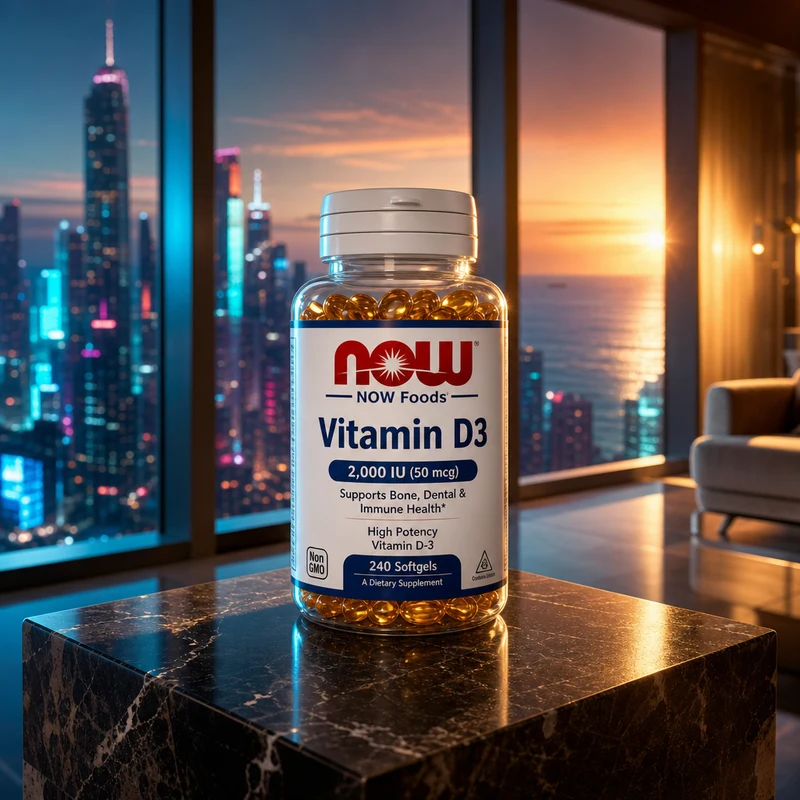
Vitamin D — NOW Foods Vitamin D-3 5000 IU
NOW Foods · D3 cholecalciferol 5000 IU, 240 softgels — our #1 vitamin-D pick7.3/10SAC Product Score™SAC Product Score™ — how it breaks down- Strength of hypertrophy evidence30%7.4
- Effect size you can expect25%6.6
- Who it actually works for (honesty about conditionality)20%7.9
- Value per month15%7.4
- Stack fit & practicality10%7.4
A correction, not a boost. If you're genuinely vitamin-D deficient — common in anyone who trains indoors or lives at higher latitudes — restoring levels can lift strength, T, and muscle function (Pilz 2011, Bischoff-Ferrari 2009). If you're already replete, supplementing more does essentially nothing for muscle. Get a 25(OH)D blood test before assuming it'll help. Our #1 pick: household-name QC at the male repletion dose for about $3/month.
- Category
- Vitamin D3 — deficiency correction
- Effect on muscle
- Real if deficient (strength, falls, T); ~zero if replete (Pilz 2011)
- Who it works for
- The deficient only — test first (target ~40-60 ng/mL 25(OH)D)
- Dose
- 1,000-5,000 IU/day to correct; pair K2/magnesium
Pros- In deficient men, correcting vitamin D raised total, free, and bioactive testosterone vs placebo (Pilz 2011)
- Supports muscle strength and reduces falls in older adults via VDR-driven muscle effects (Bischoff-Ferrari 2009)
- Trivially cheap (~$3/month) and a well-evidenced general-health correction beyond muscle (Holick 2007)
- 5,000 IU per softgel is sized for the typical male repletion dose; D3 raises 25(OH)D ~1.7× better than D2 (Tripkovic 2012)
Cons- The entire muscle benefit is conditional on being deficient — replete lifters get nothing extra (Pilz 2011)
- You can't know if you'll benefit without a blood test — guessing wastes the upside
- At chronic high doses you should pair K2 and magnesium, adding a small cofactor cost
Our take — Vitamin D is the clearest example of the page's central honesty rule: it's a deficiency correction, not a muscle booster. The evidence is genuinely good — but only in deficient people. The standout trial raised testosterone in deficient men (Pilz 2011), and the strength-and-falls data sit in older, often-deficient adults (Bischoff-Ferrari 2009). For a lifter who trains indoors, covers up, or lives somewhere with weak winter sun, there's a real chance you're low and a real upside to fixing it. For a sun-exposed, already-replete lifter, more vitamin D does nothing for muscle. So the correct move isn't to buy on faith — it's to test your 25(OH)D, and if you're below ~30 ng/mL, NOW D-3 5000 IU corrects it for about $3 a month. Buy to fix a measured deficiency; skip it if you're replete.
- #6Sleep = recovery
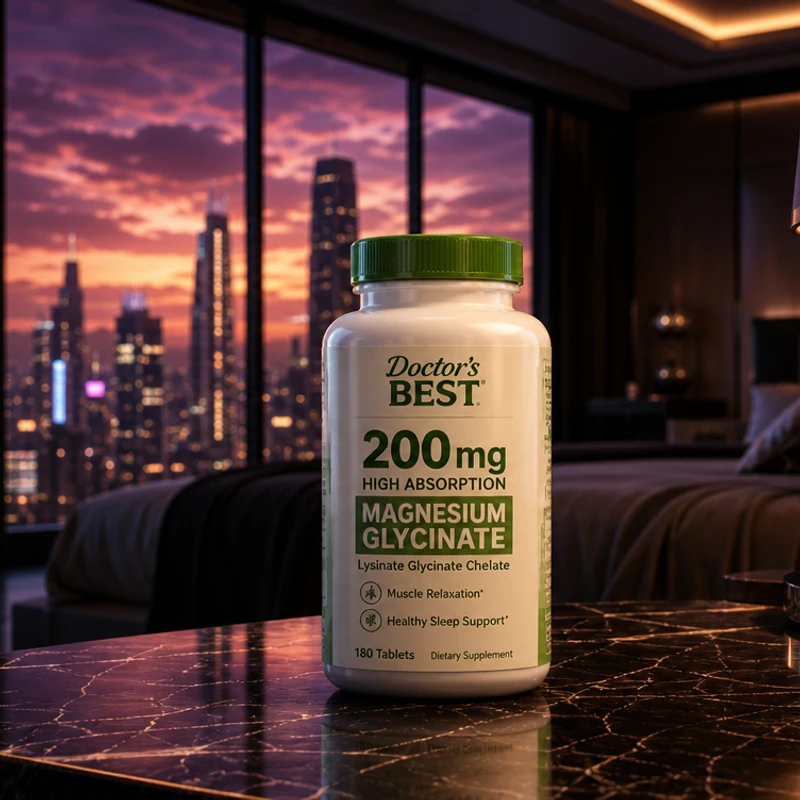
Magnesium — Doctor's Best Magnesium Glycinate
Doctor's Best · TRAACS bisglycinate/lysinate, 240 tablets — our #1 magnesium-for-sleep pick7.2/10SAC Product Score™SAC Product Score™ — how it breaks down- Strength of hypertrophy evidence30%7.4
- Effect size you can expect25%6.5
- Who it actually works for (honesty about conditionality)20%7.4
- Value per month15%7.4
- Stack fit & practicality10%7.8
Muscle is built during recovery, and recovery is built during sleep — that's how magnesium earns a place here. Supplemental magnesium improves sleep architecture and onset, especially in people running low (Abbasi 2012, Held 2002), and many lifters are low. It's an indirect, recovery-side lever, not a direct growth driver. Our #1 sleep-magnesium pick: the most-tested TRAACS chelate at the lowest cost-per-serving.
- Category
- Magnesium (glycinate chelate) — sleep & recovery
- Effect on muscle
- Indirect — better sleep/recovery, plus a role in muscle function
- Who it works for
- Lifters with poor sleep or low magnesium intake
- Dose
- 200-400 mg elemental/day; glycinate for sleep
Pros- Improves sleep onset and total sleep time in older adults with insomnia (Abbasi 2012; meta-analysis Mah & Pitre 2021)
- Normalises sleep EEG and slow-wave sleep — the deep sleep where most recovery happens (Held 2002)
- Magnesium is a cofactor in hundreds of processes including muscle contraction, and many people under-consume it
- TRAACS chelate is the most clinically-tested branded form, and the glycinate form is the right one for sleep
Cons- The muscle benefit is fully indirect — via sleep and recovery, with no direct hypertrophy effect
- If you already sleep well and eat plenty of greens/nuts, the upside is small
- Tablets have slightly slower onset than capsules for the most sensitive users
Our take — Magnesium makes the muscle list the same way ashwagandha does — through recovery, not anabolism — and specifically through sleep, the single most underrated training variable. The evidence is for sleep quality and onset, strongest in people who are low to begin with (Abbasi 2012, Held 2002), and a large share of lifters do run low on magnesium. Better, deeper sleep means better recovery between sessions, which over time means more growth — but the chain is indirect and the effect modest, which is exactly why it sits in the supporting cast rather than near the top. Doctor's Best Magnesium Glycinate is the right representative: the glycinate form is the one tied to sleep, the TRAACS chelate is the most-tested, and it's the cheapest per serving at this quality tier. Buy it if your sleep or your diet is short on magnesium; deprioritise it if both are already handled.
- #7More volume, not more tissue
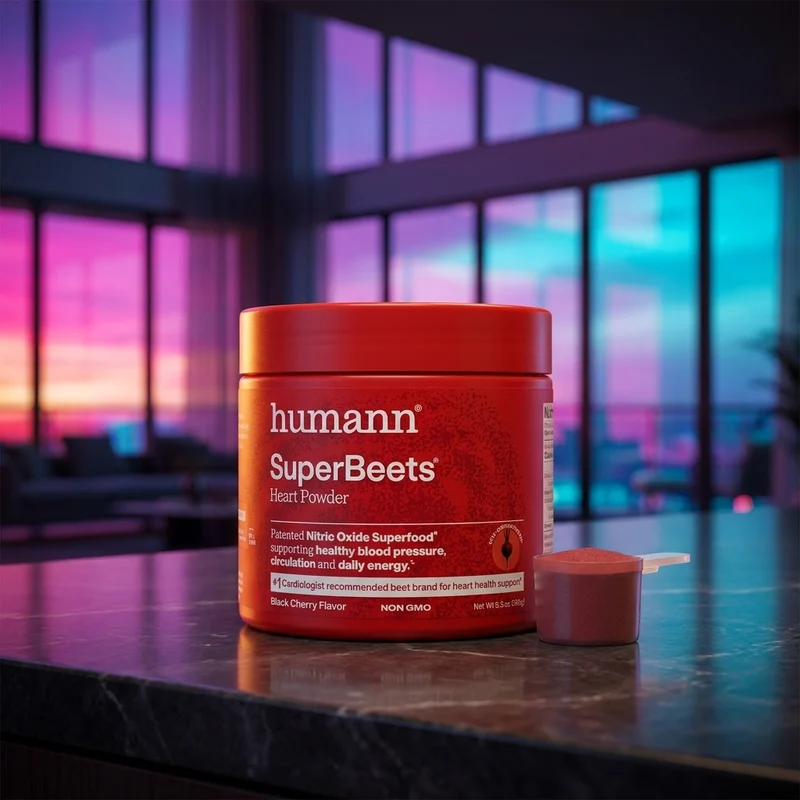
Beetroot — HumanN SuperBeets Black Cherry
HumanN · fermentation-processed beet crystals — our #1 beetroot pick7.1/10SAC Product Score™SAC Product Score™ — how it breaks down- Strength of hypertrophy evidence30%7.3
- Effect size you can expect25%6.4
- Who it actually works for (honesty about conditionality)20%7.3
- Value per month15%7.3
- Stack fit & practicality10%7.7
Beetroot doesn't build muscle — it helps you do more of the training that does. Dietary nitrate converts to nitric oxide, lowering the oxygen cost of effort and supporting endurance and pump (Lansley 2011, Wylie 2013), which can mean an extra rep or a better-quality high-volume session. Frame it as a training-volume and pump aid, not a tissue-builder. Our #1 beet pick is the recognised category benchmark.
- Category
- Beetroot / dietary nitrate — training volume & pump
- Effect on muscle
- Indirect — more work capacity via the nitrate→NO pathway, not hypertrophy
- Who it works for
- Higher-rep / volume-focused lifters; endurance crossover
- Honest caveat
- Most beet products (this one included) don't disclose nitrate mg
Pros- Dietary nitrate lowers the oxygen cost of exercise, so a given effort feels easier (Lansley 2011)
- Dose-response work shows moderate-to-high nitrate doses extend time-to-exhaustion (Wylie 2013)
- Drives the nitric-oxide 'pump' and can support an extra rep or two in high-volume work
- The most recognised, best-tolerated beet product; black-cherry crystals dissolve cleanly for daily use
Cons- Zero direct hypertrophy effect — it raises the volume you can do, it doesn't build tissue (Wylie 2013)
- Like almost all beet products, it doesn't print a nitrate number, so you can't verify the active dose
- Benefit skews to endurance and higher-rep training; least relevant to low-rep heavy strength work
Our take — Beetroot is on this page with the clearest 'indirect' label of all: it improves the efficiency and capacity of your training rather than building muscle directly. The nitrate-to-nitric-oxide pathway lowers the oxygen cost of effort and extends endurance (Lansley 2011, Wylie 2013), which for a hypertrophy lifter shows up as slightly more usable volume — an extra rep, a less-gruelling final set, a better pump. That's a legitimate, if small and indirect, contribution to growth over time. The honest asterisk, which applies to nearly every beet product including this one, is that the nitrate dose isn't disclosed, so you're trusting the brand's process over a verified number. HumanN SuperBeets is the recognised, well-tolerated default if you want to try the volume-and-pump angle; judge it by how your high-rep work feels over a couple of weeks, and keep your expectations on 'more training', not 'more tissue'.
- #8Deficiency-only
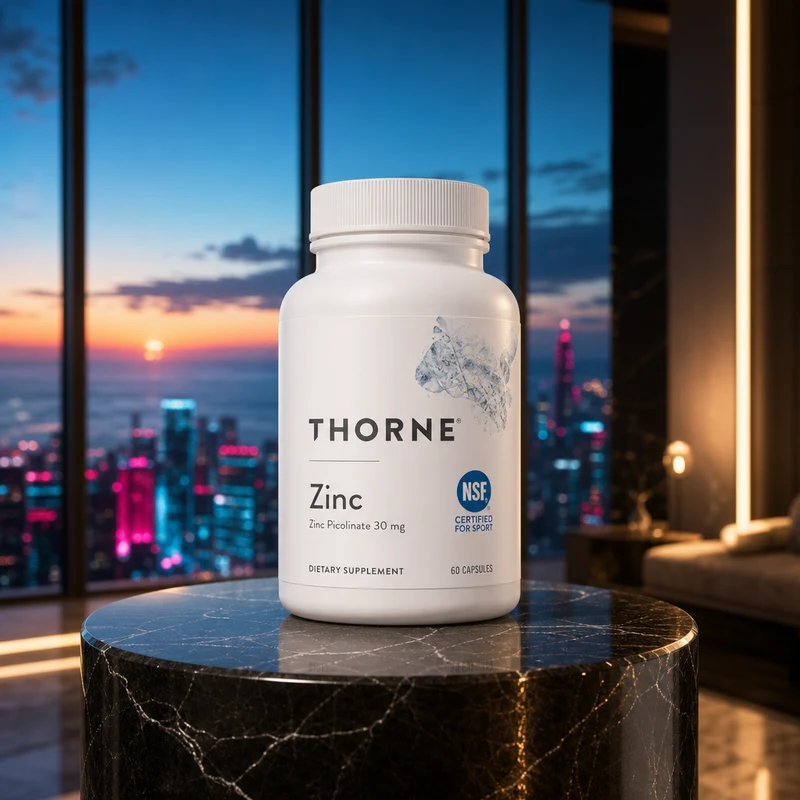
Zinc — Thorne Zinc Picolinate 30 mg
Thorne · NSF Certified for Sport zinc picolinate, 60 caps — our #1 zinc pickSAC Product Score™ — how it breaks down- Strength of hypertrophy evidence30%7.1
- Effect size you can expect25%6.3
- Who it actually works for (honesty about conditionality)20%7.1
- Value per month15%7.6
- Stack fit & practicality10%7.1
The same honesty as vitamin D: zinc only helps muscle indirectly, and only if you're deficient. In marginally deficient men, restoring zinc roughly doubled testosterone; in zinc-replete men it did nothing (Prasad 1996). Heavy sweaters, plant-based eaters, and big trainers are the most likely to be low. Don't megadose on a hunch. Our #1 zinc pick: NSF-tested picolinate at the trial-matched 30 mg dose.
- Category
- Zinc (picolinate) — deficiency correction
- Effect on muscle
- Indirect via testosterone — only if deficient (Prasad 1996)
- Who it works for
- The deficient: heavy sweaters, plant-based diets, high training loads
- Dose
- 30 mg/day elemental — don't exceed without cause
Pros- In marginally zinc-deficient men, 30 mg/day for 6 months nearly doubled serum testosterone (Prasad 1996)
- Plant-based eaters are disproportionately low — phytate binds zinc and blocks absorption (Wessells & Brown 2012)
- NSF Certified for Sport, with picolinate among the best-absorbed forms (Maares & Haase 2020)
- Cheap correction (~$14/month) at the exact trial-matched 30 mg dose
Cons- Replete men get no testosterone or muscle benefit whatsoever (Prasad 1996)
- Chronic high-dose zinc induces copper deficiency — more is actively harmful, not better
- Like vitamin D, the upside is invisible without knowing your status
Our take — Zinc sits near the bottom of the page not because the evidence is weak but because the audience is narrow: it only helps muscle indirectly (via testosterone) and only in people who are actually deficient. The cornerstone trial is striking — marginally deficient men nearly doubled testosterone on 30 mg/day — but the same study found zinc-replete men got nothing (Prasad 1996). So the real question isn't 'does zinc raise T', it's 'are you low?' Heavy sweaters, plant-based eaters, and lifters under high training loads are the most likely candidates (Wessells & Brown 2012). If that's you, Thorne Zinc Picolinate is the clean, NSF-tested, trial-dosed way to correct it for $14 a month. If you eat plenty of meat and shellfish, you're almost certainly replete and this does nothing for your muscle — and crucially, do not megadose, because chronic high zinc causes copper deficiency. Correct a real shortfall; never supplement it blind.
- #9Mainly for deficits & beginners
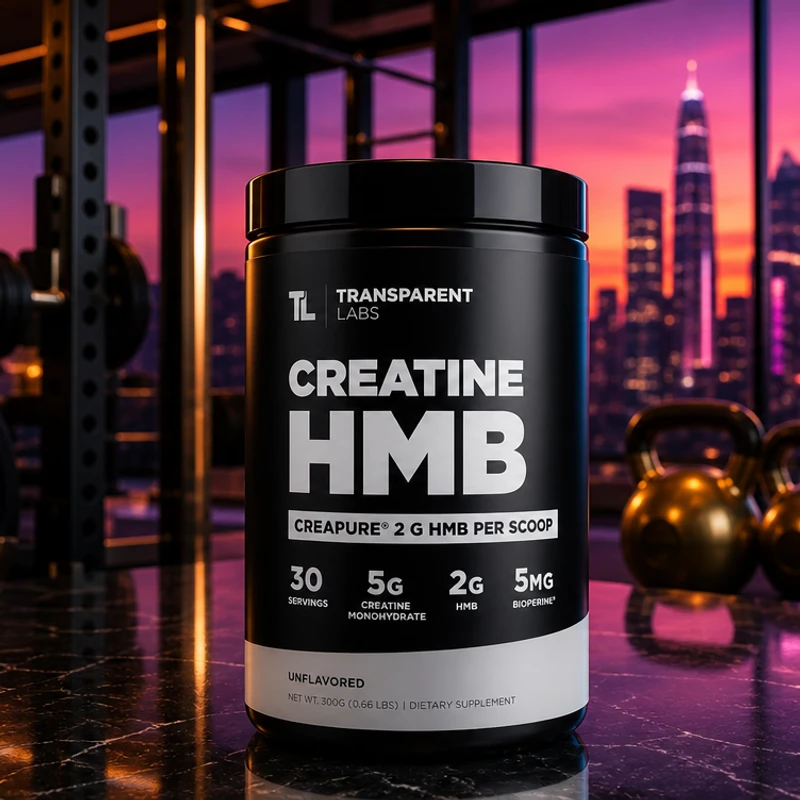
HMB — Transparent Labs Creatine HMB
Transparent Labs · Creapure + 1.5 g HMB per scoop — our creatine+HMB combo reviewSAC Product Score™ — how it breaks down- Form purity25%9.5
- Third-party testing25%9.0
- Per-serving creatine20%9.0
- Cost per active gram20%3.5
- Brand QC track record10%8.5
The most over-marketed name on the list, kept honest. HMB shows small but measurable strength and lean-mass effects in untrained beginners and meaningful anti-catabolic value in a calorie deficit or for detrained/older lifters — but in trained, well-fed athletes the effect is minimal to absent (Wilson 2013). This combo's creatine half is excellent; the HMB add-on is what's conditional. Buy for the narrow cases, not as a default.
- Category
- HMB (leucine metabolite) — anti-catabolic, situational
- Effect on muscle
- Real in beginners/deficit; minimal to absent in trained, fed lifters (Wilson 2013)
- Who it works for
- Untrained beginners, deep cutting phases, detrained/older lifters
- Honest caveat
- 1.5 g/scoop is half the 3 g/day trial dose; the creatine is the real value here
Pros- HMB has modest evidence reducing muscle protein breakdown in beginners and during calorie deficits (Wilson 2013)
- The creatine half is the same Creapure monohydrate as the #1 pick — and creatine is the part that reliably works (Kreider 2017)
- Best-in-class QC: per-batch Certificates of Analysis published publicly, lookup-able by lot code
- Genuinely useful in a cutting phase or for a returning/older lifter trying to preserve muscle
Cons- In trained, well-fed lifters — the typical buyer — the HMB effect is minimal to absent (Wilson 2013)
- You pay ~7× the pure-creatine price largely for the conditional HMB add-on
- At 1.5 g per scoop the HMB is half the 3 g/day dose the trials used, so even responders are under-dosed at one scoop
Our take — HMB closes the page as the honest counterweight to its own marketing. The supplement industry loves to bundle it with creatine and imply the stack is independently additive — but the evidence, summarised in the ISSN HMB position (Wilson 2013), is that HMB's measurable benefits live in untrained beginners and in catabolic situations like a deep calorie deficit or detraining, and largely vanish in the trained, well-fed athlete who's the typical buyer of a $50 combo. So the muscle-growth verdict splits cleanly: the Creapure creatine in Transparent Labs Creatine HMB is excellent and does the real work (Kreider 2017); the HMB add-on is what you're overpaying for, and it only earns its place in a cutting phase, for a beginner, or for an older/returning lifter preserving muscle. Outside those cases, the smarter buy is plain creatine (#1) plus enough protein. The QC here is genuinely best-in-class — but best-in-class transparency doesn't make a conditional ingredient unconditional.

▸ Affiliate disclosure: every Amazon link uses our Associates tag (superachieverclub-20). We earn a small commission at no cost to you; it funds independent reviews. We never accept payment to change a ranking.
Ranking categories, not bottles — honestly
- 01
Most ‘best supplements for muscle’ lists lie by omission.
They rank ten bottles as if they caused muscle. The honest hierarchy: progressive-overload training, a modest calorie surplus, and ~1.6–2.2 g/kg protein account for the overwhelming majority of everything you'll build.
- 02
Supplements are the last few percent — on top of that foundation.
If the training and the food aren't in place, no powder fixes it. That's not cynicism; it's the order of operations.
- 03
So we rank the CATEGORIES that matter, each by our #1 pick.
And we say honestly how big — or how small, and how conditional — each one's effect really is.
- 04
Inside that last few percent, one supplement has a large, robust, replicated effect.
Creatine. The rest are smaller and situational, and we frame them that way instead of selling every bottle as essential.
Schoenfeld (training volume) · Morton 2018 (protein) — honest effect sizes, full scoring below.
How we ranked the categories that matter for hypertrophy
This is a cross-cutting umbrella page, so we're not scoring one product against its near-identical rivals — we're scoring whole supplement CATEGORIES against each other for one job: building muscle. Each category is represented by the existing SAC #1 pick from its own cluster (same product, same review, same image), and the score reflects the category's case for hypertrophy, not that single bottle's price war. Strength of hypertrophy evidence carries the most weight because that's the only thing that separates a real lever from a marketing story — creatine has hundreds of trials and meta-analyses; most of the supporting cast has a handful of conditional studies. Effect size you can actually expect is next: a statistically real but tiny effect is still tiny. The third axis is the one most lists hide — who it actually works for — because half of these only help in a specific situation (a deficiency, a calorie deficit, an inadequate protein intake), and pretending otherwise is the central dishonesty of the genre. Value per month and stack fit settle the rest. The result is deliberately top-heavy: creatine scores far above everything else, the supporting cast clusters tightly in the low-to-mid 7s, and that gap is the most useful thing on the page.
- Strength of hypertrophy evidence30%
How much high-quality human evidence ties this category specifically to MUSCLE growth (not vague 'wellness'). Creatine has hundreds of RCTs and multiple meta-analyses; the supporting cast ranges from a few solid trials (EAAs, vitamin D in deficiency) to mechanism-plus-modest-outcome (omega-3, magnesium, beetroot). Thin or indirect evidence caps the score in the 7s no matter how popular the supplement is.
- Effect size you can expect25%
The realistic magnitude on lean mass or strength once training and protein are already handled. Creatine's ~+1.2-1.4 kg lean-mass effect is large for a legal supplement; most of the rest are small, indirect (via recovery, sleep, or training volume), or only show up in a specific population. We score the honest expected effect, not the best-case headline.
- Who it actually works for (honesty about conditionality)20%
Does it work for a well-fed, well-trained lifter — or only in a specific situation? Deficiency-correction (vitamin D, zinc), under-eating protein (EAAs), a calorie deficit or detrained state (HMB) all narrow the audience sharply. Categories that help essentially everyone (creatine) score highest here; deficiency-or-deficit-only categories are scored down for how conditional the benefit is.
- Value per month15%
Cost of a meaningful daily dose. Creatine is the value champion of the entire page (pennies a day); zinc and vitamin D are cheap; omega-3, EAAs and combo products run more. A category that's both weakly-evidenced AND expensive (a combo HMB premium) loses points here twice.
- Stack fit & practicality10%
How cleanly it slots into a real lifter's routine and whether it overlaps with something you should already be doing. EAAs overlap heavily with the protein you should already eat; magnesium and omega-3 double as general-health buys; creatine is the rare no-trade-off daily scoop. Redundancy with the food-first foundation costs points.

The bottom line — spend on the foundation, not the margins
- 01
Spend on the foundation, not the margins.
Progressive overload, a modest surplus and enough protein come first — they are the muscle. Supplements are the trim.
- 02
The one big-effect supplement: creatine (Optimum Nutrition Micronized, #1).
Everything else on the list is a rounding error next to it — useful only once the basics are locked.
- 03
Buy the category that fits the gap you actually have.
Protein if you under-eat it, creatine always, the rest only if training and food are already dialled in.
Every claim ranked above traces back to one of these
Peer-reviewed studies, meta-analyses and clinical trials behind the picks. Click any citation to read the abstract on PubMed.
- [1]Kreider 2017
International Society of Sports Nutrition position stand: safety and efficacy of creatine supplementation in exercise, sport, and medicine
ISSN position stand after reviewing 500+ studies: creatine monohydrate is the single most effective ergogenic supplement for increasing high-intensity exercise capacity and lean body mass during training, with no evidence that alternative forms outperform monohydrate at equivalent doses, and 3-5 g/day is safe and effective. The anchor for ranking creatine as the undisputed #1 muscle-growth supplement.
- [2]Branch 2003
Effect of creatine supplementation on body composition and performance: a meta-analysis
Meta-analysis: creatine supplementation increased lean body mass by an average of ~+1.2 kg vs placebo across resistance-trained subjects, with a consistent effect on high-intensity exercise performance. One of the two effect-size anchors for creatine's hypertrophy claim on this page.
- [3]Chilibeck 2017
Effect of creatine supplementation during resistance training on lean tissue mass and muscular strength in older adults: a meta-analysis
Meta-analysis of creatine + resistance training in older adults: significant gains in lean tissue mass (~+1.4 kg) and chest-press strength vs placebo. Demonstrates the creatine hypertrophy effect holds across the lifespan, supporting 'works for essentially everyone who trains'.
- [4]Moberg 2016
Activation of mTORC1 by leucine is potentiated by branched-chain amino acids and even more so by essential amino acids following resistance exercise
Head-to-head in humans after resistance exercise, activation of the muscle-building mTORC1 pathway ranked leucine alone < BCAAs < all nine essential amino acids, with the full EAA complement producing the strongest, most sustained anabolic signal. The basis for choosing a full-spectrum EAA over BCAAs and for the honest caveat that complete protein supplies the same aminos.
- [5]Wolfe 2017
Branched-chain amino acids and muscle protein synthesis in humans: myth or reality?
Critical review concluding that BCAAs alone cannot maximally stimulate muscle protein synthesis because building new muscle protein requires all the essential amino acids; supplying only three leaves the other six rate-limiting. The anchor for the honest 'EAAs/whole protein beat isolated BCAAs, and complete protein already supplies them' framing.
- [6]Jackman 2017
Branched-Chain Amino Acid Ingestion Stimulates Muscle Myofibrillar Protein Synthesis following Resistance Exercise in Humans
BCAAs alone raised myofibrillar muscle protein synthesis ~22% above placebo after resistance exercise — a real but submaximal response, well below what intact protein produces, because BCAAs lack the other essential amino acids. Supports rating EAAs above pure BCAAs while keeping the whole-protein caveat.
- [7]Wankhede 2015
Examining the effect of Withania somnifera supplementation on muscle strength and recovery: a randomized controlled trial
600 mg/day KSM-66 ashwagandha for 8 weeks in resistance-trained men produced greater bench-press and leg-extension strength gains, larger arm-muscle size, and a serum testosterone increase (+96 ng/dL vs +18 placebo). The trial behind ashwagandha's modest recovery/training-stress strength signal at the dose used here.
- [8]Chandrasekhar 2012
A prospective, randomized double-blind, placebo-controlled study of safety and efficacy of a high-concentration full-spectrum extract of ashwagandha root in reducing stress and anxiety in adults
600 mg/day KSM-66 for 60 days in chronically stressed adults reduced perceived stress -44% and morning serum cortisol -27.9% vs placebo. Establishes the cortisol/stress-reduction mechanism that underpins ashwagandha's recovery-side contribution to training.
- [9]Lopresti 2019 (testosterone)
A randomized, double-blind, placebo-controlled, crossover study examining the hormonal and vitality effects of ashwagandha (Withania somnifera) in aging, overweight males
600 mg/day KSM-66 for 8 weeks in overweight men 40-70 raised total testosterone +14.7% and DHEA-S +18% vs placebo. Supports the modest, recovery-and-stress-mediated hormonal effect of ashwagandha most relevant to stressed/older lifters.
- [10]Mozaffarian 2008
Omega-3 fatty acids and cardiovascular disease: effects on risk factors, molecular pathways, and clinical events
Comprehensive review of omega-3 mechanisms: anti-inflammatory and anti-arrhythmic effects, triglyceride reduction, and modest blood-pressure effects at 2-4 g/day. The reference for omega-3's anti-inflammatory recovery support and its stronger general-health (vs direct muscle) case.
- [11]Dyerberg 2010
Bioavailability of marine n-3 fatty acid formulations
Re-esterified triglyceride (rTG) omega-3 formulations were absorbed ~30-50% better than ethyl-ester forms. The basis for selecting the rTG form when omega-3 is the chosen recovery support.
- [12]Pilz 2011
Effect of vitamin D supplementation on testosterone levels in men
In overweight, vitamin-D-deficient men, 3,332 IU/day D3 for 12 months raised total testosterone +25%, free T +24%, and bioactive T +20% vs placebo. Critically, the men started deficient — the effect is correction of a deficiency-related drag, not a booster for replete men. The anchor for vitamin D as a deficiency-only muscle lever.
- [13]Bischoff-Ferrari 2009
Fall prevention with supplemental and active forms of vitamin D: a meta-analysis of randomised controlled trials
Meta-analysis of 8 RCTs (n=2,426): 700-1,000 IU/day vitamin D3 reduced falls 19% in adults 65+, mediated by VDR-driven muscle-strength and balance improvements. Supports vitamin D's muscle-function benefit specifically in deficient/older populations.
- [14]Holick 2007
Vitamin D deficiency
Landmark review establishing that 25(OH)D below 30 ng/mL is a meaningful deficiency state and that 1,000-4,000 IU/day is the corrective intervention. The basis for 'test first, supplement to correct' on vitamin D.
- [15]Tripkovic 2012
Comparison of vitamin D2 and vitamin D3 supplementation in raising serum 25-hydroxyvitamin D status: a systematic review and meta-analysis
Meta-analysis of 7 RCTs: D3 raised serum 25(OH)D ~1.7× more efficiently than D2 at equivalent doses. The basis for choosing D3 when correcting a deficiency.
- [16]Abbasi 2012
The effect of magnesium supplementation on primary insomnia in elderly: a double-blind placebo-controlled clinical trial
500 mg/day magnesium for 8 weeks improved sleep time, sleep efficiency, and serum melatonin and reduced sleep-onset latency (−17 min vs placebo) in elderly insomnia patients. The cornerstone trial for magnesium's sleep-and-recovery contribution to muscle growth.
- [17]Held 2002
Oral Mg(2+) supplementation reverses age-related neuroendocrine and sleep EEG changes in humans
Oral magnesium normalised sleep EEG and the age-related decline in slow-wave sleep and shifted the cortisol curve toward youthful patterns. Foundational evidence that supplemental magnesium modifies the deep-sleep architecture where recovery happens.
- [18]Mah & Pitre 2021
Oral magnesium supplementation for insomnia in older adults: a systematic review & meta-analysis
Meta-analysis of 3 RCTs (n=151): magnesium reduced sleep-onset latency ~17 minutes and increased total sleep time vs placebo in older adults with insomnia. The strongest quantitative summary of the magnesium-sleep effect underpinning its recovery role.
- [19]Lansley 2011 (O2 cost)
Dietary nitrate supplementation reduces the O2 cost of walking and running: a placebo-controlled study
Dietary nitrate from beetroot reduced the oxygen cost of submaximal exercise — the same effort required less O2. The core mechanism behind beetroot raising work capacity/training volume rather than building tissue directly.
- [20]Wylie 2013
Beetroot juice and exercise: pharmacodynamic and dose-response relationships
Dose-response mapping: moderate (8.4 mmol) and high (16.8 mmol) nitrate doses raised time-to-exhaustion ~12-14%, while a low 4.2 mmol dose did not. Establishes that beetroot's benefit is dose-dependent and expresses as training capacity — and why undisclosed nitrate content is a real limitation.
- [21]Prasad 1996
Zinc status and serum testosterone levels of healthy adults
30 mg/day zinc for 6 months in marginally zinc-deficient men nearly doubled serum testosterone (8.3 → 16.0 nmol/L), while zinc-replete subjects showed no uplift. The cornerstone trial making zinc a deficiency-only, indirect muscle lever.
- [22]Wessells & Brown 2012
Estimating the global prevalence of zinc deficiency: results based on zinc availability in national food supplies and the prevalence of stunting
~17% of the world population is at risk of inadequate zinc intake, concentrated in plant-based-diet populations where phytate binds zinc. The basis for flagging plant-based eaters (and heavy sweaters) as the lifters most likely to actually benefit from zinc.
- [23]Maares & Haase 2020
A guide to human zinc absorption: general overview and recent advances of in vitro intestinal models
Catalogues zinc bioavailability by form: bisglycinate and picolinate consistently outperform sulfate and gluconate, which outperform oxide ~2×. The basis for choosing picolinate when correcting a zinc shortfall.
- [24]Wilson 2013
International Society of Sports Nutrition Position Stand: beta-hydroxy-beta-methylbutyrate (HMB)
ISSN position stand on HMB: reviewing 30+ trials, HMB shows small but measurable strength and lean-mass effects in untrained beginners and value in catabolic states (calorie deficit, detraining, older adults), with minimal to absent effects in trained, well-fed athletes at the standard 3 g/day. The basis for ranking HMB as a situational, deficit-and-beginner supplement rather than a default.
More Creatine guides
Every form, format and use-case in the Creatine cluster — each ranked with the same methodology, so you can jump straight to the angle that fits you.
- Best Creatine for MenSame 10-product roster as the general creatine list, reframed for the male-lifter cohort — NSF Sport leads (federation-safe), Creapure form, tub size for bulking macros, per-scoop creatine.
- Best Creatine for Muscle GrowthTen creatine picks ranked for hypertrophy — cell volumization, satellite-cell proliferation, saturation over loading. Monohydrate is the only form with RCT weight.
- Best Creatine MonohydrateThe most-studied supplement in sports nutrition — and 95% of buyers get it wrong by paying for fancier forms or flavored blends. Ranked by purity (Creapure), price-per-gram, and lab transparency.
- Best Creatine SupplementsThe definitive creatine buying guide — the single best pick for each kind of buyer across powder, gummies, and HCl. Monohydrate powder wins on raw value; every other form is a situational upgrade for adherence, testing, or tolerance.
- Best Protein PowderThe 9 best protein powders ranked on protein quality and dose (whey isolate vs concentrate vs vegan), label honesty and amino-spiking purity, third-party testing, value per gram of protein and taste — with the evidence-backed frame that hitting ~1.6 g/kg/day of total protein, not the brand on the tub, is what drives muscle growth.
- Best TurkesteroneThe 8 best turkesterone supplements ranked first on third-party verification (independent tests found many products contain under 1% of the claimed turkesterone), then standardization, dose and value — with the blunt frame that there are no good human turkesterone RCTs and verification, not hype, is everything.