
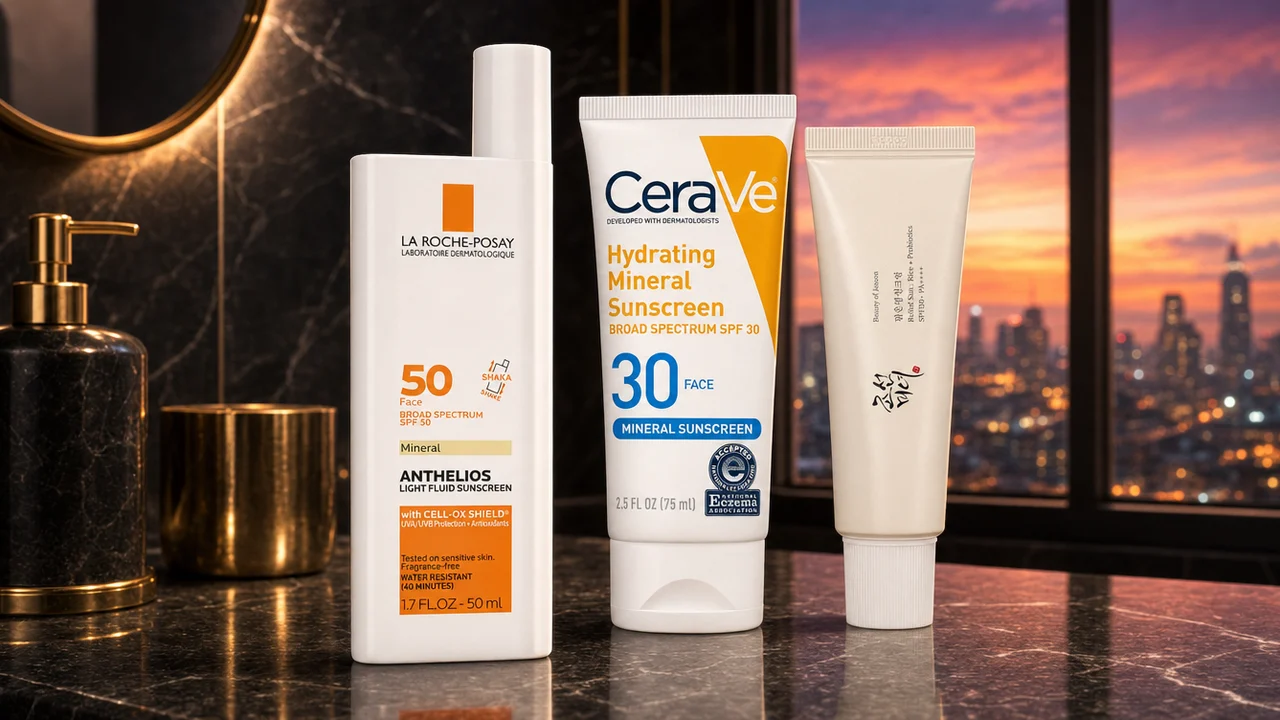
Top 8 Best Sunscreens for Your Face (2026)
Daily facial sunscreen is the single most evidence-based anti-aging move there is (~80% of facial aging is photoaging) — ranked MINERAL-FIRST: filter safety leads the methodology, 100% zinc/titanium formulas take the podium, and the legacy chemical stacks with documented blood absorption (FDA/JAMA) are honestly demoted.
8 picks — ranked by our 50/50 methodology
Compare all 8 picks side by sidefull score breakdown · strength & weakness · price
| Product | Score | Filter safety + body-health35% | Broad-spectrum protection + SPF 30+25% | Cosmetic elegance + daily wearability20% | Skin-friendliness10% | Value + cost per daily use10% | Price & buy |
|---|---|---|---|---|---|---|---|
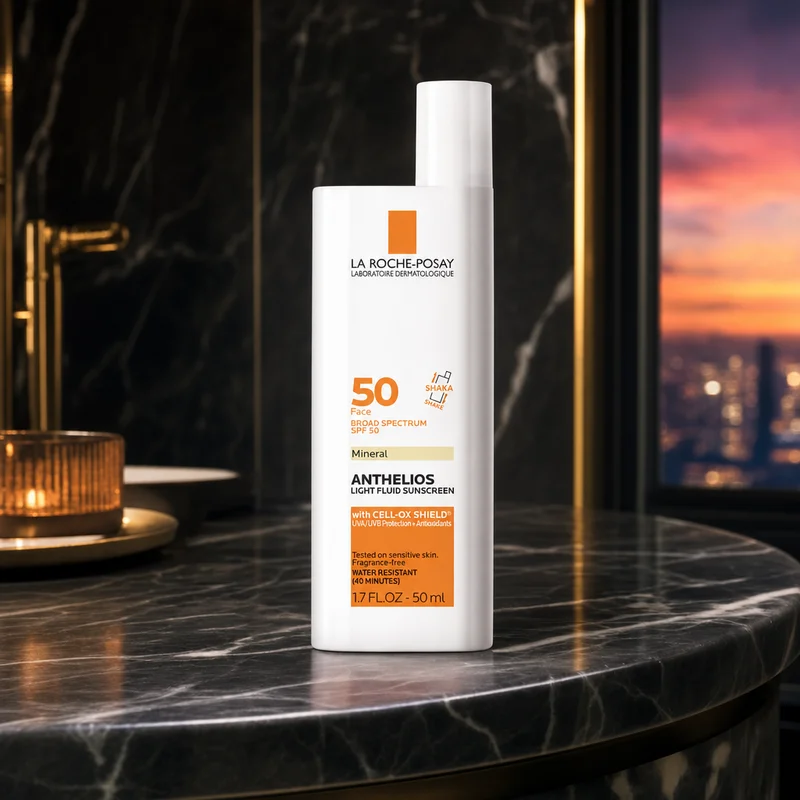 #1 La Roche-Posay Anthelios Mineral SPF 50Best overall — 100% mineral #1 La Roche-Posay Anthelios Mineral SPF 50Best overall — 100% mineral | 9.2 | 9.81 | 9.41 | 8.4 | 9.61 | 8.0 | $34 / 1.7 fl oz tube~$0.57 / daily facial useOn AmazonFull review → |
+100% mineral: zinc oxide + titanium dioxide are the only two filters the FDA classifies as GRASE — they sit on the skin instead of entering the bloodstream−Like every true mineral, it can leave a faint white cast — most visible on medium-to-deep skin tones | |||||||
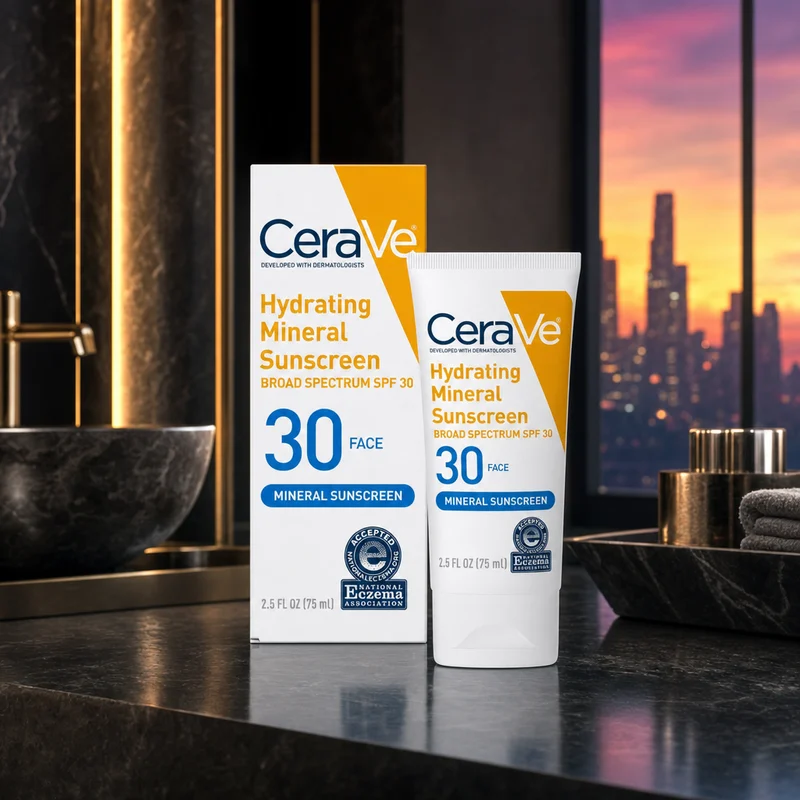 #2 CeraVe Hydrating Mineral Sunscreen SPF 30 (Face)Best budget mineral #2 CeraVe Hydrating Mineral Sunscreen SPF 30 (Face)Best budget mineral | 9.0 | 9.81 | 8.63 | 7.6 | 9.42 | 9.81 | $16 / 2.5 oz tube~$0.18 / daily facial useOn AmazonFull review → |
+100% mineral protection — the FDA-GRASE filter class — at the lowest cost-per-use on this list−The classic mineral trade-off: a white cast that shows on medium-to-deep skin tones | |||||||
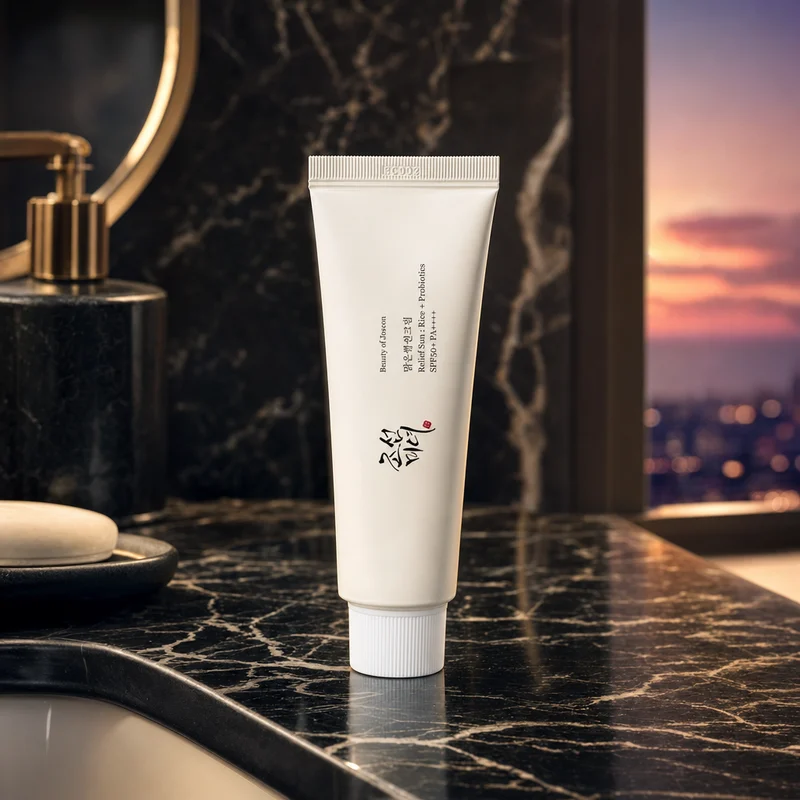 #3 Beauty of Joseon Relief Sun: Rice + Probiotics SPF 50+Most elegant — new-gen filters, with caveat #3 Beauty of Joseon Relief Sun: Rice + Probiotics SPF 50+Most elegant — new-gen filters, with caveat | 8.4 | 6.42 | 9.41 | 9.81 | 8.83 | 9.42 | $18 / 50 mL tube~$0.30 / daily facial useOn AmazonFull review → |
+Avoids the two most-flagged legacy filters (oxybenzone, octinoxate) in favor of newer, larger-molecule European-style chemistry−Still synthetic UV filters absorbed into the upper skin — long-term human safety data on the new generation is thin, just less alarming than the legacy stack | |||||||
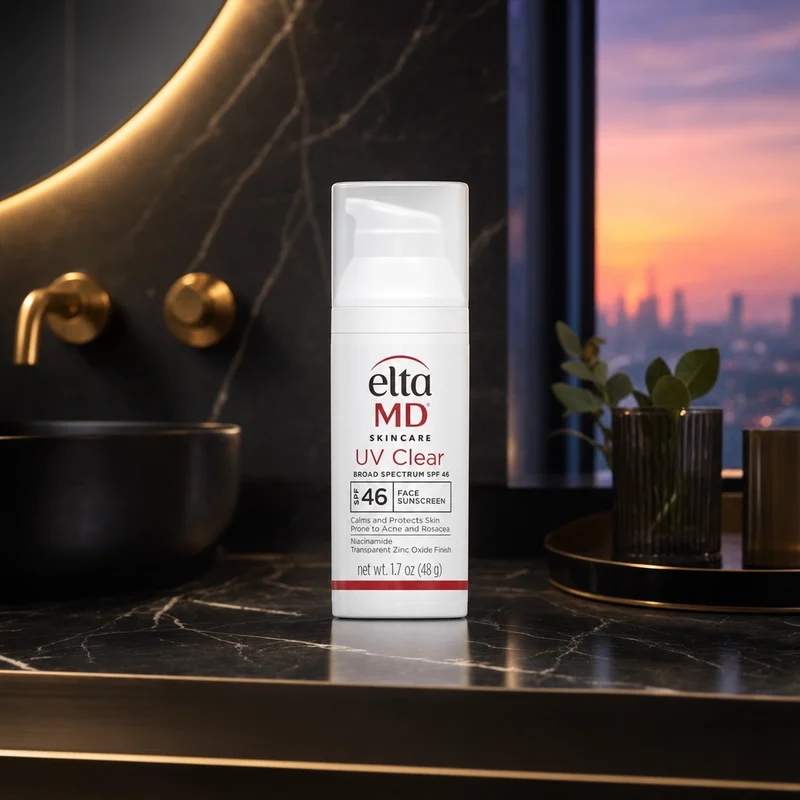 #4 EltaMD UV Clear Broad-Spectrum SPF 46Derm favorite — hybrid, demoted honestly #4 EltaMD UV Clear Broad-Spectrum SPF 46Derm favorite — hybrid, demoted honestly | 7.9 | 6.03 | 9.02 | 9.23 | 9.61 | 7.2 | $41 / 1.7 oz tube~$0.68 / daily facial useOn AmazonFull review → |
+Genuinely excellent skin formula — niacinamide calms redness, non-comedogenic base suits acne-prone and sensitive skin−Contains 7.5% octinoxate — a filter with documented systemic absorption and endocrine-activity signals in animal studies; it's why this derm favorite is #4 here and not #1 | |||||||
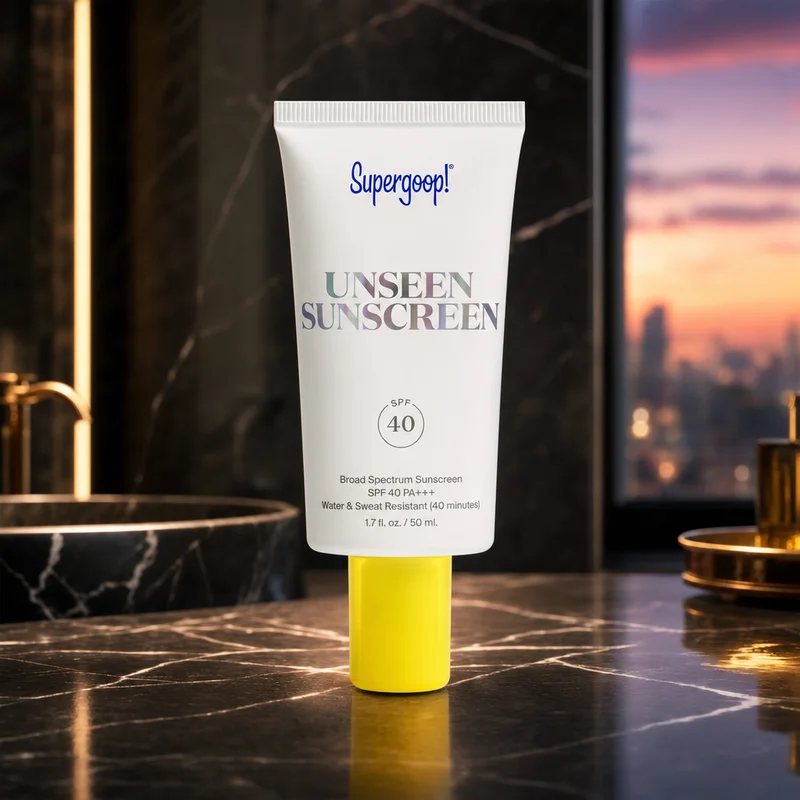 #5 Supergoop Unseen Sunscreen SPF 40Best under makeup — chemical, with caveat #5 Supergoop Unseen Sunscreen SPF 40Best under makeup — chemical, with caveat | 7.2 | 4.8 | 8.4 | 9.42 | 8.2 | 7.0 | $40 / 1.7 fl oz tube~$0.67 / daily facial useOn AmazonFull review → |
+Genuinely invisible on every skin tone — dries to a velvety, pore-blurring primer finish that grips foundation−Runs on four chemical filters from the FDA's absorption trials — avobenzone, homosalate, octisalate and octocrylene all crossed the agency's safety-testing threshold in blood | |||||||
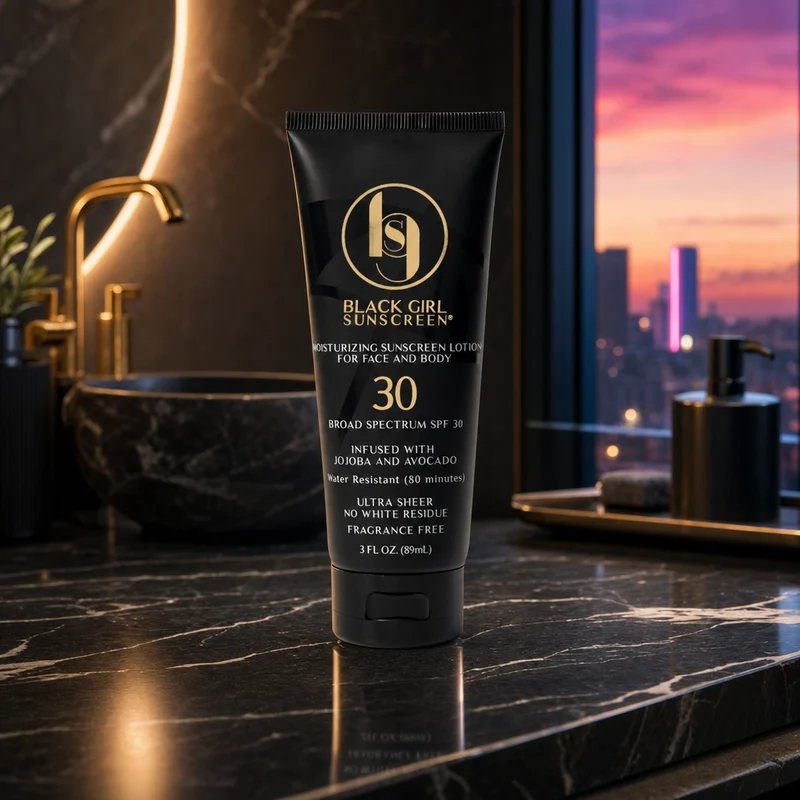 #6 Black Girl Sunscreen SPF 30Best for deeper tones — chemical, with caveat #6 Black Girl Sunscreen SPF 30Best for deeper tones — chemical, with caveat | 7.1 | 4.8 | 8.0 | 8.8 | 8.0 | 9.0 | $16 / 3 fl oz bottle~$0.16 / daily facial useOn AmazonFull review → |
+Purpose-built to disappear on deeper skin tones — no grey or ashy cast, the failure mode that made minerals unwearable for millions−The filter stack is still the avobenzone/homosalate/octisalate/octocrylene set from the FDA's absorption studies — transparent on skin, not absent from blood | |||||||
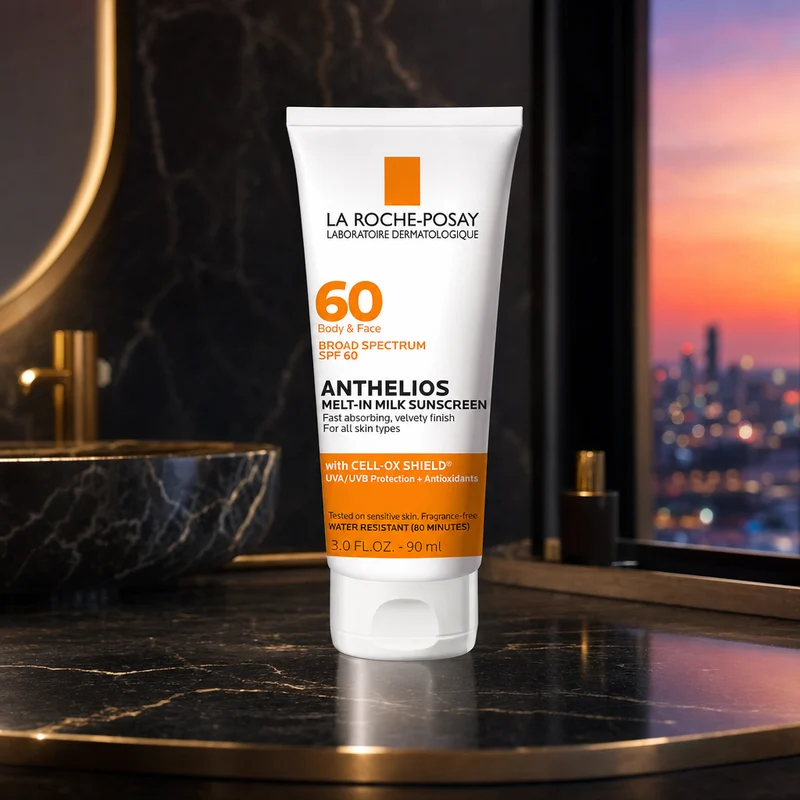 #7 La Roche-Posay Anthelios Melt-in Milk SPF 60Legacy chemical — not our daily pick #7 La Roche-Posay Anthelios Melt-in Milk SPF 60Legacy chemical — not our daily pick | 6.9 | 4.6 | 9.02 | 7.4 | 7.6 | 8.0 | $30 / 3 fl oz bottle~$0.33 / daily facial useOn AmazonFull review → |
+High, reliable broad-spectrum UVA protection with an antioxidant complex — the protection axis is genuinely strong−Built on the legacy chemical class (avobenzone and companions) with documented systemic absorption — the axis this ranking weights most | |||||||
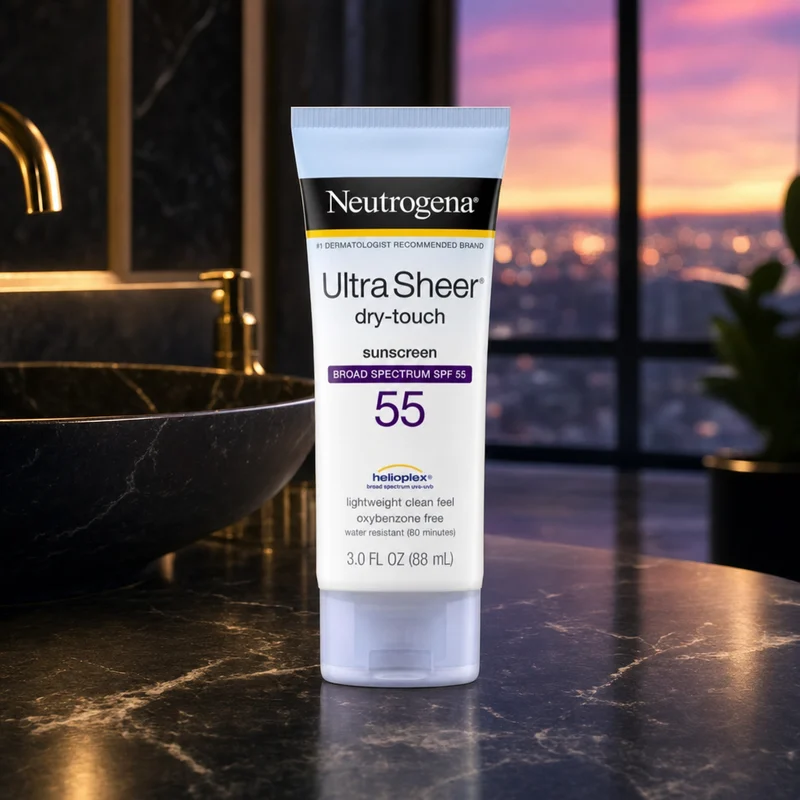 #8 Neutrogena Ultra Sheer Dry-Touch SPF 55Ubiquitous — the filter class we'd skip #8 Neutrogena Ultra Sheer Dry-Touch SPF 55Ubiquitous — the filter class we'd skip | 6.1 | 3.2 | 8.63 | 6.6 | 6.0 | 9.23 | $11 / 3 fl oz bottle~$0.12 / daily facial useOn AmazonFull review → |
+Effective broad-spectrum protection at the lowest price and widest availability on the list−Its filter actives are the very compounds the FDA's JAMA trials found in systemic circulation above the safety-testing threshold — the worst fit for a 365-day facial habit | |||||||
- #1Best overall — 100% mineral
La Roche-Posay Anthelios Mineral SPF 50
La Roche-Posay · 100% mineral zinc oxide + titanium dioxide + antioxidants, SPF 50, 1.7 fl oz9.2/10SAC Product Score™SAC Product Score™ — how it breaks down- Filter safety + body-health35%9.8
- Broad-spectrum protection + SPF 30+25%9.4
- Cosmetic elegance + daily wearability20%8.4
- Skin-friendliness10%9.6
- Value + cost per daily use10%8.0
The clean default: 100% mineral zinc-plus-titanium SPF 50 from a dermatologist brand, in an oil-free fluid light enough that wearing the safe filter every day is no sacrifice.
- Filter type
- 100% mineral (zinc oxide + titanium dioxide) — FDA-GRASE filters only
- SPF
- SPF 50, broad-spectrum UVA + UVB
- Key actives
- Antioxidant complex; oxybenzone-free, chemical-filter-free, oil-free
- Skin fit
- Sensitive, reactive, rosacea, allergy-prone, post-procedure — and everyone else
Pros- 100% mineral: zinc oxide + titanium dioxide are the only two filters the FDA classifies as GRASE — they sit on the skin instead of entering the bloodstream
- SPF 50 broad-spectrum with an antioxidant complex — no protection compromise for choosing the safe filter class
- Ultra-light oil-free fluid that blends far better than the chalky mineral formulas that gave zinc its bad reputation
- Fragrance-free, allergy-tested derm brand — the pick for skin (and bodies) that shouldn't be experimented on
Cons- Like every true mineral, it can leave a faint white cast — most visible on medium-to-deep skin tones
- Premium price for 1.7 fl oz; the CeraVe (#2) delivers the same filter class for half the money
- Matte-leaning fluid finish — very dry skin may want a moisturizer underneath
Our take — This is the sunscreen we'd hand you if you asked for one tube and no lecture: the two FDA-GRASE mineral filters at SPF 50, from a dermatologist brand, in a fluid texture that finally makes '100% mineral' and 'wearable every single day' the same sentence. Nothing absorbed into your bloodstream, nothing hormone-flagged, no asterisks — just UV physics sitting on top of your skin. The honest cost is a faint cast on deeper tones and a derm-brand price. Pay it if you can; this is the category done right.
- #2Best budget mineral
CeraVe Hydrating Mineral Sunscreen SPF 30 (Face)
CeraVe · 100% mineral zinc oxide + titanium dioxide + ceramides, SPF 30, 2.5 ozSAC Product Score™ — how it breaks down- Filter safety + body-health35%9.8
- Broad-spectrum protection + SPF 30+25%8.6
- Cosmetic elegance + daily wearability20%7.6
- Skin-friendliness10%9.4
- Value + cost per daily use10%9.8
The same safe-filter class as our #1 at a drugstore price — 100% zinc-plus-titanium SPF 30 with CeraVe's ceramides, niacinamide and hyaluronic acid supporting the skin barrier while it protects.
- Filter type
- 100% mineral (zinc oxide + titanium dioxide) — no chemical filters
- SPF
- SPF 30, broad-spectrum UVA + UVB
- Key actives
- 3 essential ceramides, niacinamide, hyaluronic acid
- Skin fit
- Sensitive, dry, reactive, eczema-prone; fragrance-free, non-comedogenic
Pros- 100% mineral protection — the FDA-GRASE filter class — at the lowest cost-per-use on this list
- Ceramides, niacinamide and hyaluronic acid genuinely support the skin barrier instead of just carrying the filter
- Fragrance-free, non-comedogenic and gentle enough for eczema-prone or post-procedure skin
- From the most trusted drugstore barrier-care brand — easy to restock anywhere, which keeps the daily habit alive
Cons- The classic mineral trade-off: a white cast that shows on medium-to-deep skin tones
- Richer, more moisturizing finish — very oily skin may find it heavy in summer
- SPF 30 is the floor, not headroom — apply generously and reapply for real sun days
Our take — If $34 sunscreen isn't happening, this is the honest answer: the exact same mineral-only filter class as our winner, bundled with the ceramides and niacinamide CeraVe is famous for, at eighteen cents a day. It protects, it repairs the barrier, and it never asks your bloodstream to participate. You accept a richer feel and the mineral cast — dry and sensitive skin will read both as features. The cheapest way on this page to do sunscreen right.
- #3Most elegant — new-gen filters, with caveat
Beauty of Joseon Relief Sun: Rice + Probiotics SPF 50+
Beauty of Joseon · Newer-generation organic filters (no oxybenzone/octinoxate) + rice extract, SPF 50+ PA++++, 50 mL8.4/10SAC Product Score™SAC Product Score™ — how it breaks down- Filter safety + body-health35%6.4
- Broad-spectrum protection + SPF 30+25%9.4
- Cosmetic elegance + daily wearability20%9.8
- Skin-friendliness10%8.8
- Value + cost per daily use10%9.4
The Korean cult favorite that wears like a weightless moisturizer — SPF 50+ PA++++ with zero cast, built on newer-generation organic filters that at least skip oxybenzone and octinoxate. Superb formula; still synthetic chemistry, and we say so.
- Filter type
- Newer-generation organic (chemical) filters — free of oxybenzone and octinoxate
- SPF
- SPF 50+ PA++++ (top-tier UVA rating), broad-spectrum
- Key actives
- Rice bran extract, probiotic ferment, niacinamide
- Skin fit
- Normal, dry, combination; dewy skin-like finish, no cast on any tone
Pros- Avoids the two most-flagged legacy filters (oxybenzone, octinoxate) in favor of newer, larger-molecule European-style chemistry
- PA++++ — the highest UVA (anti-aging) rating tier — behind a genuinely elegant, cast-free, dewy finish
- So pleasant to wear that daily adherence takes care of itself; converts people who 'hate sunscreen'
- Excellent value for the formulation quality — a third of the price of Western derm brands
Cons- Still synthetic UV filters absorbed into the upper skin — long-term human safety data on the new generation is thin, just less alarming than the legacy stack
- Korean SPF labeling isn't FDA-regulated; buy from the genuine brand storefront to avoid convincing fakes
- Dewy finish leans hydrating — very oily skin may prefer a mineral matte
- No longer listed on Amazon US (checked Oct 10, 2026) — the brand's US store sells a different SPF 30 line
Our take — If a mineral cast is genuinely keeping you from daily sunscreen, this is the compromise we can defend out loud: Beauty of Joseon uses the newer generation of organic filters — no oxybenzone, no octinoxate — wrapped in the most elegant texture on this list, with top-tier UVA protection. Be clear about what it is: still synthetic filter chemistry, with less long-term data than zinc's decades — which is exactly why it sits at #3 behind two minerals and not above them. As the chemical-filter option, it's the one we'd pick. As the default? The minerals above it earn that.
- #4Derm favorite — hybrid, demoted honestly
EltaMD UV Clear Broad-Spectrum SPF 46
EltaMD · Hybrid: 9% zinc oxide + 7.5% octinoxate, niacinamide, oil-free, 1.7 oz7.9/10SAC Product Score™SAC Product Score™ — how it breaks down- Filter safety + body-health35%6.0
- Broad-spectrum protection + SPF 30+25%9.0
- Cosmetic elegance + daily wearability20%9.2
- Skin-friendliness10%9.6
- Value + cost per daily use10%7.2
The sunscreen dermatologists name first — and the clearest example of why we re-ranked this category: a beautiful zinc-based formula that quietly pairs it with 7.5% octinoxate, one of the two most-flagged chemical filters.
- Filter type
- Hybrid: 9% zinc oxide + 7.5% octinoxate (chemical)
- SPF
- SPF 46, broad-spectrum UVA + UVB
- Key actives
- Niacinamide 5% (calming, barrier support), hyaluronic acid
- Skin fit
- Acne-prone, sensitive, rosacea; non-comedogenic, fragrance-free
Pros- Genuinely excellent skin formula — niacinamide calms redness, non-comedogenic base suits acne-prone and sensitive skin
- Zinc-forward protection with an elegant, minimal-cast finish that made it the dermatologist default
- Broad-spectrum SPF 46 with a long, stable track record and enormous real-world review base
- If you already own and love it, it's still far better than wearing nothing — switch when the tube runs out
Cons- Contains 7.5% octinoxate — a filter with documented systemic absorption and endocrine-activity signals in animal studies; it's why this derm favorite is #4 here and not #1
- The most expensive daily option on the list, and you're paying it for a hybrid filter set
- Faint cast on the deepest tones in the untinted version
Our take — EltaMD UV Clear is the best skin-feel formula on this page and we're still demoting it, because honesty is the product here: 'zinc oxide' on the front of the tube shares the ingredient list with 7.5% octinoxate — absorbed systemically per the FDA's own trials, hormone-flagged in animal work, and simply unnecessary when #1 and #2 prove full-mineral can be wearable. Dermatologists recommend it for how skin tolerates it, and on that axis they're right. On the axis of what you rub into your face for the next thirty years, the two minerals above it win. If octinoxate doesn't concern you, buy it and wear it daily — it beats every product below it. If it does, LRP Mineral is the upgrade.
- #5Best under makeup — chemical, with caveat
Supergoop Unseen Sunscreen SPF 40
Supergoop · Chemical filters (avobenzone class), invisible gel primer-feel, SPF 40, 1.7 fl oz7.2/10SAC Product Score™SAC Product Score™ — how it breaks down- Filter safety + body-health35%4.8
- Broad-spectrum protection + SPF 30+25%8.4
- Cosmetic elegance + daily wearability20%9.4
- Skin-friendliness10%8.2
- Value + cost per daily use10%7.0
A completely invisible gel that doubles as a makeup primer — cosmetically the cleverest product here, built on the classic chemical-filter stack (avobenzone, homosalate, octisalate, octocrylene) that our safety axis ranks down.
- Filter type
- Chemical: avobenzone, homosalate, octisalate, octocrylene
- SPF
- SPF 40, broad-spectrum UVA + UVB
- Key actives
- Red algae, frankincense; oil-free clear gel base
- Skin fit
- All tones, oily to normal; velvety primer finish, zero cast
Pros- Genuinely invisible on every skin tone — dries to a velvety, pore-blurring primer finish that grips foundation
- Oil-free, weightless and fragrance-free — the texture benchmark chemical filters are famous for
- Oxybenzone- and octinoxate-free at least — it skips the two most-flagged legacy filters
- For makeup wearers who reject every mineral, it's the elegant way to not skip SPF entirely
Cons- Runs on four chemical filters from the FDA's absorption trials — avobenzone, homosalate, octisalate and octocrylene all crossed the agency's safety-testing threshold in blood
- Primer-light texture invites under-application — you need a full quarter-teaspoon to get the labeled SPF 40
- $40 for 1.7 oz is derm-brand money for a filter set we score down
Our take — Unseen is a brilliant piece of cosmetic engineering wrapped around the filter class this ranking exists to demote. All four of its actives showed up in the FDA's blood-absorption trials, which is why no amount of velvet finish lifts it past the minerals. Our honest guidance: if the choice is Unseen or no sunscreen under your makeup, wear Unseen. If you're open to one experiment, try the LRP Mineral fluid (#1) under foundation first — mineral textures have caught up more than the primer aisle admits.
- #6Best for deeper tones — chemical, with caveat
Black Girl Sunscreen SPF 30
Black Girl Sunscreen · Chemical filters (avobenzone class), no white residue, SPF 30, 3 fl oz7.1/10SAC Product Score™SAC Product Score™ — how it breaks down- Filter safety + body-health35%4.8
- Broad-spectrum protection + SPF 30+25%8.0
- Cosmetic elegance + daily wearability20%8.8
- Skin-friendliness10%8.0
- Value + cost per daily use10%9.0
The sunscreen that finally vanishes on melanin-rich skin — a real, long-ignored problem solved with avocado-and-jojoba comfort. It earns its place; its avobenzone-class filter stack is why that place is #6.
- Filter type
- Chemical: avobenzone, homosalate, octisalate, octocrylene
- SPF
- SPF 30, broad-spectrum UVA + UVB
- Key actives
- Avocado, jojoba, cacao, carrot juice — nourishing plant oils
- Skin fit
- Medium to deep skin tones; zero ashy or grey residue
Pros- Purpose-built to disappear on deeper skin tones — no grey or ashy cast, the failure mode that made minerals unwearable for millions
- Moisturizing plant-oil base gives a nourished, natural finish at a very fair price
- Oxybenzone- and octinoxate-free — it skips the two worst legacy filters
- If the alternative is no sunscreen at all, this is a completely defensible daily pick
Cons- The filter stack is still the avobenzone/homosalate/octisalate/octocrylene set from the FDA's absorption studies — transparent on skin, not absent from blood
- Mineral options for deep tones remain imperfect (casts), so the honest trade-off here is real, not imagined
- Dewy, rich finish — very oily skin may want an oil-free texture instead
Our take — We refuse to do the usual list thing of pretending this trade-off doesn't exist: for medium-to-deep skin, most mineral sunscreens still leave a grey cast, and the practical result is people wear nothing — which is the worst outcome of all. Black Girl Sunscreen solved the wearability problem beautifully and affordably, and daily UV protection genuinely matters for deeper skin tones too. It sits at #6 for one reason only: its filters are the legacy chemical class our top criterion scores down. Our honest playbook: test the LRP Mineral fluid (#1) first — it's the least-casting true mineral we know. If it still greys on you, wear this daily without guilt: an absorbed filter beats unprotected photoaging.
- #7Legacy chemical — not our daily pick
La Roche-Posay Anthelios Melt-in Milk SPF 60
La Roche-Posay · Chemical filter stack (Cell-Ox Shield), face & body, SPF 60, 3 fl oz6.9/10SAC Product Score™SAC Product Score™ — how it breaks down- Filter safety + body-health35%4.6
- Broad-spectrum protection + SPF 30+25%9.0
- Cosmetic elegance + daily wearability20%7.4
- Skin-friendliness10%7.6
- Value + cost per daily use10%8.0
A silky, high-UVA chemical workhorse from the same derm brand as our #1 — proof the brand can do both. For occasional face-and-body days it's fine; for the every-morning facial slot, their mineral line is the one we recommend.
- Filter type
- Chemical: avobenzone + Cell-Ox Shield stack (oxybenzone-free)
- SPF
- SPF 60, broad-spectrum UVA + UVB
- Key actives
- Cell-Ox Shield antioxidant complex
- Skin fit
- Normal to dry, face and body; silky lotion finish
Pros- High, reliable broad-spectrum UVA protection with an antioxidant complex — the protection axis is genuinely strong
- Silky, fast-absorbing milk that covers face and body from one bottle
- Oxybenzone-free, from one of the most trusted sunscreen houses in dermatology
- Reasonable per-use cost for a derm brand
Cons- Built on the legacy chemical class (avobenzone and companions) with documented systemic absorption — the axis this ranking weights most
- Slight sunscreen scent and sheen; a face-and-body formula rather than a facial specialist
- Its own sibling — Anthelios Mineral (#1) — makes the safer version of the same promise
Our take — The most interesting thing about Melt-in Milk is who makes it: the same Anthelios line whose mineral fluid tops this page. The protection is excellent and the texture pleasant — but for a product you'd apply to your face every morning for years, we see no reason to choose the absorbed filter stack when the identical brand sells the mineral answer. Keep it for beach-and-body days if you like; for the daily facial slot, walk one shelf over to #1.
- #8Ubiquitous — the filter class we'd skip
Neutrogena Ultra Sheer Dry-Touch SPF 55
Neutrogena · Helioplex chemical stack, face & body, SPF 55, 3 fl oz6.1/10SAC Product Score™SAC Product Score™ — how it breaks down- Filter safety + body-health35%3.2
- Broad-spectrum protection + SPF 30+25%8.6
- Cosmetic elegance + daily wearability20%6.6
- Skin-friendliness10%6.0
- Value + cost per daily use10%9.2
America's default drugstore sunscreen — cheap, everywhere, and running on exactly the avobenzone/homosalate/octocrylene-class stack the FDA's absorption trials measured in people's blood. Listed for honesty, not recommended for the daily facial slot.
- Filter type
- Chemical: avobenzone, homosalate, octisalate, octocrylene (Helioplex)
- SPF
- SPF 55, broad-spectrum UVA + UVB
- Key actives
- Helioplex photostabilization; Dry-Touch matte tech; contains drying alcohol
- Skin fit
- Normal to oily, face and body — but see the daily-use caveat
Pros- Effective broad-spectrum protection at the lowest price and widest availability on the list
- Dry-Touch finish suits oily skin, and the price means people actually apply enough
- A legitimate glove-box / beach-bag backup — occasional use is a different risk math than daily
- Proven, photostable filter system as chemical stacks go
Cons- Its filter actives are the very compounds the FDA's JAMA trials found in systemic circulation above the safety-testing threshold — the worst fit for a 365-day facial habit
- Drying alcohol base plus a noticeable sunscreen scent — the least pleasant daily wear here
- General face-and-body formula with a faint cast; nothing about it is designed for your face specifically
Our take — We include Ultra Sheer because leaving it out would be dishonest — it's the sunscreen most Americans actually own. And for a beach day, a hike, the occasional exposed afternoon, using it absolutely beats burning. But this page is about the sunscreen you put on your FACE every single morning for decades, and for that job a legacy chemical stack with documented blood absorption, a drying alcohol base and a budget-first formula is our last pick, ranked here so you know exactly why. Sixteen dollars buys the CeraVe mineral (#2). For a daily habit, spend the five extra dollars.

▸ Affiliate disclosure: every Amazon link uses our Associates tag (superachieverclub-20). We earn a small commission at no cost to you; it funds independent reviews. We never accept payment to change a ranking.
Before You Buy a Face Sunscreen: 3 Rules
- 01
Rule 1: Look at the filters first.
The FDA's 2019 proposed rule classed only zinc oxide and titanium dioxide as generally recognized as safe and effective. Several chemical filters cross into the blood above its testing threshold (Matta 2019, 2020).
- 02
Rule 2: Insist on broad spectrum and SPF 30 or more.
Protection is a quarter of our score. In the Nambour trial daily users showed no detectable increase in skin aging over 4.5 years (Hughes 2013).
- 03
Rule 3: Pick one you will wear every day.
Minerals can leave a white cast, especially on deeper skin tones. The sunscreen you apply daily beats the one that stays in the drawer.
Anchored on the Nambour trial (Hughes 2013, PMID 23732711) and the FDA's JAMA absorption trials (Matta 2019, PMID 31058986; Matta 2020, PMID 31961417) — full scoring in the methodology below.
How we ranked these eight
Filter safety and body-health lead this ranking at 35% — deliberately, and against industry habit. The FDA's 2019 proposed rule recognizes only zinc oxide and titanium dioxide as GRASE (generally recognized as safe and effective); for the legacy chemical filters it states the safety data are insufficient, and the agency's own JAMA trials (Matta 2019, 2020) measured avobenzone, oxybenzone, octocrylene, homosalate and octisalate crossing into the bloodstream above the FDA's safety-testing threshold — some after a single application. Oxybenzone adds endocrine-activity signals from animal and in-vitro studies. Mineral filters sit on the skin and are not meaningfully absorbed. For a product you apply to your face every day for decades, that difference outranks texture. Broad-spectrum protection at SPF 30+ is second (25%): UVB burns, UVA ages, SPF 30 already blocks ~97% of UVB — coverage quality beats number-chasing. Cosmetic elegance is third (20%), because adherence is still the mechanism — a sunscreen only works worn daily, so cast, grease and feel are scored honestly, minerals included. Skin-friendliness (10%) covers comedogenicity and bonus actives like niacinamide or ceramides. Value per daily use (10%) rounds it out, since this is a 365-day repurchase. What changed versus every neutral list: mineral vs chemical is NOT scored neutrally here. Mineral-only formulas take the safety ceiling; newer non-oxybenzone/non-octinoxate organic filters sit mid-range with a caveat; the legacy chemical stack scores lowest on the axis that matters most.
- Filter safety + body-health35%
The top-weighted axis. 100% mineral (zinc oxide / titanium dioxide) scores highest — FDA-GRASE, sits on the skin, not meaningfully absorbed. Newer-generation organic filters without oxybenzone or octinoxate score mid-range: better chemistry, still synthetic, still thin long-term human data. The legacy chemical stack (avobenzone, octocrylene, homosalate, octisalate, oxybenzone, octinoxate) scores lowest — documented systemic absorption above the FDA threshold (JAMA 2019/2020) and, for oxybenzone/octinoxate, endocrine-activity signals.
- Broad-spectrum protection + SPF 30+25%
Genuine UVA + UVB coverage is mandatory (UVB burns, UVA ages). SPF 30 is the floor — it blocks ~97% of UVB, SPF 50 ~98% — so we treat SPF as a threshold, not a leaderboard, and reward even, reliable coverage and strong UVA ratings over a bigger number on the tube.
- Cosmetic elegance + daily wearability20%
Adherence is still the mechanism: a sunscreen only protects if you wear it every day. Cast, grease, finish, feel under makeup and reapply-willingness are scored honestly — mineral formulas included, which is exactly why the two minerals that top this list are the ones elegant enough to survive daily use.
- Skin-friendliness10%
Non-comedogenic is near-required for a face product. Suitability for sensitive, reactive, acne-prone skin scores here, and genuinely useful co-actives — niacinamide, ceramides, antioxidants — earn credit for supporting the skin barrier alongside the filter.
- Value + cost per daily use10%
A facial SPF is a 365-day product, so cost-per-wear matters more than sticker price. Budget picks that deliver honest mineral protection cheaply score high; premium picks must justify the markup with formulation quality you can't get for less.


The bottom line
- 01
Default to a 100% mineral facial sunscreen — La Roche-Posay Anthelios Mineral SPF 50 (#1).
It's 100% zinc oxide and titanium dioxide from a dermatologist brand, in a fluid light enough to wear every day. Nothing absorbed into your bloodstream, nothing hormone-flagged — just UV physics sitting on top of your skin.
- 02
Cheaper or cast-free? There are honest alternatives, ranked with clear eyes.
CeraVe Hydrating Mineral SPF 30 (#2) does the same clean job for $16. If a mineral cast genuinely doesn't work on your skin tone, the least-compromised chemical route is Beauty of Joseon (#3) or Black Girl Sunscreen (#6) for deep tones; EltaMD (#4) is a superb formula whose 7.5% octinoxate keeps it off the podium.
- 03
Mineral first, broad-spectrum SPF 30+, and the one you'll actually wear.
On the only axis that compounds for decades, zinc and titanium are the filters that don't ask your bloodstream to participate. SPF 30 already blocks ~97% of UVB, so applied generously it beats any bigger number worn thin — and the safest formula you genuinely like, worn every morning, is what lets the years do the compounding.
Every claim ranked above traces back to one of these
Peer-reviewed studies, meta-analyses and clinical trials behind the picks. Click any citation to read the abstract on PubMed.
- [1]Hughes 2013
Sunscreen and prevention of skin aging: a randomized trial
In the Nambour randomized controlled trial, adults assigned to daily sunscreen use showed no detectable increase in skin aging (skin microtopography) over 4.5 years, whereas the discretionary-use group aged measurably. The anchor evidence that the daily-sunscreen HABIT is the most proven anti-aging intervention — the habit this page keeps, while switching the filter chemistry to mineral.
- [2]Green 1999
Daily sunscreen application and betacarotene supplementation in prevention of basal-cell and squamous-cell carcinomas of the skin: a randomised controlled trial
In the same Nambour population, regular daily sunscreen use significantly reduced squamous cell carcinoma and actinic keratoses versus discretionary use. Establishes that daily sunscreen protects skin health, not just appearance.
- [3]Randhawa 2016
Daily use of a facial broad spectrum sunscreen over one year significantly improves clinical evaluation of photoaging
Daily use of a facial broad-spectrum SPF 30 for one year not only halted but visibly improved photoaging — texture, clarity, mottled pigmentation, fine lines. Direct evidence a daily facial sunscreen improves how skin looks within a year.
- [4]Matta 2019
Effect of sunscreen application under maximal use conditions on plasma concentration of sunscreen active ingredients: a randomized clinical trial
In this FDA-conducted randomized trial, four chemical UV filters (avobenzone, oxybenzone, octocrylene, ecamsule) applied under maximal-use conditions produced plasma concentrations exceeding the FDA's 0.5 ng/mL safety-testing threshold within days. The study that ended the assumption that chemical sunscreen filters stay on the skin — and a core reason this ranking weights filter safety first and puts 100% mineral formulas on the podium.
- [5]Matta 2020
Effect of sunscreen application on plasma concentration of sunscreen active ingredients: a randomized clinical trial
The FDA's follow-up trial: six chemical filters (avobenzone, oxybenzone, octocrylene, homosalate, octisalate, octinoxate) exceeded the safety-testing threshold in plasma — several after a SINGLE application — and remained elevated for days. Confirms systemic absorption across the whole legacy chemical class used in mainstream sunscreens, supporting the mineral-first policy of this guide (zinc oxide and titanium dioxide, the only FDA-GRASE filters, are not meaningfully absorbed).