
Black Girl Sunscreen SPF 30 Review
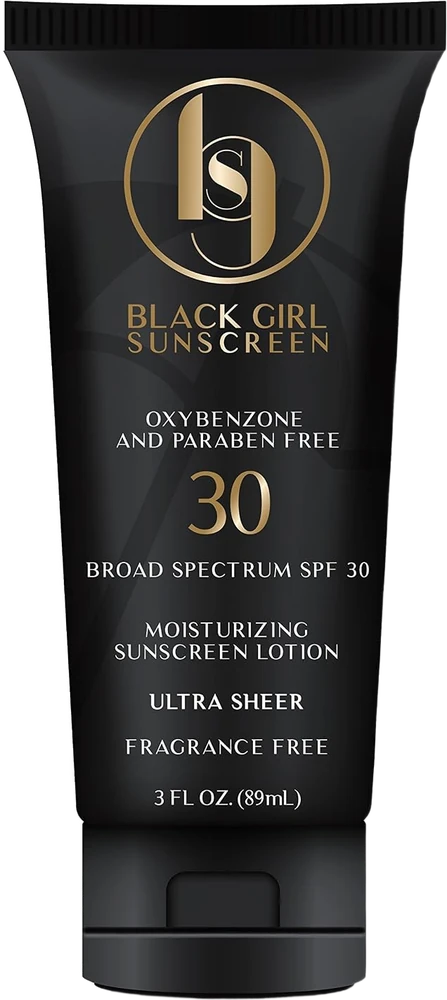 #6 of 8 · Best for deeper tones✓ Product photos checked Sep 7, 2026
Real retailer photo, cut out. Label unedited.
Consider it. The cast-free answer for deep skin tones — chemical-filter, and honest about it. Purpose-built to vanish on medium-to-deep skin with a moisturizing plant-oil base at ~$0.16/day — solving the grey-cast problem that keeps people from wearing SPF at all.
$16 / 3 fl oz bottle~$0.16 / daily facial use
Why It Scores 7.1 — And The Label Line Behind Each Number
Filter safety + body-health
35% of scoreLow, and honestly so. The filter set is the legacy chemical class — avobenzone, homosalate, octisalate, octocrylene — the same compounds the FDA's Matta 2019/2020 trials found in plasma above the safety-testing threshold. It scores identically to Supergoop Unseen on this axis because it uses the same four filters, and it's kept off the bottom only by skipping oxybenzone and octinoxate. On the most heavily weighted axis, this is a legacy-class chemical formula, full stop.
Broad-spectrum protection + SPF 30+
25% of scoreSolid. Broad-spectrum SPF 30 — the floor of this ranking, blocking ~97% of UVB — with genuine UVA+UVB coverage from the chemical stack. Reliable protection at the threshold; it scores a touch below the SPF 40–50 picks because there's less headroom for the near-universal habit of under-applying, so apply generously and reapply on real sun days.
Cosmetic elegance + daily wearability
20% of scoreStrong, and purpose-built for its audience. It disappears completely on medium-to-deep skin with no grey or ashy residue — solving the exact failure mode that made minerals unwearable for millions — over a nourishing, natural-finish plant-oil base. It scores just below the very top texture picks because the dewy, rich finish leans hydrating and very oily skin may want an oil-free option, but for its target user the wearability is excellent.
Skin-friendliness
10% of scoreGood. The avocado, jojoba, cacao and carrot-juice base gives a genuinely nourishing, moisturizing finish suited to normal-to-dry skin. It scores below the ceramide/niacinamide mineral picks because chemical filters carry marginally higher sensitization potential and the rich plant-oil base can feel heavy or be less ideal for acne-prone, oily skin — a fit consideration rather than a flaw.
Value + cost per daily use
10% of scoreExcellent. At ~$16 for 3 fl oz (~$0.16 per daily facial use) it's among the cheapest daily options on the entire page, and it delivers a genuinely hard-to-find benefit — true cast-free wear on deep skin tones — at that price. One of the best value scores here; only the raw drugstore stacks edge it, and they don't solve the deep-tone problem this does.
- Size
- 3 fl oz bottle
- Price
- ~$16 / 3 fl oz (~$0.16 per daily facial use)
- More Specs
- Filter type
- Chemical — avobenzone, homosalate, octisalate, octocrylene (oxybenzone- and octinoxate-free)
- SPF
- SPF 30, broad-spectrum UVA + UVB
- Key actives
- Avocado, jojoba, cacao, carrot juice — nourishing plant oils
- Finish
- Moisturizing, natural; zero ashy or grey residue on deep tones
- Skin fit
- Medium to deep skin tones; normal to dry skin
- Designed for
- Cast-free wear on melanin-rich skin — the grey-cast problem minerals fail on
Photos checked.This product has no Supplement Facts panel; the retailer's listing photos were reviewed Sep 7, 2026.
Marketing Claims Vs. Reality
No white cast / no ashy residue on deep skin tones.
As a chemical (non-mineral, non-pigmented) formula purpose-built for melanin-rich skin, it genuinely leaves no grey or ashy cast — its central, widely-corroborated benefit and the entire reason it exists. Accurate and the strongest reason to choose it.
Moisturizing formula with avocado and jojoba.
The avocado, jojoba, cacao and carrot-oil base delivers a genuinely nourishing, moisturizing finish, an accurate and real feature for normal-to-dry skin. The honest flip side is that the same richness reads heavy on very oily skin — a fit issue, not a false claim.
Broad-spectrum SPF 30 protection for all skin, including deeper tones.
SPF 30 broad-spectrum is a labeled FDA-regulated claim, and the emphasis that deeper skin needs daily SPF too is medically correct — melanin reduces but does not eliminate UV damage and photoaging. An accurate and genuinely important public-health message.
Oxybenzone-free / free of the worst filters.
It genuinely omits oxybenzone and octinoxate, a real point in its favor. But it still contains avobenzone, homosalate, octisalate and octocrylene — all systemically absorbed in the FDA trials — so framing it as free of concerning filters overstates it. Skipping the two worst is not the same as a clean or mineral formula.
Suitable as a daily facial and body sunscreen.
It works as a daily facial SPF and its 3 fl oz size and body-friendly base make light body use reasonable too. The honest caveat is that the rich plant-oil finish suits normal-to-dry skin better than oily or acne-prone skin, so 'for everyone daily' depends on skin type — fair for its target user, not universal.
What Our Test Actually Found
It solves a real problem, not a vanity one
This matters more than a texture note: most mineral sunscreens leave a grey cast on medium-to-deep skin, and the documented consequence is that many people with deeper tones wear no sunscreen at all — the single worst outcome for skin health. Black Girl Sunscreen vanishes completely on melanin-rich skin, affordably. Daily UV protection genuinely matters for deeper tones (melanin reduces but doesn't eliminate photoaging and skin-cancer risk), so solving the wearability problem is a real win, not cosmetic vanity.
The filters are the legacy chemical stack — that's the #6 reason
The honest limitation, stated plainly: its actives are avobenzone, homosalate, octisalate and octocrylene — the same set the FDA's Matta trials measured in blood above the safety threshold. Transparent on skin is not the same as absent from your bloodstream. It scores identically on the safety axis to Supergoop Unseen because it's the same four filters, and it's kept off the bottom only by skipping oxybenzone and octinoxate. That filter class is the sole reason it's #6.
The playbook: try a low-cast mineral first, then wear this without guilt
Our honest guidance isn't 'chemical bad, don't buy' — it's a sequence. First, test CeraVe Invisible Mineral (#2); it uses mineral filters and is sold as leaving no cast on any skin tone. If it still greys on you — a real problem, not imagined — wear Black Girl Sunscreen daily without guilt. An absorbed filter you actually apply beats unprotected photoaging every time.
If you want cast-free with mineral filters, look at #2
CeraVe Invisible Mineral (#2) is a mineral-filter SPF 50 fluid that the brand sells as invisible on all skin tones, and it scores higher overall (8.9 vs 7.1). We have not wear-tested that claim on deep tones, so try it before you rely on it. Black Girl Sunscreen's edge is a moisturizing base tuned specifically for deep tones and an even lower price.
Full analysis: all pros & cons (8), buy if / skip if
- Purpose-built to disappear on deeper skin tones — no grey or ashy cast, the failure mode that made minerals unwearable for millions
- Moisturizing plant-oil base gives a nourished, natural finish at a very fair price (~$0.16/use)
- Oxybenzone- and octinoxate-free — it skips the two worst legacy filters
- If the alternative is no sunscreen at all, this is a completely defensible daily pick
- Carries the medically-correct message that deeper skin needs daily SPF too
- The filter stack is still the avobenzone/homosalate/octisalate/octocrylene set from the FDA's absorption studies — transparent on skin, not absent from blood
- Mineral options for deep tones remain imperfect (casts), so the honest trade-off here is real, not imagined
- Dewy, rich finish — very oily skin may want an oil-free texture instead
- Mineral sunscreens leave a grey or ashy cast on your skin and it's stopped you wearing SPF
- You have medium-to-deep skin and want a cast-free, moisturizing daily formula
- You want a very affordable daily facial SPF (~$0.16/use)
- You accept legacy-class chemical filters as the price of true cast-free wear on deep tones
- You can wear a mineral-filter formula — try CeraVe Invisible Mineral (#2) first for the safer filter class
- You have oily skin and want a lighter, oil-free texture
- You have very oily skin and want an oil-free matte finish rather than a dewy plant-oil one
Purpose-built to vanish on medium-to-deep skin with a moisturizing plant-oil base at ~$0.16/day — solving the grey-cast problem that keeps people from wearing SPF at all. The caveat: it runs on the avobenzone/homosalate/octisalate/octocrylene stack from the FDA's blood-absorption trials (it does skip oxybenzone and octinoxate). If mineral greys on you, this beats wearing nothing — with clear eyes about the filters.
Black Girl Sunscreen solves a real problem the industry ignored for decades: most mineral sunscreens leave a grey, ashy cast on medium-to-deep skin, and the practical result is that millions of people simply wear nothing. This formula disappears completely on melanin-rich skin, with a moisturizing avocado-and-jojoba base and a very fair price — and daily UV protection genuinely matters for deeper skin tones too, contrary to a persistent myth. We refuse to pretend that trade-off doesn't exist, so it's on the list. It sits at #6 for one honest reason: its filters are the legacy chemical class — avobenzone, homosalate, octisalate, octocrylene — the same set the FDA's absorption studies measured in blood. It does skip oxybenzone and octinoxate. Our playbook: test a low-cast mineral first; if it still greys on you, wear this daily without guilt, because an absorbed filter beats unprotected photoaging.
A real problem solved honestly — cast-free on deep skin, chemical-filter, and we say so.

We refuse to do the usual list thing of pretending this trade-off doesn't exist: for medium-to-deep skin, most mineral sunscreens still leave a grey cast, and the practical result is people wear nothing — the worst outcome of all. Black Girl Sunscreen solved the wearability problem beautifully and affordably, and daily UV protection genuinely matters for deeper skin tones too. It sits at #6 for one reason only: its filters are the legacy chemical class our top criterion scores down. So the honest playbook: test CeraVe Invisible Mineral (#2) first — mineral filters, sold as cast-free. If a mineral still greys on you, wear this daily without a shred of guilt: an absorbed filter beats unprotected photoaging, and a sunscreen you'll actually wear beats every one you won't.
If This Doesn’t Fit — Try These
 02
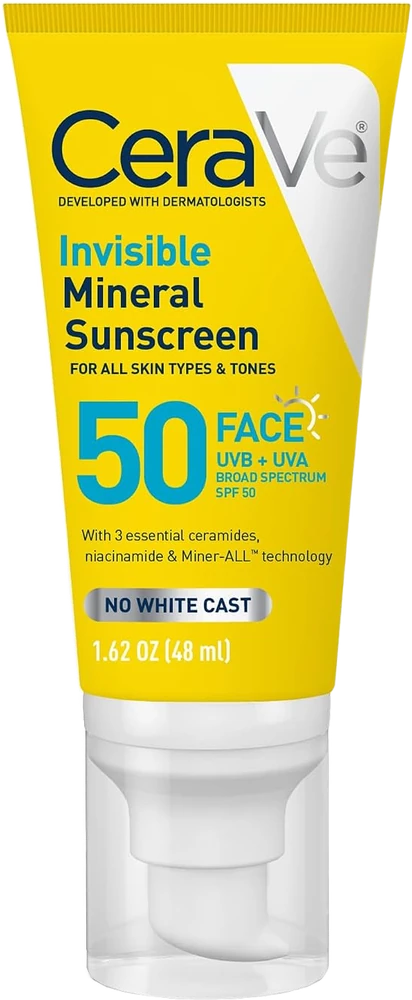
CeraVe Invisible Mineral
CeraVe Invisible Mineral SPF 50 keeps you on zinc oxide and titanium dioxide, adds SPF 50 headroom, ceramides and niacinamide, and is sold as leaving no cast, all for about $14.
 01
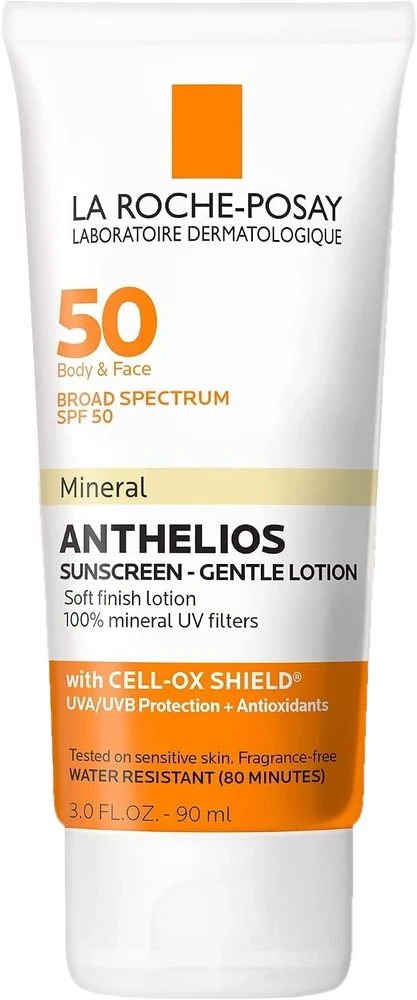
La Roche-Posay Mineral Lotion
If you asked for one sunscreen and no lecture, this is it: zinc oxide and titanium dioxide at SPF 50 from a dermatologist brand, with nothing UV-absorbing hidden in the rest of the label, for about $19.
 03
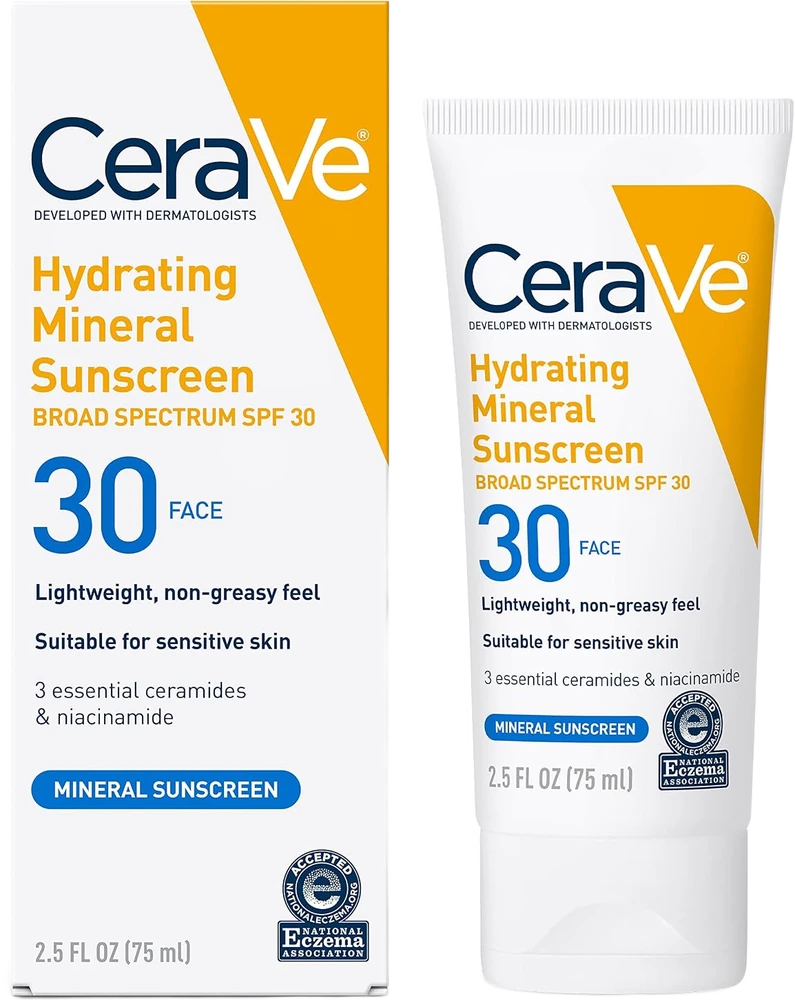
CeraVe Hydrating Mineral
CeraVe Hydrating Mineral SPF 30 keeps you on zinc oxide and titanium dioxide and adds the ceramides and niacinamide the brand is known for, at about eighteen cents a day.
Quick Answers
Do people with deeper skin tones actually need daily sunscreen?
Yes. Melanin provides some natural UV protection — but it reduces, not eliminates, UV damage, photoaging and skin-cancer risk, and it does nothing to prevent the hyperpigmentation and uneven tone that UV drives. The persistent myth that darker skin doesn't need SPF is medically wrong. Black Girl Sunscreen's real value is making that daily protection wearable without a grey cast, which is exactly the barrier that's kept many people from doing it.
Why is a sunscreen built for deep tones only ranked #6?
Purely on its filters, not its purpose. It uses the legacy chemical stack — avobenzone, homosalate, octisalate, octocrylene — the same compounds the FDA measured in blood above its safety threshold, so it scores low on the top-weighted body-health axis. It's a genuinely valuable product that solves a real problem; the rank reflects the filter class this list prioritizes, not the quality of what it does for its audience.
Should I try a mineral first?
Worth one honest attempt. Mineral textures have improved, and CeraVe Invisible Mineral (#2) is sold as leaving no white cast on any skin tone — a claim we have not wear-tested on deep tones. Patch-test it on your jaw in daylight. If it greys on you, that's a real problem, not vanity, and Black Girl Sunscreen is the defensible answer. The goal is cast-free wear you'll keep up daily.
Is it good for oily or acne-prone skin?
It leans toward normal-to-dry skin. The avocado-and-jojoba base gives a moisturizing, dewy finish that's lovely on drier skin but can feel heavy on oily skin in heat. If you have oily, acne-prone skin and want cast-free wear, a thin fluid such as CeraVe Invisible Mineral (#2) may sit better. Match the finish to your skin type.
Can I use it on my body too?
For light, everyday body coverage on exposed areas, yes — the 3 fl oz size and moisturizing base handle it fine. For a full beach or hiking day you'll want a larger, cheaper dedicated body sunscreen so you can apply the generous amounts full-body coverage needs. Keep this one for the daily facial-and-neck habit it's designed for, where the cast-free finish matters most.
Sources & Further Reading
3 peer-reviewed sources, each linked to PubMed
- [1] Matta 2020 PMID 31961417 — Effect of sunscreen application on plasma concentration of sunscreen active ingredients: a randomized clinical trial. Found homosalate, octisalate, avobenzone and octocrylene — this product's four filters — in plasma above the FDA safety threshold, several after a single application. The evidence behind scoring its legacy-class stack down on body-health.
- [2] Hughes 2013 PMID 23732711 — Sunscreen and prevention of skin aging: a randomized trial. Daily sunscreen prevented measurable skin aging over 4.5 years — the basis for the 'a cast-free SPF you actually wear beats mineral you skip' guidance central to this pick, since adherence is the mechanism.
- [3] Green 1999 PMID 10475183 — Daily sunscreen application and betacarotene supplementation in prevention of basal-cell and squamous-cell carcinomas of the skin: a randomised controlled trial. Daily sunscreen use reduced squamous cell carcinoma and actinic keratoses — evidence that daily UV protection protects skin health for all users, supporting the point that deeper skin tones benefit from a wearable daily SPF too.
Affiliate disclosure: every Amazon link uses our Associates tag (superachieverclub-20). We earn a small commission at no cost to you; it funds independent reviews. We never accept payment to change a ranking.