
La Roche-Posay Anthelios Melt-in Milk SPF 60 Review
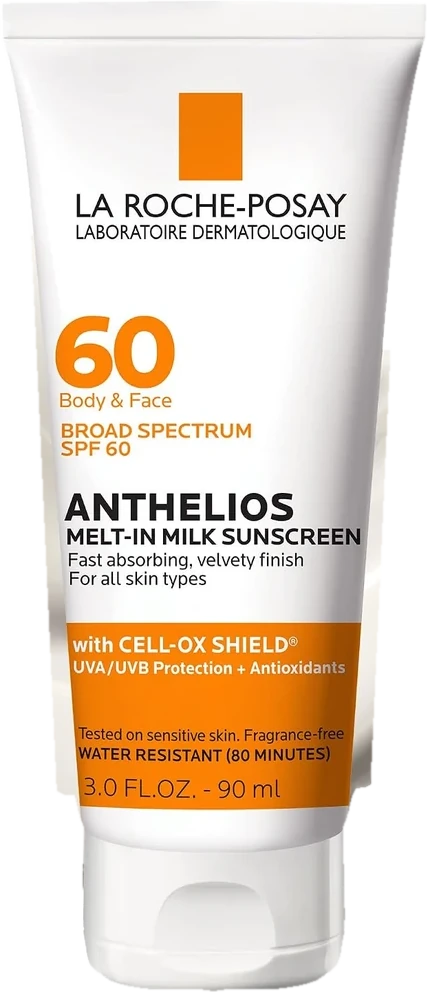 #7 of 8 · Legacy chemical✓ Product photos checked Sep 7, 2026
Real retailer photo, cut out. Label unedited.
Skip it. A good chemical sunscreen from our #1's own brand — but its mineral sibling is the daily-face pick. Silky, high-UVA SPF 60 for face and body, oxybenzone-free, from a trusted derm house — genuinely fine for occasional or beach-and-body use.
$30 / 3 fl oz bottle~$0.33 / daily facial use
Why It Scores 6.9 — And The Label Line Behind Each Number
Filter safety + body-health
35% of scoreLow, on the axis that matters most. It's built on the legacy chemical class — avobenzone plus the Cell-Ox Shield stack — with the documented systemic absorption the FDA's JAMA trials measured. It edges just above the pure drugstore stacks because it's oxybenzone-free and from a rigorous derm house, but it's unambiguously a legacy chemical formula. The defining fact is that the same brand's Anthelios Mineral (#1) offers the safe-filter version of the identical protection promise.
Broad-spectrum protection + SPF 30+
25% of scoreGenuinely strong — arguably the product's best axis. High, reliable broad-spectrum SPF 60 with excellent UVA coverage and a Cell-Ox Shield antioxidant complex, well above the SPF 30 floor. La Roche-Posay's protection engineering is real, and the UVA rating is a legitimate strength for an anti-aging-relevant sunscreen. The concern with this product is the filter class, not the coverage.
Cosmetic elegance + daily wearability
20% of scoreDecent but not a facial specialist. The silky, fast-absorbing milk covers face and body pleasantly, but it carries a slight sunscreen scent and sheen and is formulated as a general face-and-body product rather than tuned for the daily facial slot. Fine for occasional wear; the dedicated facial picks above it feel more refined under makeup and for everyday use.
Skin-friendliness
10% of scoreReasonable. Suited to normal-to-dry skin, from a derm brand with a rigorous testing reputation and an antioxidant complex for barrier support. It scores below the sensitive-skin mineral picks and the niacinamide-rich EltaMD because chemical filters carry marginally higher irritation potential and there's no standout barrier co-active — a solid but unremarkable skin profile.
Value + cost per daily use
10% of scoreFair. At ~$30 for 3 fl oz (~$0.33 per daily facial use) it's reasonable for a derm brand, and the face-and-body versatility stretches one bottle further. It scores mid-pack because the value is fine but not category-leading, and you're paying a derm price for a legacy chemical filter set — acceptable for occasional use, less compelling as a daily-face purchase.
- Size
- 3 fl oz bottle
- Price
- ~$30 / 3 fl oz (~$0.33 per daily facial use)
- More Specs
- Filter type
- Chemical — avobenzone + Cell-Ox Shield stack (oxybenzone-free)
- SPF
- SPF 60, broad-spectrum UVA + UVB
- Key actives
- Cell-Ox Shield antioxidant complex
- Finish
- Silky, fast-absorbing milk; slight scent and sheen
- Skin fit
- Normal to dry; face and body
- Same-brand note
- The mineral sibling — Anthelios Mineral SPF 50 (#1) — is the safer daily-face choice
Photos checked.This product has no Supplement Facts panel; the retailer's listing photos were reviewed Sep 7, 2026.
Marketing Claims Vs. Reality
High broad-spectrum SPF 60 with strong UVA protection.
SPF 60 broad-spectrum is a labeled FDA-regulated claim, and La Roche-Posay's high-UVA engineering (Cell-Ox Shield) is well-established. Protection quality is genuinely this product's strongest attribute — the concern is the filter class delivering it, not the coverage.
Oxybenzone-free.
It omits oxybenzone, the most endocrine-flagged legacy filter — a real, accurate point in its favor and part of why it edges above the pure drugstore stacks. It does not, however, make the formula mineral: it still relies on avobenzone and the systemically-absorbed chemical class.
Cell-Ox Shield antioxidant complex adds environmental protection.
The antioxidant complex is a real inclusion that plausibly adds secondary free-radical defense, but the proven benefit of a daily sunscreen (Hughes 2013) is from the UV filters and habit, not the antioxidant add-on. A manufacturer formulation claim, not a peer-reviewed outcome — a bonus, not a headline benefit.
Silky, fast-absorbing, suitable for daily face and body use.
The silky milk texture and fast absorption are real, and it works for face and body. But a slight scent/sheen and a general (not facial-specialist) formulation make it better suited to occasional or body use than the dedicated daily-facial slot — 'daily face' is fair but not its ideal role, especially given the same brand's mineral option.
Dermatologist-tested, gentle formula from a trusted brand.
La Roche-Posay's rigorous dermatological testing and reputation are well-documented and apply here. Accurate — the brand's credibility is genuine, which is exactly why its mineral sibling (#1) tops this list and why choosing the chemical version for daily face use is the avoidable part.
What Our Test Actually Found
Same trusted brand as #1 — which is the whole point
The single most useful fact about Melt-in Milk is its lineage: it's the Anthelios line, the same family whose mineral lotion tops this page. That means the argument against it for daily face use isn't 'this brand can't be trusted' — it obviously can. It's that the identical, trusted brand sells the safe-filter version of the same protection promise. When the mineral answer is one shelf over from the same house, choosing the absorbed chemical stack for your everyday face product is the avoidable move.
The protection is excellent — the filter class is the catch
Give it its due: SPF 60 with high, reliable UVA coverage and an antioxidant complex is genuinely strong protection, and it's oxybenzone-free from a rigorous derm house. On the coverage axis it's one of the better performers here. The catch is singular and specific: it runs on the legacy avobenzone-class stack with the systemic absorption the FDA's trials documented, and this ranking weights that highest for a product used daily on the face for decades.
Fine for the beach bag, not the bathroom shelf
The honest role for this product: occasional, face-and-body, higher-exposure days — a hike, a beach afternoon, travel — where its high SPF, versatility and one-bottle convenience shine and the daily-use risk math doesn't apply. For those uses it's a good pick. For the every-morning facial slot this page is actually about, the calculus flips: the daily, decades-long exposure is exactly where the absorbed-filter concern compounds and the mineral sibling wins.
The upgrade path is trivially easy
Unusually for a demoted pick, the better option is from the same brand at a similar shelf: Anthelios Mineral SPF 50 (#1). If you already reach for La Roche-Posay and trust it, switching your daily facial sunscreen to their mineral lotion keeps the brand you like and drops the absorbed filter stack. Keep Melt-in Milk for body and occasional use if you own it; for the face, walk one product over.
Full analysis: all pros & cons (8), buy if / skip if
- High, reliable broad-spectrum UVA protection with an antioxidant complex — the protection axis is genuinely strong
- Silky, fast-absorbing milk that covers face and body from one bottle
- Oxybenzone-free, from one of the most trusted sunscreen houses in dermatology
- Reasonable per-use cost for a derm brand (~$0.33/use)
- A good pick for occasional, higher-exposure beach-and-body days
- Built on the legacy chemical class (avobenzone and companions) with documented systemic absorption — the axis this ranking weights most
- Slight sunscreen scent and sheen; a face-and-body formula rather than a facial specialist
- Its own sibling — Anthelios Mineral (#1) — makes the safer version of the same promise
- You want a silky, high-SPF face-and-body sunscreen for occasional or beach days
- You specifically want high UVA protection in a fast-absorbing milk texture
- You trust the La Roche-Posay name and want one bottle for multiple uses
- Daily facial filter-safety isn't your priority for this particular product
- You want a daily facial sunscreen — its own mineral sibling (#1) is the safer same-brand choice
- You want to avoid the legacy chemical stack's systemic absorption
- You want a facial specialist rather than a face-and-body formula
Silky, high-UVA SPF 60 for face and body, oxybenzone-free, from a trusted derm house — genuinely fine for occasional or beach-and-body use. But it runs on the legacy avobenzone-class chemical stack with documented systemic absorption, and its own sibling — Anthelios Mineral (#1) — makes the safer version of the same promise. For the every-morning facial slot, skip in favor of the mineral.
The most interesting thing about Melt-in Milk is who makes it: the same La Roche-Posay Anthelios line whose mineral lotion tops this entire page. It's a genuinely good chemical sunscreen — a silky, fast-absorbing SPF 60 milk with high, reliable broad-spectrum UVA protection and a Cell-Ox Shield antioxidant complex, covering face and body from one bottle at a reasonable per-use cost. It's also oxybenzone-free, from one of the most trusted sunscreen houses in dermatology. But it's built on the legacy chemical class — avobenzone and companions — with the documented systemic absorption this ranking weights most, which is why it lands at #7. The clean logic: when the identical brand sells the mineral version of the same promise one shelf over, there's no reason to choose the absorbed filter stack for a product you'd apply to your face every morning for years. Keep it for beach-and-body days; for the daily facial slot, walk to #1.
A good chemical sunscreen — but its own mineral sibling is the daily-face pick.

The most interesting thing about Melt-in Milk is who makes it: the same Anthelios line whose mineral lotion tops this page. The protection is excellent — high UVA, SPF 60, an antioxidant complex, oxybenzone-free from a rigorous derm house — and the texture is pleasant. But for a product you'd apply to your face every morning for years, we see no reason to choose the absorbed legacy-filter stack when the identical brand sells the mineral answer one shelf over. That's the whole case: not that it's a bad sunscreen, but that its better sibling exists at the same counter. Keep it for beach-and-body days if you like, where its versatility and high SPF genuinely shine; for the daily facial slot this page is about, walk over to Anthelios Mineral (#1) and get the same brand's protection without the systemic absorption.
If This Doesn’t Fit — Try These
 01
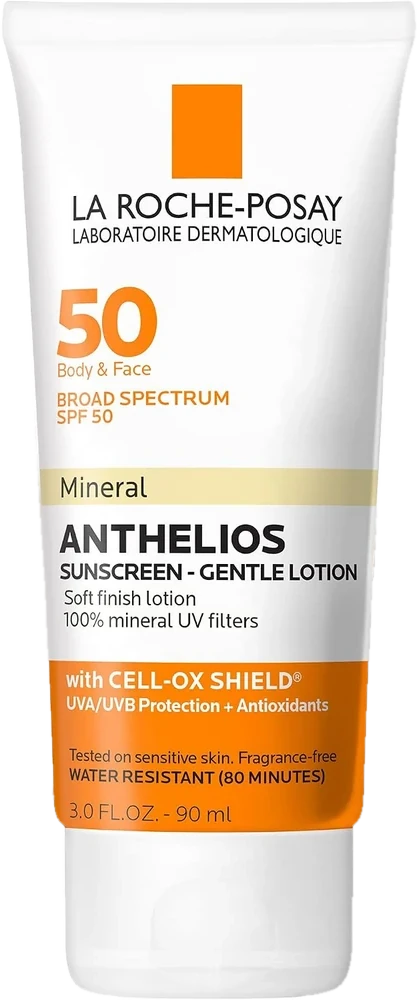
01La Roche-Posay Mineral Lotion
If you asked for one sunscreen and no lecture, this is it: zinc oxide and titanium dioxide at SPF 50 from a dermatologist brand, with nothing UV-absorbing hidden in the rest of the label, for about $19.
 02
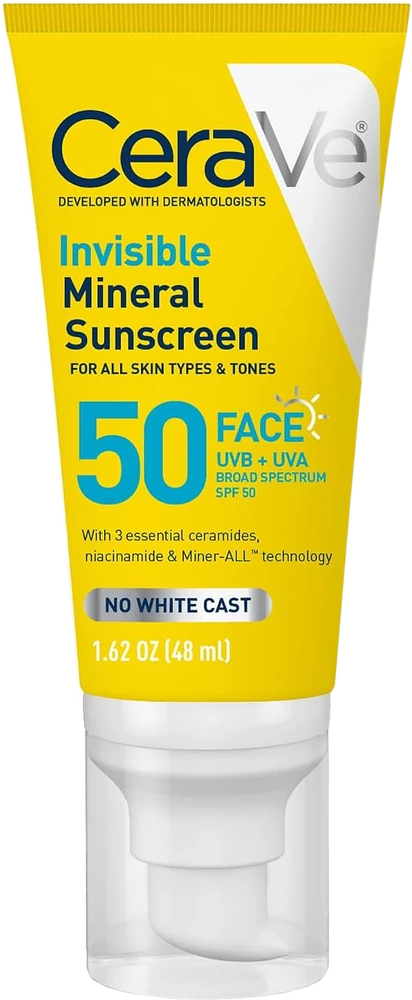
02CeraVe Invisible Mineral
CeraVe Invisible Mineral SPF 50 keeps you on zinc oxide and titanium dioxide, adds SPF 50 headroom, ceramides and niacinamide, and is sold as leaving no cast, all for about $14.
 03
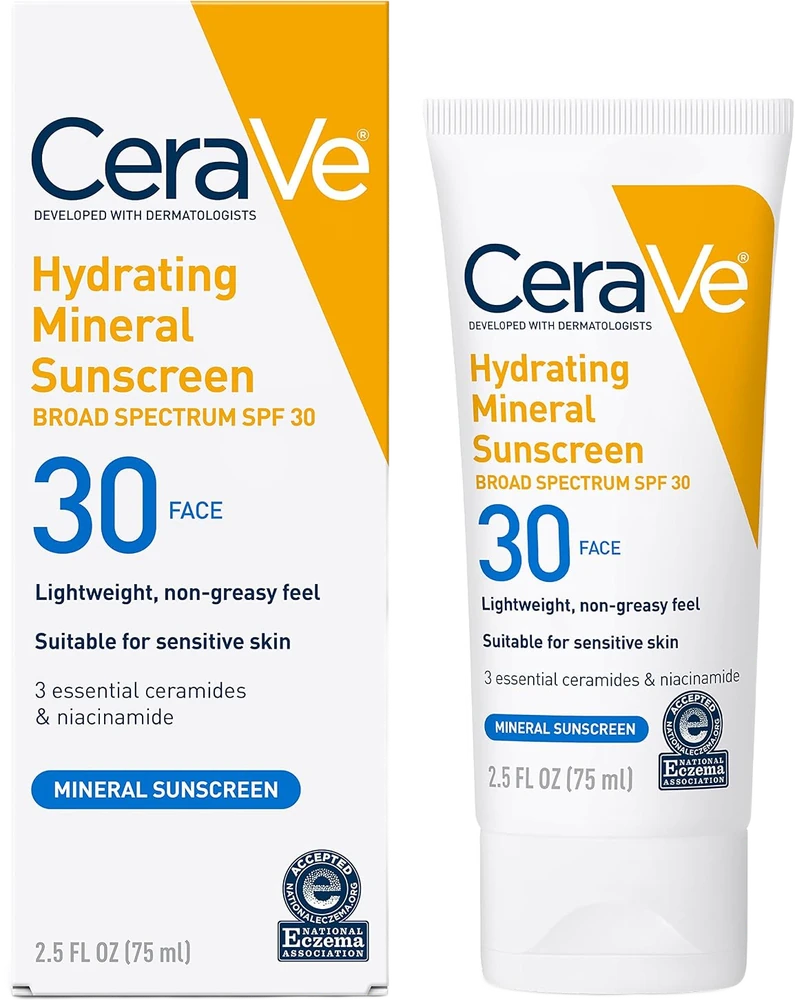
03CeraVe Hydrating Mineral
CeraVe Hydrating Mineral SPF 30 keeps you on zinc oxide and titanium dioxide and adds the ceramides and niacinamide the brand is known for, at about eighteen cents a day.
Quick Answers
Is this the same as the La Roche-Posay sunscreen ranked #1?
Same brand and product line, different filters. #1 is Anthelios Mineral — 100% zinc oxide and titanium dioxide. This Melt-in Milk is the chemical Anthelios, built on avobenzone and the Cell-Ox Shield stack. They share the trusted La Roche-Posay engineering and reputation; they differ on the one axis this ranking weights most. For daily face use, the mineral sibling is the pick — which is exactly why it's #1 and this is #7.
It's from a trusted derm brand and oxybenzone-free — why is it ranked so low?
Because 'trusted brand' and 'oxybenzone-free' don't change that it still runs on the legacy avobenzone-class chemical filters the FDA measured in blood above its safety threshold. This list weights filter body-health highest for daily facial use, and on that axis it scores low regardless of the brand's quality. The brand's credibility is real — it's exactly why its mineral version tops the page.
Is it fine for beach days and body use?
Yes — that's its best role. For occasional, higher-exposure days, its high SPF 60, strong UVA coverage, silky texture and one-bottle face-and-body convenience are genuinely good, and the daily-use risk math doesn't apply to intermittent wear. The demotion is specifically about using it as your every-morning facial sunscreen for decades, not about an occasional beach or hiking application.
Should I switch if I use it daily on my face?
If filter safety matters to you, the switch is unusually easy: the same brand's Anthelios Mineral SPF 50 (#1) gives you comparable protection without the absorbed chemical stack. You keep the La Roche-Posay quality you trust and just move to the mineral version. No need to bin what you own — finish it on body and occasional use, and buy the mineral for the daily face slot next time.
Is SPF 60 meaningfully better than SPF 30 or 50?
Only marginally on filtering — SPF 30 blocks ~97% of UVB, SPF 50 ~98%, and SPF 60 a hair more. The real-world value of a higher number is headroom against under-application, which almost everyone does. So SPF 60 isn't a reason to choose this over a mineral SPF 30 or 50; the filter class matters far more than the last percentage point of UVB blocking for a daily facial product.
Sources & Further Reading
3 peer-reviewed sources, each linked to PubMed
- [1] Matta 2019 PMID 31058986 — Effect of sunscreen application under maximal use conditions on plasma concentration of sunscreen active ingredients: a randomized clinical trial. Found avobenzone — a core filter in this product's stack — crossing into plasma above the FDA's safety-testing threshold under maximal use. The evidence behind scoring its legacy chemical class down for daily facial use.
- [2] Matta 2020 PMID 31961417 — Effect of sunscreen application on plasma concentration of sunscreen active ingredients: a randomized clinical trial. Confirmed systemic absorption across the legacy chemical filter class, several filters after a single application — supporting the mineral-first preference for the daily facial slot over a chemical face-and-body milk.
- [3] Hughes 2013 PMID 23732711 — Sunscreen and prevention of skin aging: a randomized trial. Daily sunscreen prevented measurable skin aging over 4.5 years — establishing that the daily habit is the anti-aging move, which is why the choice of filter class for the every-morning facial slot is where this product's demotion applies.
Affiliate disclosure: every Amazon link uses our Associates tag (superachieverclub-20). We earn a small commission at no cost to you; it funds independent reviews. We never accept payment to change a ranking.