
EltaMD UV Clear Broad-Spectrum SPF 46 Review
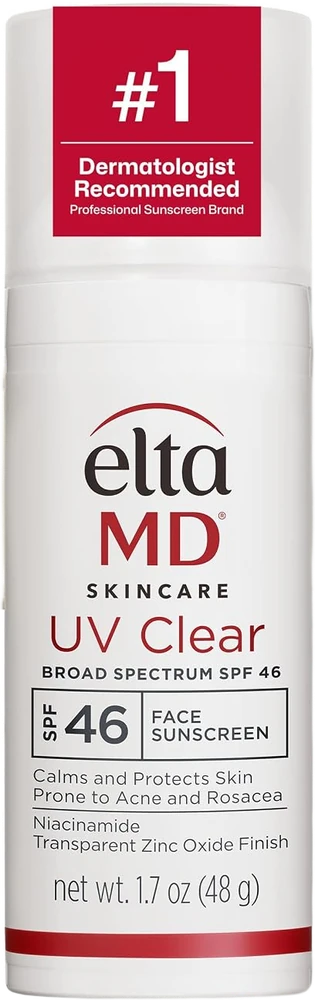 #4 of 8 · Derm favorite✓ Product photos checked Sep 7, 2026
Real retailer photo, cut out. Label unedited.
Consider it. The derm-favorite skin formula, demoted honestly for its 7.5% octinoxate. Superb skin feel — lightweight, non-comedogenic, 5% niacinamide, minimal cast, ideal for acne-prone and rosacea-prone skin.
$41 / 1.7 oz tube~$0.68 / daily facial use
Why It Scores 7.9 — And The Label Line Behind Each Number
Filter safety + body-health
35% of scoreThe axis where the demotion happens. It's a hybrid — 9% zinc oxide plus 7.5% octinoxate — so it is not the mineral formula its front-label positioning implies. Octinoxate is one of the six filters the FDA's Matta 2020 trial found absorbing above the plasma safety threshold, and it carries endocrine-activity signals in animal and in-vitro work. The zinc content and the absence of oxybenzone lift it above the pure legacy-stack picks, but the octinoxate is exactly why it scores a full tier below the mineral formulas at the top.
Broad-spectrum protection + SPF 30+
25% of scoreStrong and well-established. SPF 46 broad-spectrum with a long, stable track record and an enormous real-world review base; the zinc-plus-octinoxate pairing gives reliable, even UVA+UVB coverage well above the SPF 30 floor. Protection quality is not the concern with this product — the filter class is.
Cosmetic elegance + daily wearability
20% of scoreNear the top of the list, and the reason it's a dermatologist default. The oil-free, non-comedogenic base gives an elegant, minimal-cast finish that layers well under makeup — the octinoxate is part of what makes it feel this good, which is the whole tension of the pick. Only the cast-free formulas (#2, #5) edge it on pure elegance; the untinted version can leave a faint cast on the deepest tones.
Skin-friendliness
10% of scoreAmong the best on the list. 5% niacinamide genuinely calms redness and supports the barrier, hyaluronic acid hydrates, and the non-comedogenic, fragrance-free base is specifically suited to acne-prone, sensitive and rosacea-prone skin — the reason dermatologists reach for it. This is its strongest axis, and it's earned.
Value + cost per daily use
10% of scoreThe weakest axis. At $41 for 1.7 oz (~$0.68 per daily facial use) it's the most expensive daily option on the page — and you're paying that premium for a hybrid filter set, not a 100% mineral one. The formulation and niacinamide justify some of the markup, but on cost-per-wear for the filter class you actually get, it's poor value relative to the mineral picks.
- Size
- 1.7 oz tube
- Price
- $41 / 1.7 oz (~$0.68 per daily facial use) — most expensive daily option here
- More Specs
- Filter type
- Hybrid — 9% zinc oxide + 7.5% octinoxate (chemical)
- SPF
- SPF 46, broad-spectrum UVA + UVB
- Key actives
- Niacinamide 5% (calming, barrier support), hyaluronic acid
- Finish
- Oil-free, non-comedogenic, minimal cast
- Skin fit
- Acne-prone, sensitive, rosacea; fragrance-free
- Track record
- Long-standing dermatologist favorite with a large real-world review base
Photos checked.This product has no Supplement Facts panel; the retailer's listing photos were reviewed Sep 7, 2026.
Marketing Claims Vs. Reality
Dermatologist-recommended / #1 dermatologist-recommended professional sunscreen brand.
EltaMD's strong standing among dermatologists is well-documented, and UV Clear is a genuine derm-office staple — the recommendation is real and is based on how well skin tolerates the formula. The claim is accurate; it just reflects skin-feel and tolerance, not the filter-safety axis this ranking weights most.
Zinc oxide sunscreen for sensitive and acne-prone skin.
It does contain 9% zinc oxide and is genuinely good for sensitive/acne-prone skin, but front-loading 'zinc oxide' obscures that it's a hybrid with 7.5% octinoxate — a systemically-absorbed, endocrine-flagged chemical filter. Reading it as a mineral sunscreen, which the positioning invites, is inaccurate. This mismatch is precisely why it's demoted to #4.
Contains 5% niacinamide to calm and support the skin.
The 5% niacinamide is a real, meaningful inclusion with genuine barrier-supporting and redness-calming benefit — one of the best co-actives in any facial SPF here. Accurate and a legitimate strength of the formula.
Oil-free and non-comedogenic — won't clog pores.
The oil-free, non-comedogenic base is well-established and a big part of why acne-prone users tolerate it so well. A defensible, widely-corroborated claim consistent with its dermatology reputation.
Safe for daily, long-term facial use.
There's no evidence of harm, and daily SPF is protective (Hughes 2013). But 'safe' understates the open question the FDA itself flagged: octinoxate absorbs systemically above the agency's testing threshold and carries endocrine-activity signals in animal studies, with the long-term human significance simply not studied. For a face product used daily for decades, 'unproven' is the honest word, not 'safe.'
What Our Test Actually Found
The best skin-feel formula here — and we're still demoting it
On the axes dermatologists care about — tolerance, non-comedogenicity, calming actives — UV Clear is arguably the best formula on the page. The 5% niacinamide is a genuine standout for acne-prone and rosacea-prone skin, and the finish is elegant enough to have made it a derm-office default for a decade. None of that is in dispute. It's demoted purely on the one axis this ranking weights most, and honesty about that axis is the product we're selling.
'Zinc oxide' on the front, 7.5% octinoxate in the fine print
This is the clearest case study on the whole list of why the ranking exists. The tube's positioning reads mineral; the ingredient list is a hybrid — 9% zinc plus 7.5% octinoxate, one of the six filters the FDA's Matta 2020 trial found in plasma above the safety threshold, and one of the two carrying the strongest endocrine-activity flags. It's not a mineral sunscreen, and reading it as one is the mistake the front label invites. That's the entire reason it's #4 and not #1.
The octinoxate is unnecessary — the picks above it prove it
The strongest argument for demotion isn't that octinoxate is proven harmful; it's that it's avoidable. La Roche-Posay Anthelios Mineral (#1), CeraVe Invisible Mineral (#2) and CeraVe Hydrating Mineral (#3) protect with zinc oxide and titanium dioxide and declare no chemical filter at all. When full-mineral can be this wearable, adding a systemically-absorbed, hormone-flagged filter to a face product you'll use for thirty years is a trade with no upside on the axis that compounds.
If you already own it, this isn't a panic-switch
Perspective matters: wearing UV Clear daily is vastly better than skipping sunscreen, and there's no evidence of acute harm. If you love it and it's keeping you consistent, the honest move is to finish the tube and switch to a mineral at the next repurchase, not to bin it in alarm. The demotion is about what we'd recommend you buy next, not a warning to stop using what's working for you today.
Full analysis: all pros & cons (8), buy if / skip if
- Genuinely excellent skin formula — 5% niacinamide calms redness, non-comedogenic base suits acne-prone and sensitive skin
- Zinc-forward protection with an elegant, minimal-cast finish that made it the dermatologist default
- Broad-spectrum SPF 46 with a long, stable track record and enormous real-world review base
- Better than everything ranked below it — if you already own and love it, it's far better than wearing nothing
- Hyaluronic acid and a fragrance-free base add real barrier and hydration support
- Contains 7.5% octinoxate — a filter with documented systemic absorption and endocrine-activity signals in animal studies; it's why this derm favorite is #4 here and not #1
- The most expensive daily option on the list, and you're paying it for a hybrid filter set
- Faint cast on the deepest tones in the untinted version
- You have acne-prone, sensitive or rosacea-prone skin and want the calming niacinamide formula
- Octinoxate specifically doesn't concern you and you want the best skin-feel on the list
- You already own and love it — it beats everything ranked below it
- You want a near-cast-free finish without going fully chemical
- You want to avoid octinoxate — go for mineral filters with LRP (#1) or CeraVe (#2, #3)
- You want the safest filter class rather than the best skin feel
- You're price-sensitive — at ~$0.68/use it's the most expensive daily option here
Superb skin feel — lightweight, non-comedogenic, 5% niacinamide, minimal cast, ideal for acne-prone and rosacea-prone skin. The catch: it's a hybrid, pairing 9% zinc with 7.5% octinoxate, a filter with documented systemic absorption and endocrine-activity flags. That's why the most-recommended facial sunscreen in dermatology sits at #4 on a mineral-first list, not #1. Also the priciest daily option here.
EltaMD UV Clear is the most-recommended facial sunscreen in dermatology, and on skin feel it earns that reputation: a lightweight, non-comedogenic, minimal-cast formula with 5% niacinamide that calms redness, built for acne-prone, sensitive and rosacea-prone skin. It's also the single clearest illustration of why this page re-ranked the category. 'Zinc oxide' sits on the front of the tube, but the ingredient list pairs 9% zinc with 7.5% octinoxate — one of the two most-flagged legacy chemical filters, absorbed systemically in the FDA's own JAMA trials and carrying endocrine-activity signals in animal work. That hybrid is exactly why the dermatologist favorite lands at #4 here and not #1. If octinoxate doesn't concern you, it's a genuinely excellent daily sunscreen that beats everything below it. If it does, the three mineral picks above it show the job can be done without octinoxate.
The best skin formula on the page, demoted for its octinoxate — honesty is the product here.

EltaMD UV Clear is the best skin-feel formula on this page, and we're still demoting it, because honesty is the deliverable: 'zinc oxide' on the front of the tube shares the ingredient list with 7.5% octinoxate — absorbed systemically per the FDA's own trials, hormone-flagged in animal work, and simply unnecessary when the three picks above it do the same job without it. Dermatologists recommend it for how skin tolerates it, and on that axis they're right; the niacinamide alone makes it a standout for acne-prone and rosacea-prone skin. On the axis of what you rub into your face for the next thirty years, the three mineral picks above it win. If octinoxate doesn't concern you, buy it and wear it daily — it beats every product below it. If it does, LRP Mineral is the upgrade, and if you already own this one, just switch at the next tube.
If This Doesn’t Fit — Try These
 01
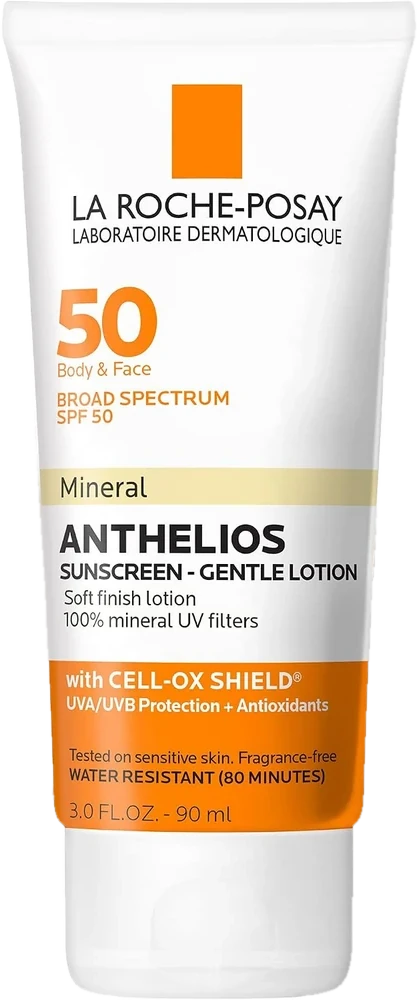
01La Roche-Posay Mineral Lotion
If you asked for one sunscreen and no lecture, this is it: zinc oxide and titanium dioxide at SPF 50 from a dermatologist brand, with nothing UV-absorbing hidden in the rest of the label, for about $19.
 02
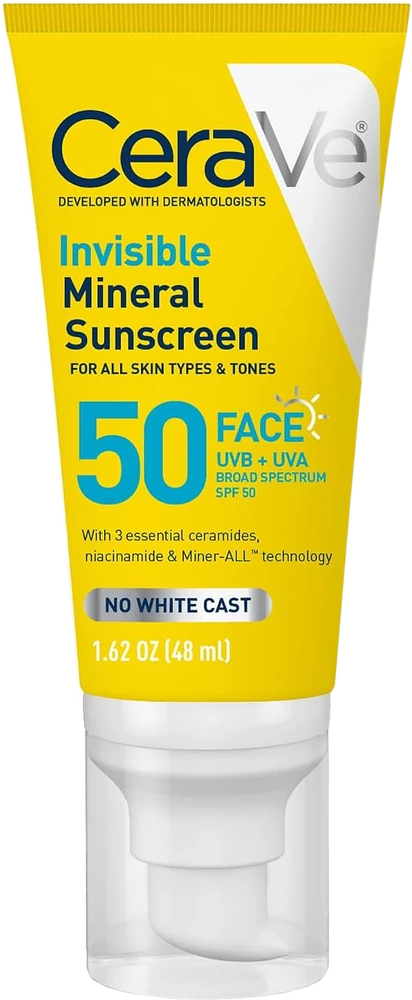
02CeraVe Invisible Mineral
CeraVe Invisible Mineral SPF 50 keeps you on zinc oxide and titanium dioxide, adds SPF 50 headroom, ceramides and niacinamide, and is sold as leaving no cast, all for about $14.
 03
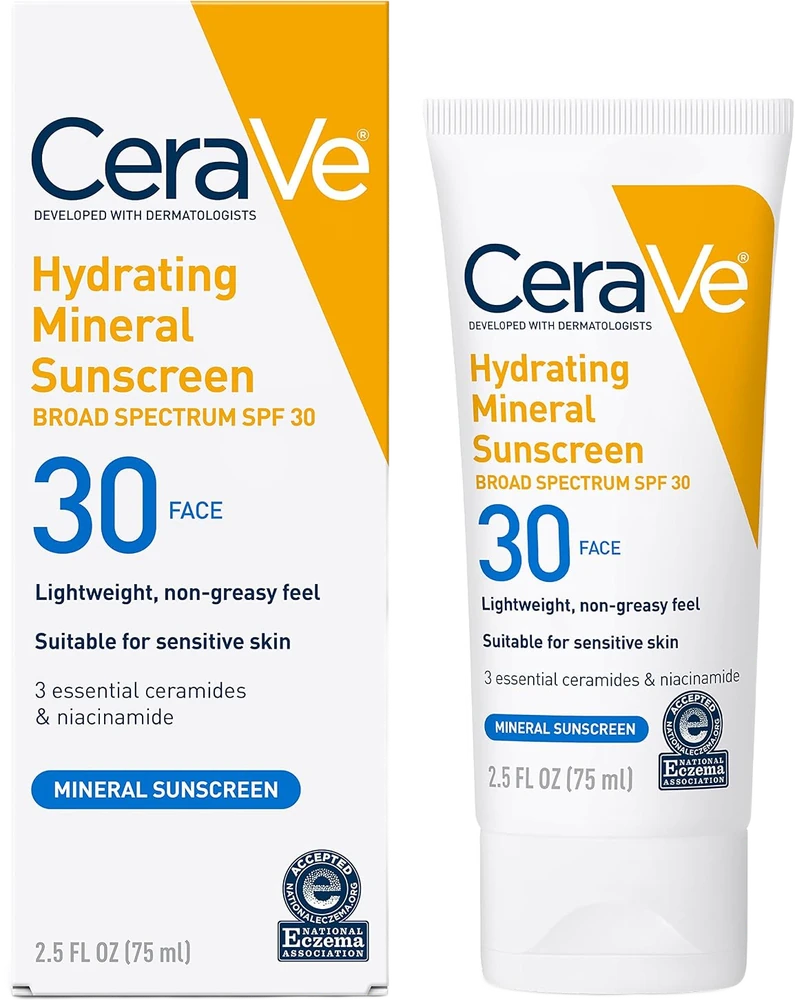
03CeraVe Hydrating Mineral
CeraVe Hydrating Mineral SPF 30 keeps you on zinc oxide and titanium dioxide and adds the ceramides and niacinamide the brand is known for, at about eighteen cents a day.
Quick Answers
Isn't EltaMD UV Clear a zinc/mineral sunscreen?
Not fully — that's the crux of its demotion. It contains 9% zinc oxide, but it's a hybrid, paired with 7.5% octinoxate, a chemical filter. The front-label emphasis on zinc invites people to read it as mineral, which it isn't. If you specifically want mineral filters only, this isn't it — La Roche-Posay Anthelios Mineral (#1), CeraVe Invisible Mineral (#2) and CeraVe Hydrating Mineral (#3) are.
Why do dermatologists love it if it's only #4 here?
Because they're optimizing for a different, entirely legitimate thing: how well skin tolerates it. On non-comedogenicity, calming niacinamide, and suitability for acne-prone and rosacea-prone skin, UV Clear is genuinely excellent, and that's what drives clinical recommendations. This ranking weights filter body-health highest, so the 7.5% octinoxate pulls it to #4. Both views are internally consistent — they just prioritize different axes.
Should I stop using it if I already bought it?
No need to panic. Daily UV Clear is far better than skipping sunscreen, and there's no evidence of acute harm — the concern is an unproven long-term question, not a known danger. The honest move is to finish the tube and switch to a 100% mineral pick at your next repurchase if the octinoxate concerns you. If it doesn't, it's a legitimately good daily sunscreen that outperforms everything ranked below it.
Is it worth $41 when CeraVe Mineral is $16?
Only if you specifically want its niacinamide-rich, acne-friendly skin feel and octinoxate doesn't bother you. On the filter class that this ranking prizes, CeraVe Hydrating Mineral delivers mineral filters for a third of the cost per use. UV Clear's premium buys a genuinely elegant, calming formula — but it's the most expensive daily option here, and you're paying it for a hybrid, not a mineral. For pure value, the minerals win.
Which version — tinted or untinted — should I get?
Both share the same hybrid filter set, so the safety consideration is identical. The tinted version uses iron oxides that reduce the faint cast on deeper tones and add some visible-light/blue-light protection, which can help with melasma; the untinted is simpler and fragrance-free-friendly. Pick tinted if the untinted casts on you or you're targeting pigmentation, but neither changes the octinoxate question that sets its rank.
Sources & Further Reading
3 peer-reviewed sources, each linked to PubMed
- [1] Matta 2020 PMID 31961417 — Effect of sunscreen application on plasma concentration of sunscreen active ingredients: a randomized clinical trial. The FDA trial that measured octinoxate — this product's chemical filter — crossing into plasma above the 0.5 ng/mL safety-testing threshold, several filters after a single application. The direct evidence behind demoting a hybrid that contains 7.5% octinoxate.
- [2] Matta 2019 PMID 31058986 — Effect of sunscreen application under maximal use conditions on plasma concentration of sunscreen active ingredients: a randomized clinical trial. First established that chemical UV filters absorb systemically above the FDA threshold under maximal use — the foundational finding that keeps any octinoxate-containing hybrid below 100% mineral on the safety axis.
- [3] Hughes 2013 PMID 23732711 — Sunscreen and prevention of skin aging: a randomized trial. Daily sunscreen prevented measurable skin aging over 4.5 years — the reason a demoted-but-well-tolerated formula like this still beats skipping SPF entirely, and why 'finish the tube, then switch' is the honest guidance for current owners.
Affiliate disclosure: every Amazon link uses our Associates tag (superachieverclub-20). We earn a small commission at no cost to you; it funds independent reviews. We never accept payment to change a ranking.