Reviewed
Verified by SAC team
+20
XP on completion
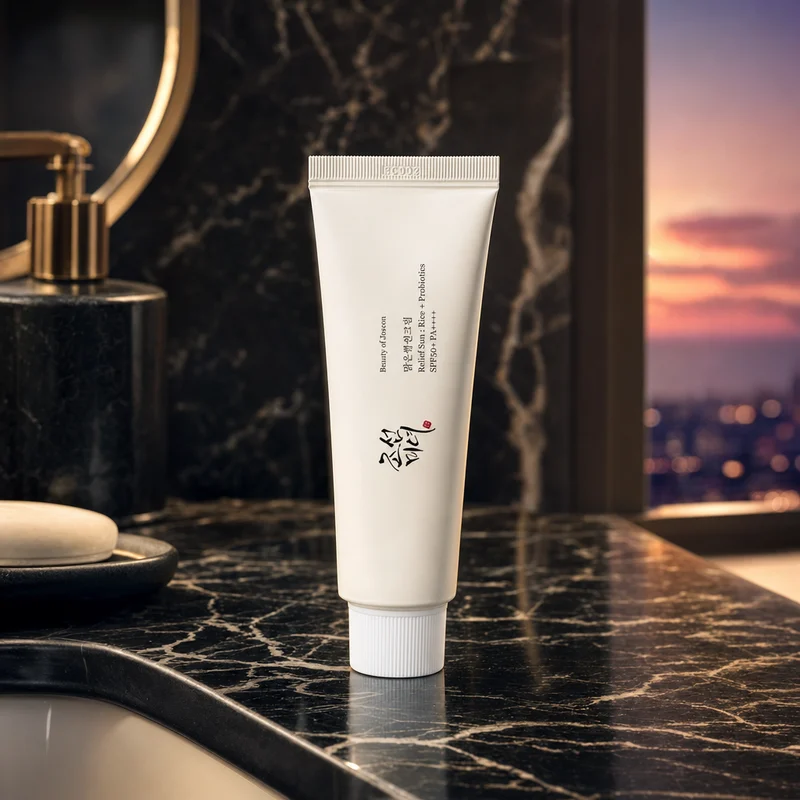
Beauty of Joseon Relief Sun: Rice + Probiotics SPF 50+ — product image
Most elegant — new-gen filters, with caveat
Beauty of Joseon · Newer-generation organic filters (no oxybenzone/octinoxate) + rice extract, SPF 50+ PA++++, 50 mL

Beauty of Joseon Relief Sun: Rice + Probiotics SPF 50+ Review

Beauty of Joseon Relief Sun is the sunscreen people who 'hate sunscreen' fall in love with: a weightless, dewy Korean formula at SPF 50+ PA++++ that leaves zero white cast on any skin tone, for about eighteen dollars. It's the most cosmetically elegant product on this entire list, and it earns the highest-ranked chemical-filter slot honestly — because it's built on the newer generation of organic filters and skips the two most-flagged legacy ones, oxybenzone and octinoxate. But it sits at #3, behind two 100% mineral picks, and we're direct about why: these are still synthetic UV filters absorbed into the upper layers of the skin, and the long-term human safety data on the new generation is thinner than zinc's decades — less alarming than the legacy stack, not proven equivalent to mineral. As the chemical-filter option, this is the one we'd pick. As the everyday default, the minerals above it earn that.

Check on Amazon

Affiliate link — Super Achiever Club earns a small commission at no extra cost to you.

Read the complete Looksmaxxing guide →
▸ THE SCORE

How we built the SAC Product Score™8.4/10

Filter safety + body-health35%6.4/10

Mid-table by design, and honestly so. This uses newer-generation organic (chemical) filters and skips the two most-flagged legacy ones — oxybenzone and octinoxate — which is a genuine step up from the drugstore chemical stack. But they are still synthetic UV filters absorbed into the upper skin, and the long-term human safety data on the new generation is thin, just less alarming than the compounds in the FDA's absorption trials. That's why it scores well above the legacy-stack picks below but a full tier under the 100% mineral formulas at the top.

Broad-spectrum protection + SPF 30+25%9.4/10

Excellent. SPF 50+ with a PA++++ rating — the highest UVA (anti-aging) protection tier in the Asian labeling system — behind genuine broad-spectrum coverage. Since UVA is what drives photoaging, the PA++++ rating is a real strength for a daily anti-aging sunscreen, and it clears the SPF 30+ threshold with margin. The one asterisk is that Korean SPF labeling isn't FDA-regulated, so trust depends on buying the genuine product.

Cosmetic elegance + daily wearability20%9.8/10

The best on the entire list. It wears like a weightless, dewy moisturizer with zero white cast on any skin tone — the texture that converts people who 'hate sunscreen' into daily wearers. Because adherence is the actual mechanism, this near-perfect wearability is a major asset. The only reason it isn't a flat 10 is that the dewy finish leans hydrating and very oily skin may prefer a matte.

Skin-friendliness10%8.8/10

Strong. Rice bran extract, probiotic ferment and niacinamide give it a genuinely nourishing, barrier-friendly profile suited to normal, dry and combination skin, and the dewy finish is comfortable for most. It scores just below the sensitive-skin mineral picks because organic filters carry a marginally higher irritation/sensitization potential than inert minerals for reactive skin, and the finish is less ideal for oily types.

Value + cost per daily use10%9.4/10

Excellent value. At ~$18 for 50 mL (~$0.30 per daily facial use) it delivers formulation quality — cast-free SPF 50+ PA++++ with skincare actives — that Western derm brands charge two to three times as much for. For the cosmetic elegance on offer, it's one of the best value propositions on the page; only the sub-$0.20 drugstore picks beat it on raw cost per use.

▸ SPECS

The product at a glance

Filter type
Newer-generation organic (chemical) filters — free of oxybenzone and octinoxate
SPF
SPF 50+ PA++++ (top-tier UVA rating), broad-spectrum
Key actives
Rice bran extract, probiotic ferment, niacinamide
Finish
Dewy, skin-like; no white cast on any tone
Skin fit
Normal, dry, combination
Size
50 mL tube
Price
~$18 / 50 mL (~$0.30 per daily facial use)
Labeling note
Korean SPF — not FDA-regulated; buy from genuine brand storefront to avoid fakes
▸ TRUTH CHECK

Marketing claims vs. reality

Verified

Oxybenzone- and octinoxate-free, newer-generation filters.

The formula uses newer organic filters and does not contain oxybenzone or octinoxate — the two legacy filters carrying the strongest endocrine-activity flags. This is accurate and is the genuine reason it ranks above the legacy-stack chemical picks; it does not, however, make the filters mineral or unabsorbed.

Verified

No white cast on any skin tone.

The cast-free, dewy finish is the product's most consistently reported real-world attribute and the core of its cult status. As an organic-filter formula it has no mineral pigments to leave a cast, so the claim holds across skin tones — the single biggest practical advantage over the mineral picks above it.

Partial

SPF 50+ PA++++ broad-spectrum protection.

The PA++++ UVA tier and SPF 50+ are the labeled ratings, and the formula is genuinely high-UVA. The honest caveat is that Korean SPF labeling isn't FDA-regulated and some past K-beauty SPF discrepancies have been documented industry-wide, so the number depends on trusting the manufacturer's testing — reliable from the genuine product, not independently FDA-verified.

Partial

Hydrating, skincare-grade formula with rice and probiotics.

Rice bran extract, probiotic ferment and niacinamide are present and give a genuinely nourishing, hydrating finish, so the skincare framing is fair. But these are cosmetic-benefit actives, not clinically proven anti-aging agents on their own — a manufacturer formulation claim, not a peer-reviewed outcome. The proven benefit here is the daily UV protection, not the rice.

Partial

Gentle and suitable for sensitive skin.

It's well-tolerated by most and the actives are barrier-friendly, but organic UV filters carry a marginally higher sensitization potential than inert mineral filters, and fragrance/extract content can bother the most reactive skin. Fair for normal/dry/combination skin; the 100% mineral picks remain the safer bet for genuinely reactive or allergy-prone skin.

▸ THE DEEP DIVE

What our test actually found

01The texture that ends the 'I hate sunscreen' excuse

This is the most elegant formula on the list, full stop: weightless, dewy, and completely cast-free on every skin tone. Because daily adherence is the actual anti-aging mechanism (Hughes 2013), a sunscreen this pleasant to wear removes the single biggest reason people skip SPF. If a mineral cast or a greasy chemical feel has kept you from a daily habit, this is the formula most likely to fix that — which is exactly why it's the highest-ranked non-mineral pick here.

02The best chemical-filter option — and we mean 'chemical'

The reason it sits at #3 behind two minerals, stated plainly: these are still synthetic UV filters that absorb into the upper layers of skin. The good news is they're the newer generation and skip oxybenzone and octinoxate, the two most-flagged legacy filters. The honest limit is that the long-term human safety data on the new-gen filters is thin — plausibly safer than the FDA-absorption stack, but not proven equivalent to zinc's decades. Wear it with clear eyes: this is the chemical option we'd pick, not a mineral substitute.

03Top-tier UVA (PA++++) is the anti-aging-relevant number

SPF measures UVB (burning); the PA rating measures UVA (aging), and PA++++ is the highest tier. Since UVA is what drives photoaging, a cast-free formula with the top UVA rating is genuinely well-matched to an anti-aging goal. The caveat is regulatory: Korean SPF/PA labeling isn't FDA-regulated, so the numbers depend on the manufacturer's testing — reliable from the genuine product, which is why sourcing matters below.

04Buy genuine — the fakes are convincing

Because it's an imported cult product, counterfeit Relief Sun circulates, and a fake sunscreen is worse than useless — you think you're protected and you're not. Buy from the genuine brand storefront or a verified seller, not the cheapest third-party listing. This is a real, practical risk that doesn't apply to the domestic drugstore picks, and it's part of the honest cost of choosing the most elegant formula on the list.

▸ THE TRADE-OFFS

Pros & cons, no sugar-coating

Pros
  • Avoids the two most-flagged legacy filters (oxybenzone, octinoxate) in favor of newer European-style chemistry
  • PA++++ — the highest UVA (anti-aging) rating tier — behind a genuinely elegant, cast-free, dewy finish
  • So pleasant to wear that daily adherence takes care of itself; converts people who 'hate sunscreen'
  • Excellent value for the formulation quality — a fraction of the price of Western derm brands
  • Rice, probiotic and niacinamide actives give a nourishing, barrier-friendly skincare finish
Cons
  • Still synthetic UV filters absorbed into the upper skin — long-term human safety data on the new generation is thin, just less alarming than the legacy stack
  • Korean SPF labeling isn't FDA-regulated; buy from the genuine brand storefront to avoid convincing fakes
  • Dewy finish leans hydrating — very oily skin may prefer a mineral matte
▸ THE BOTTOM LINE

The chemical-filter option we can defend out loud — cast-free, elegant, and honestly caveated.

If a mineral cast is genuinely keeping you from daily sunscreen, this is the compromise we can defend without hedging: Beauty of Joseon uses the newer generation of organic filters — no oxybenzone, no octinoxate — wrapped in the most elegant texture on this list, with top-tier PA++++ UVA protection, for about $0.30 a day. Be clear about what it is, though: still synthetic filter chemistry absorbed into the upper skin, with less long-term human data than zinc's decades — which is exactly why it sits at #3, behind two minerals, and not above them. Buy genuine to avoid the fakes, skip it if you want the safest possible filter class or a matte finish, and treat it as the best chemical option rather than a mineral substitute. As the cast-free pick you'll actually wear every day, it's the one we'd reach for.

Check Beauty of Joseon · Newer-generation organic filters (no oxybenzone/octinoxate) + rice extract, SPF 50+ PA++++, 50 mL on Amazon
▸ ALTERNATIVES

If this doesn’t fit — try these

▸ RESEARCH

Sources & further reading

  1. Matta 2020Matta MK, Florian J, Zusterzeel R, et al. · 2020 · JAMA · PMID 31961417

    Effect of sunscreen application on plasma concentration of sunscreen active ingredients: a randomized clinical trial

    The FDA trial that measured legacy chemical filters absorbing systemically above the safety threshold, including oxybenzone and octinoxate — the specific compounds this product deliberately avoids, and the reason 'skips oxybenzone/octinoxate' is a meaningful upgrade over the drugstore stack.

  2. Matta 2019Matta MK, Zusterzeel R, Pilli NR, et al. · 2019 · JAMA · PMID 31058986

    Effect of sunscreen application under maximal use conditions on plasma concentration of sunscreen active ingredients: a randomized clinical trial

    Established that chemical UV filters cross into plasma above the FDA's safety-testing threshold under maximal use — the general finding that keeps any organic-filter formula, even a newer-generation one like this, ranked below 100% mineral on the safety axis.

  3. Hughes 2013Hughes MCB, Williams GM, Baker P, Green AC · 2013 · Annals of Internal Medicine · PMID 23732711

    Sunscreen and prevention of skin aging: a randomized trial

    Daily sunscreen prevented measurable skin aging over 4.5 years — the evidence that an ultra-wearable, cast-free formula like this one delivers real value precisely because people actually wear it every day.