
Neutrogena Ultra Sheer Dry-Touch SPF 55 Review
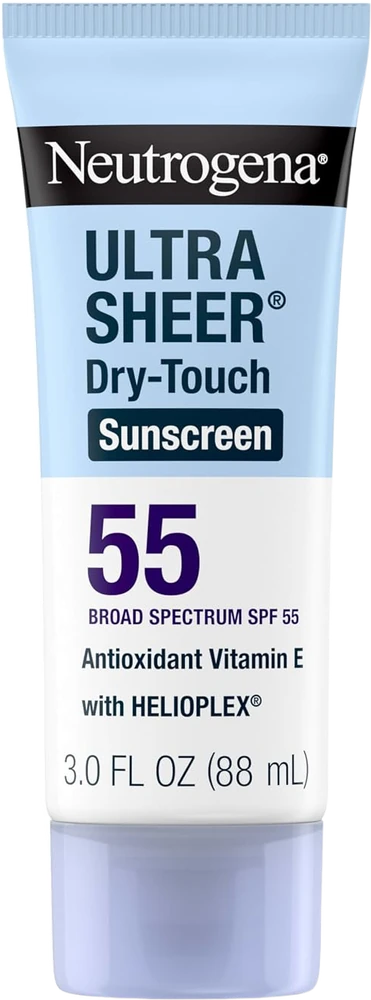 #8 of 8 · Ubiquitous✓ Product photos checked Sep 7, 2026
Real retailer photo, cut out. Label unedited.
Skip it. America's default drugstore SPF — fine for the beach bag, our last pick for the daily face. Cheap, everywhere, effective, photostable — a legitimate glove-box and beach backup where occasional use is a different risk math.
$11 / 3 fl oz bottle~$0.12 / daily facial use
Why It Scores 6.1 — And The Label Line Behind Each Number
Filter safety + body-health
35% of scoreThe lowest score on the page, on the most heavily weighted axis. Its Helioplex actives — avobenzone, homosalate, octisalate, octocrylene — are precisely the compounds the FDA's Matta 2019/2020 trials found in plasma above the 0.5 ng/mL safety-testing threshold, and it's a pure legacy chemical stack with no mineral content and no offsetting formulation virtue. For a product applied daily to the face for decades, this is the worst fit on the list, and the score reflects it.
Broad-spectrum protection + SPF 30+
25% of scoreGenuinely good, and its strongest axis. Broad-spectrum SPF 55 with a proven, photostable Helioplex filter system delivering reliable UVA+UVB coverage well above the floor. Protection is not the problem with this product — it works. The issue is entirely the filter class and the daily-wear feel, not the coverage it provides.
Cosmetic elegance + daily wearability
20% of scoreThe weakest cosmetic profile among the pleasant picks. The Dry-Touch matte finish suits oily skin, but a drying alcohol base and a noticeable sunscreen scent make it the least pleasant daily wear here, and a faint cast plus a general face-and-body formulation mean nothing about it is refined for the face specifically. Tolerable for occasional use; a chore as an everyday facial sunscreen.
Skin-friendliness
10% of scoreThe lowest skin-friendliness on the list. The drying alcohol base can be harsh on dry or sensitive skin, there's a noticeable fragrance, and there are no barrier-supporting co-actives like ceramides or niacinamide. It's a functional protectant, not a skin-caring formula — fine on resilient oily skin occasionally, poorly matched to sensitive or dry skin for daily use.
Value + cost per daily use
10% of scoreIts saving grace, and nearly the top score on this axis. At ~$11 for 3 fl oz (~$0.12 per daily facial use) it's the cheapest and most widely available option on the page, and the low price means people actually apply enough to reach the labeled SPF. Real value on raw cost — but per the quality-over-price rule, cheapness is a tie-breaker, not a reason to outrank a better-made formula, which is why the strong value score can't lift its overall rank.
- Size
- 3 fl oz bottle
- Price
- ~$11 / 3 fl oz (~$0.12 per daily facial use) — cheapest and most available here
- More Specs
- Filter type
- Chemical — avobenzone, homosalate, octisalate, octocrylene (Helioplex)
- SPF
- SPF 55, broad-spectrum UVA + UVB
- Key actives
- Helioplex photostabilization; Dry-Touch matte tech; contains drying alcohol
- Finish
- Dry-Touch matte; faint cast; noticeable sunscreen scent
- Skin fit
- Normal to oily; face and body — see daily-use caveat
- Best role
- Occasional beach / glove-box backup — not the daily facial slot
Photos checked.This product has no Supplement Facts panel; the retailer's listing photos were reviewed Sep 7, 2026.
Marketing Claims Vs. Reality
Broad-spectrum SPF 55 with Helioplex for stable, reliable protection.
SPF 55 broad-spectrum is a labeled FDA-regulated claim, and Helioplex is a genuinely photostable, well-validated filter system. Protection is real and reliable — the accurate, strong part of the product. The concern is the filter class and daily-wear feel, not the coverage.
Dry-Touch, non-greasy, lightweight finish.
The Dry-Touch matte finish is real and suits oily skin, so 'non-greasy' is fair. But it's achieved partly with a drying alcohol base and carries a noticeable sunscreen scent, making it the least pleasant daily wear here for dry or sensitive skin — 'lightweight' is true, 'pleasant for all skin daily' is not.
Suitable for face and body / everyday use.
It's a general face-and-body formula with a faint cast and no facial-specific refinement, and for daily facial use it relies on the legacy chemical stack the FDA measured in blood — the worst fit on this list for an every-morning face habit. 'Everyday facial use' is exactly the claim this ranking pushes back on; occasional use is a different, defensible matter.
Fast-absorbing and won't clog pores.
Fast absorption and a matte, oily-skin-friendly finish are real and it's marketed non-comedogenic, so this holds for resilient/oily skin. But the drying-alcohol base and fragrance undercut it for dry or sensitive skin, so it's accurate for some skin types and overstated as a universal daily claim.
Effective, dermatologist-trusted sun protection.
It is effective and widely used, and for burn prevention it works — that part is fair. But 'trusted' as a daily facial choice glosses over the systemic-absorption question the FDA itself raised about its exact filters; it's a legitimate occasional protectant, not the formula this page recommends for the daily face slot.
What Our Test Actually Found
Effective and everywhere — a legitimate occasional backup
Let's be fair before we demote: for a beach day, a hike, or an exposed afternoon, Ultra Sheer works. It's a proven, photostable SPF 55 at the lowest price and widest availability on the list, and the cheapness means people actually apply enough. As a glove-box or beach-bag backup — occasional use, a different risk math than daily — it's a completely reasonable thing to own. Using it beats burning, every time.
Its filters are the exact compounds the FDA measured in blood
Here's why it's last for the daily face. The Helioplex actives — avobenzone, homosalate, octisalate, octocrylene — are precisely the filters the FDA's Matta 2019/2020 trials found in systemic circulation above the agency's safety-testing threshold, some after a single application. It's a pure legacy chemical stack with no mineral content and nothing offsetting it. On the axis this ranking weights most, for a product used daily on the face for decades, this is the worst fit here.
The daily-wear feel is the least pleasant on the list
Beyond the filters, it's simply not built for the daily facial slot: a drying alcohol base that can be harsh on anything but oily skin, a noticeable sunscreen scent, a faint cast, and a general face-and-body formulation with no barrier actives. The Dry-Touch matte is nice on oily skin, but nothing about it is refined for the face specifically. As an everyday facial sunscreen it's a chore, not a pleasure — and pleasure is what keeps the habit alive.
The upgrade costs $5
The clinching point: this is $11, and the CeraVe Hydrating Mineral SPF 30 (#3) is $16. For five dollars more you move from the FDA-flagged chemical stack to a formula with mineral filters and ceramides, built for daily facial use. For a beach bag, keep the Neutrogena. For the sunscreen next to your toothbrush — the one that ages your face over decades — spend the extra five dollars and do it right.
Full analysis: all pros & cons (8), buy if / skip if
- Effective broad-spectrum protection at the lowest price and widest availability on the list
- Dry-Touch finish suits oily skin, and the price means people actually apply enough
- A legitimate glove-box / beach-bag backup — occasional use is a different risk math than daily
- Proven, photostable Helioplex filter system as chemical stacks go
- SPF 55 gives real headroom against under-application for higher-exposure days
- Its filter actives are the very compounds the FDA's JAMA trials found in systemic circulation above the safety-testing threshold — the worst fit for a 365-day facial habit
- Drying alcohol base plus a noticeable sunscreen scent — the least pleasant daily wear here
- General face-and-body formula with a faint cast; nothing about it is designed for your face specifically
- You want a cheap, ubiquitous sunscreen for occasional beach, hike or glove-box backup
- You need a photostable high-SPF face-and-body formula at the lowest price
- Occasional (not daily-facial) use is your actual use case
- Availability and price matter more to you than filter class for this purpose
- You want a daily facial sunscreen — CeraVe Hydrating Mineral (#3) is $5 more and uses mineral filters
- You want to avoid the legacy chemical stack's documented systemic absorption
- You have dry or sensitive skin — the drying-alcohol base and scent are the least pleasant daily wear here
Cheap, everywhere, effective, photostable — a legitimate glove-box and beach backup where occasional use is a different risk math. But it runs on the Helioplex legacy chemical stack the FDA found in blood above its safety threshold, on a drying-alcohol base with a strong scent, as a general face-and-body formula. For an every-morning facial habit it's our last pick — CeraVe Hydrating Mineral (#3) is $5 more and does it right.
Neutrogena Ultra Sheer is the sunscreen most Americans actually own — cheap, stocked in every drugstore, and effective enough that for a beach day or a hike, using it absolutely beats burning. We include it because leaving it out would be dishonest. But this page is about the sunscreen you put on your face every single morning for decades, and for that job it's our last pick, for reasons we spell out plainly. It runs on the Helioplex chemical stack — avobenzone, homosalate, octisalate, octocrylene — the exact compounds the FDA's JAMA trials found in systemic circulation above the safety-testing threshold. It adds a drying alcohol base and a noticeable sunscreen scent, making it the least pleasant daily wear here, and it's a general face-and-body formula with a faint cast, nothing about it designed for your face specifically. For $5 more, the CeraVe Hydrating Mineral (#3) does the daily job right.
The honest last pick — fine for the beach bag, wrong for the every-morning face.

We include Ultra Sheer because leaving it out would be dishonest — it's the sunscreen most Americans actually own. And for a beach day, a hike, the occasional exposed afternoon, using it absolutely beats burning; as an occasional backup it's a reasonable thing to keep. But this page is about the sunscreen you put on your face every single morning for decades, and for that job a legacy chemical stack with documented blood absorption, a drying alcohol base, a noticeable scent and a budget-first face-and-body formula is our last pick, ranked here so you know exactly why. The strong value score can't lift it — cheapness is a tie-breaker, not a reason to outrank a better-made formula. Sixteen dollars buys the CeraVe Hydrating Mineral (#3). For a daily habit, spend the five extra dollars and do it right.
If This Doesn’t Fit — Try These
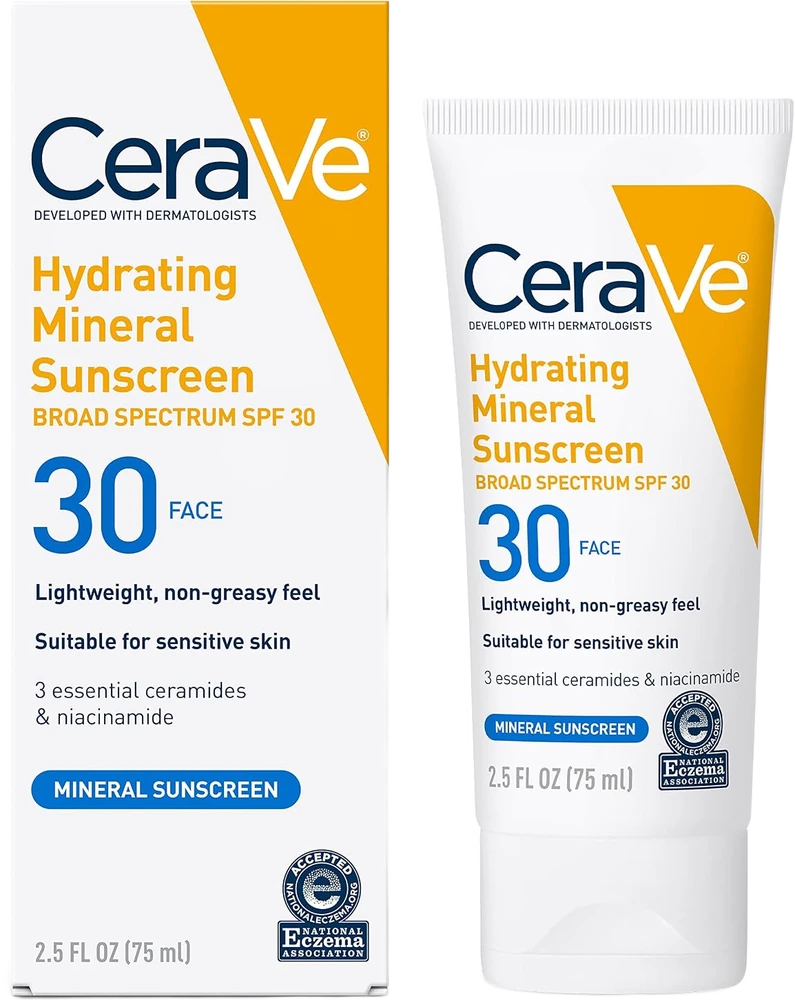 03
CeraVe Hydrating Mineral
CeraVe Hydrating Mineral SPF 30 keeps you on zinc oxide and titanium dioxide and adds the ceramides and niacinamide the brand is known for, at about eighteen cents a day.
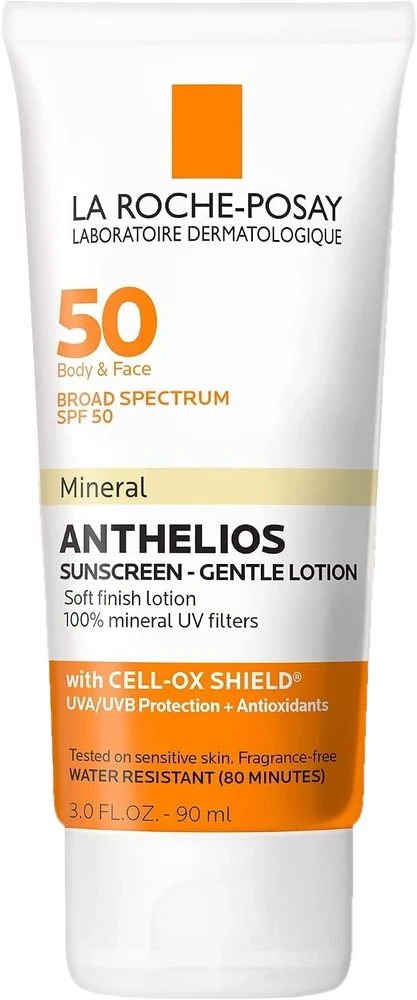 01
La Roche-Posay Mineral Lotion
If you asked for one sunscreen and no lecture, this is it: zinc oxide and titanium dioxide at SPF 50 from a dermatologist brand, with nothing UV-absorbing hidden in the rest of the label, for about $19.
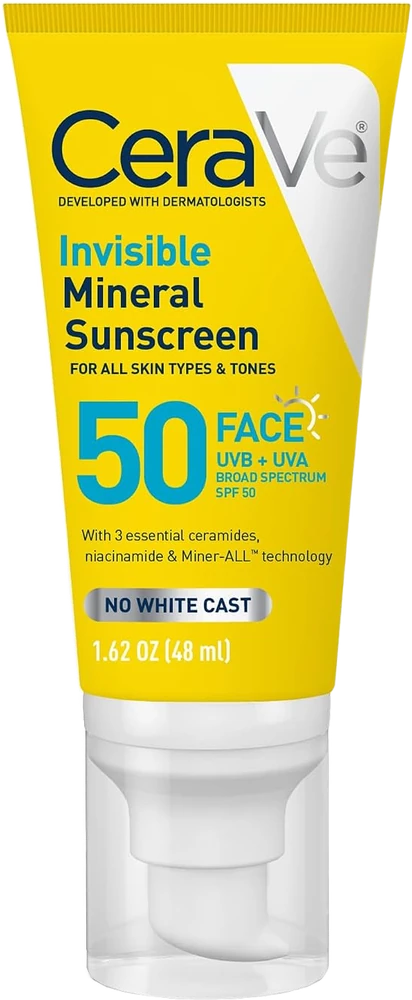 02
CeraVe Invisible Mineral
CeraVe Invisible Mineral SPF 50 keeps you on zinc oxide and titanium dioxide, adds SPF 50 headroom, ceramides and niacinamide, and is sold as leaving no cast, all for about $14.
Quick Answers
Is Neutrogena Ultra Sheer bad for you?
Not in the sense of proven harm — it's an effective, photostable sunscreen, and using it beats burning. The issue is specific: its Helioplex filters are the exact compounds the FDA found in blood above its own safety-testing threshold, and the long-term significance of that is unstudied. For occasional use that's a minor concern; for daily facial application over decades, it's why this page ranks it last and points you to a mineral instead.
Why is it ranked last if it's so popular and cheap?
Popularity and price don't move the axis this list weights most. It's a pure legacy chemical stack (all four filters in the FDA's absorption trials) with a drying-alcohol base, a strong scent, and no facial-specific refinement — the worst fit for a daily face product on the safety and skin axes. Its excellent value score is real but, per the quality-over-price rule, cheapness is a tie-breaker, not a reason to outrank better-made formulas.
Is it fine to keep for the beach or my car?
Yes — that's genuinely its best role. As an occasional, higher-exposure backup, its high SPF 55, photostable protection, low price and ubiquity are all assets, and occasional use is a completely different risk calculation than daily facial application. Keeping a bottle in your glove box or beach bag is sensible. The demotion is strictly about using it as your every-morning facial sunscreen, not about owning it.
What should I use on my face instead?
For $5 more, the CeraVe Hydrating Mineral SPF 30 (#3): mineral filters, ceramide-rich, built for daily facial use. If you want the best overall, the La Roche-Posay Anthelios Mineral SPF 50 (#1). If you want a cheap daily formula without a white cast, CeraVe Invisible Mineral (#2) is a far better facial choice than a drugstore body formula. Any of the three beats Ultra Sheer for the daily face.
Does the drying alcohol matter?
It depends on your skin. The alcohol helps create the pleasant Dry-Touch matte finish that oily skin likes, so for resilient, oily skin it's fine. But on dry, sensitive or compromised skin, a daily alcohol-based formula can feel harsh and aggravate dryness over time — combined with the noticeable fragrance, it's the least skin-friendly daily wear on this list. Dry and sensitive skin should choose a ceramide-rich mineral like CeraVe Hydrating (#3) instead.
Sources & Further Reading
3 peer-reviewed sources, each linked to PubMed
- [1] Matta 2019 PMID 31058986 — Effect of sunscreen application under maximal use conditions on plasma concentration of sunscreen active ingredients: a randomized clinical trial. Found avobenzone and octocrylene — two of this product's Helioplex filters — in plasma above the FDA's 0.5 ng/mL safety-testing threshold under maximal use. Direct evidence behind ranking a pure legacy chemical stack last for daily facial use.
- [2] Matta 2020 PMID 31961417 — Effect of sunscreen application on plasma concentration of sunscreen active ingredients: a randomized clinical trial. Extended the finding to homosalate and octisalate — the rest of this product's filter set — exceeding the plasma threshold, several after a single application. Confirms all four Helioplex actives are in the systemically-absorbed legacy class.
- [3] Hughes 2013 PMID 23732711 — Sunscreen and prevention of skin aging: a randomized trial. Daily sunscreen prevented measurable skin aging over 4.5 years — the basis for 'occasional use beats burning' while still recommending a better-formulated mineral for the daily facial habit that actually compounds over decades.
Affiliate disclosure: every Amazon link uses our Associates tag (superachieverclub-20). We earn a small commission at no cost to you; it funds independent reviews. We never accept payment to change a ranking.