
Top 9 Best Ginkgo Biloba Supplements for Cognition & Focus (2026)
 01 · Best overall✓ Label verified · Supplement Facts read Sep 7, 2026
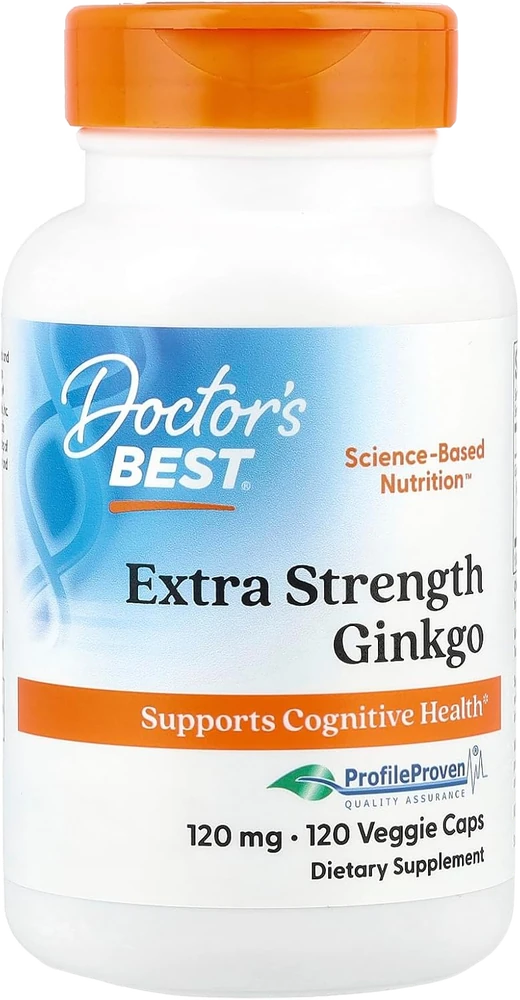
Best overall: Doctor's Best Extra Strength Ginkgo, 120 mg
The textbook clinical ginkgo: the exact EGb 761 spec — 24%/6% standardisation, a full 120 mg in one daily capsule — at one of the lowest costs per serving on the list. The easiest first recommendation in the category.
$13 / 120 veggie capsules (~120 days at 1/day)~$0.11 per 120 mg capsule
Why it wins: all five scores, pros & cons, full label
- Hits the full 120 mg clinical dose in a single daily capsule
- Standardised to the 24%/6% EGb 761 benchmark as a clean single-herb extract — no filler botanicals
- Non-GMO, vegan, gluten- and soy-free at one of the lowest costs per serving here
- Listing states an in-house 'ProfileProven' QA, not an independent third-party seal
- Plain bottle and branding — no flashy 'brain' marketing some buyers expect
- Standardisation
- 24% flavonol glycosides / 6% terpene lactones (50:1 extract)
- Dose
- 120 mg (1 capsule)
- Form
- Veggie capsule
- Count
- 120 veggie capsules

Our take — If you want one ginkgo bottle that matches what the studies actually tested, this is it. Doctor's Best lands the 24%/6% standardised spec and a full 120 mg in a single daily capsule, and it does so at roughly eleven cents a serving — the cleanest combination of clinical-grade spec and value on the list. The only thing it lacks is an independent certification seal; its QA is in-house. For the vast majority of buyers chasing the trial-standard memory-and-circulation dose, this is the bottle to start with.
 02
 03
 04
 05
 06
 07
 08
 09
Who Wins Which Aspect
Sorted by overall SAC Product Score™ — the official ranking.
| # | Pick | Score | Extract standardisation30% | Dose vs the studied 120-240 mg range25% | Purity & third-party testing20% | Value per effective day15% | Real-world response10% | Cost Per Dose | Buy |
|---|---|---|---|---|---|---|---|---|---|
| 01 | | 9.4 | 10.01 | 10.01 | 8.03 | 9.52 | 9.01 | ~$0.11 / 120 mg capsule | Check price |
| Hits the full 120 mg clinical dose in a single daily capsuleListing states an in-house 'ProfileProven' QA, not an independent third-party seal | |||||||||
| 02 | | 8.9 | 9.82 | 10.01 | 8.03 | 6.5 | 9.01 | ~$0.37 / 120 mg tablet | Check price |
| Branded Ginkgold extract with a long clinical-research pedigreeNoticeably higher cost per serving than commodity ginkgo | |||||||||
| 03 | | 8.9 | 9.0 | 10.01 | 8.03 | 9.03 | 7.5 | ~$0.15 / 120 mg capsule | Check price |
| Non-GMO Project Verified, and NOW publishes extensive in-house QC testingHouse-brand testing rather than an independent third-party certifier seal on the pack | |||||||||
| 04 | | 8.7 | 9.0 | 10.01 | 9.51 | 7.0 | 5.5 | ~$0.08 / 120 mg capsule | Check price |
| Explicit <1 ppm ginkgolic-acid limit — the standardisation/purity marker the most careful buyers wantThe large 365-count bottle is a bigger upfront spend | |||||||||
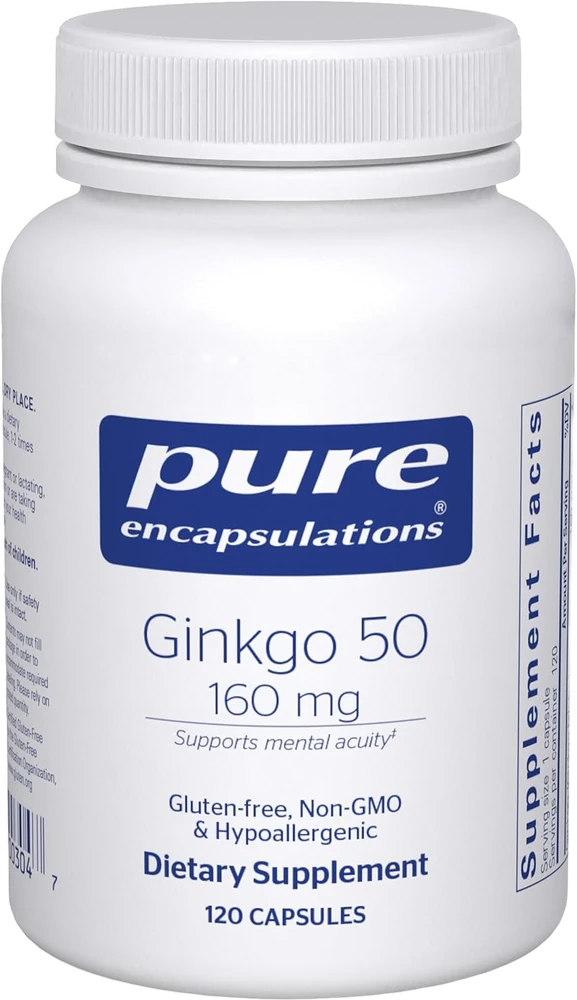
| 05 | | 8.6 | 9.53 | 9.52 | 8.52 | 5.5 | 8.52 | ~$0.28 / 160 mg capsule | Check price |
| Higher 160 mg standardised dose per capsule, still at the 24%/6% specHighest price per bottle in this lineup | |||||||||
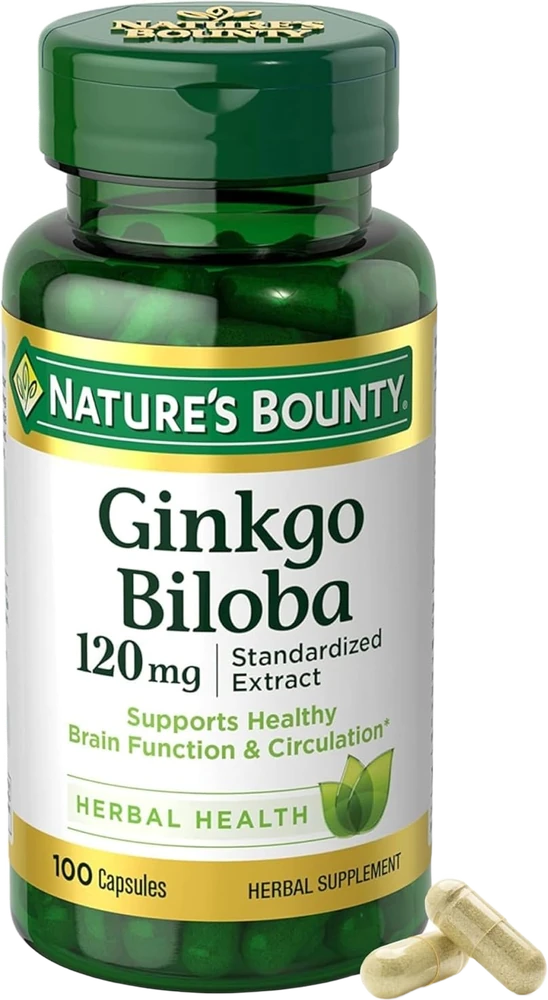
| 06 | | 8.4 | 8.0 | 10.01 | 7.5 | 8.0 | 8.03 | ~$0.12 / 120 mg capsule | Check price |
| Widely trusted, pharmacy-shelf brand that's easy to find and re-buyListing emphasises the 24% flavone-glycoside figure but is less explicit on the 6% terpene-lactone half of the spec | |||||||||
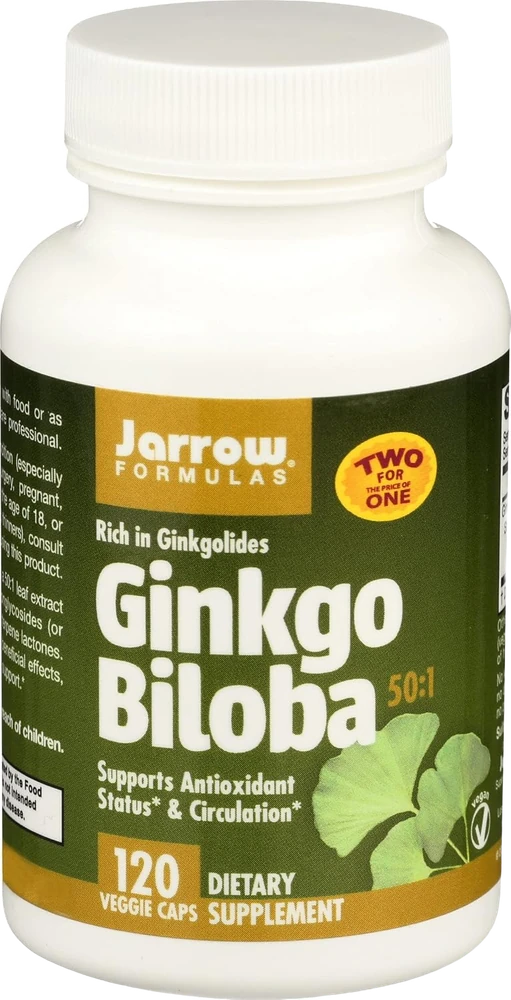
| 07 | | 8.1 | 9.0 | 8.03 | 7.5 | 7.5 | 7.5 | ~$0.22 / 120 mg serving | Check price |
| 60 mg per capsule allows flexible 60-or-120 mg dosingReaching the full 120 mg clinical dose takes 2 capsules, halving the bottle's day-count | |||||||||
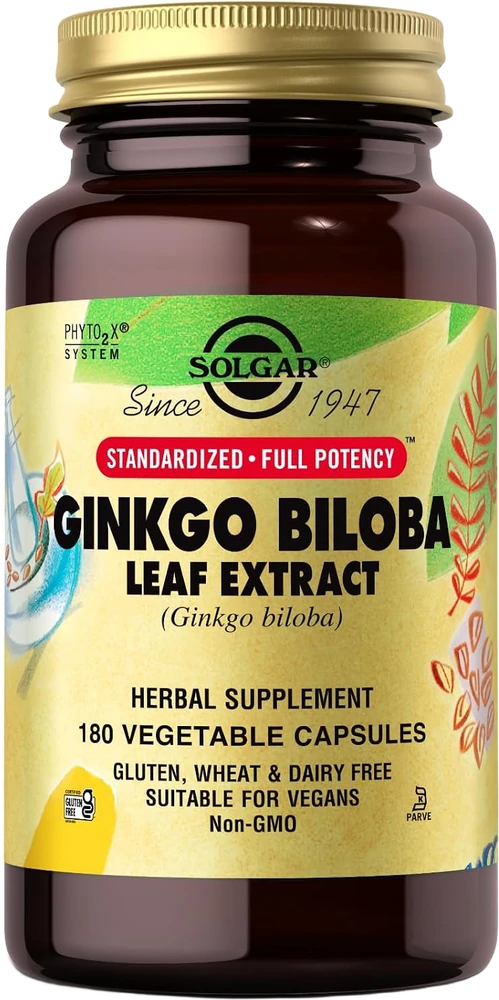
| 08 | | 8.0 | 8.5 | 8.03 | 8.52 | 6.5 | 7.5 | ~$0.30 / 120 mg serving | Check price |
| Kosher, vegan, non-GMO, gluten- and dairy-free, from a long-established premium brand60 mg per capsule means two capsules are needed to reach a 120 mg clinical dose | |||||||||
| 09 | | 7.9 | 6.5 | 10.01 | 6.5 | 10.01 | 6.0 | ~$0.07 / 120 mg capsule | Check price |
| 240-count at 120 mg/cap is the lowest cost per daily serving on the listListing highlights the 24% flavone-glycoside figure but is less explicit on the 6% terpene lactones | |||||||||
The Other 8, Ranked
- 02
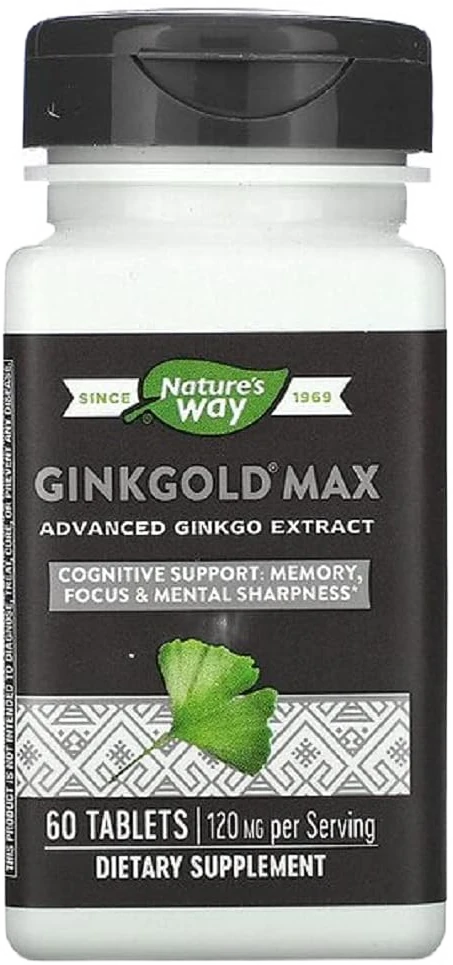
Best clinically-studied extract: Nature's Way Ginkgold Max, 120 mg
8.9SAC Score™The premium standardised pick: Ginkgold is one of the most clinically-referenced branded ginkgo extracts on the US market, at a full 120 mg in a once-daily tablet.
StrongestDose vs the studied 120-240 mg range10.01WeakestValue per effective day6.5- Standardisation
- Ginkgold extract, 24% flavone glycosides / 6% terpene lactones
- Dose
- 120 mg (1 tablet)
All five scores, pros & cons, full label
What We Like- Branded Ginkgold extract with a long clinical-research pedigree
- Standardised to the full 24%/6% spec, with the complete 120 mg dose in one once-daily tablet
- Gluten-free and vegan, from a long-established herbal brand
What You Live With- Noticeably higher cost per serving than commodity ginkgo
- Sold here under a reseller-style title ('120 Mg 60 Tab'); packaging may vary
- Form
- Tablet
- Count
- 60 tablets
Our take — If you want the ginkgo extract that's done the most time in clinical literature, Ginkgold is it, and Nature's Way delivers it at a clean 120 mg per once-daily tablet. You pay meaningfully more per serving than for commodity ginkgo, and the Amazon listing's reseller-style title is a little off-putting, but the material itself is genuinely well-pedigreed. This is the pick for a buyer who wants brand-name extract provenance over rock-bottom price.
- 03
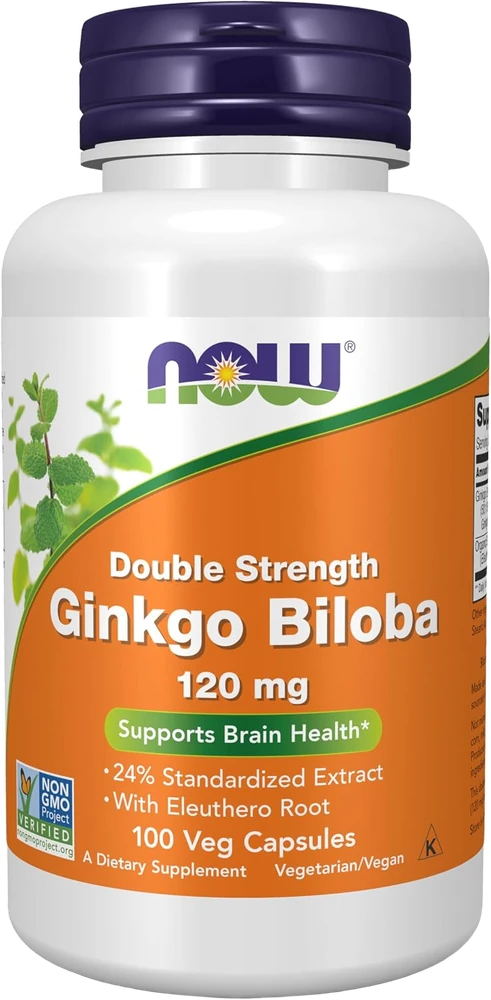
Best value standardized: NOW Foods Ginkgo Biloba 120 mg, Double Strength
8.9SAC Score™Non-GMO Project Verified at a full 120 mg dose from a brand that runs its own in-house testing lab — the best balance of trust and value on the list.
StrongestDose vs the studied 120-240 mg range10.01WeakestReal-world response7.5- Standardisation
- 24% ginkgo flavone glycosides / 6% terpene lactones
- Dose
- 120 mg (1 capsule)
All five scores, pros & cons, full label
What We Like- Non-GMO Project Verified, and NOW publishes extensive in-house QC testing
- Full 120 mg double-strength dose in a single daily capsule
- Vegan, kosher, made without major allergens — strong value per serving
What You Live With- House-brand testing rather than an independent third-party certifier seal on the pack
- Generic single-herb positioning; no added cognition co-factors
- Form
- Veg capsule
- Count
- 100 veg capsules
Our take — NOW is the trust-and-value sweet spot. You get the full 24%/6% spec and a 120 mg dose in one capsule, plus Non-GMO Project Verification and NOW's unusually transparent in-house QC — all at fifteen cents a serving. It narrowly trails the top two only because Doctor's Best is cheaper for the identical spec and Ginkgold carries more clinical pedigree. For most buyers this is an equally defensible #1; it's a hair behind purely on price-versus-spec.
- 04
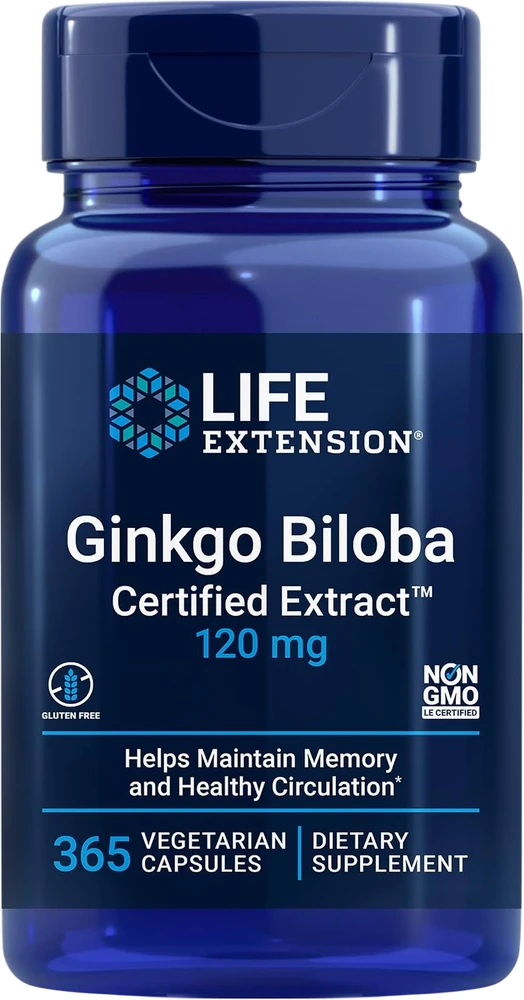
Best for purity: Life Extension Ginkgo Biloba Certified Extract, 120 mg
8.7SAC Score™The purity-focused clinical option: an EGb 761-style purified extract held to <1 ppm ginkgolic acid — the key purity marker serious buyers look for — in a full year's supply.
StrongestDose vs the studied 120-240 mg range10.01WeakestReal-world response5.5- Standardisation
- 24% flavone glycosides / 6% terpene lactones, <1 ppm ginkgolic acid
- Dose
- 120 mg (1 capsule)
All five scores, pros & cons, full label
What We Like- Explicit <1 ppm ginkgolic-acid limit — the standardisation/purity marker the most careful buyers want
- Full 120 mg dose once daily; the 365-count is the best cost-per-day on the list
- Non-GMO, gluten-free, vegetarian, from a research-oriented brand
What You Live With- The large 365-count bottle is a bigger upfront spend
- Higher per-bottle price than commodity ginkgo
- Form
- Capsule
- Count
- 365 capsules
Our take — This is the connoisseur's purity pick. Life Extension is the only product here that prints an explicit <1 ppm ginkgolic-acid limit — the contaminant marker that actually matters for ginkgo — alongside the full 24%/6% spec and a 120 mg dose, in a year-long 365-count bottle that works out to the lowest cost-per-day on the list. The catch is the larger upfront outlay. If you want the cleanest documented ginkgo and don't mind buying a year at once, this is the one.
- 05
Best higher-dose (160 mg): Pure Encapsulations Ginkgo 50, 160 mg
8.6SAC Score™The hypoallergenic purist pick: a higher 160 mg standardised dose with Pure Encapsulations' free-from formulation and practitioner-channel reputation.
StrongestExtract standardisation9.53WeakestValue per effective day5.5- Standardisation
- 50:1 extract, 24% ginkgo heterosides / 6% terpene lactones
- Dose
- 160 mg (1 capsule)
All five scores, pros & cons, full label
What We Like- Higher 160 mg standardised dose per capsule, still at the 24%/6% spec
- Hypoallergenic: free from gluten, GMOs, and unnecessary binders/fillers
- Practitioner-grade brand favored for clean, single-ingredient formulas
What You Live With- Highest price per bottle in this lineup
- 160 mg/cap is more than some users need for a simple maintenance dose
- Form
- Capsule
- Count
- 120 capsules
Our take — Pure Encapsulations is the clean-formulation, slightly-higher-dose option. At 160 mg of 24%/6% extract per capsule it sits between the 120 mg trial standard and the 240 mg upper trial dose, in the brand's signature hypoallergenic, filler-free format. It's the most expensive bottle here, and 160 mg is more than a casual user needs — but for someone who wants a practitioner-grade, free-from ginkgo and a touch more extract per cap, it earns its place.
- 06
Best budget: Nature's Bounty Ginkgo Biloba 120 mg
8.4SAC Score™The trusted pharmacy-shelf brand at a full 120 mg dose — the option a cautious first-time buyer will recognise and reach for at a low price.
StrongestDose vs the studied 120-240 mg range10.01WeakestPurity & third-party testing7.5- Standardisation
- Standardized extract; label cites 24% ginkgo flavone glycosides (terpene % not prominently stated)
- Dose
- 120 mg (1 capsule)
All five scores, pros & cons, full label
What We Like- Widely trusted, pharmacy-shelf brand that's easy to find and re-buy
- Full 120 mg in one capsule daily at a low price
- Non-GMO, gluten-free, sugar-free, with no artificial colors or flavors
What You Live With- Listing emphasises the 24% flavone-glycoside figure but is less explicit on the 6% terpene-lactone half of the spec
- No independent third-party certification seal called out
- Form
- Capsule
- Count
- 100 capsules
Our take — Nature's Bounty is the recognisable, low-cost on-ramp. It delivers a full 120 mg standardised dose from a brand most people already trust off the pharmacy shelf, at one of the lowest prices here. It ranks mid-pack rather than higher because the listing foregrounds the 24% flavone-glycoside number without clearly stating the matching 6% terpene-lactone half — standard for these extracts, but less transparent than the picks above. A solid, safe first ginkgo.
- 07
Best for flexible dosing: Jarrow Formulas Ginkgo Biloba (50:1), 60 mg
8.1SAC Score™A flexible-dosing pick: 60 mg per capsule lets you titrate to 60 or 120 mg, with Jarrow's standardised 50:1 extract at a value price.
StrongestExtract standardisation9.0WeakestPurity & third-party testing7.5- Standardisation
- 50:1 extract, 24% ginkgoflavonglycosides / 6% terpene lactones
- Dose
- 120 mg (2 capsules); 60 mg per capsule
All five scores, pros & cons, full label
What We Like- 60 mg per capsule allows flexible 60-or-120 mg dosing
- Standardised 24%/6% 50:1 extract from an established value brand
- Free from major allergens (wheat, gluten, soy, dairy, egg, nuts)
What You Live With- Reaching the full 120 mg clinical dose takes 2 capsules, halving the bottle's day-count
- The live listing labels it '60 MG' — buyers must read the per-serving math
- Form
- Veg capsule
- Count
- 120 veg capsules
Our take — Jarrow is the titration-friendly option. At 60 mg of 24%/6% extract per capsule you can run a gentle 60 mg dose or take two for the full 120 mg clinical dose — useful flexibility, from a reliable value brand. The trade-off is real: two capsules to reach 120 mg means a 120-count bottle is only a two-month supply at the clinical dose, and the '60 MG' label can mislead a careless shopper. Good for dose-tinkerers, less efficient for straight 120 mg daily use.
- 08
Best heritage-brand option: Solgar Ginkgo Biloba Leaf Extract (SFP)
8.0SAC Score™A kosher, vegan 'full-potency' single-herb option from a heritage premium brand, for buyers who want a lower 60 mg titration step.
StrongestExtract standardisation8.5WeakestValue per effective day6.5- Standardisation
- Standardized Full Potency (SFP) leaf extract, 24% flavone glycosides
- Dose
- 60 mg per capsule (SFP extract)
All five scores, pros & cons, full label
What We Like- Kosher, vegan, non-GMO, gluten- and dairy-free, from a long-established premium brand
- Standardized Full Potency extract in a clean single-herb formula
- Large 180-count bottle for an extended supply
What You Live With- 60 mg per capsule means two capsules are needed to reach a 120 mg clinical dose
- Premium pricing relative to the per-mg ginkgo delivered
- Form
- Vegetable capsule
- Count
- 180 vegetable capsules
Our take — Solgar is the heritage-brand, lower-step option. The Standardized Full Potency extract is a clean, kosher, vegan single-herb formula from a respected premium name, and the 180-count bottle lasts a while. It ranks last here on dosing efficiency and value: at 60 mg per capsule you need two to reach the 120 mg clinical dose, which makes it the priciest per effective milligram on the list. Best for someone who specifically wants the Solgar name and a gentle 60 mg titration step.
- 09
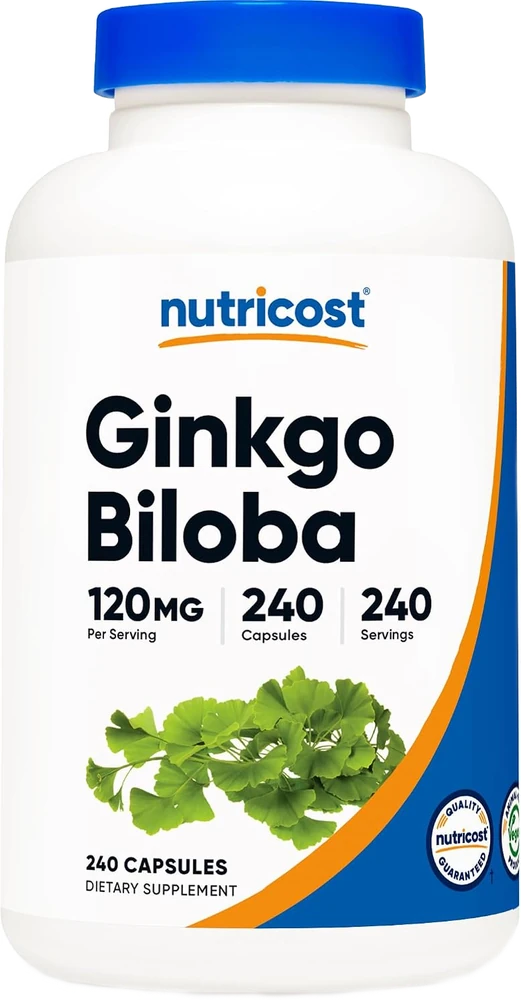
Best bulk value: Nutricost Ginkgo Biloba 120 mg
7.9SAC Score™The bulk-value play: 240 capsules at a full 120 mg dose gives the lowest cost per serving in the lineup for high-volume users.
StrongestDose vs the studied 120-240 mg range10.01WeakestReal-world response6.0- Standardisation
- 24% ginkgo flavone glycosides (terpene-lactone % not prominently stated)
- Dose
- 120 mg (1 capsule)
All five scores, pros & cons, full label
What We Like- 240-count at 120 mg/cap is the lowest cost per daily serving on the list
- Made in a GMP-compliant, FDA-registered facility; non-GMO and gluten-free
- Simple single-herb formula
What You Live With- Listing highlights the 24% flavone-glycoside figure but is less explicit on the 6% terpene lactones
- Budget brand without an independent third-party certification seal
- Form
- Capsule
- Count
- 240 capsules
Our take — Nutricost is the cost-per-day champion. A 240-count bottle at a full 120 mg per capsule works out to roughly seven cents a serving — the cheapest daily ginkgo here — made in a GMP-compliant, FDA-registered facility. It lands lower in the ranking only because, like several budget picks, the listing leads with the 24% flavone-glycoside figure without clearly stating the 6% terpene-lactone half, and there's no independent seal. For high-volume buyers who trust the spec, the value is unbeatable.
Ginkgo Biloba In Four Short Lessons
Look for 24% flavonol glycosides and 6% terpene lactones.
Nearly every meaningful ginkgo trial used an extract standardised to that ratio. A vague 'ginkgo leaf 500 mg' is raw leaf powder that shares the name.
Dose 120-240 mg a day.
That is the studied range: Le Bars 1997 used 120 mg a day and Herrschaft 2012 used 240 mg.
Do not buy it to prevent decline.
The GEM Study followed more than 3,000 older adults for six years and found 240 mg a day no better than placebo at preventing dementia (DeKosky 2008). The real benefit is modest symptomatic support.
Ranked on extract standardisation (30%), dose vs the studied 120-240 mg range (25%), purity & third-party testing (20%), value per effective day (15%), and real-world response (10%) — full scoring in the methodology below. Evidence drawn from four PubMed-verified sources cited in the file: Le Bars 1997 (PMID 9343463, JAMA), Herrschaft 2012 (PMID 22459264), the negative GEM Study — DeKosky 2008 (PMID 19017911, JAMA), and Pittler & Ernst 2000 (PMID 11014719).
Ginkgo lives or dies on its extract spec, so standardisation carries the most weight. The clinical material — EGb 761 — is standardised to 24% flavonol glycosides and 6% terpene lactones; a product that hits that 24%/6% benchmark as a clean single-herb extract scores high, and a vague "ginkgo leaf 500 mg" scores low no matter how big the milligram number looks. Dose accuracy is next: the trials used 120 mg/day (Le Bars 1997) up to 240 mg/day (Herrschaft 2012), so we reward products that deliver a full 120 mg in a sensible serving and dock points where you need two capsules to get there. Purity and third-party testing is the safety filter — ginkgolic acid is the contaminant that matters (high levels are allergenic), so an explicit low-ginkgolic-acid limit, non-GMO verification, and GMP manufacturing earn credit. Value per effective day divides real price by a 120 mg standardised serving. Real-world response — form, once-daily convenience, and brand reliability — settles ties. We never credit a certification a product doesn't actually claim.
Extract standardisation · 30%
Does it hit the EGb 761 benchmark — 24% flavonol (flavone) glycosides and 6% terpene lactones — as a clean, single-herb leaf extract? This is the spec the clinical trials used and the single best predictor that a ginkgo product will behave like the studied material. Listings that prominently state the full 24%/6% spec rank above those that cite only the 24% flavone-glycoside half, which in turn rank above raw, unstandardised leaf powder.
Dose vs the studied 120-240 mg range · 25%
Trials ran from 120 mg/day (Le Bars 1997) to 240 mg/day (Herrschaft 2012). Full marks for a clean 120 mg in one daily capsule; partial credit where the clinical dose needs two capsules (60 mg/cap products) or where the per-serving math isn't obvious from the label. Higher single-capsule doses (160 mg) are fine but not inherently better than the trial-standard 120 mg.
Purity & third-party testing · 20%
Ginkgolic acid is the contaminant that matters — concentrated leaf can carry allergenic levels, so a printed limit (e.g. <1 ppm or <5 ppm) is a genuine quality marker. Non-GMO verification, GMP-compliant or FDA-registered facilities, and clean single-herb formulas earn credit. We only award an independent third-party seal (NSF/USP) when the real listing states it — and for ginkgo, most don't, so in-house QC is the realistic ceiling here.
Value per effective day · 15%
Approximate bottle price divided by a 120 mg standardised serving, accounting for capsule count and whether you need one or two capsules to reach the clinical dose. Bulk counts (240-, 365-count) win on cost-per-day; small 60-count bottles and 60 mg-per-cap products that halve your day-count lose ground. Tiebreaker within similar specs.
Real-world response · 10%
Once-daily convenience, capsule vs tablet, dosing flexibility, and the reliability of buying a well-established brand. Ginkgo needs weeks of consistent daily dosing to show its modest effect, so a product that's easy to take every day at the right dose has a real adherence edge. Settles ties at the top.

How ginkgo biloba works
- 1
Circulation and micro-flow
Ginkgo improves blood flow, including cerebral microcirculation, and its flavonoids act as antioxidants. Better perfusion of brain tissue is the proposed mechanism behind the cognition and circulation interest.
- 2
The standardized extract
Nearly all positive research used one specific standardized extract (EGb 761: ~24% flavone glycosides, 6% terpene lactones). Raw ginkgo leaf or an un-standardized capsule is not the studied substance — which is why standardization is our heaviest axis.
- 3
Dose to the range
Trials clustered at 120-240 mg/day of the standardized extract, split across the day. Under-dosing is common in cheap products; dose vs the studied range is scored second.
- 4
Honest evidence bounds
Ginkgo's cognition data are mixed and modest — better supported for existing circulatory/age-related decline than for making a healthy young brain sharper. We frame effect size honestly rather than overselling.
What to expect from ginkgo
Nothing dramatic
Ginkgo is not a stimulant; early effects are subtle at most. Take the standardized extract consistently and give it time.
Gradual, if it works
Any cognitive or circulatory benefit builds slowly over weeks with EGb-761-type extract at 120-240 mg. Effect is modest and more likely felt by those with an existing circulatory deficit.
The honest verdict
This is the window to judge. Trials run this long because the effect, when present, is gradual — a young healthy brain may notice little, which the data predict.
Blood-thinning caution
Ginkgo can increase bleeding risk; avoid combining with anticoagulants and stop before surgery. Verify you bought a standardized extract before judging efficacy.
The bottom line
Buy Doctor's Best Extra Strength Ginkgo (#1) — the textbook clinical spec at the best value.
It hits the exact EGb 761 spec — 24% flavonol glycosides, 6% terpene lactones, a full 120 mg in one daily capsule — as a clean single-herb extract at roughly eleven cents a serving, the cleanest combination of trial-grade standardisation and value on the list. Its only gap is an in-house QA rather than an independent seal.
Alternatives by priority: NOW Foods (#3) for trust, Ginkgold (#2) for pedigree, Life Extension (#4) for purity.
NOW Foods (#3) is an almost-equal alternative with Non-GMO Project Verification; Nature's Bounty (#5) is the rock-bottom pharmacy-shelf pick; Nature's Way Ginkgold Max (#2) carries the deepest clinical pedigree; and if purity is the priority, Life Extension (#4) is the only bottle printing an explicit <1 ppm ginkgolic-acid limit. Pure Encapsulations (#6) offers a higher 160 mg dose.
Buy a standardised 24%/6% extract, take a full 120 mg daily for 6-8 weeks, and ignore prevention claims.
Dose it like the trials did and give it the same patience they required; the GEM Study found 240 mg/day no better than placebo at preventing dementia. The two 60 mg-per-capsule picks — Jarrow (#7) and Solgar (#9) — need two capsules to reach the 120 mg dose, which is why they rank lower on value. The product is only ever as good as the spec on the bottle.
Quick Answers
What is the best ginkgo biloba pick overall?
Doctor's Best Extra Strength Ginkgo, 120 mg by Doctor's Best is our #1 pick (SAC score 9.4/10). If you want one ginkgo bottle that matches what the studies actually tested, this is it. Doctor's Best lands the 24%/6% standardised spec and a full 120 mg in a single daily capsule, and it does so at roughly eleven cents a serving — the cleanest combination of clinical-grade spec and value on the list. The only thing it lacks is an independent certification seal; its QA is in-house. For the vast majority of buyers chasing the trial-standard memory-and-circulation dose, this is the bottle to start with.
What is the best budget option?
Nature's Bounty Ginkgo Biloba 120 mg at $12 / 100 capsules (~100 days at 1/day). Nature's Bounty is the recognisable, low-cost on-ramp. It delivers a full 120 mg standardised dose from a brand most people already trust off the pharmacy shelf, at one of the lowest prices here. It ranks mid-pack rather than higher because the listing foregrounds the 24% flavone-glycoside number without clearly stating the matching 6% terpene-lactone half — standard for these extracts, but less transparent than the picks above. A solid, safe first ginkgo.
How much do these picks cost?
Across our ranked picks, prices run from about $12 to $34 — exact price and cost per serving are listed on every pick card above.
How were these picks ranked?
Ginkgo lives or dies on its extract spec, so standardisation carries the most weight. The clinical material — EGb 761 — is standardised to 24% flavonol glycosides and 6% terpene lactones; a product that hits that 24%/6% benchmark as a clean single-herb extract scores high, and a vague "ginkgo leaf 500 mg" scores low no matter how big the milligram number looks. Dose accuracy is next: the trials used 120 mg/day (Le Bars 1997) up to 240 mg/day (Herrschaft 2012), so we reward products that deliver a full 120 mg in a sensible serving and dock points where you need two capsules to get there. Purity and third-party testing is the safety filter — ginkgolic acid is the contaminant that matters (high levels are allergenic), so an explicit low-ginkgolic-acid limit, non-GMO verification, and GMP manufacturing earn credit. Value per effective day divides real price by a 120 mg standardised serving. Real-world response — form, once-daily convenience, and brand reliability — settles ties. We never credit a certification a product doesn't actually claim.
Every Claim Ranked Above Traces Back To One Of These
4 peer-reviewed sources, each linked to PubMed
- [1] Le Bars 1997 PMID 9343463 — A placebo-controlled, double-blind, randomized trial of an extract of Ginkgo biloba for dementia. In a 52-week randomized, double-blind, placebo-controlled trial of EGb 761 (120 mg/day) in patients with Alzheimer's disease or multi-infarct dementia, the ginkgo group showed a small but measurable benefit on cognitive (ADAS-Cog) and functional/behavioral measures versus placebo. The anchor trial establishing standardised ginkgo as a modest SYMPTOMATIC support for memory in dementia — and the basis for the 120 mg standardised dose used in this ranking.
- [2] Herrschaft 2012 PMID 22459264 — Ginkgo biloba extract EGb 761 in dementia with neuropsychiatric features: a randomised, placebo-controlled trial to confirm the efficacy and safety of a daily dose of 240 mg. In a 24-week randomized, double-blind, placebo-controlled trial of 410 patients with mild-to-moderate dementia and neuropsychiatric symptoms, EGb 761 at 240 mg once daily was significantly superior to placebo on both cognition (SKT test battery) and neuropsychiatric symptoms (NPI total score). Confirms standardised ginkgo's symptomatic benefit at the higher 240 mg/day end of the studied dose range.
- [3] DeKosky 2008 (GEM Study) PMID 19017911 — Ginkgo biloba for prevention of dementia: a randomized controlled trial. The Ginkgo Evaluation of Memory (GEM) Study followed 3,069 older adults (normal cognition or mild cognitive impairment) for a median of ~6 years on 240 mg/day EGb 761 versus placebo. Ginkgo was NOT effective at reducing the incidence of dementia or Alzheimer's disease. The pivotal negative result, and the reason we tell buyers ginkgo is a symptomatic support — not a proven prevention drug for healthy people.
- [4] Pittler & Ernst 2000 PMID 11014719 — Ginkgo biloba extract for the treatment of intermittent claudication: a meta-analysis of randomized trials. A meta-analysis of eight randomized, double-blind, placebo-controlled trials of Ginkgo biloba extract (120-160 mg/day) in intermittent claudication found a statistically significant increase in pain-free walking distance versus placebo (weighted mean difference ~34 m). Establishes ginkgo's modest, real circulation benefit — the evidence behind its peripheral-blood-flow positioning, while noting the effect size is modest.
Affiliate disclosure: every Amazon link uses our Associates tag (superachieverclub-20). We earn a small commission at no cost to you; it funds independent reviews. We never accept payment to change a ranking.