
Nutricost Ginkgo Biloba 120 mg Review
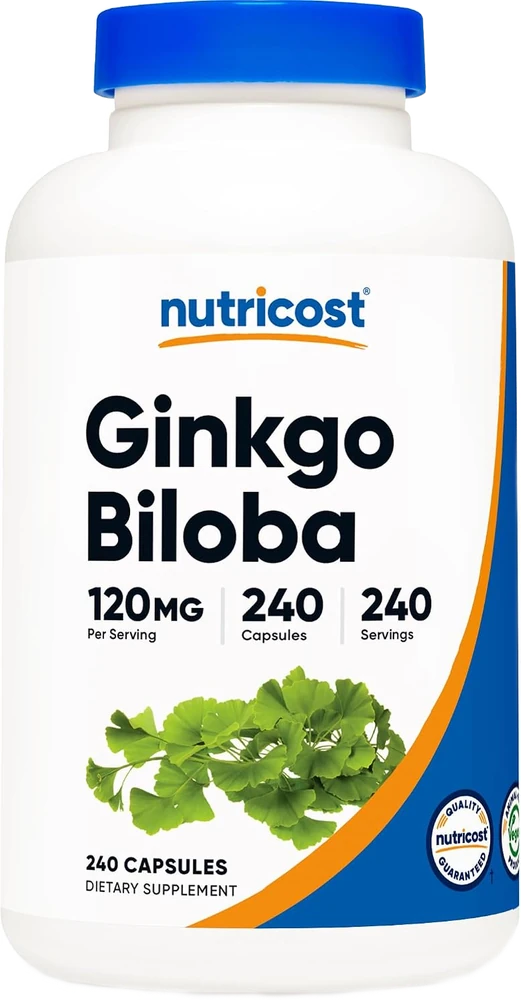 #9 of 9 · Best bulk value✓ Label verified · Supplement Facts read Sep 7, 2026
Real retailer photo, cut out. Label unedited.
Consider it. The cost-per-day champion — unbeatable value, thinner spec disclosure. A 240-count bottle at a full 120 mg per capsule = roughly seven cents a serving, the lowest cost-per-day on the list, made in a GMP-compliant, FDA-registered facility (non-GMO, gluten-free).
$16 / 240 capsules (~240 days at 1/day)~$0.07 per 120 mg capsule
Why It Scores 7.9 — And The Label Line Behind Each Number
Extract standardisation
30% of scoreA standardised extract, but the listing highlights only the 24% flavone-glycoside figure and is the least explicit on the list about the matching 6% terpene-lactone half. As with the other budget picks, the markers generally travel together in EGb 761-class material — but we score on disclosure, and this is the thinnest spec statement among the picks, so it sits well below those that clearly print the full 24%/6% spec.
- Standardisation
- 24% ginkgo flavone glycosides (listing); 6% terpene-lactone half not prominently stated
Dose vs the studied 120-240 mg range
25% of scoreA full 120 mg in one daily capsule — the trial-standard dose, no two-capsule math. Squarely inside the studied 120-240 mg range. The dose is exactly right; no issue here.
- Dose
- 120 mg (1 capsule)
Purity & third-party testing
20% of scoreMade in a GMP-compliant, FDA-registered facility, non-GMO and gluten-free — a reasonable baseline. Held back firmly by the absence of any independent third-party certification seal and no printed ginkgolic-acid limit. Budget-brand quality assurance, not the documented purity the higher picks carry (NOW's Non-GMO Project seal, Life Extension's <1 ppm limit).
- Manufacturing
- GMP-compliant, FDA-registered facility; non-GMO, gluten-free
- Testing
- Budget-brand QC; no independent third-party seal stated
Value per effective day
15% of scoreAbout $0.07 per 120 mg capsule in a 240-count bottle — the lowest cost-per-day on the entire list, edging even Life Extension's 365-count. For high-volume buyers who trust the spec, the value is unbeatable. This is the axis Nutricost wins decisively.
- Count
- 240 capsules (~240 days at 1/day)
- Price
- ~$16 / 240 caps = ~$0.07 per 120 mg serving
Real-world response
10% of scoreOne capsule a day at the clinical dose in a generous 240-count bottle — convenient and long-lasting. Loses ground for budget-brand positioning without a third-party seal, the generic single-herb presentation, and the 240-count upfront commitment. No-frills usability rather than a standout experience.
- Active form
- Ginkgo biloba standardized leaf extract
- More Specs
- Best for
- High-volume buyers optimising cost-per-day
Label verified. Every figure read from the Supplement Facts photo, Sep 7, 2026.
Marketing Claims Vs. Reality
Standardized to 24% ginkgo flavone glycosides.
Accurate as stated — a real standardised extract at 24% flavone glycosides. Scored partial because the listing doesn't clearly state the matching 6% terpene-lactone half of the full EGb 761 spec, which the higher-ranked picks print explicitly.
120 mg per capsule, 240 capsules per bottle.
A full 120 mg per capsule in a 240-count bottle — the trial-standard dose and the largest mid-size count on the list. Confirmed by the label; the basis for its category-best cost-per-day.
Made in a GMP-compliant, FDA-registered facility; non-GMO, gluten-free.
The listing states GMP-compliant, FDA-registered manufacturing, non-GMO and gluten-free — a reasonable quality baseline for a budget brand. No reason to doubt it; note it's not the same as an independent third-party certification.
Supports memory, focus, and circulation.
Real but modest, like all ginkgo. Standardised ginkgo supported cognition/circulation in impaired populations (Le Bars 1997; Herrschaft 2012; Pittler & Ernst 2000); it does not prevent decline in healthy people (GEM, DeKosky 2008). Honest as a support claim, not a strong-nootropic or prevention claim.
What Our Test Actually Found
It wins the value axis decisively — that's the whole pitch
Nutricost's case is simple and strong: at about seven cents per 120 mg serving in a 240-count bottle, it's the cheapest way to run a full clinical ginkgo dose on the entire list, edging even the bulk Life Extension 365-count. If your only goal is the lowest running cost for standardised 120 mg ginkgo and you'll buy 240 capsules at once, nothing here beats it. The value is real and it's the reason to buy.
The spec disclosure is the honest weak point
Like the other budget picks, the listing leads with the 24% flavone-glycoside figure without clearly stating the 6% terpene-lactone half. In a properly-made EGb 761-class extract those markers go together, so this is most likely a disclosure gap rather than a missing component — but we rank on what's printed, which is why Doctor's Best (#1) and Life Extension (#4), which spell out the full 24%/6%, sit above it. If complete spec documentation matters to you, those are the picks.
GMP-compliant and FDA-registered, but no third-party seal
Nutricost's quality baseline is reasonable: GMP-compliant, FDA-registered manufacturing, non-GMO, gluten-free. What it lacks is an independent certification seal or a printed ginkgolic-acid limit — the documented-purity edge that NOW (#3, Non-GMO Project Verified) and Life Extension (#4, <1 ppm ginkgolic acid) carry. For a value buyer comfortable with GMP-level assurance that's fine; for someone who wants outside verification, it's the gap that matters.
240 capsules is a commitment — sensible once you trust the herb
The 240-count is what unlocks the value, but it's also a larger single purchase for a modest-effect botanical. The sensible path mirrors the Life Extension logic: if you're new to ginkgo, trial a smaller bottle first; once you know it belongs in your routine, the 240-count Nutricost is among the cheapest ways to sustain it. The bulk value rewards conviction, not first-time experimentation.
Same honest ceiling — a modest symptomatic support
Like every ginkgo here, Nutricost's is a modest symptomatic helper, not a prevention drug. The replicated benefit is in memory and circulation for people with measurable impairment (Le Bars 1997; Herrschaft 2012; Pittler & Ernst 2000), and the GEM Study (DeKosky 2008) showed 240 mg/day didn't prevent decline over six years. Buy it as the cheapest way to run standardised ginkgo patiently for 6-8 weeks, and keep the expectation grounded.
Full analysis: all pros & cons (9), buy if / skip if
- Lowest cost-per-day on the list (~$0.07 per 120 mg serving) via the 240-count bottle
- Full 120 mg clinical dose in one daily capsule
- Made in a GMP-compliant, FDA-registered facility; non-GMO and gluten-free
- Generous 240-count bottle — a long supply for high-volume users
- Simple, no-frills single-herb formula at unbeatable value
- Listing highlights the 24% flavone-glycoside figure but not clearly the 6% terpene-lactone half
- Budget brand without an independent third-party certification seal
- No printed ginkgolic-acid limit (Life Extension #4 states <1 ppm)
- Modest, symptomatic effect — like all ginkgo, not a prevention drug
- You want the lowest cost-per-day on the list and will buy 240 capsules at once
- You're already sold on standardised ginkgo and just want the cheapest running cost
- You're comfortable with GMP-compliant, FDA-registered, non-GMO assurance
- You want a full 120 mg in one daily capsule at rock-bottom value
- You want the full 24%/6% spec clearly printed — Doctor's Best (#1) or Life Extension (#4) state it
- You want a third-party seal or a printed ginkgolic-acid limit — NOW (#3) / Life Extension (#4) deliver those
- You'd rather not buy 240 capsules upfront for a modest-effect botanical
A 240-count bottle at a full 120 mg per capsule = roughly seven cents a serving, the lowest cost-per-day on the list, made in a GMP-compliant, FDA-registered facility (non-GMO, gluten-free). It ranks #9 only because the listing foregrounds the 24% flavone-glycoside figure without clearly stating the 6% terpene-lactone half, and has no third-party seal. The right pick for a high-volume buyer optimising cost who trusts the standardisation; for documented spec, Doctor's Best (#1) or Life Extension (#4) edge it.
Nutricost Ginkgo Biloba 120 mg is the cost-per-day champion of the list. A 240-count bottle at a full 120 mg per capsule works out to roughly seven cents per daily serving — the cheapest way to run a full clinical ginkgo dose here — made in a GMP-compliant, FDA-registered facility, non-GMO and gluten-free. For a high-volume buyer who's already sold on standardised ginkgo and just wants the lowest running cost, it's hard to beat. It lands at #8 for the same reason most budget picks do: the listing highlights the 24% flavone-glycoside figure but is less explicit about the matching 6% terpene-lactone half of the spec, and it carries no independent third-party seal. That's a transparency gap rather than necessarily a quality one — a 24% flavone-glycoside extract is generally the same standardised material that hits 6% terpene lactones — but we score on what the listing states. Here's the full breakdown.
The value champion — buy it for the cheapest running cost, trust the spec.

Nutricost Ginkgo Biloba 120 mg is the bottle for a high-volume buyer who wants the lowest possible running cost. A 240-count bottle at a full 120 mg per capsule works out to about seven cents a serving — the cheapest daily ginkgo on the list — made in a GMP-compliant, FDA-registered facility, non-GMO and gluten-free. If you're already sold on standardised ginkgo and just want to run it as cheaply as possible, this wins the value axis outright. It isn't the spec leader, and we score it honestly. The listing foregrounds the 24% flavone-glycoside figure without clearly stating the 6% terpene-lactone half, and there's no third-party seal — so if you want the fullest documented spec, Doctor's Best (#1) prints it, and Life Extension (#4) adds a <1 ppm ginkgolic-acid limit. The 240-count is also a real upfront commitment, best made once you already trust the herb. As with all ginkgo, keep the expectation honest: it's a modest symptomatic support for memory and circulation (Le Bars 1997; Herrschaft 2012; Pittler & Ernst 2000), not a prevention drug — the GEM Study (DeKosky 2008) settled that. Take one capsule daily for 6-8 weeks, and you've run standardised ginkgo at the lowest cost available.
If This Doesn’t Fit — Try These
 01
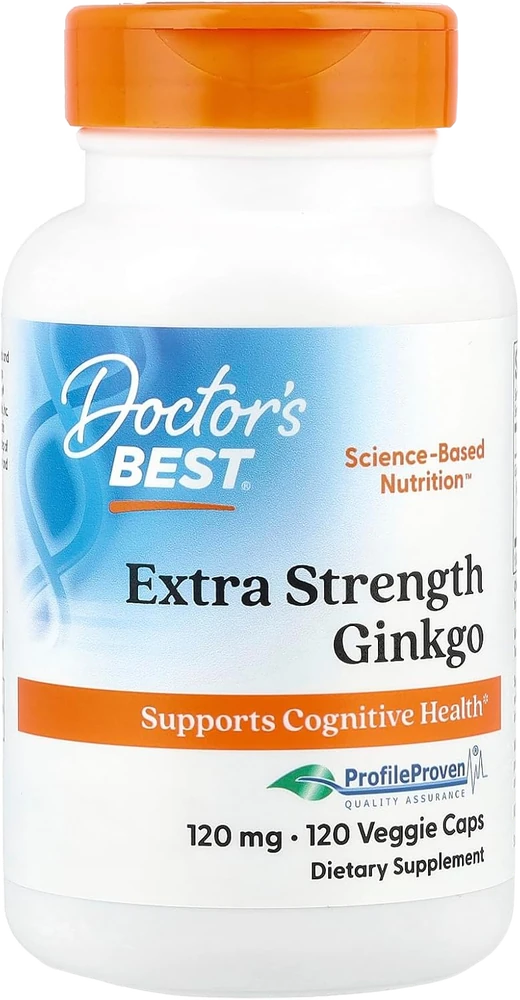
Doctor's Best Extra Strength Ginkgo
If you want one ginkgo bottle that matches what the studies actually tested, this is it.
 04
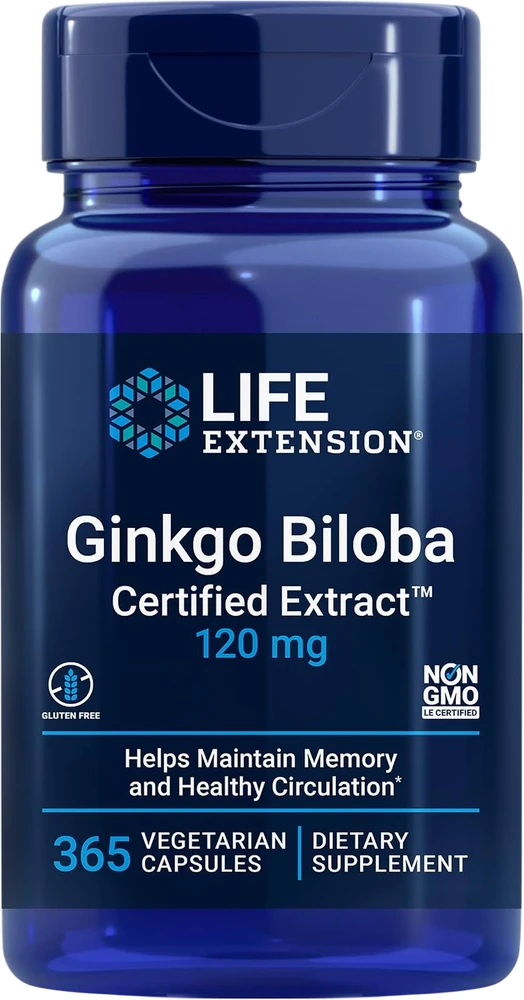
Life Extension Ginkgo Certified Extract
This is the connoisseur's purity pick.
 03
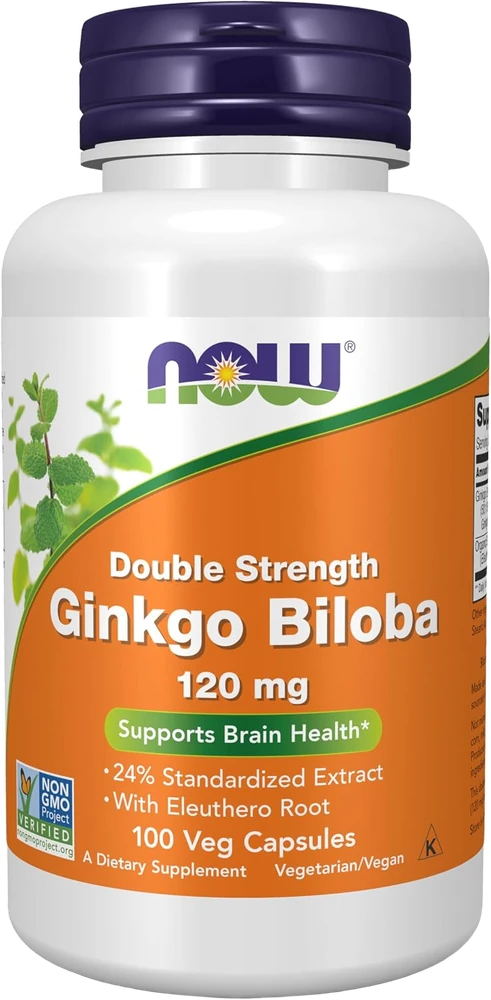
NOW Ginkgo Biloba 120 mg
NOW is the trust-and-value sweet spot.
Quick Answers
Is Nutricost really the cheapest per day on the list?
On raw cost-per-serving, yes — it's the value leader. A 240-count bottle at a full 120 mg per capsule works out to about seven cents per daily serving, edging even Life Extension's 365-count (~8 cents) and well under the spec-leaders like Doctor's Best (~11 cents). If your only goal is the lowest cost to run a full 120 mg ginkgo dose daily, and you're comfortable buying 240 capsules at once, Nutricost wins. The catch is that the value comes with slightly less spec transparency than the pricier picks — which is the trade-off the ranking reflects.
The listing says 24% flavone glycosides — what about the 6% terpene lactones?
The listing highlights the 24% flavone-glycoside figure but is less explicit about the matching 6% terpene-lactone half. As with the other budget picks, a properly-standardised 24% flavone-glycoside extract generally also hits 6% terpene lactones — the two markers travel together in EGb 761-class material — so this is most likely a disclosure gap rather than a missing component. But we score on what the listing actually states, which is why Nutricost sits below the picks (Doctor's Best, Life Extension) that clearly print the full 24%/6% spec. For most buyers it's still a genuine standardised 120 mg ginkgo at an unbeatable price.
Is Nutricost a trustworthy brand for ginkgo?
It's a reputable budget brand with reasonable quality credentials. Nutricost makes this in a GMP-compliant, FDA-registered facility, and the product is non-GMO and gluten-free — that's a solid baseline. What it doesn't have is an independent third-party certification seal or a printed ginkgolic-acid limit, which is where the spec-leaders (NOW's Non-GMO Project seal, Life Extension's <1 ppm limit) pull ahead. So: trustworthy enough for a value buyer who's comfortable with GMP-level assurance, but not the pick if you want documented third-party verification.
Why does it rank #8 if the value is so good?
Because value is only one of five criteria, and Nutricost wins that one decisively but gives ground on the others. Its standardisation disclosure is thinner (24% flavone-glycoside figure foregrounded, 6% terpene-lactone half not clearly stated), and it has no third-party seal. The dose (120 mg, one capsule) is perfect, and the value is the best on the list — but the spec-transparency gap and budget-brand positioning keep it from ranking higher. It's the right pick specifically for a high-volume buyer optimising cost-per-day who trusts the standardisation.
What should I realistically expect from it?
The same modest, honest outcome as any well-standardised ginkgo, at the lowest cost. Take one 120 mg capsule daily for at least 6-8 weeks. Standardised ginkgo has shown modest memory and circulation benefit in people with measurable impairment (Le Bars 1997; Herrschaft 2012; Pittler & Ernst 2000), but it does not prevent cognitive decline in healthy people — the six-year GEM Study (DeKosky 2008) found 240 mg/day no better than placebo. So treat the 240-count Nutricost bottle as the cheapest way to run standardised ginkgo patiently, not as a guaranteed memory boost or a prevention pill.
Sources & Further Reading
3 peer-reviewed sources, each linked to PubMed
- [1] Le Bars 1997 PMID 9343463 — A placebo-controlled, double-blind, randomized trial of an extract of Ginkgo biloba for dementia. 52-week RCT of standardised EGb 761 (120 mg/day) in dementia: modest cognitive/functional benefit vs placebo. The reference for the 120 mg standardised dose this bottle delivers.
- [2] Herrschaft 2012 PMID 22459264 — Ginkgo biloba extract EGb 761 in dementia with neuropsychiatric features: a randomised, placebo-controlled trial to confirm the efficacy and safety of a daily dose of 240 mg. 24-week RCT, 410 patients: 240 mg/day EGb 761 beat placebo on cognition and neuropsychiatric symptoms. Confirms standardised ginkgo's symptomatic benefit at the upper dose end.
- [3] DeKosky 2008 (GEM Study) PMID 19017911 — Ginkgo biloba for prevention of dementia: a randomized controlled trial. GEM Study: 3,069 older adults, ~6 years, 240 mg/day vs placebo — ginkgo did NOT prevent dementia. The honesty caveat for every ginkgo, this one included.
Affiliate disclosure: every Amazon link uses our Associates tag (superachieverclub-20). We earn a small commission at no cost to you; it funds independent reviews. We never accept payment to change a ranking.