
Pure Encapsulations Ginkgo 50, 160 mg Review
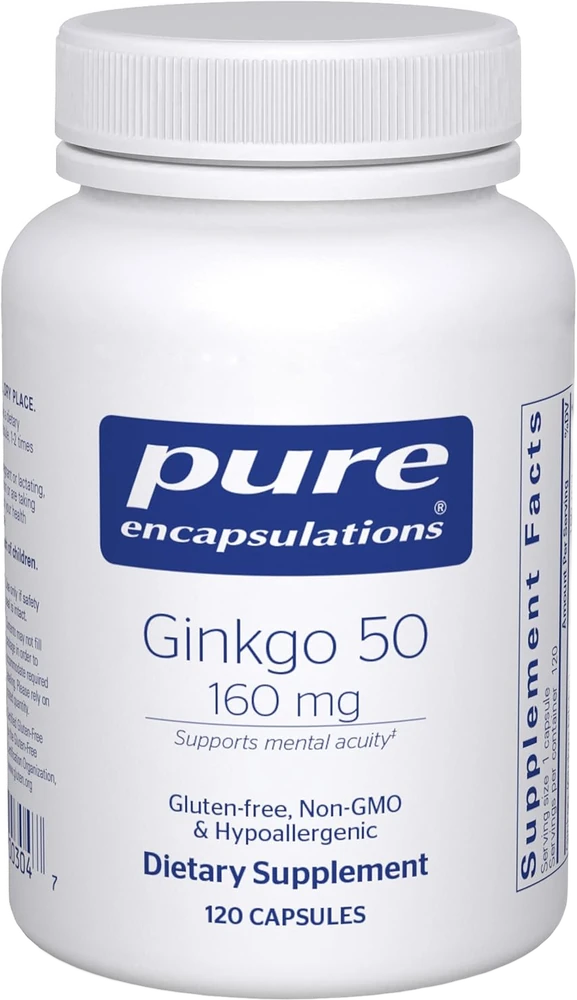 #5 of 9 · Best higher-dose✓ Label verified · Supplement Facts read Sep 7, 2026
Real retailer photo, cut out. Label unedited.
Consider it. The hypoallergenic, higher-dose pick — clean formula at a premium price. 160 mg of standardised 24%/6% extract per capsule, free from gluten, GMOs, and unnecessary fillers, from a practitioner-grade brand — a dose between the 120 mg trial standard and the 240 mg upper end.
$34 / 120 capsules (~120 days at 1/day)~$0.28 per 160 mg capsule
Why It Scores 8.6 — And The Label Line Behind Each Number
Extract standardisation
30% of scoreA 50:1 extract standardised to 24% ginkgo heterosides (the same class as flavone glycosides) and 6% terpene lactones — the full EGb 761-class spec, clearly stated. Top-tier standardisation; the 'heterosides' terminology is just Pure Encapsulations' label language for the standard marker.
- Standardisation
- 24% ginkgo heterosides / 6% terpene lactones
- Trial-dose alignment
- 160 mg sits between the 120 mg standard and 240 mg upper trial dose
Dose vs the studied 120-240 mg range
25% of score160 mg per capsule sits between the 120 mg trial standard (Le Bars 1997) and the 240 mg upper trial dose (Herrschaft 2012) — a legitimate, evidence-consistent dose. Scored just below a perfect 10 only because 160 mg is slightly above the most-studied 120 mg and more than some buyers need, not because it's outside the range.
- Dose
- 160 mg (1 capsule)
Purity & third-party testing
20% of scoreHypoallergenic and free from gluten, GMOs, and unnecessary binders and fillers, from a practitioner-channel brand built on clean single-ingredient formulas. Among the strongest formulation-purity stories on the list. A notch below the top only because, like most ginkgo, it doesn't print an explicit ginkgolic-acid limit (Life Extension's edge) or carry an NSF/USP seal.
Value per effective day
15% of scoreRoughly $0.28 per 160 mg capsule — the most expensive bottle on the list per serving. You're paying for the hypoallergenic formulation, the practitioner-grade brand, and a touch more extract per capsule, not a stronger effect. The weakest axis, and the main reason it ranks where it does despite excellent spec and formula.
- Count
- 120 capsules (~120 days at 1/day)
- Price
- ~$34 / 120 caps = ~$0.28 per 160 mg serving
Real-world response
10% of scoreOne clean capsule a day at a clinical-range dose, from a brand with a strong practitioner-channel reputation for tolerability — easy to take and unlikely to cause excipient reactions. Loses a touch only on the premium price-to-convenience ratio versus the value picks.
- Active form
- Ginkgo biloba leaf extract (50:1)
- More Specs
- Formulation
- Hypoallergenic — free from gluten, GMOs, unnecessary binders/fillers
- Best for
- Buyers wanting a clean, practitioner-grade, slightly-higher-dose ginkgo
Label verified. Every figure read from the Supplement Facts photo, Sep 7, 2026.
Marketing Claims Vs. Reality
50:1 extract standardized to 24% ginkgo heterosides and 6% terpene lactones.
The full EGb 761-class spec is stated, as a 50:1 extract. 'Ginkgo heterosides' is the same marker class as flavone glycosides — the standardisation is the clinical benchmark. Accurate and clearly disclosed.
160 mg per capsule, a higher standardized dose.
A full 160 mg per capsule — above the 120 mg trial standard and inside the studied 120-240 mg range. Confirmed by the label; an evidence-consistent dose.
Hypoallergenic — free from gluten, GMOs, and unnecessary fillers.
Consistent with Pure Encapsulations' practitioner-channel, clean-label formulation philosophy. The free-from claim is the brand's core identity and is reliably accurate.
Supports memory, concentration, and circulation.
Real but modest, like all ginkgo. Standardised ginkgo supported cognition/circulation in impaired populations (Le Bars 1997; Herrschaft 2012; Pittler & Ernst 2000); it does not prevent decline in healthy people (GEM, DeKosky 2008). Neither the higher dose nor the clean formula raises the efficacy ceiling.
What Our Test Actually Found
A legitimately higher dose, still inside the evidence
The 160 mg dose is the obvious differentiator, and it's a sound one: it sits between the 120 mg trial standard and the 240 mg upper trial dose, so it's fully consistent with the evidence. For a buyer who wants a touch more extract per capsule without leaving the studied range, it's a reasonable choice. Just don't read 'higher dose' as 'stronger effect' — 120 mg is the most-studied amount and works well; 160 mg is a preference, not an upgrade.
The hypoallergenic formula is the real reason to pay up
Pure Encapsulations' identity is clean, single-ingredient, free-from formulation — no gluten, no GMOs, no unnecessary binders or fillers — and that's what the premium buys. For someone who reacts to excipients or prefers practitioner-channel brands, that rigor is genuinely valuable and hard to find at commodity prices. It's the strongest formulation-purity story on the list, even if it doesn't print a ginkgolic-acid limit the way Life Extension (#4) does.
It's the most expensive bottle here — and that caps the ranking
At about twenty-eight cents per capsule, Ginkgo 50 is the priciest on the list per serving. The same 24%/6% spec is available at a lower 120 mg dose for a fraction of the price (Doctor's Best #1 at ~11 cents). So the value axis is where this pick gives ground hardest — the spec and formula are excellent, but you pay a clear premium for the hypoallergenic positioning and the extra 40 mg per capsule. That trade-off is the whole decision.
160 mg is more than a casual user needs
For simple maintenance dosing, 120 mg is the standard and is plenty — so the 160 mg here is slightly more extract than many buyers require. That's not a flaw, but it's worth naming: if you don't specifically want the higher dose or the clean formula, you're paying for capacity you may not use. The pick makes most sense for someone who values the hypoallergenic formulation AND wants a bit more per capsule, not for a cost-minimising maintenance buyer.
Same honest ceiling — purity and dose don't change the biology
Neither the cleaner formula nor the higher dose lifts ginkgo's modest, symptomatic effect. The replicated benefit is in memory and circulation for people with measurable impairment (Le Bars 1997; Herrschaft 2012; Pittler & Ernst 2000), and the GEM Study (DeKosky 2008) showed 240 mg/day didn't prevent decline over six years. Buy Ginkgo 50 for the clean, practitioner-grade formulation and the slightly higher dose, run it patiently for 6-8 weeks, and keep the expectation grounded.
Full analysis: all pros & cons (9), buy if / skip if
- Higher 160 mg standardised dose per capsule, still at the full 24%/6% spec
- Hypoallergenic — free from gluten, GMOs, and unnecessary binders/fillers
- Practitioner-grade brand favored for clean, single-ingredient formulas
- 50:1 extract, clearly standardised, in a convenient one-capsule-a-day format
- Strong choice for buyers sensitive to excipients or fillers
- Most expensive bottle on the list per serving (~$0.28 per 160 mg cap)
- 160 mg is more extract than some users need for simple maintenance
- No printed ginkgolic-acid limit (Life Extension #4 states <1 ppm)
- Modest, symptomatic effect — like all ginkgo, not raised by the higher dose or clean formula
- You want a hypoallergenic, filler-free ginkgo from a practitioner-grade brand
- You specifically want a slightly higher 160 mg dose (still inside the studied range)
- You react to binders, fillers, or common allergens in cheaper formulas
- You value clean, single-ingredient formulation over rock-bottom price
- You're cost-conscious — it's the most expensive bottle on the list per serving
- You just want the trial-standard 120 mg dose — Doctor's Best (#1) or NOW (#3) cost far less
- 160 mg is more extract than you need for simple maintenance dosing
160 mg of standardised 24%/6% extract per capsule, free from gluten, GMOs, and unnecessary fillers, from a practitioner-grade brand — a dose between the 120 mg trial standard and the 240 mg upper end. The catch is price: it's the most expensive bottle on the list, and 160 mg is more than casual users need. Worth it if you react to fillers or want practitioner-channel quality; if you just want the trial-standard dose, Doctor's Best (#1) does the same job for far less.
Pure Encapsulations Ginkgo 50 is the clean-formulation, slightly-higher-dose option. It delivers 160 mg of standardised 24%/6% extract (labelled '24% ginkgo heterosides / 6% terpene lactones,' a 50:1 extract) per capsule, in Pure Encapsulations' signature hypoallergenic, filler-free format. The 160 mg dose sits neatly between the 120 mg trial standard and the 240 mg upper trial dose — a legitimate, evidence-consistent amount with a bit more extract per capsule than the commodity picks. The trade-off is cost: at roughly twenty-eight cents per capsule this is the most expensive bottle on the list, and 160 mg is more than a casual user strictly needs. The premium buys the practitioner-grade, free-from formulation and the brand's clean-label reputation, not a stronger effect — and like all ginkgo, the underlying benefit is modest and symptomatic. For a buyer who wants a hypoallergenic ginkgo and a touch more extract, here's the full breakdown.
The clean, higher-dose pick — buy it for the formula, not the price.

Pure Encapsulations Ginkgo 50 is the ginkgo for buyers who want a hypoallergenic, practitioner-grade formula and a touch more extract per capsule. It delivers 160 mg of standardised 24%/6% extract — a legitimate dose between the 120 mg trial standard and the 240 mg upper end — in the brand's signature filler-free, free-from format. For someone who reacts to excipients or prefers clean single-ingredient formulas, it's the best-formulated ginkgo on the list. What it isn't is a value pick. At roughly twenty-eight cents per capsule it's the most expensive bottle here, and the same 24%/6% spec is available at a 120 mg dose for a fraction of the price (Doctor's Best #1). The premium buys the hypoallergenic formulation and the extra 40 mg per capsule, not a stronger effect — and 160 mg is more than a casual maintenance user needs. As with all ginkgo, keep the expectation honest: it's a modest symptomatic support for memory and circulation (Le Bars 1997; Herrschaft 2012; Pittler & Ernst 2000), not a prevention drug — the GEM Study (DeKosky 2008) settled that. Buy it for the clean formula and the dose, run it daily for 6-8 weeks, and judge it on its merits.
If This Doesn’t Fit — Try These
 01
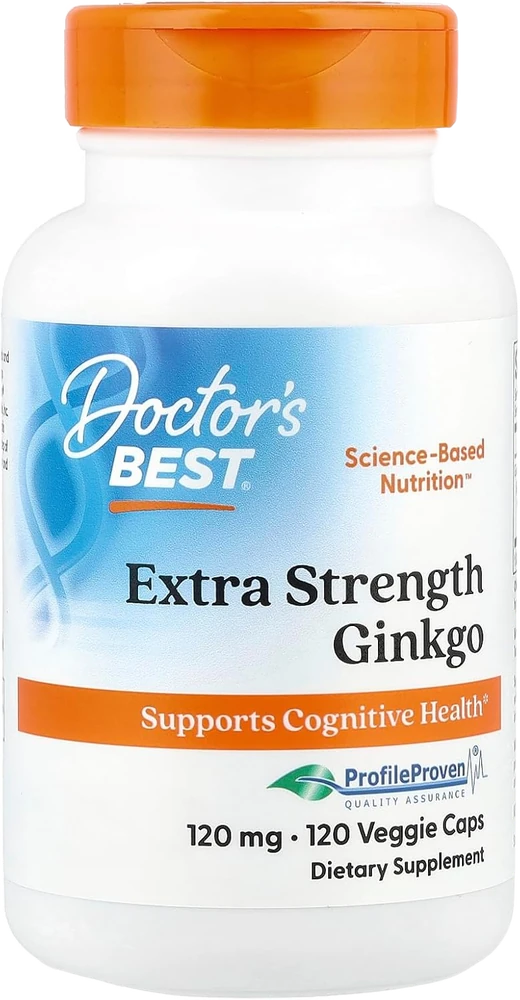
01Doctor's Best Extra Strength Ginkgo
If you want one ginkgo bottle that matches what the studies actually tested, this is it.
 04
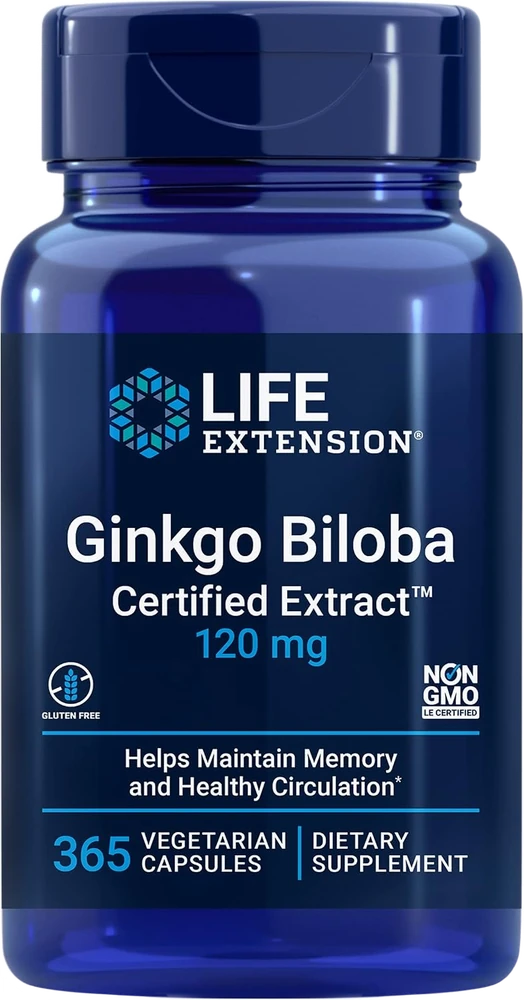
04Life Extension Ginkgo Certified Extract
This is the connoisseur's purity pick.
 03
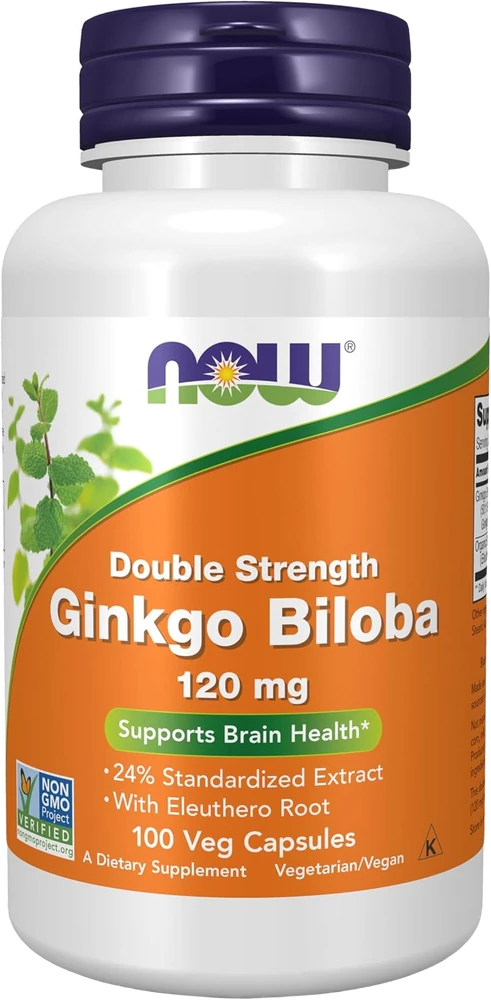
03NOW Ginkgo Biloba 120 mg
NOW is the trust-and-value sweet spot.
Quick Answers
Is 160 mg a better dose than the standard 120 mg?
Not better, just a bit higher and still well inside the studied range. The clinical trials ran from 120 mg/day (Le Bars 1997) to 240 mg/day (Herrschaft 2012), so 160 mg per capsule sits comfortably between the floor and ceiling — it's a legitimate, evidence-consistent dose. But 'higher' doesn't mean 'more effective' for everyone; 120 mg is the most-used trial dose and is plenty for most people. The 160 mg here is a reasonable choice if you specifically want a touch more extract per capsule, not a reason to expect a stronger result. Take one capsule a day either way.
What does '24% ginkgo heterosides' mean — is that the same as flavone glycosides?
Yes — 'ginkgo heterosides' and 'flavone (flavonol) glycosides' refer to the same class of standardised marker compounds; 'heterosides' is just the term Pure Encapsulations uses on this label. So '24% ginkgo heterosides / 6% terpene lactones' is the full EGb 761-class spec, the same 24%/6% standardisation as the other top picks, delivered as a 50:1 extract. The terminology difference is cosmetic; the standardisation is the clinical benchmark.
Why is Pure Encapsulations so much more expensive?
You're paying for the practitioner-grade, hypoallergenic positioning — and the slightly higher 160 mg dose. Pure Encapsulations is a brand favored in the practitioner channel for clean, single-ingredient formulas free from gluten, GMOs, and unnecessary binders and fillers. That 'free-from' rigor and brand reputation command a premium, and at roughly twenty-eight cents per 160 mg capsule this is the most expensive bottle on the list. Whether it's worth it depends on how much you value the hypoallergenic formulation; for the same 24%/6% spec at a lower dose and far lower price, Doctor's Best (#1) is the value pick.
Who is this pick actually for?
Someone who wants a clean, hypoallergenic ginkgo and a touch more extract per capsule, and is willing to pay for it. It's a good fit if you react to fillers or binders, prefer practitioner-channel brands, or specifically want a 160 mg dose rather than the 120 mg standard. It's a poor fit if you're cost-conscious or just want the trial-standard dose — in which case the 120 mg value picks (Doctor's Best #1, NOW #3) do the same core job for much less. The 160 mg is also more than a casual user needs for simple maintenance.
Will the higher dose or cleaner formula make ginkgo work better?
Marginally at most on dose, and not at all on the formula — purity is about tolerability, not efficacy. A 160 mg dose is inside the studied range, so it's evidence-consistent, but it won't reliably outperform a well-standardised 120 mg ginkgo. And a hypoallergenic, filler-free formula reduces the chance of reacting to excipients; it doesn't make the ginkgo itself stronger. The honest ceiling is the same for all ginkgo: a modest symptomatic support for memory and circulation (Le Bars 1997; Herrschaft 2012; Pittler & Ernst 2000), with no prevention benefit in healthy people (GEM, DeKosky 2008). Buy this for the clean formula and dose, not a bigger effect.
Sources & Further Reading
3 peer-reviewed sources, each linked to PubMed
- [1] Le Bars 1997 PMID 9343463 — A placebo-controlled, double-blind, randomized trial of an extract of Ginkgo biloba for dementia. 52-week RCT of standardised EGb 761 (120 mg/day) in dementia: modest cognitive/functional benefit vs placebo. The reference for the trial-standard dose; Ginkgo 50's 160 mg sits just above it.
- [2] Herrschaft 2012 PMID 22459264 — Ginkgo biloba extract EGb 761 in dementia with neuropsychiatric features: a randomised, placebo-controlled trial to confirm the efficacy and safety of a daily dose of 240 mg. 24-week RCT, 410 patients: 240 mg/day EGb 761 beat placebo on cognition and neuropsychiatric symptoms. Establishes the 240 mg upper end; Ginkgo 50's 160 mg dose sits inside this range.
- [3] DeKosky 2008 (GEM Study) PMID 19017911 — Ginkgo biloba for prevention of dementia: a randomized controlled trial. GEM Study: 3,069 older adults, ~6 years, 240 mg/day vs placebo — ginkgo did NOT prevent dementia. The honesty caveat: neither a higher dose nor a cleaner formula raises the efficacy ceiling.
Affiliate disclosure: every Amazon link uses our Associates tag (superachieverclub-20). We earn a small commission at no cost to you; it funds independent reviews. We never accept payment to change a ranking.