
Doctor's Best Extra Strength Ginkgo 120 mg Review
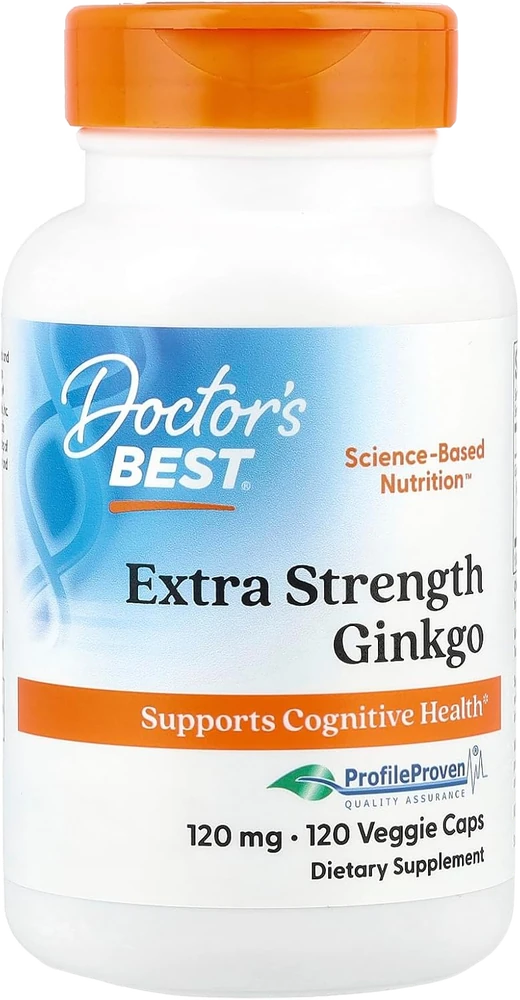 #1 of 9 · Best overall✓ Label verified · Supplement Facts read Sep 7, 2026
Real retailer photo, cut out. Label unedited.
Buy it. The textbook clinical ginkgo — right spec, right dose, best value. The exact 24%/6% EGb 761 standardisation and a full 120 mg in one daily capsule, at roughly eleven cents a serving — the cleanest spec-for-value pick in the category.
$13 / 120 veggie capsules (~120 days at 1/day)~$0.11 per 120 mg capsule
Why It Scores 9.4 — And The Label Line Behind Each Number
Extract standardisation
30% of scoreHits the EGb 761 benchmark exactly — 24% flavonol glycosides and 6% terpene lactones, as a clean single-herb 50:1 extract with no filler botanicals. This is the standardised material the clinical trials used, and there's no ambiguity in the listing about the full spec. The best possible score on the axis that matters most for ginkgo.
- Standardisation
- 24% flavonol glycosides / 6% terpene lactones
- Trial-dose alignment
- 120 mg matches Le Bars 1997; inside the studied 120-240 mg range
Dose vs the studied 120-240 mg range
25% of scoreA full 120 mg in one daily capsule — the trial-standard dose from Le Bars 1997, and the floor of the studied 120-240 mg range. No two-capsule math, no under-dosing. Take one a day and you're exactly where the symptomatic-benefit evidence sits.
- Dose
- 120 mg (1 veggie capsule)
Purity & third-party testing
20% of scoreNon-GMO, vegan, gluten- and soy-free, single-herb. Held below the top because the listing's quality assurance is in-house ('ProfileProven') rather than an independent third-party seal, and it doesn't print an explicit ginkgolic-acid limit the way Life Extension does. Solid and clean, but not best-in-class on documented purity.
- Testing
- In-house 'ProfileProven' QA (not an independent third-party seal)
Value per effective day
15% of scoreRoughly $0.11 per 120 mg capsule in a 120-count bottle — among the lowest cost-per-effective-day on the list, and the cheapest at this exact clinical spec. Only the bulk 240- and 365-count picks edge it on raw per-serving cost, and they trade away either spec clarity or upfront affordability to do it.
- Count
- 120 veggie capsules (~120 days at 1/day)
- Price
- ~$13 / 120 caps = ~$0.11 per 120 mg serving
Real-world response
10% of scoreOne veggie capsule a day at the right dose — trivial to stay consistent with, which matters for a botanical that needs weeks of daily use to show its modest effect. Reliable, no-nonsense format from an established brand. Loses a touch only for plain packaging and the absence of any added cognition co-factors.
- Active form
- Ginkgo biloba leaf extract (50:1)
- More Specs
- Free from
- Non-GMO, vegan, gluten-free, soy-free
- Best for
- Standardised memory + circulation support at the clinical dose
Label verified. Every figure read from the Supplement Facts photo, Sep 7, 2026.
Marketing Claims Vs. Reality
Standardized to 24% flavonol glycosides and 6% terpene lactones.
This is the EGb 761 benchmark spec used in the clinical trials, and it's clearly stated on the listing as a 50:1 single-herb extract. The most important claim a ginkgo product can make, and it's accurate here.
120 mg extra-strength dose in a single capsule.
A full 120 mg per veggie capsule — the trial-standard dose (Le Bars 1997) in one serving, with no two-capsule math. Confirmed by the label.
Supports memory, concentration, and healthy blood circulation.
Supported but modest. Standardised ginkgo improved cognition/function in dementia patients (Le Bars 1997; Herrschaft 2012) and pain-free walking distance in poor leg circulation (Pittler & Ernst 2000). The support is real at this dose, but the effect size is small — and it does NOT prevent decline in healthy people (GEM Study, DeKosky 2008).
Non-GMO, vegan, gluten-free.
The listing states non-GMO, vegan, and gluten- and soy-free, consistent with a clean single-herb formulation. No reason to doubt it.
ProfileProven quality.
'ProfileProven' is Doctor's Best's in-house QA language verifying the extract profile — genuine, but not an independent third-party certification (NSF/USP). Accurate as an in-house claim; buyers wanting an outside seal should know it isn't one.
What Our Test Actually Found
It matches the studied material — the rarest and most valuable thing in ginkgo
Most ginkgo buying mistakes come from grabbing a big-milligram raw-leaf bottle that has nothing to do with the studied extract. Doctor's Best avoids that entirely: 24% flavonol glycosides, 6% terpene lactones, clean 50:1 single-herb extract — the EGb 761 spec from the trials. When you take this, you're taking the closest commodity equivalent to what Le Bars 1997 and Herrschaft 2012 administered. That spec match, not the brand name, is why it tops the list.
The price-to-spec ratio is the best on the list
At roughly eleven cents per 120 mg capsule, Doctor's Best is among the cheapest ginkgo on Amazon AND the cheapest at this exact clinical spec. The only picks with a lower raw per-serving cost are bulk 240- and 365-count bottles (Nutricost, Life Extension), and they either state the spec less fully or cost much more upfront. For a buyer who wants trial-grade ginkgo without overpaying, this is the efficient choice.
In-house QA is the one place it gives ground
The honest limitation: the 'ProfileProven' QA is internal, not an independent third-party seal, and there's no printed ginkgolic-acid limit. For ginkgo this is normal — almost no bottle carries an NSF/USP seal — but if documented purity is your top priority, Life Extension (#4) prints an explicit <1 ppm ginkgolic-acid figure that this one doesn't. For most buyers, a clean non-GMO single-herb formula from an established brand is enough; for purity maximalists, it's the reason to look at #4.
Once-daily dosing is a real adherence advantage
Ginkgo only works if you actually take it for weeks, and a single 120 mg capsule a day is the easiest possible protocol — no splitting, no two-capsule math, no powder. Compared with the 60 mg-per-capsule picks (Jarrow #7, Solgar #8) that need two capsules for the clinical dose, this is simpler to sustain and stretches a 120-count bottle to a full four months. Convenience compounds into consistency, which is the whole ballgame with a slow botanical.
Keep the expectation honest — it's a modest symptomatic support
The spec is excellent, but the ceiling is set by ginkgo itself. The replicated benefit is modest and symptomatic — memory and circulation support in people with measurable impairment, not a dramatic lift in healthy brains. The six-year GEM Study (DeKosky 2008) found 240 mg/day didn't prevent dementia. So buy this as a low-cost, trial-grade extract to run patiently for a couple of months, judge it honestly, and don't expect it to do what no ginkgo has been shown to do.
Full analysis: all pros & cons (8), buy if / skip if
- Hits the exact 24%/6% EGb 761 spec as a clean single-herb 50:1 extract
- Full 120 mg clinical dose in one daily capsule — no two-capsule math
- Among the lowest costs per serving on the list (~$0.11 per 120 mg)
- Non-GMO, vegan, gluten- and soy-free
- Once-daily format makes the weeks of consistent dosing ginkgo needs effortless
- In-house 'ProfileProven' QA rather than an independent third-party (NSF/USP) seal
- No printed ginkgolic-acid limit (Life Extension #4 states <1 ppm)
- Modest, symptomatic effect — like all ginkgo, not a prevention drug or a strong nootropic for healthy adults
- You want the exact 24%/6% extract spec the clinical trials used, as a clean single-herb formula
- You want a full 120 mg in one daily capsule with no per-serving math
- You want the best combination of clinical-grade spec and price on the list
- You're patient — willing to run it daily for 6-8 weeks before judging the modest effect
- You specifically want an independent third-party (NSF/USP) seal — ginkgo rarely has one; in-house QC is the norm here
- You want a printed ginkgolic-acid limit — Life Extension (#4) is the pick that states <1 ppm
- You expect a strong, fast nootropic lift as a healthy adult — ginkgo's evidence is symptomatic and modest
The exact 24%/6% EGb 761 standardisation and a full 120 mg in one daily capsule, at roughly eleven cents a serving — the cleanest spec-for-value pick in the category. Non-GMO, vegan, single-herb. The only gap is that its QA is in-house, not a third-party seal. Buy it as a standardised 120 mg memory-and-circulation support, take it daily for 6-8 weeks before judging, and keep expectations honest: ginkgo is a modest symptomatic helper, not a prevention drug.
Doctor's Best Extra Strength Ginkgo is the bottle we hand to anyone who wants ginkgo that matches what the science actually tested. It lands the exact EGb 761 specification — 24% flavonol glycosides and 6% terpene lactones, as a clean single-herb 50:1 extract — and delivers a full 120 mg in one daily capsule, the trial-standard dose. It does all of that at roughly eleven cents a serving, which makes it the cleanest combination of clinical-grade spec and value on the entire list. The single thing keeping it from a perfect score is testing transparency: the listing cites an in-house 'ProfileProven' QA rather than an independent third-party seal. That's the realistic ceiling for ginkgo, where almost no bottle carries an outside lab certification. And one honest frame applies to every ginkgo product, this one included — it's a modest symptomatic support for memory and circulation at the studied dose, not a proven dementia-prevention pill. For the buyer who wants the right spec, the right dose, and a fair price, here's the full breakdown.
The default ginkgo to buy — right spec, right dose, best value.

Doctor's Best Extra Strength Ginkgo is what we recommend to almost everyone shopping this category. It lands the exact clinical specification (24% flavonol glycosides, 6% terpene lactones, clean single-herb extract), delivers the trial-standard 120 mg in one daily capsule, and prices it at roughly eleven cents a serving — the cleanest spec-for-value combination on the list. If you want ginkgo that resembles what the studies tested, without overpaying, start here. Two honest caveats keep it from being a no-asterisk pick. First, its quality assurance is in-house rather than a third-party seal, and it doesn't print a ginkgolic-acid limit — if documented purity is your priority, Life Extension (#4) does. Second, the limitation that applies to all ginkgo: the benefit is modest and symptomatic. Standardised ginkgo helped memory and circulation in people with measurable impairment (Le Bars 1997; Herrschaft 2012; Pittler & Ernst 2000), but the GEM Study (DeKosky 2008) showed it doesn't prevent decline in healthy older adults. Take one 120 mg capsule daily for 6-8 weeks, judge it honestly, and you've bought the best-value clinical-grade ginkgo available.
If This Doesn’t Fit — Try These
 03
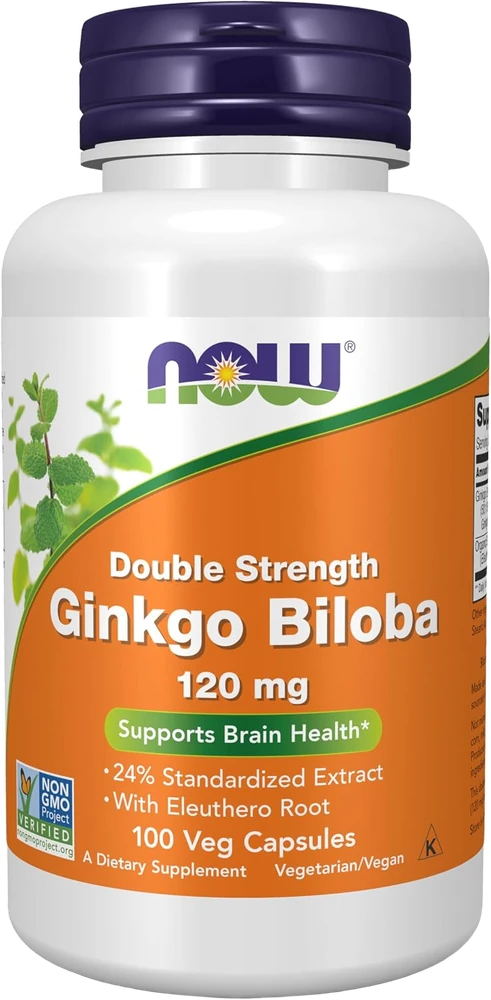
NOW Ginkgo Biloba 120 mg
NOW is the trust-and-value sweet spot.
 04
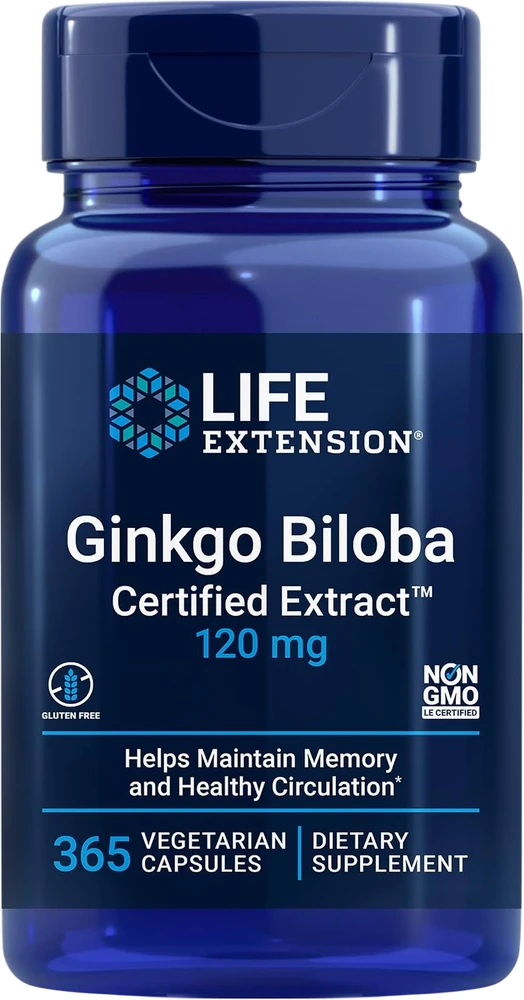
Life Extension Ginkgo Certified Extract
This is the connoisseur's purity pick.
 02
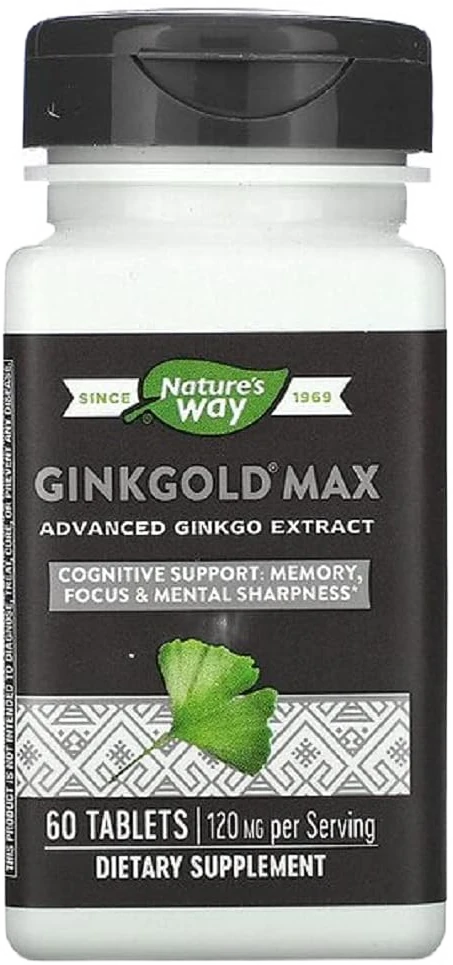
Nature's Way Ginkgold Max
If you want the ginkgo extract that's done the most time in clinical literature, Ginkgold is it, and Nature's Way delivers it at a clean 120 mg per once-daily tablet.
Quick Answers
Is the 24% / 6% standardisation on this bottle the one the studies used?
Yes — that's exactly why it's our #1. The clinical material behind almost every meaningful ginkgo trial is EGb 761, a leaf extract standardised to 24% flavonol (flavone) glycosides and 6% terpene lactones. Doctor's Best hits that benchmark as a clean single-herb 50:1 extract, so it most closely resembles what Le Bars 1997 (JAMA, 120 mg/day) and Herrschaft 2012 (240 mg/day) actually administered. A competitor's bottle that just says 'Ginkgo Biloba 500 mg' of raw leaf powder is not the same product, even though the milligram number looks bigger. The spec is the whole game with ginkgo, and this one nails it.
Is 120 mg a day the right dose, or should I take more?
120 mg/day in a single capsule is the trial-standard dose and the right starting point. Le Bars 1997 used 120 mg/day; Herrschaft 2012 confirmed benefit at 240 mg/day (taken as a once-daily dose). So 120 mg is squarely inside the studied 120-240 mg range, and most buyers do well there. If you're targeting the higher end of the range you could discuss 240 mg with your clinician, but more is not automatically better — and ginkgo's effect is modest at any dose. Take the one capsule consistently every day rather than chasing a bigger number.
Will this make my memory sharper if I'm healthy?
Be realistic. Ginkgo's replicated evidence is as a symptomatic support in people with dementia or measurable cognitive impairment, not as a sharpener for already-healthy brains. The large GEM Study (DeKosky 2008, JAMA) followed 3,000+ older adults for six years and found 240 mg/day ginkgo no better than placebo at preventing cognitive decline. So a standardised 120 mg ginkgo is a reasonable, low-risk memory-and-circulation support to trial — but if you're a healthy adult expecting a noticeable nootropic 'lift,' temper that expectation. The spec here is excellent; the ceiling is set by the herb's biology, not the brand.
What does 'ProfileProven' mean — is it third-party tested?
'ProfileProven' is Doctor's Best's in-house quality-assurance language, not an independent third-party certification like NSF or USP. It signals the brand verifies its own extract profile, which is meaningful, but it isn't the same as an outside lab seal. For ginkgo specifically, very few bottles carry a true third-party seal, so in-house QC is the realistic standard in this category — and this is held to a clean non-GMO, vegan, single-herb formula. If a printed contaminant limit matters most to you, Life Extension (#4) is the only pick that states an explicit <1 ppm ginkgolic-acid figure.
How long before I should expect to notice anything?
Give it at least 6-8 weeks of consistent daily dosing before judging. Ginkgo is a slow, cumulative botanical — the trials that found benefit ran for months (52 weeks in Le Bars 1997, 24 weeks in Herrschaft 2012), and circulation effects build over weeks too. Two weeks tells you nothing. Take one 120 mg capsule every day, ideally at the same time, and reassess after a couple of months. If you want a fast, obvious effect, ginkgo isn't that supplement; if you want a low-cost, trial-grade standardised extract to run patiently, this is the one.
Sources & Further Reading
3 peer-reviewed sources, each linked to PubMed
- [1] Le Bars 1997 PMID 9343463 — A placebo-controlled, double-blind, randomized trial of an extract of Ginkgo biloba for dementia. 52-week RCT of EGb 761 (120 mg/day) in Alzheimer's and multi-infarct dementia: a small but measurable benefit on cognition and function versus placebo. The anchor for the 120 mg standardised dose this bottle delivers.
- [2] Herrschaft 2012 PMID 22459264 — Ginkgo biloba extract EGb 761 in dementia with neuropsychiatric features: a randomised, placebo-controlled trial to confirm the efficacy and safety of a daily dose of 240 mg. 24-week RCT, 410 patients: EGb 761 240 mg/day beat placebo on cognition (SKT) and neuropsychiatric symptoms (NPI). Confirms standardised ginkgo's symptomatic benefit at the higher end of the studied dose range.
- [3] DeKosky 2008 (GEM Study) PMID 19017911 — Ginkgo biloba for prevention of dementia: a randomized controlled trial. GEM Study: 3,069 older adults, ~6 years, 240 mg/day EGb 761 vs placebo — ginkgo did NOT prevent dementia. Cited as the honesty caveat: even a perfect-spec bottle like this one is a symptomatic support, not a prevention drug.
Affiliate disclosure: every Amazon link uses our Associates tag (superachieverclub-20). We earn a small commission at no cost to you; it funds independent reviews. We never accept payment to change a ranking.