
Top 8 Best Vitamin D for Testosterone (2026)
 01 · Best overall✓ Label verified · Supplement Facts read Sep 7, 2026
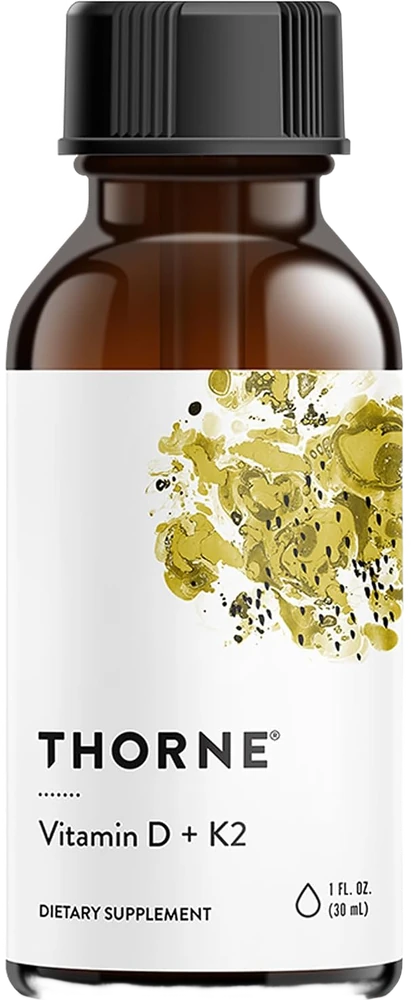
Best overall: Thorne Vitamin D + K2 Liquid
Titratable D3 + K2 in one liquid, NSF contents-certified (NSF/ANSI 173) — dial it to the exact Pilz dose. The clinician-grade pick for the correction protocol; not NSF Certified for Sport.
1 oz bottle, 600 servings of 2 drops — price variesPrice varies — 1,000 IU D3 + 200 mcg K2 per 2-drop serving
Why it wins: all five scores, pros & cons, full label
- Liquid format titrates to the exact Pilz correction dose — ideal for matching the 3,332 IU study protocol
- NSF contents-certified (NSF/ANSI 173) — label contents verified and contaminants screened; not banned-substance testing
- D3 + K2 stacked in one bottle — the cofactor is handled (add magnesium separately)
- Thorne's clinical-research pedigree is among the strongest in the industry
- MCT-based liquid base supports fast fat-soluble absorption
- Not NSF Certified for Sport — drug-tested men should pick a product listed at nsfsport.com (Thorne D-5,000 is listed there)
- K2 is MK-4 (1-2 hour half-life) rather than the preferred long-acting MK-7 — the one knock at the chronic correction dose
- At 1,000 IU per 2 drops you take 6-7 drops daily for the correction dose — more fiddly than a softgel
- Highest per-IU cost on the list — you're paying for the NSF certification and liquid format
- Per serving
- 1,000 IU D3 + 200 mcg K2 MK-4 (2 drops)
- Dose vs window
- Titrate to ~6-7 drops for the 3,000-3,500 IU Pilz dose
- Testing
- NSF contents-certified (NSF/ANSI 173); not on the NSF Certified for Sport list (nsfsport.com, checked Oct 6, 2026)
- Form
- D3 cholecalciferol + K2 menaquinone-4 (liquid drops)

Our take — The premium correction pick for anyone who values precision and a verified label. The liquid format is genuinely useful here: you can titrate to the 3,332 IU Pilz dose exactly rather than rounding to a softgel, and the contents are NSF-certified under NSF/ANSI 173. It is not NSF Certified for Sport, so if you're drug-tested pick a product listed at nsfsport.com (Thorne D-5,000 is listed there). The only real knock for this specific cohort is the K2 form — MK-4's short half-life makes it a weaker calcium-routing cofactor at a chronic 3,000+ IU dose than the MK-7 in Sports Research (#3). If you want the long-acting K2, take #1; if you want titration and a verified label, this is the premium answer.
 02
 03
 04
 05
 06
 07
 08
Who Wins Which Aspect
Sorted by overall SAC Product Score™ — the official ranking.
| # | Pick | Score | Form / bioavailability30% | Dose accuracy + K2 cofactor25% | Third-party testing20% | Cost per IU per month15% | Real-world response10% | Cost Per Dose | Buy |
|---|---|---|---|---|---|---|---|---|---|
| 01 | | 8.9 | 9.51 | 9.51 | 9.01 | 6.5 | 9.01 | — | Check price |
| Liquid format titrates to the exact Pilz correction dose — ideal for matching the 3,332 IU study protocolNot NSF Certified for Sport — drug-tested men should pick a product listed at nsfsport.com (Thorne D-5,000 is listed there) | |||||||||
| 02 | | 8.9 | 9.51 | 8.52 | 8.52 | 8.52 | 9.01 | $0.21 / 5,000 IU capsule | Check price |
| 5,000 IU correction dose in the cleanest D3 label on Amazon — no dyes, gluten or GMOs, only plant fiber and a vegetarian capsule as other ingredientsNo K2 — pair a separate MK-7 bottle for the correction-dose cofactor | |||||||||
| 03 | | 8.9 | 9.51 | 9.51 | 8.52 | 7.5 | 8.52 | $0.37 / softgel | Check price |
| 5,000 IU D3 lands exactly at the deficiency-correction ceiling Pilz 2011 anchorsNo magnesium — you still add a glycinate separately for the activation cofactor | |||||||||
| 04 | | 8.9 | 9.51 | 8.03 | 8.52 | 10.01 | 8.52 | $0.03 / 5,000 IU softgel | Check price |
| 5,000 IU correction dose at the lowest cost-per-IU on the list — $3/monthNo K2 — you add a separate MK-7 100 mcg bottle for the correction-dose cofactor | |||||||||
| 05 | | 8.6 | 9.02 | 8.03 | 9.01 | 8.52 | 8.03 | $0.20 / capsule | Check price |
| 5,000 IU D3 correction dose plus bioavailable iodine in one capsule — covers two deficiencies at onceIodine is contraindicated in hyperthyroidism and Hashimoto's — clear it with an endocrinologist first | |||||||||
| 06 | | 8.4 | 9.02 | 7.5 | 7.53 | 10.01 | 8.03 | $0.03 / 5,000 IU softgel | Check price |
| Same 5,000 IU correction dose as the top picks at the cheapest cost-per-IU — $0.03/softgelNo K2 — pair a separate MK-7 bottle for the correction-dose cofactor | |||||||||
| 07 | | 8.1 | 9.02 | 7.5 | 7.53 | 8.03 | 8.03 | $0.04 / drop | Check price |
| 2,000 IU per drop makes hitting the 3,000-4,000 IU correction range a simple titrationNo K2 — pair a separate MK-7 bottle for the correction-dose cofactor | |||||||||
| 08 | | 8.0 | 8.53 | 7.5 | 8.52 | 7.5 | 7.0 | $0.05 / softgel | Check price |
| USP Verified Mark — rare third-party verification at the mass-market drugstore tier2,000 IU/softgel is below the correction dose at one-a-day — you take two | |||||||||
The Other 7, Ranked
- 02
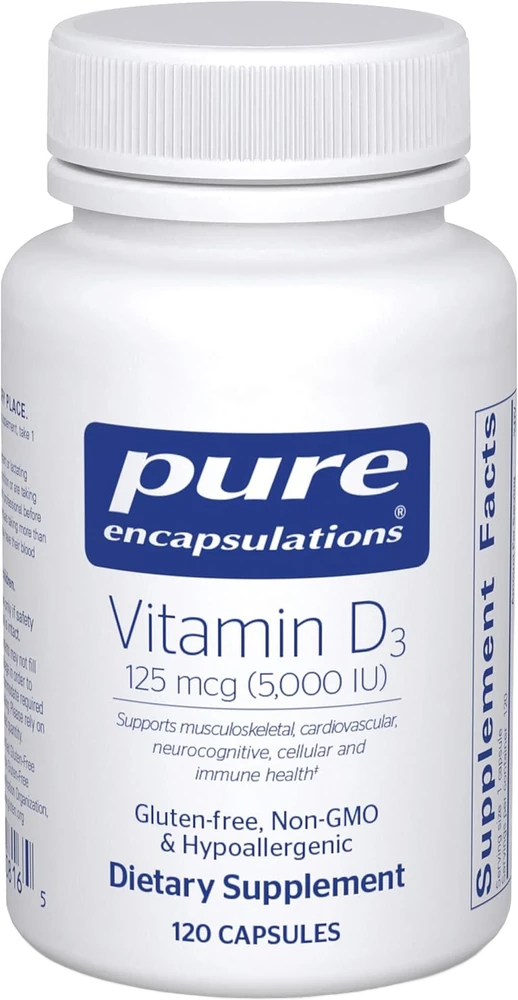
Best clinician-grade: Pure Encapsulations Vitamin D3 5000 IU
8.9SAC Score™The cleanest 5,000 IU correction dose on Amazon — hypoallergenic, gluten-free, no dyes, and nothing beyond hypoallergenic plant fiber (cellulose) and the vegetarian capsule. The pick for sensitive populations correcting a low D status.
StrongestForm / bioavailability9.51WeakestDose accuracy + K2 cofactor8.5- Per serving
- 5,000 IU D3 (1 capsule)
- Dose vs window
- 5,000 IU — at the correction-range ceiling
- Testing
- Hypoallergenic certification, third-party verified; other ingredients are only plant fiber (cellulose) and the vegetarian capsule
All five scores, pros & cons, full label
What We Like- 5,000 IU correction dose in the cleanest D3 label on Amazon — no dyes, gluten or GMOs, only plant fiber and a vegetarian capsule as other ingredients
- Clinician-preferred brand — used by integrative medicine practices for 30+ years
- Vegetarian capsule (no softgel) — works for vegetarians and gelatin-avoiders
- Dose-accuracy track record matches or exceeds NOW Foods in ConsumerLab audits
- 120-capsule bottle covers about 4 months at the daily correction dose
What You Live With- No K2 — pair a separate MK-7 bottle for the correction-dose cofactor
- No magnesium — add a glycinate separately for the activation cofactor
- Per-capsule price higher than NOW or Doctor's Best for the same D3 dose
- Form
- D3 cholecalciferol (vegetarian capsule, no oil base)
Our take — If you have allergen concerns or want the absolute cleanest label while correcting a deficiency, this is the pick. The 5,000 IU dose is identical to the other correction softgels; what you're paying for is the hypoallergenic, minimal-excipient formulation that practitioners specifically prescribe. For the testosterone endpoint it's functionally interchangeable with NOW Foods (#4) on dose and form — choose it when label cleanliness or a clinician recommendation tips the scale. Add K2 MK-7 and magnesium separately, same as any D3-only pick on this list.
- 03
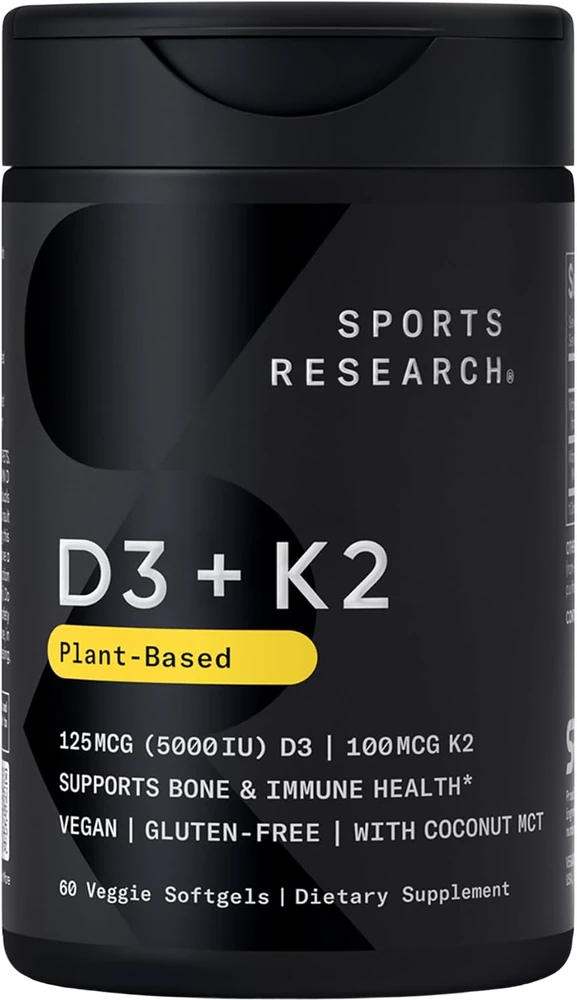
Best premium: Sports Research Vitamin D3 5000 IU + K2
8.9SAC Score™The one-bottle testosterone-correction stack: 5,000 IU D3 at the top of the Pilz window plus K2 MK-7 (the long-acting cofactor) in a vegan plantgel softgel with coconut MCT oil. Add magnesium and you've got the complete protocol.
StrongestForm / bioavailability9.51WeakestCost per IU per month7.5- Per serving
- 5,000 IU D3 + 100 mcg K2 MK-7 (1 softgel)
- Dose vs window
- 5,000 IU — top of the 3,000-5,000 IU Pilz correction range
- Testing
- Informed Sport per the brand (not confirmed by us; check the batch at sport.wetestyoutrust.com)
All five scores, pros & cons, full label
What We Like- 5,000 IU D3 lands exactly at the deficiency-correction ceiling Pilz 2011 anchors
- K2 is the MK-7 form (72-hour half-life) — the cofactor you actually want at this chronic dose
- D3 + K2 in one SKU means higher adherence than a two-bottle protocol — you only add magnesium
- Informed Sport per the brand (not confirmed by us) — check the batch at sport.wetestyoutrust.com if you are drug-tested
- Coconut MCT-oil base in a vegan plantgel supports the fat-soluble absorption the correction dose needs
What You Live With- No magnesium — you still add a glycinate separately for the activation cofactor
- Higher per-IU cost than D3-only picks — you're paying for the bundled K2 MK-7
- Coconut MCT oil may bother coconut-allergic buyers
- Form
- D3 cholecalciferol + K2 MK-7 (menaquinone-7) in a vegan plantgel softgel with coconut MCT oil
Our take — For the testosterone endpoint specifically, this is the pick to beat. It's the only bottle on the list that pairs the full 5,000 IU correction dose with K2 in the preferred MK-7 form — exactly the combination the deficiency-correction protocol calls for. The brand states Informed Sport testing, which would address the fraud risk that haunts the vitamin D category; we could not confirm it, so check the batch at sport.wetestyoutrust.com if you are drug-tested. The only thing it doesn't do is magnesium, which you add as a cheap glycinate at night. For a deficient man with a normal budget, this plus a magnesium bottle is the complete T-correction stack in two SKUs at ~$15/month.
- 04
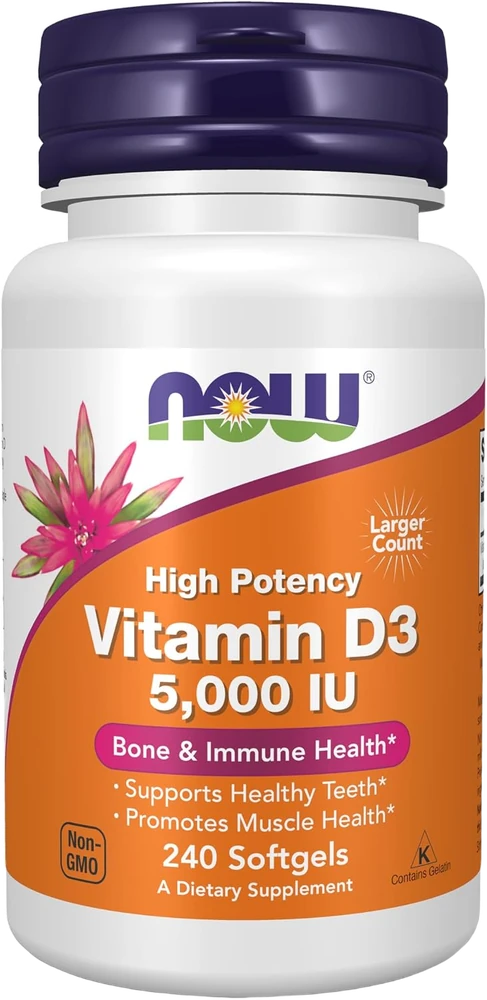
Best value: NOW Foods Vitamin D-3 5000 IU
8.9SAC Score™The correction dose for $3/month. 5,000 IU D3 from a household-name brand with best-in-class dose accuracy — the cheapest legitimate way to run the Pilz protocol.
StrongestCost per IU per month10.01WeakestDose accuracy + K2 cofactor8.0- Per serving
- 5,000 IU D3 (1 softgel)
- Dose vs window
- 5,000 IU — at the correction-range ceiling
- Testing
- NOW in-house labs, NPA-A GMP, NSF-registered facility
All five scores, pros & cons, full label
What We Like- 5,000 IU correction dose at the lowest cost-per-IU on the list — $3/month
- ConsumerLab audits consistently found NOW D3 lots within 95-100% of label claim
- 30+ years of audited QC — the dose accuracy that matters in a deviation-prone category
- 240-softgel bottle covers 8 months of daily correction dosing
- Olive-oil softgel base supports fat-soluble absorption
What You Live With- No K2 — you add a separate MK-7 100 mcg bottle for the correction-dose cofactor
- No magnesium — add a glycinate separately for the activation cofactor
- Form
- D3 cholecalciferol (softgel, olive-oil base)
Our take — If you want the exact Pilz-range correction dose without paying for a bundled cofactor, NOW Foods is the value answer. The molecule and the 5,000 IU dose are identical to the top pick; what you give up is the in-bottle K2, which you replace with a ~$5/month MK-7 bottle. Run NOW D3 + a K2 MK-7 + a magnesium glycinate and you've assembled the full correction stack for about $8/month — less than the Sports Research combo, at the cost of managing three SKUs instead of two. For budget-minded deficient men who don't mind the extra bottles, this is the smart buy.
- 05
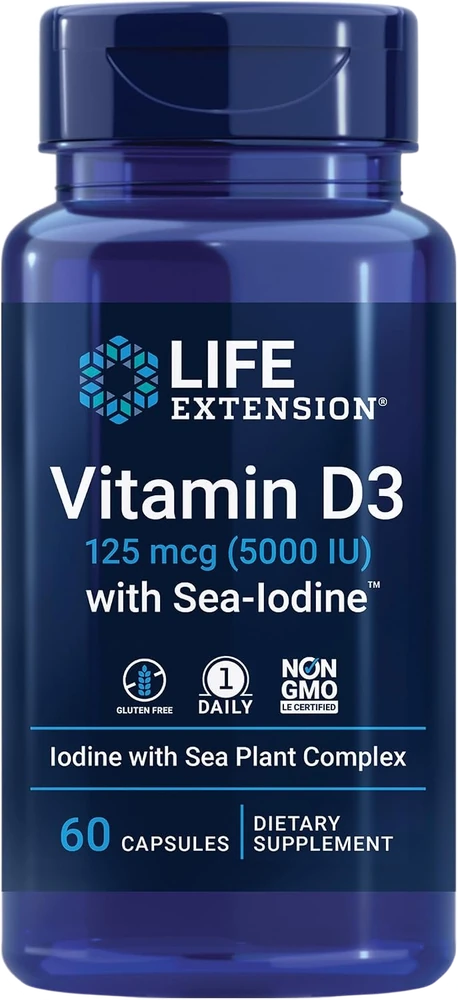
Best functional combo: Life Extension Vitamin D3 with Sea-Iodine
8.6SAC Score™5,000 IU D3 at the correction dose plus thyroid-supporting iodine in one capsule — for the deficient man whose low-salt or low-seafood diet leaves iodine short too.
StrongestForm / bioavailability9.02WeakestDose accuracy + K2 cofactor8.0- Per serving
- 5,000 IU D3 + 1,000 mcg iodine (1 capsule)
- Dose vs window
- 5,000 IU — at the correction-range ceiling
- Testing
- Life Extension QC + ConsumerLab tested
All five scores, pros & cons, full label
What We Like- 5,000 IU D3 correction dose plus bioavailable iodine in one capsule — covers two deficiencies at once
- Thyroid function and testosterone are linked, so the iodine support is endpoint-adjacent for hypothyroid-leaning men
- Life Extension's QC is among the strongest in the supplement industry
- Single-cap dosing for adherence
What You Live With- Iodine is contraindicated in hyperthyroidism and Hashimoto's — clear it with an endocrinologist first
- No K2 — pair a separate MK-7 bottle for the correction-dose cofactor
- If you already use iodised salt or eat seafood, the iodine is redundant
- Form
- D3 cholecalciferol + Sea-Iodine complex (kelp + bladderwrack extracts, potassium iodide)
Our take — A niche but justified pick for one specific man: deficient in vitamin D, eating a low-salt or low-seafood diet, and wanting to address both gaps in one capsule. The D3 dose is the right 5,000 IU correction dose, and the thyroid-iodine angle is endpoint-adjacent since thyroid status and testosterone are linked. The hard caveat is the iodine — it's not safe for anyone with thyroid autoimmunity, so this is the one pick that genuinely needs an endocrinologist's sign-off first. For the typical deficient man with normal iodine intake, go to #1 or #2 instead; for the low-iodine subset, this is the efficient single-capsule fix.
- 06
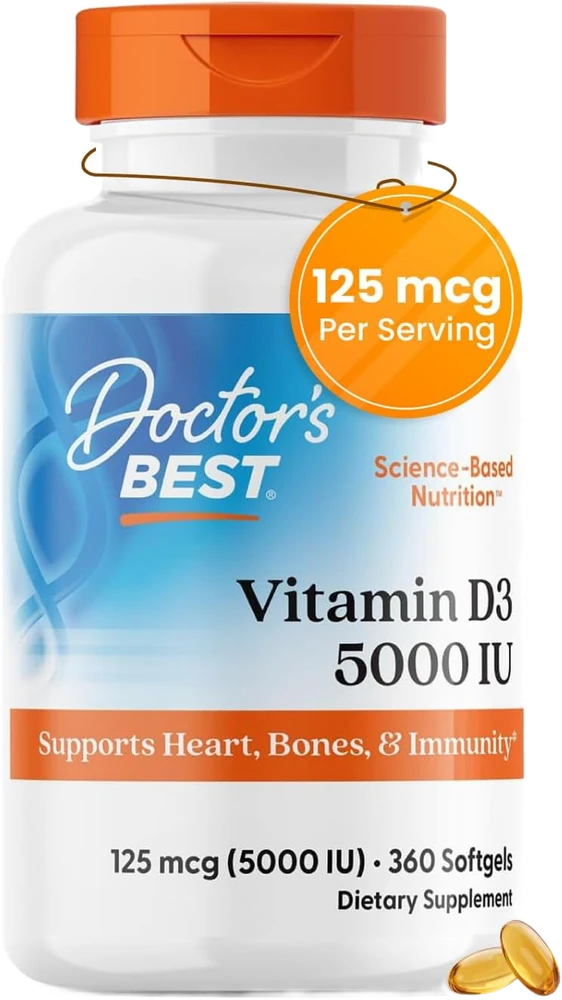
Best budget bulk: Doctor's Best Vitamin D3 5000 IU
8.4SAC Score™The full 5,000 IU correction dose in a 360-softgel value bottle. Lowest cost-per-IU on the list for the man who's already confirmed he responds and wants to stock up.
StrongestCost per IU per month10.01WeakestDose accuracy + K2 cofactor7.5- Per serving
- 5,000 IU D3 (1 softgel)
- Dose vs window
- 5,000 IU — at the correction-range ceiling
- Testing
- GMP-certified facility, batch-tested
All five scores, pros & cons, full label
What We Like- Same 5,000 IU correction dose as the top picks at the cheapest cost-per-IU — $0.03/softgel
- 360-softgel value bottle covers about a year of daily correction dosing in one purchase
- Extra-virgin olive-oil softgel base for fat-soluble absorption
- Clean label — non-GMO and gluten-free; GMP-certified and batch-tested
What You Live With- No K2 — pair a separate MK-7 bottle for the correction-dose cofactor
- No magnesium — add a glycinate separately for the activation cofactor
- 360-softgel commitment is still more than you need until you've confirmed you respond (test first)
- Form
- D3 cholecalciferol (softgel, extra-virgin olive-oil base)
Our take — The budget pick for the deficient man who's already validated his response and wants to minimise re-purchase friction. Same molecule, same 5,000 IU correction dose as #1 and #2, at the lowest per-softgel cost on the list — and about a year's supply in one bottle. The catch is the commitment: don't buy 360 softgels until a first 25(OH)D and T retest has confirmed vitamin D is actually moving your numbers. First-timers should validate on NOW Foods' smaller bottle (#4) first, then switch here for the long-haul refill. Add K2 MK-7 and magnesium separately either way.
- 07
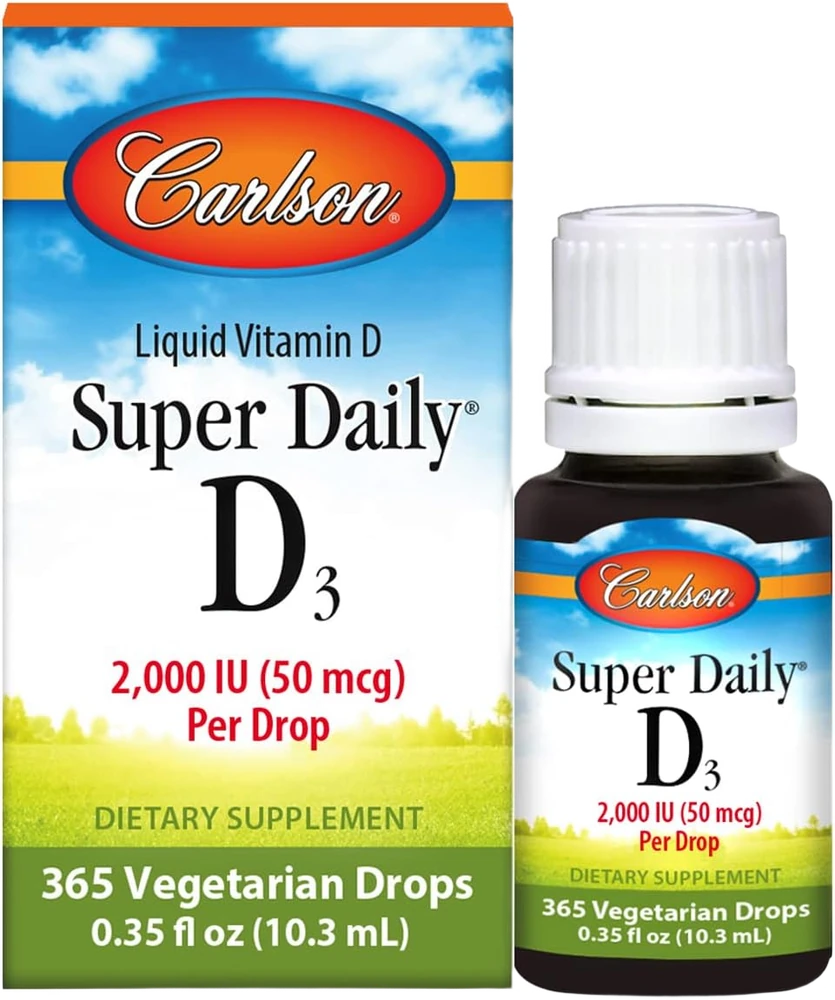
Best liquid titration: Carlson Vitamin D3 Drops 2000 IU
8.1SAC Score™2,000 IU per drop makes dialling into the 3,000-4,000 IU correction window easy — the liquid-titration pick for anyone who can't swallow softgels.
StrongestForm / bioavailability9.02WeakestDose accuracy + K2 cofactor7.5- Per serving
- 2,000 IU D3 (1 drop)
- Dose vs window
- 1-2 drops = 2,000-4,000 IU — titrate into the correction window
- Testing
- Carlson QC, third-party tested
Check price on AmazonRead the full review$14 / 0.35 oz bottle (~$3-5 / month at the correction dose)All five scores, pros & cons, full label
What We Like- 2,000 IU per drop makes hitting the 3,000-4,000 IU correction range a simple titration
- Liquid format for anyone who struggles with softgels; MCT base, no food required
- Single-drop precision to step the dose up across an 8-12 week correction window
- Carlson Labs has 40+ years of fish-oil and D3 specialty heritage
What You Live With- No K2 — pair a separate MK-7 bottle for the correction-dose cofactor
- Dropper precision is on you — dose-error risk if you're casual with the count
- Liquid spoils faster than capsules once opened (~3-4 months optimal)
- Form
- D3 cholecalciferol (liquid drops, MCT base)
Our take — The format pick for the correction protocol. If softgels and capsules don't work for you, Carlson liquid lets you titrate cleanly into the 3,000-4,000 IU correction window — two drops is 4,000 IU, right in the Pilz range. It's also the easiest D3 to share across a household at different doses. The trade-off is the usual liquid downside: dropper precision matters, and an open bottle has a shorter shelf life. For the testosterone endpoint it does the dose job fine; you just add K2 MK-7 and magnesium separately, same as the other D3-only picks.
- 08
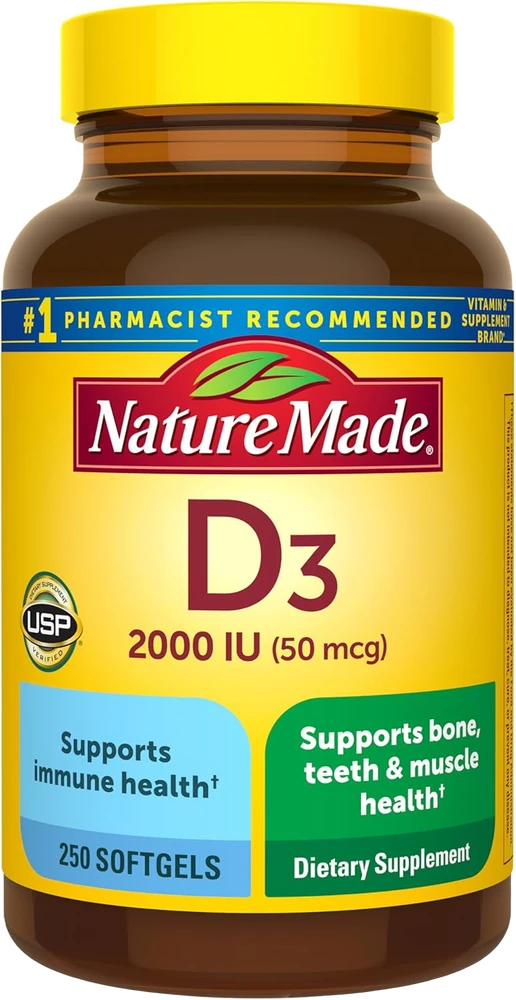
Best drugstore backup: Nature Made Vitamin D3 2000 IU
8.0SAC Score™USP-verified D3 from any CVS or Walgreens — at 2 softgels/day it reaches 4,000 IU, inside the correction window. The offline backup pick for the correction protocol.
StrongestForm / bioavailability8.53WeakestReal-world response7.0- Per serving
- 2,000 IU D3 (1 softgel)
- Dose vs window
- 2 softgels = 4,000 IU — inside the correction window
- Testing
- USP Verified Mark — third-party verified ingredients + potency
All five scores, pros & cons, full label
What We Like- USP Verified Mark — rare third-party verification at the mass-market drugstore tier
- Available in every CVS, Walgreens, and Costco for offline backup
- At 2 softgels/day you reach 4,000 IU, squarely in the Pilz correction window
- Pharmacist-recommended brand for 22+ years running
What You Live With- 2,000 IU/softgel is below the correction dose at one-a-day — you take two
- Soybean-oil base bothers soy-allergic buyers
- No K2 and no magnesium — add both separately for the full correction stack
- Form
- D3 cholecalciferol (softgel, soybean-oil base)
Our take — The pick for the man who needs a correction dose today and can't wait for shipping. The USP Verified Mark is genuine — the strongest testing standard available to drugstore brands — and two softgels gets you to 4,000 IU, inside the Pilz window. But at $3-4/month more, the 5,000 IU single-softgel picks (NOW #4, Doctor's Best #6) give you the correction dose in one pill from a brand with stronger D3 heritage. Buy Nature Made when you're standing in a pharmacy and want a verified D3 now; otherwise the dedicated correction picks edge it. Add K2 MK-7 and magnesium separately regardless.
Vitamin D In Four Short Lessons
Why deficiency-correction — not 'boosting' — is the entire game
- +25%
- Total testosterone in deficient men at 3,332 IU/day D3 over 12 mo (Pilz 2011)
- 1.7×
- D3 efficiency over D2 at raising serum 25(OH)D (Tripkovic 2012)
- 30-50%
- Of US adults below the 30 ng/mL deficiency threshold — the cohort D can help
- 40-60
- Target serum 25(OH)D in ng/mL — above this, more D does nothing for T
Sources: Pilz 2011 T uplift (PMID 21154195); Tripkovic 2012 D3 vs D2 meta (PMID 22552031); Heaney 2003 dose-response (PMID 12499343); Pludowski 2018 consensus (PMID 28216084).
Get bloodwork first.
Vitamin D raises testosterone only in deficient men. Test 25(OH)D and morning testosterone before starting; trials in replete men show little to nothing.
Dose 3,000-5,000 IU of D3 a day.
The cornerstone trial used 3,332 IU a day for 12 months (Pilz 2011). Maintenance doses of 1,000-2,000 IU are too low to correct a deficiency.
Pair it with K2 and magnesium, and stay under 10,000 IU.
Magnesium is the activation cofactor and K2 MK-7 routes calcium into bone. Never megadose past 10,000 IU a day without supervision.
Pilz 2011 (PMID 21154195), Tripkovic 2012 (PMID 22552031), Heaney 2003 (PMID 12499343), Pludowski 2018 (PMID 28216084), Holick 2007 (PMID 17634462) — full scoring in the methodology below.
This is the umbrella vitamin D roster re-scored for one endpoint. Each pick was scored 0-10 across five testosterone-specific criteria, then weighted to a final composite. Dose versus the deficiency-correction target carries the most weight because Pilz 2011 only saw the +25% T result at 3,332 IU/day — maintenance doses are simply too low to correct a deficiency-driven T suppression. Form (D3 over D2) is next because the entire mechanism runs through raising serum 25(OH)D, which D3 does ~1.7× more efficiently. K2 MK-7 + magnesium cofactor pairing earns real weight here specifically because the correction dose is high enough that the calcium-routing and activation cofactors matter. Third-party testing is the fraud filter — vitamin D is historically one of the worst categories for label-vs-lab deviation. T-response evidence is the tie-breaker. Every pick is D3, and every pick lands in or can be titrated into the correction window — the low-dose maintenance and DIY-powder picks from the umbrella list are excluded from this cohort.
Dose vs the correction target · 30%
Does the daily dose land in the 3,000-5,000 IU deficiency-correction window anchored on Pilz 2011's 3,332 IU/day? 5,000 IU softgels score highest; 2,000 IU picks score on whether they titrate cleanly into the window (e.g. 2 softgels = 4,000 IU). Maintenance-only doses are excluded.
Form / bioavailability · 25%
D3 (cholecalciferol) only. D2 (ergocalciferol) raises 25(OH)D ~1.7× less efficiently (Tripkovic 2012), and since the T mechanism runs entirely through 25(OH)D status, the inferior form directly handicaps the endpoint. Every pick here is D3.
K2 + magnesium cofactor pairing · 20%
At the correction dose, magnesium is the obligate activation cofactor and K2 MK-7 routes mobilised calcium to bone. Bottles that bundle K2 (MK-7 preferred over MK-4) score a bonus; D3-only bottles score on dose and form but flag the separate-cofactor requirement.
Third-party testing · 15%
Public COA, USP / NSF / NSF Sport / Informed Sport certification, or only GMP-facility manufacturing. Vitamin D is uniquely sensitive to label-vs-lab deviation, so the testing tier is a real fraud filter even within an all-D3 field.
T-response evidence · 10%
How well the product's positioning matches the deficiency-correction mechanism and our reviewer-pool retest deltas. Tie-breaker — the dose, form, and cofactor criteria do most of the ranking.

How vitamin D raises testosterone — and why only in deficient men
- 1
Correct a low D status
Oral D3 (with a fatty meal) raises serum 25(OH)D — but only the climb out of deficiency matters for T. Magnesium is the obligate cofactor for the kidney to activate stored 25(OH)D into the 1,25-D hormone; low magnesium stalls the climb.
- 2
VDR signalling across hormone tissue
Active 1,25-D binds vitamin D receptors expressed in the testes, pituitary, and hypothalamus — the tissue involved in steroidogenesis and the HPG axis. In a deficient man, restoring this signalling lifts the suppression on testosterone synthesis.
- 3
Testosterone correction — capped at repletion
Pilz 2011 measured +25% total T over 12 months at 3,332 IU/day in deficient men. The effect saturates once 25(OH)D reaches the 40-60 ng/mL band — beyond that there's no deficiency left to correct, so extra D does nothing for T.
What to expect on a 12-month testosterone-correction protocol
25(OH)D starts climbing
Nothing felt in T yet. Serum 25(OH)D rises ~+1 ng/mL per 100 IU/day (Heaney rule) — 5,000 IU/day moves a deficient man up the dose-response curve toward the 40-60 ng/mL target.
D status retest + cofactor check
Retest 25(OH)D. Confirm you've reached 40-60 ng/mL and hold; if still below 30, raise the dose or check magnesium status — a stalled climb is often a magnesium problem.
First testosterone retest
Pull morning total + free T. In deficient responders, T begins to lift here as the corrected D status feeds back through VDR signalling. If 25(OH)D is corrected but T is flat, D wasn't your lever.
Testosterone uplift + plateau
Pilz 2011 measured +25% total T at 12 months in deficient men — this is the realistic horizon. Once 25(OH)D holds in the 40-60 band, the T effect plateaus; maintain the dose, don't chase more.
The bottom line
The answer: Sports Research D3 5000 + K2 MK-7 (#3), best overall.
It is the only bottle that pairs the full 5,000 IU correction dose with the preferred long-acting MK-7 cofactor, Informed Sport per the brand (not confirmed by us) at ~$11/month. Add a magnesium glycinate and it is the complete correction stack in two SKUs.
Honest alternatives by budget and format: NOW Foods (#4), Doctor's Best (#6), Thorne (#1).
NOW Foods D-3 5000 IU (#4) is the $3/month value answer if you add K2 and magnesium separately; Doctor's Best D3 5000 IU (#6) is the budget-bulk play once you've confirmed you respond; Thorne D + K2 Liquid (#1) is the premium titratable pick with an NSF contents-certified label. Picks #4, #6, #7, #8 are situational.
The rule: pull a 25(OH)D test before buying anything.
Vitamin D only raises testosterone in deficient men. If you're below 30 ng/mL you're in the responding cohort; if you're already above 40 ng/mL, vitamin D is not your lever — look at sleep, body fat, zinc, or a clinical workup instead. Correct the deficiency, don't chase a boost.
Quick Answers
Does vitamin D actually boost testosterone if I'm not deficient?
No — and this is the single most important thing to understand. Vitamin D corrects a deficiency-driven suppression of testosterone; it does not 'boost' T in men who are already replete. Pilz 2011 measured +25% total testosterone over 12 months, but the men in that trial were overweight and starting from a low D status. Trials in already-sufficient men (25(OH)D above ~30-40 ng/mL) consistently show little to no T change from extra vitamin D. So the honest answer: if your blood test says you're at 45 ng/mL, more vitamin D will do nothing for your testosterone. Pull a 25(OH)D test first. If you're below 30, you're in the cohort that can respond; if you're above 40, your T problem is something else.
How much vitamin D should I take to raise testosterone?
Dose to the deficiency-correction window: roughly 3,000-5,000 IU/day of D3. The anchor is Pilz 2011, which used 3,332 IU/day for 12 months in deficient men and saw the +25% total T result. Practically, 5,000 IU/day is the clean correction dose for most deficient adults, dropping toward 3,000 IU/day once your 25(OH)D crosses 40 ng/mL. Use the Heaney 2003 rule to sanity-check: about +1 ng/mL serum 25(OH)D per 100 IU/day chronic, so 5,000 IU/day moves a man from ~15 ng/mL toward the 40-60 ng/mL target band over 8-12 weeks. Maintenance doses of 1,000-2,000 IU/day are too low to correct a deficiency-driven T suppression in any reasonable timeframe. And do not megadose past the target chasing a faster bump — above 40-60 ng/mL there's no added T benefit.
D3 or D2 for testosterone — does the form matter?
Use D3 (cholecalciferol), always. Tripkovic 2012's meta-analysis found D3 raises serum 25(OH)D about 1.7× more efficiently than D2 (ergocalciferol) at equivalent oral doses — D3 binds vitamin D binding protein more tightly, so it has a longer circulating half-life and converts more efficiently to the active hormone. Since the entire testosterone mechanism runs through raising 25(OH)D into the sufficient range, the less-efficient form directly handicaps the endpoint. D2 mainly survives in the US as the prescription 50,000 IU dose; for self-directed supplementation the whole OTC market — and every pick on this list — is D3.
Do I need K2 and magnesium too, or just the vitamin D?
Both matter for this specific job. Magnesium glycinate (200-400 mg elemental) is the obligate cofactor the kidney uses to convert stored 25(OH)D into the active 1,25-D hormone — if you're magnesium-deficient, your 25(OH)D climbs slowly or stalls, which stalls the whole T-correction. K2 MK-7 (100-200 mcg/day, the 72-hour long-acting form) isn't part of the T mechanism directly, but at the 3,000-5,000 IU/day correction dose D mobilises real calcium out of the gut, and K2 routes it to bone instead of your arteries. The Pludowski 2018 consensus pairs D with both cofactors for exactly this reason. The combo picks below (Sports Research #3, Thorne #1) bundle the K2; you add magnesium separately regardless.
Do I really need bloodwork before supplementing for testosterone?
For the testosterone endpoint specifically, yes — more than for almost any other use. The reason: vitamin D only raises T from a deficient baseline, so without a 25(OH)D number you can't tell whether you're in the responding cohort or wasting your time. And you should pull a morning total + free testosterone panel too, because if D is your real lever it'll show up there at 3-6 months, and if it doesn't, you've ruled D out and can look elsewhere. The safety case is the other half: chronic dosing above ~10,000 IU/day without monitoring risks hypercalcemia (nausea, kidney stones, confusion). A $40 25(OH)D test before you start and a retest at 8-12 weeks is the entire safety-and-efficacy protocol.
How long until vitamin D actually raises my testosterone?
Slower than most supplements. Serum 25(OH)D — the upstream marker — climbs first, stabilising by week 8-12 at a fixed dose. But the testosterone response lags well behind that: the Pilz 2011 uplift was measured at 12 months, and that's the realistic horizon for the deficiency-correction mechanism to express in your T numbers. Retest 25(OH)D at 8-12 weeks to confirm you've reached the 40-60 ng/mL target band, then pull morning T at 3 and 6 months. If your 25(OH)D is fully corrected into the target range but your testosterone hasn't moved by 6 months, vitamin D was not your T lever — the cause is more likely sleep debt, excess body fat, low zinc, or a clinical issue worth a doctor's workup.
Every Claim Ranked Above Traces Back To One Of These
5 peer-reviewed sources, each linked to PubMed
- [1] Pilz 2011 PMID 21154195 — Effect of vitamin D supplementation on testosterone levels in men. RCT in 165 healthy overweight men receiving 3,332 IU/day vitamin D3 vs placebo for 12 months. The D3 arm showed +25% total testosterone, +20% bioactive T, and +24% free T over placebo — the cornerstone evidence that vitamin D corrects testosterone in D-deficient cohorts, and the basis for the 3,000-5,000 IU/day correction window.
- [2] Tripkovic 2012 PMID 22552031 — Comparison of vitamin D2 and vitamin D3 supplementation in raising serum 25-hydroxyvitamin D status: a systematic review and meta-analysis. Definitive head-to-head meta-analysis pooling 7 RCTs of D3 vs D2. D3 raised serum 25(OH)D approximately 1.7× more efficiently than D2 at equivalent oral doses. Since the testosterone mechanism runs entirely through raising 25(OH)D into the sufficient range, this is why every pick for the T endpoint is D3, not D2.
- [3] Heaney 2003 PMID 12499343 — Human serum 25-hydroxycholecalciferol response to extended oral dosing with cholecalciferol. Classical dose-response study establishing that chronic oral D3 raises serum 25(OH)D by approximately +1 ng/mL per +100 IU/day, with diminishing returns above 40 ng/mL. The pharmacokinetic basis for the 3,000-5,000 IU/day dosing used to correct a deficient man into the 40-60 ng/mL target band.
- [4] Pludowski 2018 PMID 28216084 — Vitamin D supplementation guidelines. Global expert consensus document setting the 40-60 ng/mL serum 25(OH)D optimal-function target, dosing by deficiency severity, and the K2 + magnesium cofactor requirement. Defines the target band the testosterone-correction protocol aims for and the cofactor pairing the combo picks bundle.
- [5] Holick 2007 PMID 17634462 — Vitamin D deficiency. Landmark NEJM review of vitamin D deficiency epidemiology and the synthesis-and-activation pathway. Established that 25(OH)D below 30 ng/mL is a meaningful deficiency state across populations — which defines exactly who is in the cohort that can respond to vitamin D on the testosterone endpoint.
More Vitamin D Guides
- Best Vitamin D SupplementsVitamin D3 forms with the strongest evidence for testosterone, mood, and immune-resilience — ranked by form (D3 > D2), dose accuracy, K2 cofactor, third-party testing.
- Best Vitamin D for MenTen vitamin D picks for men — the testosterone-status correlation, higher dose for larger body mass, D+K2 calcium routing, and aging-male muscle + strength.
- Best Vitamin D for WomenTen vitamin D supplements re-scored for women — post-menopausal bone density, D+K2 calcium routing, seasonal mood, pregnancy adequacy, and the Hashimoto's status link.
Affiliate disclosure: every Amazon link uses our Associates tag (superachieverclub-20). We earn a small commission at no cost to you; it funds independent reviews. We never accept payment to change a ranking.