
Top 8 Best Sleep Trackers for Sleep & Recovery (2026)
 01 · Best overall✓ Product photos checked Sep 7, 2026
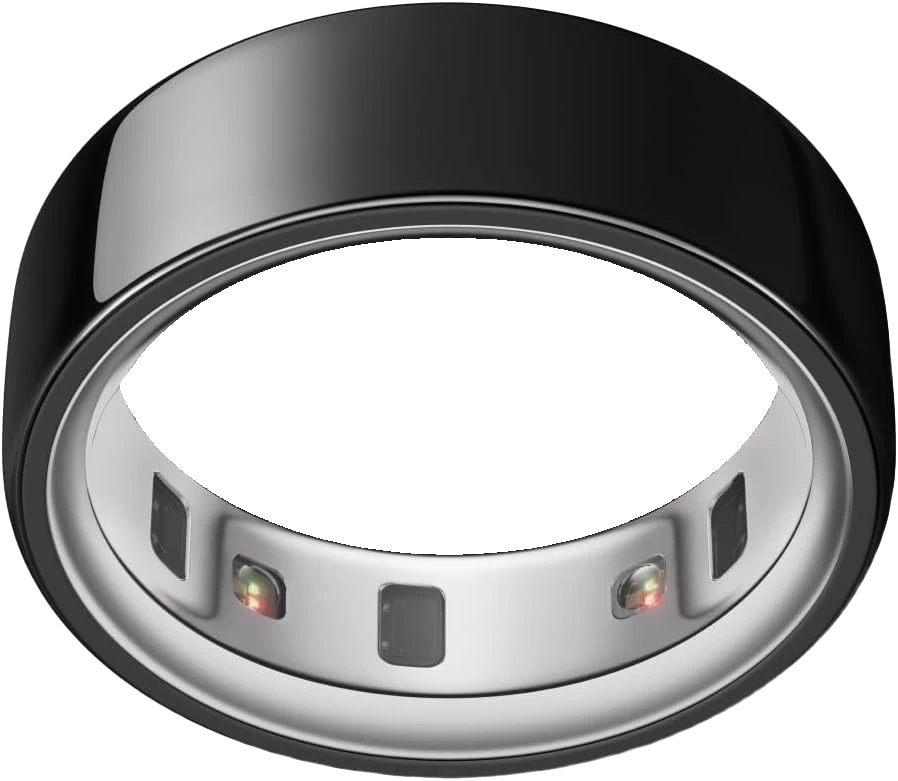
Best overall: Oura Ring 4
The most polished overall sleep-and-readiness tool here, with among the best consumer-grade staging — in a comfortable titanium ring you forget you're wearing.
~$349 + ~$5.99/mo
Why it wins: all five scores, pros & cons, full label
- Among the best consumer-grade sleep staging, and the most actionable app — Readiness turns data into a clear daily call
- Genuinely comfortable to sleep in: a titanium ring with no screen and no vibration
- Strong on the numbers that matter most — total sleep time, sleep/wake, and trends
- Up to ~8 days battery means you charge it during the day, not mid-sleep
- Requires a ~$5.99/month subscription for full insights — a real recurring cost most guides bury (this is the single reason it isn't a runaway #1)
- Like every consumer device, exact stage breakdowns are estimates, not lab-grade measurements
- A ring can't double as a daytime smartwatch the way a wrist device can
- Battery
- Up to ~8 days
- Metrics
- Sleep, Readiness, 50+ health metrics
- Subscription
- Required — ~$5.99/month (1st month free)
- Form
- Titanium smart ring (no screen, no buzz)

Our take — If you want the best overall sleep tracker and don't mind paying monthly, this is it: among the best consumer staging, the most polished and actionable app, and a titanium ring comfortable enough that you'll genuinely wear it every night. The honest asterisk is the ~$5.99/month subscription — that's exactly why the no-fee RingConn (#2) sits right behind it. Use Oura for trends and habits, not as a nightly report card, and it's the most useful sleep-and-readiness tool here.
Who Wins Which Aspect
Sorted by overall SAC Product Score™ — the official ranking.
| # | Pick | Score | Accuracy (vs lab PSG)30% | Metrics & insight20% | Comfort & wearability20% | Cost / no-subscription15% | Battery & ecosystem15% | Buy |
|---|---|---|---|---|---|---|---|---|
| 01 | | 9.1 | 9.51 | 9.51 | 9.52 | 7.0 | 9.31 | Check price |
| Among the best consumer-grade sleep staging, and the most actionable app — Readiness turns data into a clear daily callRequires a ~$5.99/month subscription for full insights — a real recurring cost most guides bury (this is the single reason it isn't a runaway #1) | ||||||||
| 02 | 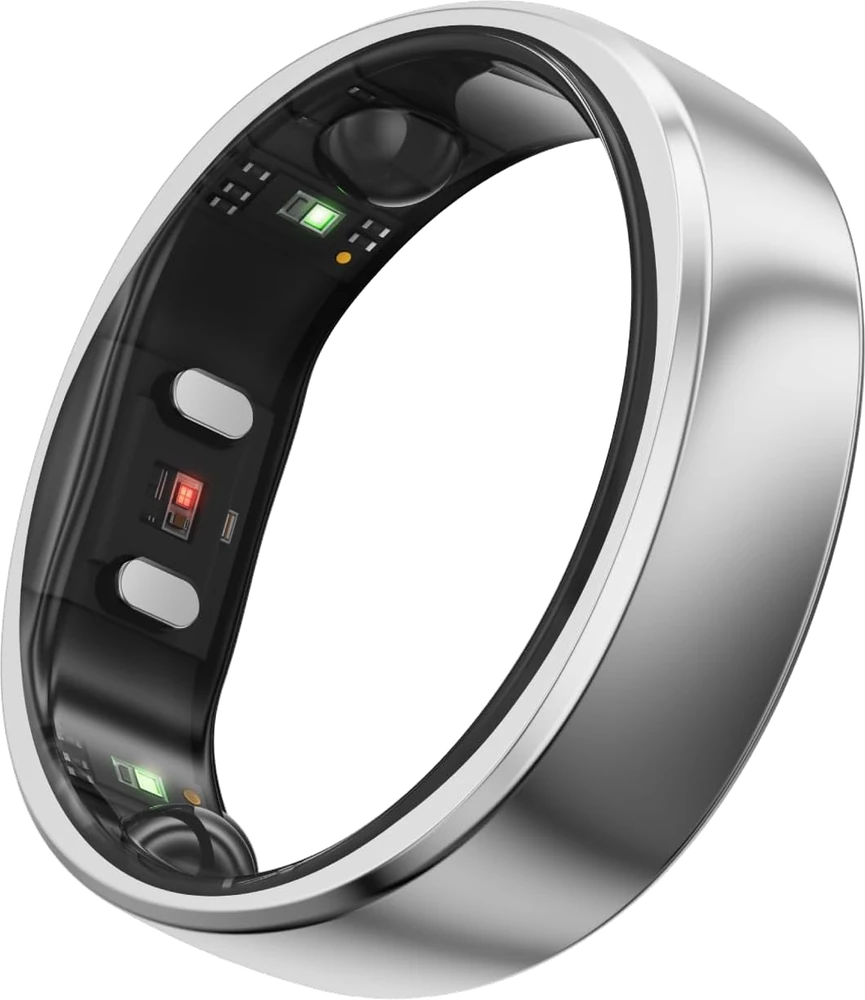 | 8.7 | 8.52 | 8.02 | 8.8 | 9.81 | 8.82 | Check price |
| No subscription, ever — lifetime app access, which over three years saves well over $200 versus OuraApp insight is good but a step behind Oura's polish and depth of coaching | ||||||||
| 03 | 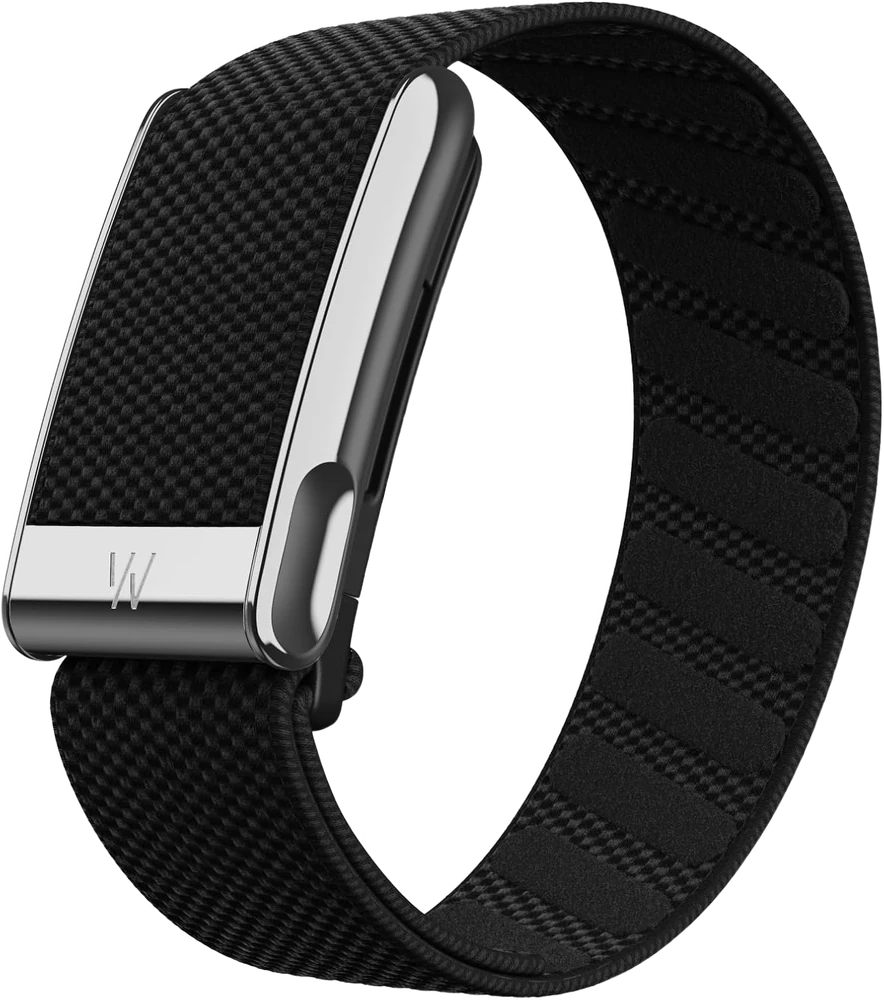 | 8.5 | 8.52 | 9.51 | 9.33 | 6.0 | 8.63 | Check price |
| Best-in-class recovery and strain coaching — built for athletes balancing training load and restThere's no buy-once option — the recurring MEMBERSHIP is the product, the biggest ongoing cost on this list | ||||||||
| 04 | 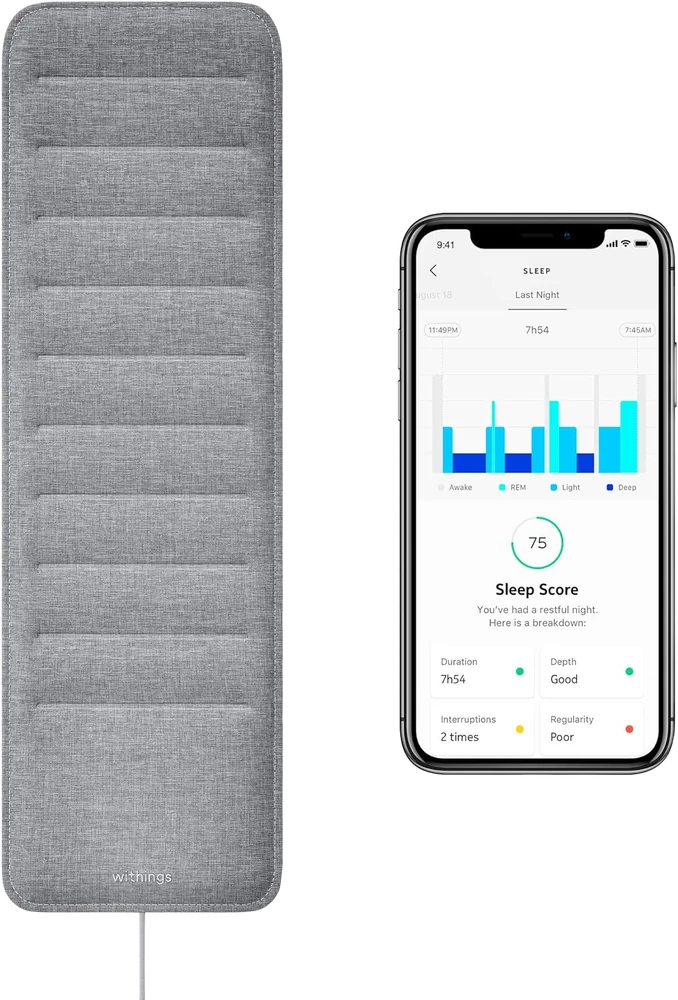 | 8.3 | 8.03 | 7.7 | 9.81 | 8.52 | 7.5 | Check price |
| Wear nothing at all — perfect for people who can't stand sleeping in a ring or watchOnly tracks you in your own bed — useless when you travel, and it can be fooled by a restless partner | ||||||||
| 05 | 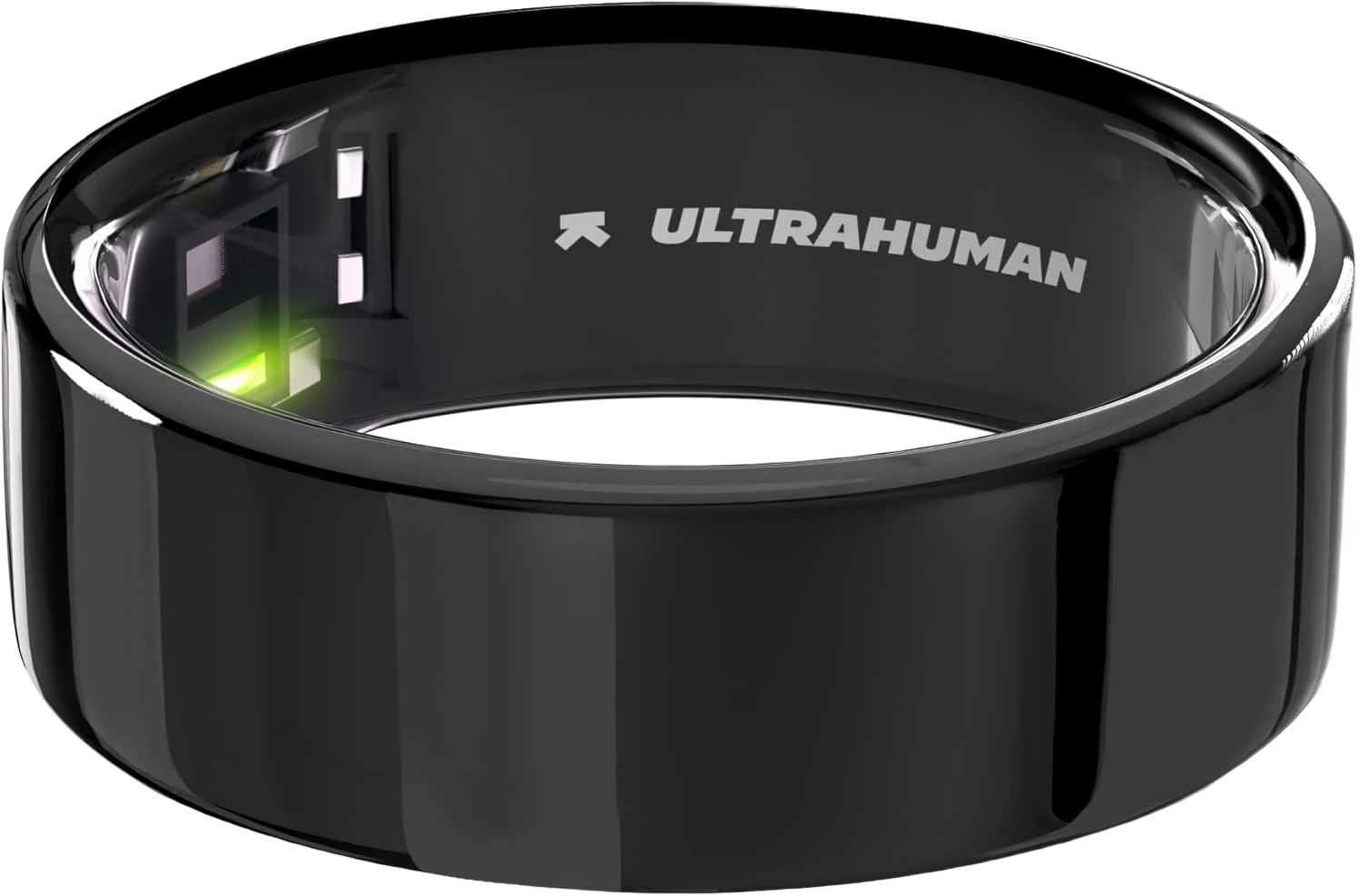 | 8.1 | 7.8 | 7.5 | 9.2 | 8.52 | 7.5 | Check price |
| No subscription — a one-time purchase with lifelong access to your data and ring featuresApp coaching is less deep and polished than Oura's Readiness | ||||||||
| 06 | 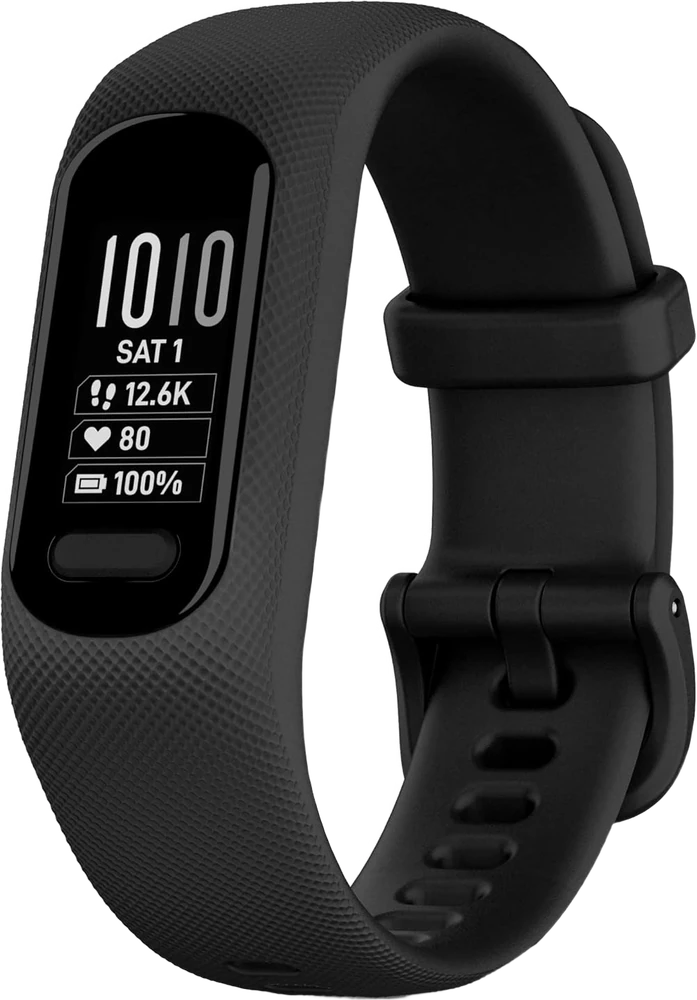 | 7.8 | 7.8 | 7.83 | 7.5 | 8.03 | 8.0 | Check price |
| No subscription — full sleep and recovery features in the free Garmin Connect appSome people dislike wearing a band to bed versus the barely-there feel of a ring | ||||||||
| 07 | 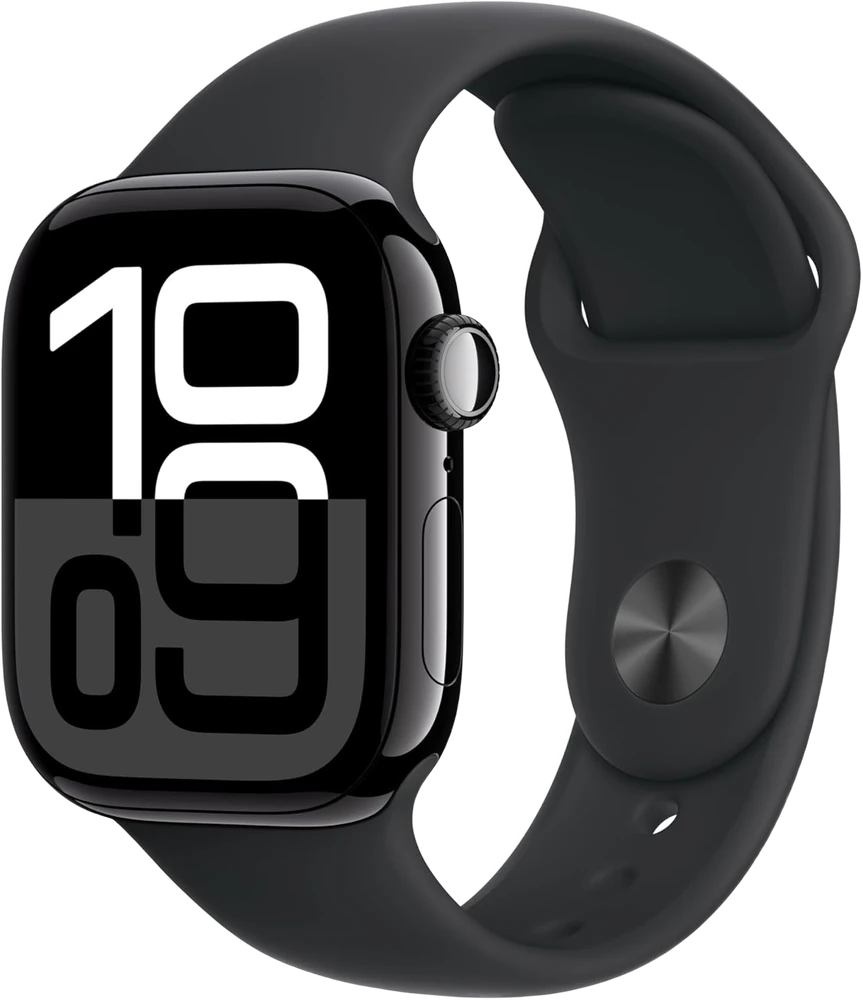 | 7.6 | 7.8 | 7.83 | 7.5 | 7.5 | 7.0 | Check price |
| Best all-round smartwatch for iPhone users — sleep tracking is one feature among many~1-2 day battery is the worst here for sleep: you must carve out a daytime charge window, or it dies overnight and tracks nothing | ||||||||
| 08 | 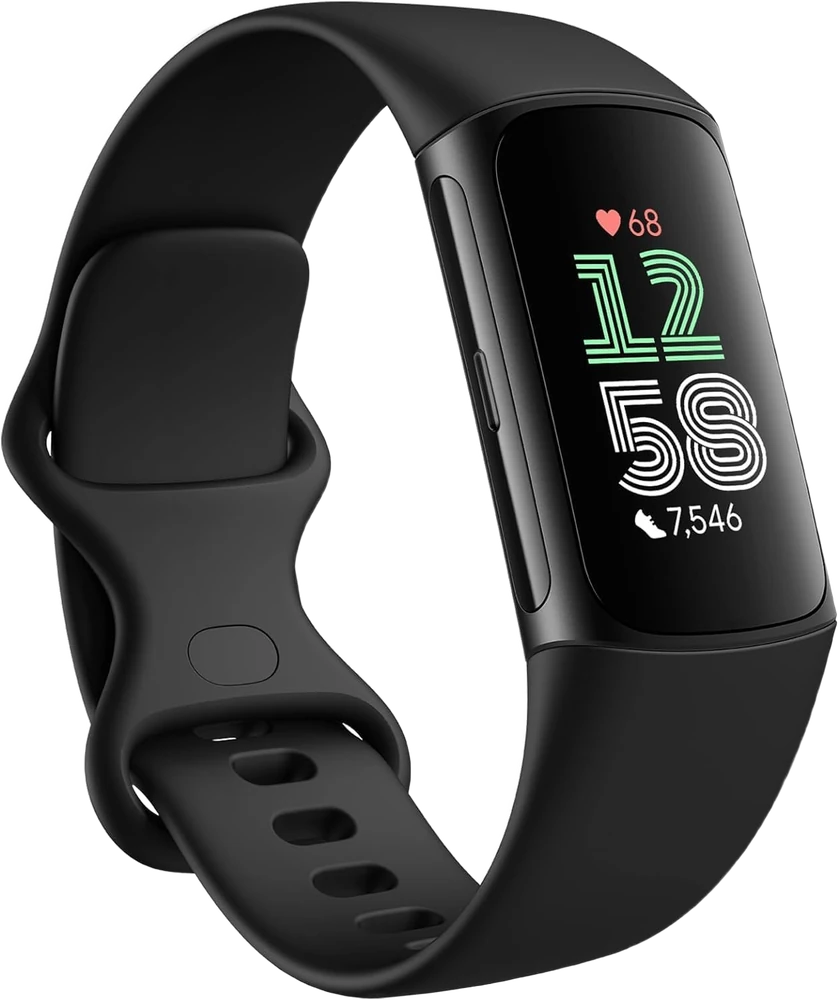 | 7.4 | 7.5 | 7.5 | 7.0 | 7.5 | 7.8 | Check price |
| Best value here — reliable sleep tracking and a beginner-friendly app at a low priceSome of the best long-term trend insight is nudged toward the optional Fitbit Premium subscription | ||||||||
The Other 7, Ranked
- 02
Best no-subscription: RingConn Gen 2
8.7SAC Score™Most of the Oura ring experience — comfort, multi-day battery, strong sleep/wake tracking, even a sleep-apnea signal — with zero subscription.
StrongestCost / no-subscription9.81WeakestMetrics & insight8.0- Battery
- Up to ~12 days
- Subscription
- NONE — lifetime app access
- Extra
- Sleep-apnea monitoring signal
All five scores, pros & cons, full label
What We Like- No subscription, ever — lifetime app access, which over three years saves well over $200 versus Oura
- Excellent comfort: ~2 g and very thin, easy to forget you're wearing it to bed
- Strong sleep/wake and duration tracking — the numbers you should trust most — plus a sleep-apnea signal to prompt a real evaluation
- Long ~12-day battery means rare charging and few missed nights
What You Live With- App insight is good but a step behind Oura's polish and depth of coaching
- Exact stage breakdowns are estimates, like every consumer device — read the trend
- Smaller ecosystem than Oura, with fewer third-party integrations
- Form
- Titanium smart ring (~2 g, ultra-thin)
Our take — This is the smart pick for anyone who wants the comfort and battery of a sleep ring without paying a monthly fee forever. You give up some of Oura's app polish, but you keep the things that matter most — comfortable nightly wear, strong sleep/wake and duration tracking, a long battery, and even a sleep-apnea signal — with no subscription at all. If a recurring fee is a dealbreaker, buy this and don't look back. Trust the trend, not the nightly number.
- 03
Best for athletes: WHOOP 5.0 (WHOOP Life membership)
8.5SAC Score™The best recovery-and-strain coaching here for athletes and hard trainers — a screen-free band you barely notice overnight.
StrongestMetrics & insight9.51WeakestCost / no-subscription6.0- Focus
- Recovery, strain & sleep coaching
- Battery
- ~4-5 days (wearable battery pack)
- Model
- Membership IS the product (no buy-once)
All five scores, pros & cons, full label
What We Like- Best-in-class recovery and strain coaching — built for athletes balancing training load and rest
- Screen-free and light: comfortable to wear 24/7, including overnight
- Strong on sleep duration and recovery trends, with genuinely actionable daily guidance
- Wearable battery pack charges the band without taking it off — fewer gaps in your data
What You Live With- There's no buy-once option — the recurring MEMBERSHIP is the product, the biggest ongoing cost on this list
- Overkill for someone who just wants a simple sleep log rather than training analytics
- Like all consumer devices, exact sleep staging is estimated, not lab-grade
- Form
- Screen-free wrist/body band
Our take — For athletes and serious trainers, WHOOP is the most useful device here — its recovery and strain coaching turns sleep and HRV into real training decisions in a way a plain sleep log never will. The honest trade-off is the model: you can't just buy the hardware, the membership IS the product, so this is a standing subscription, not a one-time purchase. If you train hard and will use the recovery coaching, it earns its keep; if you only want to understand your sleep, a ring is cheaper and simpler. Read recovery as a trend, not a daily verdict.
- 04
Best non-wearable: Withings Sleep (under-mattress)
8.3SAC Score™Slides under your mattress and tracks sleep, heart rate, snoring, and breathing disturbances while you wear absolutely nothing.
StrongestComfort & wearability9.81WeakestBattery & ecosystem7.5- Tracks
- Sleep cycles, heart rate, snoring, breathing
- Power
- Always-on (mains powered)
- Extra
- Breathing-disturbance / apnea signal
All five scores, pros & cons, full label
What We Like- Wear nothing at all — perfect for people who can't stand sleeping in a ring or watch
- Always-on and mains-powered: no charging, no missed nights in your own bed
- Tracks snoring and breathing disturbances — a useful prompt to seek a real apnea evaluation
- No required subscription for core sleep tracking
What You Live With- Only tracks you in your own bed — useless when you travel, and it can be fooled by a restless partner
- No daytime activity, HRV-recovery depth, or readiness coaching like the rings and bands
- Like every consumer device, it estimates rather than measures clinical sleep stages
- Form
- Under-mattress pad — zero wearable
Our take — If the dealbreaker is wearing something to bed, this is the answer: a thin pad under your mattress that tracks your sleep, heart rate, snoring, and breathing while you wear nothing and never charge anything. It won't follow you when you travel and it can't match a ring's recovery depth, but for at-home, no-wearable sleep trends — and an honest nudge if your breathing looks disturbed — it's the clear pick. As always, treat the stage detail as approximate and watch the trend.
- 05
Best ring alternative: Ultrahuman Ring AIR
8.1SAC Score™The lightest no-subscription smart ring — space-grade titanium, lifelong data access, no recurring fee.
StrongestComfort & wearability9.2WeakestMetrics & insight7.5- Battery
- Up to ~6 days
- Subscription
- NONE — lifelong data access
- Eligibility
- HSA/FSA eligible
All five scores, pros & cons, full label
What We Like- No subscription — a one-time purchase with lifelong access to your data and ring features
- Among the lightest, most comfortable rings to sleep in — barely there on the finger
- Solid sleep/wake and duration tracking with a clean, metrics-forward app
- HSA/FSA eligible, which can soften the upfront cost
What You Live With- App coaching is less deep and polished than Oura's Readiness
- Shorter ~6-day battery than RingConn's ~12 days
- Exact sleep staging is an estimate, like every consumer device
- Form
- Space-grade titanium ring (very light)
Our take — A strong no-subscription ring that goes head-to-head with RingConn on the 'ring comfort without a monthly fee' pitch. It's one of the lightest rings to sleep in and gives you lifelong data access for a one-time price. RingConn (#2) edges it on battery and the sleep-apnea signal, which is why it ranks a touch lower, but if you prefer Ultrahuman's app and the featherweight feel, it's an easy recommendation. Read it for trends, not nightly perfection.
- 06
Best battery / value watch: Garmin vívosmart 5
7.8SAC Score™A slim, no-subscription band that does double duty — all-day fitness plus sleep stages and Body Battery recovery — with multi-day battery.
StrongestCost / no-subscription8.03WeakestComfort & wearability7.5- Battery
- Up to ~7 days
- Subscription
- NONE — Garmin Connect is free
- Extra
- Sleep stages + Body Battery recovery
All five scores, pros & cons, full label
What We Like- No subscription — full sleep and recovery features in the free Garmin Connect app
- Does double duty: all-day activity and workouts plus overnight sleep tracking
- Body Battery turns sleep and stress into a simple, trend-friendly recovery gauge
- Up to ~7 days battery — far less charging than a full smartwatch
What You Live With- Some people dislike wearing a band to bed versus the barely-there feel of a ring
- Sleep-staging accuracy is good-not-great, and like all consumer devices the stage detail is estimated
- App is functional but less sleep-focused and polished than Oura's
- Form
- Slim wrist band (lightweight)
Our take — The pick if you want one no-subscription device for both daytime fitness and nighttime sleep, with a battery that won't quit mid-week. It's slimmer and more sleep-friendly than a chunky smartwatch, Body Battery is a nice trend-based recovery read, and Garmin Connect costs nothing. A ring is more comfortable for pure sleep and Oura's coaching is deeper, but for value and versatility on the wrist, this is the one. Watch the trend, not the nightly stage chart.
- 07
Best for iPhone users: Apple Watch Series 10
7.6SAC Score™The best sleep-tracking smartwatch for iPhone owners — full-featured wearable by day, sleep stages and overnight vitals by night.
StrongestAccuracy (vs lab PSG)7.8WeakestBattery & ecosystem7.0- Battery
- ~1-2 days (near-daily charge)
- Ecosystem
- iPhone-only (no Android)
- Extra
- ECG, blood oxygen, sleep stages
Check price on Amazon~$399, no required subscriptionAll five scores, pros & cons, full label
What We Like- Best all-round smartwatch for iPhone users — sleep tracking is one feature among many
- Sleep stages plus overnight heart rate, blood oxygen, and sleep-apnea notifications
- No subscription required for core sleep and health tracking
- Deep Apple Health integration ties sleep into your wider health picture
What You Live With- ~1-2 day battery is the worst here for sleep: you must carve out a daytime charge window, or it dies overnight and tracks nothing
- iPhone-only — useless for Android users
- Bulkier to sleep in than a ring or slim band, and stage detail is estimated like every consumer device
- Form
- Full smartwatch (always-on display)
Our take — If you already live in the Apple ecosystem and want one device for everything, the Series 10 tracks sleep perfectly well — stages, overnight vitals, even apnea notifications — as part of a best-in-class smartwatch. The catch for SLEEP specifically is battery: with roughly a day of life, you have to charge it during the day so it survives the night, or you'll wake to a dead watch and no data. For pure sleep tracking a ring is more comfortable and far less needy; for an iPhone owner who wants a do-everything watch, this is the pick. Read trends, not nightly scores.
- 08
Best budget: Fitbit Charge 6
7.4SAC Score™The most affordable solid entry point — a slim band with reliable sleep tracking and a friendly app, with Fitbit Premium optional, not required.
StrongestBattery & ecosystem7.8WeakestComfort & wearability7.0- Battery
- Up to ~7 days
- Subscription
- Core tracking free; Premium optional
- Extra
- Sleep stages, sleep score, GPS, heart rate
Check price on Amazon~$130 (Premium optional)All five scores, pros & cons, full label
What We Like- Best value here — reliable sleep tracking and a beginner-friendly app at a low price
- Core sleep tracking, stages, and a sleep score work without paying — Premium is optional
- Slim and comfortable enough to sleep in, with up to ~7 days battery
- Built-in GPS and heart rate make it a capable all-day fitness band too
What You Live With- Some of the best long-term trend insight is nudged toward the optional Fitbit Premium subscription
- Sleep-staging accuracy is fine-not-elite, and the stage detail is estimated like every consumer device
- The nightly 'sleep score' is exactly the kind of single number to view as a trend, not a verdict (orthosomnia risk)
- Form
- Slim wrist band (lightweight)
Our take — If you want to start tracking your sleep without spending much, the Charge 6 is the right on-ramp: dependable core tracking, a sleep score, and a friendly app, with Premium genuinely optional for the basics. It's not as accurate or as comfortable for sleep as the rings above, and Fitbit pushes you toward Premium for the deepest trends — but as a low-cost, low-commitment way to see your patterns, it delivers. Treat the sleep score as a trend line, not a grade, and don't let it stress you out.
The Guide In Four Short Lessons
What the evidence actually shows
- Sleep/wake
- What trackers do WELL vs lab PSG — detecting sleep vs wake and total sleep time
- Stages
- Where they're WEAKER — scoring exact light/deep/REM epoch by epoch
- Orthosomnia
- Baron 2017: fixating on a 'perfect' sleep score can worsen sleep
- Trends
- The honest use case — read the trend line, not any single night's number
Sources: Chinoy ED, et al. Performance of seven consumer sleep-tracking devices compared with polysomnography. Sleep 2021 (PMID 33378539). Baron KG, et al. Orthosomnia: are some patients taking the quantified self too far? J Clin Sleep Med 2017 (PMID 27855740).
Trust duration and trends, not the stage chart.
Against lab testing, consumer trackers are good at total sleep time and night-to-night trends and weaker at exact light, deep and REM stages (Chinoy 2021).
Check the subscription before the price.
Some rings and bands require a recurring subscription that most guides bury; others do not. Cost of ownership carries 15% of our score.
Choose the form you will wear every night.
A ring is the most comfortable to sleep in, a watch does double duty by day, and a mat means wearing nothing. If the score makes you anxious about sleep, take it off.
Grounded in Chinoy et al. 2021, Sleep (PMID 33378539) and Baron et al. 2017, J Clin Sleep Med (PMID 27855740) — full scoring in the methodology below.
Each pick was scored 0-10 across five criteria, then weighted to a final composite. Accuracy against laboratory polysomnography (PSG) carries the most weight — 30% — but with an honest twist: we weight what consumer trackers actually get RIGHT (sleep vs wake, total sleep time, and night-to-night trends, where validation work like Chinoy 2021 shows real strength) ABOVE what they get wrong (exact light/deep/REM staging, which every consumer device estimates imperfectly). A device that nails duration and trends scores well even if its stage breakdown is soft, because that's the data you can actually act on. Next, metrics and actionable insight (20%): does the app turn data into a clear next step, or just draw pretty charts? Then comfort and wearability (20%), because the best tracker is the one you'll wear nightly without fail — a ring you forget you're wearing beats a watch you take off at bedtime. Then cost of ownership and no-subscription (15%): we disclose recurring fees plainly and reward devices that don't require one. Finally battery and ecosystem (15%): nightly uptime, charge cadence, and how well it fits your phone and apps. We do not fabricate validation numbers; the studies we lean on are Chinoy 2021 (accuracy vs PSG) and Baron 2017 (orthosomnia).
Accuracy (vs lab PSG) · 30%
The most important factor — but honestly weighted. We reward agreement with lab polysomnography on the things consumer trackers do well: sleep vs wake, total sleep time, and night-to-night trends. We weight exact sleep STAGING (light/deep/REM) lower because every consumer device estimates it imperfectly. A tracker measures and approximates; it never equals a clinical sleep study, and it cannot diagnose a disorder.
Metrics & actionable insight · 20%
Does the app turn raw data into a clear next action — a readiness call, a bedtime nudge, a recovery trend you can use — or just draw charts? Useful, trend-based coaching scores highest; a flashy single 'score' with no guidance (and the orthosomnia risk that comes with it) scores lower.
Comfort & wearability · 20%
The best tracker is the one you'll actually wear every night. A comfortable ring (no screen, no buzz) or an under-mattress mat (wear nothing) scores highest for sleep; a watch you find bulky at night, or take off to charge at bedtime, scores lower. Consistency of wear is what makes the trend data trustworthy.
Cost of ownership / no-subscription · 15%
The TRUE cost, disclosed honestly. Devices with no required subscription (RingConn, Ultrahuman, Garmin, Apple) are rewarded; Oura (~$5.99/mo) and WHOOP (membership IS the product) are flagged for the recurring fee that most guides bury. Over three years a monthly subscription is real money on top of the sticker price.
Battery & ecosystem · 15%
Nightly uptime and how the device fits your life: rings last ~6-12 days, mats are always-on, watches usually need a near-daily charge (and a watch on the charger tracks no sleep). Ecosystem fit — Android/iOS support, app quality, platform lock-in like Apple Watch needing an iPhone — rounds it out.
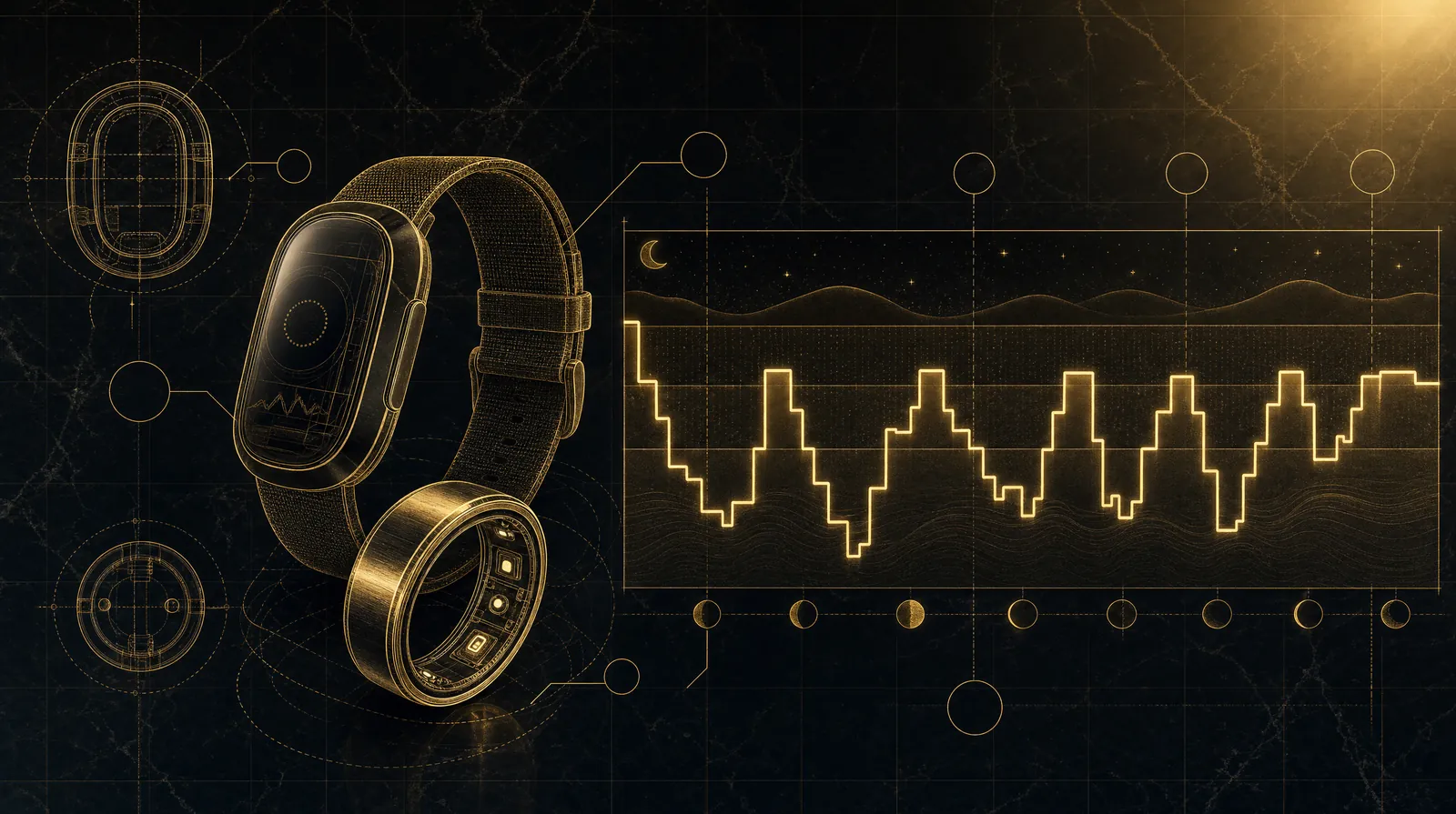
How a wearable estimates your sleep (and where it slips)
- 1
Sensors infer sleep from the body, not the brain
A consumer tracker reads movement (accelerometer), heart rate and HRV, and often skin temperature and blood oxygen. From those it INFERS sleep. A lab study (PSG) instead reads brain waves directly — which is why the lab is the gold standard and the wearable is an estimate.
- 2
Sleep vs wake and total time — it gets these right
Distinguishing asleep from awake, and adding up total sleep time, is something modern trackers do well versus PSG (Chinoy 2021). These are the numbers — plus your night-to-night trend — that you can actually trust and act on.
- 3
Exact stages and a single 'score' — handle with care
Splitting sleep into precise light/deep/REM is where wearables are weakest, so the stage breakdown is a rough guide, not a measurement. And the tidy nightly 'sleep score' is a convenience, not a verdict — fixating on it can worsen sleep (orthosomnia, Baron 2017). Read the trend, not the report card.
What to expect in your first month with a tracker
Get comfortable and capture baseline
Wear it nightly so it learns your patterns. Resist the urge to judge each night's score — you're collecting a baseline, and single nights are noisy. Make sure the form factor is comfortable enough that wearing it is effortless.
Read trends, pick ONE habit
Now your trend line means something. Anchor on total sleep time and bedtime consistency, and choose one habit to build — usually a fixed wake time. Treat the stage breakdown as background, not gospel.
Decide it's helping — or take it off
By now you'll know if it's lowering friction (you sleep more consistently, worry less) or raising it (you're anxious about the score). If it's helping, keep going on a weekly trend-check. If it's feeding orthosomnia, take it off for a couple of weeks. The behavior change is the win, not the dashboard.
The bottom line
The Oura Ring 4 (#1) is the overall winner — if you accept the subscription.
It scores 9.1/10 on our composite: among the best consumer staging, the most actionable app, and a comfortable titanium ring you'll actually wear nightly. The honest asterisk is the ~$5.99/month membership — the single reason it isn't a runaway #1.
Hate subscriptions, train hard, or refuse to wear anything to bed — each has its pick.
The RingConn Gen 2 (#2) delivers most of the same ring experience with no recurring fee — our value champion. Athletes should look at the WHOOP 5.0 (#3) for its recovery coaching, remembering the membership IS the product. The Withings Sleep mat (#4) tracks you while you wear nothing, and the Fitbit Charge 6 (#8) is the best budget entry point.
Whichever you buy, read trends and build one habit — never grade yourself nightly.
Trust total sleep time, sleep versus wake, and bedtime consistency; treat the exact light/deep/REM breakdown as a rough estimate. Pick one habit — usually a consistent wake time — and let the tracker reinforce it. If it starts making you worry about sleep, take it off: the win is the calmer relationship with sleep, not the number on the screen.
Quick Answers
How accurate are sleep trackers, really?
Honestly: good at the easy jobs, weaker at the hard one. Against laboratory polysomnography (PSG) — the gold standard, with EEG, eye, and muscle sensors — consumer trackers are genuinely good at detecting sleep versus wake, estimating total sleep time, and tracking night-to-night trends (Chinoy et al. 2021). Where they struggle is scoring the exact sleep STAGES (light, deep, REM) epoch by epoch; those breakdowns are estimates, not measurements. So trust your total sleep time and your trend lines; treat the stage pie chart as a rough guide. And remember the core point: a tracker MEASURES sleep, it does not treat it, and it cannot diagnose a sleep disorder — that's a doctor and a sleep study.
What is orthosomnia, and should I worry about it?
Orthosomnia is a term coined by Baron and colleagues in 2017 for an unhealthy fixation on achieving 'perfect' sleep as measured by a tracker — where the anxiety about the score actually makes sleep worse. It's a real risk with these devices. The fix is to use the tracker as a coaching mirror for TRENDS and habits, not as a nightly report card. Check it weekly or monthly, not obsessively each morning; never 'try harder' to sleep to fix a number; and if the device is making you anxious about sleep, take it off for a couple of weeks. The goal is less worry about sleep, not more.
Do I need a smart ring, a watch, or an under-mattress mat?
Pick the one you'll actually keep using. A smart RING (Oura, RingConn, Ultrahuman) is the most comfortable thing to wear to bed and the best dedicated sleep tool, with multi-day battery. A WATCH or band (Apple, Garmin, Fitbit) does double duty tracking your day, but some people dislike wearing a watch to sleep and watches usually need a near-daily charge. An under-mattress MAT (Withings) lets you wear nothing at all — ideal for people who can't stand sleeping in a device — at the cost of not tracking you away from your own bed. Comfort and consistency beat spec sheets here.
Which sleep trackers require a subscription?
This is the cost most guides bury. Oura requires a membership of about $5.99/month to unlock its full insights (the first month is included). WHOOP doesn't sell hardware separately at all — the recurring membership IS the product. By contrast, RingConn Gen 2 and the Ultrahuman Ring AIR give you lifetime app access with NO subscription, and Garmin and Apple track sleep with no required fee (Fitbit's core tracking is free; Fitbit Premium is optional). Over three years, a ~$6/month subscription is well over $200 on top of the device — so factor it in before you buy.
Can a sleep tracker detect sleep apnea?
Some can flag SIGNALS that warrant a real evaluation, but none replaces a diagnosis. The Withings Sleep mat and RingConn Gen 2, for example, include breathing-disturbance or sleep-apnea detection features that can surface a possible problem. That's genuinely useful as a prompt to see a doctor — but a consumer device cannot diagnose sleep apnea. If a tracker flags disordered breathing, or if you snore heavily, wake gasping, or feel exhausted despite 'enough' sleep, talk to a physician and ask about a clinical sleep study. The tracker's job is to raise the flag, not to make the call.
Is the Oura Ring worth it given the subscription?
For many people, yes — it's the most polished overall sleep-and-readiness tool here, with among the best consumer-grade staging and an app that turns data into clear next actions. But the ~$5.99/month subscription is a real, ongoing cost, and that's exactly why the RingConn Gen 2 (#2) exists on this list: it delivers most of the same smart-ring benefits — comfort, multi-day battery, strong sleep/wake tracking, even a sleep-apnea signal — with NO recurring fee. If you want the best app and don't mind the subscription, Oura. If you want ring comfort without paying monthly forever, RingConn.
Will a tracker actually improve my sleep?
Only indirectly — by helping you change behavior. A tracker doesn't treat sleep; it measures it. Its real value is making your habits visible so you can hold a consistent wake time, a regular bedtime, and a wind-down routine — the things that actually move sleep quality. Used that way, as a nudge toward better habits and a view of your trends, it can genuinely help. Used as a scoreboard to anxiously optimize every night, it can backfire (see orthosomnia). Pick one habit to build, use the tracker to reinforce it, and read the trend, not the nightly number.
Do I need to wear it every single night?
For trend data, consistency helps more than perfection. Sleep tracking is most useful as a pattern over weeks, so the more nights you capture, the more honest your trend line — which is another reason comfort and battery life matter so much in the ranking. That said, missing a night is harmless; the device isn't a medical monitor and one gap won't ruin your data. Choose a form factor comfortable enough that wearing it nightly is effortless, keep it charged on a predictable cadence, and don't stress about the occasional skipped night.
Every Claim Ranked Above Traces Back To One Of These
3 peer-reviewed sources, each linked to PubMed
- [1] Chinoy 2021 PMID 33378539 — Performance of seven consumer sleep-tracking devices compared with polysomnography. Validation of seven consumer sleep-tracking devices against laboratory polysomnography (PSG). Consumer devices performed well at detecting sleep versus wake and estimating total sleep time, but were meaningfully weaker at classifying specific sleep stages — the basis for trusting tracker duration/trends while treating stage breakdowns as approximate. (PMID confirmed against PubMed.)
- [2] Baron 2017 PMID 27855740 — Orthosomnia: are some patients taking the quantified self too far?. Case series coining the term 'orthosomnia' — a perfectionistic preoccupation with achieving ideal sleep-tracker data that can exacerbate sleep-related anxiety and worsen sleep. The evidence basis for our warning to use a tracker for trends, not as a nightly report card. (PMID confirmed against PubMed.)
- [3] de Zambotti 2019 PMID 28323455 (PMID to verify) — The Sleep of the Ring: comparison of the ŌURA sleep tracker against polysomnography. Early validation of the Oura ring against PSG in healthy adults: good agreement on total sleep time and overall sleep/wake, but imperfect sleep-stage estimation (e.g. underestimating deep sleep, overestimating light/REM). Supports both the 'best consumer staging is still imperfect' framing and the trust-the-duration-not-the-stages guidance. PMID flagged for verification.
Affiliate disclosure: every Amazon link uses our Associates tag (superachieverclub-20). We earn a small commission at no cost to you; it funds independent reviews. We never accept payment to change a ranking.