Updated Jul 21, 2026 · by Felix Hesse · Verified by SAC team
Jul 21, 2026
Verified by SAC team
+10
XP on completion
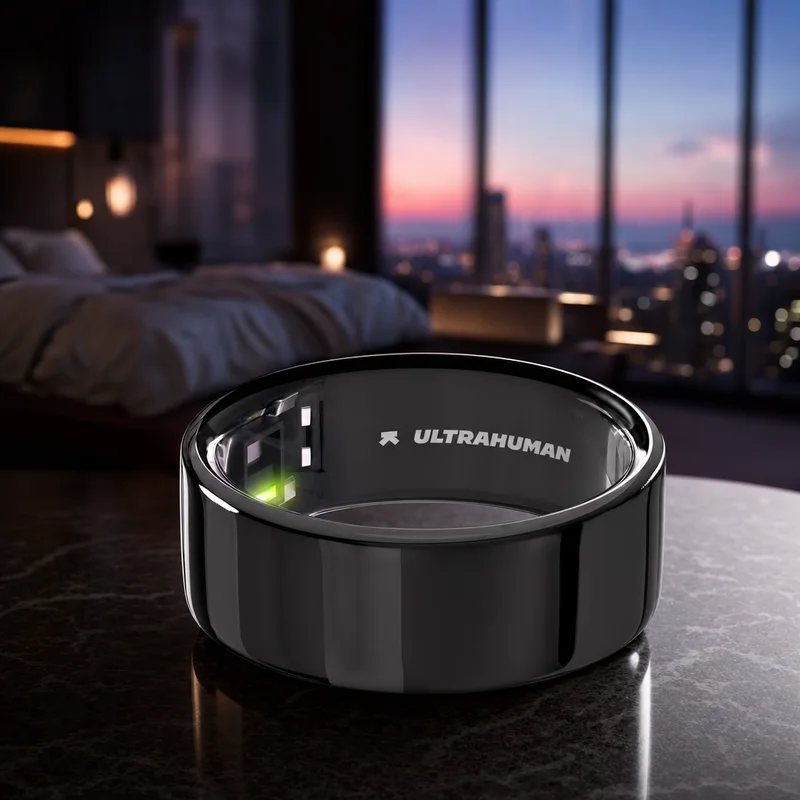
Ultrahuman Ring AIR lightweight titanium smart ring — from Amazon listing
Best ring alternative
Ultrahuman · titanium smart ring · NO subscription

Ultrahuman Ring AIR Review

The Ultrahuman Ring AIR makes the same wager as the RingConn Gen 2 — that most people want smart-ring sleep tracking without renting their own data — and backs it with the lightest build in the argument. Space-grade titanium at a barely-there weight makes this one of the easiest devices in our entire ranking to sleep in, and comfort is quietly the most important accuracy feature a consumer tracker has: the ring you forget you're wearing is the ring that captures every night, and every night is what makes trend data honest. Add lifelong data access with no subscription, solid tracking of the outputs consumer devices genuinely get right, and HSA/FSA eligibility that can soften the ~$349 price with pre-tax dollars, and you have a real alternative to Oura for subscription-refusers. Why it sits at #5 rather than #2 is a matter of inches, and we'll be precise about them: the RingConn Gen 2 runs roughly twice the battery (~12 days versus ~6), costs ~$50 less, and adds a sleep-apnea monitoring signal — three concrete wins on a near-identical pitch. And the universal caveats hold: staging is an estimate on every consumer ring, the app's coaching is lighter than Oura's Readiness, and no wearable diagnoses anything. But if the featherweight feel, the metabolic-fitness app style, or the HSA/FSA angle speaks to you, this is an easy ring to recommend. Here's the full breakdown.

Check on Amazon

Affiliate link — Super Achiever Club earns a small commission at no extra cost to you.

Read the complete Sleep & Recovery guide →
▸ THE SCORE

How we built the SAC Product Score™8.1/10

Accuracy (vs lab PSG)30%7.8/10

Solid on the honest layer: sleep/wake detection, total sleep time, and week-over-week trends track reliably — consistent with what validation work says consumer wearables do well (Chinoy 2021). It scores a step below Oura and RingConn on refinement of the estimates and the maturity of the algorithms, and the universal ceiling applies: exact light/deep/REM staging is an inference on every consumer ring, this one included.

Metrics & insight20%7.5/10

A clean, metrics-forward app with a distinctive angle: alongside sleep and recovery scores it leans into circadian timing — when to get light, caffeine cutoffs, movement nudges — which is genuinely actionable guidance of the kind our methodology rewards. It sits below Oura's Readiness on coaching depth and polish, and below WHOOP on training specificity; the score reflects good data presentation with a lighter decision layer.

Comfort & wearability20%9.2/10

The AIR's namesake feature: among the lightest smart rings made, in smooth space-grade titanium — a corrosion-resistant, widely skin-tolerated metal, an honest choice for eight hours of nightly skin contact. It's genuinely easy to forget you're wearing it, which is what nightly compliance — and therefore trustworthy trend data — actually requires. Standard ring caveats: size with the kit, and expect scuffs if you lift heavy in it.

Cost / no-subscription15%8.5/10

No subscription, lifelong data access — the honest pricing model, stated on the listing itself. Two things keep it below RingConn's 9.8 on this axis: the ~$349 sticker is ~$50 higher for a comparable no-fee package, and RingConn bundles more (longer battery, apnea signal) per dollar. The AIR's counterweight is HSA/FSA eligibility, which for US buyers with those accounts effectively discounts it by their marginal tax rate.

Battery & ecosystem15%7.5/10

Up to ~6 days per charge — comfortably clear of the nightly-charge trap that plagues smartwatches, but half of RingConn's ~12 and below Oura's ~8; expect roughly two charges a week, timed to showers or desk blocks so no night goes untracked. Ecosystem: a younger company with an actively developed app and standard health-platform integrations, but a smaller third-party surface than Oura or the big wrist brands.

▸ SPECS

The product at a glance

Form
Space-grade titanium smart ring — among the lightest made
Battery
Up to ~6 days per charge
Subscription
NONE — lifelong data access included
Sizing
Size-first: free sizing kit ships before the ring
Tracks
Sleep, recovery, fitness, circadian-timing guidance
Eligibility
HSA/FSA eligible (US)
Compatibility
Android and iOS
Price
~$349, no recurring fee
▸ TRUTH CHECK

Marketing claims vs. reality

Verified

No app subscription — your data and features, for life.

Stated on the listing ('No App Subscription') and central to the product's identity. Core sleep, recovery, and fitness tracking carry no recurring fee — the same honest model as RingConn, and the direct answer to Oura's membership. The claim that defines the ring's place in our lineup, and it holds.

Verified

Six days of battery life.

The listing states 6-day battery; as with all wearables it's an up-to figure that varies with settings, but it's an honest, middle-of-the-ring-pack number — clear of nightly charging, half of RingConn's class-leading ~12. We price that difference into the ranking rather than rounding it away.

Verified

Tracks sleep, recovery, and fitness with a sizing-kit-first fit process.

The size-first flow (free sizing kit, then the ring) is real and worth taking seriously — snug fit is a precondition for ring-sensor accuracy. The tracking suite is as listed. As everywhere in this category, the honest split applies: duration/trends are the trustworthy outputs; exact staging is an estimate (Chinoy 2021).

Verified

HSA/FSA eligible.

Listed as HSA/FSA eligible for US buyers — a genuinely useful differentiator: paying with pre-tax dollars effectively discounts the ~$349 price by your marginal tax rate, which can close most of the gap to RingConn's sticker. Eligibility rules are the account administrator's final call, so confirm with yours before counting on it.

▸ THE DEEP DIVE

What our test actually found

01Weight is the AIR's genuine edge — and it matters more than it sounds

The gap between a good sleep tracker and an abandoned one is rarely the sensor — it's whether the thing is still on your body in week six. The AIR is among the lightest smart rings made, light enough that wearers reliably report forgetting it exists, and that translates directly into the metric that actually powers consumer sleep tracking: consecutive nights captured. Every night worn is a data point; every trend line is only as honest as its coverage. If you've abandoned a watch or found even a normal ring noticeable at night, the featherweight build is a legitimate reason to pick the AIR over rivals with better spec-sheet numbers.

02The RingConn comparison, settled in inches

Same pitch, three concrete differences. Battery: RingConn's ~12 days roughly doubles the AIR's ~6 — both escape nightly charging, but RingConn's cadence is near-invisible while the AIR asks for twice-weekly top-ups. Price: ~$299 versus ~$349 for comparable no-fee packages. Features: RingConn adds a sleep-apnea monitoring signal; the AIR counters with the lighter build, HSA/FSA eligibility, and its circadian-guidance app. Our math lands RingConn ahead (8.7 vs 8.1) and the ranking says so plainly. But if pre-tax dollars pay for the AIR, or the weight difference decides your compliance, the practical gap shrinks to nearly nothing — these are the two right answers to the same question.

03The circadian angle is the app's most useful idea

Where Oura centers readiness and WHOOP centers training strain, Ultrahuman's app leans into circadian timing: light exposure windows, caffeine cutoff nudges, movement timing — the behavioral levers that actually move sleep quality, attached to your own data. That's a genuinely good framing, because a tracker can't treat sleep; it can only make your habits visible and nudge better ones. The honest caveat is depth: the guidance layer is lighter and less personalized than Oura's Readiness coaching, so self-directed users will get the most from it. But 'change your mornings and caffeine, watch the trend respond' is exactly the healthy usage pattern this category should push.

04No-fee pricing is also a relationship with your own data

The subscription question isn't only arithmetic. A membership model means your historical sleep data — years of it, eventually — sits behind a paywall that can be repriced, and lapsing turns your device into jewelry. The AIR's lifelong-access model means the ~$349 you pay once is the whole deal: your data stays yours to view, indefinitely, at no further cost. Over three years that's over $200 saved versus Oura's membership; over five, more. The trade, stated honestly: subscription revenue funds Oura's faster software development, and it shows in coaching depth. You're choosing between renting the best app and owning a very good one.

▸ THE TRADE-OFFS

Pros & cons, no sugar-coating

Pros
  • Among the lightest smart rings made — barely-there nightly wear in skin-friendly titanium
  • No subscription, ever: lifelong access to your data included in the one-time price
  • HSA/FSA eligible — pre-tax dollars can meaningfully soften the ~$349 sticker
  • Solid tracking of the honest outputs: sleep/wake, duration, and week-over-week trends
  • Useful circadian-timing guidance — behavioral nudges, not just charts
Cons
  • RingConn Gen 2 (#2) beats it on battery (~12 vs ~6 days), price (~$50 less), and an apnea signal — the reason it ranks #5
  • App coaching is lighter and less polished than Oura's Readiness layer
  • Exact sleep staging is an estimate, like every consumer device — trust duration and trends
▸ THE BOTTOM LINE

A very good no-fee ring — pick it for the featherweight feel or HSA/FSA money; otherwise RingConn first.

The Ultrahuman Ring AIR delivers the core promise that matters in the no-subscription camp: comfortable smart-ring sleep tracking, honest on the outputs consumer devices actually get right, with lifelong access to your own data for a one-time price. Its genuine edges are physical and financial — one of the lightest builds in the category, which quietly maximizes the nightly compliance that makes trend data trustworthy, and HSA/FSA eligibility that lets US buyers pay the ~$349 with pre-tax dollars. Its app's circadian-timing guidance pushes exactly the right behavior: change habits, watch trends. Our ranking is equally honest about why it's #5 and not #2: the RingConn Gen 2 makes the same no-fee pitch with double the battery, a ~$50 lower price, and a sleep-apnea signal, so it's the default recommendation between them. Choose the AIR when its specifics fit you — the weight, the app style, the HSA/FSA angle — and you'll be well served; this is a 'consider' born of a strong rival, not a weak product. Whichever ring you land on, run the playbook the evidence supports: nightly wear, one habit (fixed wake time), weekly trend reads — and never let a nightly score become a report card (Baron 2017).

Check Ultrahuman · titanium smart ring · NO subscription on Amazon
▸ ALTERNATIVES

If this doesn’t fit — try these

▸ RESEARCH

Sources & further reading

  1. Chinoy 2021Chinoy ED, Cuellar JA, Huwa KE, Jameson JT, Watson CH, Bessman SC, Hirsch DA, Cooper AD, Drummond SPA, Markwald RR · 2021 · Sleep · PMID 33378539

    Performance of seven consumer sleep-tracking devices compared with polysomnography

    Consumer trackers validated against lab polysomnography: strong sleep/wake and total-sleep-time performance, weaker exact staging. The framework for trusting the AIR's duration/trend outputs while reading its stage estimates as context.

  2. Baron 2017Baron KG, Abbott S, Jao N, Manalo N, Mullen R · 2017 · Journal of Clinical Sleep Medicine · PMID 27855740

    Orthosomnia: are some patients taking the quantified self too far?

    Case series coining 'orthosomnia' — score-fixation that worsens sleep. Why our AIR guidance is habit-building and weekly trend reads, never nightly score-grading.