Updated Jul 21, 2026 · by Felix Hesse · Verified by SAC team
Jul 21, 2026
Verified by SAC team
+10
XP on completion
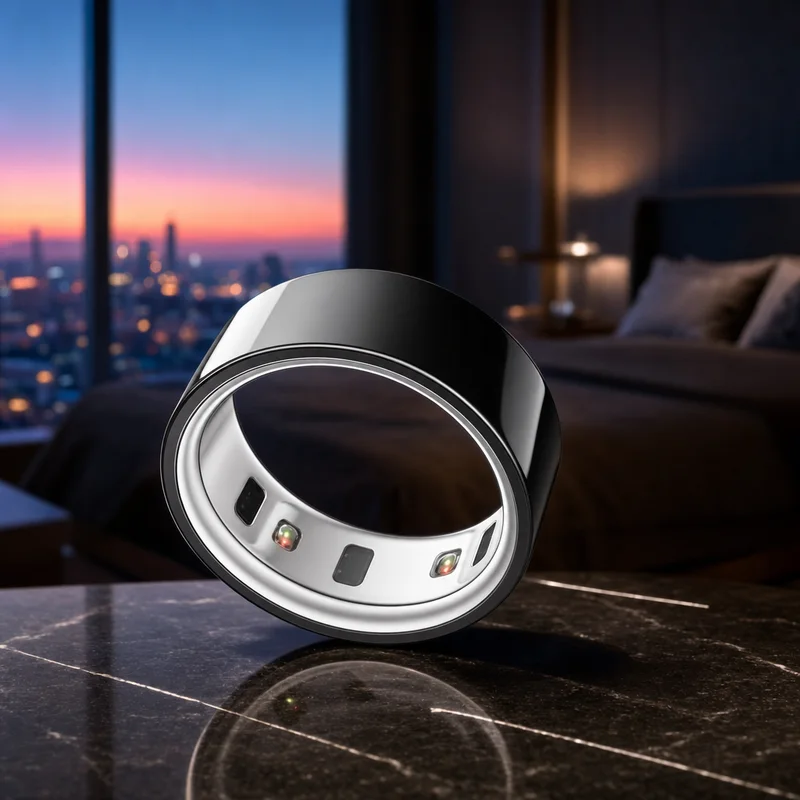
Oura Ring 4 titanium smart sleep tracker — from Amazon listing
Best overall
Oura · titanium smart ring · subscription ~$5.99/mo

Oura Ring 4 Review

The Oura Ring 4 wins our sleep-tracker ranking because it does the whole job better than anything else here: it captures the numbers consumer trackers can actually get right — total sleep time, sleep versus wake, bedtime consistency, night-to-night trends — with among the best stage estimation in the category, and then its app does the thing most rivals skip: it turns the data into a clear next action. The Readiness score is the most useful daily output in consumer sleep tech, and the titanium ring itself is so comfortable that nightly wear is effortless, which is what makes the trend data trustworthy in the first place. Up to ~8 days of battery means you charge it during the day, not mid-sleep. Two honest limits frame the score. First, the ~$5.99/month membership is genuinely required for the full experience — over three years that's real money on top of the ~$349 ring, and it's the single reason this isn't a runaway #1 (the no-fee RingConn Gen 2 sits directly behind it for exactly this reason). Second, the universal caveat: Oura MEASURES sleep, it does not treat it. Its stage breakdown is a best-in-class estimate, not a lab study, and no ring can diagnose a sleep disorder. Use it for trends and habits — never as a nightly report card — and it's the best overall sleep tool you can buy. Here's the full breakdown.

Check on Amazon

Affiliate link — Super Achiever Club earns a small commission at no extra cost to you.

Read the complete Sleep & Recovery guide →
▸ THE SCORE

How we built the SAC Product Score™9.1/10

Accuracy (vs lab PSG)30%9.5/10

Top of the consumer class. Like every tracker, it's strongest exactly where the validation literature says consumer devices are strong — sleep/wake detection, total sleep time, and trends (Chinoy 2021) — and its multi-sensor staging (movement, heart rate, HRV, temperature) is among the best available without electrodes. The deduction is the category ceiling, not an Oura flaw: exact light/deep/REM staging remains an estimate on every consumer device, and we refuse to pretend otherwise.

Metrics & insight20%9.5/10

The best app in the category. Readiness distills sleep, resting heart rate, HRV, and temperature into one trend-friendly daily call; the sleep view separates the trustworthy numbers (duration, consistency) from the estimates; and 50+ metrics are there when you want depth without being shoved at you. It coaches next actions instead of just drawing charts — the exact thing our methodology rewards, because a score without guidance is orthosomnia bait.

Comfort & wearability20%9.5/10

A smooth titanium ring with no screen and no vibration is about as close to wearing nothing as sleep tracking gets — and titanium is an honest material choice for something in skin contact eight hours a night: corrosion-resistant and well tolerated by most skin. Nightly compliance is effortless, which is what makes the trend data real. Small caveats: sizing matters (use the sizing kit), and a ring can scuff against weights at the gym.

Cost / no-subscription15%7/10

The weak axis, scored honestly: ~$349 for the ring plus a required ~$5.99/month membership for the full app. Over three years the subscription alone exceeds $200 — a real cost most guides bury, and the single reason Oura isn't a runaway #1. You're paying for the best software in the category on an ongoing basis; that's a defensible trade, but it is the trade.

Battery & ecosystem15%9.3/10

Up to ~8 days per charge means charging happens on your desk during the day, never mid-sleep — a structural advantage over any nightly-charge smartwatch, because a device on the charger tracks nothing. The app is polished on both Android and iOS, integrates with Apple Health and Google ecosystems, and firmware support has been consistent. RingConn's ~12 days edges it on raw battery; almost nothing touches the app maturity.

▸ SPECS

The product at a glance

Form
Titanium smart ring — no screen, no vibration
Battery
Up to ~8 days per charge
Sensors
Movement, heart rate, HRV, skin temperature, SpO2
Metrics
Sleep, Readiness, Activity — 50+ metrics in-app
Subscription
Required for full app — ~$5.99/month (first month included)
Compatibility
Android and iOS
Sizing
Ring-sized — use the free sizing kit before wearing
Price
~$349 device + ~$5.99/mo membership
▸ TRUTH CHECK

Marketing claims vs. reality

Verified

Tracks sleep, activity, and readiness with up to 8 days of battery life.

The listing states up to 8 days of battery, and sleep/activity/readiness are the app's three core surfaces. The ~8-day figure is the manufacturer's up-to number — real-world use typically lands within a day or two of it, and it comfortably clears the bar that matters for sleep: you charge during the day, never overnight.

Partial

Advanced sleep staging and 50+ health metrics via the Oura App.

The metrics breadth is real and the staging is among the best in the consumer category. We mark it PARTIAL for the framing every wearable brand uses: against lab polysomnography, exact light/deep/REM staging remains an estimate on ALL consumer devices (Chinoy 2021). Duration, sleep/wake, and trends are the trustworthy outputs; the stage chart is a good approximation, not a measurement.

Verified

Full insights require the Oura membership (~$5.99/month).

Accurate and disclosed on the listing — the first month is included, after which the membership unlocks the detailed analysis. We surface it prominently because it's the true cost of ownership: ~$72/year on top of the device, indefinitely. It's the main reason our cost criterion scores 7.0 while everything else scores 9+.

▸ THE DEEP DIVE

What our test actually found

01The app is the product — and it's the best one in the category

Hardware differences between good smart rings are smaller than the marketing implies; what separates Oura is what happens after the data lands. Readiness converts sleep, HRV, resting heart rate, and temperature into one daily, trend-based call that tells you something actionable — push today or recover. That's precisely what our methodology weights: a score with guidance beats a chart dump. It's also why the subscription, annoying as it is, buys something real. If you won't engage with the coaching, though, you're paying monthly for graphs — and the no-fee rings become the smarter buy.

02Comfort is an accuracy feature, not a luxury

Trend data — the honest core value of any consumer tracker — only accumulates if the device is on your finger every single night. A screenless, buzz-free titanium ring at a few grams is the form factor with the least friction in the category: nothing to snag bedding, nothing glowing at 3 a.m., nothing to feel on your wrist. Eight days of battery compounds the effect, because the charger visit happens at your desk, not at bedtime. In practice this is why ring wearers log more consecutive nights than watch wearers — and more nights means a trend line you can actually trust.

03What it gets right vs what it estimates — the honest split

The validation literature on consumer trackers (Chinoy 2021, seven devices vs polysomnography) draws a consistent line: strong at detecting sleep versus wake and totaling sleep time, weaker at classifying exact stages. Oura sits at the top of the consumer class on staging, but the line still exists — light/deep/REM percentages are inferred from movement, heart rate, and temperature, not measured from brain waves. Practically: act on total sleep time, bedtime consistency, and multi-week trends; read the stage chart as context. And if the ring flags something like persistent breathing disturbance, treat that as a prompt to see a doctor, never as a diagnosis.

04The subscription math, in plain numbers

~$349 up front plus ~$5.99/month is roughly $565 over three years — versus ~$299 flat for the RingConn Gen 2, our #2. That ~$265 gap is the honest price of Oura's software advantage: better staging polish, deeper coaching, a more mature ecosystem. For a buyer who will genuinely use Readiness daily and review trends weekly, the fee earns its keep. For a buyer who just wants clean sleep duration and consistency data with a trend line, it doesn't — and we say so plainly in the ranking by placing the no-fee alternative one slot behind.

▸ THE TRADE-OFFS

Pros & cons, no sugar-coating

Pros
  • Among the best consumer-grade sleep staging, on top of rock-solid duration and trend tracking
  • Readiness is the most actionable daily output in consumer sleep tech — coaching, not just charts
  • Titanium ring with no screen or vibration — effortless, skin-friendly nightly wear
  • Up to ~8 days of battery: charge during the day, never lose a night of data
  • Polished, mature app on both Android and iOS with broad health-ecosystem integration
Cons
  • Requires a ~$5.99/month membership for full insights — well over $200 across three years, and the reason it isn't a runaway #1
  • Exact light/deep/REM staging is an estimate, like every consumer device — no ring replaces a sleep lab
  • A ring can't double as a daytime smartwatch, and it's worth removing for heavy lifting to avoid scuffs
▸ THE BOTTOM LINE

The best overall sleep tracker — buy it for the app and comfort, budget for the membership.

The Oura Ring 4 is the pick for anyone who wants the most complete, most polished sleep tool in consumer tech. It nails the numbers trackers can honestly get right — duration, sleep/wake, consistency, trends — with among the best stage estimation available, and its Readiness coaching turns that data into a clear daily call. The titanium ring is comfortable enough that nightly wear becomes automatic, and ~8 days of battery means the data never gaps overnight. The caveats are two, and they're the ones we've flagged throughout. The ~$5.99/month membership is genuinely required for the full experience — about $565 total over three years versus ~$299 flat for the no-fee RingConn Gen 2 (#2), which is the right alternative if a recurring fee grates. And like every consumer wearable, Oura measures sleep rather than treating it: trust the trend lines, hold one habit (a consistent wake time is the highest-impact one), read the stage chart as an estimate, and if the score ever starts making you anxious about sleep, take the ring off — orthosomnia is real (Baron 2017). Used as a coaching mirror rather than a nightly report card, this is the best sleep tracker you can buy.

Check Oura · titanium smart ring · subscription ~$5.99/mo on Amazon
▸ ALTERNATIVES

If this doesn’t fit — try these

▸ RESEARCH

Sources & further reading

  1. Chinoy 2021Chinoy ED, Cuellar JA, Huwa KE, Jameson JT, Watson CH, Bessman SC, Hirsch DA, Cooper AD, Drummond SPA, Markwald RR · 2021 · Sleep · PMID 33378539

    Performance of seven consumer sleep-tracking devices compared with polysomnography

    Seven consumer sleep trackers validated against lab polysomnography: good at detecting sleep vs wake and estimating total sleep time, meaningfully weaker at exact sleep-stage classification. The basis for trusting Oura's duration/trend outputs while treating its stage chart as an estimate.

  2. Baron 2017Baron KG, Abbott S, Jao N, Manalo N, Mullen R · 2017 · Journal of Clinical Sleep Medicine · PMID 27855740

    Orthosomnia: are some patients taking the quantified self too far?

    Case series coining 'orthosomnia' — perfectionistic fixation on ideal tracker data that worsens sleep. Why we recommend using Oura's Readiness and sleep scores as weekly trend reads, never as a nightly report card.