
Top 9 Best Ginger Supplements (2026)
 01 · Editor's Choice✓ Label verified · Supplement Facts read Sep 7, 2026
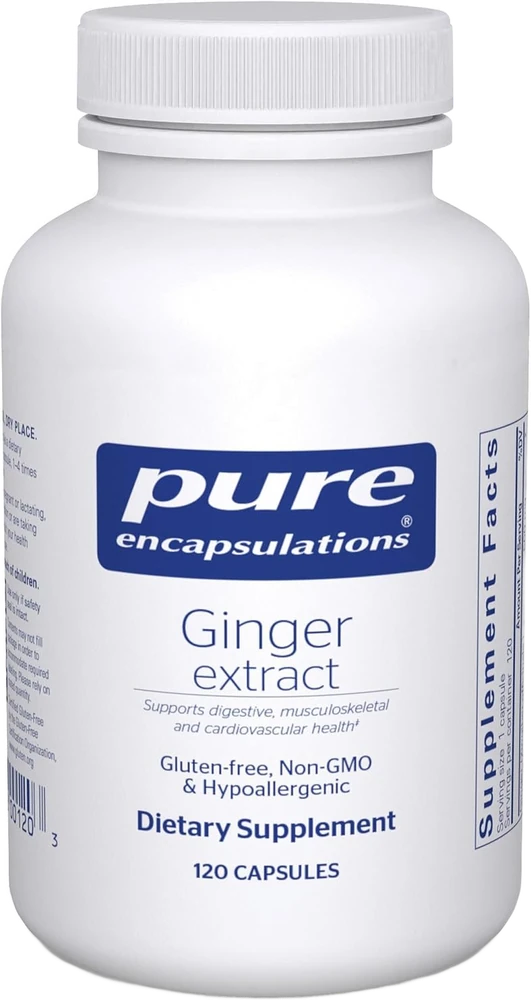
Editor's Choice — Precision Pick: Pure Encapsulations Ginger Root Extract 500mg (Standardized 5% Gingerols), 120 Capsules
The only supplement on this list with a labeled gingerol standardization — the one number that lets you reproduce a clinical result instead of guessing.
$30~$0.50 per 1g serving (2 caps)
Why it wins: all five scores, pros & cons, full label
- Only product here with a verifiable gingerol standardization (5%), so effects are attributable
- Single-ingredient — no curcumin or turmeric muddying what's doing the work
- Practitioner-grade purity and label-accuracy reputation
- Clean hypoallergenic, vegan, gluten-free formula
- Premium price per milligram of ginger
- You must take 2 caps to hit the studied ~1g/day, doubling the effective cost
- Standardization
- 5% gingerols (labeled)
- Cost per dose
- ~$0.50 per ~1g serving
- Dose
- 500mg extract/cap; 2 caps ≈ 1g/day
- Form
- Standardized gingerol extract capsule
- Count
- 120 capsules (60 x 2-cap servings)
- Testing
- Practitioner-grade, brand third-party tested; hypoallergenic, vegan, GMO-free

Our take — If you want the highest confidence that you're taking a real, measurable dose of ginger's active compounds, this is the pick. It costs more and needs two caps a day to reach the clinical range, but it's the only bottle that turns 'ginger' into a number you can trust.
 02
02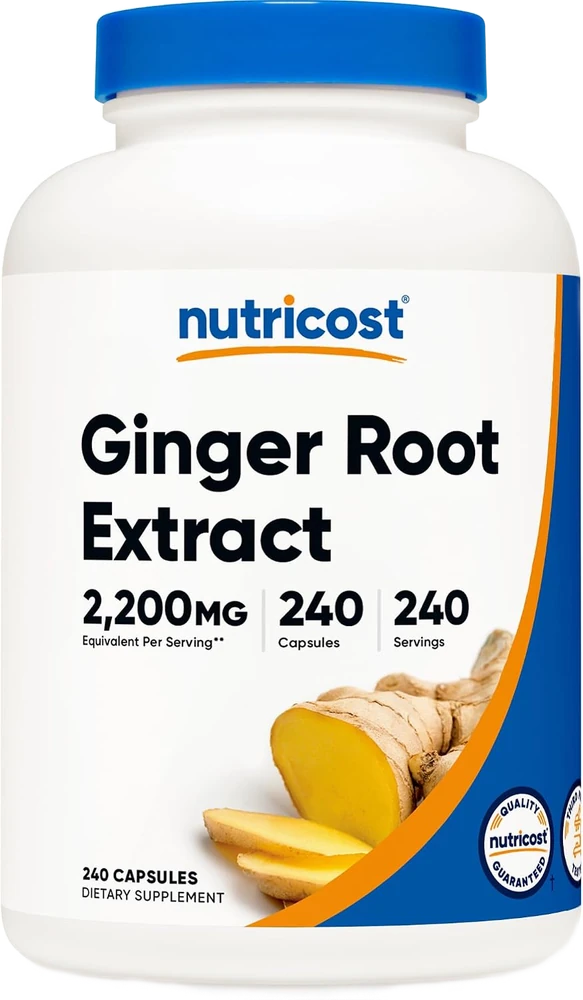 03
03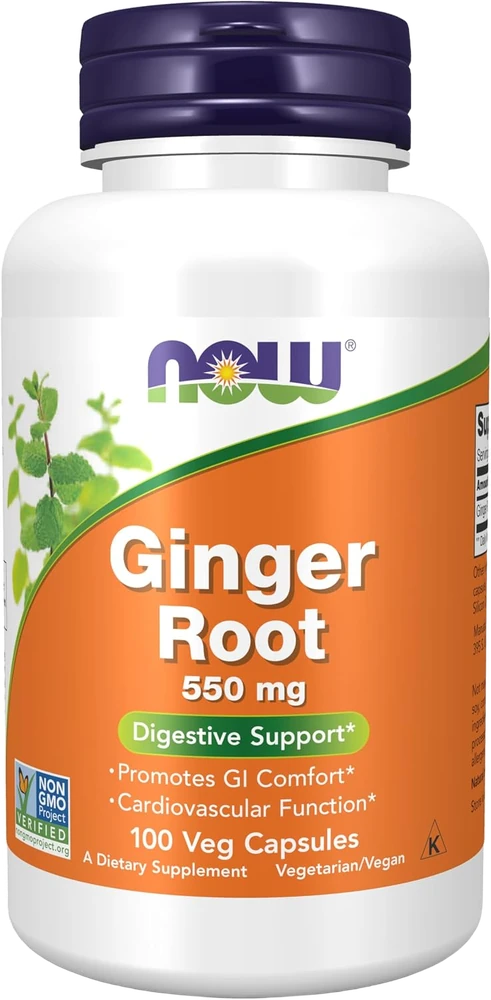 04
04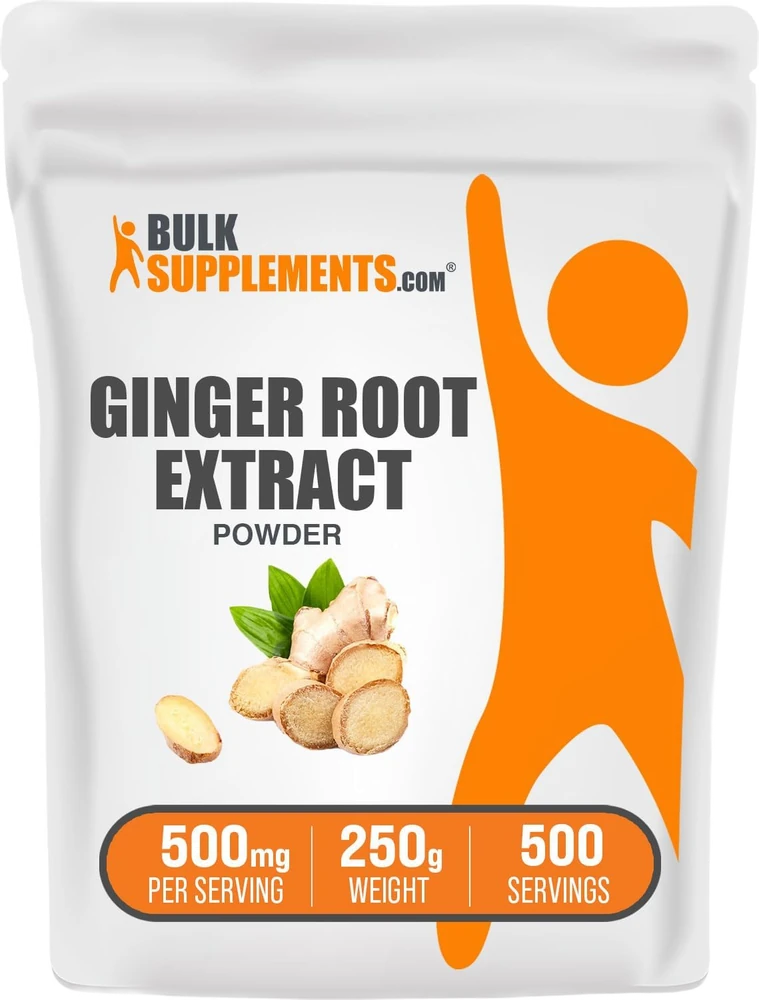 05
05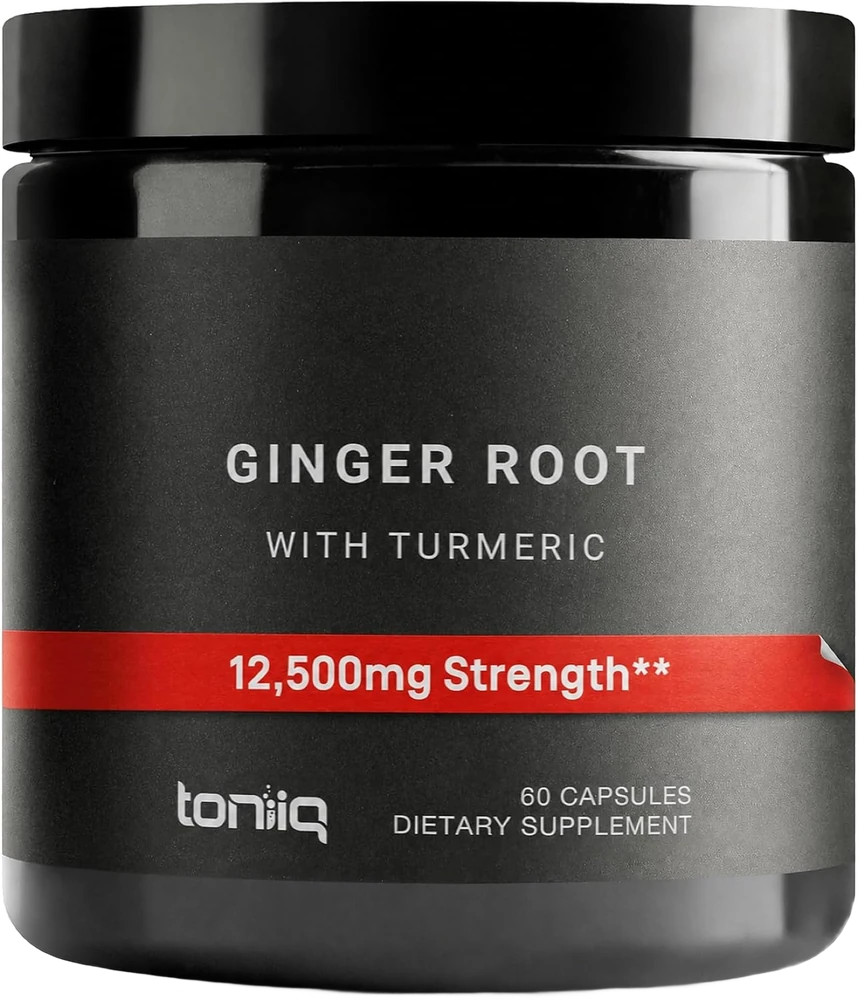 06
06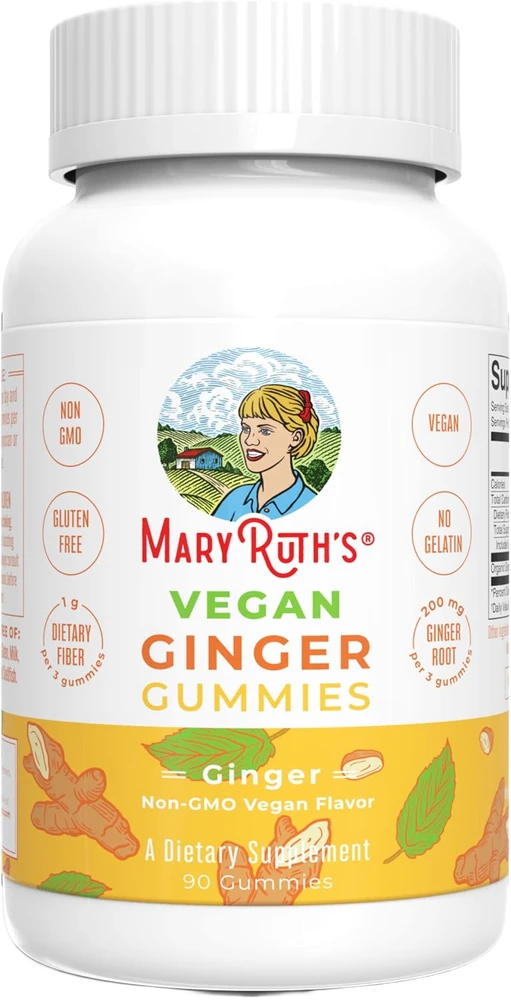 07
07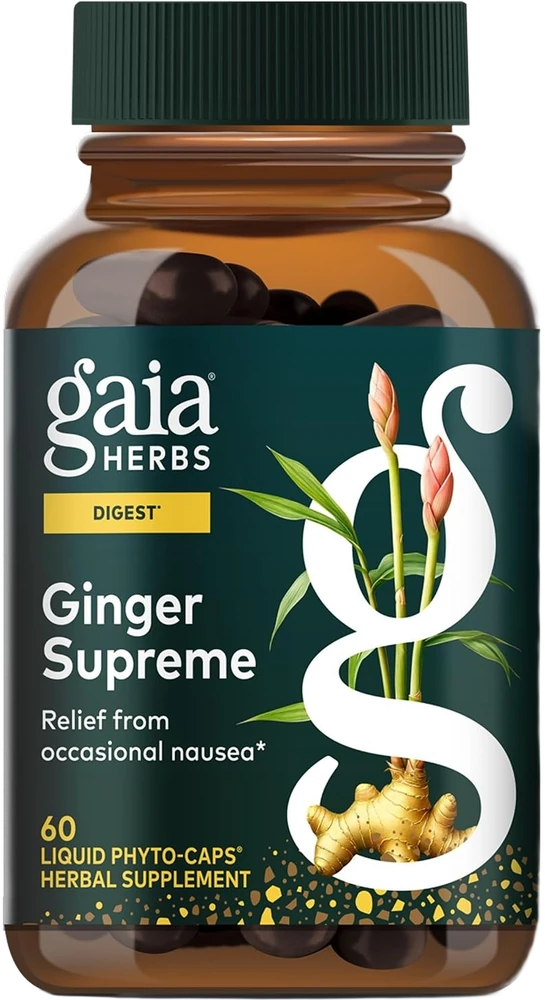 08
08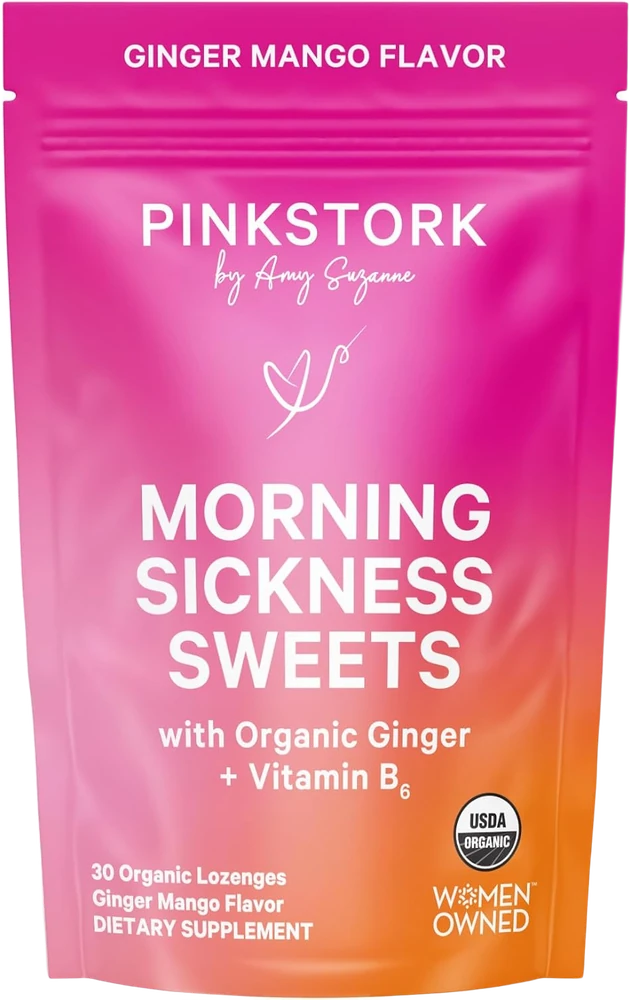 09
09Who Wins Which Aspect
Sorted by overall SAC Product Score™ — the official ranking.
| # | Pick | Score | Form, Bioavailability & Standardization25% | Dose vs. Clinical Range25% | Third-Party Testing & Purity20% | Tolerability & Safety15% | Value15% | Cost Per Dose | Buy |
|---|---|---|---|---|---|---|---|---|---|
| 01 | | 8.3 | 8.91 | 7.52 | 9.01 | 8.51 | 7.53 | ~$0.50 / ~1g serving | Check price |
| Only product here with a verifiable gingerol standardization (5%), so effects are attributablePremium price per milligram of ginger | |||||||||
| 02 | | 7.8 | 6.33 | 8.51 | 8.52 | 8.02 | 8.02 | ~$0.22 / serving | Check price |
| Hits the clinically studied ~1g/day at the 2-cap serving without extra pillsWhole ground root is NOT standardized — actual gingerol content is unlabeled and varies batch to batch | |||||||||
| 03 | | 7.2 | 6.33 | 7.03 | 7.5 | 7.53 | 8.51 | ~$0.15 / 2-cap serving | Check price |
| Best cost-per-capsule of any product, with a huge 240-count bottleThe '4:1' has NO labeled gingerol percentage, so true potency versus a standardized extract is unknown | |||||||||
| 04 | | 7.0 | 6.1 | 6.5 | 7.5 | 7.53 | 8.02 | ~$0.16 / 2-cap serving | Check price |
| Lowest sticker price on the list from a trusted QC brandA single 550mg cap is only about half the studied ~1g dose — you must take two | |||||||||
| 05 | | 6.4 | 5.6 | 6.0 | 7.5 | 5.0 | 8.51 | ~$0.03 / 500mg | Check price |
| Cheapest cost-per-gram by a wide margin — dose is fully adjustableRaw powder is sharply pungent and can irritate the stomach — a real tolerability hit | |||||||||
| 06 | | 6.3 | 6.0 | 5.0 | 8.03 | 7.0 | 6.0 | ~$0.73 / serving | Check price |
| Highest labeled gingerol concentration (20%) of any product rankedIt's a ginger + curcumin + piperine blend — you can't isolate ginger's contribution | |||||||||
| 07 | | 6.2 | 6.1 | 4.0 | 7.0 | 8.02 | 7.0 | ~$0.63 / serving | Check price |
| Most palatable format for gag-sensitive or pill-averse usersOnly 200mg ginger per serving — one-fifth of the studied ~1g dose | |||||||||
| 08 | | 6.1 | 6.82 | 4.0 | 7.5 | 7.0 | 5.5 | ~$0.33 / capsule | Check price |
| Supercritical CO2 extraction preserves the pungent active compounds wellOnly ~150mg ginger per cap — far below the ~1g nausea dose | |||||||||
| 09 | | 5.7 | 5.8 | 3.5 | 6.5 | 7.53 | 6.5 | ~$0.47 / drop | Check price |
| Ginger + B6 combo mirrors ACOG's first-line pregnancy-nausea guidanceCandy format with low per-drop ginger — won't deliver a measured daily or anti-inflammatory dose | |||||||||
The Other 8, Ranked
- 02
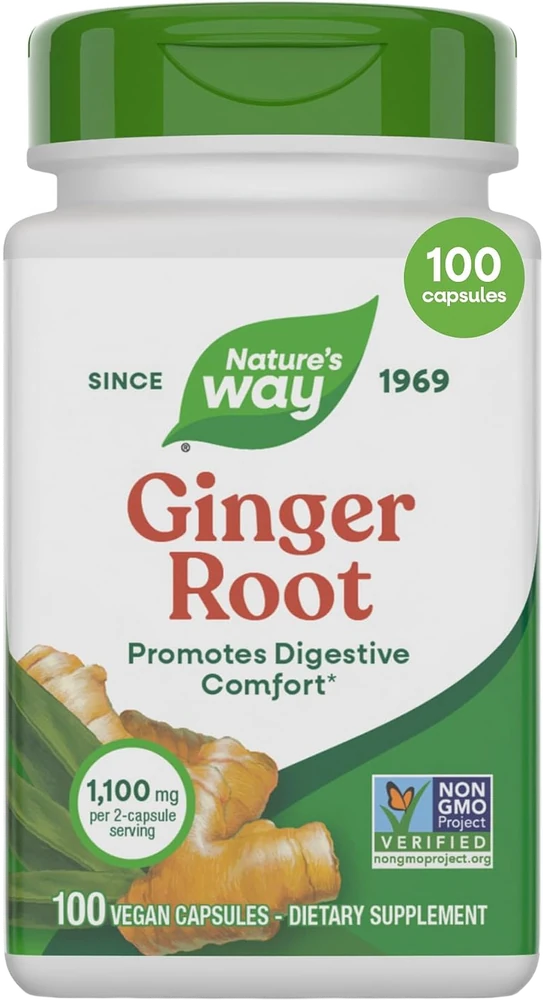
Best Full-Dose Value: Nature's Way Ginger Root Capsules, 1100 mg per 2-Capsule Serving, 100 Count
7.8SAC Score™A whole-root capsule that actually lands on the studied ~1g dose in a single 2-cap serving, with botanical-ID authentication behind it.
StrongestDose vs. Clinical Range8.51WeakestForm, Bioavailability & Standardization6.3- Standardization
- None — whole ground root
- Cost per dose
- ~$0.22 per serving
- Dose
- 1100mg per 2-capsule serving (~1.1g/day)
All five scores, pros & cons, full label
What We Like- Hits the clinically studied ~1g/day at the 2-cap serving without extra pills
- TRU-ID authentication confirms it's genuine Zingiber officinale
- Explicitly formulated for digestive comfort and motion nausea
- Excellent cost per full serving
What You Live With- Whole ground root is NOT standardized — actual gingerol content is unlabeled and varies batch to batch
- Whole-root powder is less concentrated than an extract, so the real active load is uncertain
- Form
- Whole-root powder capsule
- Count
- 100 capsules (50 servings)
- Testing
- Non-GMO Project Verified, TRU-ID botanically authenticated, gluten-free, vegan
Our take — The best choice for people who want a real, on-label ~1g dose without paying extract prices. It loses standardization points because you can't see the gingerol number, but TRU-ID authentication and an honest full-gram serving make it the value-plus-dose sweet spot.
- 03
Best Bulk Value: Nutricost Ginger Root Extract 550 mg (4:1), 240 Capsules
7.2SAC Score™A 4:1 concentrate at 240 capsules — an eight-month supply that's stronger than plain root powder and the lowest cost per capsule here.
StrongestValue8.51WeakestForm, Bioavailability & Standardization6.3- Standardization
- 4:1 ratio only — no labeled gingerol %
- Cost per dose
- ~$0.15 per 2-cap serving
- Dose
- 550mg of 4:1 extract per capsule; 2 caps to approach ~1g equivalent
All five scores, pros & cons, full label
What We Like- Best cost-per-capsule of any product, with a huge 240-count bottle
- 4:1 concentrate is meaningfully stronger than plain whole-root powder
- Non-GMO and third-party tested
- Long shelf life per purchase makes daily use painless
What You Live With- The '4:1' has NO labeled gingerol percentage, so true potency versus a standardized extract is unknown
- Concentration ratio isn't the same as active-compound content — precision buyers should look higher on the list
- Form
- Concentrated root extract (4:1) capsule
- Count
- 240 capsules (~8-month supply)
- Testing
- Non-GMO, gluten-free, third-party-tested GMP-compliant facility
Our take — A smart value pick for daily digestive use where you want a concentrate but don't need lab-grade precision. It sits mid-table precisely because a ratio without a gingerol number is a partial answer — great economics, uncertain potency.
- 04
Budget QC Staple: NOW Foods Ginger Root (Zingiber officinale) 550 mg, 100 Veg Capsules
7.0SAC Score™The cheapest bottle here from a brand with a genuinely strong in-house QC lab — a reliable single-ingredient whole root if you dose it correctly.
StrongestValue8.02WeakestForm, Bioavailability & Standardization6.1- Standardization
- None — whole root
- Cost per dose
- ~$0.16 per 2-cap serving
- Dose
- 550mg per capsule — take 2/day for the ~1g range
All five scores, pros & cons, full label
What We Like- Lowest sticker price on the list from a trusted QC brand
- Strong manufacturing reputation (UL/NSF-audited lab)
- Simple single-ingredient whole root, widely available
- Long track record and easy to find
What You Live With- A single 550mg cap is only about half the studied ~1g dose — you must take two
- Whole root is unstandardized, so gingerol content is unlabeled and variable
- Form
- Whole-root powder capsule
- Count
- 100 capsules (50 servings at 2/day)
- Testing
- Non-GMO, vegan, GMP-certified NOW UL/NSF-audited in-house lab
Our take — The default budget staple: cheap, clean, and backed by real quality control. It ranks below the concentrates because you're taking twice-daily unstandardized whole root, but for a low-risk, low-cost daily ginger it's hard to fault.
- 05
Best DIY Dose Control: BulkSupplements Ginger Root Extract Powder, 500mg per Serving, 250g (8.8 oz)
6.4SAC Score™Loose extract powder with published COAs and the cheapest cost-per-gram anywhere — you set the dose, from 500mg to a full clinical gram-plus.
StrongestValue8.51WeakestTolerability & Safety5.0- Standardization
- Not standardized on label
- Cost per dose
- ~$0.03 per 500mg
- Dose
- 500mg per scoop, freely scalable to 1g+
All five scores, pros & cons, full label
What We Like- Cheapest cost-per-gram by a wide margin — dose is fully adjustable
- Every batch third-party tested with published COAs
- No capsule fillers, binders, or excipients
- Ideal for people who want to titrate up toward the full clinical dose
What You Live With- Raw powder is sharply pungent and can irritate the stomach — a real tolerability hit
- Needs a milligram scale for accurate dosing; gingerol content isn't standardized
- Form
- Loose extract powder
- Count
- 250g (~500 servings)
- Testing
- Third-party lab tested with published COAs; cGMP facility
Our take — For the hands-on user who wants maximum control and minimum cost, this is unbeatable on economics and transparency (those COAs are a genuine plus). It falls mid-pack because the harsh taste, GI irritation, and need for a scale make it impractical for most, and the label still doesn't standardize gingerols.
- 06
Highest Potency: Toniiq Ginger Root Capsules – 25:1 Extract with 20% Gingerols + Curcumin & Black Pepper, 60 Capsules
6.3SAC Score™The most concentrated gingerol load on the list — a 25:1 extract standardized to 20% gingerols, stacked with curcumin and piperine for anti-inflammatory reach.
StrongestThird-Party Testing & Purity8.03WeakestDose vs. Clinical Range5.0- Standardization
- 20% gingerols (highest labeled on list)
- Cost per dose
- ~$0.73 per serving
- Dose
- 500mg of 25:1 extract per 2-cap serving (~100mg gingerols)
All five scores, pros & cons, full label
What We Like- Highest labeled gingerol concentration (20%) of any product ranked
- Adds curcumin + black pepper for genuine anti-inflammatory synergy
- Independently batch-tested for potency
- Strong pick if inflammation, not just nausea, is your target
What You Live With- It's a ginger + curcumin + piperine blend — you can't isolate ginger's contribution
- Only 30 servings per bottle, so it runs out fast
- Form
- High-potency standardized extract capsule (blend)
- Count
- 60 capsules (30 servings)
- Testing
- Lab/third-party batch-tested; cGMP + ISO facility
Our take — For anti-inflammatory support this multi-herb stack is arguably more useful than pure ginger, and its testing and potency are excellent. It lands at #6 because the blend confounds attribution and the bottle only lasts a month — but if you want the strongest gingerol punch, it's here.
- 07
Most Palatable: MaryRuth Organics Ginger Gummies, 200mg Organic Ginger Root per 3-Gummy Serving, 90 Count
6.2SAC Score™The easiest ginger to actually get down when you're already queasy — a vegan pectin gummy with no gelatin and a genuinely pleasant taste.
StrongestTolerability & Safety8.02WeakestDose vs. Clinical Range4.0- Standardization
- None — whole root, not standardized
- Cost per dose
- ~$0.63 per serving
- Dose
- 200mg ginger root per 3 gummies
All five scores, pros & cons, full label
What We Like- Most palatable format for gag-sensitive or pill-averse users
- Vegan pectin base with no gelatin
- Easy, portable on-the-go dosing
- Gentle on the stomach for light daily use
What You Live With- Only 200mg ginger per serving — one-fifth of the studied ~1g dose
- Contains added cane sugar; it's a taste/convenience pick, not a therapeutic dose
- Form
- Gummy (pectin base)
- Count
- 90 gummies (30 servings)
- Testing
- Vegan, Non-GMO, gluten-free, no gelatin
Our take — A likeable, well-made gummy that's honest about being a comfort format rather than a clinical one. If palatability is the only thing standing between you and taking ginger at all, it earns its place — just don't expect a 200mg sugar gummy to match a gram of extract.
- 08
CO2 Craft Extract: Gaia Herbs Ginger Supreme (Organic Ginger CO2 Extract + Turmeric), 60 Vegan Liquid Phyto-Caps
6.1SAC Score™A supercritical CO2 extract that preserves ginger's pungent gingerols and shogaols beautifully — paired with turmeric for a digestion-plus-inflammation angle.
StrongestThird-Party Testing & Purity7.5WeakestDose vs. Clinical Range4.0- Standardization
- CO2 extract (gingerols/shogaols preserved); no labeled %
- Cost per dose
- ~$0.33 per capsule
- Dose
- 150mg ginger CO2 extract + 25mg turmeric per cap
All five scores, pros & cons, full label
What We Like- Supercritical CO2 extraction preserves the pungent active compounds well
- Batch-level traceability via Meet-Your-Herbs ID is best-in-class transparency
- Ginger + turmeric pairing suits digestion and inflammation together
What You Live With- Only ~150mg ginger per cap — far below the ~1g nausea dose
- High cost for a low absolute ginger amount, and it's blended with turmeric
- Form
- Supercritical CO2 liquid phyto-cap (ginger + turmeric)
- Count
- 60 capsules
- Testing
- Meet-Your-Herbs batch-level lab traceability; vegan, gluten/dairy/soy-free
Our take — Genuinely high-quality extraction and outstanding traceability, but the math is unforgiving: at 150mg per capsule you'd need many caps to approach a nausea dose. Best viewed as a gentle daily digestion-and-inflammation blend, not a therapeutic anti-nausea tool.
- 09
Pregnancy Acute-Nausea Aid: Pink Stork Morning Sickness Sweets, Organic Ginger + Vitamin B6, 30 Wrapped Drops
5.7SAC Score™A portable ginger-plus-B6 drop that mirrors the exact combination ACOG suggests for pregnancy nausea — built for acute queasiness, not daily dosing.
StrongestTolerability & Safety7.53WeakestDose vs. Clinical Range3.5- Standardization
- None — whole root, low per-drop amount
- Cost per dose
- ~$0.47 per drop
- Dose
- Low per-drop ginger + vitamin B6, taken as-needed
All five scores, pros & cons, full label
What We Like- Ginger + B6 combo mirrors ACOG's first-line pregnancy-nausea guidance
- Fast, portable, take-as-needed for acute queasiness
- USDA Organic ginger, individually wrapped for freshness
- Genuinely useful niche tool for morning sickness flare-ups
What You Live With- Candy format with low per-drop ginger — won't deliver a measured daily or anti-inflammatory dose
- Contains sugar and only 30 drops per pack
- Form
- Lozenge/drop (ginger + vitamin B6)
- Count
- 30 wrapped drops
- Testing
- USDA Organic, non-GMO, individually wrapped
Our take — Judged as a daily ginger supplement it finishes last because the per-drop dose is small and unmeasured. But for its actual job — a fast, palatable ginger + B6 aid for acute pregnancy nausea — it's thoughtfully designed and aligned with clinical guidance. Buy it for the flare-up, not the routine.
Ginger In Two Short Lessons
Check that a serving reaches about 1 g.
The trials that worked used roughly 1 gram of ginger daily. Products that top out at 150-200 mg per serving cannot be assumed to reproduce those results.
Look for a stated gingerol content.
Standardization and dose dominate our scoring. A label that never states its gingerols leaves the active dose to guesswork.
Buy it for nausea first.
Ginger's best-supported use is nausea in pregnancy, motion sickness and, as an adjunct, chemotherapy. The osteoarthritis effect is real but modest.
Cochrane-style meta-analyses and randomized trials in Nutrition Journal, Supportive Care in Cancer, and Osteoarthritis & Cartilage (see sources).
We rank for one goal — gut-health, specifically nausea relief and digestive comfort, with anti-inflammatory support as a secondary claim. Every product is graded on five weighted axes that map to whether it can actually reproduce a clinical result. Quality drives the ranking; price is only a tie-breaker capped at 15% and can never buy a product to #1. Whole-root powders and gummies are penalized when their true gingerol content is unlabeled, because you cannot dose what you cannot measure. Scores are the weighted average of the five axes, reconciled to one decimal.
Form, Bioavailability & Standardization · 25%
Does the label state a gingerol percentage or extract ratio you can trust? Standardized gingerol extracts score highest because they let you attribute an effect; unstandardized whole-root and gummy formats score lower because potency drifts batch to batch.
Dose vs. Clinical Range · 25%
Clinical nausea trials cluster around ~1g ginger/day (250mg x4 for pregnancy, up to 1-2g for chemo). We reward products that reach that dose in a sane number of servings and mark down formats that top out at 150-200mg.
Third-Party Testing & Purity · 20%
Independent batch testing, published COAs, botanical-ID authentication (TRU-ID, Meet-Your-Herbs), and cGMP/NSF/UL-audited manufacturing. Single-ingredient formulas score higher for clean attribution.
Tolerability & Safety · 15%
Ginger is well tolerated, but high doses cause heartburn and reflux, and it has mild antiplatelet activity (a caution near surgery or on blood thinners). Palatable, low-GI-irritation formats and clean excipient profiles score higher.
Value · 15%
True cost per clinically-relevant ~1g serving, not per bottle or per capsule. A cheap bottle that under-doses is poor value; a pricier bottle that delivers a verifiable gram can win here.
The bottom line
Want proof you're taking real ginger? Pay up for Pure Encapsulations.
It's the only bottle with a labeled gingerol standardization and a clean single-ingredient formula, so an effect is attributable to ginger and reproducible at ~1g/day. That precision is worth the premium if you're treating a real symptom.
Want a full clinical dose without extract prices? Nature's Way wins.
At 1100mg per 2-cap serving with TRU-ID authentication for about $0.22 a serving, it lands on the studied ~1g dose honestly. You give up a gingerol number but gain the best dose-per-dollar of any capsule here.
Want anti-inflammatory reach, or maximum palatability? Match the format to the job.
For inflammation, Toniiq's 20%-gingerol extract stacked with curcumin and piperine is the strongest tool. For a queasy stomach that rejects pills, MaryRuth's gummy or Pink Stork's ginger+B6 drops are honest comfort formats — just accept they're sub-therapeutic on dose.
Quick Answers
What is the best ginger pick overall?
Ginger Root Extract 500mg (Standardized 5% Gingerols), 120 Capsules by Pure Encapsulations is our #1 pick (SAC score 8.3/10). If you want the highest confidence that you're taking a real, measurable dose of ginger's active compounds, this is the pick. It costs more and needs two caps a day to reach the clinical range, but it's the only bottle that turns 'ginger' into a number you can trust.
What is the best budget option?
Ginger Root Capsules, 1100 mg per 2-Capsule Serving, 100 Count at $11. The best choice for people who want a real, on-label ~1g dose without paying extract prices. It loses standardization points because you can't see the gingerol number, but TRU-ID authentication and an honest full-gram serving make it the value-plus-dose sweet spot.
How much do these picks cost?
Across our ranked picks, prices run from about $8 to $30 — exact price and cost per serving are listed on every pick card above.
How were these picks ranked?
We rank for one goal — gut-health, specifically nausea relief and digestive comfort, with anti-inflammatory support as a secondary claim. Every product is graded on five weighted axes that map to whether it can actually reproduce a clinical result. Quality drives the ranking; price is only a tie-breaker capped at 15% and can never buy a product to #1. Whole-root powders and gummies are penalized when their true gingerol content is unlabeled, because you cannot dose what you cannot measure. Scores are the weighted average of the five axes, reconciled to one decimal.
Every Claim Ranked Above Traces Back To One Of These
5 peer-reviewed sources, each linked to PubMed
- [1] Viljoen E, Visser J, Koen N, Musekiwa A. A systematic review and meta-analysis of the effect and safety of ginger in the treatment of pregnancy-associated nausea and vomiting. Nutr J. 2014;13:20. PMID 24642205 — A systematic review and meta-analysis of the effect and safety of ginger in the treatment of pregnancy-associated nausea and vomiting. Ginger significantly reduced nausea in pregnancy versus placebo, with no significant increase in adverse events — supporting ~1g/day for pregnancy-associated nausea.
- [2] Ryan JL, Heckler CE, Roscoe JA, et al. Ginger (Zingiber officinale) reduces acute chemotherapy-induced nausea: a URCC CCOP study of 576 patients. Support Care Cancer. 2012;20(7):1479-1489. PMID 21818642 — Ginger (Zingiber officinale) reduces acute chemotherapy-induced nausea: a URCC CCOP study of 576 patients. Ginger supplementation (0.5-1g) reduced the severity of acute chemotherapy-induced nausea in a large randomized trial, supporting its adjunct use.
- [3] Bartels EM, Folmer VN, Bliddal H, et al. Efficacy and safety of ginger in osteoarthritis patients: a meta-analysis of randomized placebo-controlled trials. Osteoarthritis Cartilage. 2015;23(1):13-21. PMID 25300574 — Efficacy and safety of ginger in osteoarthritis patients: a meta-analysis of randomized placebo-controlled trials. Ginger produced a statistically significant but clinically modest reduction in OA pain versus placebo, with a higher rate of GI side effects — supporting an honest 'modest' framing for inflammation.
- [4] Lien HC, Sun WM, Chen YH, et al. Effects of ginger on motion sickness and gastric slow-wave dysrhythmias induced by circular vection. Am J Physiol Gastrointest Liver Physiol. 2003;284(3):G481-G489. PMID 12576305 — Effects of ginger on motion sickness and gastric slow-wave dysrhythmias induced by circular vection. Ginger reduced motion-sickness nausea and normalized gastric slow-wave dysrhythmias, providing a mechanistic basis for its anti-nausea and pro-motility effects.
- [5] Wu KL, Rayner CK, Chuah SK, et al. Effects of ginger on gastric emptying and motility in healthy humans. Eur J Gastroenterol Hepatol. 2008;20(5):436-440. PMID 18403946 — Effects of ginger on gastric emptying and motility in healthy humans. 1.2g of ginger accelerated gastric emptying and stimulated antral contractions in healthy volunteers, supporting its role in digestive comfort and dyspepsia.
Affiliate disclosure: every Amazon link uses our Associates tag (superachieverclub-20). We earn a small commission at no cost to you; it funds independent reviews. We never accept payment to change a ranking.