
Ginger Root Capsules – 25:1 Extract with 20% Gingerols + Curcumin & Black Pepper, 60 Capsules Review
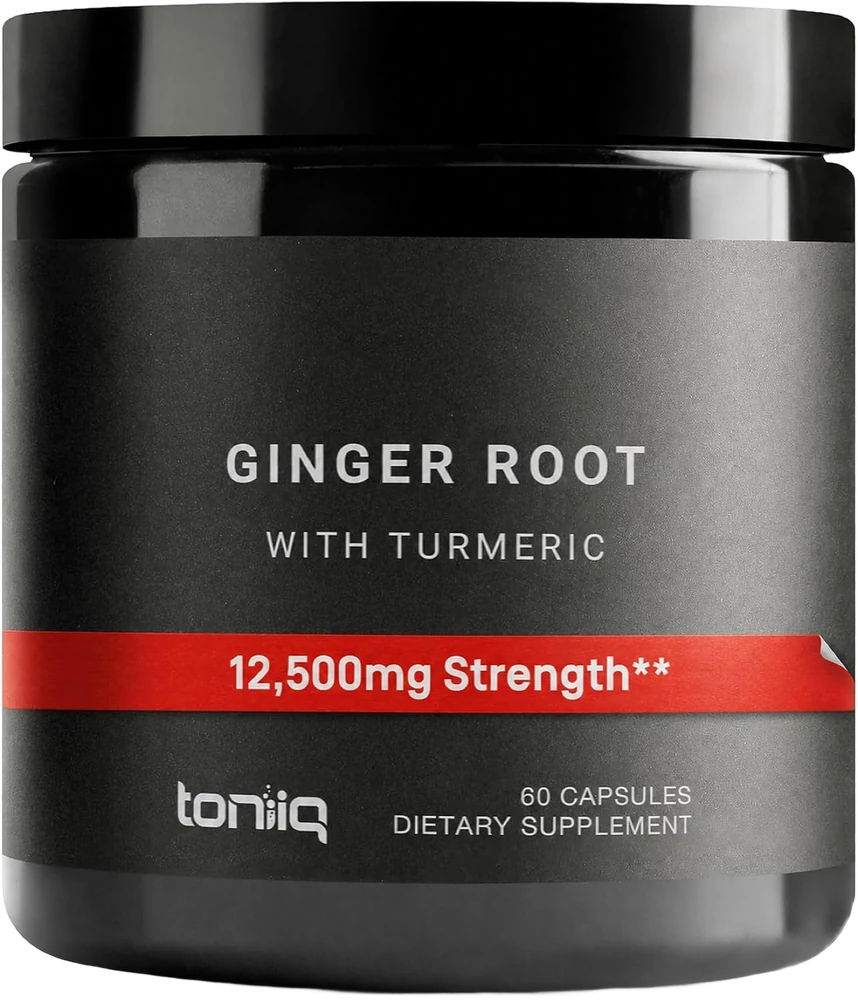 #6 of 9 · Highest Potency✓ Label verified · Supplement Facts read Sep 7, 2026
Real retailer photo, cut out. Label unedited.
Consider it. Highest gingerol potency claimed on the list — but no legible panel to confirm it. The listing claims a 25:1 extract at 20% gingerols with independent batch testing — genuinely potent if accurate, but no gallery photo shows a legible Supplement Facts panel, so we could not verify it.
$22~$0.73 per 2-cap serving
Why It Scores 6.3 — And The Label Line Behind Each Number
Form, Bioavailability & Standardization
25% of scoreA 25:1 extract capsule with added piperine, which is documented to enhance curcumin absorption — that part is sound regardless of the panel. The listing claims 20% gingerols, four times the standardization the next-best pick states, but no gallery photo shows a legible Supplement Facts panel, so we could not confirm that figure. Scored down from what an equally potent, verifiable pick would earn: the blend also makes ginger's exact contribution opaque even if the number holds up.
- Form
- 25:1 standardized extract capsule (blend), per the product listing
- Standardization
- 20% gingerols (per listing, unverified) + curcumin + black pepper
Dose vs. Clinical Range
25% of scoreThe listing claims 500mg of 25:1 extract per 2-cap serving (~100mg gingerols), but this could not be checked against an actual Supplement Facts panel — none of the product photos show one legibly. Taken at face value, the total ginger-equivalent is already harder to map to whole-root trial doses than a straight extract; taking the dose itself on faith is the larger issue, which is why this scores below picks whose dose we could actually verify on the panel.
- Dose
- Listing claims 500mg 25:1 extract per 2-cap serving (~100mg gingerols); not verified against the panel
Third-Party Testing & Purity
20% of scoreIndependently batch-tested for potency, made in a cGMP + ISO facility. Solid transparency, a notch below the practitioner-grade leader.
- Label check
- Not verifiable — no legible Supplement Facts photo in the listing (checked Sep 7, 2026)
- Testing
- Independent batch potency testing; cGMP + ISO facility (per listing)
Tolerability & Safety
15% of scoreGinger is well tolerated, but this is a curcumin-containing blend — curcumin/turmeric supplementation in pregnancy is not well studied, so ask your clinician first. For pregnancy nausea, a single-ingredient ginger format is the more studied choice.
Value
15% of score~$22 for a claimed 30 servings makes per-day cost middling despite the low sticker. You're paying for potency and the curcumin/piperine add-ons, not volume — and the serving count itself is a listing claim, since no legible panel confirms the 2-cap serving size.
- Count
- 60 capsules (front-of-jar text confirms this); the 30-servings figure depends on an unverified 2-cap serving claim
- Cost per serving
- ~$0.73, based on the listing's claimed 30 servings
Label verified. Every figure read from the Supplement Facts photo, Sep 7, 2026.
Marketing Claims Vs. Reality
Standardized to 20% gingerols
The listing claims a 20% gingerol standardization on a 25:1 extract — the highest figure claimed on this list — backed by independent batch testing. We could not confirm this against the Supplement Facts panel: no photo in the listing's gallery shows one legibly.
Curcumin + black pepper boost anti-inflammatory effect
Piperine reliably increases curcumin absorption, and curcumin has modest anti-inflammatory data. But ginger's own anti-inflammatory effect is modest (Terry 2011), and the blend prevents isolating ginger's role.
Pure ginger supplement
This is a three-ingredient ginger + curcumin + piperine blend, not pure ginger. Buyers wanting single-ingredient ginger should look elsewhere.
What Our Test Actually Found
Label not verifiable: gingerol %, dose, and serving count are listing claims, not confirmed panel figures
None of this listing's gallery photos show a legible Supplement Facts panel. Only front-of-jar text is visible — "Ginger Root With Turmeric, 12,500mg Strength", Toniiq, 60 Capsules, Dietary Supplement. We could confirm the capsule count (60) from that front text, but we could not verify the 25:1 extract ratio, the 20% gingerol standardization, the 500mg per-serving dose, or the 2-cap serving size against an actual panel. Every potency and dose figure below is the listing's claim, not a confirmed label fact. We checked the full gallery on Sep 7, 2026.
Potency is claimed, not confirmed — and attribution is unclear either way
The listing's 20% gingerol figure would be the strongest on this list if we could confirm it — but we can't, since no gallery photo shows a legible Supplement Facts panel. And even taking it at face value, because curcumin and piperine ride along, you can't know whether relief came from the ginger, the curcumin, or the absorption-boosting pepper. That's a fair trade for a combo-seeker willing to buy on the listing's word, a dealbreaker for a purist who wants a verifiable label.
A claimed 30 servings runs out fast
At the listing's claimed 2-cap serving, a 60-count bottle would be about a month's supply — though we couldn't verify that serving size against an actual panel. For daily nausea use, factor in the reorder cadence; the per-serving cost may run higher than the sticker suggests if the true serving size turns out to differ.
Full analysis: all pros & cons (7), buy if / skip if
- Listing claims the highest gingerol concentration on this list (20%)
- Listing claims independent batch potency testing in a cGMP + ISO facility
- Curcumin + piperine add a plausible anti-inflammatory synergy
- Compact 2-cap serving (per listing)
- No gallery photo shows a legible Supplement Facts panel — gingerol %, dose, and serving size are unverified
- A blend, not pure ginger — ginger's contribution can't be isolated
- Only a claimed 30 servings per bottle (unconfirmed serving size); higher effective cost per day
- Listing claims the highest gingerol concentration on this list (20%)
- Listing claims independent batch potency testing in a cGMP + ISO facility
- Curcumin + piperine add a plausible anti-inflammatory synergy
- No gallery photo shows a legible Supplement Facts panel — the gingerol %, dose, and serving count are unverified
- A blend, not pure ginger — ginger's contribution can't be isolated
- Only a claimed 30 servings per bottle; higher effective cost per day
The listing claims a 25:1 extract at 20% gingerols with independent batch testing — genuinely potent if accurate, but no gallery photo shows a legible Supplement Facts panel, so we could not verify it. It's also a blend, so ginger's isolated effect is unknowable, and 60 caps is only a claimed 30 servings. Consider it if you're fine buying on the listing's word and want a combined anti-inflammatory stack; not the pick if you want a verifiable label or pure ginger.
If raw gingerol concentration is your metric, Toniiq's listing wins on paper: a 25:1 extract the listing claims is standardized to 20% gingerols — the highest figure claimed on this list — with independent batch testing in a cGMP/ISO facility. But none of the gallery's photos show a legible Supplement Facts panel, so we could not verify that gingerol figure or the per-serving dose against the actual label. It also stacks curcumin and black-pepper piperine for anti-inflammatory synergy. The honesty caveat is real, too — because it's a three-ingredient blend, you cannot cleanly attribute any effect to ginger, and at a claimed 30 servings per bottle it runs through fast. A potent-on-paper pick for people who want a combined digestion-and-inflammation formula and don't need single-ingredient purity — just don't take the potency figures as confirmed until you can read your own bottle's panel.
Consider it for the claimed potency and anti-inflammatory stack — but verify the panel yourself

Toniiq is worth a look if you want the listing's claimed most-concentrated gingerol dose on this list and like the idea of a ginger-curcumin-piperine combo for digestion plus inflammation. But no gallery photo shows a legible Supplement Facts panel, so we could not verify the 20% gingerol figure, the 500mg dose, or the 2-cap serving size ourselves — you'd be buying on the listing's word. Accept that, plus the blend and the roughly monthly reorder. If you need clean, single-ingredient ginger with a label you (or we) can actually verify, the #1 pick is the better call.
If This Doesn’t Fit — Try These
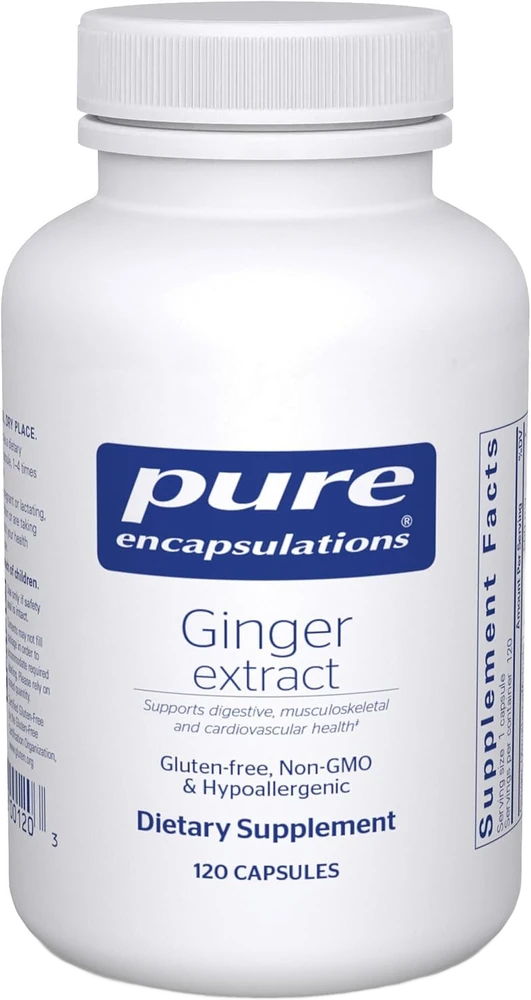 01
Pure Encapsulations Ginger Extract
If you want the highest confidence that you're taking a real, measurable dose of ginger's active compounds, this is the pick.
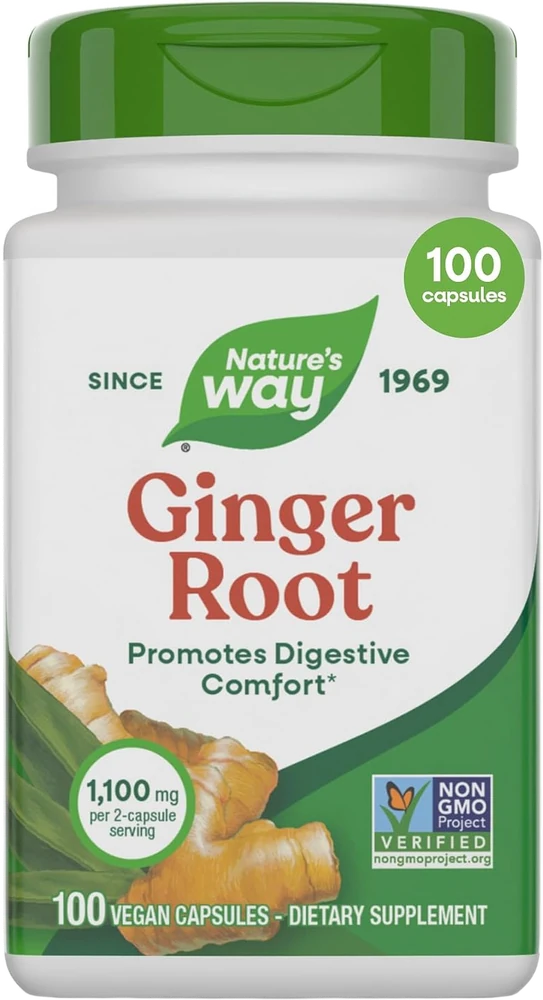 02
Nature's Way Ginger Root
The best choice for people who want a real, on-label ~1g dose without paying extract prices.
Quick Answers
Is this better than plain ginger for nausea?
Not necessarily. The listing's 20% gingerol figure is impressive if accurate — but no gallery photo shows a legible Supplement Facts panel, so we couldn't verify it — and nausea trials used whole-root or simple extracts anyway. The curcumin/piperine here targets inflammation, which ginger is only modestly good for.
Can I take it if I'm pregnant?
Ask your clinician first — this is a curcumin-containing blend, and curcumin/turmeric supplementation in pregnancy is not well studied. For pregnancy nausea, a single-ingredient ginger or ginger+B6 format is the more studied choice.
Sources & Further Reading
2 peer-reviewed sources, each linked to PubMed
- [1] Terry R, et al. The use of ginger (Zingiber officinale) for the treatment of pain: a systematic review of clinical trials. Pain Med. 2011;12(12):1808-18. PMID 22054010 — The use of ginger for the treatment of pain: a systematic review of clinical trials. Evidence that ginger reduces pain is insufficient and inconsistent, underscoring its modest anti-inflammatory profile.
- [2] Bartels EM, et al. Efficacy and safety of ginger in osteoarthritis patients: a meta-analysis of randomized placebo-controlled trials. Osteoarthritis Cartilage. 2015;23(1):13-21. PMID 25300574 — Efficacy and safety of ginger in osteoarthritis patients: a meta-analysis of randomized placebo-controlled trials. Ginger produced a statistically significant but small reduction in OA pain, with GI side effects more common than placebo.
Affiliate disclosure: every Amazon link uses our Associates tag (superachieverclub-20). We earn a small commission at no cost to you; it funds independent reviews. We never accept payment to change a ranking.