
Ginger Root Capsules, 1100 mg per 2-Capsule Serving, 100 Count Review
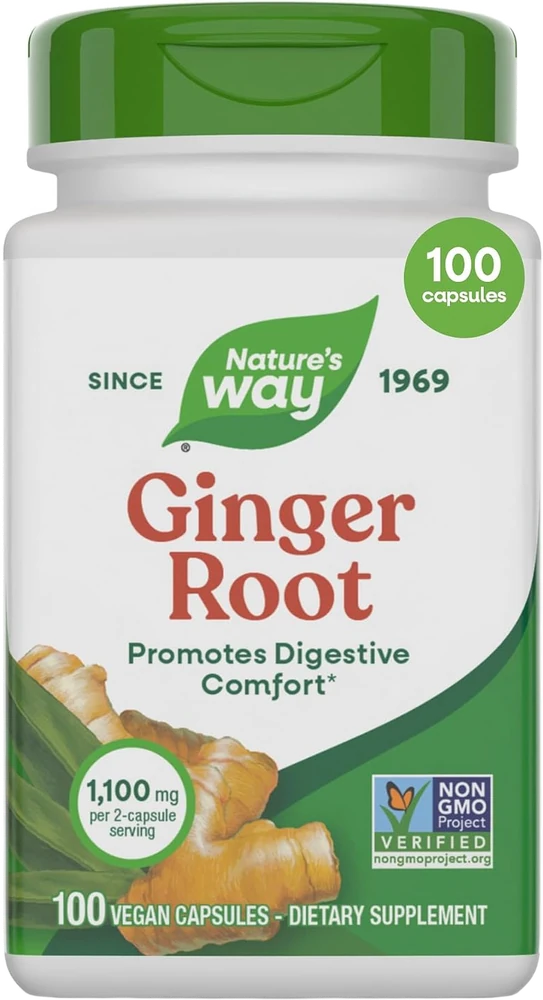 #2 of 9 · Best Full-Dose Value✓ Label verified · Supplement Facts read Sep 7, 2026
Real retailer photo, cut out. Label unedited.
Buy it. Full clinical-range dose, botanically authenticated, at value pricing. 1100mg per serving lands in the studied nausea range, and TRU-ID confirms the botanical identity.
$11~$0.22 per 1.1g serving (2 caps)
Why It Scores 7.8 — And The Label Line Behind Each Number
Form, Bioavailability & Standardization
25% of scoreWhole ground root rather than a concentrated extract. It works — the nausea trials often used powdered root — but it's less concentrated per milligram than the extract picks above it. No gingerol standardization; actual active content varies by batch. TRU-ID authentication confirms species identity, which is a meaningful honesty point even without potency labeling.
- Form
- Whole-root powder capsule
- Standardization
- None (whole root; gingerol content unlabeled)
Dose vs. Clinical Range
25% of scoreThe standout axis: 1100mg per 2-cap serving lands squarely in the ~1g/day used across pregnancy, motion, and chemo nausea trials — in a single serving, no doubling required.
- Dose
- 1100mg per 2-capsule serving (~1.1g/day)
Third-Party Testing & Purity
20% of scoreNon-GMO Project Verified plus TRU-ID botanical authentication is stronger identity assurance than most whole-root products offer.
- Testing
- Non-GMO Project Verified; TRU-ID botanical authentication
Tolerability & Safety
15% of scoreGinger is well tolerated, and this is a simple vegan, gluten-free whole-root capsule; the serving can be dropped to one capsule as a lighter maintenance dose.
Value
15% of score~$11 for 50 full-dose servings is roughly $0.22/day — excellent for a hits-the-dose product from a reputable mainstream brand.
- Count
- 100 capsules (50 servings)
- Cost per serving
- ~$0.22
Label verified. Every figure read from the Supplement Facts photo, Sep 7, 2026.
Marketing Claims Vs. Reality
Delivers the ~1g studied dose per serving
1100mg per 2-cap serving is at the top of the ~1g/day range used in nausea RCTs (Viljoen 2014; Ernst & Pittler 2000), achieved in one serving.
Authenticated ginger root
TRU-ID DNA authentication and Non-GMO Project Verification confirm the contents are genuine Zingiber officinale — an identity guarantee many competitors lack.
Standardized potency
This is whole ground root with no gingerol standardization. Active-compound content is not labeled and varies between batches.
What Our Test Actually Found
Dose beats concentration for nausea
Because much of the strongest nausea evidence used whole powdered root at ~1g, hitting that dose reliably matters more than a high extract ratio. This product's whole-root, full-dose approach is well-aligned with how the trials were actually run.
Identity assurance without potency labeling
TRU-ID confirms you're getting real ginger — but it doesn't tell you how much gingerol is in each batch. That's the honest ceiling on a whole-root product: authenticated species, unquantified strength.
Full analysis: all pros & cons (6), buy if / skip if
- Reaches the full ~1g studied dose in a single 2-cap serving
- TRU-ID botanical authentication confirms genuine ginger
- Non-GMO Project Verified, vegan, gluten-free
- Outstanding value at ~$0.22 per full-dose serving
- Whole root, not standardized — gingerol content unlabeled and batch-variable
- Less concentrated per mg than the extract picks above it
- Reaches the full ~1g studied dose in a single 2-cap serving
- TRU-ID botanical authentication confirms genuine ginger
- Non-GMO Project Verified, vegan, gluten-free
- Whole root, not standardized — gingerol content unlabeled and batch-variable
- Less concentrated per mg than the extract picks above it
1100mg per serving lands in the studied nausea range, and TRU-ID confirms the botanical identity. It's whole root, not a standardized extract, so gingerol content isn't labeled — but for reliable full-dose ginger at low cost, it's hard to beat.
Sometimes the honest answer is 'just take enough ginger.' Nature's Way delivers 1100mg of whole ground root per 2-capsule serving — right in the ~1g/day range used in the nausea literature — and backs it with Non-GMO Project Verification and TRU-ID botanical authentication that confirms you're actually getting Zingiber officinale. The trade-off is that whole root isn't standardized to gingerols, so the active content varies batch to batch. But for a straightforward, verified, full-dose digestive and motion-nausea aid at a very low price, this is the value benchmark of the list.
The value benchmark — buy it for reliable full-dose nausea relief

If you want to take ginger for nausea and digestion without overthinking it, this hits the studied dose, confirms it's real ginger, and costs pennies a day. You give up gingerol standardization, but for most people the authenticated full dose is the practical win. Our best-value pick.
If This Doesn’t Fit — Try These
 01
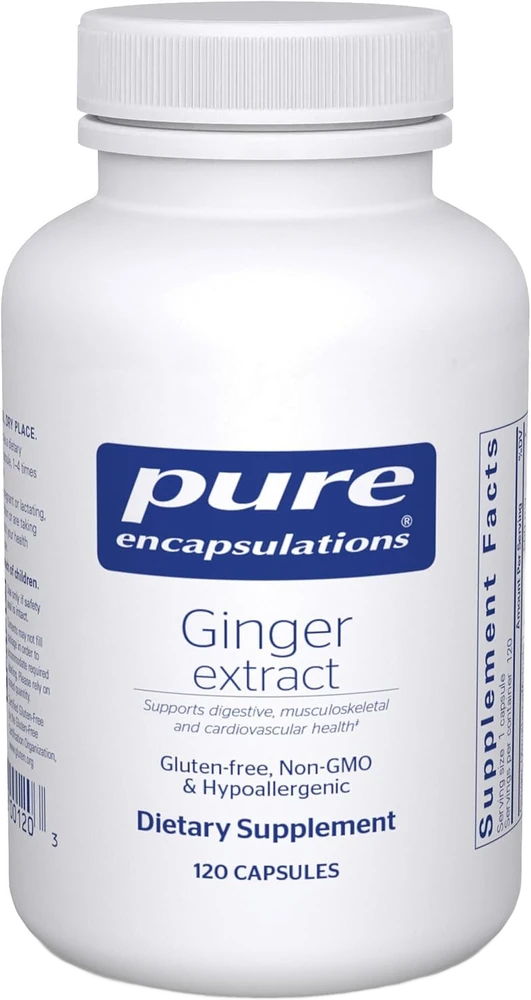
Pure Encapsulations Ginger Extract
If you want the highest confidence that you're taking a real, measurable dose of ginger's active compounds, this is the pick.
 03
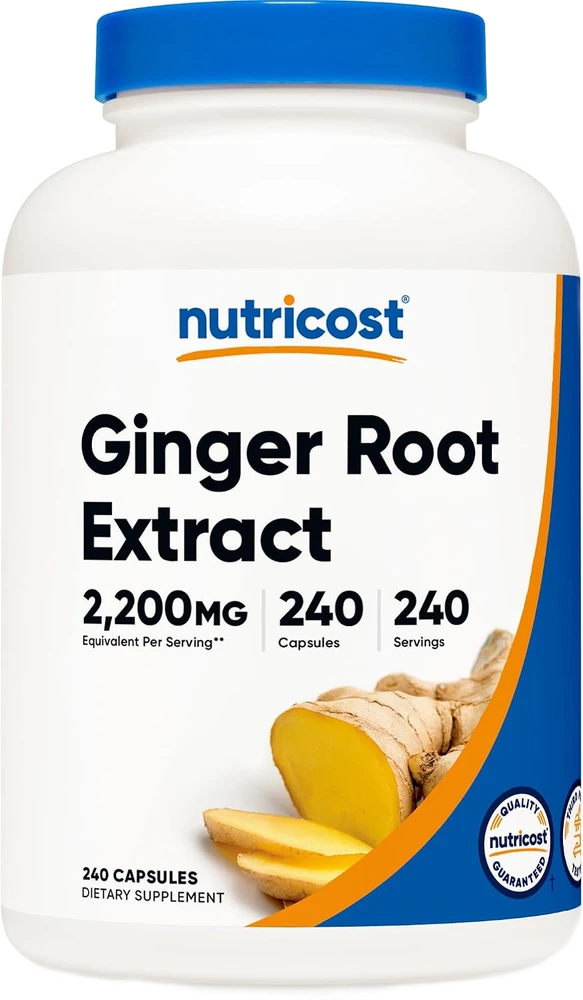
Nutricost Ginger 4:1
A smart value pick for daily digestive use where you want a concentrate but don't need lab-grade precision.
Quick Answers
Is whole root as good as a standardized extract?
For nausea, it's close — many trials used whole powdered root at ~1g, which this hits. The downside is you don't know the exact gingerol content per batch.
How long does a bottle last?
About 50 days at the 2-cap full-dose serving, or 100 days if you take one capsule as a lighter maintenance dose.
Sources & Further Reading
2 peer-reviewed sources, each linked to PubMed
- [1] Ryan JL, et al. Ginger (Zingiber officinale) reduces acute chemotherapy-induced nausea: a URCC CCOP study of 576 patients. Support Care Cancer. 2012;20(7):1479-89. PMID 21818642 — Ginger reduces acute chemotherapy-induced nausea: a URCC CCOP study of 576 patients. Ginger at 0.5–1.0g/day significantly reduced acute chemotherapy-induced nausea versus placebo.
- [2] Viljoen E, et al. A systematic review and meta-analysis of the effect and safety of ginger in the treatment of pregnancy-associated nausea and vomiting. Nutr J. 2014;13:20. PMID 24642205 — A systematic review and meta-analysis of the effect and safety of ginger in the treatment of pregnancy-associated nausea and vomiting. Roughly 1g/day ginger improved pregnancy nausea versus placebo without adverse pregnancy outcomes.
Affiliate disclosure: every Amazon link uses our Associates tag (superachieverclub-20). We earn a small commission at no cost to you; it funds independent reviews. We never accept payment to change a ranking.